
Must be…ahem…Spring
Must be…ahem…Spring
I spent three days this week wandering the show floor of a conference on stem cells, interviewing scientists and corporate executives for a series of articles I am writing. As this is the first time I have met most of these people, the conversation usually starts somewhat tentative as the people try to figure out how to address my journalistic needs while fulfilling their marketing agendas. This is just the nature of such interviews.
Luckily, I have a secret that tends to break the ice a little. Early in the conversation, I try to find an opening in what they are telling me to relate a personal anecdote or observation about my own scientific training as a protein biochemist—yes, I actually used to be quite smart.
Within seconds, the interviewee’s posture changes, their voice takes on a new timber as they realize that I am a kindred spirit even if my uniform has changed. Suddenly, they know I can relate, and the conversation becomes one between friends or colleagues.
The same holds true for storytelling.
When the reader picks up your novel or short story, the viewer sits down to watch your movie, the initial engagement can be tentative as the reader tries to figure out what you’re doing, where you’re taking them. The reader holds back from completely engaging with you as they wait for that magic moment when they can relate.
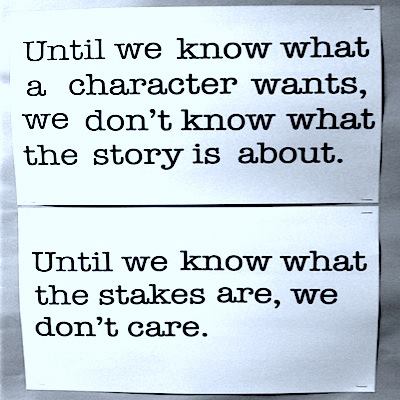
No matter how fantastical or mundane your story, the reader must be able to latch onto something, to find a kindred spirit.
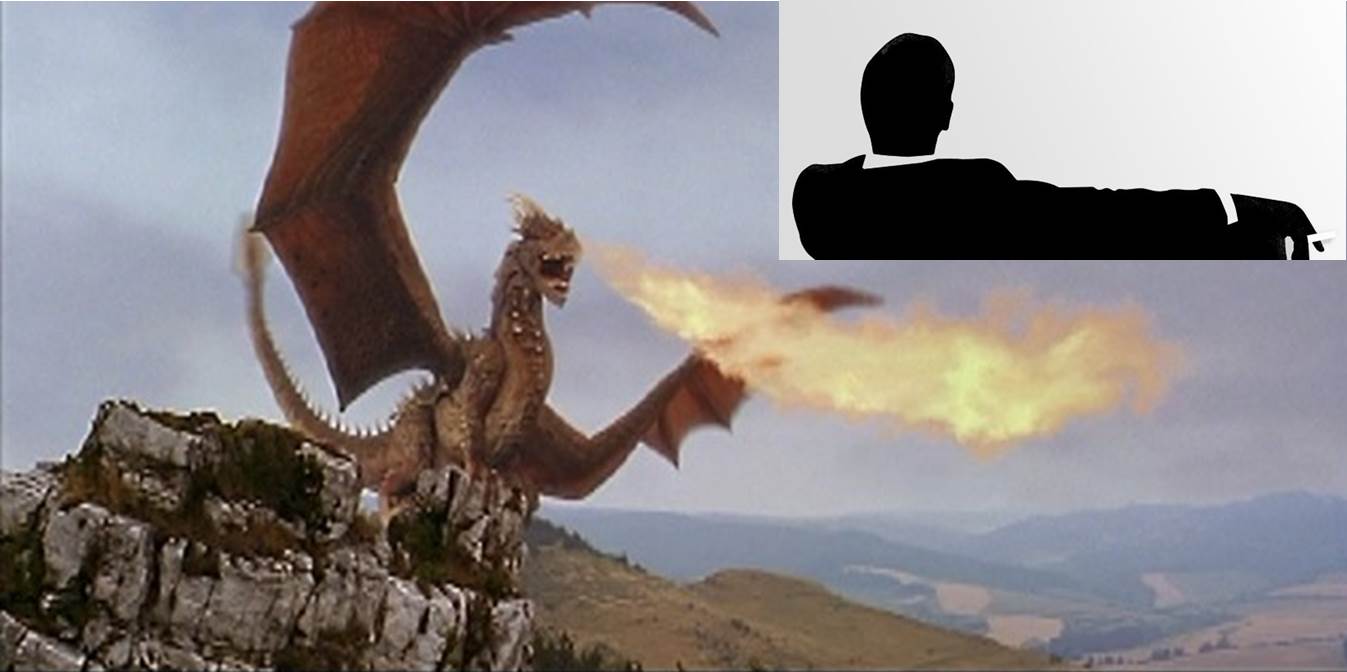
More often than not, it is your protagonist—the canonical Everyman or Everywoman—who has some visceral need to fulfill or challenge to overcome. Killing the dragon is the superficial challenge, but damned few of us have had much experience killing dragons. Most of us, however, have fought for the respect of our community or have had to overcome a fear and step forward to take control or responsibility.
Hell, readers might even relate to the dragon, as in the movie Dragonheart, where Sean Connery’s Draco finally explained that his assaults on the townsfolk were [SPOILER ALERT] his attempts to save the last dragon—him—from extinction.
In the rarest of cases, it may not be a character, but the environment to which someone relates. This is my situation with the series Mad Men. I find it difficult to relate to any of the characters and their hyper-exaggerated soap opera problems. Having spent more than five years in advertising, however, I can relate to the creative challenges within the office. I find myself getting angry or frustrated as I watch pitch meetings or client presentations because of my own baggage.
As a creator of your story, you cannot hope to know everyone who will come across your story. Thus, you cannot—nor should you—build your story to accommodate these varied experiences. You have to tell your story to tell it effectively, but you can broaden its appeal by making sure your characters (and possibly your environment) offer clear parallels to the current human experience. (If your primary audience is dogs or fish, then change the word “human” as appropriate.)
At their most basic levels, what are the human conditions that your characters express or are trying to repress (oooh, subtext)? When you get a good handle on that, you’ll have a better understanding of how relatable your story will be to your audience.
(Images are used without permission.)
My trip wasn’t just about dead people and lost civilizations, of course.
You can’t visit Central America without taking in some of the natural wonders.


As a child (and still as an adult), I have always been fascinated by history, so the thought of visiting one of the great sites of human civilization–the ruins of Chichin Itza and Xel Ha in Mexico–while on vacation just over a year ago, blew me away.
Although magnificent, what struck me was how small and human they seemed. It was as though these ancient cultures were ruled by giants, and yet, as close as I was allowed to approach, I was met with steps that would not be challenging for a short-statured adult.
I remain in awe of who these people were and what they accomplished, but having visited their cultural centres, I must admit that I came back a little disappointed. They were as you and me, and for whatever reason, that has dulled their sheen in the wondering eyes of the young boy I was.








Once more unto the breach, dear friends, once more. – Henry V III, i, 1
In his thrilling speech to his troops (see excerpt below), who stood exhausted before the walls of Harfleur, Henry V challenges them to try yet again to take the city, that now is not the time to back off. Keep moving forward.
As it was expressed dramatically about war, so it is with Art and with life itself. It is vital that once you gain some momentum, you should do everything in your power to maintain that momentum.
Several years ago, I took up running. I hated it. I hated every living moment of it. But I was trying to improve my health and I knew that it was important. And so every couple days, when I would head out for my run, I had but one thought in my mind: keep moving forward. I knew that if I stopped, I might never run again.
As it was with running, so it is with writing. I write because I desire to, but also because I fear that if I stop, there is every chance that other aspects of life will creep in and keep me from it. My fear of losing writing is bigger than my fear of writing crap.
If I’m working on a screenplay and hit a creative sticking point, I try to move around it rather than dwell on it and lose the forward momentum. Sometimes, moving around it means writing another scene elsewhere in the same screenplay, but more often, it means jumping to another screenwriting project, developing another blog post or riffing wildly on Twitter or Facebook. My poor keyboard owes me nothing.
Even when I am simply writing some notes for a scene yet to be written, I do not allow the “correct” word choice to block me from writing…I simply add a placeholder where the right word should be and keep the thoughts flowing onto the page. The placeholder can be a blank underline (fill it in later) or a close enough word so I will know what I meant later, or it can be the word “shit”. It doesn’t matter.
It’s the artistic version of Newton’s First Law of Motion: An object at rest remains at rest unless acted upon by a force. An object in motion remains in motion, and at a constant velocity, unless acted upon by a force.
In this case, the object in question is me and/or my creative spirit.
In fact, forward movement doesn’t even have to be the same art form. I often use photography to keep me going. But you can also read a book, see a movie, sit in a park. Do whatever it takes to keep the creative parts of your brain and soul moving forward.
But how will I ever get anything done if I keep flitting back and forth from distraction to distraction?
Unless you’re specifically working to a deadline for your creative project—and there will be times when this is true—creativity is about the process, not the product.
Most artists (and we are all artists) live and act to create, not to have created.
And even if you are working to deadline, forcing your way through a challenge will likely result in a work that requires significantly more reworking than if you had simply let the creative spirit take you where it would. Thus, I don’t know that you’ve really gained much by pushing on something that isn’t coming naturally.
The natural direction of the universe is forward. You have it in you to continually move forward. Why would you give that up?
In peace there’s nothing so becomes a man
As modest stillness and humility:
But when the blast of war blows in our ears,
Then imitate the action of the tiger;
Stiffen the sinews, summon up the blood,
Disguise fair nature with hard-favour’d rage;
Then lend the eye a terrible aspect;
Let pry through the portage of the head
Like the brass cannon; let the brow o’erwhelm it
As fearfully as doth a galled rock
O’erhang and jutty his confounded base,
Swill’d with the wild and wasteful ocean.
Now set the teeth and stretch the nostril wide,
Hold hard the breath and bend up every spirit
To his full height. – Henry V III, i, 3-17
(Image used without permission.)
I often find truisms that speak to me as I troll social media, but this morning, within mere moments, I found maxims that spoke to both the writer and the photographer sides of me.
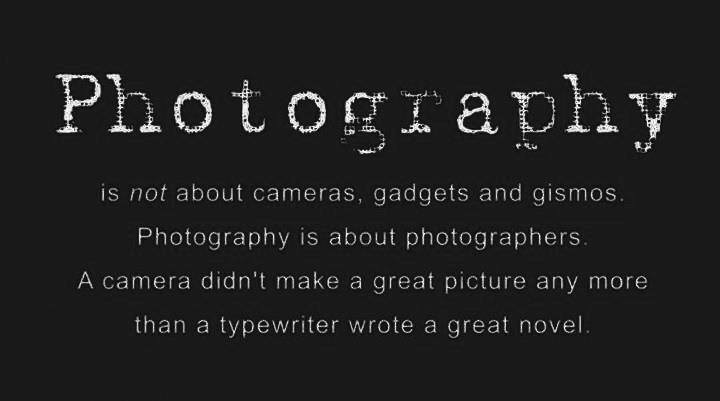

Okay, so maybe this last one just speaks to me…but it does combine words and pictures! 😀
Change your focus;
Blur the lines of what is.
Look deeper for beauty;
Superficially for meaning.
Perception is only relative
To what you seek.




Dear Diary: I couldn’t believe that this type of thing would happen to a guy like me, but when that woman got out of the pool, she wasn’t wearing any…
Oops. Wrong diary.
We are all incredibly talented, witty, sophisticated, creative people. Unfortunately, for most of us, we are incredibly talented, witty, sophisticated, creative people who would have trouble remembering our names if they weren’t on our drivers licenses.
I personally have a brilliant memory. I remember that the most common form of cockroach in the United States and Canada is Periplaneta americana. I recall that the parasitic Paragonimus westermani is a lung fluke. And I am quite certain that Tycho Brahe had history’s first rhinoplasty, however involuntarily on his part.
I also remember that I had three really good ideas for blog posts yesterday…I just can’t remember today what they were.
We never know when the creative spark will light us up, but as often as not, it is likely to happen when we are least prepared to act on it. A mall parking lot. Dinner with the family. Police interrogation. And inevitably, because we’re in the middle of that distraction, we forget the idea.
Carry a note book and pen or pencil at all times. Capture that fleeting moment, no matter how (in)conspicuously. Whether you’re a writer, sculptor, painter, musician, whatever your art, the important thing is to give yourself some form of reminder that you can use for inspiration later.
As I believe I’ve mentioned in earlier posts, my first screenplay grew out of a four-word pun (a song parody) that I wrote in a note book several years earlier.
When the pun occurred to me, I had no idea what to do with it, but I wrote it down any way. Over the next two years, when I would struggle for inspiration, I would flip the pages of my notebooks, and one day, I read the pun and an idea began to ferment. 18 months later, I had the first draft of my first screenplay.
Too often, I fear, we let these moments of inspiration slip away, and while we may kick ourselves momentarily on realizing we’ve lost something, we shrug our shoulders and simply move on. Fine, move on, but don’t keep repeating the mistake.
We all know how hard to come by moments of creative insight can be. Those moments are precious gifts, even if we can’t see the application today. So, the last thing we need to be doing is simply letting them float by and be lost.
Write it down. Save it for later, when you have the time or creative inclination to turn the idea into something special.
In any event, I just had to get this off my chest before I forgot it too.
(Image is the property of Biodiversity Explorer and is used here without permission.)
A few more shots from my recent trip down to Toronto’s waterfront, including some taking in the sights across from Billy Bishop Airport.






Picking up from my first realization that my passion might also be a gift, as explained in Part One.
Over the years, I’ve had opportunities to display my creative demons before an audience. An effective little soap opera episode in Grade 12. Geeky science humour in my own magazine. Heart-wrenching poetry following the end of a close friendship that might have been much more.
I worked my way into the magazine world, writing interesting stories about interesting discoveries and advances, but it wasn’t the same. The words poured forth and the story-telling skills improved, but I was always a chronicler of someone else’s story.
Creativity expressed itself in my approach to the story. In seeing a story that no one else saw. In context that was invisible to everyone else. Creativity manifested itself in identifying authors and writers from all walks of life to fill gaps in the magazines. I may not have been the best project manager, but I was definitely the most creative.
As I matured in my jobs, I extended this creativity to everything I did. Looking for effective solutions to seemingly intractable problems. But it wasn’t enough. That voice within me cried out to be heard. And the more I worked—and overworked—to distract it, the louder it screamed. So loudly, that even my wife could hear it.
While sitting in an Orlando hotel bar one night, she finally challenged me and my workaholic tendencies, demanding that we come up with a hobby for me. When pressed, I admitted that I had always felt like I’d been born 30 years too late. That if I could have any miracle in my life, it would be to work on those old sketch comedy shows from the 1950s as a comedy writer. Sid Ceasar’s Show of Shows came to mind. Imagining myself in the writers’ room with Mel Brooks, Larry Gelbart, Woody Allen and Neil Simon.
Neither of us knew how to make that happen, but my wife challenged me to find something at home that would set me up in that direction. The next week, I signed up for my first improv class at Second City.
Although it still wasn’t where I wanted to be—more performance than writing—the improv classes were amazing; therapeutic on a variety of levels. Eventually, though, I stumbled onto their sketch comedy writing program and that’s when I hit my stride. A wonderful instructor, talented zany fellow students.
The words flowed incredibly quickly. Within weeks, I had dozens of sketches and felt like I was making serious headway in my education of what worked and why. If there was a problem with the class, it was that my production vastly outstripped the need. I tried new things. I broke out of my comfort zone. I pushed my limits. My only goal was funny.
As I honed my sketches, I prepared for the reality of rehearsals with actors, when all of this work would really come true; when my efforts became more than an academic exercise. Rehearsals went well. Out actors seemed genuinely grateful to be performing our work. I saw what worked and what didn’t, even in the work of others.
Interestingly, I wasn’t in control of the process and I was okay with that. There’s something to be said for being so far out of your element that you recognize the limitations of your control. I had complete faith in the director and our actors. I believed they too wanted this to work as badly as I did.
And then the day of the performance arrived. Nervous energy ran through my body and I couldn’t sit still. I could barely communicate. There was no fear. Only anticipation and potential validation. Was I funny?
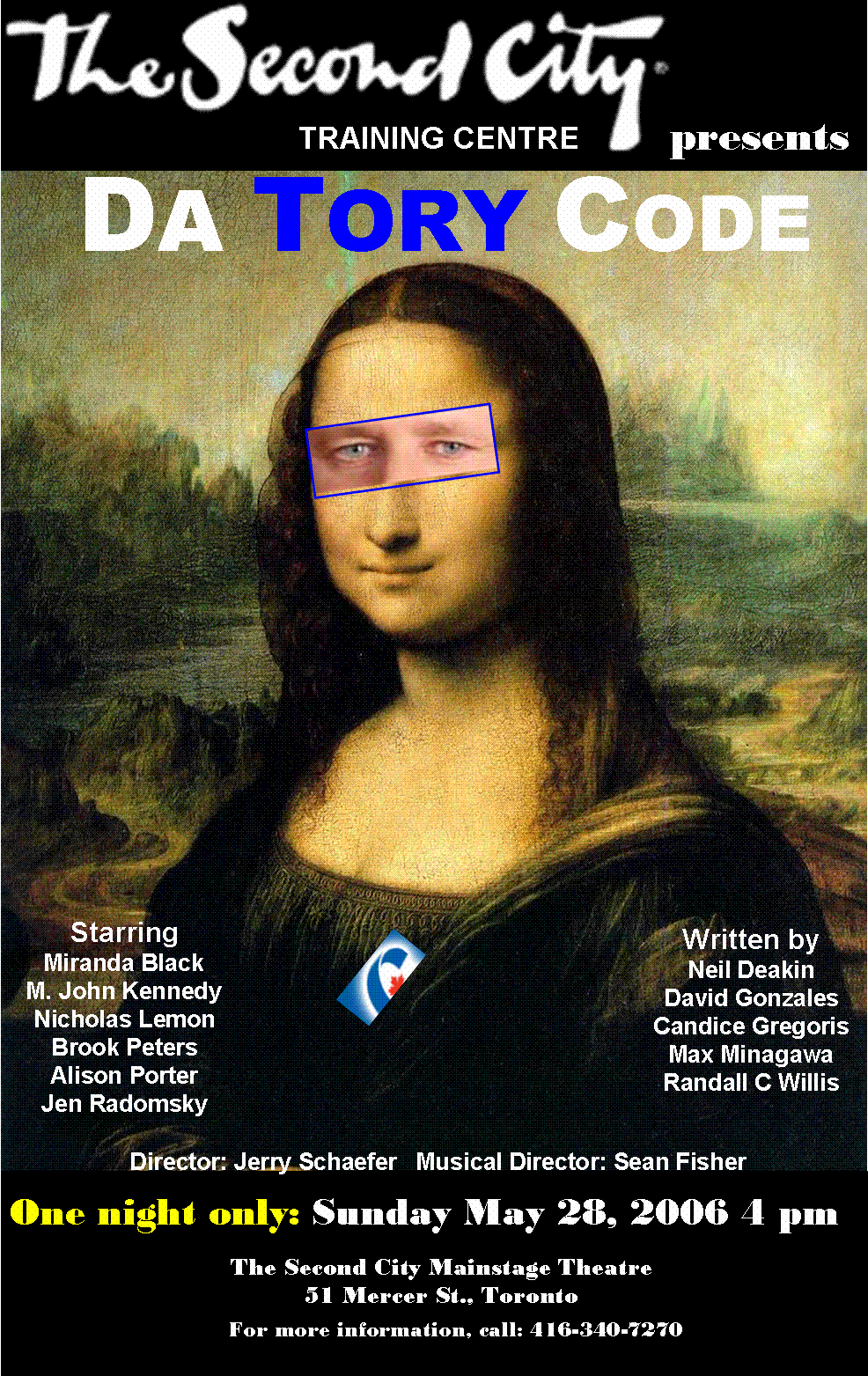
The day we premiered Da Tory Code was easily one of the best days in my life. The audience laughed. Not at everything, which was a valuable lesson, but they laughed at enough to validate my talent.

PIECES OF ME...
Mother, Nehiyaw, Metis, & Itisahwâkan - career communicator. This is my collection of opinions, stories, and the occasional rise to, or fall from, challenge. In other words, it's my party, I can fun if I want to. Artwork by aaronpaquette.net
Life at any age can be amazing! We only need to grab hold & experience it!
The internet web log of Michael Cedarwood. I used to be a stripper. Now I'm a writer.
Thoughts on creativity, Pharma and whatnot
Mindfulness, Philosophy, Spirituality, Meditation, Awareness, Religion, Nature Photography
Living for Happiness
A perspective from the other side of the hockey ocean
Romance Author
Author of Kritsotopoula, Girl of Kritsa and Rodanthe's Gift
Our opinions don't stink!
Rantings and Ravings on all things Screenwriting and Movies
My Elicits, an Inception... Learning to Live in Perfection

