You suck (How awesome is that?)

pexels-paper ball-147633

You suck. It’s true. No need to be embarrassed.

I suck, too; quite regularly, in fact. Possibly unlike you, however, I revel in that fact.

In almost any facet of life, when we are called upon to do something, many of us have concerns that we might not be up to the task, that we suck.

Depending on the task, the individual, the timing and innumerable other factors, this fear may give only the slightest pause or it may result in complete catatonia, leaving us bereft of the will to do anything let alone the requested task.

And I think this fear of suckage—yep, just made that word up—is perhaps the greatest in creatives as it is in creativity that we face our harshest critic: ourselves.

I have myself, and seen others, stare at a blank page, completely immobilized, incapable of the first squiggle that would start the creative process.

At best, we’re trying to consider every starting concept in our heads, lest our suckage be recorded for posterity and later ridicule. But just as often, it is blank-screen paralysis, our thoughts as immobile as our body.

I’m here to tell you that they are just negative manifestations of a positive experience.

In many ways, sucking is not only normal, it is also wonderful.

pexels-straw woman-185937

When I teach screenwriting, I start every lecture with the same question:

“Who sucked this week?”

And at least until the students have adjusted to the question, mine is the first hand that goes up.

You cannot help but suck at something until you don’t, and the timeline of skill is different for every individual and every task.

But actually sucking—as opposed to the fear of sucking—means you are trying. You are making an effort to push through your personal suckage, and that is amazing and wonderful.

Even the fear of suckage is a good sign, if not a good feeling, because it is an indication of how important the assignment is to you. If it wasn’t important to you, you wouldn’t care if you sucked.

So suck. Jump in with both feet, ignoring as best you can that little voice that warns you of doom should you suck.

stairs-man-person-walking

Take the next step, and then the one after that

For one thing, even once you have developed great skill in a field or activity, you will still have occasion to suck.

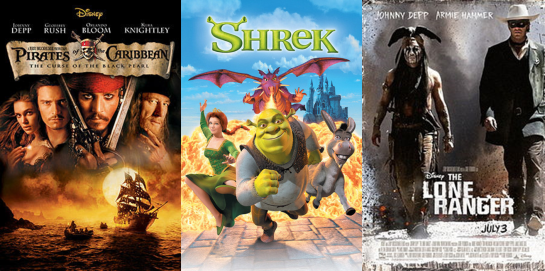
With apologies to the magnificent screenwriter Terry Rossio, for every Shrek and Pirates of the Caribbean, there is the odd Lone Ranger.

For every record-breaking season, Wayne Gretzky missed an open net on occasion.

No professional photographer keeps every shot she takes, nor painter every painting, nor songwriter every lyric or note.

You are going to suck.

The silver lining, however, is that the more you suck now, the less likely you are to suck later.

God knows I still do. And I’m very happy about that.


To learn more about effective storytelling and maybe gain insights from my years of suckage, visit:

So, What’s Your Story (web site)

So, What’s Your Story (Facebook)

SWYS-Facebook-Cover

Why story coaching?

Coaching

No matter where you are in your writing career, your work can almost always be helped by feedback from fresh eyes that do not have a vested interest in the work itself.

Story analysis can help you see challenges in your story that might be invisible to you, whether through inherent biases or because you see the story clearer in your head than it has been recorded on the page.

Story analysis can also help you see opportunities in your work that you overlooked, if only because you are too close to it. Your priority for that early draft, in all likelihood, was simply to get things out of your head and onto the page, and we all walk with the fear of wandering down so many blind alleys that we never come out of the other end, wherever that end may be.


So fine, story analysis is helpful. But what the hell is story coaching?

Almost by definition, story analysis happens AFTER you have completed a draft (or several). It comes AFTER you have wandered the desert of creative confusion. It comes AFTER you have bled your creative juices onto the page and have become smitten with your creation.

And in some very unfortunate cases, it never comes at all, because the storyteller never completed the project, whether due to fear of failure, a sense of being intractably lost, or simply because Life intervened to distract from the task at hand.

This is where story coaching can help.

Story coaching is about a work-in-progress, whether a screenplay, a novel, the writer him or herself…whatever the storyteller needs most.

Hurdles

As with life coaching, business coaching or athletics coaching, story coaching is about providing guidance to the storyteller on a regular basis, whether simply as a second set of eyes to critique the work or as a mentor who uses the work-in-progress as a framework within which to help the storyteller develop as an artist.

Story coaching is also about commitment and accountability for the storyteller.

By hiring a story coach, the writer has made his or her creative art a priority in life. Why else spend the money?

And working with the storyteller, the story coach establishes expectations and deliverables, whether that is new story ideas, number of newly written pages, rewrites. These are the foundations of creative habits that can be difficult to develop and entrench in solitude because the creative process is so personal and fraught with self-doubt and self-recrimination.


But I can get this from a writing course or a writers’ group.

Yes, this is true…to an extent.

Writing classes can be invaluable, depending on the composition of your classmates and the skill of your instructor.

With a roomful of students, however, it can be difficult for the instructor to provide truly focused guidance to an individual student. More typically, the student is presented with a spectrum of general direction, all of which can be valuable but only some of which may be germane to a given work-in-progress.

Writers’ groups can also be a wonderful resource, again depending on the composition of the group. That composition and the individual writer’s position within the skill hierarchy, however, are critical.

Most writers’ groups are comprised of peers with relatively equal experience, and so may not be able to provide the more advanced analysis and mentorship that an individual wants or needs. And if an individual is the most advanced or skilled within a given writers’ group, he or she may find little opportunity for improvement.

[NOTE: I firmly believe that you will always find something in the feedback of any group of readers. The question is more whether it is worth the effort you put into the group.]

Sports

Although it is not impossible, you are very unlikely to ever become a professional football or hockey player by spending any amount of time playing flag football or pond hockey with friends. Why would we expect storytelling to be any different?


How do I know a story coach is right for me?

You don’t. Well, you don’t until you start a conversation with him or her.


Oh, hey! Is the story coach going to try to tell me what stories to tell?

Absolutely not.

The story coach is here to understand what story you want to tell or help you understand it better yourself, and then help you tell it in the most effective manner.

You are the Creator. The story coach is not.


If you want to learn more about Story Coaching, feel free to reach out to me (no obligation) at:

So, What’s Your Story? (web site)

So, What’s Your Story? (Facebook)

SWYS-Facebook-Cover

A call to live your passion

My friend Jarrod Terrell, whom I met through Kevin Scott‘s Effortless Alphas group, recently challenged his fellow Alphas to share their goals and dreams for life in a Facebook video.

In part, the idea was that verbalizing your dreams made them real for you, but it also opened the door to others in your community who might be able to help make those dreams come to fruition.

Here is my video.

How can I help you discover, explore and share your passion?

See also:

So, What’s Your Story? (web site)

So, What’s Your Story? (FB page)

Contagious Adrenaline (FB page)


We are the stories we tell ourselves

boats

Human beings connect through story. We define our individual selves by story. We even define our universe in terms of the stories we tell ourselves.

And despite often sharing experiences with others, my understanding and interpretation of those experiences—my personal Truth—is the story that I build around those experiences.

If I see something I have never seen before, I immediately construct a story. I give it context from items around it or its location or its presence at this time of day.

And remarkably, if I came upon this same thing tomorrow rather than today, the story I construct then might be entirely different from the one I build today.

Thus, story is malleable. It lives and breathes as we take in new information from our surroundings and incorporate that information into the story, making tweaks and adjustments to ensure that everything continues to make sense.

When the story doesn’t make sense, when congruence is lost, we get upset, and in some cases, put up hostile blinders. This is when human beings lose connection.

Because story is such a personal thing, the Creative—whom I define as anyone who pursues a task with passion—is faced with an essentially insurmountable challenge: How do I share my story through myriad personal filters?

Ultimately, you cannot control how another receives and interprets your story.

abstract art

What is my story for this work? What story did the Creative intend?

Even if the Painter tells me her intent in painting a portrait or landscape, the Novelist types out in no uncertain terms precisely what he means to convey, the Musician strikes notes and chords to instill specific feelings, I can remain oblivious to those intents, consciously or un-.

This simply is; and we can only hope that it does not negatively influence the passion to create.

That passion, the drive to create, must be given voice, however; and so the Creative moves forward, doing his or her best to share (much as I am doing now in writing this).

A dedicated Creative struggles on, regardless of the insurmountable barriers, and strives to convey the most effective story he or she can, looking for ways to layer thoughts and emotions and spiritual energies onto the personal stories of others.

We practice what we know. We experiment with the unknown. We seek guidance and critical analysis.

And most importantly, we accept that we will never achieve 100% success instilling our stories in others, and yet push ourselves and our Art as if it were possible.

As Creatives, as people of passion, that is central to our stories.

*****

If you’re interested in learning how to build stories more effectively, seeking guidance for nascent projects or critical analysis of existing works, feel free to check out my website So, What’s Your Story or reach out to me here or via my Facebook page.

In the meantime, I wish you all the success in the world.

SWYS-Facebook-Cover

Free Fire still too expensive

free_fire_poster

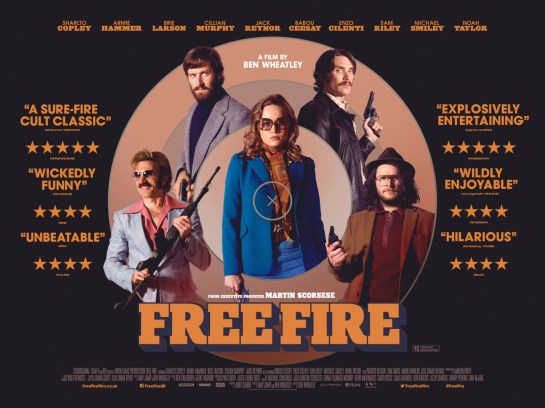
It seems I am cursed to see the lesser works of great film artists. Such was the case last night as my friends and I discussed Ben Wheatley’s latest release.

My friends spent much of the evening telling me how much I should have seen High Rise and Kill List. Sadly, we saw Free Fire, a 90-minute exploration of how many bullets the human body can take…seriously, that is the movie.

In 1976 or so, IRA terrorists arrive at a derelict warehouse to buy guns, but things suddenly go wrong and a shootout ensues. The End.

Lots of shooting. Lots of bleeding. Lots of “witty” banter. For 90 minutes.

This is The Good, The Bad and The Ugly if all we saw was the Mexican stand-off.

It is every Quentin Tarantino film without the Shakespearean nuance for which Tarantino is known (*sarcasm*).

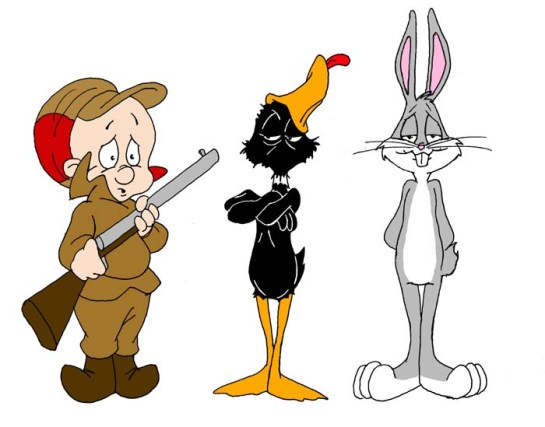
It is Bugs and Daffy arguing over whether it is rabbit season or duck season.

duck_season_rabbit_season_by_dromens

And like a young child’s game of Cops & Robbers or Cowboys & Indians—or whatever other culturally and socially incentive games the kids get up to these days—no one really suffers for the ballistic barrage that enters their bodies. This might as well have been paint ball.

I am told Ben Wheatley (writer and director here) is a very creative artist, whose earlier works bordered on the metaphysical. Free Fire didn’t manage physics, let alone metaphysics.

The entire film was one beat repeated over and over and over again, much like this review.

Running out of shooters or bullets? Let’s simply insert a couple of new shooters. Wow, that was so much fun, let’s do it again.

The movie had a really good cast, including the likes of Brie Larson (The Room), Sharlto Copley (District Nine), Armie Hammer (The Man From U.N.C.L.E.) and Cillian Murphy (you know; the guy that was in that movie).

And there were a few funny one-liners (whatever they made, nobody wants to buy it anymore).

But let me save you $13 and simply suggest you watch the trailer 37 times.

free_fire_guns

The only stars of the movie

The Last Laugh – review

Last Laugh poster

As I sat in Toronto’s Hot Docs Ted Rogers Cinema, munching my popcorn and sipping my soda, I started to get the sneaking suspicion I had accidentally seated myself in a Synagogue, such was the nature of the audience who slowly closed in around me.

And as the theatre lights dimmed, I realized that they were here to see a documentary about the Holocaust, while I was here to see one about comedy. We were both in the right place.

For me, the central theme of The Last Laugh is the question: Is there any topic that is off-limits to comedy?

For the others, it was probably more a question of whether any humour could be found in something as horrific as the wholesale slaughter of 6 million Jews.

Through a series of interviews with comedians—most Jewish—and Holocaust survivors, centering on the thoughts of Renee Firestone, The Last Laugh pivots back and forth between heavy discussions about survival under unreal conditions and light-hearted attempts to understand the dark humours arising from those conditions as expressed by the generations of comedians that followed.

the-last-laugh-brooks

As Mel Brooks pointed out, if he had tried to produce “The Inquisition” sequence of History of the World, Part I back in the late 1400s, he probably wouldn’t have fared as well in 1981. Likewise, other comedians pointed out that when The Producers was released in 1968, the concept of “Spring Time for Hitler” was scandalous, whereas people seeing the Broadway musical now are apt to sing along with the music.

For many, it was a matter of timing. How much time had passed since the original horror? For others, it was a bit more complicated, and it was generations more than years that needed to pass, citing examples where the children of Holocaust survivors—people who themselves did not experience and therefore release the horrors—were more apt to get upset about Holocaust jokes than their parents.

the-last-laugh-2016-sara-silverman

Interestingly, Brooks himself was quick to note that the Holocaust was a line he could not cross himself, but that if someone else made a funny joke, he could laugh at it.

Going back to survivor Firestone, it was very interesting to see her perspectives on this question and the various attempts by comedians like Sara Silverman to touch the subject. For Firestone, none of the jokes seemed to come across as funny, but some she acknowledged were very close to the truth of the experience or how society now thought of it.

Elly Gross-Ferne Pearlstein-Renee Firestone

Writer/director Ferne Pearlstein (centre) with survivors Elly Gross and Renee Firestone

And she could see in hindsight the humour of some of the camp activities as the prisoners (I am at a loss for a better word to describe those held captive) tried to maintain a grip on sanity within the camps, whether it was preparing imaginary dinner parties or performing musical revues.

Countering opinions also entered the fray as people debated the merits of the film Life is Beautiful, most of the comedians considering it terrible and an ironic whitewashing of the horror, or bringing in other recent events such as Jim Crow racism or the events of 9/11.

Life is Beautiful

Ultimately, while I’m not sure the question of off-limit topics was ever really answered, everyone who watched the documentary was affected by it.

Where your heart was broken by a recounted memory, it was shortly thereafter mended by quip.

Where your breath caught in your chest at a recalled horror, it quickly burst forth in a gush of laughter.

After 88 minutes riding waves of conflicting emotions, the audience was neither depressed, nor bemused, but likely to a person, they had asked questions they had never considered before. Can’t really ask more of a documentary.

Demystifying Expertise

expertise-equation

Each of us tends to undersell (or completely disbelieve) our expertise on subjects that are near and dear to our hearts. Expertise, we believe, is something other people have.

And yet, I am convinced that we are more expert than we think. And fortunately, we are living in a time where methods to convince others of our expertise has never been easier.

Watch my recent Facebook Live video Demystifying Expertise and see if you agree.


Artists I adore (and you should follow)

barnaby-dixon

Barnaby Dixon – puppetry

As many of you know, I am nutso for puppetry and have somehow managed to know some amazingly talented puppeteers. But as much as I adore my friends, one fellow blows me away not just for his skill as a puppeteer, but also as a puppet designer.

For a guy that looks like he’s 12—I’m over 50, so you all look 12 to me—Barnaby Dixon seems ancient in his craft and wisdom. From the very first YouTube video I watched, he has dazzled me with his love of the art form, his ability to bring the inanimate to life, and his presentation style that draws you in and makes you feel like this is a private conversation. Stellar!

Visit Barnaby’s web site, Facebook page and Twitter account


matt-me-naomi

Baram & Snieckus – comedy

I know, I know. I have to get past my addiction to these beautiful sketch and improv wunderkinds. But I can’t help myself.

Apart, Matt Baram and Naomi Snieckus are wonderfully funny and vulnerable and endearing, but together, they rocket off the charts.

As I have reviewed previously (see below), Baram & Snieckus are to the modern era what Stiller & Meara and Nichols & May were to theirs, people who express the challenges and wonders of social awkwardness, allowing us to laugh at the things that frighten us in our daily lives.

No one is more neurotic than Matt…until Naomi erupts in her own mental mushroom cloud.

And that this husband-and-wife team are beautiful, friendly, giving, caring people is an absolute bonus.

You can follow Matt & Naomi on their web site, Facebook page or Twitter.


See also:

You and Me Both – A revue review

Still Figuring It Out: Baram & Snieckus


filippa

Filippa Levemark – visual arts

As a photographer, I adore nature. As a writer, I adore bizarre or interesting juxtapositions. Thus, I had no choice but to fall in love with Filippa Levemark’s work.

With the seemingly simplest of compositions, Filippa combines nature and human infrastructure to powerfully demonstrate that the two worlds are one and the same. Try as it might, humanity cannot hold itself as distinct from the wildlife that surrounds us, nor should it.

Her work is beautifully approachable and yet is rife with meaning, offering depths that may be missed at first glance.

Based in Sweden, my greatest hope is to find a way for her to bring her works to Canada.

You can follow Filippa on her web site, Facebook and Instagram.


sankoff-and-hein_toronto-star

Irene Carl Sankoff & David Hein – musical theatre

As a student at Toronto’s Second City Training Centre several years ago, I had the great fortune to meet and do improv with a gorgeous and talented actress named Irene Sankoff, a truly giving performer.

Years later, I heard that Irene and her husband David Hein had created the somewhat autobiographical stage musical My Mother’s Lesbian Jewish Wiccan Wedding, which played to wonderful reviews in Toronto. What I didn’t realize was that the musical would explode in the theatre world both in Canada and abroad, setting these two up as a creative force of nature.

And just this past year, they have repeated (and likely surpassed) that success with a new musical Come From Away, based on events in Gander, Newfoundland on 9/11 when hundreds of air passengers found themselves suddenly grounded.

The musical just completed a spectacularly successful run in Toronto and begins Broadway previews on Feb 18 at the Gerald Schoenfeld Theatre in New York, where it is sure to sell out quickly.

But like my Baram & Snieckus comment above, what makes these two particularly special is that they are genuinely wonderful people and have such love for their craft and for the people who come see the show.

Recently, on a frigid Toronto morning, the pair brought coffee and donuts to fans waiting for rush tickets to their final Toronto performance (Toronto Star article). The pair and performers from the show entertained the small crowd, singing songs and chatting with the chilled throng. That is simply beautiful.

Follow Irene & David’s adventures on their web site, Facebook and Twitter.


Whither the losers

coyote

History, we are told, is written by the victors. So, it also seems, are books about writing; although it is perhaps more accurate to say that books about writing only talk about winners.

Whether we’re talking about Star Wars, Unforgiven, Casablanca or The Wizard of Oz, almost any model of screenplay structure or character development or dialogue construction can be retrofitted to suit the film in question.

It’s like one of those mysterious illustrations that test whether you see two faces or a goblet. Once the secret is pointed out to you, it is virtually impossible to unsee.

illusions

Faces or a vase? Old woman or young?

Now, I’m not suggesting that these films or scenes or characters within aren’t good examples of the methods and approaches being promoted. Rather, because they are good examples, I question how much you can learn from them.

If you know the film well, it can be virtually impossible to imagine it any other way. And that is what the lesson should be telling you.

What happens when you don’t follow the model?

What does bad writing look like and how can you fix it?

Without that last part, learning to write well becomes the typing equivalent of being given paint, brushes, canvas and the Mona Lisa. Now, go out there and launch the new Renaissance! (The Rerenaissance?)

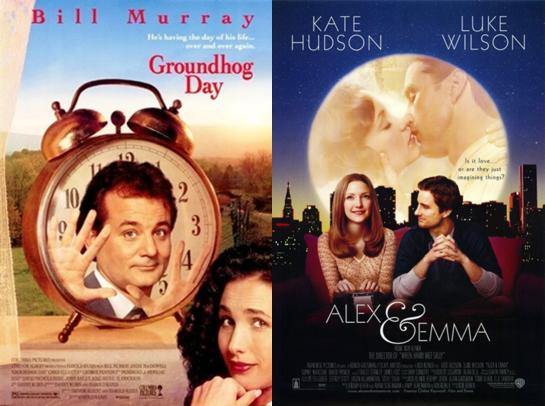
A couple of years ago, I had the good fortune to take a comedy writing workshop given by Steve Kaplan. Aside from providing our small group with a series of tools to not only analyze but also develop comedy—nicely captured in his wonderful book The Hidden Tools of Comedy—Steve walked us through examples of where these tools were used to great effect AND examples where they weren’t.

Alongside excerpts of Groundhog Day, we watched scenes from Alex & Emma. After considering the classic sitcom about nothing Seinfeld, we were inflicted with the show’s original and quite terrible pilot.

groundhog-and-emma

Like with the positive examples, you see the failures when they are pointed out to you. But the nice thing about the failures is you can ask what could have been done differently to make the idea or scene work better.

(Note: Sometimes, the answer is nothing, because it was a weak idea or poorly written.)

You may not have committed the specific sin you’re studying, but it at least gives you the opportunity to use the tools you’ve just acquired and see if you can’t make that “Elvis on crushed velvet” look more like the Mona Lisa.

elvis-lisa

And particularly for the relatively novice or untested writers, examining failures helps to keep from establishing an impossible bar of success. Rather, it suggests that whereas we always strive for greatness, mediocrity can make it to the screen, and more importantly, we do not need to (and never will) achieve gold with every piece we write.

Which is good, because for every Pirates of the Caribbean and Shrek, there is a The Lone Ranger (all written in part by the wonderful and giving Terry Rossio).

rossio

See also:

The Hidden Tools of Comedy (Steve Kaplan)

Story is everywhere

[First part of a weekly series related to my new story analysis service So, What’s Your Story.]

bookshelf

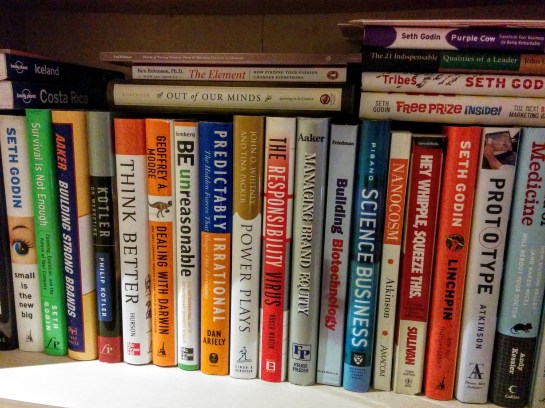
Even the most esoteric subjects have story, with all the elements of a fictional novel or screenplay…even text books about business or biochemistry or writing.

There’s no story in text books!

Yes, there is.

Only here, plot is less about action sequences and more about the interplay of the different aspects of your subject and the causes and effects that drive your theses or perspectives forward. This can be reflected in the cadence of your descriptions, as you walk the reader through your arguments, leading them to your conclusion.

Likewise, your characters are less about personalities and more a sense of the…you guessed it…characteristics of your subjects. In the broadest sense, the conflicts and synergies between the component parts or ideas of any topic are what effectively humanize the topic, providing a familiarity to the reader or viewer.

Without story, your manuscript or presentation has no narrative drive, nothing to draw the reader or viewer forward. Instead, it reads like a specification sheet or spreadsheet; a series of minimally connected facts and figures that provide information but only to the most intrepid reader.

Story is one of the reasons why you can have hundreds (thousands?) of different versions of the same facts, and how publishers and book retailers stay in business.

So, if you’re working on a nonfiction manuscript or presentation, let’s talk and see how well you are bringing your ideas to your audience.

Reach out and tell me: What’s your story?

Twitter: @createdbyrcw

Facebook: https://www.facebook.com/storyanalysis/

Website: [to come]