NeoHuman podcast, starring me

Willis NeoHuman

My friend Agah Bahari is interested in everything, which is one of the things that I love about him.

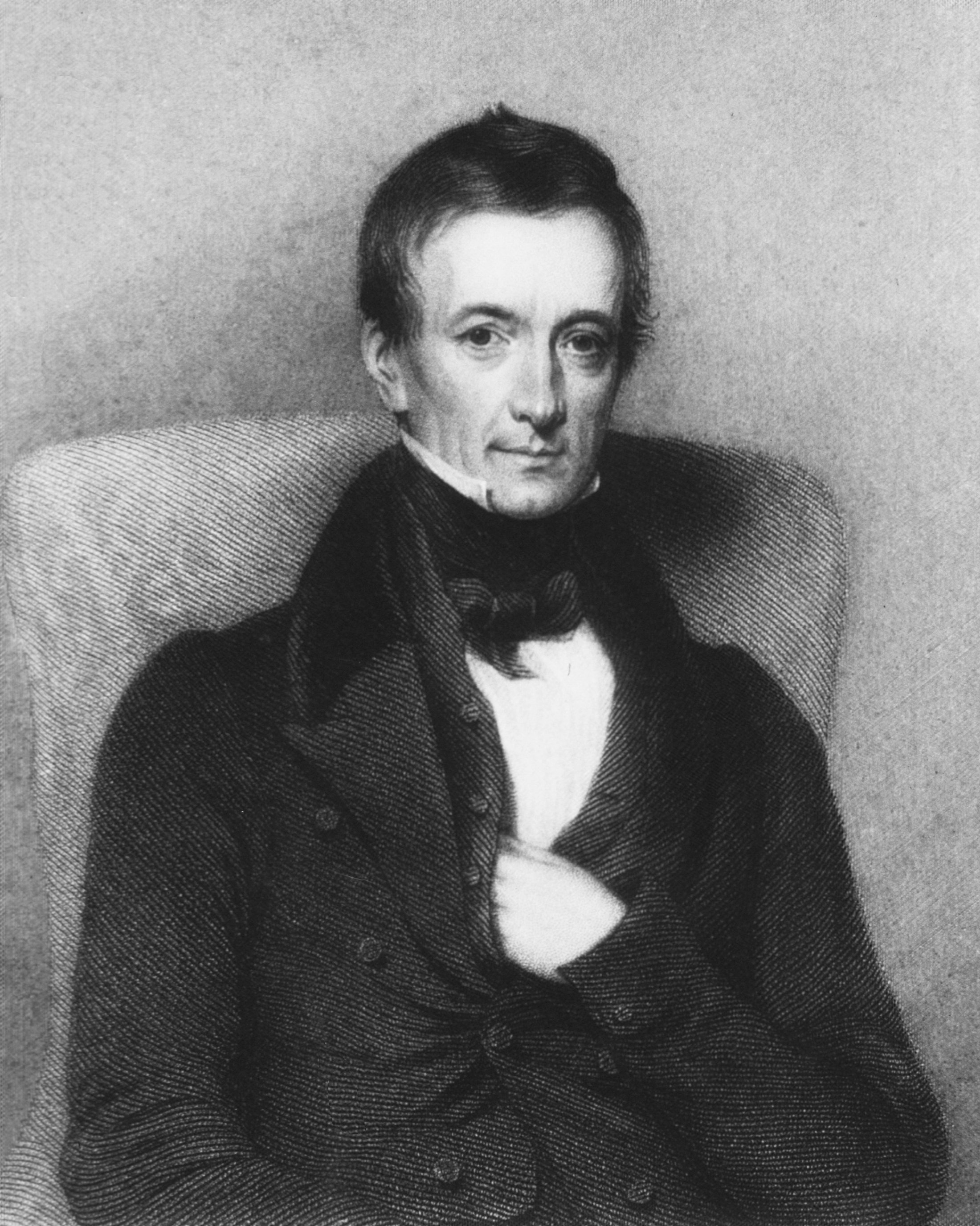
Not that long ago, he decided to indulge his interests by starting something he calls the NeoHuman podcast (which matches nicely with his NeoHuman blog), inviting many of the interesting people he knows to discuss pretty much anything that comes up.

Well, seems he ran out of interesting people and so he invited me to participate…and we talked about anything: biotechnology, pharma, global healthcare, designer babies, creativity, writing, screenwriting, 9/11, marketing, and the novel he and I are writing about his life.

But my favourite part is the question he asks all his guest, which is roughly:

If you met an intelligent alien life-form, what would you describe as the greatest human accomplishment and as the worst human accomplishment?

Never boring, my friend Agah.

Agah-me

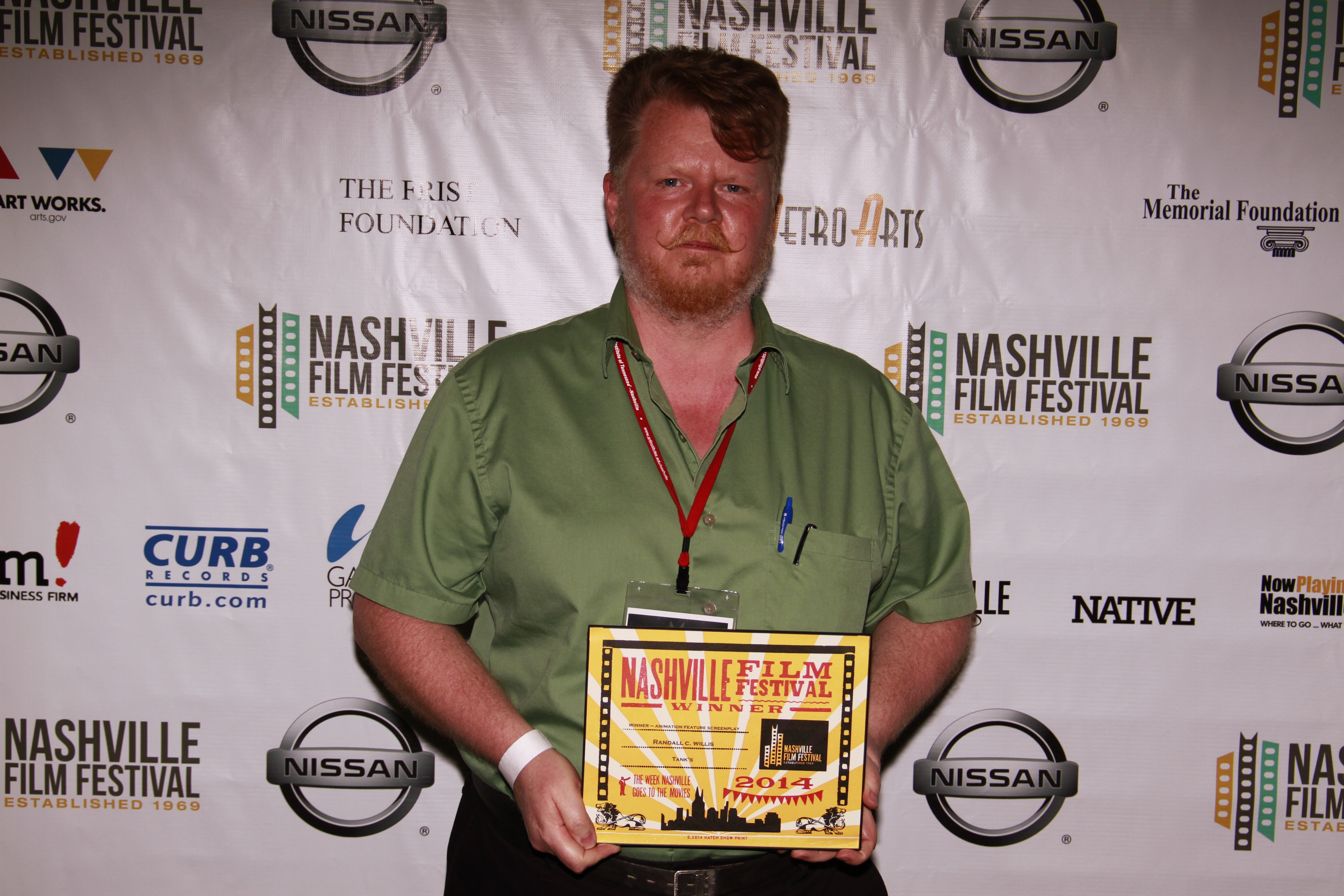
(Photo stolen with love from Kelly Brienz Showker)

Writing is its own success

(I’m going to post this here, now, so that when I do make it big financially, I can prove I really did believe this while I was still poor.)

A writer writes

A writer writes

If you don’t love writing for the sake of writing, get out. For the sake of your own sanity, do something else.

I would like to make a career of my screenwriting and novel writing, but if I don’t, I will still do it and be glad that I do.

The truth is that the majority of us (like 99.9997%) will never make it big as writers…not Terry Rossio big, doubtfully Damon Lindelof big, nor Nora Ephron big. Hell, I’m not even sure the simple majority (50%+) will even make a livable wage as writers.

But as much as I want to hit it big and spread the gospel of my genius (he says only half-facetiously), I write because I love writing and I don’t know how to not write.

I can do other things to keep food in the house and a roof over my head, but I don’t want to if I don’t have to. It all interferes with my time for writing.

Perhaps this passive approach to accomplishing something with my writing will keep me from making it big. But I prefer to think that by focusing on the joy of writing, the excitement of expressing my thoughts and feelings, I will be happy throughout the entire process, from now to wherever and whenever I end up.

If nothing else, this attitude means that everything that comes down the road is a known positive rather than a potential disappointment.

Good luck, everyone.

Bonus!

Bonus!

In other words

Word up!

Word up!

According to a Global Language Monitor survey from 2014, there are 1,025,109.8 words in the English language. (Not sure what the 0.8 word is.) And based on further research, this tally makes English anywhere from 5- to 10-times larger than most Western European languages.

Depending on who you ask or possibly where, a native English-speaking adult has a functional vocabulary of anywhere from 10,000 to 75,000 words. Thus, on a regular basis, we use about 1-10% of the words available to us.

Many of those words have similar if not identical meanings and can often be used interchangeably with slight variations in implied meaning or significance. Hell, a British clinician with a list-making fetish famously went out and tried to catalogue these word relationships, offering encyclopedic lists of alternates to the most commonly used English words.
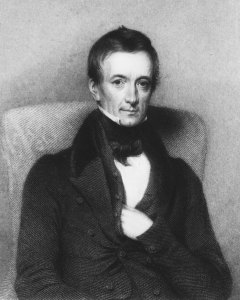
A man with a list (or maybe that's just how he sits)

A man with a list (or maybe that’s just how he sits)

So, given this profusion of synonymic wonder, why am I seeing an increasing number of stories—novels, screenplays, etc.—that seem only capable of the low end of the vocabulary spectrum?

And I’m not even talking the big words here. I am talking the simple words we use every day and yet which hold little more meaning than their strictest definition. Words like “said”, “walk”, “enter”.

Now, I am not suggesting people necessarily have to write with a copy of Roget’s Thesaurus next to them, something of which I have been accused on occasion. But while exsanguinating your latest cerebral machinations into the fibrous folds of the human record—sorry, I digress—why not make the most of the words that are at your disposal?

For example:

Hearing a cry from the other room, Cecily walked through the door.

Now, Cecily may indeed have “walked” through the door, but that tells me absolutely nothing other than her transitional geographic location.

What was Cecily’s emotional state and how eager was she to discover the source of the cry?

There are so many other words—common words—in the English language that will tell us so much more about Cecily than the fact that she moved.

What about strutted, strode, skipped, crashed, bolted, dashed, raced, blasted, crept, snuck (sneaked?), sauntered, staggered, bounded, tripped, stumbled, inched, crawled, or fell?

Each of these words tells us so much more about Cecily’s relative state of confidence and sense of urgency, and any one of these in place of “walked” prevents the writer from having to later explain her emotions with a second sentence.

In some cases, people will append adverbs to offer greater insights into the emotional state of a character, but again, even this can often be avoided through use of more descriptive verb.

For example:

“You’re crazy,” Philip replied angrily.

Definitely better than just “Philip replied”. But what if Philip did more than reply? What if he screamed, shouted, barked, bellowed, screeched, roared, or cried?

Again, each word offers a slightly different take on Philip’s emotional state and gives us a sense of whether he is angry at his target or terrified by her.
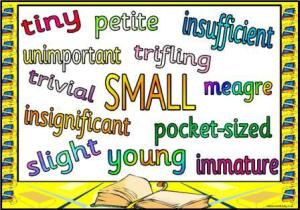
All the kids are doing it

All the kids are doing it

And what holds true for verbs, also holds for adjectives, and particularly as some of the simpler ones can be relative.

The precise height of a tall man varies significantly between someone who is 5 ft 2 versus someone who is 6 ft 1. And again, the adjective has an opportunity to add an emotional or psychological angle to the description.

Rather than “tall”, what about towering, mountainous, tree-like, statuesque, cloud-scraping, looming, or neck-straining?

Or instead of a specific age (unless the precise number is vital), what about world-weary, worn down, spry, vivacious, ancient, wizened, infantile or cadaverous?

Got your back, kid!

Got your back, kid!

Again, I don’t think we need to discard the presocialized anthropoidal biped with the bath water, but particularly in our writing, I think we need to make better use of the wealth the English language affords us and open ourselves to more precise and effective word choices.

Together, we can strut the walk and hallelujah the talk.

NaNoWriMo words than I expected

81K

This year, I participated in my second NaNoWriMo (national novel writing month) competition, although the word competition is a bit of a misnomer but love-fest sounds a bit Sixties.

The last time, about three years ago, I got about a week into it before the realities of life interfered and everything stalled. This year was different.

While the realities of life have generally been pretty easy on me, I did have two solid weeks of distractions in the middle of November (yay, paying distractions) and still managed to reach the goal of 50,000 words by my birthday near the middle of the month (and while on the road).

Unfortunately, because I have never met a 50,000-word story that couldn’t actually be 200,000 words, I am not yet at the end of my story or my novel and so continued to type actively for most of the rest of the month to finish the competition/love-fest/creative circle-jerk just shy of 81,000 words.

I want to pat myself on the back for getting this far (and eventually, I will) but the problem is that having gotten this far, I want to reach the end of the novel, and so on December 1st, 2014, I begin what can best be described as Mo’NaNoWriMo.

And if I’m still not finished by New Year’s Eve, then I shall welcome in the New Year singing:

MoNaNo, MoNaNo, MoNaNo!

Thanks to all of my friends who have been so supportive throughout this process…especially those of you who have no idea what I am doing or why.

Let all y’all know how it goes!

Thera cover


Synopsis

At the height of its power, the Minoan civilization ruled the Mediterranean Sea, establishing trading colonies throughout the region and venturing into the dangerous waters of the Atlantic. But unknown to its rulers and priests, the Earth itself was planning an end to the empire; an end that centered on the tiny colony of Thera, the present-day island of Santorini.

The story Thera bears witness to this cataclysmic end through the eyes of a young Mycenaean boy Patroclus, taken from his simple village on the coast of Greece as unwilling tribute and slave into the Minoan court. Patroclus quickly learns the machinations that hold the Minoan world together, but just as he recognizes his opportunity for escape, his world is threatened by Nessa, his Minoan Master’s daughter who sees something special in him.

The clash of cultures takes second stage, however, as the world itself begins to change shape. Only Patroclus seems to be aware of the scale of the omens, adding urgency to his survival plans and conflict over how to deal with Nessa.

See also: Thera–Describing the end of a world

Thera – Describing the end of a world

Thera cover

To further stimulate progress on my NaNoWriMo project, I offer the opening to the novel Thera.

It is an idea that has been mulling around the back of my brain for more than a decade and I am so excited to finally get it out on paper (well, laptop screen).

Enjoy.

The stones barely moved as Patroclus’ sandals flew across their surface down the side of the mountain toward the sea. Every now and again, the root of a scrub bush or jagged edge of exposed slate would grasp for his ankle, seeking to do him harm, but Patroclus had travelled these paths too often to be felled so easily.

His earliest memories were of him escorting his father up the cliffs that bordered his home town, moving their small herd of goats to better grazing above the wave-ravaged shores. Now, at the ancient age of 15, the task was his alone, leaving his father to drag his younger brother Iolus out on their fishing boat.

For Patroclus, the slight of being relegated to goat sitter had been too much. Long had he wailed that anyone could herd these beasts up the trail. They’d done if for so long, he doubted not that they would do it instinctively if left to their own devices.

He should be at his father’s side, he moaned, using the strength of his sinewed back and arms to help draw the traps they set each day for lobster and crab, octopus and squid.

But wail as he might, he was a dutiful son and when his father insisted about the goats, Patroclus accepted the verdict, no matter how reluctantly.

If he could take some solace in his lot, it was that his daily banishment afforded him a spectacular view of his universe, the world unfolding itself before him like a vividly coloured ever-shifting map.

About a kilometer from his home, the grazing grounds his grandfather had discovered decades ago rose 400 meters above the mighty sea that defined one side of his village. The jewel had been discovered quite by accident when his grandfather went in search of an errant ram, and it remained their sole domain as it was too steep for any of the other farmers to willingly take.

Thus, the family goats grew large and contented on the virgin grazing, the trek ensuring that the succulent foliage became delicious muscle and not simply fat to be lost over roasting fires.

The constant trek did not just keep the herd in shape, however. Patroclus too had developed into a firmly shaped boy, well ahead of his age-mates in muscle tone and vigor. And in the few hours of relaxation, he had used that tone to achieve victory in several athletic games held in the region.

But even as his body developed in his trips too and from the mountain valley, so too did his mind grow rapidly in the many lonely hours spend listening to the steady chew of his cloven charges.

As his eyes took in the perpetual movement of the waves and clouds, he discerned patterns and periodicities that spoke of a larger fabric. And as the wild animals became accustomed to his docile presence, they allowed him to bear witness to their secret rites and rituals.

But more importantly, the cliff faces overlooking the sea hinted at a bigger world beyond his home. He would watch as ships would slowly rise from the waters in one area only to disappear beneath them again elsewhere, and yet at no point appearing to have foundered, crews toiling as though no emergency had taken place.

He also bore witness from his aerie to the town that sprawled beneath his feet, all but invisible from the ground; a loose congregation of buildings and fields that took geometric form when seen from aloft. And on the clearest days, he could follow the footpaths that spidered out from his town, connecting it to larger towns that tore holes in the distant forest canopy or filled crevices between mountains.

It was this universal certainty, however, that had him coursing down the mountainside, his footfalls oblivious to the sting of jagged stones, his horned minions long forgotten, left to fend for themselves.

Instead, his mind was filled with questions about the large fleet of ships that was escorting the town’s fishing vessels back to harbour, including the low-slung boat of his father.