Talking Comedy—Toronto Screenwriting Conference 2014

(L to R): Jeff Biederman, Katie Ford, Joseph Raso, Andrew Clark

(L to R): Jeff Biederman, Katie Ford, Joseph Raso, Andrew Clark

This past weekend, TSC2014 convened a panel of sitcom showrunners entitled Comedy Is A Funny Business, where the panelists discussed various aspects of developing comedy for Canadian television.

The panel was comprised of Jeff Biederman (showrunner for Spun Out), Joseph Raso (showrunner for Seed) and Katie Ford (showrunner for Working the Engels), and was moderated by Andrew Clark, Director of Humber College’s Comedy Writing and Performance Program.


How do you know you or something is funny?

From Raso’s perspective, most people who want to write comedy typically have good comedic sense, and that it is important to trust your own instincts on what is funny. The rest of the writing process comes down to mechanics. Ford added that it is often about what you watched as a kid, the shows you grew up with.

Biederman mentioned that he had taken improv and stand-up comedy classes several years earlier, but had never really enjoyed them. He still wanted to be associated with comedy, however, so he gravitated to comedy television. Ford is an advocate of such classes, however, as she feels it gives the writer a sense of what you are up against. And Raso echoed those sentiments suggesting it also makes sure that you give actors solid material with which to work.


Can you discuss the seeming renaissance of sitcoms in Canada?

According to Raso, it is important to have a solid premise or conceit for a show, a distinct way to describe the core idea, because simply having ideas for individual episodes won’t cut it. One of the challenges for Canadian sitcoms, he warns, however, is that it is so hard to get networks to see beyond the first year—one and done, as he describes it—which has doomed many shows in the past. For most shows, the first season is difficult as the show hasn’t yet managed an identity or found its audience.

For writers, Biederman adds, this can be a big challenge as it can take a while for a new writer to break through, and there are not a lot of places to build the necessary skills or unique voice needed to be successful.


Can you describe the pitching process?

For Biederman, it is about going in with a story. Rather than try to tell jokes or act things out, he prefers to focus on why this show, what is particularly interesting about this premise. And if you already have a spec pilot script, all the better, because it helps the creator and writer maintain his or her power in the conversation and gives the network something more definitive to look at.

For Ford, it is about walking in with your logline, introducing a sense of theme, outlining a typical episode and then describing the characters. But perhaps most importantly, letting people see your passion for the project and how you connect with the subject matter.

Raso couldn’t agree more. For him, the personal angle is key.

Ford also suggests that it is vital you engage the executive you are pitching because he, she or they are your first audience.


Can you talk about the writers’ room?

Biederman describes the mix as people sharing responsibility for the final product, more as partners than anything in a hierarchical sense. He even brings in outsiders to punch-up the script (e.g., jokes). He describes the room as ruthless but welcoming and admits that it’s not always easy to be in the room or to run it.

Ford agrees, suggesting that it is a collaborative environment, but is by no means a creative free-for-all. Her job is to listen for the voices that add to the show. Raso, meanwhile suggests that the hardest part of the job for him is that he has to say no a lot, but despite that difficulty, it is vital that the room start off with real, honest and open discussion.

Biederman suggests that table reads with the actors can be invaluable to the writers but that they don’t always happen. Scripts for a multi-camera show can change 50 or 60 times over the course of a week, Ford adds, limiting the usefulness of table reads. And single-camera shows tend to work on tighter timelines, so again table reads are not always possible.


So, how does a new writer get into the room?

Biederman suggests starting as a script coordinator rather than try to get in with samples of your writing. The job will give the novice writer invaluable production experience. Ford agrees, suggesting that her own script coordinator kept things together on her show.

Ford also suggests that new writers need to be heard, to get their voice out there by whatever mechanism they can find, whether Twitter feeds, blogs, anything. It’s about demonstrating your strengths and your personality to show you’d be a good fit for the room.

According to Biederman, the make-up of the room has steadily changed over the years. It’s not just television writers, but also stand-up comedians and performers who bring unique voices into the mix.

The biggest place he sees new writers fail is in not sending their work when he offers to look at it. The fear of it being not quite perfect kills a lot of opportunities. Just send the work, he says.


Spec script or spec pilot?

Both Raso and Ford were adamant that they much prefer to read original work over spec scripts. According to Ford, they’re just not interested in reading yet another Big Bang Theory spec or whatever show is popular. She finds it much harder to get a sense of a writer’s unique voice by looking at a script that is trying to be someone else’s voice.

tsc-logo

Writing for puppets

Monty meets Muppets!

Monty meets Muppets!

As some of you may know, I am one of the comedy writers for a sketch show called SomeTV!, which is currently in production in Toronto. As our godhead Nic likes to describe it, the show takes the no-sacred-cows approach of Monty Python’s Flying Circus and combines it with the playful anarchy of The Muppet Show (no hubris here, eh?).

Now, for some, that may sound like the greatest writing gig ever. Those some have clearly never written for puppets.

Human actors—or as we call them, Fleshies—can be tricky enough to deal with. Prone to completely misunderstanding the point of a scene or sketch, they tend to have difficulty learning lines that make no sense to them.

Luckily, their natural insecurity, despite the outward facing ego, means that they can be molded into subservience, if only in two- to five-minute chunks, the longest most are willing to go without checking their make-up or cell phones for calls from their managers.

At their core, Fleshies are the rhesus monkeys of the performance world, clinging to each other for some semblance of affection but ultimately willing to give that up for warmth and sustenance.

Not so puppet actors, aka the Felts or Felties.

Flesh v Felt

These are the apex predators of the performance world and should always be treated as such. Sure, they look cute and cuddly, with their giant heads, bulging eyes and disarming colours, but that’s exactly what they want you to think.

You don’t write for Felties so much as start a sentence that is perpetually interrupted with ideas or lines the bastards think are smarter, funnier, crazier.

Fleshies forget their lines because they’re not too bright…Felties “forget” because they are malicious egotists.

Adding to the challenge is the near-impossibility of figuring out a Feltie. He, she or it is the poster-child for multiple personality disorder.

You think you’re writing a scene for a young Spanish girl, when out of nowhere a tall Jovian Codswadder shows up to take the scene in an entirely new direction. (To this day, the only thing I know about Codswadders is they come from Jupiter, where given the crushing gravity, their height makes no sense.)

Not the home of young Spanish girls

NOT the home of young Spanish girls

It’s like dealing with someone with hyperactive comedic Tourettes, and trust me, I’ve taken enough improv classes in Toronto to know what that looks like.

Felties are also astoundingly lazy creatures. Sure, they look frenetic on the television screens, but in reality, these buggers will literally not lift a finger without someone doing it for them. Our show has an entire team of Feltie fluffers whose entire job is to see to the every-last needs of these freaks. We’re talking major OCD: obsessive-compulsive demands.

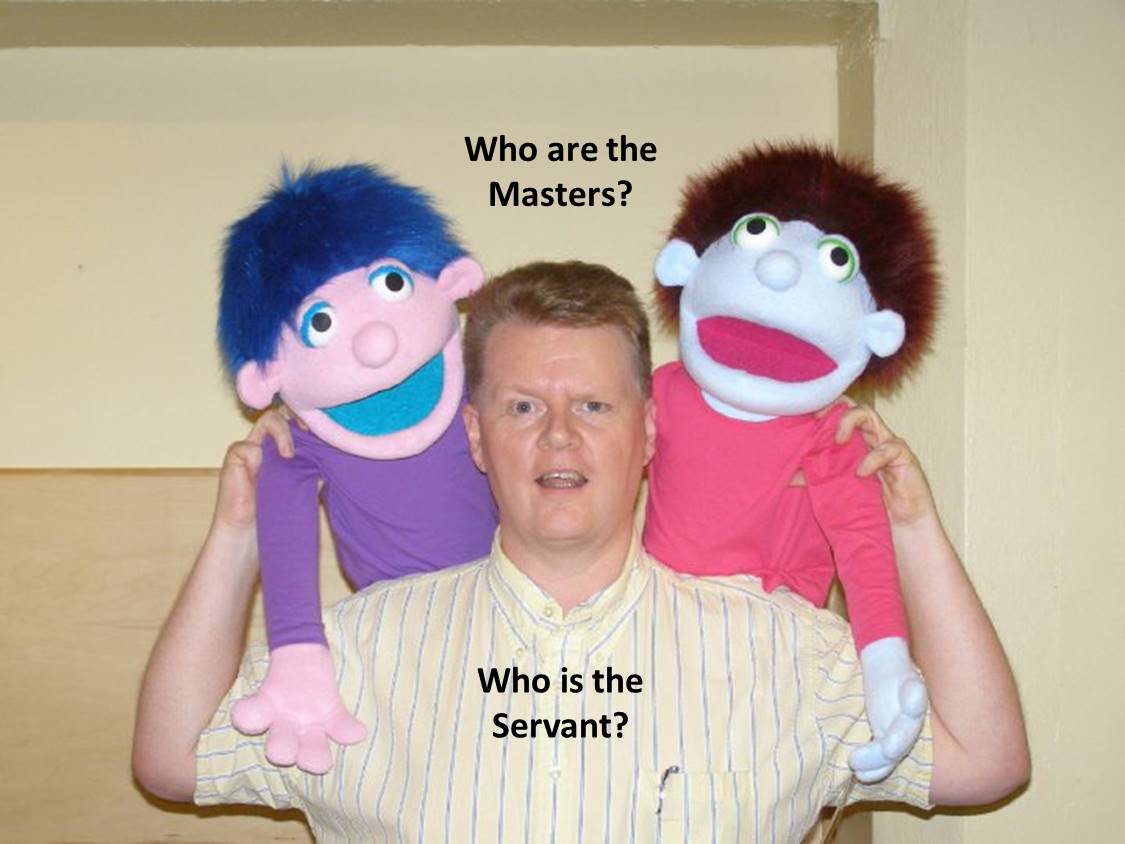
Trust me, the dictionary writers of the world have the concept of “puppet master” completely backwards.

Masterclass

To be fair, the Felties do sometimes come up with lines that are funnier than the stuff I wrote. But on the flip side, they get away with lines that no intelligent Fleshie could ever hope to pull off.

This has two impacts: 1) the Feltie doesn’t have to try very hard to get a laugh, and 2) they can be as crude, rude and insulting as they want, knowing everyone just thinks “awwww, how cute”.

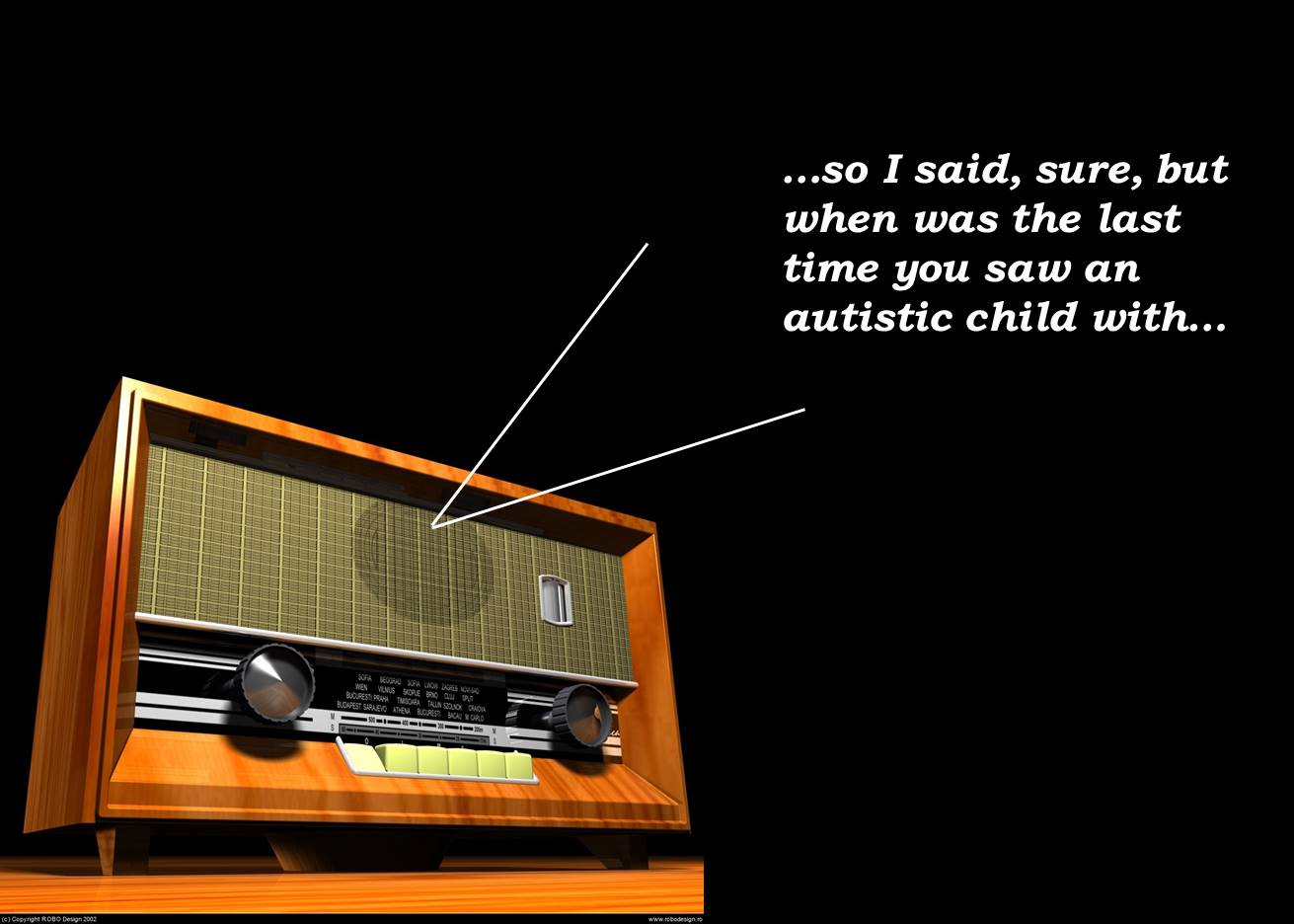
There’s a reason you don’t hear a lot of puppet radio programs…the shit they come up with is repugnant.

NPR = Nasty Puppet Radio

NPR = Nasty Puppet Radio

So, why do I stay? Why do I continue to write for these self-glorified hand-warmers?

Most days, I don’t know.

But then the rent comes due and I realize that my best chances at succeeding as a “comedy writer” is to have my words (or some semblance thereof) come out of a Feltie’s mouth…and those lint-sucking leeches know it, too.


SomeTV! is being produced by Lemon Productions Inc.

Like us on Facebook: SomeTV!Lemon Productions Inc.

Follow us on Twitter: @SomeTVNews

No

Not yet

I love what I do.

I love writing. I love coming up with new ideas to write. I love helping other people put their ideas into words and then into action.

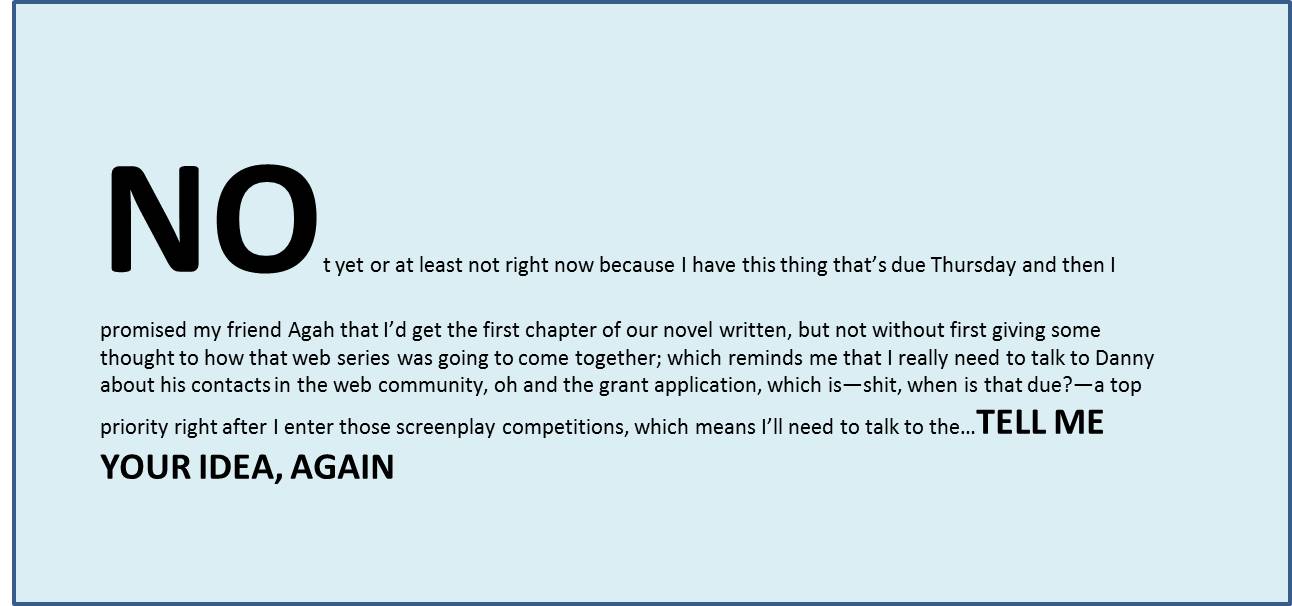
This is why I struggle with one of the shorter words in the English language: No.

Hello, my name is Randy, and I am addicted to new projects.

There was a time when my inability to tell people no stemmed from my fear of letting them down. Or more accurately, my fear of them never asking again and my value as a person being reduced to zero.

Not so now, luckily. Now, I find my value internally. I am, therefore I have value.

Interestingly, though, I still struggle to say no. But now, it’s a curse of enthusiasm and confidence, now fear and self-loathing.

And to complicate things further, that same enthusiasm and confidence attracts people who are more timid in one or both. People with ideas but lack voice, or with voice but lack means.

I am glad that they see me as a vector through which to explore and advance their visions. At the same time, I have to remember that my bandwidth is limited. It is less the hours in a day and more the daily ration of creative energy that limits me.

(BTW, this is why I don’t upbraid myself for spending hours on the computer or playing Solitaire. That is my period of recharge.)

At some point, I have to limit my involvement in others’ works. I have to save enough space for my paying gigs, lest I be hungry and homeless, and for my creative projects, lest I be frustrated and unhappy.

I have to say “No”.

You recently published a book and want to turn it into a screenplay? Great!

You’ve got an idea for a comedy sketch event? Fantastic!

I came up with another great concept for a movie? Congratulations! (Yes, even I drain my batteries.)

I’m not saying I won’t help, but don’t take it personally if I limit my involvement. It is not a reflection on you or your idea but rather on me and my limitations.

Today, I can work with you. Tomorrow, I may only be able to listen to you. The next day, I may not even be able to do that.

Oh, and I’ll do my best to recognize and respect those same boundaries in your life.

No doesn’t mean your idea sucks. No doesn’t mean I never want to work with you. No simply means I can’t, not right now, no matter how much I might want to. There are shades of No.

I can’t because I already have plenty on my plate. I can’t because I have to keep myself a priority. I can’t simply because I can’t.

But I wish you all the best in your efforts.

Yellow sub no2

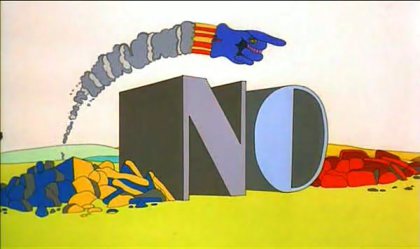
In a slightly unrelated brain fart, the concept of No reminded me of one of my favourite revelations from the movie Yellow Submarine, the animated Beatles film.

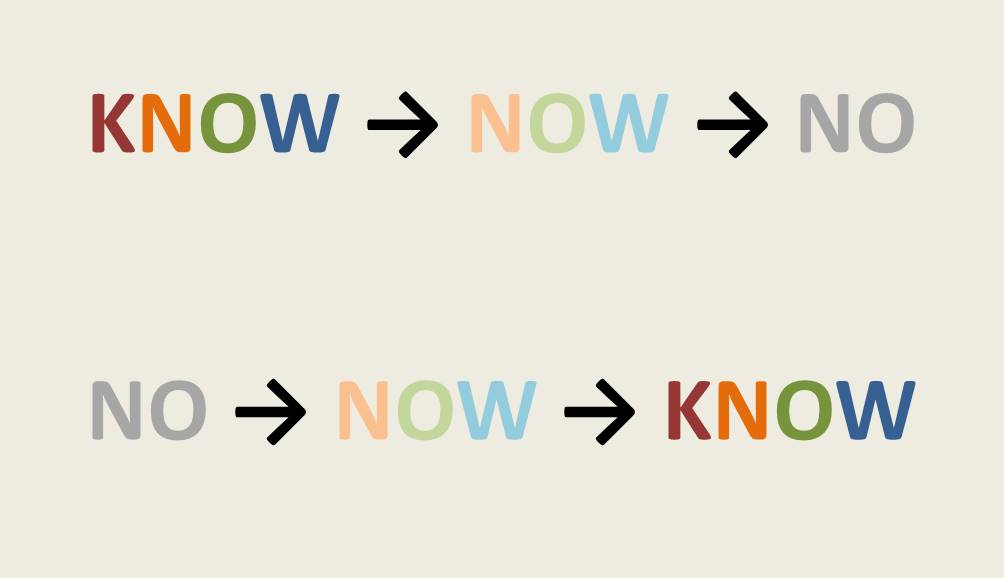
Early in the film, as the forces of evil are over-taking Pepperland, a ballistic glove called Glove chases people and smashes things with his giant fist, including the letters in the giant Technicolor word “KNOW”. First, he smashes the K to make the word “NOW”. He then smashes the W to make the word “NO”, which becomes black-and-white.

Late in the movie, when the Beatles—disguised as Sgt. Pepper’s Lonely Hearts Club Band—lead the people’s revolt to reclaim their land, the smashed letters reverse and become colour again.

What surprised me was that having watched the film at least a dozen times before, it wasn’t until late in my “adulthood” that I realized the message embedded within the two events.

No pic


Consider my mind blown!

Engage me, don’t yell at me

While on LinkedIn earlier today, an acquaintance posted the following image that has been circulating lately; an image humourously designed to explain social media.

Look at me!

Look at me!

What this also highlights, however, is our complete lack of understanding when it comes to social media…that it has to be social.

Well, it doesn’t have to be social. Plenty of examples on the Internet (probably some written by me) where an individual or company has used social media to scream out their own message, not bothering to wait for a response or worried whether they are engaging the individuals on the other end. Just one giant game of: Look at me! Aren’t I clever? Love me!

Again, I recognize my own culpability in this. I too can be accused of approaching social media like a dog barking at a window, with little or no concern about those at whom I am barking. I do my best to have a point and always enjoy engagement.

Social media should be about engaging and building a community of which you and I are just one member. It should be more about listening than talking. It’s about starting a conversation, not a speech.

Thus, I offer the following revision of the white board presentation above.

Look at us!

Look at us!

In social media, everyone can hear you scream…but how many of us are listening to what you are screaming?

(Of course, this could all be high-handed holier-than-thou BS…in which case, I expect you to hold me to account. Go ahead, prove me right!)

Screenwriting, not choreography

Write-dance

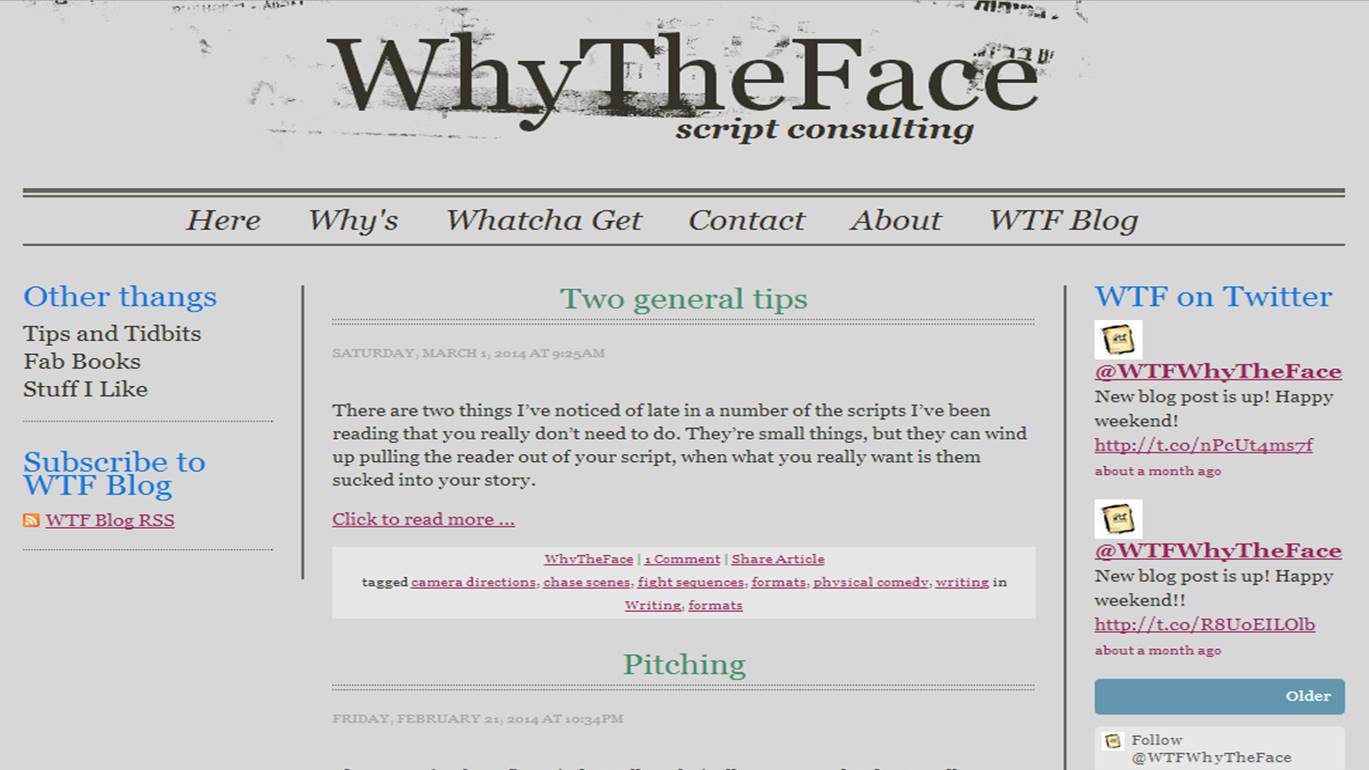
In her weekly blog Why The Face, my friend Marsha Mason (more “Hey, there!” than Goodbye Girl) hits briefly on two topics of particular angst in new screenwriters: camera directions and over-written action sequences.

For me, both of these come down to the same issue: the screenwriter’s need to choreograph his or her story so that the reader “sees” the movie as the screenwriter “sees” it.

Below, with permission, I have reproduced Marsha’s original post and my comments on it.

WTF

Why The Face, March 1, 2014:

There are two things I’ve noticed of late in a number of the scripts I’ve been reading that you really don’t need to do.  They’re small things, but they can wind up pulling the reader out of your script, when what you really want is them sucked into your story.

1) Camera directions: leave them out. When someone falls in love with your script, the director that attaches to it will be the one to figure out what camera angles they’ll use and when.

And…

2) Detailed descriptions of fight sequences/car chases/long physical comedy bits: once someone falls in love with your script, there will be stunt choreographers, fight directors, and your star actor/comedian, people whose specialty it is to design these sequences for the production, based on the needs/wants of the director/producer/star.

A better idea is to describe the feeling and the tone so the reader knows what you’re aiming for, rather than going on for a page or more.  Ie “An epic car chase ensues.   More Seth Rogen behind the wheel than Al Unser Jr., it goes for blocks, barely missing nuns and orphaned children.”

Essence of, then right back into your story.

My comments:

Couldn’t agree more. Too many people feel they have to direct their screenplay to ensure the reader “sees” what they “saw” in writing it.

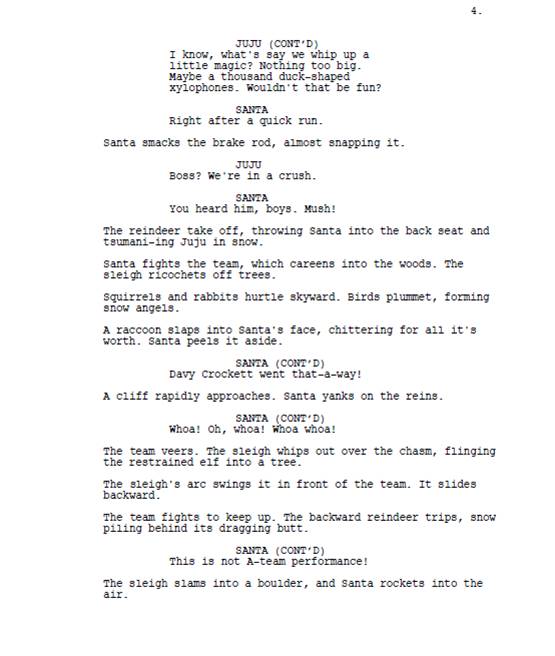
In a few screenplays I read recently, the writer went to great lengths to choreograph fight scenes, offering the minutiae of balletic movements.

“Raising his knee, he blocks X’s kick, and then twirls to chop X across the back of the neck. Stunned by the blow, X falls forward but recovers quickly enough to tuck and roll back to his feet. Etc. Etc. Etc.”

A fight sequence should have a sense of energy, urgency. These are people struggling. You want that to play out emotionally. You want the reader to break out in a sweat, his or her pulse elevating while reading the scene.

Instead, you slow down the reading with lengthy descriptions. The reader has to wade through line after line of description.

As Marsha describes, you can offer the fight in broader strokes to elicit feeling or tone.

Alternatively, you can present a sequence in short, staccato phrases and sentences. It is like having 20 hockey players firing pucks at you, at will. You become powerless in the onslaught, never precisely sure from where the next shot is coming.

Because the descriptions are short, they take little time for the reader to absorb before he or she moves onto the next one. Each line comes faster and faster, until the reader finds him or herself in the fight.

And then suddenly, it is over and the reader is left drained, but exhilarated.

In action sequences, less is more.

Sleigh


(Note: The above sequence is from my latest screenplay The Naughty List, a holiday-themed film for adults. Think The Santa Clause meets Good Morning, Vietnam.)

Rule breakers

Broken Rules Falls to Chaos Anarchy Pieces

Oil and water do not mix because, well, they are oil and water. This is a rule. We made a cliché out of it, so it must be a rule.

And yet, it is not a rule.

Oil and water can mix. You just have to screw around with it by adding another component to the mix…an emulsifier. True, this isn’t the same kind of mixture as blue Kool-Aid plus red Kool-Aid makes purple Kool-Aid, but the colloidal suspension of oil droplets in water is still a mixture.

So what about combining oil painting with water colour painting? Anathema, you say. They are two distinct media, you cry.

So what, I respond.

Because we’ve never seen it done (or at least, I haven’t), doesn’t mean that it cannot be.

Each medium offers its own strengths and limitations, and magnificent works have been created with either. Is there a way, however, to enhance those strengths, moderate those limitations by combining the media within a single work?

Every day, new rules are created, new schools of thought founded that try to define a panoply of Art forms. This is good, as these institutions form the parameters in which new Artists learn and understand their craft.

Can you imagine the panic of being told to go make art and being given nothing to do so: no instruction, no media, no resources?

And yet, those very institutions can strait-jacket the unwary and the unthinking, as rules become commandments rather than guidelines. When any attempt to step outside of the school is med with derision, contempt and blinkered exclusion.

The very congresses and champions established to support the growth and evolution of Art can easily become the prison wardens of that Art, confining aberrant Artists in an attempt to petrify the one true form.

(By the way: The same is true for Science, where journals and textbooks are rife with examples of explorers being squashed for daring to suggest something that didn’t fit within scientific canon.)

It would be naïve and harmful to suggest that rules should not only be broken, they should be shattered. If you wrote a novel using numbers rather than letters, you might find a very small audience for your work and little understanding from peers. There is much to be said, however, for grazing, nicking or wounding the rules.

Rules should be constantly questioned, viciously challenged if Art is to evolve. Without such a challenge to the nucleotides that comprise our genetic material, we would not exist and the planet would be lifeless.

But just as we demand mutation and adaptation to facilitate Artistic evolution, so must we accept the other half of the Darwinian equation. Only those most fit to survive will. The majority of mutations and adaptations will be for naught and that Art will perish.

It is a harsh reality, but look at what it has wrought in just 40,000 years since humans first applied colour to walls.

All this to say, break some rules. Test the limits. It is your evolutionary destiny as an Artist.

Break-the-Rules-e1331912129855

(Images are property of owners and are used here without permission and against the rules.)

Failure is not an option…it’s a skill

Fear-of-failure

I used to be terrified of failure. If I couldn’t know that I would succeed at something, I would put it off and potentially never do it.

And this was true in all aspects of life.

Driving. Dancing. Playing musical instruments. Talking to girls and later women. Athletics.

I became the best I could at one or two things—the things for which I seemed to have a natural aptitude—to avoid having to worry about being asked to do any of a thousand other things.

To me, failure was not an option. (I could spend months discussing why, but I won’t…at least, not here).

It has taken me a long time, but I have finally realized that I was only half right.

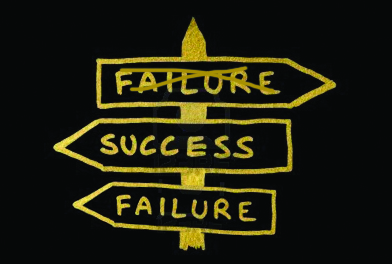
failure_success

Failure is not an option…it is an imperative.

It is a skill that I must practice time and time again in all aspects of life.

At its simplest, if I succeeded at everything to which I turned my hand, I would stop doing it.

I succeeded. I achieved my goal. What more could I hope to accomplish? Everything after that is pure redundancy and repetition.

When harnessed, however, failure and imperfection can be that thing that drives me forward, when purely creative urges do not.

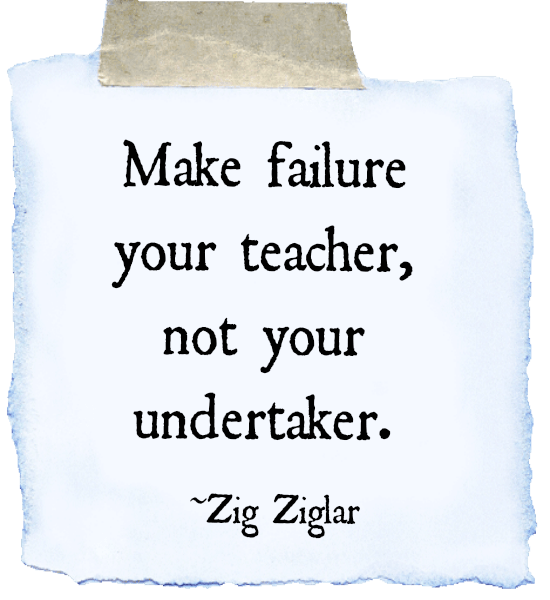
ziglar

Failure is my teacher. Failure is my drill sergeant and mentor. And yes, failure can be my devil.

Perfection is an illusion and is therefore unattainable. This means that even at our zenith, we have failed. So what?

Even if we do not strive for perfection, but for an attainable, measurable goal, we are likely to fail if for no other reason than once we have achieved that goal, we instinctively move the goal posts. Our best is always a thing of the past and acts as a goad for us to do better.

Herein also lays the further challenge of failure in Art. There typically is no real metric other than external opinion. Rare is the individual who targets using 7.83% magenta in his next painting.

coyote

Wile E. Coyote is about the only artist I know who can actively test the realism of his Art. He has achieved his goal if the Roadrunner runs into the cliff wall painted to look like a tunnel. Ironically, his downfall was the hyperrealism he achieved such that the painting actually became a tunnel. In succeeding, he found failure.

Where I used to fear failure, I now embrace it. I use it to stretch myself and my skills. I use it as a lesson plan.

Failure-is-not-falling-down-but-refusing-to-get-up

But for this to work, I must envision failure as something internal and self-defined rather than something external and based on the opinions of others. There lies madness.

Yes, I rely on feedback garnered from others to determine my degree of success, but I do not allow others to define that success.

It is my Art. I define it and in doing so, define myself. And to do that, I must fail and fail again.

failure-and-success

(Images are property of owners and are used here without permission, which may be an epic failure on my part.)