Phoenix

Image

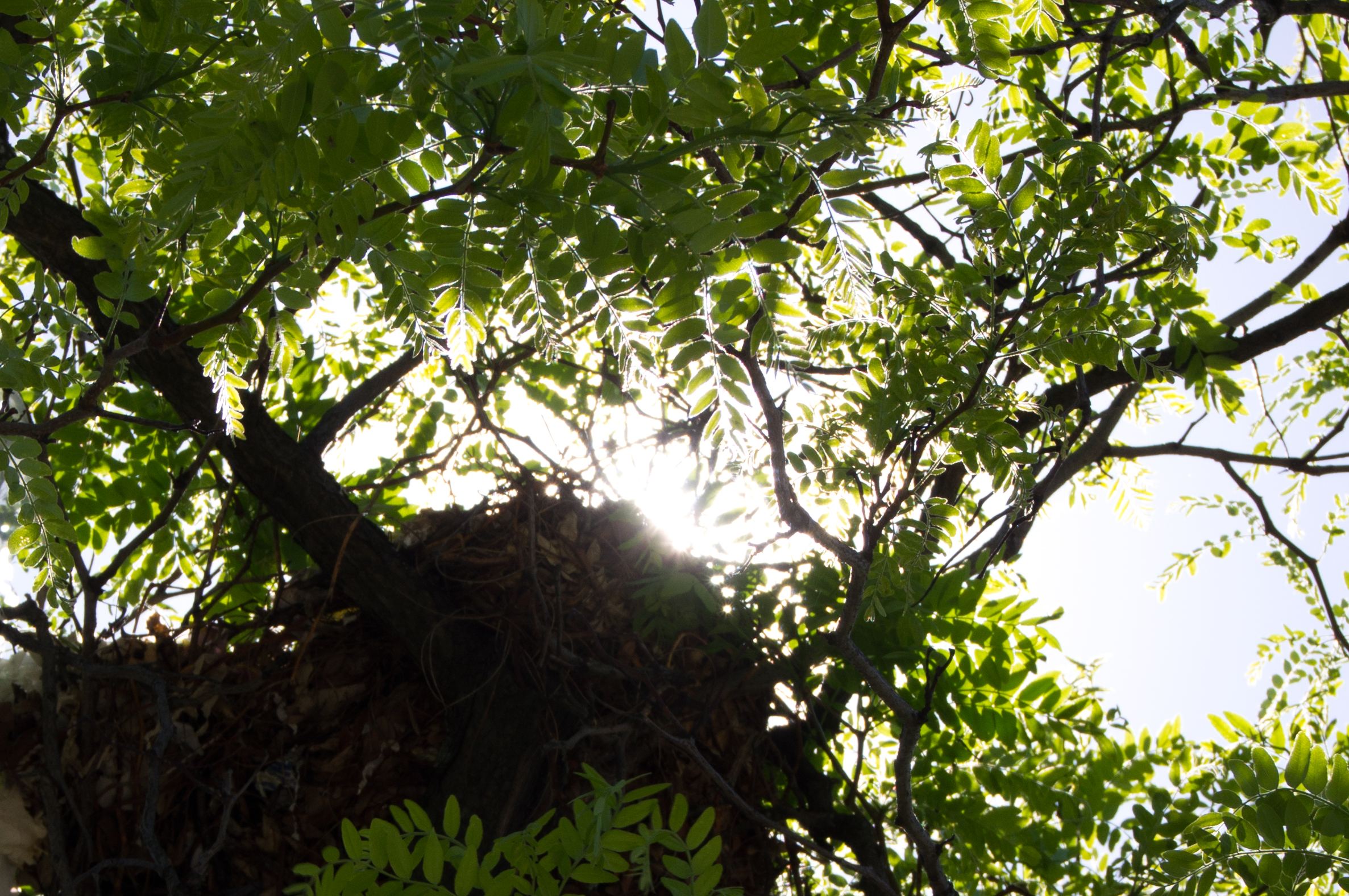
The phoenix rises,

Feet firmly planted

In death and decay,

To stretch its wings

And catch the rays

Of life-giving Phoebus.

Wind rustles quiet

Giving brazen birth

To feathered choirs

Of heavenly song.

A magic silhouette

Shadows the orb.

Earth is forgotten

In a leap of faith.

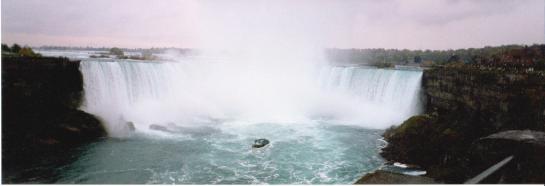
RC Scanner – Northern British Columbia

Again, apologies for the quality but these are 20 year old photos on a scanner not meant for photos.

A trip literally around the province of British Columbia with friends.

Based on my true story

Image

As I wrote yesterday in “Write what you…No!”, I wanted to talk about a variant of writing on a topic in which you have expertise: the true story.

Now let me start off by saying that I have never written anything directly lifted from a true story—at least never attempted to fictionalize one—but I have spent the better part of two years listening to people try to do same, and it seems to me the effort is fraught with pitfalls.

(Ironically, however, I am about to start a project with someone that will be based on his true story, so let’s see if my attitudes change once I’m on the inside.)

The biggest challenge I have seen is that many novice writers forget that they need to tell a story. On the surface, that may sound ridiculous. It is a story. I know. I was there. The problem it seems is that a lot of writers try to chronicle the actual events that occurred rather than try to tell a story. That is a history, not a story.

It’s like sharing a joke with someone and having a third party enter asking what’s so funny. When you think about it, you realize the joke itself is not the funny part and you respond “You had to be there.”

The same holds true for the true story. With rare exceptions, while experiencing the actual events, you experienced emotions and actions that are just too difficult to translate into a narrative. And without your context, the audience loses something.

Likewise, you may be leaving out critical facts that are obvious or second-nature to you but elude us. When this happens, characters do not feel fully developed or plot points don’t seem connected, because we don’t instinctively see the link.

And ironically, despite what I just said, novice writers working on such stories tend to want to stick to the facts as they know it to the detriment of any sense of story…they refuse to fictionalize their story beyond changing names, settings and the odd plot point because to do more would be to remove the truth of their experiences.

Let me give an example.

A friend of mine was trying to develop a screenplay about a family coping with young adult son with a psychological disability, and the young man’s attempts to find his personal space. It was very well written, but at least in its initial stages, it felt like there were plot and motivational holes throughout the manuscript. As we discussed it in class, we learned that this was effectively a fictionalization of the writer’s family.

In her manuscript, the protagonist—the young man—was largely shut down from his family and even they largely repressed their feelings with each other as a coping mechanism. As an audience member, this made it difficult to get into the characters and rather than feel empathy or any form of connection with the protagonist, he just pissed many of us off. We hadn’t lived the experience the writer had, so we couldn’t see her story the way she did.

Try as we would to get the writer to see our dilemma, she was equally adamant that to make the protagonist any other way would make him unrealistic given his condition; a defensible position within limits. She couldn’t let go of enough of the truth to develop a story.

The story must come first if you ever hope to engage an audience. Even fact-laden documentaries and news items focus on a story or narrative. Without that, you are reading a dictionary or encyclopedia entry.

The truth or reality of your personal experiences are vitally important, but only in so much as they are used to bolster or support the story you are trying to tell. It is almost impossible to successfully do it the other way around.

(Image used without permission, and that’s my true story.)

Write what you—No!

Image

The adage I hear a lot in writing circles and books is “Write what you know”. By that, people mean write about the things for which you have a passion, because that passion for the subject will shine through your writing and become infectious to your reader or viewer.

To a large extent, I agree with this sentiment, but I think there has to be codicil. When you know how to write, write what you know.

Let me explain with an anecdote.

When I first started writing, I was coming out of a career as a biochemistry researcher who had spent the bulk of my training in protein biochemistry and genetics. That was where my passion lies. So, perhaps as no surprise, when I decided to become a science writer, I focused much of my initial energies on writing about protein biochemistry. I understood the science; I could see the story quickly; I could write about it with some fluency.

Unfortunately, despite or perhaps because of my passion and fluency, I was completely unreadable to anyone who wasn’t already a protein biochemist. I wasn’t speaking to my audience in terms they could understand but rather in terms I could understand. To a greater or lesser extent, I might as well have been writing in Klingon, which I suspect would have given me a broader audience.

When I finally realized what was happening—thanks to all of the people who beat me about the head—I made a pact with myself. Until I felt that I could really tell a story, I would do my best to avoid writing anything about that at which I was most expert. I had to become my audience: the relative non-experts.

About a year into writing about topics I had to research and for which I had to ask potentially stupid questions, my writing had matured to the point where I could go back to my area of expertise and approach it in the same way. I had finally arrived.

I think the same holds true for any kind of writing, whether news, novels, screenplays, blogs.

Until you are capable of telling a story that your audience can decipher, and more importantly wants to read, you are probably better served to stay away from the topics you know best. To do otherwise means running the risk that you will leave out the “obvious” and the “well, yeah” that you know in your bones, but that could be vitally important to an audience member trying to understand why certain facts or behaviours in your story exist.

Give yourself—and by extension, your audience—a chance to learn your story, to experience it at a visceral level. As you develop your story, you’ll likely find yourself asking questions of your plot or characters that your audience would ask. You want your audience to think, but you never want them to have to research. Until your work becomes part of a school curriculum, it shouldn’t require a study guide.

It is easier to remove the truly superfluous common knowledge or understanding later than it is to convince yourself that the information you need to add isn’t common knowledge.

When you are ready to tackle it, the subject(s) for which you have passion will still be there. Consider them the reward for all the hard work you did up front.

In a future post, I hope to discuss a flavour of this topic: “Based on a true story”.

Tips to jump-start your writing (unless you’re in Arkansas)

This is so brilliant and funny that I have decided Ned must have stolen it from me! 😀

Ned's Blog's avatarNed's Blog

They say change is good, especially if there’s a nickel involved. Why a nickel? Because that’s all you need each Friday for Ned’s Nickel’s Worth on Writing! For newcomers, this is the day I share my collective wisdom from 15 years as a columnist and share it with you, at half the price of my hourly wage! Here are a just a couple of testimonials from regular readers of Ned’s NWOW…

I discovered this website totally by accident — I haven’t slept since
Thanks to what I’ve learned from Ned’s NWOW, I’m now pursuing a rewarding career cleaning hazard cones!

Enough accolades! Let’s get to it…

image There’s nothing quite like staring at a blank page, knowing that with a few strokes of the keyboard you will transform a landscape devoid of life into a living, breathing thing of your own creation. There’s also nothing quite…

View original post 1,172 more words

Courage

Reaching up to the stars or down to a child

Image

Standing at the peak or sitting in protest

Image

Achieving your glory or starting from scratch

Image

Leading your team or following your dream

Image

Crossing the finish line or starting over

Image

There are all kinds of courage


(Images used without permission but with plenty of gratitude.)

Brand New Skin: Editing A Zero Draft

A Zeroeth Law of Writing.
Writing those initial words is like a trust exercise that has gone horribly wrong because you never quite hit the ground, but rather keep spinning until you puke something out (how’s that for metaphor goulash?).

bareknucklewriter's avatarBare Knuckle Writer

There is a shitty part about doing a zero draft, and it is this: sometimes you have to look at a mess you’ve made and realize you’ve now got to make something worthwhile out of it. And, fuck, that seems like a lot of work.

Funny, the idea of just writing it the right way the first time around never seems like as much work. Just think it out until it all lines up perfectly and then write it. Right?

If you can actually do this, then I salute you. Also, I’m probably going to hunt you down and eat your brain in the hopes of gaining your powers.

Zero drafts are a mess. They’re stories without their skin on, just the bones and blood and unidentifiable bloated squashy bits all kind of hanging together in a semi-cohesive shape. It’ll fall apart if you so much as look at it…

View original post 220 more words