Birth of a reader

Okay. I admit it. I have a book problem.

I, Randall (Randy) C Willis, am a book addict.

In my defense, it is my mother’s fault…she was my first dealer.

From my earliest days, I remember being surrounded by books…books purchased for my enjoyment and edification (I read that word in a book).

Books were my companions. Books were my connection to the greater universe. Books were my babysitter. Books were my escape. Wherever my books are, that place is my home.

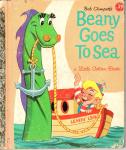
As I said, my mom started the process, as seen below in scans of some of my earliest books. Each of these volumes was published within a couple years of my birth, and either my mother or I have schlepped these things around for almost five decades.

I still smile as I flip through the Counting Book, testing my acumen. So far, so good.

And I sit in awe of the Adventures of Beany & Cecil, which was way too hip for kids as a short trip down YouTube indicates.

At the peak of my addiction, I think I owned 3000 books, give or take. I am presently sitting around 500, the rest being donated over the years to Good Will stores in Canada and the United States.

I know libraries exist, but in a twisted way, that would be like going to a strip club or brothel. A bibliographic quickie instead of a committed relationship (told you it was twisted).

No, I’ll stick with my books, thanks. Constant companions in an inconstant world.

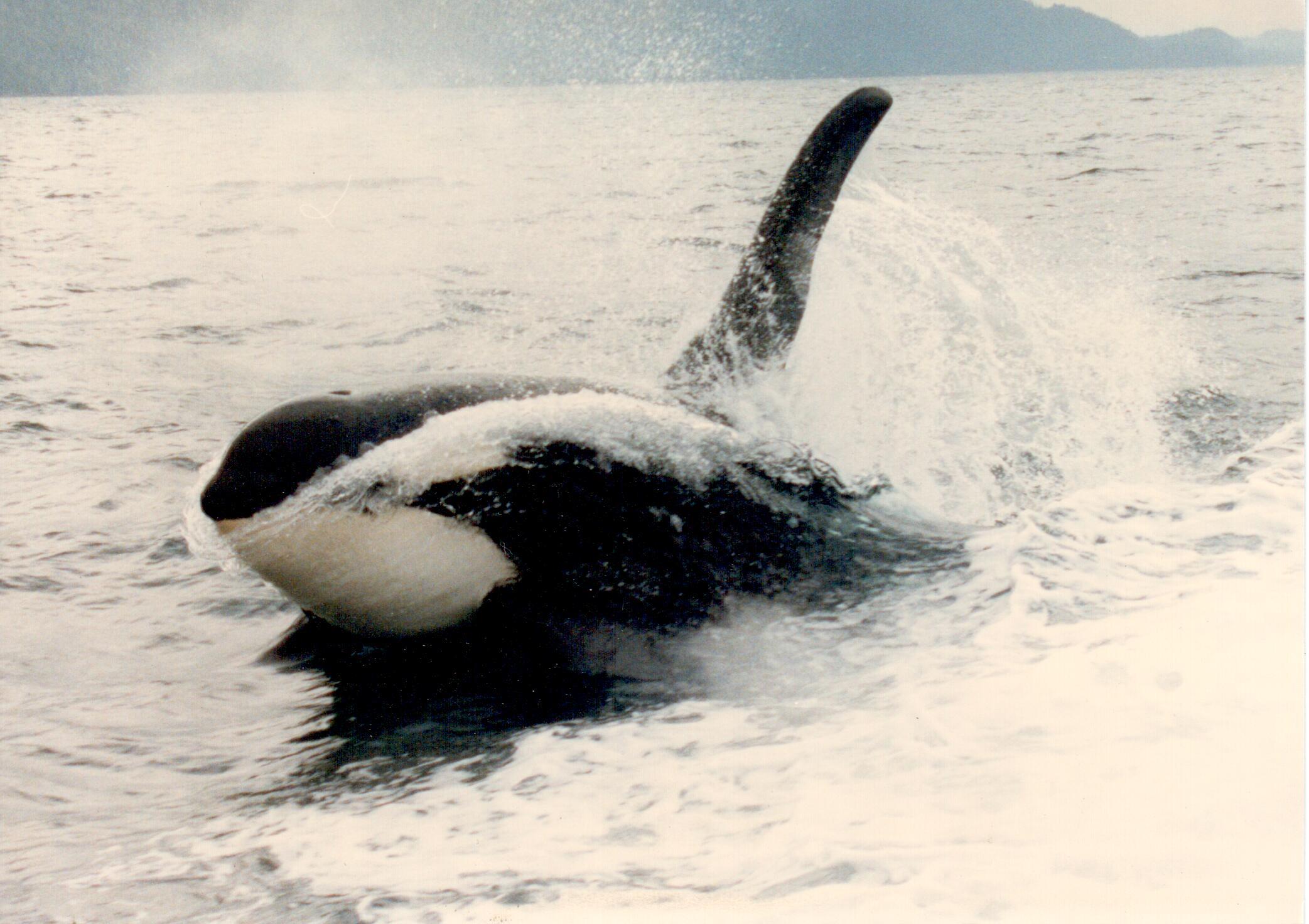
Found it!

I was sure that I only had the one framed print left…convinced that I had lost the negative and other prints. The most amazing photo I have taken so far in my life.

I’ve taken better photos since that day 20 years ago, but never have a taken a photo where I was willing to sacrifice all other photos for this ONE to turn out. (For the young ones out there, back in the day of film, you had to wait quite some time to know if a photo turned out.)

But while pouring through a box of old photos this past weekend, I found both another copy of the photo as well as the negative! OMG! Woohoo!

Image

Taken on an orca-watching trip through the Inside Passage between Vancouver Island and the British Columbia mainland, near Port Hardy.

I was ready to let the photo gods kill the other 14 rolls of film I took on that trip for this one moment to work…and it did.

If you told me that as of tomorrow, I would never be allowed to take another photo in my life, I would be saddened but satisfied that I had at least taken this one.

Packing it in

Cardboard conundra;

A thousand puzzles

Demanding attention.

Sticky fingers clawing

Invisible seams;

Tortured screams

Muffle buried treasures.

Swaddled icons

Nestled strategically;

Memories layered

On things forgotten.

The paper-laden tomb

Of a modern day pharaoh;

Heiroglyphic notes

Of fumed pitch.

Life in a box

Awaiting release.

Image

Patterns and redirections

Sometimes things just don’t look right when you’re taking a walk, or they can seem to lead your mind one way and then switch-back in another direction.

I had a few of these moments in my recent walk through downtown Toronto.

Unintended misogyny

According to the Cambridge Dictionaries Onlinemisogyny (n) Feelings of hating women or the belief that men are much better than women.

Image

Let me state for the record that I do not hate women, but over the last decade or so, I have come to realize the insidious ways in which I felt (or made it appear that I felt) men to be superior to women.

As a male writer, I have historically written stories from the male perspective. My protagonists were male. My antagonists were male. My peripheral characters were predominantly male. And when I did include a female character, she tended to be rather two-dimensional (see also my blog post For my friend Emma).

Several years ago, I had the fortunate happenstance to take a sketch comedy writing class at Toronto’s Second City Training Centre under the guidance of actress and writer Aurora Browne, best known locally as one of the actors from the show Comedy Inc. and former mainstage performer at Second City. Perhaps not surprisingly, the class was mostly comprised of men. And to a man, we wrote sketches about guys.

After the first couple of classes, however, when we had each produced a few sketches, Aurora challenged the men in the room to either rewrite one of their existing sketches or write a completely new sketch with a woman (or several) in the lead.

It was at that moment that I realized my unintended misogyny.

Aurora was tired of trying to find material with strong and/or well-defined female characters. She was tired of simply playing the girlfriend, the ex-wife, the nurse, the teacher. Not that there was anything inherently wrong in playing any of these roles, but more that they were almost always written as two-dimensional…if they could even be said to aspire to a second dimension.

This was her opportunity to put her heels into the dirt in moulding the next generation of comedy writers.

From my perspective, the task was amazingly daunting and very surprising, as I found myself breaking down walls and obstructions I never realized I had put in place. I had to think how might a woman character function differently in this scene, without getting cliché, and how would that change the dynamics of the scene. Or even would it?

In the years since, no matter what I write—sketch, screenplay, teleplay, poem—I watch for places where I might fall into gender bias. The minute I decide on my main characters, I ask myself if the protagonist or antagonist could be a woman (sadly, I still typically default to males). If the answer is yes, then I take a second run at my idea to see which way would make for a better story.

As a result, I have both dramatically increased the repertoire of characters I can bring to life and greatly enriched my stories. In fact, the two most recent screenplays I am developing have female protagonists, as do a couple of my television pilot concepts—not out of a sense of political correctness or fairness, but because those choices made the most sense for the story.

So thanks, Aurora, for the creative kick upside the head.

(Illustration used without permission.)

Errand air alike

Early yesterday, I had an errand to run that would involve a 45-minute round trip walk, so I decided to take my camera.

Annoyingly, the subject of my errand was not available when I got there (ironically, a photograph) but my little walk ended up being a 2-hour tour of the area.

Over the next couple of days, I will post a selection of the photos taken, but here’s the first batch: The birds and the bugs.

For my friend Emma

…and all my other female actor friends and colleagues, a simple request to storytellers and writers:

When creating a female character for your story (or any character, for that matter), please describe her in terms that reflect who she is and not in terms of how she relates to another.

Image

Phrases like ex-girlfriend or soccer mom provide only a limited degree of context and tell us nothing at all about your vision for that character.

Is she a psychotic Glen Close type of character or is she a nurturing Barbara Billingsley type of character?

To what does she aspire?

If presented with a spider, she would [fill in the blank].

Around a board room table, her position would be [location], she would be dressed [adjective], her posture would be [adjective] and her eyes would express [noun].

If the character is important enough to move your story along, the character is important enough to be a human being (or whatever species you are dealing with).

If not, then you probably don’t need the character in your story.

What more did you need?

Image

There is an allegory that was better told by Karl Malden on The West Wing, but it goes something along the lines of:

There was a man who lived by a river, and one day, he heard a weather report that said the river was going to flood and that everyone should move to higher ground. A devout man, he said, “God will protect me. I do not have to leave my home.”

The rains started and a policeman came knocking on the man’s door, telling him he had to evacuate. The man smiled and said, “The Lord will protect me. I’ll be okay.”

The river flooded and the man was stranded on his roof, when a rescuer in a boat rowed by, telling him to get into the boat. The man shook his head and said “I have prayed and God will protect me.”

Eventually, the river swept the house away and the man drowned, and when he got to heaven, he stood confused before God and asked, “Lord, you let me drown. I am a good man, why did you not protect me?”

And God looked down and replied, “I sent you a weather report, a police officer and a rescuer in a boat. What more did you need?”


I recount this story because I have a colleague who is going through similar stages with her screenplay.

After months of feedback from writing groups and instructors that suggested several issues with her screenplay, the most prominent being the passivity of her protagonist and complete lack of conflict in her story, my colleague stood fast by her story. She defended her choices vigorously and left us in no doubt that she was going down the right road.

As it is her story, that is her right, and so many of us stopped discussing these issues with her.

More recently, she’s had the opportunity to send her screenplay to a film producer she knows, who was more than happy to give my colleague her thoughts. A few days later, she shared the feedback with us and smack in the middle was several issues related to the behaviour and actions of the protagonist. My colleague was unimpressed and vaulted upon her Steed of Rationalization, charging into the night.

A week or so later, my colleague received feedback from a film director and again, was smacked with a lack of central conflict and a passive protagonist. And again, this elicited response of being misunderstood and dismissive anger.

And the screenwriting gods looked down and replied, “I sent you a screenwriters group, a film producer and a film director. What more did you need?”


We all want people to agree with our views, particularly when it comes to something as personal as our art. Agreement validates us as individuals and confirms that our art has merit in the world beyond.

But in the search for that agreement, we must be prepared for disagreement. And while it is always our prerogative to ignore contrary opinions, we lose the right to complain when the contrary feedback is consistent and still we choose ignore it (or worse, rail against it).

I don’t believe that anyone has to accept external feedback; positive or negative. But if you want your art to be more than mental masturbation, you should be prepared to listen to all input and incorporate what makes sense to improve your art.

Otherwise, shut up and let the rest of us evacuate the flood plain.

Blogging and Writer’s Insecurity

An interesting take on the insecurity that comes with opening your soul and worrying that no one will care.

Kira Lyn Blue's avatarkiralynblue

4writingstages_005-400w

Edit: This post is now subtitled:

You’re Not Your F%$^ing Blog Stats!

I’ve noticed something. Blogging is a microcosm of the emotions I have about writing in general. This is probably a good thing, because having the blog is helping me deal with my insecurities in small bites, a few at a time rather than being inundated all at once if I just went out and attempted to publish my book without the blog.

Writer Insecurity #1: What if no one wants to read my stuff?

It’s only human to be frustrated when you have something to say and no one to listen. You ever have a really good idea and then try to take it to a friend, coworker or spouse and have them just respond as with a “Ok, sure,” and a shrug? It’s demoralizing when your great idea does not generate the same enthusiasm in other people.

View original post 880 more words