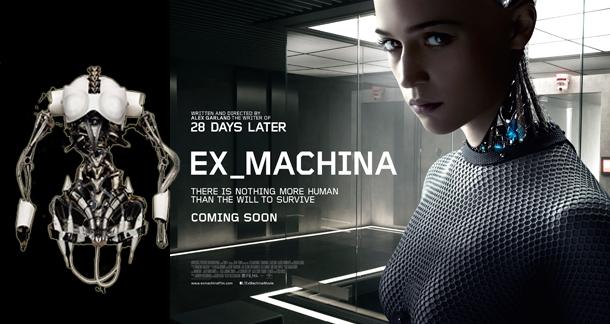
As someone who works and recreates in the Arts, I have struggled to make sense of the current conversations about the roles or sins of artificial intelligence in the creative arts, however you might personally define those.
Like many in my fields, I have worried that AI tools were going to pick my pocket or put me out of work. And I have worried about the dumbing down, the dilution, the commoditization of the Arts.
What a load of egotistical bollocks on my part!
As I said, I work and play in the creative arts. For me, that involves writing pretty much anything that can be written, live storytelling, and improvisation, and I dabble in filmmaking, drawing, and even singing. And I consume most of the creative arts in one way or another.
But is any of this Art, deserving of the capital A? I’m not sure that I care.
I enjoy what I enjoy and don’t what I don’t. I hope the same is true for you. If our choices overlap, great. If our choices completely conflict, great. I am just happy you have found things that make you happy.
At the risk of offending the artists I follow, I suspect that The Establishment – that mysterious arbiter of acceptable tastes – would call most of what I like pedestrian – as if there’s something wrong with walking – or outright trash.
I read thrillers and Shakespeare. I follow and own prints and paintings by street artists. I love The Three Stooges and The Flying Circus. And my musical tastes range from Gregorian Chants and Bizet to The Monkees and Ray Stevens (YouTube “The Streak”).
For its part, can anything I create be described as Art? Again, I am not sure that I care about the uppercase A or that I am truly in a place to judge.
Some of my writing has been brilliant, says me and, on occasion, others. Most of my writing has been serviceable, passable, or utilitarian. And quite a bit of my writing has been weak, bad or downright embarrassing. (I leave your opinions of this piece to you.)
I enjoy my live storytelling and improv, but not every story or set comes off or is received as I might hope. The same is true for my other artistic efforts.
And most of the planet’s population will never experience any of it. (Thank you for experiencing this.)
So, what does my creative resume have to do with AI?
Two things: One, the concept of “big A” Art is hubris of the highest order and exclusionary. And two, the artistic merit of anything is a personal decision rather than something with tangible metrics.
Art evolves with every passing generation because tastes evolve with every passing generation. In some ways, Mozart was the Ray Stevens of his era and The Abduction from the Seraglio is his Gitarzan, a piece of music considered frivolous by “those who know” and yet highly successful in its time.
Charles Dickens and Arthur Conan Doyle were newspaper serialists long before their works were considered classic literature. And most famous crime and science fiction writers published chapbooks – aka “cheap” books or pulp fiction – before they became known as Masters of their genres.
AI, like the printing press, is simply a tool that facilitates the production of creative arts on a scale not previously imaginable. Whether the output of that production is “good” rests soundly in the eyes and ears of the beholders, just as communities once warned of the sins of comic books and English translations of The Bible.
I do not actively use AI tools in my creative arts – I even avoid the AI results of a Google search – not because I think AI is evil but because I have not found a use-case for AI. The typical reasons most use AI, it seems, actually serve to replace the steps that I find make my creative artistry most enjoyable.
That said, I appreciate that not everyone thrills at the sight of a blank page like I do. Not everyone has the same confidence in their passions or themselves that I have developed. I meet many of these people when I teach a screenwriting class or improvised writing workshop. And I personally know the hesitation of self-doubt in attempting creative arts I consider outside my natural skillset.
If AI tools serve as a gateway for self-expression for these souls, I am all for it, and I will support and encourage them just as I would support and encourage those who choose to experiment and risk failure under their own steam.
And if AI tools are used to mass-produce materials – aka Content – to be consumed by the seemingly bottomless pit of the online world, so be it. People, including possibly me, who want it, will consume it. And maybe it will whet consumers’ appetites for creative arts produced by humans. Maybe even for mine.
Although there remain environmental and intellectual property factors to consider in choosing to use AI tools, the artistic (or Artistic) merits and values of what it produces seem trivial and egocentric to me.
Over my lifetime, I have consumed trillions of words by seasoned and novice writers. I have seen pens, pencils, and keyboards used to stunning effect, in both the positive and negative sense. I expect no different of the words generated by AI tools.
I wish any creator, any artist using any tool much joy in the creative process, whatever theirs might be. And I look forward to making up my own mind on their end product, however it came to be, no capital A required.
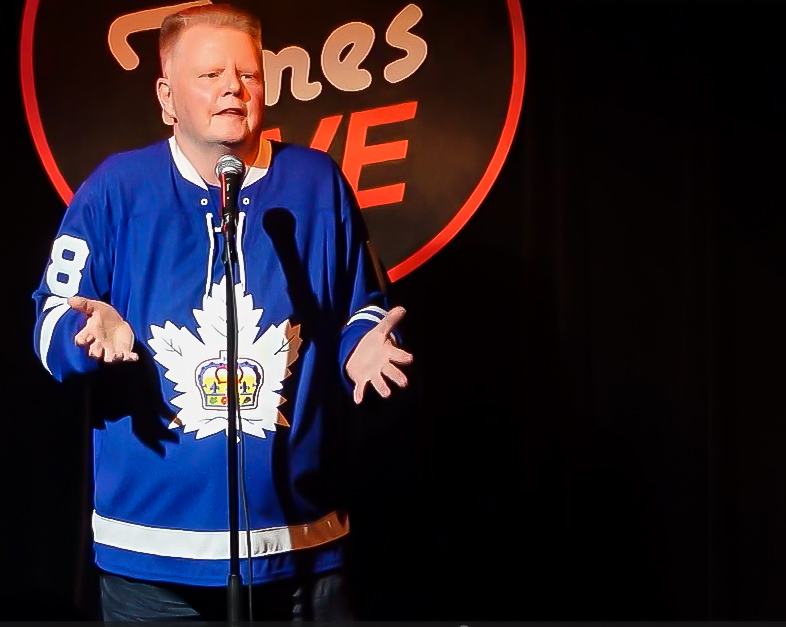
Who is this guy?
An award-winning screenwriter and filmmaker, Randall C Willis has told stories his entire life, writing for every medium, but has recently caught fire live on-stage. He describes himself as a story evangelist, a practice that he preaches as a screenwriting instructor at George Brown Polytechnic. In January, Randall launched the workshop Out of Our Minds and Onto the Page, which fosters freewheeling creativity and spontaneous storytelling using improv games and writing sprints. And through his company So, What’s Your Story?, he helps storytellers of all media to find their voices and explore their ideas.
Randall has told stories across Toronto, grateful to take the spotlight at Funny Bone, Listen to This, Page to Stage, Tales Toronto, The Yarn, Tight Five, and Replay Storytelling.