Is AI art Art? Who cares.

As someone who works and recreates in the Arts, I have struggled to make sense of the current conversations about the roles or sins of artificial intelligence in the creative arts, however you might personally define those.

Like many in my fields, I have worried that AI tools were going to pick my pocket or put me out of work. And I have worried about the dumbing down, the dilution, the commoditization of the Arts.

What a load of egotistical bollocks on my part!

As I said, I work and play in the creative arts. For me, that involves writing pretty much anything that can be written, live storytelling, and improvisation, and I dabble in filmmaking, drawing, and even singing. And I consume most of the creative arts in one way or another.

But is any of this Art, deserving of the capital A? I’m not sure that I care.

I enjoy what I enjoy and don’t what I don’t. I hope the same is true for you. If our choices overlap, great. If our choices completely conflict, great. I am just happy you have found things that make you happy.

At the risk of offending the artists I follow, I suspect that The Establishment – that mysterious arbiter of acceptable tastes – would call most of what I like pedestrian – as if there’s something wrong with walking – or outright trash.

I read thrillers and Shakespeare. I follow and own prints and paintings by street artists. I love The Three Stooges and The Flying Circus. And my musical tastes range from Gregorian Chants and Bizet to The Monkees and Ray Stevens (YouTube “The Streak”).

For its part, can anything I create be described as Art? Again, I am not sure that I care about the uppercase A or that I am truly in a place to judge.

Some of my writing has been brilliant, says me and, on occasion, others. Most of my writing has been serviceable, passable, or utilitarian. And quite a bit of my writing has been weak, bad or downright embarrassing. (I leave your opinions of this piece to you.)

I enjoy my live storytelling and improv, but not every story or set comes off or is received as I might hope. The same is true for my other artistic efforts.

And most of the planet’s population will never experience any of it. (Thank you for experiencing this.)

So, what does my creative resume have to do with AI?

Two things: One, the concept of “big A” Art is hubris of the highest order and exclusionary. And two, the artistic merit of anything is a personal decision rather than something with tangible metrics.

Art evolves with every passing generation because tastes evolve with every passing generation. In some ways, Mozart was the Ray Stevens of his era and The Abduction from the Seraglio is his Gitarzan, a piece of music considered frivolous by “those who know” and yet highly successful in its time.

Charles Dickens and Arthur Conan Doyle were newspaper serialists long before their works were considered classic literature. And most famous crime and science fiction writers published chapbooks – aka “cheap” books or pulp fiction – before they became known as Masters of their genres.

AI, like the printing press, is simply a tool that facilitates the production of creative arts on a scale not previously imaginable. Whether the output of that production is “good” rests soundly in the eyes and ears of the beholders, just as communities once warned of the sins of comic books and English translations of The Bible.

I do not actively use AI tools in my creative arts – I even avoid the AI results of a Google search – not because I think AI is evil but because I have not found a use-case for AI. The typical reasons most use AI, it seems, actually serve to replace the steps that I find make my creative artistry most enjoyable.

That said, I appreciate that not everyone thrills at the sight of a blank page like I do. Not everyone has the same confidence in their passions or themselves that I have developed. I meet many of these people when I teach a screenwriting class or improvised writing workshop. And I personally know the hesitation of self-doubt in attempting creative arts I consider outside my natural skillset.

If AI tools serve as a gateway for self-expression for these souls, I am all for it, and I will support and encourage them just as I would support and encourage those who choose to experiment and risk failure under their own steam.

And if AI tools are used to mass-produce materials – aka Content – to be consumed by the seemingly bottomless pit of the online world, so be it. People, including possibly me, who want it, will consume it. And maybe it will whet consumers’ appetites for creative arts produced by humans. Maybe even for mine.

Although there remain environmental and intellectual property factors to consider in choosing to use AI tools, the artistic (or Artistic) merits and values of what it produces seem trivial and egocentric to me.

Over my lifetime, I have consumed trillions of words by seasoned and novice writers. I have seen pens, pencils, and keyboards used to stunning effect, in both the positive and negative sense. I expect no different of the words generated by AI tools.

I wish any creator, any artist using any tool much joy in the creative process, whatever theirs might be. And I look forward to making up my own mind on their end product, however it came to be, no capital A required.
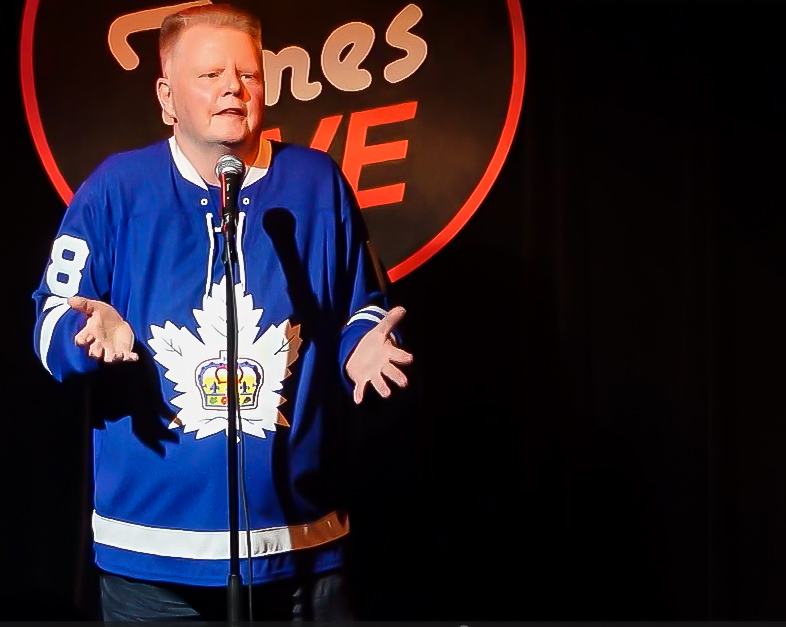
Who is this guy?

An award-winning screenwriter and filmmaker, Randall C Willis has told stories his entire life, writing for every medium, but has recently caught fire live on-stage. He describes himself as a story evangelist, a practice that he preaches as a screenwriting instructor at George Brown Polytechnic. In January, Randall launched the workshop Out of Our Minds and Onto the Page, which fosters freewheeling creativity and spontaneous storytelling using improv games and writing sprints. And through his company So, What’s Your Story?, he helps storytellers of all media to find their voices and explore their ideas.

Randall has told stories across Toronto, grateful to take the spotlight at Funny Bone, Listen to This, Page to Stage, Tales Toronto, The Yarn, Tight Five, and Replay Storytelling.

Substance over volume

ddnews

When you meet someone who does not speak your language, there is a cliché response of talking louder to make yourself understood. There is something within many of us that says if we simply pump up the volume, we can overcome the disconnect.

A couple of months ago, Tufts University released their latest estimates for the average cost of developing a new drug: $2.6 billion (I’ve seen estimates up to $5 billion). Eleven years ago, the same group calculated the costs at $0.8 billion.

Now, every time these estimates arise, the hand-wringing begins over how the costs were calculated, which factors make sense and which are over-reaching. What no one seems to argue, however, is that drugs are less expensive to develop today than they were a decade ago.

So what has this to do with speaking louder?

The same period has seen amazing technological achievements designed to facilitate and accelerate drug discovery and development.

Combinatorial chemistry was heralded as a way to expand compound libraries from hundreds to hundreds of thousands. High-throughput and high-content screening, as well as miniaturization and automation, were lauded as ways to screen all of these compounds faster under the paradigm of “fail early, fail often”. And given the masses of data these technologies would churn out, the informatics revolution was supposed to convert data into knowledge and knowledge into healthcare.

And yet, for all of these improvements in throughput, I question whether we have seen much improvement in the number or quality of drugs being produced. We certainly haven’t made them less expensive.

Please understand, I don’t place any fault in the technologies. These are truly marvels of engineering. Rather, I question the applications and expectations of the technologies.

Almost two years ago, GSK CEO Andrew Witty told a London healthcare conference: “It’s entirely achievable that we can improve the efficiency of the industry and pass that forward in terms of reduced prices.”

The pivotal question here, I believe, is how one defines efficiency.

I wonder how many people simply felt economies-of-scale would improve discovery, much as mass production made Henry Ford a rich man. But drugs are not cars, and where throughput and scale make sense when you have a fully characterized end product, they have their limitations during exploration.

When I was a protein biochemist in an NMR structural biology lab, I spent some time trying to wrap my head around two concepts: precision and accuracy. A 3-Å protein structure is very precise but if the structure isn’t truly reflective of what happens in nature, it is meaningless. A 30-Å protein structure is much less precise, but if it is more accurate, more in tune with nature, then it is likely more useful.

By comparison, I wonder if our zeal to equate efficiency with throughput hasn’t improved our precision at the cost of our accuracy. If you ask the wrong question, all of the throughput in the world won’t get you closer to the right answer.

In researching the DDNews Special Reports over the last couple of years, I have spoken at length to several pharma and biotech specialists about this topic, and many feel that the industrialization of drug discovery and development has underwhelmed if not outright failed. Several have suggested it is time to step back and learn to ask better questions of our technologies.

But getting back to the costs issue.

I know many will rightly point out that the largest expense comes from clinical trials. To address this challenge, new technologies and methodologies are being developed to get the most useful information out of the smallest patient populations.

Here again, however, no one segment of the drug development process stands in isolation, and I think back to the compounds reaching the clinic and question the expense of incremental improvements.

Oncolytics CEO Brad Thompson discussed the challenge in Cancer in the Clinic (June 2014 DDNews).

“If you could double [overall survival], you could show that in a couple of hundred patients. If you want to do a 10-percent improvement, you’re talking thousands of patients to do it to the statistical level that everybody would prefer to see. How do you run a study like that?”

That is a huge difference in financial expenditure that begs the question is an efficacy improvement of just 10 percent of value.

From an individual patient perspective, assuredly. From a pharmacoeconomic perspective, maybe not, and particularly with the growing prevalence of high-cost targeted biologics. Maybe we need to aim for bigger improvements before moving candidates forward, which happens long before the clinic.

Again, I’m not placing blame. The history of any industry is filled with experimentation in different methodologies and technologies. Everyone involved had the best of intentions.

But after a couple of decades of middling results, perhaps it is time to question how and when many of these advancements are applied. Simply yelling at a higher volume doesn’t seem to be enough.

[This piece was originally published in the January 2015 issue of DDNews. A lot has happened in the year since, including some amazing results in the field of immuno-oncology that might just address the demand for high-performance treatments even if only for a select patient population. For more on that, see my June 2015 Special Report “Body, heal thyself”.]

Documentaries can change the world

Save

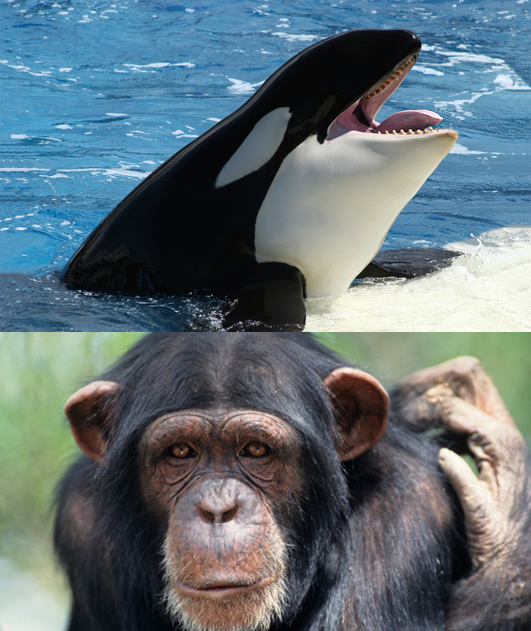
Just when you thought it was safe to go back near the water, SeaWorld announced that it will phase out its world-famous—and more recently, infamous—killer whale shows. The decision comes after months of pressure from community and animal-rights groups outraged by scenes depicted in the documentary Blackfish.

To further show the power of documentaries, however, the U.S. National Institutes of Health (NIH) recently announced that it would phase out the use of chimpanzees in biomedical research, transferring its remaining test subjects to an ape sanctuary.

NIH officials have given numerous reasons for the decision, citing the weakness of animal models for human disease and technological advances that make such animals less necessary. Many, however, suspect the government agency is bowing to pressure from community groups fearing the post-apocalyptic world highlighted in the documentary series Planet of the Apes.

In particular, the actions of former laboratory test subject Koba scared the shit out of everyone.

There is no doubt that this trend of documentaries changing animal policies will intensify. For example, it is anticipated that the 2016 release of Ice Age: Collision Course will prompt the U.S. government to change its policies regarding the Scrat…whatever the feck that is.

Selling out versus selling

Image

Over the last few years, I have met a lot of artists of various stripes, and almost to a person, one of the major fears each has is the belief that to become a success and to make a living with their Art, they will have to dilute that art. They’ll have to sell out. Some simply fear it in quaking silence, while others fend it off with flecks of foam like some rabid dog chained in a backyard of their own making. To each, their own.

You have a vision for your Art and you must respect that. It is because you are doing your Art that your Art is different from anyone else’s. By the same token, if you do hope to make enough money to keep at it, you must be able to express your Art in some commercial way.

Admittedly, with technologies such as self-publishing (formerly known as vanity publishing) and phones that offer better cinematography than anything Cecile B could have dreamt of, you can go it alone as no one before you could. You can make all of your dreams come true, but the question is, will those dreams come true? Will anyone beyond your mom, your partner and a few close friends bother with your Art once discovered?

I’m not saying to make a living you have to sell out. Don’t despoil your craft in the name of crass commercialism. If you’re truly an artist rather than a hack, it wouldn’t serve your purposes and you’d come to loathe the thing you once loved.

No, I’m talking about finding a line of compromise between your vision and the market’s.

As this is particularly close to my heart right now, let’s say that you’re writing a screenplay. First, congratulations. There may be thousands of screenplays out there, but I am confident there are billions of unfinished scripts and half-thought ideas.

Having completed your screenplay, however, is only the first step. Now you’ve got to share your creation with dozens of other people, each of whom will want to put his or her stamp on the work.

Story editors, readers, producers, directors, actors, financiers, market researchers. To a greater or lesser extent, each of these people has to buy into what you’re selling before your movie will get made.

Sure, if your film is small with a very modest (miniscule) budget, all of these titles may be handled by 3 to 6 people, but even then, you’ll likely run into issues with distribution.

I’m not saying it can’t be done. History is replete with artists who decided to go it alone. But the unwritten backdrop of that history is swamped with the myriad films sitting idle on bookshelves or hard drives, or competing with cavorting kittens and bad karaoke on YouTube or Vimeo.

If you want to share your Art—and I’m betting that you do—then you want outside thought, you want feedback, you want people to contribute.

Don’t look at barriers, but rather seize opportunities to engage. These people are your first audience. Respect them. Use them. Understand them. Do this and you’ll be well on your way to realizing your vision in their world.


(Image is property of owner and is used here without permission because I refuse to let anyone sell out.)