(Re)Learning to Swim – Art vs Technique

I love to swim. It is one of my favourite activities and one of the only forms of exercise I don’t begrudge, perhaps because I can’t tell if I’m perspiring. I am by no means athletic or proficient with it, but I enjoy doing it and have decent stamina.

Several years ago, a friend of mine decided she wanted to learn to swim. As an adult, however, she was embarrassed that she didn’t already know how, so she asked if I could help her learn the basics. Being a good friend—and not just a little bit infatuated with her—I said sure, happy to help.

A few days later, we got to the pool and I tried to break things down for her. Unfortunately, unlike many other exercises, with swimming you are in water and therefore much of the mechanics are difficult to view directly. Thus, I had to show her the mechanics above water, as though swimming to the ceiling. And that’s when everything started to fall apart.

No sooner did I begin teasing out the various movements in swimming than I realized that I was rapidly losing the ability to swim. Eventually, I just had to thrash about for a bit to remind myself how to do it.

It was unnerving.

I had been swimming (swum? swam?) for so many years that it was just something I did. It was never something I analyzed. You get in the water. You swim. It was muscle memory.

In teaching my friend to swim, I had separated the technique from the art, and for a brief few minutes, lost the art in the process.

The same can happen with writing.

In the earliest phases of our development as writers, it is important to develop a basic understanding of the mechanics of writing and story, to have someone walk us through the process. But at some point, we have to step forward and simply practice our art.

If writing is purely a mechanical exercise, then it is very dry and boring. It lacks the spirit that it needs to live. It is the difference between an animatronic deer and a biological deer. They may look very similar, but one is alive and the other is inert.

As a more seasoned writer, I have found that there will be times where I try to focus on the more mechanical, structural aspects of the stories I am writing. I want to make sure all the right elements are in the right place. But when I read the material over later, it always sounds forced, wooden, bereft of life.

In my effort to teach someone how to write properly—in this case, teach me—I have, however briefly, lost the ability to write. I have sacrificed the art for the technique.

Technique and process are vital, but they are not art. Art comes as you build the spiritual, intellectual, psychological muscle memory to allow yourself to immerse yourself unthinking into your writing and simply allow the story to flow.

As I’ve said before, story before structure. Art over technique.

Do fish ever think about swimming? And if so, do they then sink to the bottom? (Manuel Antonio, Costa Rica)


Do fish ever think about swimming? And if so, do they then sink to the bottom? (Manuel Antonio, Costa Rica)

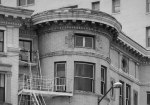
Art-chitecture of Washington

Washington, DC, is an odd town for a variety of reason…it is steeped in history and yet is constantly in a state of renewal as its four quadrants cycle from decay to rebirth to affluence to decadence, and the people within the town, depending on money and power, move from quadrant to quadrant accordingly.

Being the political and international heart of the US, however, means that it is also a showcase–in the museum display sense–of what the US has to offer architecturally.

I’ve tried to capture some of that here.

Write…as rain

I write.

I write because I love playing with words.

I write because my head will explode if I don’t.

I write to explore ideas.

I write because I’m interested in a lot of stuff.

I write because I’m a narcissist.

I write because the stories flow through me.

I write because I’m funny (some of the time).

I write because I have thoughts worth expressing.

I write because the blank page beckons.

I write to release my pain.

I write to share my joy.

I write to add beauty to the world.

I write to keep moving.

I write to share the magnificent visions I see.

I write to exorcise and exercise the voices.

I write to play.

I write because I am a writer.


Why do you?

Doubt

I have doubt.

Not in my skills, thank goodness, or the belief that with the right guidance, I can improve them steadily, but I have doubt.

I have doubt that I will find the right people to see the merits of those skills and help me to convert them into something meaningful. A video, a television program, a film, a novel, a photo exhibit. Something that I can share with all the world. Something that will touch the souls of others as the gestation and creation of the work has touched mine.

I have doubt that I can hold on to my new fantasy life and that reality, oh harsh reality, won’t poke its head into the mix and throw me back to where I was. That I will need to find resources to live, and that the need will draw me away from my art. Perhaps irreparably tearing me from it and setting me back upon the course I once journeyed of discontent and pain.

I have doubt that I won’t continue to find supporters and friends—my oh so wonderful friends—who will hold my hand on this journey. Who will provide a tether to keep me connected and yet free enough not to anchor me to the world.

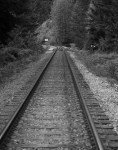
I have doubt about what is around the next corner. About the shadows in the darkness. About the approaching ground in my free fall through life.

I have doubt.

But I will not let that change what I am doing. I cannot allow my doubt to prevent me from living the life I have finally discovered.

If around the corner is an oncoming train, in the shadows lay a vicious monster, and on the approaching ground shards of glass, I will not allow doubt to slow or still me.

I may not succeed in achieving my goals, but in overcoming my doubt, I will have succeeded in my journey. And for that, I will be eternally grateful and find peace.

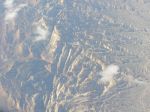
Gotta let it out

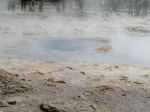
Do you ever feel like there is an idea inside you just waiting to burst forth? Like you can’t control the energy that is welling up?

It is there, just below the surface, and no matter how much you try to suppress it–it’s not ready; I’ll embarrass myself; what will others think–you really have no choice but to show it to anyone who passes by.

Congratulations, you’re an artist. Welcome to the club. Oh, and you might want to stand back…someone else is ready to explode.

(Photos taken at Geyser, Iceland.)

The Devil’s in the detales

Attention to detail is craftsmanship.

Fixation on detail is neurosis.

It’s important to be diligent when working on a project, but not so diligent that the project is dead before it starts.

Relax. Let your natural skills and energies flow through you as you explore your art.

It is those little quirks that make the piece yours and not the same as every other piece ever produced.

The ceiling of the trophy room of the Hockey Hall of Fame, which used to be a bank. (Toronto)

The ceiling of the trophy room of the Hockey Hall of Fame, which used to be a bank. (Toronto)

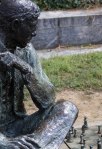
The match

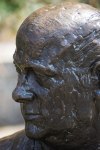
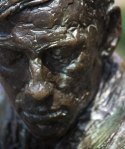
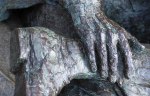
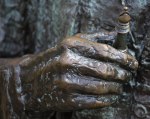
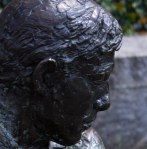
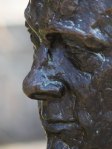
As I strolled through the streets of Washington, DC, I came across this amazing sculpture, although to call it simply a sculpture or statue was to short-change the artist.

Before my eyes (and the lens of my camera) a small scene played out despite the participants’ inanimacy.

(Yes, I make words up. I’m a writer, it’s what I do. Same relationship as intimate to intimacy.)

Thoughts on thinking

Thinking is over-rated. And by that, I am not espousing advocacy for unthinking, so much as non-thinking or as it is known in some circles, doing.

Think before you speak is an admonishment often heard (or at least by me) and perhaps there is some wisdom in this. More on that in a future post.

But I worry that too often, people think before they write and for many, thinking means never writing. These individuals become so encumbered by or enamoured of their thoughts that they are unable to commit anything to paper.

To me, writing or any other form of creation is a spiritual thing. I personally don’t feel that I create so much as simply channel or act as conduit for creativity itself—the good, the bad and the ugly. I bring into being that which was no so moments earlier. Thus, my pretentious tagline of “Seer of the invisible, scribe of the unwritten”.

I worry that people spend way too much time mulling things over, trying to come up with every angle and waiting until they find the perfect angle. Pen hovers over paper. Fingers hover over keyboard. And nothing happens as the writer becomes paralyzed in thought.

As I’ve written before, I set a destination, but I revel in the journey. I let the road dictate my next step and feel that I discover more wondrous things than I could ever have pre-conceived.

Sure, the road can lead me to a cliff or into a wall that I cannot surmount, but what of it? If I have discovered one thing in my life, it is that the return journey from a place is so much more than simply the backsides of things you saw on the forward journey. Perspectives change and so therefore does the story your journey provides.

Take the thinking out of your writing and see what happens. Sit at a table with your laptop or notepad and write down the name of the first thing you see. Let that be the first word in whatever follows, no matter how short or nonsensical that might be.

The story will tell its story. You don’t have to.

(I don’t know what’s on your table, but this was on mine!)

Image