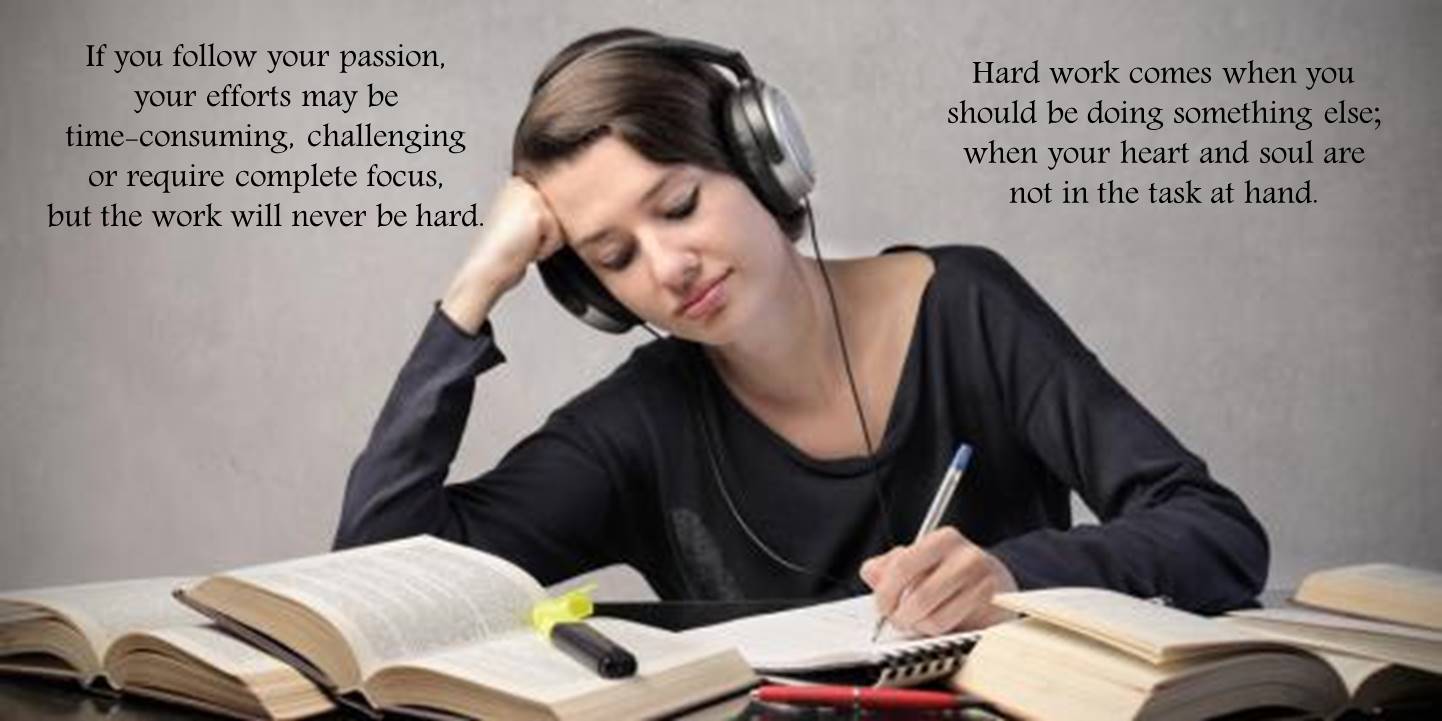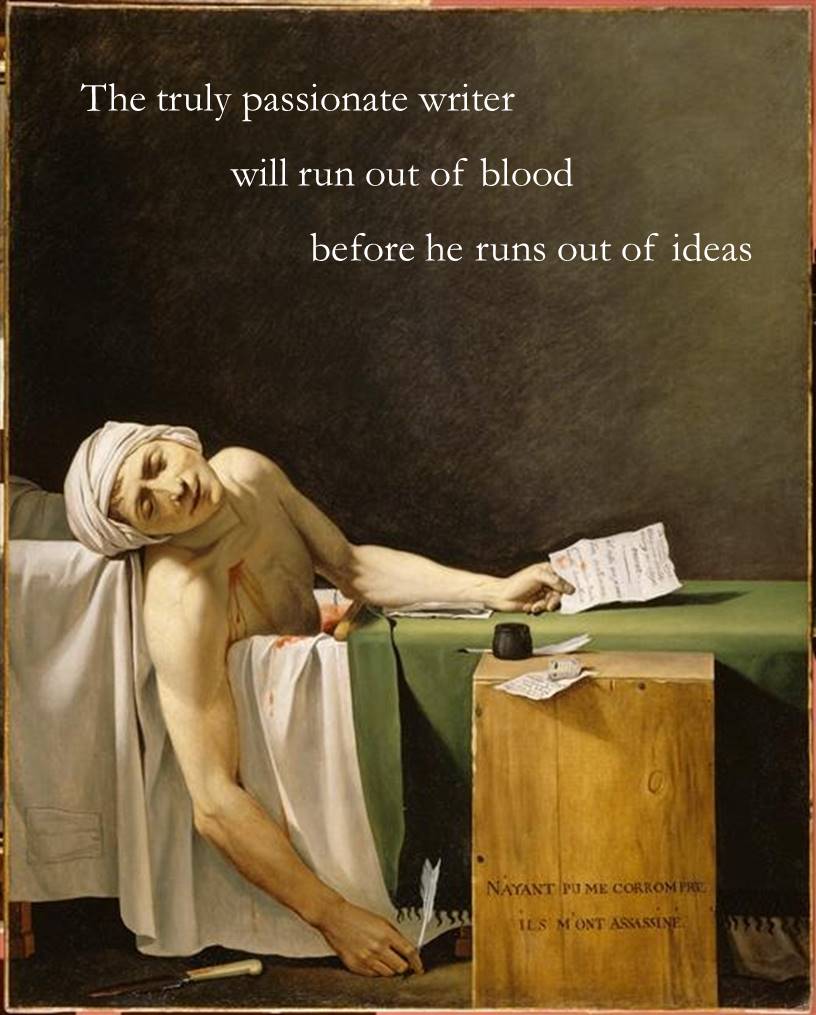
Writing is its own success

(I’m going to post this here, now, so that when I do make it big financially, I can prove I really did believe this while I was still poor.)

A writer writes

A writer writes

If you don’t love writing for the sake of writing, get out. For the sake of your own sanity, do something else.

I would like to make a career of my screenwriting and novel writing, but if I don’t, I will still do it and be glad that I do.

The truth is that the majority of us (like 99.9997%) will never make it big as writers…not Terry Rossio big, doubtfully Damon Lindelof big, nor Nora Ephron big. Hell, I’m not even sure the simple majority (50%+) will even make a livable wage as writers.

But as much as I want to hit it big and spread the gospel of my genius (he says only half-facetiously), I write because I love writing and I don’t know how to not write.

I can do other things to keep food in the house and a roof over my head, but I don’t want to if I don’t have to. It all interferes with my time for writing.

Perhaps this passive approach to accomplishing something with my writing will keep me from making it big. But I prefer to think that by focusing on the joy of writing, the excitement of expressing my thoughts and feelings, I will be happy throughout the entire process, from now to wherever and whenever I end up.

If nothing else, this attitude means that everything that comes down the road is a known positive rather than a potential disappointment.

Good luck, everyone.

Bonus!

Bonus!

Left-handed (DNA) compliment

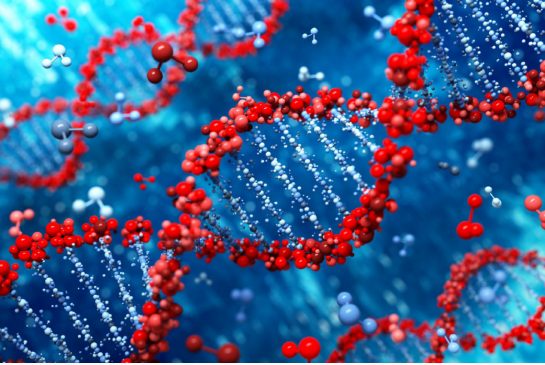
While attending the surprise birthday party for a friend in the sciences, I noticed he owned a coffee mug from a group called Life Sciences Career Development Society based at the University of Toronto. Actually, to be more accurate, what caught my eye was the DNA double-helix on the mug…and the fact that it was wrong.

Wrong

BOOM! My head explodes.

As someone with biochemistry & genetics degrees who has written about the life sciences for ~15 years, this seemingly innocuous error drives me crazy. This must be how copy editors feel when they see a misused semi-colon (and I’m sorry about that).

right v wrong

For the non-biochemists, through a characteristic known as chirality (look it up…too hard to explain here), the typical DNA double-helix in human cells—the famous Watson-Crick-Franklin structure or B-DNA—has a right-handed helix. This means that if you could see the double-helix (above) and let your fingers follow along the curve of one side as it wraps around the other, you could only do this comfortably with your right hand.

You can see that in an example of a single helix that curves either to the left (left) or the right (right).

handed

Unfortunately, somewhere in the mists of science illustrations time, an artist drew the double-helix of DNA in the wrong direction and that double-helical abomination has perpetuated ad nauseum, including irritatingly enough, in science publications and scientific logos such as a recent health article in the Toronto Star (image below), the cover of a sci-fi novel and the LSCDS logo.

DNA - backwards

And if I only saw this in 50% of the images, I’d be irritated but probably not the raving loony I am now. But no, this freak of nature is everywhere. The correct right-handed DNA illustration is the anomaly.

So why does this matter? Maybe it doesn’t, and I am just a raving loony.

Certifiable loony!

Certifiable loony!

But for me, I struggle with what else might be wrong in a life science or healthcare story if they can’t get the DNA helix right. Do I trust the math of an investment planner who doesn’t know that four quarters equals one dollar?

Luckily, the fix is an easy one. Simply mirror the image you have (not turn it upside down) and the left-handed double-helix becomes a right-handed one. (In a mirror, your actual left hand looks like a right hand.)

So, medical illustrators everywhere, please fix your catalogues of scientific illustrations. My head can’t take too many more explosions.

So much better

Nerves already calming.

[Also, from a design perspective, up and to the right is more palatable for North American audiences as it implies future success (e.g., rising value). Has nothing to do with handedness, here.]

For the more biochemically savvy:

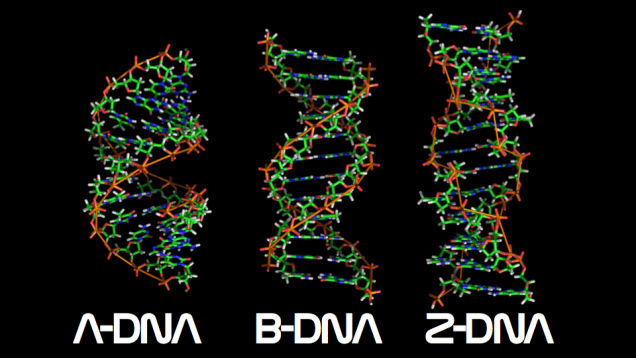
Yes, there is left-handed DNA, which is also known as Z-DNA. But as you can see from the illustration below, its structure is significantly different from the smooth-flowing curves of B-DNA (and the equally unusual A-DNA).

Two rights don't make a left

Two rights don’t make a left

You are your own inspiration

An actor friend recently expressed “I don’t wanna” about leaving town for an upcoming gig. I assumed it was less about fearing the gig and more about leaving home, but I wanted to let her know it wasn’t about wanna or even hafta.

Enjoy.

dream

In other words

Word up!

Word up!

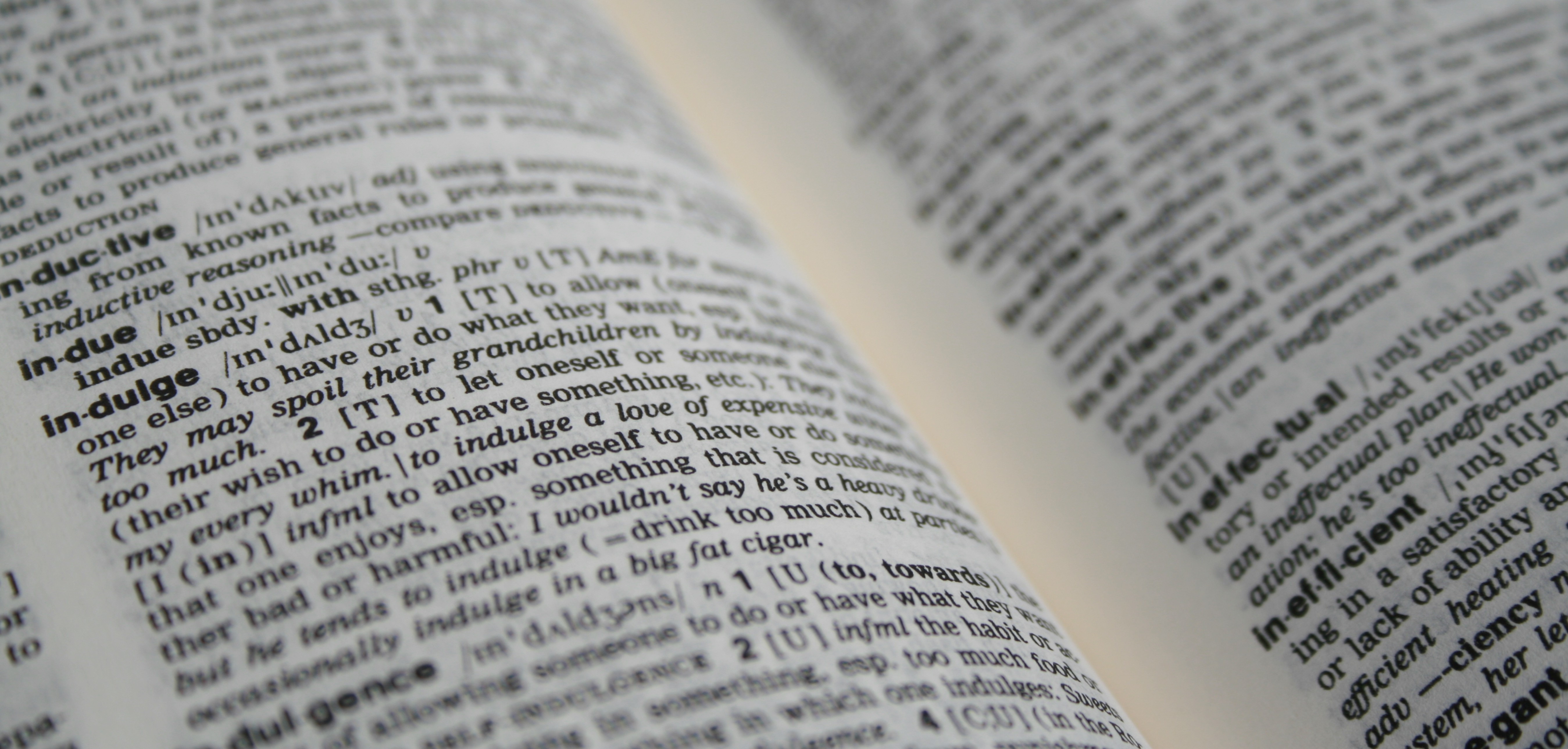
According to a Global Language Monitor survey from 2014, there are 1,025,109.8 words in the English language. (Not sure what the 0.8 word is.) And based on further research, this tally makes English anywhere from 5- to 10-times larger than most Western European languages.

Depending on who you ask or possibly where, a native English-speaking adult has a functional vocabulary of anywhere from 10,000 to 75,000 words. Thus, on a regular basis, we use about 1-10% of the words available to us.

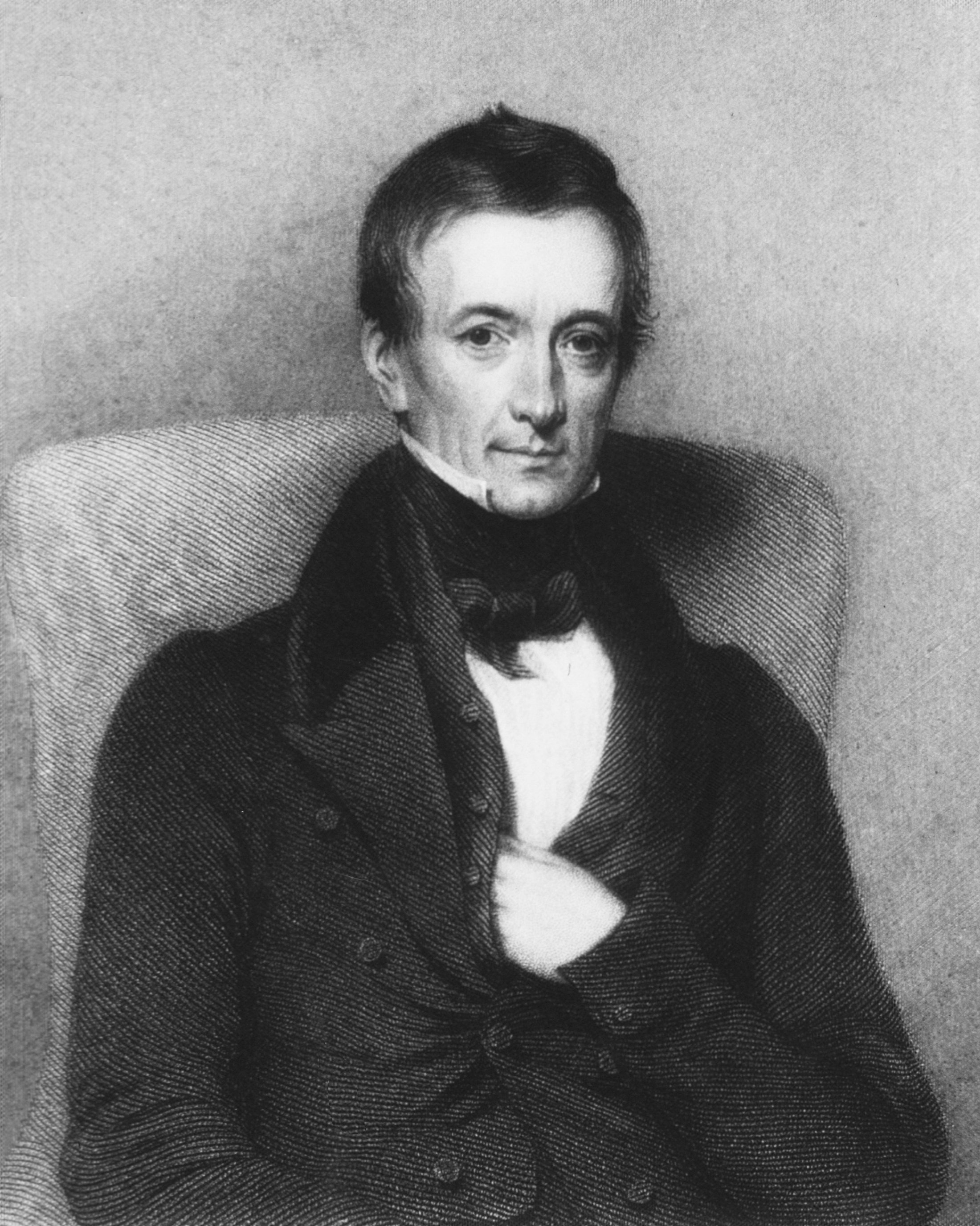
Many of those words have similar if not identical meanings and can often be used interchangeably with slight variations in implied meaning or significance. Hell, a British clinician with a list-making fetish famously went out and tried to catalogue these word relationships, offering encyclopedic lists of alternates to the most commonly used English words.
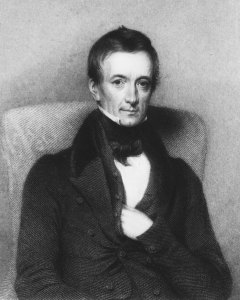
A man with a list (or maybe that's just how he sits)

A man with a list (or maybe that’s just how he sits)

So, given this profusion of synonymic wonder, why am I seeing an increasing number of stories—novels, screenplays, etc.—that seem only capable of the low end of the vocabulary spectrum?

And I’m not even talking the big words here. I am talking the simple words we use every day and yet which hold little more meaning than their strictest definition. Words like “said”, “walk”, “enter”.

Now, I am not suggesting people necessarily have to write with a copy of Roget’s Thesaurus next to them, something of which I have been accused on occasion. But while exsanguinating your latest cerebral machinations into the fibrous folds of the human record—sorry, I digress—why not make the most of the words that are at your disposal?

For example:

Hearing a cry from the other room, Cecily walked through the door.

Now, Cecily may indeed have “walked” through the door, but that tells me absolutely nothing other than her transitional geographic location.

What was Cecily’s emotional state and how eager was she to discover the source of the cry?

There are so many other words—common words—in the English language that will tell us so much more about Cecily than the fact that she moved.

What about strutted, strode, skipped, crashed, bolted, dashed, raced, blasted, crept, snuck (sneaked?), sauntered, staggered, bounded, tripped, stumbled, inched, crawled, or fell?

Each of these words tells us so much more about Cecily’s relative state of confidence and sense of urgency, and any one of these in place of “walked” prevents the writer from having to later explain her emotions with a second sentence.

In some cases, people will append adverbs to offer greater insights into the emotional state of a character, but again, even this can often be avoided through use of more descriptive verb.

For example:

“You’re crazy,” Philip replied angrily.

Definitely better than just “Philip replied”. But what if Philip did more than reply? What if he screamed, shouted, barked, bellowed, screeched, roared, or cried?

Again, each word offers a slightly different take on Philip’s emotional state and gives us a sense of whether he is angry at his target or terrified by her.
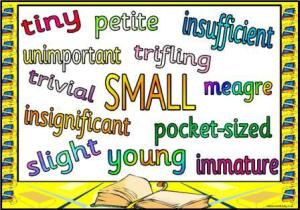
All the kids are doing it

All the kids are doing it

And what holds true for verbs, also holds for adjectives, and particularly as some of the simpler ones can be relative.

The precise height of a tall man varies significantly between someone who is 5 ft 2 versus someone who is 6 ft 1. And again, the adjective has an opportunity to add an emotional or psychological angle to the description.

Rather than “tall”, what about towering, mountainous, tree-like, statuesque, cloud-scraping, looming, or neck-straining?

Or instead of a specific age (unless the precise number is vital), what about world-weary, worn down, spry, vivacious, ancient, wizened, infantile or cadaverous?
Got your back, kid!

Got your back, kid!

Again, I don’t think we need to discard the presocialized anthropoidal biped with the bath water, but particularly in our writing, I think we need to make better use of the wealth the English language affords us and open ourselves to more precise and effective word choices.

Together, we can strut the walk and hallelujah the talk.
Creation (a poem)

Hand-writing-on-paper-with-pen1

A river is born

As the ball rolls,

Moisture captured

In upper strata,

Bleeding to layers below.

Impressions made;

Streams carved;

The universe is marked

By passing thought.

From irrigated channels,

Ideas unsaid find root.

Worlds are created.

Worlds are changed.

And life takes new meaning,

If only for a moment,

Until the ball rolls again

In fields yet untilled.

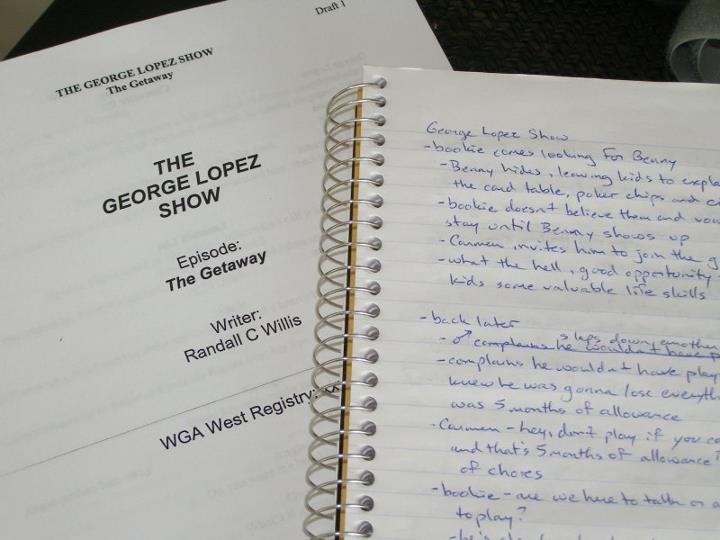
The episode that never existed

The episode that never existed