Not for nothing – REQUEST FOR HELP

ssnolan3

How do you write about nothing?

I know how to not write. In fact, I was very good at that in the past, but gratefully not writing is no longer much of an option for me.

I’m not talking about not writing, however. Instead, I am talking about writing scenes where superficially nothing happens, where a character walks through the mundane actions of life. What they are doing is unimportant to them, a robotic response to an overwhelming thought or scenario. There is an astronomic exchange of information and yet no words are spoken.

In a novel or short story, you can have an inner dialogue, revealing the character’s thoughts, but in a film, you have only silence. Sure, there’s always the trusty voiceover, but I personally think that unless the character is recalling a past statement, voiceovers are a crutch. And a voiceover weakens a scene when you compare it with silence.

Think of the last time you were faced with silence in response to something you said or did. Think of the dis-ease (yes, that’s where “disease” comes from) you experienced as you tried to figure out what the other party was thinking. In many of those situations, I bet that shouting would have been preferable to silence.

In an improv class I took—I am sorry that this is my version of “This one time, in band camp…”—we were doing a status exercise wherein one character would try to take status away from the other one, proving themselves superior through statement or action. While many student pairs would do their best to out-pompous, out-preen or out-bravado each other, I took a different tack. I went completely silent.

No matter what my partner said or did, I faced him stoically or indifferently, deigning to give him the merest glance on occasion while going about my activities. And the louder or larger he got, the less I minded or acknowledged him. The more he talked, the weaker he appeared.

Silence is powerful. And even if the silence is due to idiocy, it comes across as thoughtfulness.

Think of scenes in movies where a character has chosen to deal with a problem by thinking about it. With a good actor, you can see all the thoughts as they play out in his or her mind. The body, the face, the eyes tell you all you need to know about the emotional swells washing through the actor. A single word breaks that tension and weakens the moment. As a storyteller, why would you ever give that up?

Which brings me back to my original question: How do you write nothing?

Perhaps I am delving too far into the domains of the director and actor, but there has to be a way to ensure both those artists know what you, the writer, intend. But I’ll be damned if I know how.

So, I open the question to you, my fellow artists.

What do you do, what have you learned, what have you seen that tells you how to write nothing and yet convey a world of thought and feeling?

Please share your thoughts here as I can’t be the only one who wants to know.

Many levels of review – Part Two

Whenever someone asks me to review their writing, I try to be thorough and look at it from many levels. Yesterday, we looked at how I approach writing from the 30,000- and 5,000-foot levels. Below, we dig deeper.

1000_foot_view

The view from 1,000 feet: Now that I’ve identified the major structural and thematic issues and determined there is a reason to keep reading, I go back to the beginning and really start to peel things apart.

If I have a thing for character—and I do—I might follow an individual character through the story to see if I can reverse engineer the writer’s profile of that character. I am making this sound much more formal than it really is. Basically, what do I know about the character and are his or her actions and reactions consistent with that knowledge given: (a) where that character is now in the story; and (b) where he or she is trying to get or accomplish?

From the plot perspective, I begin to look at individual scenes and ask if the interplay between characters makes sense for their relationship and respective goals within the scene. For that matter, does each character in a scene have a clear goal?

How have the characters within the scene changed from one end of it to the other? Did one start with the upper hand and that power shift somewhere through the scene to the other character? This last point is not a necessity, but is merely one way a scene can experience reversal.

Likewise, is the scene clear with one predominant purpose or has the writer tried to accomplish too much too quickly, muddying the scene and leaving the reader uncertain as to what refers to what?

At a slightly broader level, how do the scenes play against each other? Are there smooth or logical segues from one scene to another, and if not, does the hard plot swing work? Does the scene in question set up a future one or pay off a previous one, and has it done this job effectively?

200_foot_view

The view from 200 feet: Now I really start to get into the weeds, looking at paragraphs and individual lines. From the narrative perspective, does the reader have all the information he or she needs to make sense of the story? Does the scenery or environment serve almost as another character at this point, representing a source of conflict or support for your characters? Again, this last point isn’t necessary, but can be quite effective such as in movies like The Perfect Storm.

Alternatively, has the writer massively over-written the narrative, demonstrating his or her superhuman vocabulary and/or visual imagination at the expense of the story and poor befuddled reader? As a personal aside, this is my greatest sin as a writer…but then you probably already knew that. Can I recommend any broad strokes edits (not copy edits) to help reduce the clutter and maintain the flow for the reader?

If it’s a screenplay, does the writer interrupt the reader too often with small directorial nods to the actors? For example, during a particularly heated scene of dialogue between the protagonist and antagonist, is the writer constantly reminding the actors to furrow their brows or shrug? I try to determine whether these narrative directions are absolutely necessary to get the idea of the scene across.

The problem here is that the regular intrusion of direction takes the reader out of the moment, disrupting the story and the emotional power of the characters. The senses, if only at the mental level, are forced to trip back and forth between things like subtle movements and emotive energy. Thus, in even the most action- or tension-packed scenes, too much narrative can sap the energy of the scene such that the read becomes plodding. By removing these superfluous lines, the reading speeds up and the energy of the scene is renewed.

This brings us to dialogue, which is easily my greatest challenge in screenwriting. I think novel writing gives you a bit more leeway with dialogue but I am less familiar with the medium from a writing perspective.

When I review dialogue, I try to sense how natural the dialogue feels…perhaps even reading it aloud, if I am not certain. Are these sentences that real characters would say and are the lines apt for the character who is saying them? From what I have surmised about the character, would he or she use those particular words in that way or to that purpose? Is the character saying exactly what he or she is thinking (on-the-nose) or is there some sense of subtext, whether known to the character or not?

Similarly, is the dialogue as tight as it could be, saying only what needs to be said and in the best way? Now, please note, I did not say or mean to imply in the shortest way, with the fewest words. People rarely keep their sentences to a minimum, but rather when caught up in the heat of the moment, tend to spew a bit more than necessary. There is a cadence to an individual’s speech patterns, so each of the characters should have their own cadences.

In a conversation between two or more characters, is the subject and banter clear or am I left with some uncertainty about what line corresponds as a response to what previous line or thought. To map it out somewhat mathematically, it might read something like A then A’, B then B’, C then C’, etc., rather than ABC then A’, D then B’C’, etc., where each of the letters and its prime counterpart represent a thought and its response or reaction. By the same token, however, I have to be alert and sensitive to cases where it is perfectly natural for that character to blurt out a series of thoughts and the resulting confusion may be consistent with the plot.

splashdown

Splashdown: Only once all of that has been settled, do I get to the cosmetic aspects of story review. This is where I might recommend copy edits and what have you to ensure the screenplay or novel is clean. This can include looking for stylistic inconsistencies (e.g., capitalization) or spelling errors. Personally, this part bores the hell out of me and I know that for every error or inconsistency I find, I have missed two or three others. As a courtesy, however, I will point out those that I do find and hope someone else catches the rest.

I find that by the time we reach splashdown, writers either love me or hate me…and I am okay with that. Although I prefer the former, I understand the latter and don’t take it personally. Putting your work out there for critique and possible criticism is difficult and not just a little nerve wracking. I applaud anyone who does that almost as hard as I applaud them for having written in the first place.

I just hope that, at the end of the day, I have helped the writer improve his or her work.

(Images are the property of their owners and are used here without permission because it’s more impactful.)

Indirect influences

Image

I naturally speak with one voice. If pressed, I can speak with a second, more professional voice; the one that presents concepts to advertising clients or interviews corporate executives for a magazine. But most of the time, I speak with one voice that uses a vocabulary and attitude established over my many decades of life.

I think this is largely the case for everyone, which is why it is not surprising that people tend to write stories with a series characters that can largely sound the same. The protagonist is typically quite distinct. The antagonist is often distinct. But after that, I don’t know that I could tell who was speaking if I didn’t read the names.

These secondary characters, by their very nature, are not our focus as writers, so they tend to have the least developed back stories even in our heads. Other than age or gender, what makes the paperboy different from the local sheriff from the school teacher?

The same thing that makes you different from me. Our experiences, past and present.

One of the tricks for informing a character that I learned in improv was to endow a character with a trait that only you as the performer knew, and ideally a trait that had absolutely nothing to do with the scene that was developing.

In one exercise, I decided that my character had a bad right ankle, so that every time I took a step, my ankle would cause me pain. I didn’t hobble or verbally express the pain with either an “Ow” or “Would you slow down, my ankle hurts”.

The pain was expressed, however, in how my character responded to his environment and the other characters in the scene. What might have been a middle-of-the-road character suddenly became a terse character, someone in a hurry to get things over with, quick to anger or frustrate, less apt to engage in activities.

The bonus aspect of the exercise, for me, was that my fellow improv performers quickly got and responded to my character, but when pressed, could not exactly say why I behaved as I did.

Now change that ankle pain to a foot orgasm (read about it this week online) and see where that character would go (probably jogging).

The sore ankle had no impact on what role the character played in the scene, but more in HOW that character performed that role. And this made the character stand out from all of the others.

I go back to this exercise often, when I find myself creating secondary or tertiary characters that aren’t differentiated from the background. A little something to make them stand out, however briefly, in their scene.

If you find yourself stuck, give it a shot. What could it hurt, other than possibly your ankle?

(Image is property of owners and is used here without permission, because it makes me happy/indifferent/snarky/hot.)

Dialogue v Narrative

Image

Yesterday, my friend Marsha posted a short piece on her blog—Why the Face (WTF)—where she discussed her challenges in writing narrative/action for a scene and how she found scene writing to be so much easier if she started the dialogue.

“On its own, free of formatting and figuring out what characters are doing physically,” she wrote, “it lets me really get into what these people are actually saying to each other.”

When I read this, I thought, what a fascinating approach as mine is the complete opposite.

When I start a scene, I can go on ad nauseum about the setting and what the characters are doing or how they are behaving, but I find actually expressing the characters in dialogue to be daunting. When I do start writing dialogue, I find that I am writing exactly what my characters are thinking (on-the-nose) or that their emotions and motivations are incredibly superficial.

When I describe a character’s behaviour, however, his or her emotions surface more slowly through unconscious tics. The tensions that I intone in my mind’s eye then inform the word choice when I start to write his or her dialogue. It is as though I have to psych myself into the character’s body before I can express his or her desires and impulses to the fullest.

What makes this ironic is that while discussing this with Leela, another friend, she reminded me of the days when I first started writing sketch comedy, and all I could seem to manage were a series of “talking-head” sketches. At that time, action was unimportant to me as I felt the only way to bring my point across was through words.

On paper, my sketches could be very engaging, whereas on stage, they were significantly less so. Thus, I needed to learn the power of the unspoken word. Apparently, the pendulum has swung full tilt and I am now in the process of finding a happy medium. (No wonder writing is so tiring.)

Ultimately, like a good Oreo cookie, the best screenwriting comes from the combination of solid narrative (icing) and solid dialogue (cookie), so I am glad Marsha has my back and I have hers.

Dildo out of water

In writing, one of the tips for jazzing up your story is to put your character into an odd situation and watch how he or she deals with the new circumstances. In comedy, we call this being a “fish out of water”.

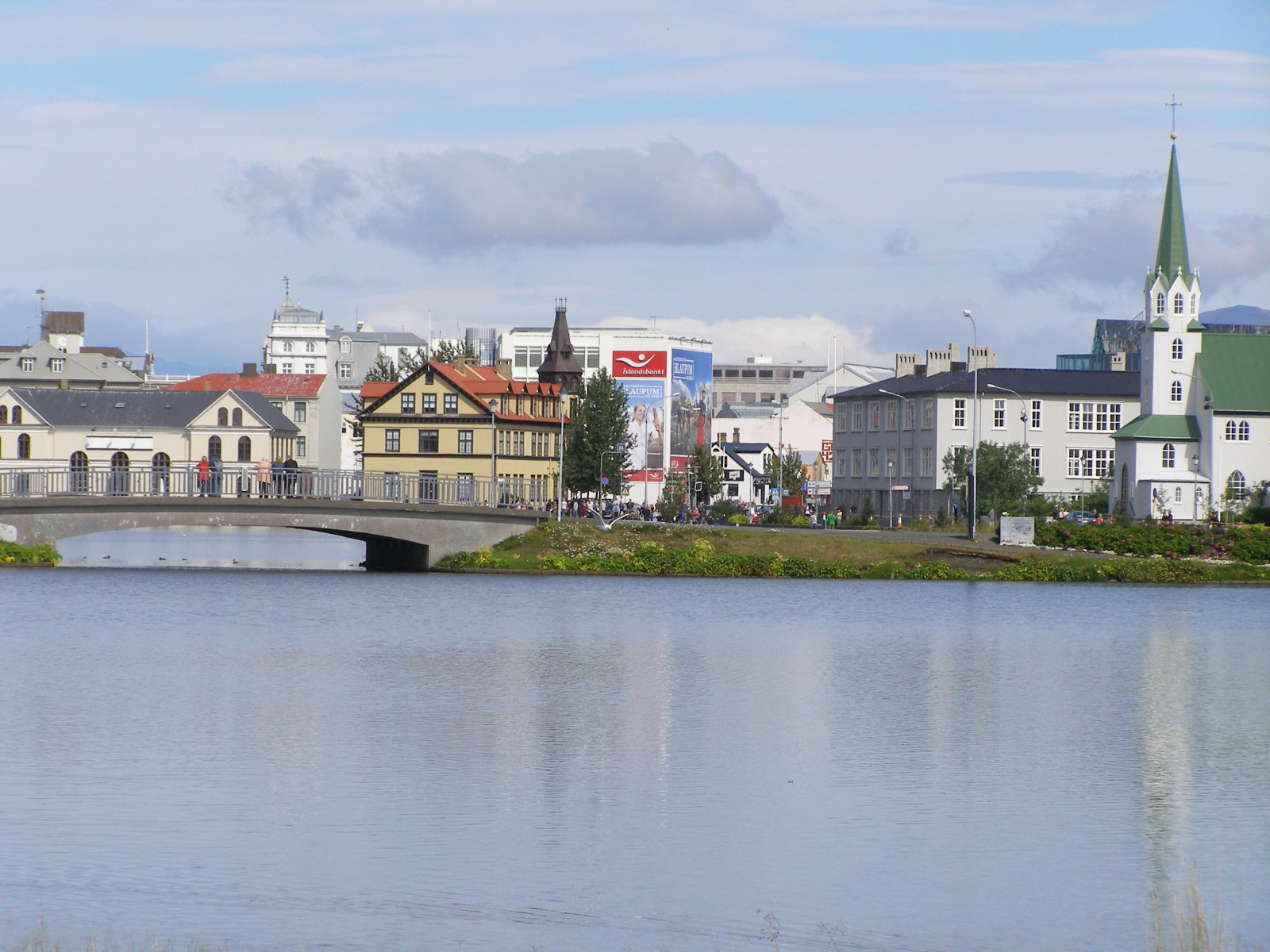
While traveling through Iceland a year ago, I got to see this on a grand scale. While wandering around a large pond in downtown Reykjavik, I was surprised to find a large dildo in the middle of the sidewalk—it was a few days after the end of Pride Week, so I could only imagine where it came from.

On Golden Dong (near the pond in Reykjavik)

On Golden Dong (near the pond in Reykjavik)

Realizing there was an opportunity here, I sat on a nearby bench and spent an amazing hour or so watching locals and tourists come upon the vulcanized penis. It was a magnificent chance to people-watch and learn about the range of emotions.

Some were disgusted. Some were anxious for their over-inquisitive children. Many were amused. Most arrived quietly and left highly animated.

I’m not sure what this says, but I seemed to be the only one who took a photo of it.

As a North American, I was not used to the beautiful simplicity of a European city (Reykjavik)

As a North American, I was not used to the beautiful simplicity of a European city (Reykjavik)

The pond in Reykjavik was a magical place to write and think

The pond in Reykjavik was a magical place to write and think

Dara Marks at Toronto Screenwriting Conference 2013

Engaging the Feminine Heroic

Dara Marks

In a follow-up to her very popular Transformational Arc talk of previous years, Dara Marks took us through another aspect of character development, something she calls the feminine heroic. A counterpart to the well known hero’s journey, the feminine heroic completes the hero’s character and thus is not necessarily tied simply to female heroes. Rather, it encapsulates the feminine side of everyone’s natures.
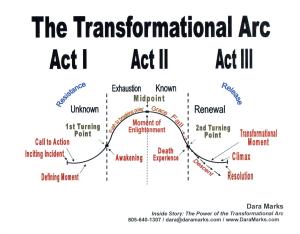
Transformational Arc

She explains, as writers, we are constantly trying to understand the narrative in which we are living, but we experience that narrative from a very personal perspective. Thus, in her canonical transformational arc, there is both an outer realm, where external forces act upon the hero, and an inner realm, the more personal influences. We grow, she says, only in relationship to demands on us to grow, and the external realm stimulates the internal reckoning.

The union of the feminine and masculine brings about wholeness in the character. It is a combination of the masculine spirit, which represents all that we can be, and the feminine soul, the deepness of our authentic self. Marks offers the example of a tree, which may reach toward the sky, but is only as strong as the root system that provides it nutrients.

Everything we are in life is what comes from deep within ourselves.

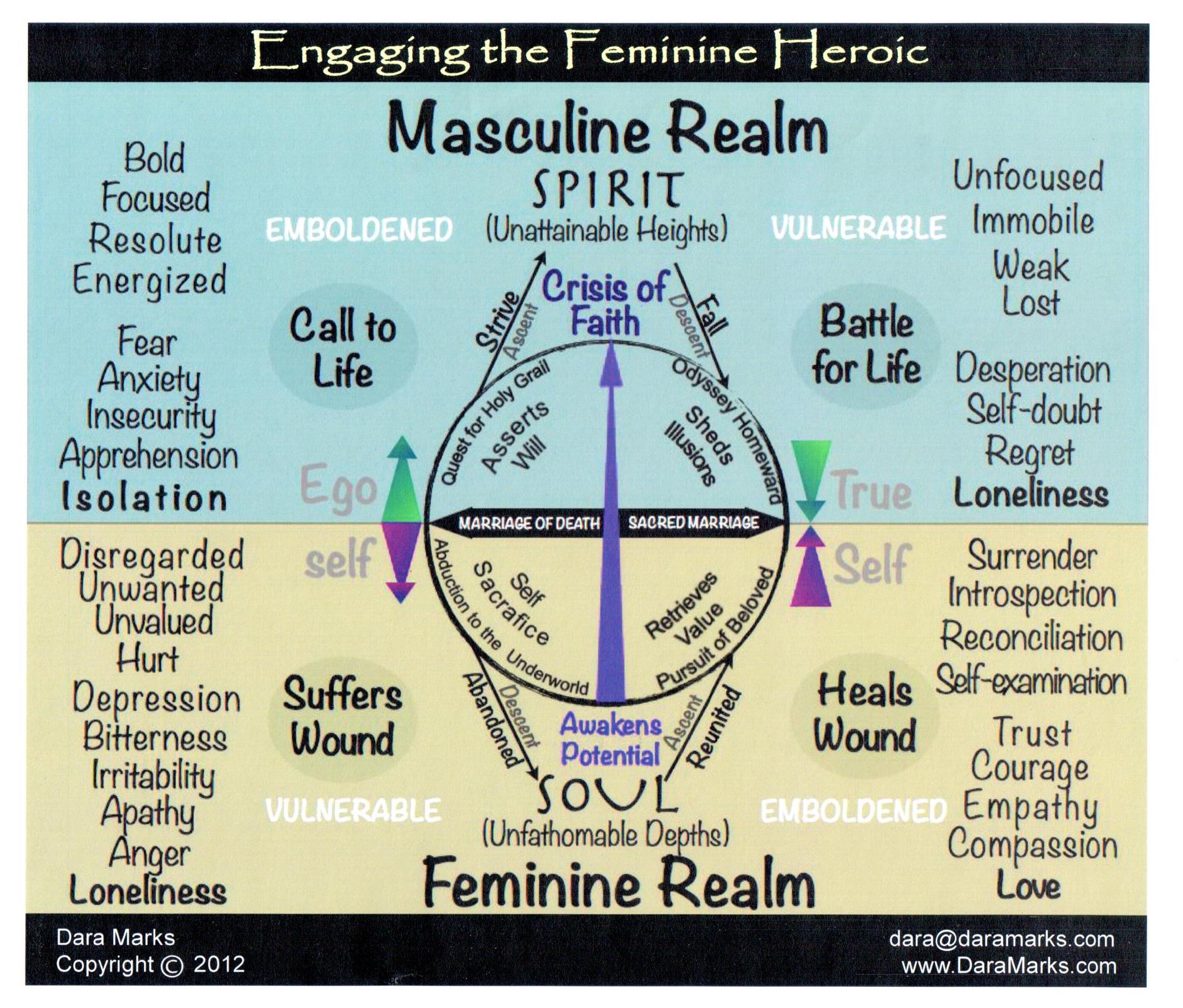
Marks presented this relatively complicated diagram that illustrated the hero’s external and internal journey (and in many ways, reflects our own journey through counseling or life itself). To the left, we find the Ego Self, where the onus is on my aspirations and beliefs of me. To the right is the True Self, which is understood after reflection and denotes my understanding of myself in the universe.
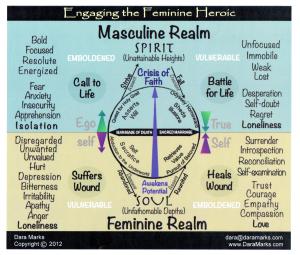
The union of the masculine and feminine sides of a character creates a wholeness

The union of the masculine and feminine sides of a character creates a wholeness

Ego Self: All early development, even that of a child, relies very heavily on the development of the Ego, a sense of will and determination. We believe that we’re in charge, despite all evidence to the contrary.

So if we start the journey in the Ego Self realm, we can look at the External or Masculine side and the Internal or Feminine side of ourselves.

Masculine Ego: In the top left quadrant, we have the Call to Life, the external mission that demands we strive or ascend to a greater level. We assert the force of our will on the universe. This area therefore is associated with a youthful and energetic quality. We have to move forward. We cannot let fear hold us back. To do this, we must sacrifice our feminine side, pushing those feelings down, or we cannot move forward.

Marks suggests that the tragedy of Hamlet was that he couldn’t get beyond his feminine side when he needed to move forward. She also gives the very literal example of Agamemnon, who was forced to sacrifice his daughter Iphigenia before the Greek ships would be allowed to voyage to Troy.

Feminine Ego: In the lower left quadrant of the diagram, we see the influence the masculine decision has on the feminine ego. We suffer a wound because part of us is no longer valued. We are literally abandoning a key part of our self and this will have a lingering effect. While we appear invincible externally, we are very vulnerable internally.

Thus, the feminine side needs to be rescued by the proverbial knight on a white charger. Marks is quick to point out that this is no time for political correctness as at this stage in our development, we just don’t have the internal skills to rescue ourselves.

She goes back to Greek myth to show how this works, focusing on the story of Demeter and her daughter Persephone, the latter of whom was abducted to the underworld by Hades to become his wife. Demeter was distraught at the loss of her daughter and journeyed to the underworld to bring her back to the surface.

The underworld experience may be difficult, but it is educational and we need to journey through it to come out more whole in the next stage.

Marriage of Death: The combination of the masculine and feminine ego is what Marks calls the Marriage of Death. Anytime we strive to become something new, it means the death to other aspects of our being. We just can’t strive at all things at the same time. But this marriage is not designed to last.

As Marks points out, the problem with striving is that it is doomed to failure. We can’t be rich enough, strong enough, famous enough, whatever enough. And it is at the moment of realization that our dreams are doomed that we have a Crisis of Faith (masculine side), which leads to an Awakening of Potential (feminine side). We move closer to the discovery of our true self, the right hand side of the diagram.

Masculine True Self: As the masculine ego passes through its crisis of faith, it suffers a fall from the unattainable heights, which converts the Call to Life into a Battle for Life. For self-renewal, it is essential that our delusions and illusions are shed during this descent, such as the belief that we are in control of our lives. And thus, at this stage, it is the masculine self that needs rescuing.

Marks offers the example of Odysseus (a popular subject at TSC this year) and the knowledge that his journey home was his great undoing as he loses more and more of his ego self (including his ships, crew, etc). The second half of his journey is literally the journey homeward toward his true self.

Feminine True Self: And who rescues the masculine true self? As the masculine side becomes more vulnerable, the feminine side becomes emboldened. We heal our wounds and reunite, turning pain and suffering into love and creativity.

The way out of our self-imposed purgatory is through compassion. We have to hear the story and then feel and acknowledge the pain. And it is only when the pain is given voice that it can move back from the underworld into life.

Marks exemplifies this aspect with the myth of Inanna and Erishkegal (which I do not know as well and so simply provide a link).

Sacred Marriage/True Self: It is at this point, through the sacred marriage of the masculine and feminine that we finally achieve the true self.

NOTE: All images and illustrations are property and copyright of Dara Marks and are used here without permission.
The phone call

Warble

Mounting tension, anxiety

Warble

Movement, lifting, listening

Enquiry

Commentary

Fire, pain

Denial

Heat, anger, accusation

Denial, response, anger

Profanity, wrath, threats

Pain, ire, disappointment

Accusation, fire

Denial, frustration

Heat, threat

A slam, a sob

Warble

Exhaustion

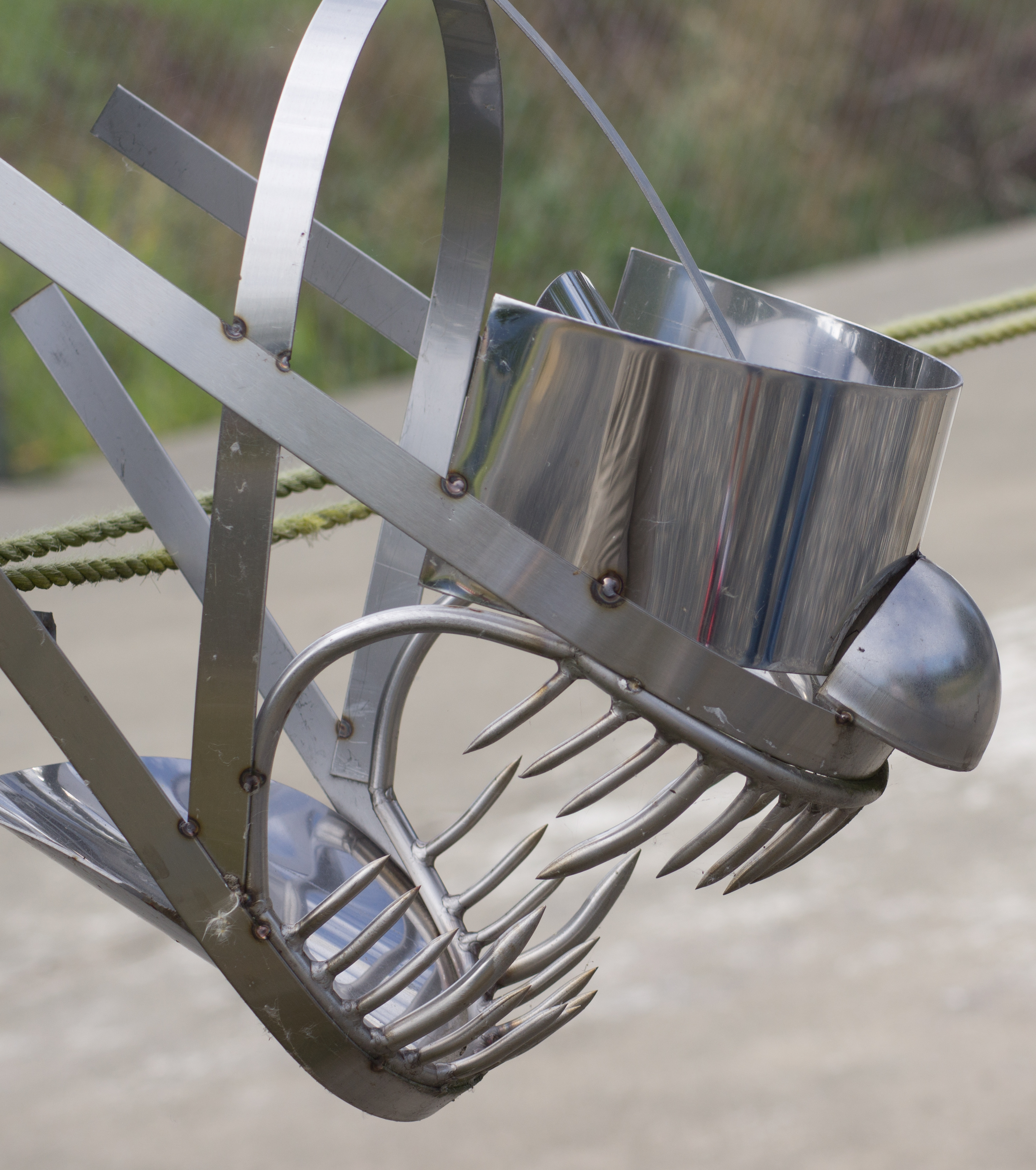
A macabre mask captures the anger and pain I overheard in the phone call. (Created by an incredible metal-working artist in Chilliwack, BC)

A macabre mask captures the anger and pain I overheard in the phone call. (Created by an incredible metal-working artist in Chilliwack, BC)

Faces of Washington

For as much fun as someone can have in Washington, DC, there is a certain stoicism that residents have as they walk the streets, braced against the cold and wet of Spring.

I have tried to capture some of the emotions that ride just below the surface.

The word was “Thirsty”

The result of another writing exercise…and the slow recognition that almost everyone I write about is seriously messed from by previous relationships. Ah, hindsight.

“Thirsty?” Jim asked, as he watched Phil throw back yet another pint of beer without coming up for a breath.

“L’il bit,” was all Phil would say as he signaled the bartender for another round.

Jim had seen Phil drink before, but there was something different tonight; something desperate about the way Phil was pounding them back that reminded Jim of a man who was trying to drown himself 12 ounces at a time.

“Something you wanna talk about?” he asked, as he watched Phil connect the sweat rings left on the bar by the humid glasses; a massive game of connect-the-dots with no picture in sight.

Phil just sat there, head down, slightly slumped forward. The fact that his eyes were open was Jim’s only clue that he hadn’t fallen asleep; that and the random ministrations of a finger on autopilot, running across the bar.

Without Jim realizing it had happened, two more pints had suddenly shown up on the bar, bubbles rising skyward to form a frothy blanket across the top of the glass. Jim looked at his own mostly full glass and realized that he was falling seriously behind. Over the sound of his own gulping, he thought he heard Phil say something.

He looked over to see Phil staring at him with very weary eyes. Jim shuddered. Phil was only two years older than his own 42 years, but right now, he had the eyes of someone twice as old; someone who had been run over by life and was too tired to hide it.

“She called today,” said a voice that seemed to come from nowhere. “She called the office.”

Without explanation, Jim knew that “she” was Phil’s ex-wife Jacklyn; a wraith who liked to appear every so often to throw Phil off kilter. It wasn’t anything malicious, mind you. It was just that neither of them had ever really accepted that they were divorced. Phil and Jacklyn were proof that no matter how much two people love each other, no matter how much you live for the other’s company, that is still no guarantee of a successful marriage.

“How is she?” Jim asked, as much to fill the void as out of interest.

“Dunno,” Phil replied, between mouthfuls of beer. “I was out.”

A new low, Jim thought. Phil hadn’t even spoken to her and he was in a state. This didn’t bode well for the rest of the evening.

Beautiful sadness was the first thing I thought when I lined up this shot (Tofino)

Beautiful sadness was the first thing I thought when I lined up this shot (Tofino)

Star Gazer

I sit on my front step,

staring up at the sky,

and I see her face before mine.

The light of the waning moon

mingles with strands of her hair of pitch

and shines off the lock o’er her brow.


Her smiling eyes stare back at me

and myriad stars twinkle

in the moist dark pools.

I dive into this ocean,

the universe of my destiny,

to swim among creatures fantastical.


The warmth of her body

in the cool evening air

waves across me with its welcoming tide;

and the sweet aroma of her tropical breath

is a nectar upon which I feed;

A breath of life and love,

rejuvenating my soul.


The air is disturbed

by the rise and fall of her chest,

and scarf slides from her shoulder.

The colours of her garment

flicker briefly in the moon,

as its light passes through thin matter,

and the silence is broken

by the light shuffle of silk

against her satin flesh.


I grow drunk on her perfume;

I’m lightened by the joy of her smile,

and all the concerns of the day

melt with her touch.

She is my universe

and I shall never want.

Image

(Blue moon over Chilliwack, BC.)