Demystifying Expertise

expertise-equation

Each of us tends to undersell (or completely disbelieve) our expertise on subjects that are near and dear to our hearts. Expertise, we believe, is something other people have.

And yet, I am convinced that we are more expert than we think. And fortunately, we are living in a time where methods to convince others of our expertise has never been easier.

Watch my recent Facebook Live video Demystifying Expertise and see if you agree.


The Majesty of Old World Faith – review

Basilica Ste Anne de Beaupre

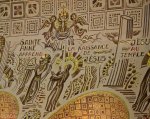
A short drive to the east of Quebec City is the majestic Basilica of Sainte-Anne-de-Beaupre, which has been credited by the Catholic Church with miracles related to curing the sick and disabled. Reflecting this history, you are immediately presented with a collection of crutches and braces upon entering the church.

A popular destination for both tourists and pilgrims alike, the church is easily visible from the highway and is a common point of interest on bus tours of the area. For the drivers, although street parking is possible, it is highly unlikely; instead, we took advantage of a small parking lot nearby that charged $5.

Feeling much more imposing from the outside than its sibling in Montreal—Notre-Dame Basilica—it is less dramatic once you step through the great doors. The lighting is much brighter than with Notre-Dame (less moody or awe-inspiring), but that gives you plenty of opportunities to read Ste. Anne’s life story, told in a series of vignettes across the vault above the main chamber.

With so many tourists wandering around, conversing and taking photos, it can sometimes get a little awkward when pilgrims are praying to the Sainte for her intervention in some personal need. More than once, I witnessed less mindful tourists lining up to get shots of themselves with believers praying in the background. I was unimpressed, and while I am not religious, I felt bad for those who are.

On the lower floor is another chapel with a much lower ceiling, surrounded by scenes of various priests and nuns from the area’s history working with the local indigenous community or immigrants to the New World. (I will not get into the historical and social implications of these interactions.)

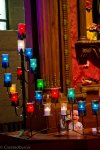
And in the hallway that rings this chamber are several smaller prayer alcoves and rooms dedicated to Mary or past priests and nuns.

Within walking distance, you will find a variety of restaurants. Those on the narrow town streets tend to be coffee and souvenir shops, while those off the highway are fast-food joints like Tim Hortons and A&W. A couple minutes west on the highway, you will find Restaurant Les Artistes, a true roadside diner. There is also a gift shop on the Basilica grounds, but I did not visit these.

Even if you’re not particularly religious, the Basilica of Sainte-Anne-de-Beaupre has much to offer as a tourism destination because I think more than Notre-Dame, it offers a true glimpse into the role of the Church in Quebec’s history and the faith of its current believers.

Malnourished with malinformation

KnowledgeI’d argue that any amount of knowledge is a good thing. It is a little bit of information that is likely to trip you up.

As many of you know, I am a science and medicine writer in another life—the more lucrative one, but that’s not saying much—and so I spend many of my days immersed in the worlds of scientific and medical discoveries and blundering. I even spent several years working at a biochemistry bench as a scientist—you may genuflect, now—so I know the world of which I speak.

For this reason, I tend to view science and medicine as a work-in-progress, as so much noise with moments of signal. Rarely do I herald the hype and equally rarely do I despair the bumps.

To my friends who see every announcement as a breakthrough, I am a cynic. And likewise, to everyone who pounces on every setback as evidence of mass conspiracy, I am a complicit shill. Whatever.

The challenge comes when I engage in a discussion of the topic du jour, because more often than not, the person with whom I am talking is adamant that he or she knows the truth. They are empowered by something they have heard or read from a renown expert. They have information.

(Let me state here that I do not believe that I am the holder of all truths. I do feel, however, that I have a good handle on what I do not know, and just as importantly, what is not yet known for certain.)

So, let’s start with some definitions (purely mine) of information types:

Information: A collection of facts about a subject upon which someone can formulate a testable theory or postulate a conjecture.

Misinformation: Incorrect declarations that potentially lead one to false conclusions.

Disinformation: Knowingly false declarations for the purposes of misleading another group (e.g., counter-espionage, propaganda).
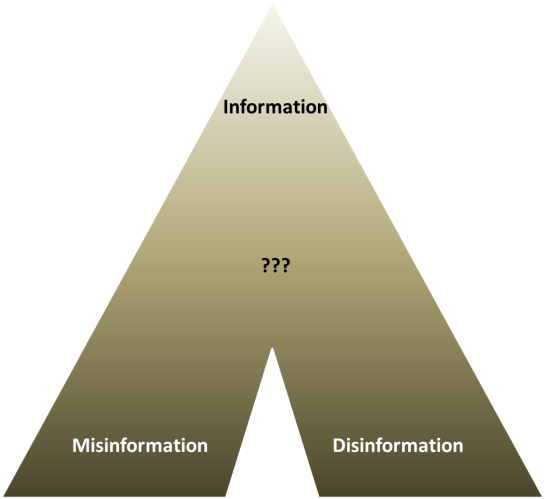
information triangle

I suggest, however, that we need another category to address the shade of grey between the positives of information and the negatives of mis- and disinformation.

Following the model of nutrition versus starvation, I propose we call this new category malinformation, with the following definition:

Malinformation: A collection of facts that, while true, is insufficient to formulate a definitive conclusion without the support of further facts.

Just as a malnourished person is not starving, but rather suffers the effects of an insufficient blend and quantity of nutrients to experience balanced health, a malinformed individual is not wrong per se, but rather suffers the effects of an insufficient blend and quantity of facts to experience balanced knowledge and understanding.

For example, people who change their eating habits because they read about a single study that showed a specific food extract reduced tumour size in mice. Or a clinician who has created a behavioural modification program to reduce addiction based on a thought exercise using largely unrelated studies.

Any of these decisions are based on legitimate data from legitimate studies, but often ignore (or simply don’t look for) alternative and/or possibly conflicting data from equally legitimate studies. Rather than analyze all available data before generating a theory, they find the malinformation that supports their beliefs and then stop; a little bit of data being taken to conclusions that simply are not supported.

Boom-bust

Maybe they’re right. But more likely, it is much more complicated.

In conversation, I find the malinformed much more intractable than the ill-informed. With the latter, there is a chance you can correct the misinformation. With the former, however, the mere fact that the malinformation is correct seems to be sufficient cause for them to defend the castle they have built in the sky. When you “yes, but” them, all they tend to hear is the “yes”.

In fairness, all information is technically malinformation as we will never have access to the complete knowledge of the universe. We are always going to be forced to make decisions based on limited knowledge.

But where more knowledge is available, I think there is duty to examine and understand it before becoming intractable in our positions.

If there is a newspaper article about a new scientific discovery, efforts should be made to learn more about the limitations of the science that led to the discovery. How far can you realistically extrapolate from those few data points?

In biomedical research, that which occurs in a mouse is, at best, a clue to what might happen in a human. Nothing more.

It could lead to the next step in scientific inquiry—the actual purpose of science—or to a dead end.

Belief is nice, but unless that belief is well founded on broad and balanced information, it is limiting and might be dangerous.

(Or at least, as far as I know based on my understanding of the available information.)

Left-handed (DNA) compliment

While attending the surprise birthday party for a friend in the sciences, I noticed he owned a coffee mug from a group called Life Sciences Career Development Society based at the University of Toronto. Actually, to be more accurate, what caught my eye was the DNA double-helix on the mug…and the fact that it was wrong.

Wrong

BOOM! My head explodes.

As someone with biochemistry & genetics degrees who has written about the life sciences for ~15 years, this seemingly innocuous error drives me crazy. This must be how copy editors feel when they see a misused semi-colon (and I’m sorry about that).

right v wrong

For the non-biochemists, through a characteristic known as chirality (look it up…too hard to explain here), the typical DNA double-helix in human cells—the famous Watson-Crick-Franklin structure or B-DNA—has a right-handed helix. This means that if you could see the double-helix (above) and let your fingers follow along the curve of one side as it wraps around the other, you could only do this comfortably with your right hand.

You can see that in an example of a single helix that curves either to the left (left) or the right (right).

handed

Unfortunately, somewhere in the mists of science illustrations time, an artist drew the double-helix of DNA in the wrong direction and that double-helical abomination has perpetuated ad nauseum, including irritatingly enough, in science publications and scientific logos such as a recent health article in the Toronto Star (image below), the cover of a sci-fi novel and the LSCDS logo.

DNA - backwards

And if I only saw this in 50% of the images, I’d be irritated but probably not the raving loony I am now. But no, this freak of nature is everywhere. The correct right-handed DNA illustration is the anomaly.

So why does this matter? Maybe it doesn’t, and I am just a raving loony.

Certifiable loony!

Certifiable loony!

But for me, I struggle with what else might be wrong in a life science or healthcare story if they can’t get the DNA helix right. Do I trust the math of an investment planner who doesn’t know that four quarters equals one dollar?

Luckily, the fix is an easy one. Simply mirror the image you have (not turn it upside down) and the left-handed double-helix becomes a right-handed one. (In a mirror, your actual left hand looks like a right hand.)

So, medical illustrators everywhere, please fix your catalogues of scientific illustrations. My head can’t take too many more explosions.

So much better

Nerves already calming.

[Also, from a design perspective, up and to the right is more palatable for North American audiences as it implies future success (e.g., rising value). Has nothing to do with handedness, here.]

For the more biochemically savvy:

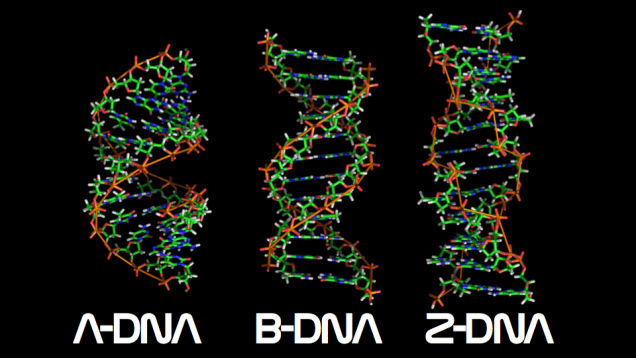
Yes, there is left-handed DNA, which is also known as Z-DNA. But as you can see from the illustration below, its structure is significantly different from the smooth-flowing curves of B-DNA (and the equally unusual A-DNA).

Two rights don't make a left

Two rights don’t make a left

The job you hate is killing your creative spirit

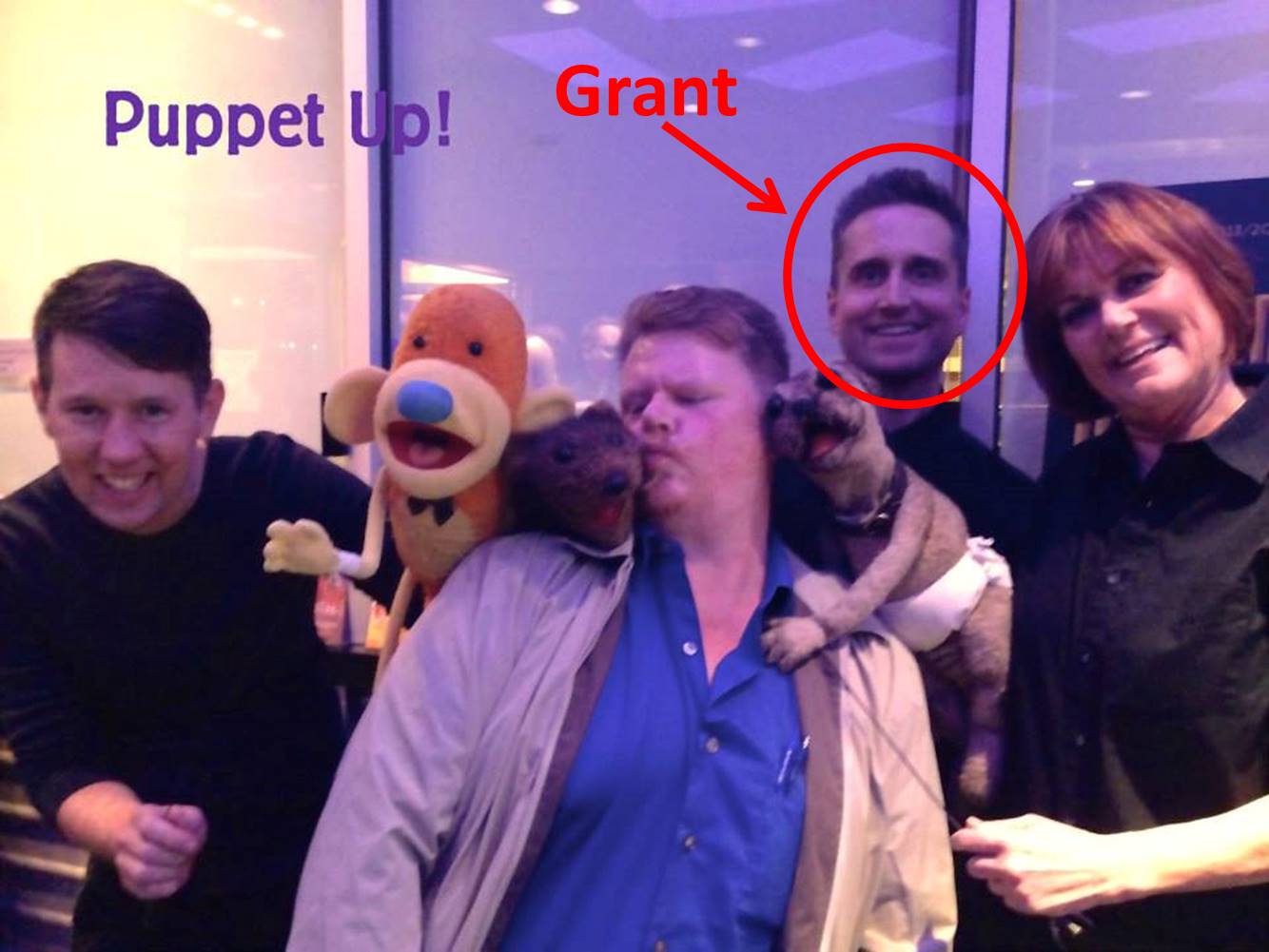
The wonderful Grant and his weasel buddy join me for a post-show photo (also shown Peggy Etra and Brian Clark).

The wonderful Grant and his weasel buddy join me for a post-show photo (also shown Peggy Etra and Brian Clark).

Grant Baciocco is an amazingly talented actor and puppeteer I had the good fortune to meet online and then in person when he came to Toronto with the improv puppetry show PuppetUp! (about which I have raved extensively elsewhere).

Well, aside from his amazing talent, he also has a wonderful creative spirit, both in the sense of what he creates and how he tries to inspire others to be open to their own inner creative spirit. To this latter point, he has a wonderful blog Grantblog: Ruminations & Pomposity that I heartily recommend.

At the beginning of each week, he posts Creative Mondays and today was no exception. Today he talked about “A job you hate”, which I excerpt below:

For years after college, about ten in fact, I worked as a substitute teacher.  It was an okay job, certainly flexible enough and I was making money, but by the end of those ten years I was starting to burn out because it was not the job I wanted to be doing.  I was good at it and several times I was told I should get my teaching credential because I was such a good teacher.  But deep inside of me I could feel a darkness building up because I was doing a job I absolutely hated.

The moment I made the decision to stop subbing and focus on The Radio Adventures of Dr. Floyd, it felt like a weight was instantly lifted from my chest.  I attempted, for the millionth time, to lose weight and it was actually working (lost 80 pounds).  I was just a million times happier than I was when I was subbing.  And guess what?  I became more creative!  This was the creative boom era for Dr. Floyd, because I was doing something I love.

Grant’s is a lesson too many of us learn very late in life (NOTE: I did not say “too late in life”…it is NEVER too late).

In my case, I was fortunate enough to have a series of occupations I loved for a period…scientist, science writer, media relations, advertising copywriter…but with each, I stayed in the occupation long after I had fallen out of love with the choice. I had to be a certain amount of miserable before I was brave enough to jump.

But two years ago, I completely jumped ship to pursue my true love: story telling (screenplays, novel, sketches, short stories). I’m still not making money off any of this, so I live on freelance magazine writing and ad copywriting. But to Tiffany’s point, it is what I do to eat and sleep under a roof.

If you are fortunate to know your passion—it can take time to figure out what it is—then you must make it happen to find happiness (hunh, “happen” and “happiness”…so similar).

And if you haven’t fully defined your passion yet, go with your gut until you do. Explore the universe of opportunities, until you do. You may not end up the financially richest person on the planet, but you’ll definitely be one of the spiritually richest.

If you don’t want to take it from me, then take it from Grant. Find your happiness and pursue it with everything you have. Despite appearances, you really do have nothing to lose and everything to gain.


You can follow Grant on Twitter: @ToasterBoy

On Second Thought

Do you think?

Why do we give our second thoughts so much more sway than our firsts? What is so magical about the second thought that makes it more believable, more honest, more sensible?

I had second thoughts about writing this simply because it was prompted by a conversation with a friend who is struggling with a dilemma. Would my friend be upset I was talking about him or her? Making light of his or her dilemma? Sharing secrets that weren’t mine?

I can deal with that.

Rare is the person who completely trusts his gut; who goes with the first thought that comes into his head. To the outside world, such a person is often considered rash or impulsive, perhaps even flighty. Rarely is he described as definitive or confident.

Second thought, in contrast, is seen as considered, rational, reasoned…well, thoughtful (or thought full).

The Senate of Canada’s Parliament has oft been described as the chamber of sober second thought, as though the House of Commons is populated by ADHD-riddled chickens, prone to explode at the slightest provocation.

(The realities of the Canadian Parliamentary system are fodder for a different blog post.)

The concept of sobriety does point to one of the benefits of second thought. The decision not to pursue flights of drunken fancy such as driving home after drinking too much rather than take a taxi. But while this points to the benefits of second thought, it also points to its source: Fear.

We have and listen to second thoughts because we are afraid. We are afraid that our first thought was ill-considered (rash) and might result in failure. And because we don’t want to take responsibility for that failure, we build a rationale for our alternative thoughts, thus making ourselves more confident in our decision.

The harsh truth, however, is that no matter what our final decision, there is always a risk of failure, perhaps catastrophic. The Titanic and Hindenburg were well-considered ventures based on sound and common practices. It was the unforeseen (if not unforeseeable) incidences that doomed the exercises.

To a greater or lesser extent, gut instincts and reactions are You unencumbered by rules and conventions. They represent the way you view the world and yourself without the censorship of social pressures. Thus, I believe, they more accurately represent your goals and desires, and ultimately what will make you happy.

Now, this is not a belief that was reasoned on the basis of careful study. If nothing else, that would defeat my argument. It does, however come from a lifetime of observing others and myself.

I have no reason to lie to myself when under my own control, in the absence of other influences—chemical or human. Thus, my gut instinct is my truth.

This doesn’t mean that I have to follow it—there may be extenuating circumstances to go another way—but I should never deny the instinct.

In denying it, I will never have the opportunity to build faith in it, and ultimately, second thought is a lack of faith in myself.

confident

Risking it all

Risk

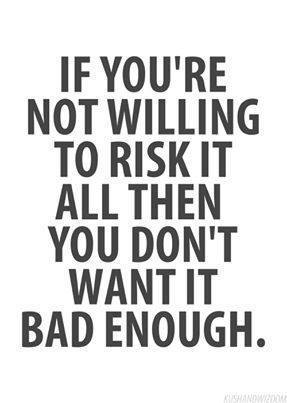
A friend of mine recently posted the above sign on her Facebook page, and I had no choice but to share it with my Facebook community (and now you). Although I find the sentiment a little negatively toned as worded, I completely agree with it.

As many of you know, I jumped off a cliff about 18 months ago, completely turning my life upside down in pursuit of the dream of being a screenwriter. To do that, I have made a large number of sacrifices to the way my life was, but in the interim, I have discovered some wonderful things—about me and my friends—that I might never have learned if I hadn’t.

Last week, I had drinks with another friend, someone who had made a similar jump to mine. Like me, he has had some wonderful times during this phase of his life, but he is also struggling with doubt and the sense that the years of effort haven’t paid off as he would have liked. Doubt is a thing I understand.

At this moment, I have no doubt or at least not about my dream. It seems as real and viable as ever. Its realization is simply a matter of time in and work on my part. I revel in these moments and wish my friend could feel the same way right now.

When doubt does creep in, however, I do my best to give it context.

The doubt: Can I afford this conference? Is this screenplay any good? Have I made a mistake? Am I a fraud?

The context: What is the alternative?

I look back at my life before I made the jump and I realize that I can’t go back to that. This is not to say that it was all miserable…I had love and support; I enjoyed aspects of my jobs; I met wonderful people. But in many ways, all of those positives were for naught back then because I was miserable.

I was living my life for other people. I based my identity on my job and what I did for other people. I was only as good, as valuable, as loved as other people told me I was, and deep inside, I truly suspected they were lying. Through no fault of theirs, I couldn’t have faith in them because I didn’t have faith in me.

So, when I finally jumped off the cliff, I realized that what I was risking was a life of well masked misery and distrust. Hardly much of a risk from my perspective.

I understand that others cannot always jump as wholeheartedly as I did. They have responsibilities that I did not have.

I have no children. My wife and I were separating for other reasons (nice to say she remains my strongest and most loving advocate and supporter). My family responsibilities had all but disappeared. My jumping would leave no one in the lurch.

So, maybe you can’t jump like I did. I’m not suggesting that it is right for everyone. But to not jump at all in pursuit of a passion is folly.

Every day you maintain the lie, whatever your personal lie is, is another day you risk it all.

It will be scary. You will have doubts. But you’re not doing anyone any favours, least of all yourself, by continuing to pursue activities, attitudes or a life that is crushing you.

I hope my friend relocates the wonder in what he is doing and continues to explore his adventure. If he will let me, I am happy to help him in any way I can.

He is a very lucky man because he is surrounded by love and support from a community of people who adore him and want him to be happy. I hope he can take energy from that. I know I do.

Faith

Image

Faith is believing when common sense tells you not to.

– Fred Gailey (John Payne), Miracle on 34th Street


We all have doubts.

Doubt that we are good enough to accomplish our goals. Doubt that our goals are even realistic or rational.

And sadly, most if not all of us have had or currently have a long line of people who are more than willing to feed those doubts with their own. Often, their superficial motive is to be supportive, to help cushion the blow of failure, to save you from certain doom. But more likely, their motive is to take comfort in the belief that your doubts make it okay for them to have doubts about their own lives.

But, if you’re lucky, you have those special few in your life who have absolutely no doubt in your future success. They’re the ones who listen to your ideas with a smile, an eager nod, and perhaps some sage constructive advice to help make your goals even more realistic.

The latter group are the people you need to heed, for they see the potential of your efforts in the absence of your fears and just as importantly, in the absence of their own.

I am not a religious man—although I have become quite spiritual—so faith has never been top of mind for me until recently. It’s not that I didn’t have faith, in hindsight, but rather that I had a very narrow definition of it. And, like my friends for me, it was easy to have faith in things external. It was faith in myself that I lacked.

More recently, however, I have realized that faith isn’t about rejecting the possibility of failure. Rather it is about accepting the possibility of failure but with the further understanding that failure does not mean your journey has ended.

Failure does not put your destination off limits. It is merely a diversion from your original path to that destination.

I know I am a good writer and story teller, but I also know I have challenges ahead in translating those skills into the money I need to make to continue writing and story telling.

Faith comes in telling myself (and believing) that through hard work on my part (e.g., networking, classes, practice) and unknown forces outside of my control and understanding, those challenges will dissipate at the appropriate time.

Like those well-intentioned naysayers, drawing a line in the sand about giving up (e.g., going back to my former career) only gives voice to my doubts. I will not allow myself to do that anymore.

I have faith that I will endure failure and that I will succeed at whatever it is I am to accomplish, no matter what street I live on.

I wish you that faith as well.


For an interesting piece on questions about talent and faith therein, check out this post from Plotting Bunnies: The ingredients of Writing: Talent…?

(Image is property of owner and is used without permission because I have faith they’ll get my point.)

Phoenix

Image

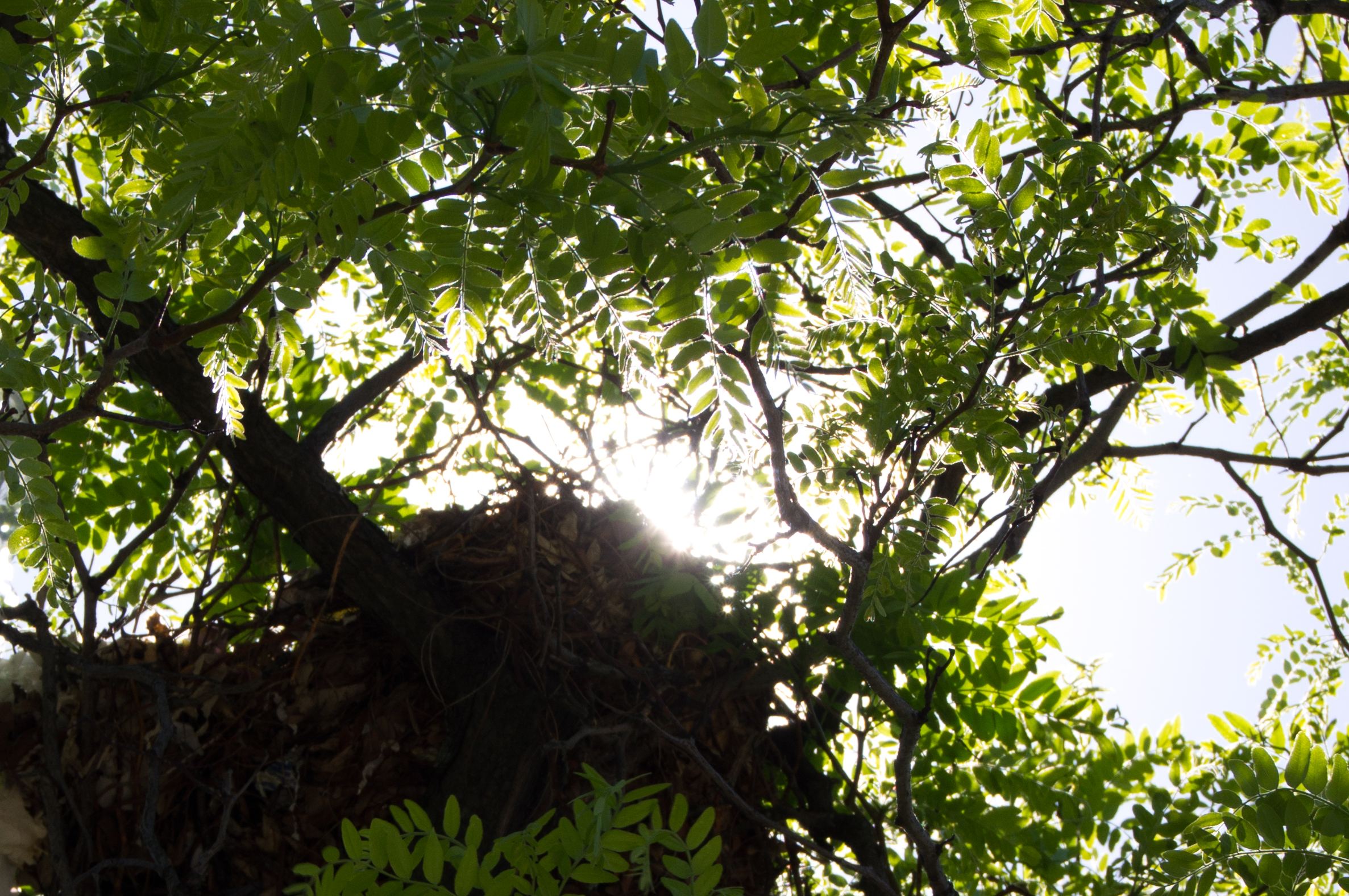
The phoenix rises,

Feet firmly planted

In death and decay,

To stretch its wings

And catch the rays

Of life-giving Phoebus.

Wind rustles quiet

Giving brazen birth

To feathered choirs

Of heavenly song.

A magic silhouette

Shadows the orb.

Earth is forgotten

In a leap of faith.