The word was “Thirsty”

The result of another writing exercise…and the slow recognition that almost everyone I write about is seriously messed from by previous relationships. Ah, hindsight.

“Thirsty?” Jim asked, as he watched Phil throw back yet another pint of beer without coming up for a breath.

“L’il bit,” was all Phil would say as he signaled the bartender for another round.

Jim had seen Phil drink before, but there was something different tonight; something desperate about the way Phil was pounding them back that reminded Jim of a man who was trying to drown himself 12 ounces at a time.

“Something you wanna talk about?” he asked, as he watched Phil connect the sweat rings left on the bar by the humid glasses; a massive game of connect-the-dots with no picture in sight.

Phil just sat there, head down, slightly slumped forward. The fact that his eyes were open was Jim’s only clue that he hadn’t fallen asleep; that and the random ministrations of a finger on autopilot, running across the bar.

Without Jim realizing it had happened, two more pints had suddenly shown up on the bar, bubbles rising skyward to form a frothy blanket across the top of the glass. Jim looked at his own mostly full glass and realized that he was falling seriously behind. Over the sound of his own gulping, he thought he heard Phil say something.

He looked over to see Phil staring at him with very weary eyes. Jim shuddered. Phil was only two years older than his own 42 years, but right now, he had the eyes of someone twice as old; someone who had been run over by life and was too tired to hide it.

“She called today,” said a voice that seemed to come from nowhere. “She called the office.”

Without explanation, Jim knew that “she” was Phil’s ex-wife Jacklyn; a wraith who liked to appear every so often to throw Phil off kilter. It wasn’t anything malicious, mind you. It was just that neither of them had ever really accepted that they were divorced. Phil and Jacklyn were proof that no matter how much two people love each other, no matter how much you live for the other’s company, that is still no guarantee of a successful marriage.

“How is she?” Jim asked, as much to fill the void as out of interest.

“Dunno,” Phil replied, between mouthfuls of beer. “I was out.”

A new low, Jim thought. Phil hadn’t even spoken to her and he was in a state. This didn’t bode well for the rest of the evening.

Beautiful sadness was the first thing I thought when I lined up this shot (Tofino)

Beautiful sadness was the first thing I thought when I lined up this shot (Tofino)

Travel within and without – British Columbia

It may sound ridiculous to say, but wherever and whenever I travel, I find symbols of my inner journey, the personal transit that extends beyond airline tickets, overstuffed luggage, and souvenir shops. And it’s often not until I arrive home to look at the images within my camera, that I see the patterns.

Am I imprinting meaning where none inherently exists? Does it matter?

Whether inherent or imposed, the imagining of a pattern changes me and the pattern becomes true.

The following are a selection of images from my travels last year through British Columbia, a break before I began on the next great journey of my life, and one I take alone.

Sloppy Seconds™

Do you have trouble coming up with original ideas? Do you think you suck because your ideas blow?

Well, worry no more. Let me introduce you to Sloppy Seconds™, the concept that’ll put spunk back into your body.

Sloppy Seconds™ is all about taking what somebody else started and going one step further for a bigger finish. It’s about taking the worry out of satisfying those opening urges and putting all of your focus on the climax. Ideas that will send a chill down everyone’s spine and get them crying out for more.

How can I enjoy Sloppy Seconds™, you ask? Well, let’s get the ball rolling.

You know that feeling when something is on the tip of your tongue, but you can’t quite put your finger on it? Well, let somebody else swallow the responsibility of getting things started. Let them put it out there and once it’s on display, grab hold of it, take it all the way in, and make it yours by adding that special little something you have inside you.

If you do that, you’ll find everyone leaves satisfied, and if you go at it long enough, perhaps even sated.

And who knows? When you’re done with it, someone else may come along and make it theirs with a sloppy third. The more people who pile on, typically, the better it gets and the more fun everyone has.

So, the next time you find yourself frustrated, blocked, unable to get things started, give Sloppy Seconds™ a try. Your hands may get tired, but you’ll have a smile on your face.

Sloppy Seconds™: Coming to a location near you.

Image

BTW: This is talking about brainstorming…you know, starting with someone else’s creative idea and then adding your own personal spin to get a story started. I’m not sure what you were thinking about.

Star Gazer

I sit on my front step,

staring up at the sky,

and I see her face before mine.

The light of the waning moon

mingles with strands of her hair of pitch

and shines off the lock o’er her brow.


Her smiling eyes stare back at me

and myriad stars twinkle

in the moist dark pools.

I dive into this ocean,

the universe of my destiny,

to swim among creatures fantastical.


The warmth of her body

in the cool evening air

waves across me with its welcoming tide;

and the sweet aroma of her tropical breath

is a nectar upon which I feed;

A breath of life and love,

rejuvenating my soul.


The air is disturbed

by the rise and fall of her chest,

and scarf slides from her shoulder.

The colours of her garment

flicker briefly in the moon,

as its light passes through thin matter,

and the silence is broken

by the light shuffle of silk

against her satin flesh.


I grow drunk on her perfume;

I’m lightened by the joy of her smile,

and all the concerns of the day

melt with her touch.

She is my universe

and I shall never want.

Image

(Blue moon over Chilliwack, BC.)


Unpacking baggage – Part Two

In Part One, I discussed the idea that to understand any characters you create and to make them more alive to your audience, you need to understand their baggage, the emotional and psychological events of their past that informs/moulds their behaviours and responses today. Today, I want to talk about making sure you let your audience in on the cosmic joke.

A couple years ago, I wrote a pilot episode for a new sitcom that I was developing—and still am; oh producers, where are’t thou?—and I asked my long suffering wife to read the teleplay.

My concern, I explained, was that of the four main characters, I didn’t feel I had a handle on three. The protagonist I nailed—knew him inside and out—but the other three seemed a little superficial. I wanted a second opinion, though, in case I was just being hard on myself.

Upon reading the script, she asked me a question. [SIDEBAR: Keep all friends who ask questions before offering opinions.]

Which of the four characters did I think I was most like? The protagonist, hands down. She smiled.

Based on her single reading without any background information, she proceeded to describe the other three characters in the script. And nailed them! She matched almost perfectly what I had had in mind for them.

But as was her wont—never in a malicious way—she then burst my bubble by telling me that she had almost no clue as to who the protagonist was, other than he was very similar to me. Without the benefit of 10 years of marriage, the protagonist was a black box. A name followed by narrative action or dialogue.

We walked through scenes and I explained motivations. My explanations made sense to her, but they weren’t on the page. My protagonist was so close to me that it never occurred to me that things weren’t obvious.

More recently, I’ve had the pleasure of reading other people’s developing screenplays, and very often, one of the problems I find as a reader is that I don’t have a clear vision of a character’s motivations in a scene. Why did they do what they did, say what they said?

One fellow student in particular I pressed for explanations about some characters in her otherwise amazing script (which horrified the bejeezus out of me btw). She waxed eloquent on her characters’ motivations and histories, offering amazing little vignettes from their pasts that helped explain why her characters were now behaving as they were.

But it wasn’t on the page!

Before I go further, this is NOT a call for more flashbacks (or cowbells). I am addicted to flashbacks, so I understand their power. Please avoid unless it is really there to move your plot along and not just a underhanded form of exposition designed to keep you from having to learn how to write subtext.

My recommendation to my friend, and something I will do on occasion, is to actually write out those vignettes, full narrative and dialogue, but only for myself and not for inclusion with the screenplay. Don’t just think about them, though. Actively write them out. For it is the act of writing that you will find the emotion of the scene, and it is that emotion that will provide the subtext of your screenplay.

That emotion will inform your dialogue and narrative word choice. That emotion will mould the flow and cadence of your dialogue (e.g., short, terse response vs. raving diatribe). It will also help inform how other characters will respond.

As I have experienced, having this information in my head makes it an intellectual exercise, with all of the cold aloofness that goes with it. But putting it on paper forces you to acknowledge and release those demons. It activates your lizard brain, as another friend of mine liked to call it. It is more visceral, more real.

It also has the added benefit of giving you something back to which you can refer when working on the story after six months of doing something else.

When someone reads your work or an actor performs it, you want to make it as easy as possible for them to get your characters, to understand the turmoil in which your characters function. Except at the highest levels of your story, do not ask your audience to think. It takes them out of the story.

You want them to feel the anger; the amusement; the sadness. If your protagonist is being oppressed, you want your audience to feel angry at the mistreatment, frustrated by the inability to change what is happening, and vindicated/exhilarated when your protagonist triumphs.

They can think on the way home from the theatre or after they close the back cover of the book.

If it is not on the page, none of this will happen. You audience will not engage and your story will suffer.

Sure, it sounds like extra work—it is!—but you’ve already invested this much time and effort on your story. Do you really want to risk that being all for nought because you’re the only one who gets why this story is important?

Who is this man and what is he thinking? What is he waiting for? If he looked at me, would I see boredom, anger, fear, joy?

Image

(Taken in Tofino, British Columbia.)

No “new”s

Where do you get your ideas? It’s a common question and my answer tends to stun people, if only for its honesty. I steal them.

I don’t plagiarize. That would be wrong. But I seriously doubt that I could tell a truly original story if I tried. It’s not that I lack faith in my abilities, but rather that I simply don’t think there are any truly original stories to tell.

Every story I develop in the future is, on some level, based on one or more stories I have read, heard or seen throughout my life. And I’m okay with that, because what makes my story mine and not those is me, my unique spin on the age-old tales.

I was in a screenwriting workshop years ago and the instructor had us do an exercise where we all watched the same scene from the movie After Hours (a brilliant piece of psychotic filmmaking if ever there was one). When the scene was over—maybe 3 minutes of Griffen Dunne and Rosana Arquette in a coffee shop at night—he had each of us write what happened next.

When we read our scenes to the class what we quickly discovered was that we had 8 different movies, one from each workshopper. Eight people working from the same starting point, 8 movies.

Everybody steals. Always have.

Shakespeare stole his plotlines. Romeo & Juliet was a total rip-off of West Side Story.

20,000 Leagues Under The Sea and Finding Nemo? Same lead character name and they were underwater.

These are not coincidences, my friends.

So cut yourself some slack. You will bring something of yourself to your re-interpretation of other stories and you will mix and match them in ways that no one else would.

Hell, Laurence Olivier, Kenneth Branagh and Mel Gibson each filmed Hamlet and none of them truly matches the play that Shakespeare wrote. They may be the same starting point, but they are not the same movie. (The links are all to the To Be or Not To Be speech)

And if you’ve given your work to someone else to critique, and the first thing they give back to you is “This is a little too much like…”, STOP READING THEIR ADVICE because most of the rest of it is likely ill-conceived or just plain stupid.

Other people have taken photos of bees on flowers, but no one took the photo I took of that particular bee on that particular flower.

If you wrote a story when you were 20 and then wrote a story with the same plot when you were 40, I can pretty much guarantee that those would end up being two very different stories.

So relax. Tell your story, no matter where it comes from. Because in the end, you will make it your story.

PS. If you want a great book that further proves this point, check out Peter Desberg and Jeffrey Davis’s Show Me The Funny. More on this book in a future post.

PPS. After Hours was a rip-off–sorry, modern day interpretation–of Homer’s The Odyssey, which was also the premise of Oh Brother, Where Are’t Thou.

Tach-ing out

I do not take drugs. Well, okay, the odd Extra Strength Tylenol. But hey, all the kids with headaches were doing it.

Anyways, it is my understanding that cocaine brings the sensation of clarity and sends your entire being into a state of overdrive. Your engine doesn’t idle. It runs at full speed and if you’re lucky, you’ll never shift it from neutral to drive or you’ll explode into a wall.

Whether it’s true or not, that’s what I feel like right now, in the creative sense.

Everything about me is running at full speed and then some. Every sense is attuned to the universe and picks up every scintilla of stimulation, translating those sensations into thought and eventually into word.

And while I embrace this period of unbridled energy, particularly after a couple of months of intellectual torpor (or at least that’s what it felt like to me), this constant revving of my creative engines has its problems.

Am I making sense? The words flow out so quickly and the paper cup overflows so easily that I don’t leave myself much time to analyze what I am writing to determine if it isn’t just the word “banana” over and over and over again. (Or the word “over”, for that matter.)

Can I finish anything? Because I find so much joy in the creative process, I worry that I jump from project to project without actually completing anything. Building the seminal moments and scenes for my next screenplay are so much more fun than actually writing 110 pages of dialogue that I am seriously running the risk of waking up two weeks from now surrounded by ideas for 68 movies, but no actual scripts.

How quickly can I become ambidextrous? I have two hands, why can’t I write in two notebooks or on two laptops at the same time? I want to believe that it would cut the noise down by 50%, but something tells me that it would just feed the monster, which would expect 4 times the output. If my toes weren’t the size of rhinoceros heads, perhaps I could up my output even further.

And even if I can finish all of the projects that are exploding out of me, how do I keep them from just hitting the bottleneck of “So, now what?” It took me years, and a very caring friend, to help me deal with the backlog of comedy sketches I wrote during my time at Toronto’s Second City Training Centre and since then.

Must pull my head out of my laptop long enough to transition some of these projects from Word and Final Draft documents into actual films and television shows. (BTW, “pull my head out of my laptop” reads a little weirder than it sounded in my head.)

Oooooh! The ideas are only 30 seconds apart! Must remember my breathing exercises.

Oh god, my creative water broke! Quick, someone get me a notebook, a pen and two Extra Strength Tylenol!

Across the universe – a mental travelogue

(This post is inspired by something I saw earlier today on another blogger’s site. So thanks, storiesbyfrances.)

Whether writing or doing photography, one of my personal goals is to look beyond what is right in front of me, to see objects at levels beyond their macro existence (how metaphysical is that). Given time and attention, patterns form, images present themselves, thoughts meander, reality becomes flexible.

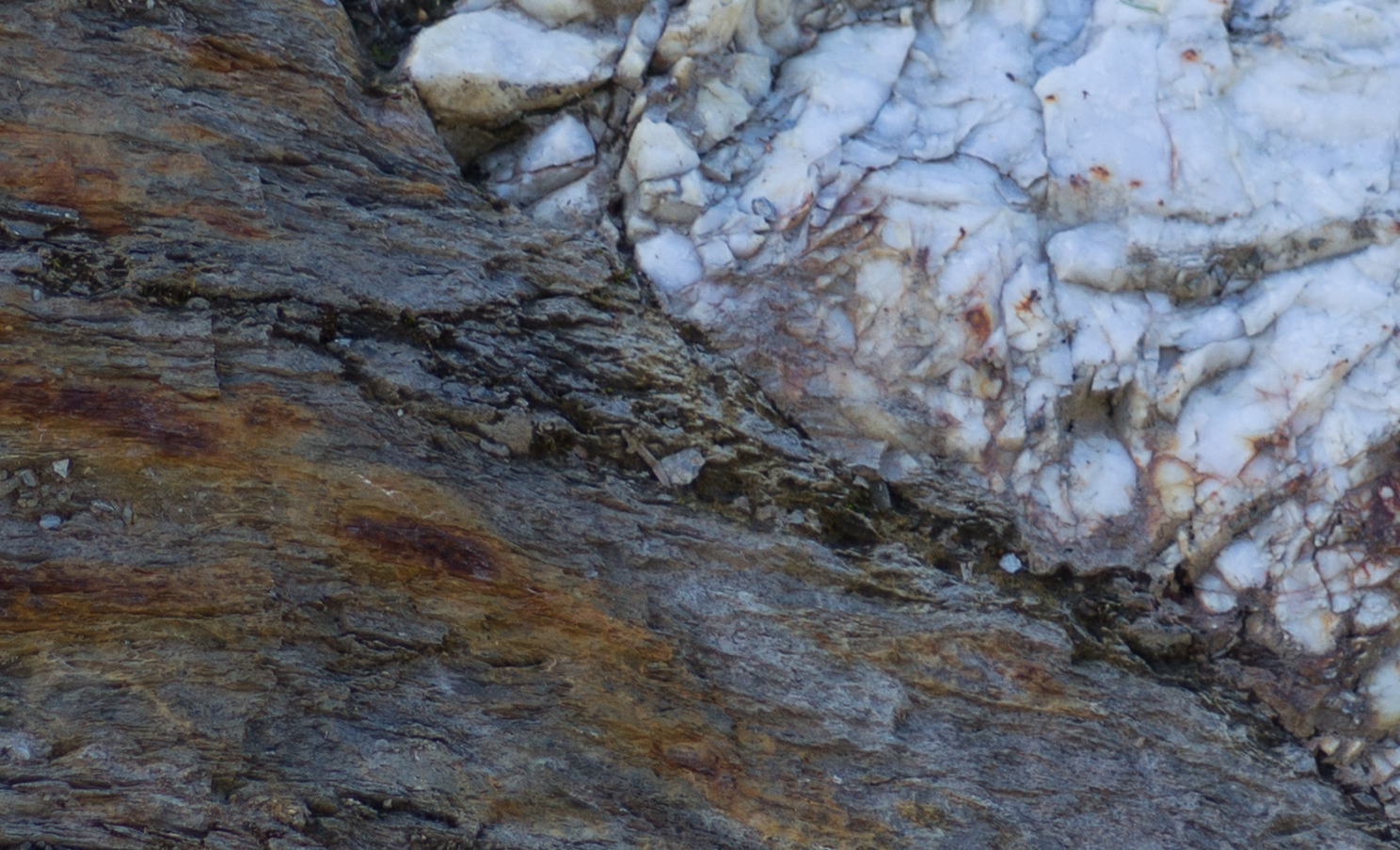
Below, I’ve posted photos taken while traveling through British Columbia last year. I was going to tell you what I saw, but instead have decided to ask you what you see in the images, if anything. For the sake of the wondrous places I visited, however, I will tell you where the photos were taken.

(Botanical Beach, Vancouver Island)

Image

(Botanical Beach, Vancouver Island)

Image

(China Beach, Vancouver Island)Image

(Port Renfrew, Vancouver Island)

Image

(Tofino, Vancouver Island)

Image

Don’t forget to let me know what you see.

I don’t care if we agree; in fact, if you see something I didn’t, then my universe becomes that much larger.

The word was “wine”

As I mentioned earlier (in Thoughts on Thinking), I like a little writing exercise that involves sitting in a bar or restaurant with a notebook and just writing something at random that starts with a word I see nearby. No plan, just writing.

I haven’t done much of this recently–too much “planned” writing–but here is one I did a while ago.


“Wine?” Henry asked as he nervously fumbled with his keys.

Jeanine had only been in town for three hours and already she was beginning to regret her decision.

“Why did I come here?” she admonished herself quietly. “He’s not interested in me. He was just being polite.”

Jeanine had only worked at the peanut plant for three weeks, but since day one she had felt like an outsider; like nuts just weren’t her thing. Henry, however; he had nuts written all over him. In fact, he had the biggest nuts contract in the company. That’s why Jeanine had agreed to come to dinner. She knew he could teach her a lot about nuts.

Suddenly, she realized that he hadn’t continued talking.

“I’m sorry, Henry,” she said in a barely audible, embarrassed whisper. “I must have faded out on you.”

He smiled at her, but there was a sadness behind his eyes. “That’s okay,” he said. “I just wondered if you’d like a glass of wine before we headed off to dinner.”

As he spoke, she watched his lips move, but somehow it was all disconnected; as though the sounds were coming out of a television playing in another room. “Sure,” she mustered. “That would be nice.”

For an almost imperceptible moment, Henry’s gaze hung on her and then his shoulders drooped as he took a shallow breath and rose from the edge of the couch. “White okay, or do you prefer red?”

“White’s fine,” she said. White’s always fine, she thought. She’d stopped drinking red some time ago. The tannic acid left a sour taste in her mouth these days. The oaky smell brought up too many painful memories.

Henry had moved to the kitchen and Jeanine could hear the fridge door open momentarily before sliding shut with a dull pfft. “It’s like you knew my preference,” Jeanine called from the couch, trying to sound lighter than her mood dictated. “But I don’t remember that question being on the job application.”

“I always like to keep a white wine in the fridge. Just in case,” Henry replied. Jeanine couldn’t be sure if he’d missed her little joke or was just ignoring it. Either way, she was glad he hadn’t tried to reply in kind.

Henry re-entered the living room with two large tumblers of wine. A Riesling if Jeanine’s nose still held. “Sorry about the glasses,” he smiled. “I guess you can give the boy a corner office, but you can’t make him shop.”

Jeanine just smiled, as Henry gave her a glass and raised his own. “Here’s to new beginnings,” he toasted. Jeanine hadn’t even realized that she had inhaled, however slightly, but Henry’s demeanor changed instantly.

“Look, Jeanine,” he started, putting his glass on a coaster without even taking a sip, “if this makes you feel awkward or uncertain, please just say so. No hard feelings.” He tried to smile, but his hands instinctively reached for his keys, giving away his unease.

“Shit, I’m blowing it,” Jeanine thought to herself. “No, Henry, please,” she said aloud. “I’m sorry. You asked me over for a drink and for some dinner to discuss work and here I am off in a fog. It’s my fault.”

Unsure what to do or how to approach her, Henry rose and walked across to the stereo to adjust the music level. It gave him a half-second to think. For the company’s biggest sales guy, Henry berated himself for his inability to function one-on-one with people.

Sales was easy. It was getting outside of yourself and being the professional. An actor as much as a sales person. But people? Individuals? Women? They made Henry nervous, for some reason.

It wasn’t Jeanine, but she didn’t know that.

“I’m really glad you asked. I really want to learn more,” she said rapidly to fill the void. Suddenly adding, “About the company.”

“Oh Christ,” she thought. “You sound like a ruddy schoolgirl. Calm down.”

Henry turned back and smiled. “Of course,” he replied, at a loss for what to say next. “I just wanted to make sure you were comfortable. You’ve only been with the company a few weeks and I ask you if you want to see my portfolio. A girl might get the wrong idea, but I want to assure you that this salesman is an honourable one.”

She smiled despite herself. “An honourable salesman?” she laughed. “A bit of an oxymoron, isn’t it?”

It was Henry’s turn to laugh. “Oxymoron,” he repeated. “I’m impressed.”

“Hey, they may not teach us much at York University,” she said mock defensively, “but I came away with a good vocabulary.”

Henry held up his hands in submission. “I surrender. I’m just a poor Ryerson grad. I don’t even think we were taught the word ‘vocabulary’.”

That seemed to have broken the ice a little and they both sat there, quietly, noses into their wine glasses, surreptitiously surveying their companion.

Jeanine was 35. A blonde by birth, a brunette by practice, she had long ago given up any hope of ever getting control of those odd silver hairs that forced their way through into the sunlight every few weeks. And given her fair complexion, sunlight was one thing she avoided religiously.

She was of middling height and had once heard herself described by her art history professor as a cross between Rubens and Botticelli. Unfortunately, she sucked at art history, so she was never sure if she should be flattered, embarrassed, or angry. In any event, she was happy with her figure, even if it was a little over-exuberant in a bathing suit.

And it never seemed to get in her way when it came to sex. By no means easy, she flattered herself, she was playful and for that very reason, had to be careful about her drinking. Everybody, it seems, loves a happy drunk.

Henry was 43 and to ask him, he’d earned every one of those years. In fact, in his eyes, he should have gotten double credit for ten of them; the ones he’d spent married. He’d married shortly after leaving college to begin a career as a traveling salesman. And cliché as it might seem, that’s exactly what led to his first divorce. And ironically his second marriage. Well, that and a ruptured condom.

Henry and Sarah, his second wife, had left on relatively amicable terms about four years ago. Together, the happy couple had produced a beautiful son, a mortgage, two ulcers, two very wealthy lawyers and for Henry, an entirely new appreciation for how much shit you can pile into a Mazda Miata. They’re roomier than you might think.

If you asked him, Henry would be just as likely to blame his salt-and-pepper mane on a decade of liquid lunches as much as his history with women. Oh, it’s not that he didn’t have definite opinions on his ex-wives, but he was too much of a realist to believe that all of life’s problems were their fault. The wine belly—if one can have a wine belly—was the other clue.

Thoughts on thinking

Thinking is over-rated. And by that, I am not espousing advocacy for unthinking, so much as non-thinking or as it is known in some circles, doing.

Think before you speak is an admonishment often heard (or at least by me) and perhaps there is some wisdom in this. More on that in a future post.

But I worry that too often, people think before they write and for many, thinking means never writing. These individuals become so encumbered by or enamoured of their thoughts that they are unable to commit anything to paper.

To me, writing or any other form of creation is a spiritual thing. I personally don’t feel that I create so much as simply channel or act as conduit for creativity itself—the good, the bad and the ugly. I bring into being that which was no so moments earlier. Thus, my pretentious tagline of “Seer of the invisible, scribe of the unwritten”.

I worry that people spend way too much time mulling things over, trying to come up with every angle and waiting until they find the perfect angle. Pen hovers over paper. Fingers hover over keyboard. And nothing happens as the writer becomes paralyzed in thought.

As I’ve written before, I set a destination, but I revel in the journey. I let the road dictate my next step and feel that I discover more wondrous things than I could ever have pre-conceived.

Sure, the road can lead me to a cliff or into a wall that I cannot surmount, but what of it? If I have discovered one thing in my life, it is that the return journey from a place is so much more than simply the backsides of things you saw on the forward journey. Perspectives change and so therefore does the story your journey provides.

Take the thinking out of your writing and see what happens. Sit at a table with your laptop or notepad and write down the name of the first thing you see. Let that be the first word in whatever follows, no matter how short or nonsensical that might be.

The story will tell its story. You don’t have to.

(I don’t know what’s on your table, but this was on mine!)

Image