We shall overcome if it kills us (and it will)

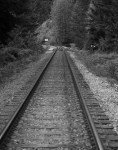
That way

Friends and family hate walking up hills with me. I have no idea how they feel about the flat regions, but definitely the hills they hate. And it’s not that they are out of shape. To the contrary, I am the excessively shaped one…and I’m lazy.

Thus, when I reach the bottom of a hill, I want to get the climb over with as quickly as possible…I power my way up the hill, leaving them to trot along or simply do their own thing and catch up with me.

But the biggest challenge, once they catch up, is that they then have to wait for me to recover from my exertion. In my zeal to get to the top, I completely ignore the fact that the trip is not over once I reach the top…I leave nothing in my tank for the rest of the trip.

I’ve done the same whenever I’ve decided to change my shape with exercise or diet. I start out incredibly aggressively…not holds barred. And for a week or two, my goals are not only met, they are surpassed. I am incredible. I am a GOD! I am also exhausted and sore…and I slowly stop my program.

And as if this behaviour wasn’t already annoying enough, I find I also have a tendency to take the same attitude in my writing.

Prepare my work area. Cogitate on what I want to do. Research. Procrastinate. And then, WRITE LIKE THERE IS NO TOMORROW BECAUSE I REALLY WANT TO GET THIS DONE THIS WEEK OR AT LEAST GET AS FAR AS I CAN GET BECAUSE NEXT WEEK…

At the end of the process, whether it is a hundred pages of a novel, another feature article for a magazine, an outline and beat sheet for a new screenplay, I am exhausted and my brain hurts. The creative wheels come off (or wobble severely), and I lay up for a couple of days accomplishing nothing, except possibly another thousand games of Solitaire.

My ultimate goal is still way over there. Whether it is within sight or not, I can’t do anything about it because I am doubled over with my hands resting on my knees wondering why my (creative) lungs have shrivelled to the size of grapes.

I can drive a car by flooring the accelerator for 30 seconds and then releasing it until the car crawls to a stop, only to repeat the cycle again and again. I can. But the car will like it about as much as the other drivers and police. And whether due to a destroyed transmission or arrest, I will lose the car.

As I reminded myself on Twitter this past week, I am not writing a novel today. Rather, I am writing a scene, a paragraph, a sentence. But I am writing.

The top of the hill is not my destination, but rather is a way-station along the journey, a landmark I will pass. And for all I know—because despite my best efforts, omniscience has not yet occurred—the hill may be the most interesting and/or important part of the journey. The upward grade itself may hold the answer to the whole damned project

So here’s to my best efforts to ease into the next hill and enjoy the scenery along the way. I’ll reach my destination eventually and who knows, I might actually enjoy the trip (or at least, not drop of a coronary).

Destination

(Images are property of owners and used here with no destination in sight.)

Free fall update

Free fall

With a pretty steady acceleration of about 9.8 m/s2 and a consistent headwind coming from below, I am happy to report that my free fall through the universe remains largely unchanged from my last check-in.

The ground remains nowhere in sight although recent episodes of blue-shifting suggest it is down there somewhere. Otherwise, the view continues to be spectacular, if a tad blurry.

The best movie metaphor I can offer for my journey thus far is a mashup between Indiana Jones & The Last Crusade and 2001: A Space Odyssey. It is as though I combined Indiana’s leap from the lion’s head over the yawning chasm with Dave’s journey into the monolith to find it full of stars. (My journey’s been full of actors, some of whom will one day be stars.)

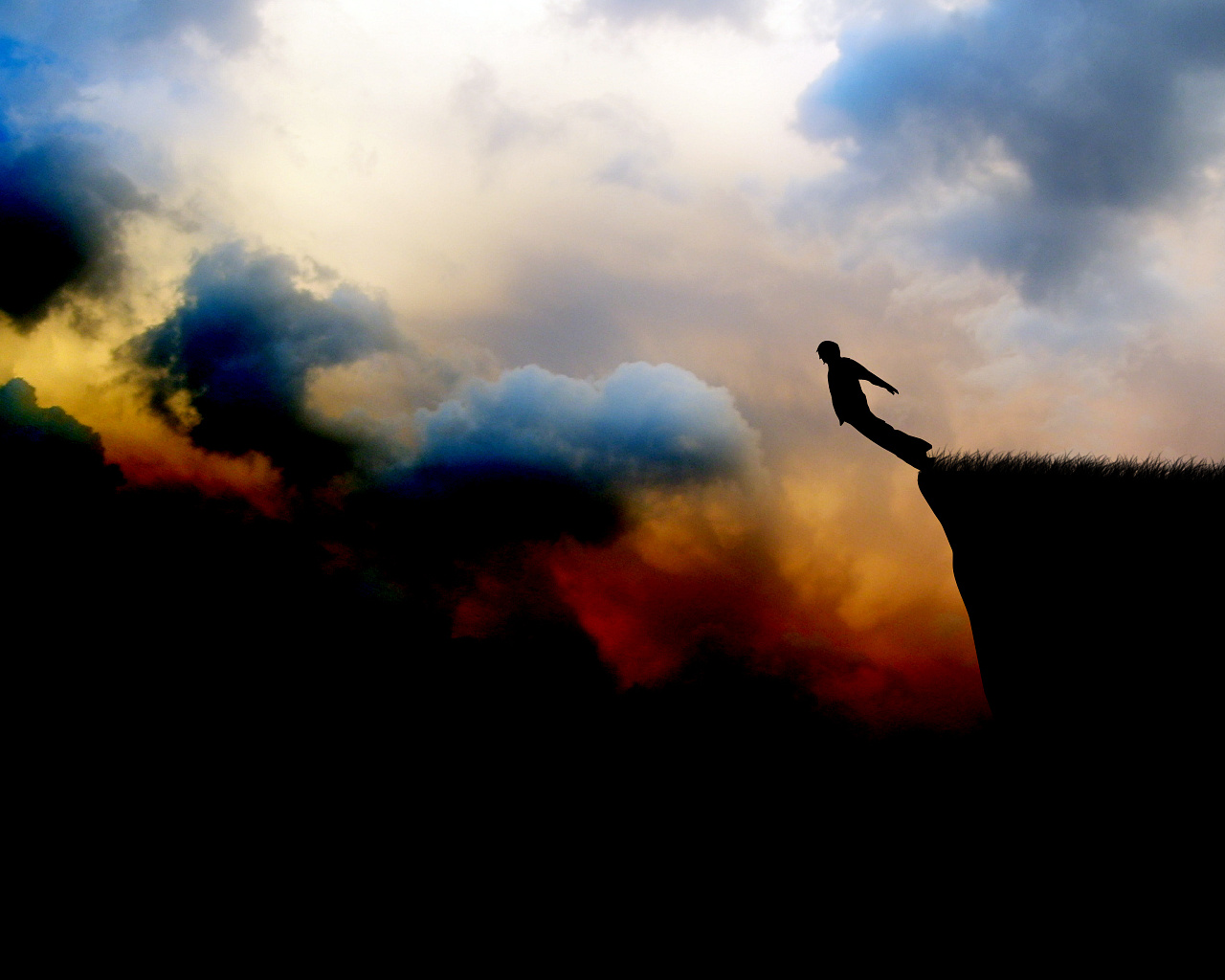
When I stepped off the cliff in May 2012, I could not see the bottom. That there was even a bottom to be seen was pure conjecture. In some respects, that may have made it easier to step off. Ironically, not seeing what awaited me was less frightening.

As I fall—which I don’t see as a negative expression—I have come to realize that I care less and less about my potential destination. Instead, I am enjoying the freedom of soaring in whatever direction takes my fancy (falling is just soaring on a downward bias).

And in my journey, I am meeting an endless array of interesting people. Some are also soaring, while others are flailing in resistance. And still others have convinced themselves they are stable and stationary. Whatever floats their sense of well-being.

The forecast for tomorrow is a continued breeze with periodic pockets of turbulence in a sea of exhilaration. Can’t wait.

Null and void

The sounds of the city

Echo through my brain,

Filling the void with

Impulses that dissipate

As suddenly as formed.

Photonic reflections

Bombard my eyes and

Yet I see nothing

As I stare into

The darkening distance.

As empty as the bookshelves

That lie to either side,

My mind is a canvas,

Devoid of tint or brushstroke,

The words of yesterday

Replaced by so much silence.

The mind has wandered,

I know not where,

To seek adventure

In environs yet new,

To channel its destiny

In fields not yet furrowed,

Leaving only a husk of humanity,

A shed skin, abandoned shell,

To signal its former home

In the expanding universe.

I cannot know

If it will return,

But remain a sentinel

On constant watch ‘til death.

(Image is property of owner and is used here without permission. I don’t recall why.)

Lost

Image

Where are you?

I watch you though

You are not here.

Your eyes search

The horizon absently,

Wandering lands

Only you can see;

Listening for noises

Only you can hear;

Searching, needing.


Where are you?

I sit with you

But you not with me.

I feel your heat,

Your breath, your soul,

But you are unaware

That I am waiting.

You cannot sense

My heart beating,

My eyes watching,

My mind racing.


Where are you?

I want to know

So I can help

You with your search.


(Image used without permission because I was distracted.)

Maps quest

In another life, I could have been a cartographer. I simply love maps.

Road maps. Old maps. Topographical maps. Biological maps. I love maps.

It is probably truer to say that I love visual information presentation, but let’s stick with maps.

Image

As a kid, I remember staring at maps that came out of the National Geographic or in my books and literally tracing the courses of rivers with my fingers, trying to understand what their winding patters told me about the lands through which they passed.

I would look at maps in history books, and see how topographical features literally and figuratively changed the course of civilization. There are several reasons, for example, why Montreal sits where it does, but most of them are geographical.

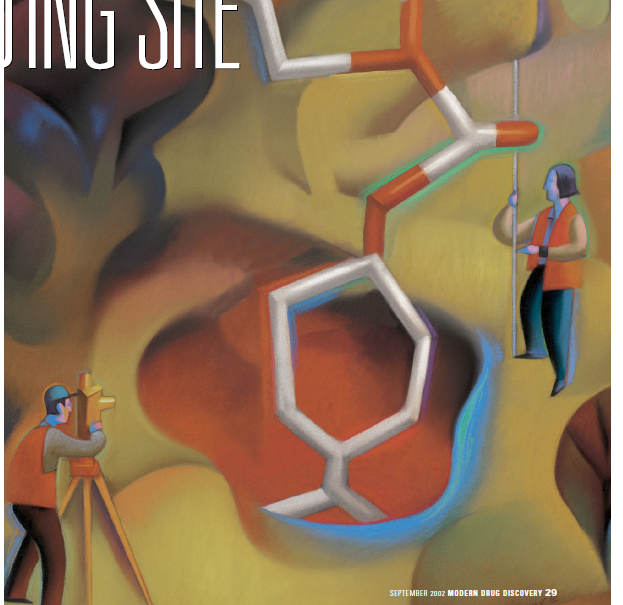
(Magazine art for my article on efforts to understand how proteins bind drug molecules.)

Image

Later in my life, I would draw maps—at first geographical, but later biological. The biochemical mechanisms that cells and organs use to communicate, to rejuvenate, to function are maps unto themselves, each criss-crossing with others, offering alternate routes to the same destination. The latter point is why diseases like cancer are so hard to treat.

Maps allow me to take journeys, but not just in the physical sense of providing direction. They also give a factual tether to my fantastical imaginings. I can go places I may never visit, understand things unfathomable, while pouring over a map.

And map systems like Google Street View have added to those imaginings. Often, when I write, I will visit the setting of my story on Google Street View to help me paint a more vivid picture of the location. Sometimes this makes my narrative sound more like a travel brochure, but that’s my fault and can easily be handled with editing. The important thing is that the reader gets the essence of what I’m trying to convey.

(Lake Maggiore in northern Italy. Setting for the climax of my murder thriller screenplay)

Image

My writing itself is a map. Like Google Street View, I am only giving the reader what fits within a specific frame, in essence guiding the reader. But at the same time, I cannot control what the reader thinks or how the reader feels as he or she journeys through my word jungles.

Just as with my childhood adventures of following rivers and mountain chains, the reader is free to layer his or her own imaginings on top of mine. And so, I have written not just one story, but hundreds or thousands.

Hunh?

I guess I became a cartographer, after all.

(Overview of my neighbourhood in downtown Toronto.)

Image

Write…as rain

I write.

I write because I love playing with words.

I write because my head will explode if I don’t.

I write to explore ideas.

I write because I’m interested in a lot of stuff.

I write because I’m a narcissist.

I write because the stories flow through me.

I write because I’m funny (some of the time).

I write because I have thoughts worth expressing.

I write because the blank page beckons.

I write to release my pain.

I write to share my joy.

I write to add beauty to the world.

I write to keep moving.

I write to share the magnificent visions I see.

I write to exorcise and exercise the voices.

I write to play.

I write because I am a writer.


Why do you?

Dara Marks at Toronto Screenwriting Conference 2013

Engaging the Feminine Heroic

Dara Marks

In a follow-up to her very popular Transformational Arc talk of previous years, Dara Marks took us through another aspect of character development, something she calls the feminine heroic. A counterpart to the well known hero’s journey, the feminine heroic completes the hero’s character and thus is not necessarily tied simply to female heroes. Rather, it encapsulates the feminine side of everyone’s natures.
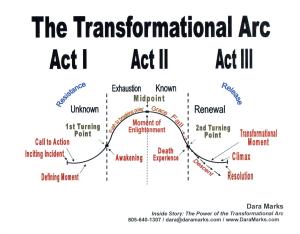
Transformational Arc

She explains, as writers, we are constantly trying to understand the narrative in which we are living, but we experience that narrative from a very personal perspective. Thus, in her canonical transformational arc, there is both an outer realm, where external forces act upon the hero, and an inner realm, the more personal influences. We grow, she says, only in relationship to demands on us to grow, and the external realm stimulates the internal reckoning.

The union of the feminine and masculine brings about wholeness in the character. It is a combination of the masculine spirit, which represents all that we can be, and the feminine soul, the deepness of our authentic self. Marks offers the example of a tree, which may reach toward the sky, but is only as strong as the root system that provides it nutrients.

Everything we are in life is what comes from deep within ourselves.

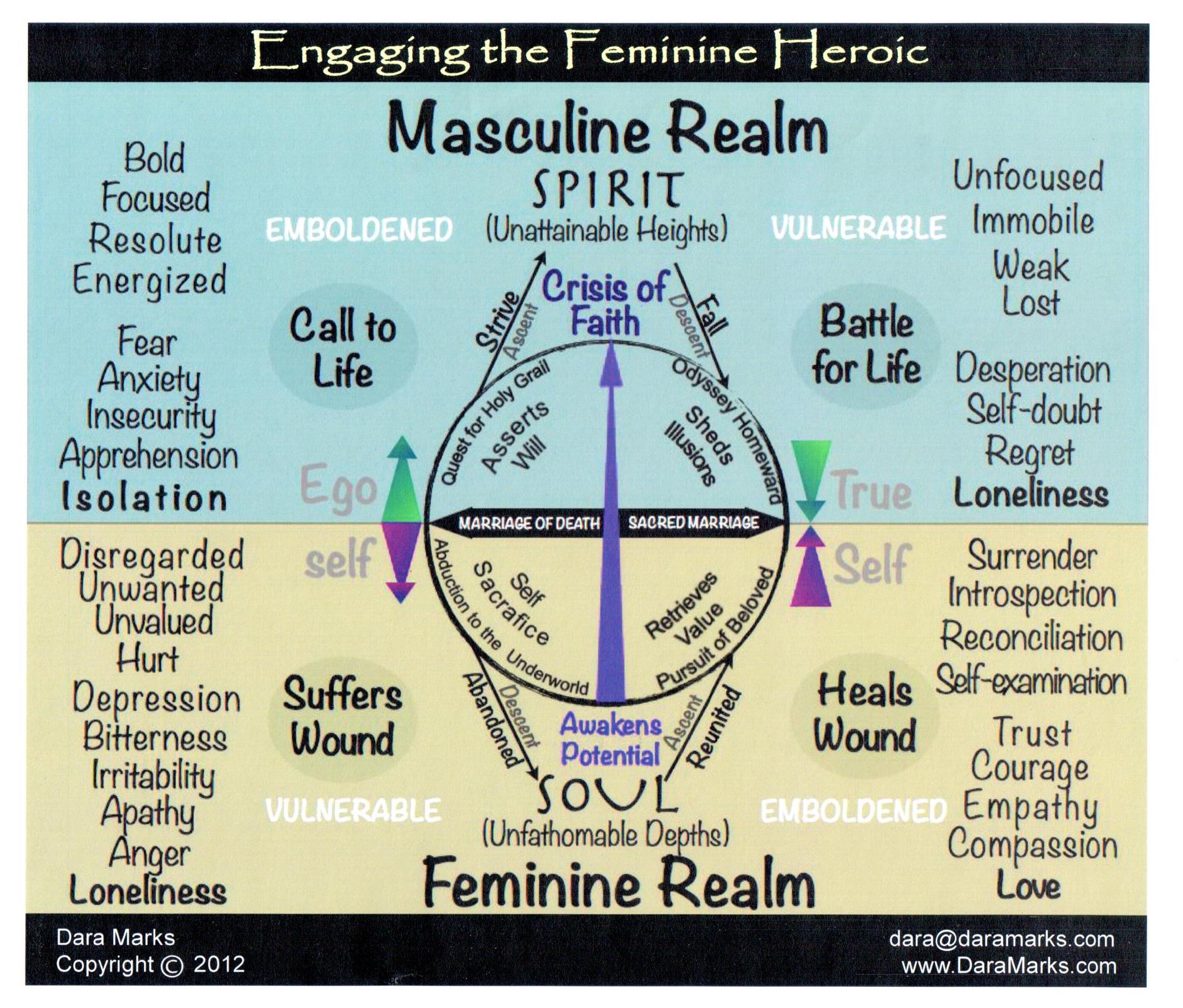
Marks presented this relatively complicated diagram that illustrated the hero’s external and internal journey (and in many ways, reflects our own journey through counseling or life itself). To the left, we find the Ego Self, where the onus is on my aspirations and beliefs of me. To the right is the True Self, which is understood after reflection and denotes my understanding of myself in the universe.
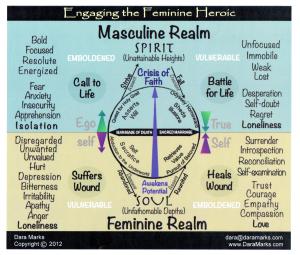
The union of the masculine and feminine sides of a character creates a wholeness

The union of the masculine and feminine sides of a character creates a wholeness

Ego Self: All early development, even that of a child, relies very heavily on the development of the Ego, a sense of will and determination. We believe that we’re in charge, despite all evidence to the contrary.

So if we start the journey in the Ego Self realm, we can look at the External or Masculine side and the Internal or Feminine side of ourselves.

Masculine Ego: In the top left quadrant, we have the Call to Life, the external mission that demands we strive or ascend to a greater level. We assert the force of our will on the universe. This area therefore is associated with a youthful and energetic quality. We have to move forward. We cannot let fear hold us back. To do this, we must sacrifice our feminine side, pushing those feelings down, or we cannot move forward.

Marks suggests that the tragedy of Hamlet was that he couldn’t get beyond his feminine side when he needed to move forward. She also gives the very literal example of Agamemnon, who was forced to sacrifice his daughter Iphigenia before the Greek ships would be allowed to voyage to Troy.

Feminine Ego: In the lower left quadrant of the diagram, we see the influence the masculine decision has on the feminine ego. We suffer a wound because part of us is no longer valued. We are literally abandoning a key part of our self and this will have a lingering effect. While we appear invincible externally, we are very vulnerable internally.

Thus, the feminine side needs to be rescued by the proverbial knight on a white charger. Marks is quick to point out that this is no time for political correctness as at this stage in our development, we just don’t have the internal skills to rescue ourselves.

She goes back to Greek myth to show how this works, focusing on the story of Demeter and her daughter Persephone, the latter of whom was abducted to the underworld by Hades to become his wife. Demeter was distraught at the loss of her daughter and journeyed to the underworld to bring her back to the surface.

The underworld experience may be difficult, but it is educational and we need to journey through it to come out more whole in the next stage.

Marriage of Death: The combination of the masculine and feminine ego is what Marks calls the Marriage of Death. Anytime we strive to become something new, it means the death to other aspects of our being. We just can’t strive at all things at the same time. But this marriage is not designed to last.

As Marks points out, the problem with striving is that it is doomed to failure. We can’t be rich enough, strong enough, famous enough, whatever enough. And it is at the moment of realization that our dreams are doomed that we have a Crisis of Faith (masculine side), which leads to an Awakening of Potential (feminine side). We move closer to the discovery of our true self, the right hand side of the diagram.

Masculine True Self: As the masculine ego passes through its crisis of faith, it suffers a fall from the unattainable heights, which converts the Call to Life into a Battle for Life. For self-renewal, it is essential that our delusions and illusions are shed during this descent, such as the belief that we are in control of our lives. And thus, at this stage, it is the masculine self that needs rescuing.

Marks offers the example of Odysseus (a popular subject at TSC this year) and the knowledge that his journey home was his great undoing as he loses more and more of his ego self (including his ships, crew, etc). The second half of his journey is literally the journey homeward toward his true self.

Feminine True Self: And who rescues the masculine true self? As the masculine side becomes more vulnerable, the feminine side becomes emboldened. We heal our wounds and reunite, turning pain and suffering into love and creativity.

The way out of our self-imposed purgatory is through compassion. We have to hear the story and then feel and acknowledge the pain. And it is only when the pain is given voice that it can move back from the underworld into life.

Marks exemplifies this aspect with the myth of Inanna and Erishkegal (which I do not know as well and so simply provide a link).

Sacred Marriage/True Self: It is at this point, through the sacred marriage of the masculine and feminine that we finally achieve the true self.

NOTE: All images and illustrations are property and copyright of Dara Marks and are used here without permission.

Doubt

I have doubt.

Not in my skills, thank goodness, or the belief that with the right guidance, I can improve them steadily, but I have doubt.

I have doubt that I will find the right people to see the merits of those skills and help me to convert them into something meaningful. A video, a television program, a film, a novel, a photo exhibit. Something that I can share with all the world. Something that will touch the souls of others as the gestation and creation of the work has touched mine.

I have doubt that I can hold on to my new fantasy life and that reality, oh harsh reality, won’t poke its head into the mix and throw me back to where I was. That I will need to find resources to live, and that the need will draw me away from my art. Perhaps irreparably tearing me from it and setting me back upon the course I once journeyed of discontent and pain.

I have doubt that I won’t continue to find supporters and friends—my oh so wonderful friends—who will hold my hand on this journey. Who will provide a tether to keep me connected and yet free enough not to anchor me to the world.

I have doubt about what is around the next corner. About the shadows in the darkness. About the approaching ground in my free fall through life.

I have doubt.

But I will not let that change what I am doing. I cannot allow my doubt to prevent me from living the life I have finally discovered.

If around the corner is an oncoming train, in the shadows lay a vicious monster, and on the approaching ground shards of glass, I will not allow doubt to slow or still me.

I may not succeed in achieving my goals, but in overcoming my doubt, I will have succeeded in my journey. And for that, I will be eternally grateful and find peace.

Hero of a Thousand Voices

I hear dead people.

I also hear living people, imaginary people and people who aren’t even people.

I am a writer, and I am highly confused.

Since quitting my day job to commit full-time to writing, I have found the voices that run rampant through my head have amplified, in volume and seemingly in number.

Before I quit, the anxieties and activities of daily living dampened the voices, shoved them to the periphery, surely as a functioning if not coping mechanism.

Now, without those distractions, the voices push outward, stretching their muscles after years of confinement, exploring their new world with the glee of a four-year-old on a steady diet of Coco Puffs. And here I sit, trying to control or harness them, sticking my pinky in a fire hose opened to maximum flood.

I have so many stories to tell, to record, to witness. But as soon as I sit down to transcribe one, a dozen others poke their heads out of the ground; conceptual prairie dogs wondering if the coast is clear.

I’ve always believed that creativity breeds creativity. I am experiencing that in spades, these days.

I will admit that after so many years of holding it back, part of me wants to let the voices flow unchecked. I want to stand at the foot of the waterfall and let the deluge wash over me, cleansing the grime of repressed enthusiasm from my soul.

But at some point, in some way, I still have to function in this universe. I want to recount these stories to someone, and for them to be intelligible, I have to direct my journey through the eddies that buffet me.

I hear voices. And I struggle with how to deal with them all.

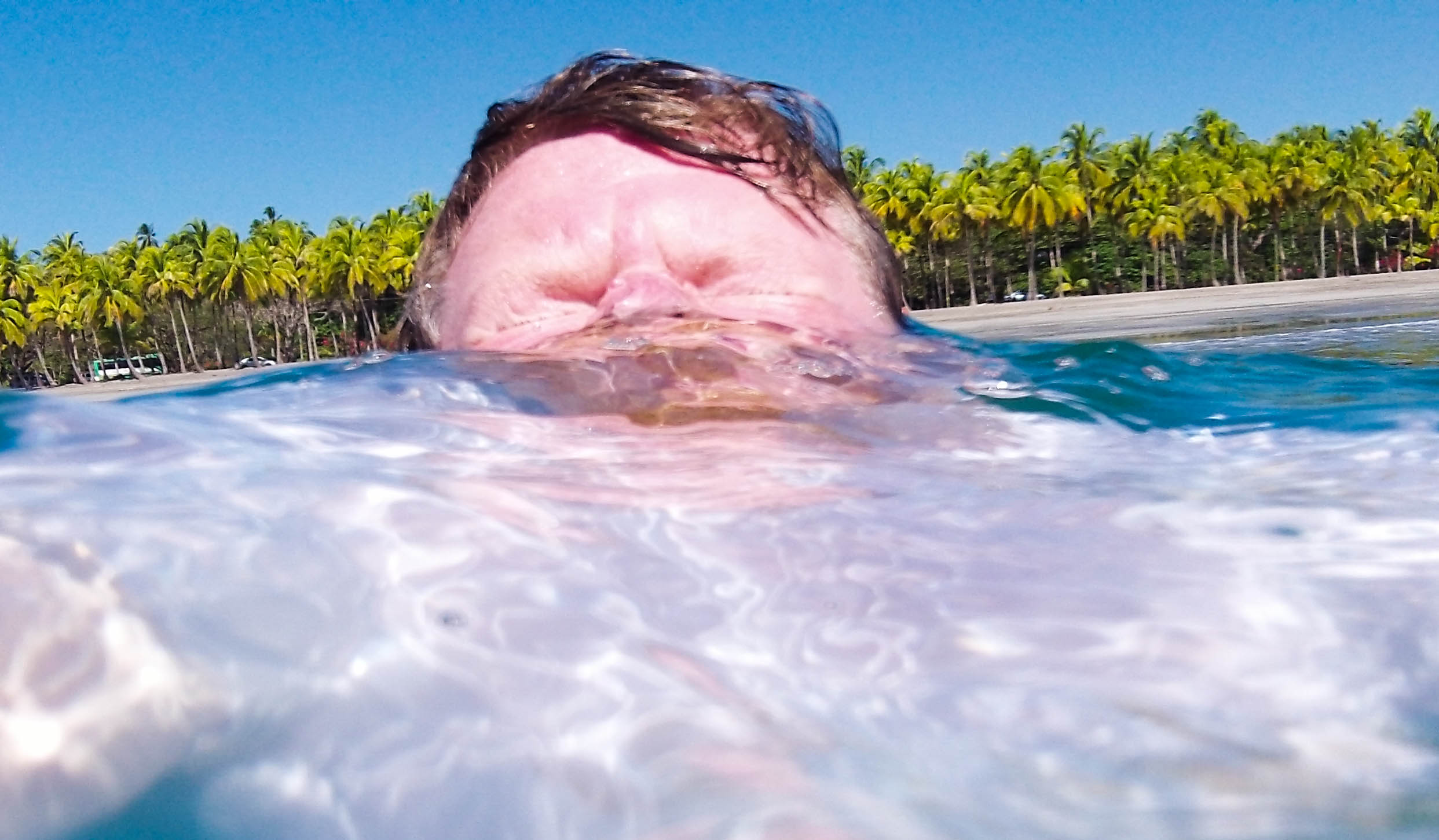
At times, the onslaught of voices is one more wave than I can handle. (Photo taken at Carilla Beach, Costa Rica)

At times, the onslaught of voices is one more wave than I can handle. (Photo taken at Carilla Beach, Costa Rica)

Travel within and without – British Columbia

It may sound ridiculous to say, but wherever and whenever I travel, I find symbols of my inner journey, the personal transit that extends beyond airline tickets, overstuffed luggage, and souvenir shops. And it’s often not until I arrive home to look at the images within my camera, that I see the patterns.

Am I imprinting meaning where none inherently exists? Does it matter?

Whether inherent or imposed, the imagining of a pattern changes me and the pattern becomes true.

The following are a selection of images from my travels last year through British Columbia, a break before I began on the next great journey of my life, and one I take alone.