…why would I resolve to change anything?


(Images are property of me, me, me, for once!)
…why would I resolve to change anything?
(Images are property of me, me, me, for once!)

On Monday, November 18, I celebrate my 50th birthday. To commemorate the half-century, I have tried to look back and capture my fondest memories or most life-changing events.
The following list is not in order, although the subject of event #2 would likely have no problem believing she ranks after #1 and possibly as low as #5. She can be assured little of this would have nearly the meaning or significance to me without her presence for much of it.
A seemingly random assortment of images highlighting the unusual and unexpected.









Reaching up to the stars or down to a child

Standing at the peak or sitting in protest

Achieving your glory or starting from scratch

Leading your team or following your dream
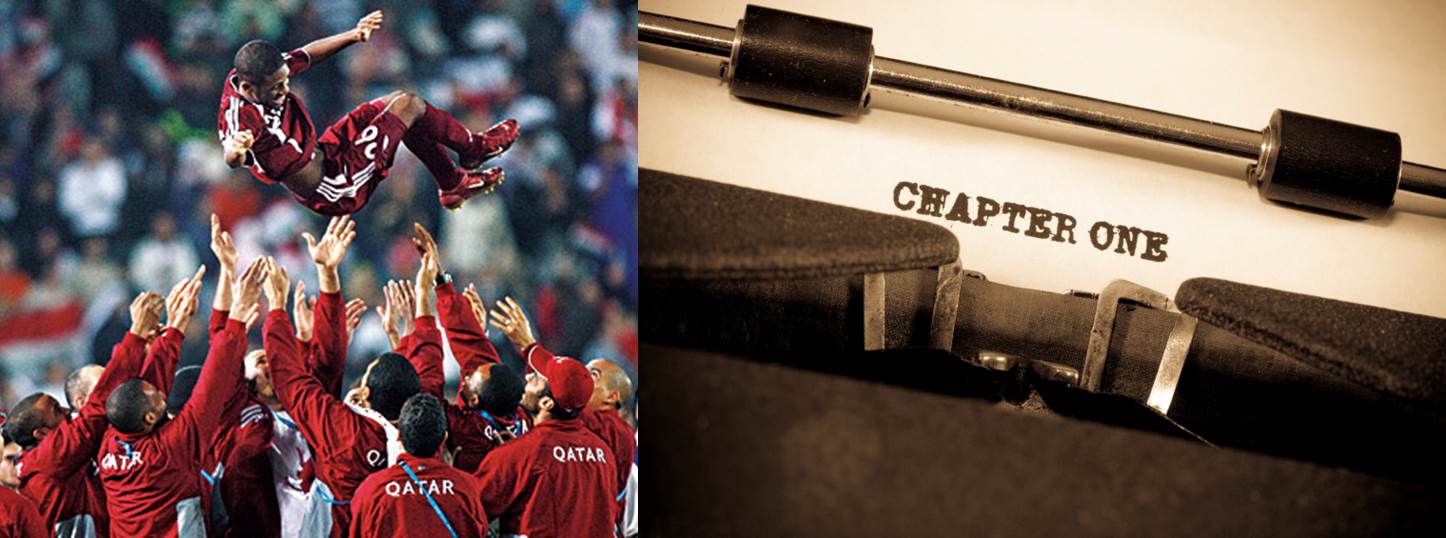
Crossing the finish line or starting over

There are all kinds of courage
(Images used without permission but with plenty of gratitude.)
Picking up from my first realization that my passion might also be a gift, as explained in Part One.
Over the years, I’ve had opportunities to display my creative demons before an audience. An effective little soap opera episode in Grade 12. Geeky science humour in my own magazine. Heart-wrenching poetry following the end of a close friendship that might have been much more.
I worked my way into the magazine world, writing interesting stories about interesting discoveries and advances, but it wasn’t the same. The words poured forth and the story-telling skills improved, but I was always a chronicler of someone else’s story.
Creativity expressed itself in my approach to the story. In seeing a story that no one else saw. In context that was invisible to everyone else. Creativity manifested itself in identifying authors and writers from all walks of life to fill gaps in the magazines. I may not have been the best project manager, but I was definitely the most creative.
As I matured in my jobs, I extended this creativity to everything I did. Looking for effective solutions to seemingly intractable problems. But it wasn’t enough. That voice within me cried out to be heard. And the more I worked—and overworked—to distract it, the louder it screamed. So loudly, that even my wife could hear it.
While sitting in an Orlando hotel bar one night, she finally challenged me and my workaholic tendencies, demanding that we come up with a hobby for me. When pressed, I admitted that I had always felt like I’d been born 30 years too late. That if I could have any miracle in my life, it would be to work on those old sketch comedy shows from the 1950s as a comedy writer. Sid Ceasar’s Show of Shows came to mind. Imagining myself in the writers’ room with Mel Brooks, Larry Gelbart, Woody Allen and Neil Simon.
Neither of us knew how to make that happen, but my wife challenged me to find something at home that would set me up in that direction. The next week, I signed up for my first improv class at Second City.
Although it still wasn’t where I wanted to be—more performance than writing—the improv classes were amazing; therapeutic on a variety of levels. Eventually, though, I stumbled onto their sketch comedy writing program and that’s when I hit my stride. A wonderful instructor, talented zany fellow students.
The words flowed incredibly quickly. Within weeks, I had dozens of sketches and felt like I was making serious headway in my education of what worked and why. If there was a problem with the class, it was that my production vastly outstripped the need. I tried new things. I broke out of my comfort zone. I pushed my limits. My only goal was funny.
As I honed my sketches, I prepared for the reality of rehearsals with actors, when all of this work would really come true; when my efforts became more than an academic exercise. Rehearsals went well. Out actors seemed genuinely grateful to be performing our work. I saw what worked and what didn’t, even in the work of others.
Interestingly, I wasn’t in control of the process and I was okay with that. There’s something to be said for being so far out of your element that you recognize the limitations of your control. I had complete faith in the director and our actors. I believed they too wanted this to work as badly as I did.
And then the day of the performance arrived. Nervous energy ran through my body and I couldn’t sit still. I could barely communicate. There was no fear. Only anticipation and potential validation. Was I funny?
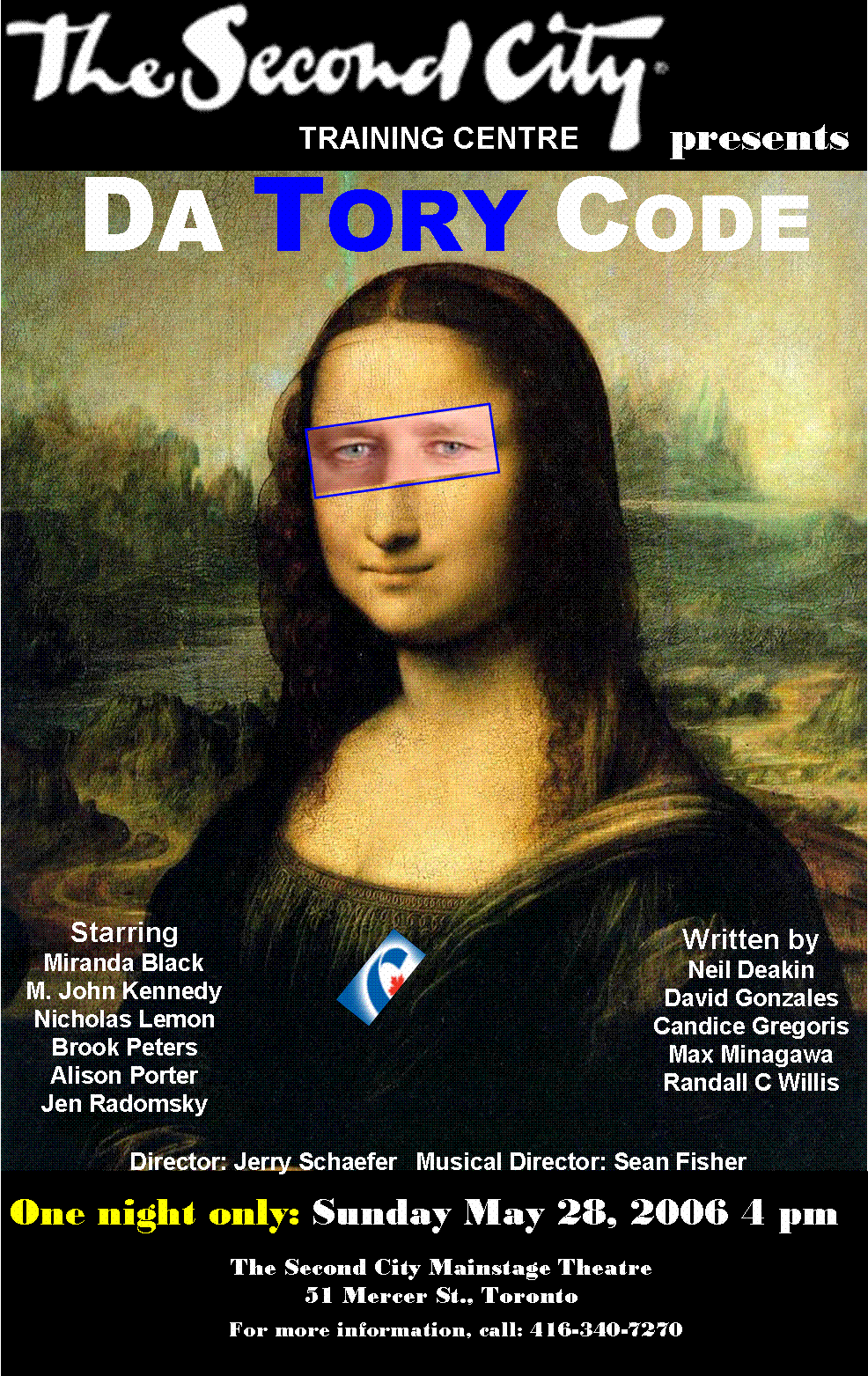
The day we premiered Da Tory Code was easily one of the best days in my life. The audience laughed. Not at everything, which was a valuable lesson, but they laughed at enough to validate my talent.

What follows are a few thoughts on why I write…the moments in my life that led me to embrace my passion. It is an incredibly personal story and I hope it doesn’t make anyone uncomfortable, but rather helps them reflect on why they embrace their own passions.

I need to be creative on my terms.
When I was younger, it was all about acquiring knowledge and being recognized for having acquired that knowledge. In hindsight, I’m not exactly sure what I was planning to do with that knowledge.
In some respects, it was about solving a puzzle, which could range from how does this alarm clock work to how does the universe work. On another level, I think it was about control. Knowing how the universe worked meant knowing that there was a broader sense of organization out there; that the laws of physics and mathematics still held even when my own life seemed in constant flux. The subtle irony of entropy only occurred later.
But it was also about control in the sense that I couldn’t be expected to come up with answers, with solutions, until I had all the information I needed to make that decision. The aggravating reality of that method of control is it only works when you’re the one asking the questions. Nobody else is willing to wait until I have all of the info I need.
At the same time, I needed the safety of analysis and knowledge, I’ve also had a need to be creative. A need that has only recently blossomed as a regular part of my life.
When I was young, I was constantly creating new worlds through my stories. First, as play scenarios and then as the written word. I constantly developed short stories that took me in a million directions. Again, this might have been an attempt at control.
When I wrote, I was the master of my universe. I was the one who decided who lived and who died, who was allied and who was the enemy. I was the protagonist and the antagonist.
It was in 1977, as I started high school, that I first noticed the strength of my writing. That summer, my life changed with the release of Star Wars. So deeply effected was I by the characters and the story, that I immediately went home and started working on the sequel. My version took a very different turn than George Lucas’s—although there were some subplot overlaps—but over the next few weeks, I hand wrote 400 pages of dialogue.
I shared the script with my Grade 9 English teacher, who was impressed with the volume if not the content (my words, not hers). It was in her class that I first realized the power of my words to still and disturb an audience.
On day, Ms. Philp gave us a writing assignment that started with the sentence “I couldn’t believe it when I heard that sound.” It was supposed to be an in-class assignment, but I was onto something and asked if I could take it home to finish it. I guess she sensed something—that this was important to me—and she said yes. While I didn’t finish the story, I did hand her several pages the next day.
After reading the story herself, she decided to read it to the class. Whereas most people had written stories about funny sounds, spooky sounds or weird sounds, I had written about a man who comes upon a murder in an alleyway, first by the sound of bone and sinew breaking, and then by sight. I wrote about the fear and indecision in the witness’s heart as the murderer sees him and he flees for his life.
As Ms. Philp read the story aloud, there was silence in the room—a room of 14 and 15 year olds. No one said a word until she was done reading. It was magical for me.
I wish I could say that there was a rousing round of applause at the end and that this was the day that I decided to become a professional writer. There was no round of applause—although my class seemed to appreciate my story—and Ms. Philp continued to be supportive of my efforts, but there was no effort to foster this creative desire in a young boy struggling to define his world.
The opportunity was there. Everything was laid out for someone to recognize, but nobody tapped into it. Writing continued to be a strange little quirk of my life. I guess it was just easier to find ways to support my interest in science and history by buying me more books, taking me to the Science Centre.
What do you do for a budding writer? Get him a pen and a notebook? Buy him a typewriter?
Eventually, someone did buy me a typewriter—a vehicle to do my homework. But it quickly became the vehicle for my creative outlet, much to my mother’s chagrin. The muse hits me when I have time to be alone with my thoughts. When my day isn’t cluttered with requests for attention and responsibilities. Unfortunately, in my childhood home, those times only tended to occur when my family was asleep.
Routinely, my mother would yell down from her bedroom for me to stop wailing away at the keys. Loudly pounding them into submission. Watching the letter hammers get stuck because the thoughts occurred to me and be translated through my fingertips faster than the typewriter could accommodate. She wanted to be supportive, but not at the cost of a good night’s sleep.
It took no time at all before I had an incredible portfolio of work—half-finished thoughts, short stories—but they languished unread by anyone other than me. I had given voice to the creative urges in my soul but no one heard that voice. It was the proverbial tree in a forest. With no one to even acknowledge the existence of my efforts, did they really exist.
Where was my mentor to guide me through this process? Someone to help me hone my voice. To make my stories better. To help me get my voice heard.
To be continued…
Peace

(Sorry, no long-winded speeches with this photo.)
The last week of June each year, the City of Toronto explodes with colour and excitement as the fever of inclusion takes over the city. It’s another Pride Week.
Gay, straight, budgie…whatever you consider yourself, if you haven’t experienced the pageantry of Toronto Pride Week, you should consider your life cheapened. You should then get your butt to Toronto and party.

Following on the success of Pride Week, however, the other Deadly Sins have petitioned for their own festivals.
Greed Week is slated to run over two weeks and its organizers are actively petitioning for a third.
Wrath Week got pissed at everyone and so plans to do its own thing.
Planning for Envy Week has been difficult as organizers keep asking for the date to be moved because they feel the other Sins got better dates.
Lust Week started slow and gentle but really built up a head of steam before petering out.
Avarice Week demanded the largest budget and still refused to control its expenses.
Sadly, Sloth Week just never really took off.
(Note: Photo is property of Pride Toronto and is used without permission.)
Attention to detail is craftsmanship.
Fixation on detail is neurosis.
It’s important to be diligent when working on a project, but not so diligent that the project is dead before it starts.
Relax. Let your natural skills and energies flow through you as you explore your art.
It is those little quirks that make the piece yours and not the same as every other piece ever produced.

The ceiling of the trophy room of the Hockey Hall of Fame, which used to be a bank. (Toronto)
PIECES OF ME...
Mother, Nehiyaw, Metis, & Itisahwâkan - career communicator. This is my collection of opinions, stories, and the occasional rise to, or fall from, challenge. In other words, it's my party, I can fun if I want to. Artwork by aaronpaquette.net
Life at any age can be amazing! We only need to grab hold & experience it!
The internet web log of Michael Cedarwood. I used to be a stripper. Now I'm a writer.
Thoughts on creativity, Pharma and whatnot
Mindfulness, Philosophy, Spirituality, Meditation, Awareness, Religion, Nature Photography
Living for Happiness
A perspective from the other side of the hockey ocean
Romance Author
Author of Kritsotopoula, Girl of Kritsa and Rodanthe's Gift
Our opinions don't stink!
Rantings and Ravings on all things Screenwriting and Movies
My Elicits, an Inception... Learning to Live in Perfection
 createdbyrcw