(Ab)Use your imagination

Image

Four more reps! C’mon, you can do it. Three more reps! Don’t quit now. Two more reps! You’re a champion. One more rep! Almost there. Annnnnd, you are done. Way to go!

Phew!

As you may be able to tell, I recently started a fitness routine, a boot camp if you will. The nice thing about it is that I can still eat and drink whatever I want and the only reason I break into a sweat is because Toronto’s experiencing a nasty heat/humidity wave.

Just over a week ago, I started a screenwriting boot camp of sorts called Screenwriting U, which is designed to teach you how to create the most stunning and saleable scripts that Hollywood will eat up. (My apologies if this sounds like an infomercial.)

All I know right now is the program—the ProSeries—is kicking my ass.

For the next six months, I will have an assignment practically every day (including weekends) that is designed to push me to excel at EVERY aspect of screenwriting; e.g., concept, plotting, character, conflict, narrative, marketing.

I won’t go into any detail as to what we are doing—that would be improper and unethical as the fine folks at Screenwriting U have to make a living—but I can tell you about the outcomes.

At the moment, we’re working on concepts.

Once most of us come up with a concept that really interests us, we typically start writing right away, whether actual dialogue or mapping out plot points. We’re excited. We want to see our amazing idea come to life. Tomorrow is too far away.

No such luxury here.

In the true Full Metal Jacket sense, the instructors are making us break our ideas down to build them back up. And once we’ve done that, we do it again. And again. And again. Each time with a slightly altered method and/or goal.

In nine days, what was six interesting ideas (to me, at least), has become 30 new ideas, some of which are completely lame whereas others are pretty damned good, and more importantly, a hell of a lot more solid that the originals.

It’s a brainstormers wet dream and nightmare all rolled into one.

No matter how thoroughly I think I have developed an idea, just a little more time (or time away) shows me that I can go a little further with the idea or take it in new directions. As with the writing process itself, it is the permission to fail spectacularly with an eye toward finding something truly amazing.

And like physical exercise…what, I did that once…it is painful as hell in the early going, but it does get easier. And when it gets easier, I’ve got to make it hurt like hell again. I’m building imagination muscle memory. I’m making these thought processes second nature.

Now, if you’ll excuse me, I have to go change…oh, wait, that would be telling.

PS Hal Croasmun, our drill sergeant, is nothing like the guy in Full Metal Jacket, unless you wanted to imagine verbal enthusiasm replacing verbal abuse.

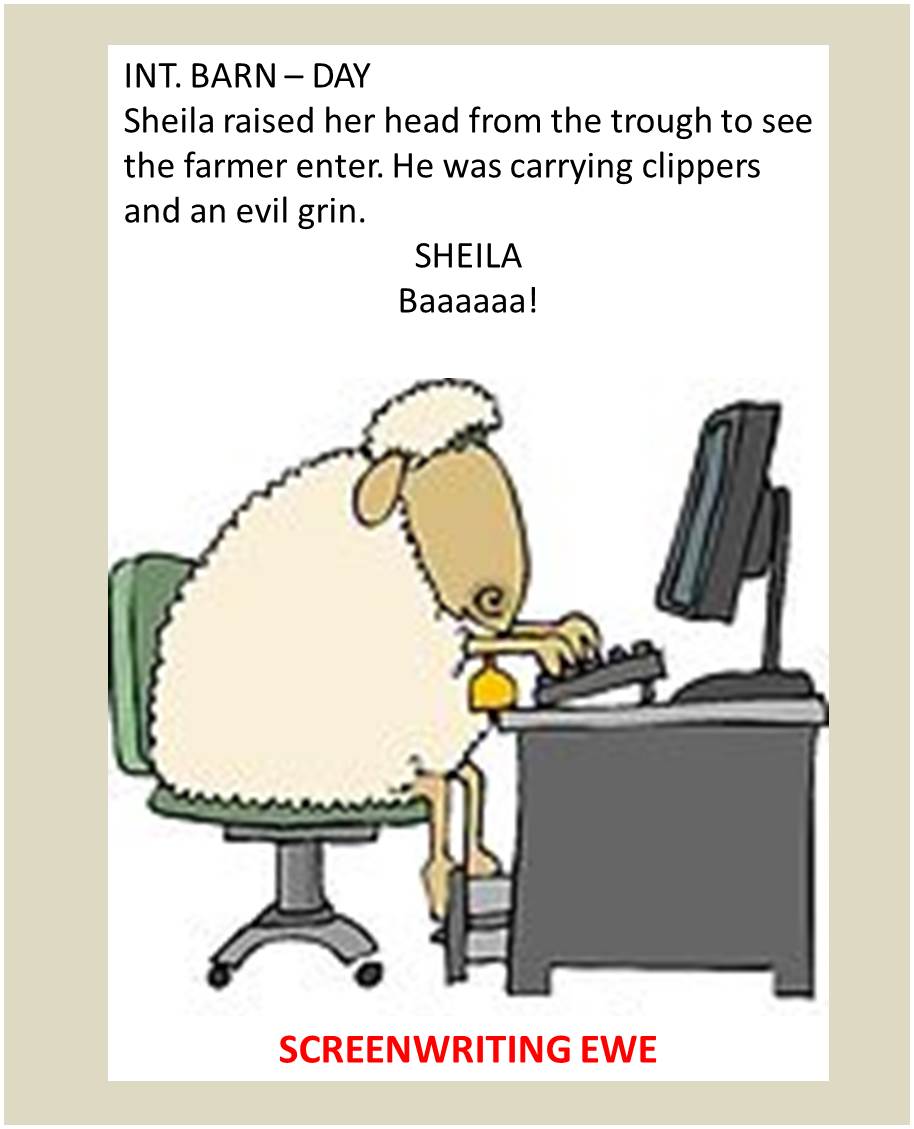
(First image is used without permission because I like to push the envelope, or any other piece of stationery, for that matter. Clip art below clipped without permission.)
Image

Based on my true story

Image

As I wrote yesterday in “Write what you…No!”, I wanted to talk about a variant of writing on a topic in which you have expertise: the true story.

Now let me start off by saying that I have never written anything directly lifted from a true story—at least never attempted to fictionalize one—but I have spent the better part of two years listening to people try to do same, and it seems to me the effort is fraught with pitfalls.

(Ironically, however, I am about to start a project with someone that will be based on his true story, so let’s see if my attitudes change once I’m on the inside.)

The biggest challenge I have seen is that many novice writers forget that they need to tell a story. On the surface, that may sound ridiculous. It is a story. I know. I was there. The problem it seems is that a lot of writers try to chronicle the actual events that occurred rather than try to tell a story. That is a history, not a story.

It’s like sharing a joke with someone and having a third party enter asking what’s so funny. When you think about it, you realize the joke itself is not the funny part and you respond “You had to be there.”

The same holds true for the true story. With rare exceptions, while experiencing the actual events, you experienced emotions and actions that are just too difficult to translate into a narrative. And without your context, the audience loses something.

Likewise, you may be leaving out critical facts that are obvious or second-nature to you but elude us. When this happens, characters do not feel fully developed or plot points don’t seem connected, because we don’t instinctively see the link.

And ironically, despite what I just said, novice writers working on such stories tend to want to stick to the facts as they know it to the detriment of any sense of story…they refuse to fictionalize their story beyond changing names, settings and the odd plot point because to do more would be to remove the truth of their experiences.

Let me give an example.

A friend of mine was trying to develop a screenplay about a family coping with young adult son with a psychological disability, and the young man’s attempts to find his personal space. It was very well written, but at least in its initial stages, it felt like there were plot and motivational holes throughout the manuscript. As we discussed it in class, we learned that this was effectively a fictionalization of the writer’s family.

In her manuscript, the protagonist—the young man—was largely shut down from his family and even they largely repressed their feelings with each other as a coping mechanism. As an audience member, this made it difficult to get into the characters and rather than feel empathy or any form of connection with the protagonist, he just pissed many of us off. We hadn’t lived the experience the writer had, so we couldn’t see her story the way she did.

Try as we would to get the writer to see our dilemma, she was equally adamant that to make the protagonist any other way would make him unrealistic given his condition; a defensible position within limits. She couldn’t let go of enough of the truth to develop a story.

The story must come first if you ever hope to engage an audience. Even fact-laden documentaries and news items focus on a story or narrative. Without that, you are reading a dictionary or encyclopedia entry.

The truth or reality of your personal experiences are vitally important, but only in so much as they are used to bolster or support the story you are trying to tell. It is almost impossible to successfully do it the other way around.

(Image used without permission, and that’s my true story.)

Write what you—No!

Image

The adage I hear a lot in writing circles and books is “Write what you know”. By that, people mean write about the things for which you have a passion, because that passion for the subject will shine through your writing and become infectious to your reader or viewer.

To a large extent, I agree with this sentiment, but I think there has to be codicil. When you know how to write, write what you know.

Let me explain with an anecdote.

When I first started writing, I was coming out of a career as a biochemistry researcher who had spent the bulk of my training in protein biochemistry and genetics. That was where my passion lies. So, perhaps as no surprise, when I decided to become a science writer, I focused much of my initial energies on writing about protein biochemistry. I understood the science; I could see the story quickly; I could write about it with some fluency.

Unfortunately, despite or perhaps because of my passion and fluency, I was completely unreadable to anyone who wasn’t already a protein biochemist. I wasn’t speaking to my audience in terms they could understand but rather in terms I could understand. To a greater or lesser extent, I might as well have been writing in Klingon, which I suspect would have given me a broader audience.

When I finally realized what was happening—thanks to all of the people who beat me about the head—I made a pact with myself. Until I felt that I could really tell a story, I would do my best to avoid writing anything about that at which I was most expert. I had to become my audience: the relative non-experts.

About a year into writing about topics I had to research and for which I had to ask potentially stupid questions, my writing had matured to the point where I could go back to my area of expertise and approach it in the same way. I had finally arrived.

I think the same holds true for any kind of writing, whether news, novels, screenplays, blogs.

Until you are capable of telling a story that your audience can decipher, and more importantly wants to read, you are probably better served to stay away from the topics you know best. To do otherwise means running the risk that you will leave out the “obvious” and the “well, yeah” that you know in your bones, but that could be vitally important to an audience member trying to understand why certain facts or behaviours in your story exist.

Give yourself—and by extension, your audience—a chance to learn your story, to experience it at a visceral level. As you develop your story, you’ll likely find yourself asking questions of your plot or characters that your audience would ask. You want your audience to think, but you never want them to have to research. Until your work becomes part of a school curriculum, it shouldn’t require a study guide.

It is easier to remove the truly superfluous common knowledge or understanding later than it is to convince yourself that the information you need to add isn’t common knowledge.

When you are ready to tackle it, the subject(s) for which you have passion will still be there. Consider them the reward for all the hard work you did up front.

In a future post, I hope to discuss a flavour of this topic: “Based on a true story”.

Weekend plans (re: boots)

Superscript You will believe that a screenwriter can try.

Image

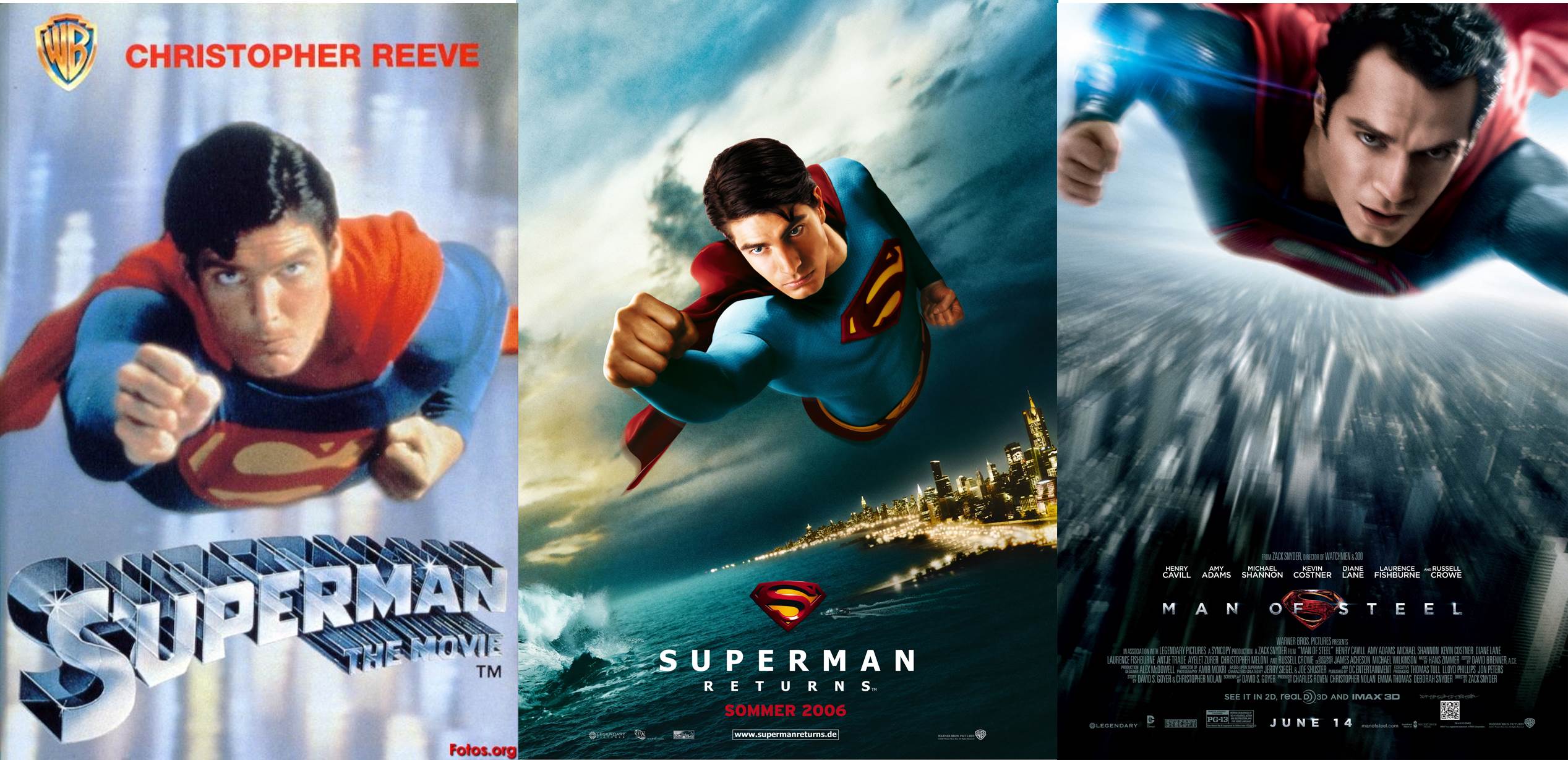
Tonight, I go to see The Man of Steel, the latest reboot of the Superman origin story…but unlike most nights when I go to a movie with friends, tonight I shall take notes, because tomorrow it’s back to the keyboard.

Tomorrow, I will write a screenplay for the next reboot of the Superman origin story.

And then next weekend, I will write a screenplay for the subsequent reboot of the Superman origin story.

And perhaps every weekend after that, I shall write screenplays for subsequent reboots of the Superman origin story.

For, having lately seen Batsmen, Stars Trek and now Supersmen, it would appear that Hollywood only wants what they already know or more importantly, what they already know sells. Originality, it would appear, is anathema in Lotus Land.

In the meantime, I throw my head back and yell: ZOD!!!!!!!!

Can you relate?

Image

I spent three days this week wandering the show floor of a conference on stem cells, interviewing scientists and corporate executives for a series of articles I am writing. As this is the first time I have met most of these people, the conversation usually starts somewhat tentative as the people try to figure out how to address my journalistic needs while fulfilling their marketing agendas. This is just the nature of such interviews.

Luckily, I have a secret that tends to break the ice a little. Early in the conversation, I try to find an opening in what they are telling me to relate a personal anecdote or observation about my own scientific training as a protein biochemist—yes, I actually used to be quite smart.

Within seconds, the interviewee’s posture changes, their voice takes on a new timber as they realize that I am a kindred spirit even if my uniform has changed. Suddenly, they know I can relate, and the conversation becomes one between friends or colleagues.

The same holds true for storytelling.

When the reader picks up your novel or short story, the viewer sits down to watch your movie, the initial engagement can be tentative as the reader tries to figure out what you’re doing, where you’re taking them. The reader holds back from completely engaging with you as they wait for that magic moment when they can relate.

No matter how fantastical or mundane your story, the reader must be able to latch onto something, to find a kindred spirit.

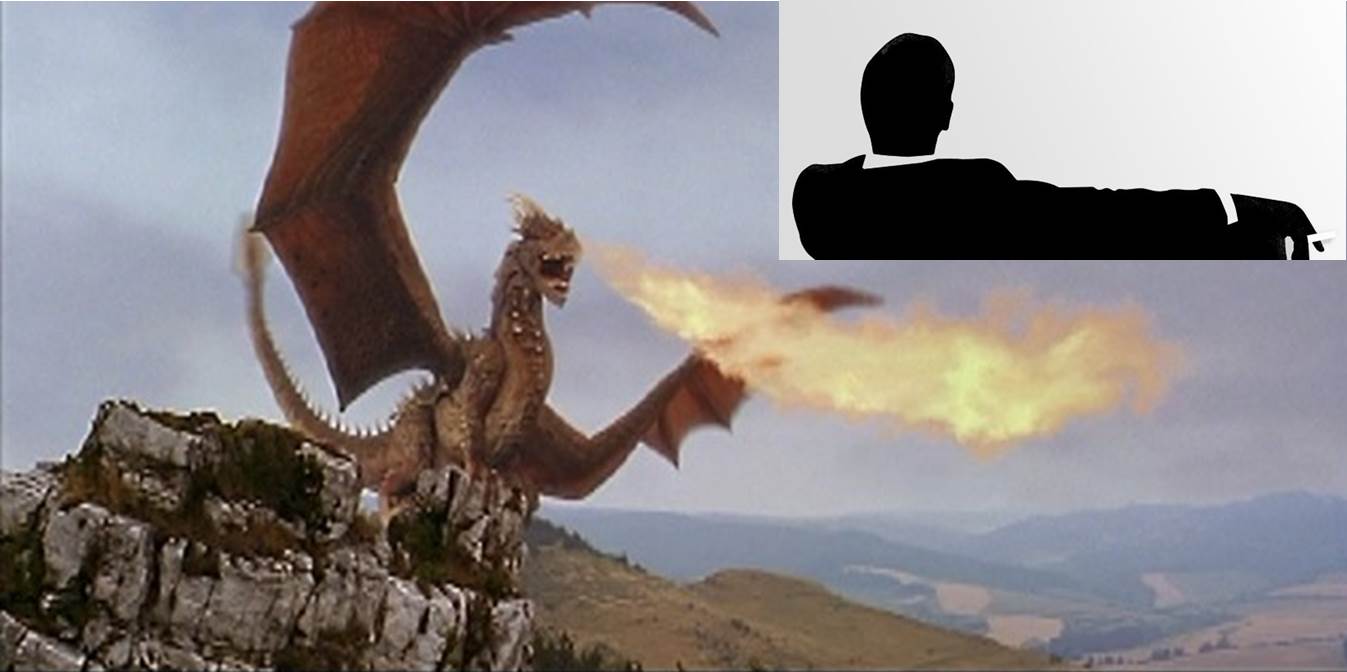
More often than not, it is your protagonist—the canonical Everyman or Everywoman—who has some visceral need to fulfill or challenge to overcome. Killing the dragon is the superficial challenge, but damned few of us have had much experience killing dragons. Most of us, however, have fought for the respect of our community or have had to overcome a fear and step forward to take control or responsibility.

Hell, readers might even relate to the dragon, as in the movie Dragonheart, where Sean Connery’s Draco finally explained that his assaults on the townsfolk were [SPOILER ALERT] his attempts to save the last dragon—him—from extinction.

In the rarest of cases, it may not be a character, but the environment to which someone relates. This is my situation with the series Mad Men. I find it difficult to relate to any of the characters and their hyper-exaggerated soap opera problems. Having spent more than five years in advertising, however, I can relate to the creative challenges within the office. I find myself getting angry or frustrated as I watch pitch meetings or client presentations because of my own baggage.

As a creator of your story, you cannot hope to know everyone who will come across your story. Thus, you cannot—nor should you—build your story to accommodate these varied experiences. You have to tell your story to tell it effectively, but you can broaden its appeal by making sure your characters (and possibly your environment) offer clear parallels to the current human experience. (If your primary audience is dogs or fish, then change the word “human” as appropriate.)

At their most basic levels, what are the human conditions that your characters express or are trying to repress (oooh, subtext)? When you get a good handle on that, you’ll have a better understanding of how relatable your story will be to your audience.

(Images are used without permission.)

Onward creative spirits

Image

Once more unto the breach, dear friends, once more.Henry V III, i, 1

In his thrilling speech to his troops (see excerpt below), who stood exhausted before the walls of Harfleur, Henry V challenges them to try yet again to take the city, that now is not the time to back off. Keep moving forward.

As it was expressed dramatically about war, so it is with Art and with life itself. It is vital that once you gain some momentum, you should do everything in your power to maintain that momentum.

Several years ago, I took up running. I hated it. I hated every living moment of it. But I was trying to improve my health and I knew that it was important. And so every couple days, when I would head out for my run, I had but one thought in my mind: keep moving forward. I knew that if I stopped, I might never run again.

As it was with running, so it is with writing. I write because I desire to, but also because I fear that if I stop, there is every chance that other aspects of life will creep in and keep me from it. My fear of losing writing is bigger than my fear of writing crap.

If I’m working on a screenplay and hit a creative sticking point, I try to move around it rather than dwell on it and lose the forward momentum. Sometimes, moving around it means writing another scene elsewhere in the same screenplay, but more often, it means jumping to another screenwriting project, developing another blog post or riffing wildly on Twitter or Facebook. My poor keyboard owes me nothing.

Even when I am simply writing some notes for a scene yet to be written, I do not allow the “correct” word choice to block me from writing…I simply add a placeholder where the right word should be and keep the thoughts flowing onto the page. The placeholder can be a blank underline (fill it in later) or a close enough word so I will know what I meant later, or it can be the word “shit”. It doesn’t matter.

It’s the artistic version of Newton’s First Law of Motion: An object at rest remains at rest unless acted upon by a force. An object in motion remains in motion, and at a constant velocity, unless acted upon by a force.

In this case, the object in question is me and/or my creative spirit.

In fact, forward movement doesn’t even have to be the same art form. I often use photography to keep me going. But you can also read a book, see a movie, sit in a park. Do whatever it takes to keep the creative parts of your brain and soul moving forward.

But how will I ever get anything done if I keep flitting back and forth from distraction to distraction?

Unless you’re specifically working to a deadline for your creative project—and there will be times when this is true—creativity is about the process, not the product.

Most artists (and we are all artists) live and act to create, not to have created.

And even if you are working to deadline, forcing your way through a challenge will likely result in a work that requires significantly more reworking than if you had simply let the creative spirit take you where it would. Thus, I don’t know that you’ve really gained much by pushing on something that isn’t coming naturally.

The natural direction of the universe is forward. You have it in you to continually move forward. Why would you give that up?


In peace there’s nothing so becomes a man
As modest stillness and humility:
But when the blast of war blows in our ears,
Then imitate the action of the tiger;
Stiffen the sinews, summon up the blood,
Disguise fair nature with hard-favour’d rage;
Then lend the eye a terrible aspect;
Let pry through the portage of the head
Like the brass cannon; let the brow o’erwhelm it
As fearfully as doth a galled rock
O’erhang and jutty his confounded base,
Swill’d with the wild and wasteful ocean.
Now set the teeth and stretch the nostril wide,
Hold hard the breath and bend up every spirit
To his full height.
– Henry V III, i, 3-17

(Image used without permission.)

Take notes

Image

Dear Diary: I couldn’t believe that this type of thing would happen to a guy like me, but when that woman got out of the pool, she wasn’t wearing any…

Oops. Wrong diary.

We are all incredibly talented, witty, sophisticated, creative people. Unfortunately, for most of us, we are incredibly talented, witty, sophisticated, creative people who would have trouble remembering our names if they weren’t on our drivers licenses.

I personally have a brilliant memory. I remember that the most common form of cockroach in the United States and Canada is Periplaneta americana. I recall that the parasitic Paragonimus westermani is a lung fluke. And I am quite certain that Tycho Brahe had history’s first rhinoplasty, however involuntarily on his part.

I also remember that I had three really good ideas for blog posts yesterday…I just can’t remember today what they were.

We never know when the creative spark will light us up, but as often as not, it is likely to happen when we are least prepared to act on it. A mall parking lot. Dinner with the family. Police interrogation. And inevitably, because we’re in the middle of that distraction, we forget the idea.

Carry a note book and pen or pencil at all times. Capture that fleeting moment, no matter how (in)conspicuously. Whether you’re a writer, sculptor, painter, musician, whatever your art, the important thing is to give yourself some form of reminder that you can use for inspiration later.

As I believe I’ve mentioned in earlier posts, my first screenplay grew out of a four-word pun (a song parody) that I wrote in a note book several years earlier.

When the pun occurred to me, I had no idea what to do with it, but I wrote it down any way. Over the next two years, when I would struggle for inspiration, I would flip the pages of my notebooks, and one day, I read the pun and an idea began to ferment. 18 months later, I had the first draft of my first screenplay.

Too often, I fear, we let these moments of inspiration slip away, and while we may kick ourselves momentarily on realizing we’ve lost something, we shrug our shoulders and simply move on. Fine, move on, but don’t keep repeating the mistake.

We all know how hard to come by moments of creative insight can be. Those moments are precious gifts, even if we can’t see the application today. So, the last thing we need to be doing is simply letting them float by and be lost.

Write it down. Save it for later, when you have the time or creative inclination to turn the idea into something special.

In any event, I just had to get this off my chest before I forgot it too.

(Image is the property of Biodiversity Explorer and is used here without permission.)

Approaches not panaceas

Image

As I said in Birth of a Reader, I am addicted to books. But even with my addiction, I must admit that every now and again, I wish there were no books on writing and most specific to me, screenwriting.

I say this not because the books available are particularly badly written, but more because they are well written by the author but often poorly understood by the reader; readers who more often than not are looking for the One True Way to screenplay writing.

The same is true in business books. If you tell me your favourite business author, I can tell you how—and possibly what—you think.

Seth Godin. Philip Kotler. Clayton Christensen. John C. Maxwell. Each of these authors has their own approach to various aspects of business, and the more you engage with each, the more your mind thinks in those directions. (It is probably more that they help you rationalize where you were going anyways.)

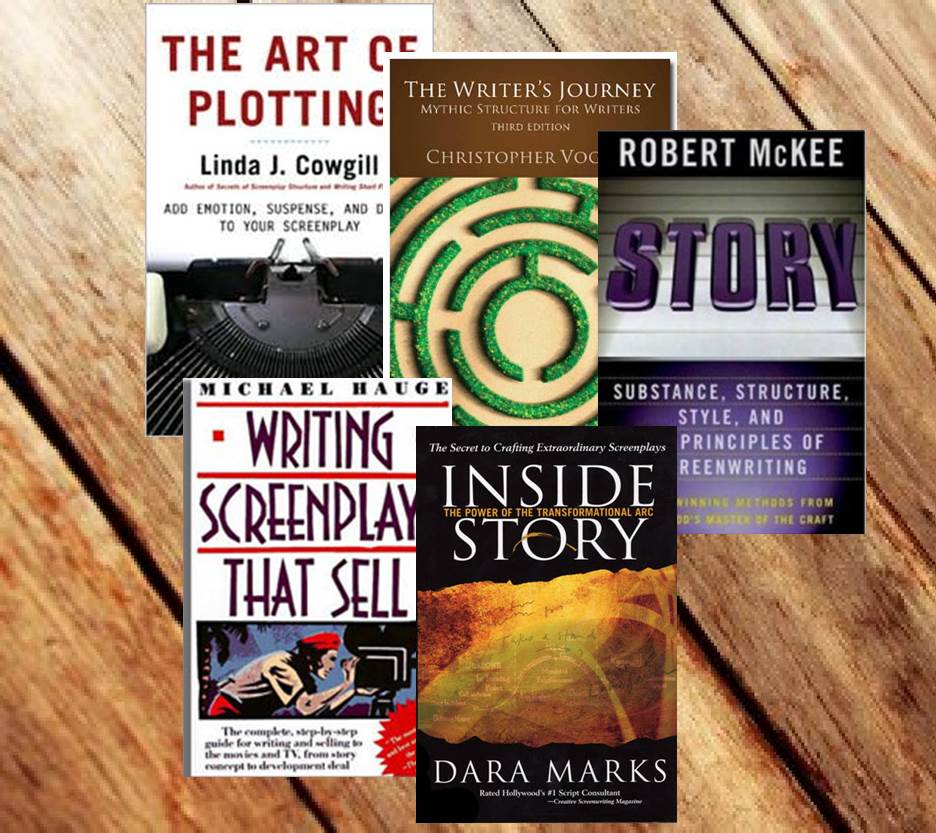
Linda Cowgill. Chris Vogler. Robert McKee. Michael Hague. Paul Joseph Gulino. Dara Marks. Each of these authors also has a trigger onto which student after student latches, like a remora on a shark, looking for their next artistic meal. Each offers an approach to screenplay writing that he or she found particularly useful.

Unfortunately, too many students miss the point that these are approaches or ways of thinking about screenwriting and not road maps to success. Each book offers one or more lessons that a writer can incorporate into his or her work today to make it better, but none of them are the One True Way.

In fact, too close a focus on any one author and you will never find Your True Way.

Too much focus on Dara Marks’ Inside Story and you will find yourself in a tailspin about Theme, as you struggle to force-fit your characters’ actions and dialogue around a theme that may or may not be true to your story.

If you find yourself able to quote Chris Vogler’s The Writer’s Journey, you’re likely describing your characters in terms of mythic archetypes a la Joseph Campbell and drawing parallels with The Wizard of Oz and Star Wars.

I’m not saying that novice writers should avoid these authors. I am simply saying that each should be approached cautiously as the novice writer—or seasoned writer, for that matter—can’t hope to achieve everything these authors discuss. The authors have the luxury of looking at a screenplay as a completed item and so discuss aspects and approaches for which you and/or your screenplay may not yet be ready. There is a reason that you will still find many of these books on the shelves of seasoned screenwriters…because they continue to find new lessons in old books as they develop their craft.

The authors and their tomes are more like a screenwriting buffet, offering you a variety of flavours that hopefully provide nourishment, but can also cause artistic indigestion.

So, sorry folks. The books offer no clues as to the One True Way. It doesn’t exist. And like everyone that came before you and will likely come after, you will continue to struggle as you search for Your True Way.

PS I own and have read books by all of the authors discussed here (and in Book larnin’), and every time I reread them, I find something new to apply to my screenwriting—including, interestingly enough, from the business writers.

Dialogue v Narrative

Image

Yesterday, my friend Marsha posted a short piece on her blog—Why the Face (WTF)—where she discussed her challenges in writing narrative/action for a scene and how she found scene writing to be so much easier if she started the dialogue.

“On its own, free of formatting and figuring out what characters are doing physically,” she wrote, “it lets me really get into what these people are actually saying to each other.”

When I read this, I thought, what a fascinating approach as mine is the complete opposite.

When I start a scene, I can go on ad nauseum about the setting and what the characters are doing or how they are behaving, but I find actually expressing the characters in dialogue to be daunting. When I do start writing dialogue, I find that I am writing exactly what my characters are thinking (on-the-nose) or that their emotions and motivations are incredibly superficial.

When I describe a character’s behaviour, however, his or her emotions surface more slowly through unconscious tics. The tensions that I intone in my mind’s eye then inform the word choice when I start to write his or her dialogue. It is as though I have to psych myself into the character’s body before I can express his or her desires and impulses to the fullest.

What makes this ironic is that while discussing this with Leela, another friend, she reminded me of the days when I first started writing sketch comedy, and all I could seem to manage were a series of “talking-head” sketches. At that time, action was unimportant to me as I felt the only way to bring my point across was through words.

On paper, my sketches could be very engaging, whereas on stage, they were significantly less so. Thus, I needed to learn the power of the unspoken word. Apparently, the pendulum has swung full tilt and I am now in the process of finding a happy medium. (No wonder writing is so tiring.)

Ultimately, like a good Oreo cookie, the best screenwriting comes from the combination of solid narrative (icing) and solid dialogue (cookie), so I am glad Marsha has my back and I have hers.

I am always right (motivation)

Image

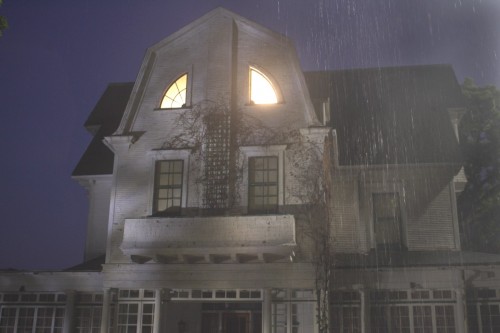
If I move into a beautiful New England home with my beautiful family and on our first night, the walls run red with blood and a disconnected voice cries “Get out!”, I go to a hotel and move the next day.

I do not search for an explanation (or at least not that night). I do not instinctively head for the dusty attic, the dank dark basement or that rather nasty looking shed under the menacing weeping willow in the darkest corner of the back yard.

So when I read about characters doing just that in a novel or screenplay or watch actors do it at the movies, I find myself thinking they deserve whatever comes next because they are idiots. What the hell motivated them to have that stupid response? Out of the gate, I disconnect from the character.

Now, despite the title of this blog post, I am not suggesting that only my instincts should be followed in screenplays, novels, etc.—these would be damned short stories if everyone did—but rather it is a call to writers to help me, as a reader or viewer, understand why the character behaved the way he or she did. Until I do, I cannot really bond with the character.

This isn’t easy, but it is necessary.

Whenever a character responds to something or takes an action, you have to ask yourself, why did he or she do that? And over the course of your story, are all of that character’s choices consistent with his or her personal journey from before your story’s opening to its conclusion?

And as if that isn’t difficult enough, you then have to ask yourself, have I written the story in such a way that the audience can see the logic of the choices, even if only in hindsight?

This last point is crucial, because as writers, we often know or understand things about our characters that never make it to the page. Thus, while everything may seem completely consistent and logical to us, it may still be confusing to our audience, who is not privy to the machinations within the head of the writer god.

At the same time, you never want to spell it out for the audience, because then story reading or watching becomes too passive an exercise and the audience doesn’t engage. You need to feed your audience just enough information that it can begin to make inferences about your characters’ behaviours and so become connected with your characters.

The good news is that this is unlikely to happen in your first draft or at best, will happen in drips and drabs.

As you develop your story past draft one, you will find moments of inconsistency or more likely, your trusted readers and advisers will find inconsistencies. Take those in and mull them over. Odds are, fixing those issues will not require a major refocus of your story…just a heavy-brush rewrite. And your story will improve.

So if the walls run red with blood, a disconnected voice cries “Get out!” and your protagonist doesn’t, I better understand why.

Image

(Images are the property of the owners and are used here without permission.)