Feedback, not criticism (or worse)

customerstalking

A friend of mine recently wrote a screenplay for a sitcom. Not a spec of an existing show, mind you, but rather an entirely new idea she developed.

In accomplishing this feat, she joined rarified company. For every person who has written a television pilot, there may be a thousand people who have written a spec script and millions who have never put pen to paper (finger to keyboard).

And like any good writer, she wanted her work to be as good as it could be, so she asked a handful of people she knew—including me—to read it and give her feedback.

Unfortunately, as I later learned on sending her my feedback, she was ready to chuck in the writing game because of scathing criticism from another reviewer, who essentially told her that her pilot was complete crap (or worse).

My friend is talented and is in the process of maturing her style. And the feedback I gave her was honest and critical, but it was also designed to help her improve, not make her quit. The pilot was still raw, but there was merit in many aspects of it, and the rest could be easily improved.

Sadly, it seems her other reviewer was less interested in helping her find the gems in her work.

To the writers out there, I say, pick your reviewers wisely, and before you take any of the feedback to heart, consider the source and get input from more than one person.

Feedback that is overly critical or overly praising is largely useless…and potentially lethal.

To the reviewers out there, I say, be honest but be constructive. It does no one any good to rip a work to shreds and leave it in tatters. It doesn’t make you more powerful. This isn’t even about you but about the work.

At the end of this post, I have links to pieces I have written previously on receiving and giving feedback. And below, without giving away my friend’s identity or her concept, I offer the opening of my notes to her.

Good luck and good writing to everyone!


My favourite insight of all time on writing for television is that pilots suck. Let me repeat that:

PILOTS SUCK!

The challenge with a pilot is you have to do soooo much structural heavy-lifting and still try to tell a coherent story.

  1. You need to establish the premise.
  2. You need to establish the perspective of your protagonist and therefore your concept.
  3. You need to not only introduce all of the regular characters and their relationships to each other, but also make them engaging.
  4. You need to give the audience a sense of what a typical episode might look like so they know when they can go pee.
  5. And did I mention that you also need to tell a coherent story?
  6. Oh, and one last thing for the sitcom writers…you have to be funny.


So, massive kudos to you for writing a sitcom pilot and doing a decent job of it. You’ve covered all of the points above, but you haven’t really nailed them yet. And for me, nailing them hinges on your decisions about point #2…

Cookie-Monster-Quote-Wallpaper-Download

See also:

Giving Feedback – The Reviewer Strikes Back

Receiving Feedback – Part One

Receiving Feedback – Part Two

Race in writing

One race, many peoples (from mediadiversified.org)

One race, many peoples (from mediadiversified.org)

I’ve spent a few months now reading dozens of teleplays, and one thing that stood out as a new trend for me was the phrase “mixed-race” when describing a character.

“Attracted to the noise, JOANNE (27, tall, mixed-race) looks up from her laptop. A smile blossoms across her face.”

Now, lest anyone take offence, I really don’t care to what race a character is attributed. Nor do I care if the character has parentage of different races or even different species (looking at you, Spock).

Instead, what struck me was that in only one of these teleplays did the fact that the character was mixed-race in any way influence the story and/or the character’s worldview. Which begs the question:

Why mention race at all?

In a screen- or teleplay, you should only be telling me things I need to know to understand the story or interpret a character’s behaviours and attitudes. Unless being 7 feet tall means a character can do something no one else can do and the plot in some way turns on that ability, then I don’t need to know the character is 7 feet tall.

Likewise, if a character is a Korean-Italian and the only thing this fact influences is possibly his or her name, who cares? Where are the subtextual or textual influences of this genetic melange?

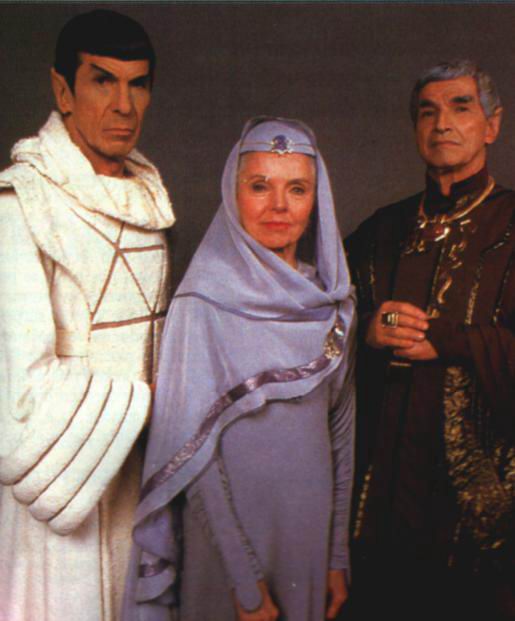
Spock was every bit his warring human and vulcan sides

Spock was every bit his warring human and vulcan sides

In the case of Spock, entire stories were built around the internal and sometimes external conflicts arising from his mixed heritage. He fought constantly to suppress his human side and that influenced his relationships and reactions with everyone else.

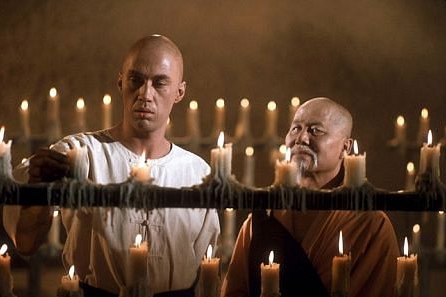
In the single teleplay I read where the character’s mixed lineage did matter, the character struggled with being treated as an outsider by both communities. Thus, in being ostracized by both cultures, she built the defence of being a rebellious loner and responded to her world thusly.

American father, Chinese mother, Kwai Chang Caine lived conflicting cultures

American father, Chinese mother, Kwai Chang Caine lived conflicting cultures

In none of the other teleplays was anything like this even remotely the case. In none of those scenarios, did the writer use the choice to inform the character. In fact, in almost every mixed-race teleplay, the writer never specified what races had been mixed.

That’s how unimportant this fact was to these writers. And there’s the real shame.

Although I don’t know what the writers intended by making their characters mixed race, I suspect it was simply to make themselves look socially conscious.

What they achieved, at least in my eyes, was the exact opposite.

Illiterate in 3 languages…all English

canadianEnglish

“That which we call a rose, would by any other name, smell…”

William Shakespeare, Bad Line Break theatre

As many of you know (or have quickly surmised), I am Canadian, and more specifically, Anglo Canadian. Unto itself, that’s a pretty cushy thing to be in this country.

In choosing to live as a writer, however, I added an otherwise unnecessary twist to my life—I forced myself to learn English as a second language.

Wait. Didn’t you just self-identify as an English-speaking Canadian?

Yes, I did. But I’m a Canadian English-speaking Canadian.

And one of the first things you realize when you become a Canadian writer is that you will probably starve for lack of work.

Now, I’m not knocking Canadian writing, whether fiction, for film and television, journalism, what have you. It is easily some of the most beautiful writing available in the English world. But it is often written to (if not for) an incredibly small market, and opportunities to succeed are therefore often few and far between.

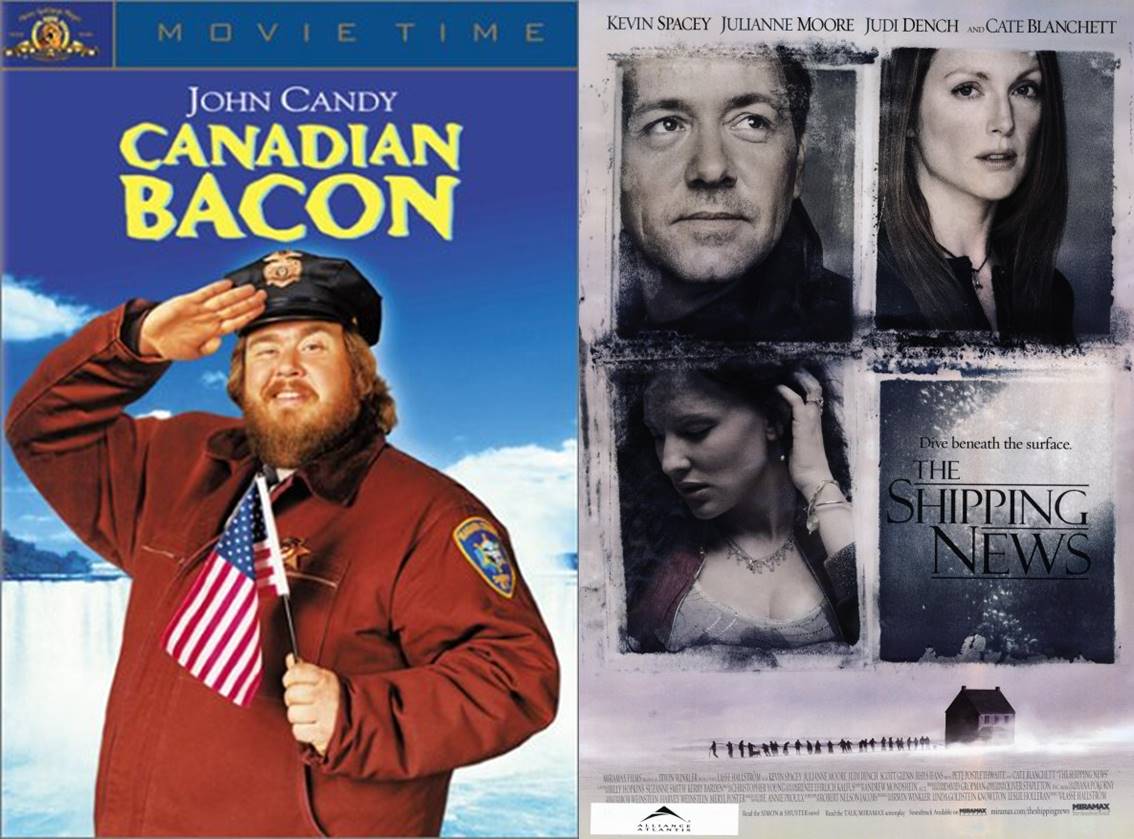
If feels like 8 writers encompass the entire Canadian television landscape. And name a Canadian movie. (I’ll wait.)
Nope and nope.

Nope and nope.

Okay, now name one not directed by David Cronenberg or Denys Arcand.

I was once offered a job as the Editor of a Canadian biotech magazine—yes, I used to be even more nerdy—for $30kpa. And yet, already on my resume was a job working for an American biotech mag that started around $65kpa.

Bottom line is thank goodness for my passion to write, because my passion for money has taken a beating.

(Side note: This was a choice I made and for which I take full responsibility. I don’t mean this to be a “life is so unfair” rant.)

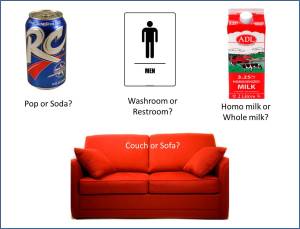
What this has meant, therefore, is that to make it as a writer, I have had to learn English as a second language. In this case, American English.

Recently, the BBC published a short article that tried to explain Canadian English within the context of its British and American counterparts. Rightly, the author noted that the differences were more than a matter of spelling (e.g., centre v center; honor v honour). Rather, the differences also manifested in idioms, speech patterns and word choice.

As long as everyone's having fun

As long as everyone’s having fun

As with most Canadians, I had a bit of a leg up on learning American as our proximity to the border (mere kilometres and even fewer miles) means we are inundated daily by American film and television programming. But I also had the additional benefit of having been married to an American, and a Southerner to boot (more on “boots” later).

Where I would recommend taking the 401 across north Toronto, Leela would suggest taking 66 from Fairfax into Washington. Luckily, we were both practical enough to set aside arguments about whether we needed to go to hospital or the hospital.

All this to say that although the differences between Canadian English and American English can be subtle, they can easily explode before the eyes of the unsuspecting.

Writing for an American biotech magazine and working with American editors was something of an ESL boot camp. And over the intervening 15 years, I like to think I honed my American skills to the point where you suspect I am from Minnesota or Western New York (hello, North Tonawanda).

In fact, I’m going to rely heavily on my multi-Angloism as most of my writing, whether for money or in my screen- and novel writing, is aimed at American audiences. And although my primary goal remains writing the best story, my secondary goal is writing it in the most innocuous way. I don’t want my writing to “read” Canadian.
Versus

Truth be told, I don’t want my writing per se to be noticeable at all. If it is, I’ve taken the reader out of the story.

This is not to say that I want my stories to be bland, but rather that I want all of the art to be in the story itself, rather than the more mechanical aspects.

In my Canadian stories (so far a sitcom pilot and screenplay), which are set in Canada, involve Canadians and target Canadian audiences, I write Canadian. For pretty much everything else, I write American.

Should I start targeting British audiences, then I’ll spend more time learning British English, and make fewer spelling changes.

In the meantime, I’ll continue to bounce back and forth between the multiple Englishes like a character out of Monty Python.

What’s it aboot?

Anyone can make fun of how Canadians communicate (or don’t). Goodness knows Canadians do. But I have to admit that I struggle with the whole “oot and aboot” phrasing that American audiences in particular seem to see as a Canadian phrase.

It’s not that I think we pronounce these words correctly so much as we don’t say “oot”. Rather, we say “oat”.

As I mentioned, I was married to a Southerner, and one day, we had a lengthy conversation about the word “South”. Try as she might, Leela could not get me to pronounce the “ou” without it taking on a surreal emphasis akin to “owwwwwww”.

Instead, I would say “Soath”. And instead of “about”, I would say “aboat”. And as I made a point of listening closely to Anglo-Canadians speak, I never heard a single one say “aboot”. It was always “aboat”.

That being stated, I will totally cop to “eh”. It’s us. End of story.

Screw the cat

First Draft

So, you want to write a screenplay.

Maybe you’ve read some books on screenplay writing—names like Cowgill, McKee and Field dot your bookshelf. Perhaps you’ve taken some screenwriting classes whether at a local university or community centre. You may have even—saints be praised—read some screenplays.

Great. Good on you. Way to go.

Now, before you type your first letter onto a page, do yourself a huge favour and forget all of it.

Okay, don’t forget it, but definitely shelve it. Put it aside, because almost none of it is useful to you yet.

In short, you can’t handle the truth…and that’s okay.

Leave the lessons for Draft Two and onward

Leave the lessons for Draft Two and onward

You’re about to write your first first draft (no accidental duplication there) and your only purpose right now is to tell a story.

Should my inciting incident happen around page 10? Doesn’t matter.

How much detail is okay in my narrative? As much as you need.

When is it okay to use voiceovers? Whenever you want.

None of what you learned really matters at this stage and is more likely to make your job harder than easier. It will become useful, later, when you’re doing rewrites—and you will do a lot of those.

But for right now, all of that information—much of which can appear and may be conflicting—is just a barrier between the blank page before you and the story you want to tell. Or perhaps more importantly, between you and the best story you can tell.

In my experience, it is a 1000X easier to fix bad structure than it is to fix a bad story. (This is not to say that any story cannot be improved.)

If you need three pages of narrative to get you to the first line of dialogue, then write three pages of narrative.

If it takes you 347 pages to tell your story, then that’s what it takes.

If you read yesterday’s pages and they sound like shit, stop reading yesterday’s pages. Keep writing until you’ve told your story.

Contrary to the name of the software package—thanks for the pressure, Final Draft—this is your first draft and it’s going to have a lot of shitty bits and pieces; they all do. I don’t know that in the history of screenwriting, anyone has ever filmed the first draft.

So write like no one is watching; because other than you, no one is. And tell the story you want to tell.

When you finally write “FADE TO BLACK” or “END” or “FIN” (pretentious move, btw), those books, blogs and lessons will still be there to help you get to drafts two, eight and fifteen.

(Please note: When I say ignore everything, I’m also including this blog post. If it is easier for you to tell your story by considering any or all structural and formatting elements, then do so.)

Blaze the trail that works for you, regardless of whether anyone has been down that trail before.

Let the cat write his or her own damned story

Let the cat write his or her own damned story

Inside definitely Out (a review)

poster

Earlier today, I had the opportunity to see the latest Pixar movie Inside Out in the company of one of the film’s writers and its story supervisor Josh Cooley (a very nice man). And aside from receiving a lovely lecture about story development at the famed animation house, the connection afforded me an opportunity to appreciate the movie much more than I did on simple viewing.

To briefly bring everyone up to speed, Inside Out tells the story of the emotions that rattle around inside the mind of 11-year-old Riley as she struggles with a move across the country. Although we are introduced to 5 main emotions in Riley Headquarters (get it?)—Joy, Sadness, Anger, Disgust and Fear—there is no mistaking that Joy is numero uno in this space.

Joy (voiced by Amy Poehler) sucks the oxygen out of any room she’s in and proves that even the best intentioned of assholes is still an asshole. Her goal in life is to make every moment of Riley’s life a happy one and is not worried about shoving aside the others (ever so happily) to ensure that.

But where Joy has developed a respectful détente with Anger (Lewis Black), Disgust (Mindy Kaling) and Fear (Bill Hader), she firmly but gently has no use for Sadness (Phyllis Smith), practically ostracising the poor creature to the periphery.

With the upset of the move from Minnesota to San Francisco, though, Sadness seems to want to be more involved and in a fracas with Joy, the two get sucked out of headquarters and into the long-term storage hinterlands of Riley’s brain.

At this point, the story basically turns into the Odyssey as the two emotions struggle to return home before Riley falls completely apart at the hands of the others. (To say much more would be to offer spoilers.)

Joy and Sadness wander the hinterlands of long-term memories

Joy and Sadness wander the hinterlands of long-term memories

The challenge I had was in trying to figure out exactly at whom Pixar was targeting the movie.

Superficially, this is a pure kids movie (ages 6 to 10, maybe), unlike many previous Pixar concoctions, which had elements for both kids and adults. Inside Out doesn’t have the depth of Toy Story or The Incredibles to truly speak to adults, much as the most mature 11-year-old isn’t ready for the adult world.

I’m not saying there aren’t adult-focused jokes interspersed throughout the film, but rather exactly that. They are interspersed, like small granules of sugar designed to feed the parents accompanying the kids to the theatre.

Up talked about loss and aging

Up talked about loss and aging

There is no real adult storyline to this film to touch adults as there was in Up or Wall-E. Instead, the film has sweet, adorable moments of baby bums and first goals that might tug at a parent’s heartstrings but never engage the soul.

But as a friend suggested, it is not strictly a kids flick either because it touches on esoteric aspects of the psyche that kids that age would never be able to comprehend, such as abstract thought and the concept of forgotten memories. The problem is these aspects are more conversations of the mind and not the soul. So even here, the adult is largely passed over unless they have an interest in neurology and psychology.

Wall-E dealt with issues of love and environmental destruction

Wall-E dealt with issues of love and environmental destruction

And as a writer, perhaps the biggest sin with Inside Out is there is no sense of what’s at stake.

Sure, Joy is losing her cool as she fights to get back to headquarters. For her, Riley having a down moment is a disaster.

And Sadness isn’t exactly having a picnic as she is routinely sideswiped or ignored by Joy in their efforts to get home. If anything, she increasingly takes the blame for everything onto herself.

But what’s at stake? What if they don’t get back to headquarters?

Does someone die? Is life no longer worth living?

I don’t know because that was never a question on the table. And without stakes, I find it difficult to root for the hero.

And this challenge is made all the more difficult by the fact that the hero (Joy) is also the villain, albeit passively. She is truly her own worst enemy, and so I quickly find myself irritated by her with no great concerns about the outcome.

The six hour conversation and lesson with Cooley helped me see a lot more of what the writers, animators, editors, directors and producers were trying to accomplish. And that did help me understand the movie better. The thing is, few others were going to get this kind of help.

The movie will do well at the box office. Of that I have no doubt. It is a wonderful vivid distraction for young kids.

But it won’t have the staying power of Pixar’s earlier efforts and likely won’t be spoken of again in a few years other than in possibly hushed whispers.

Heart of Coppola

Zeotrope

Francis Ford Coppola likes me! He really likes me!

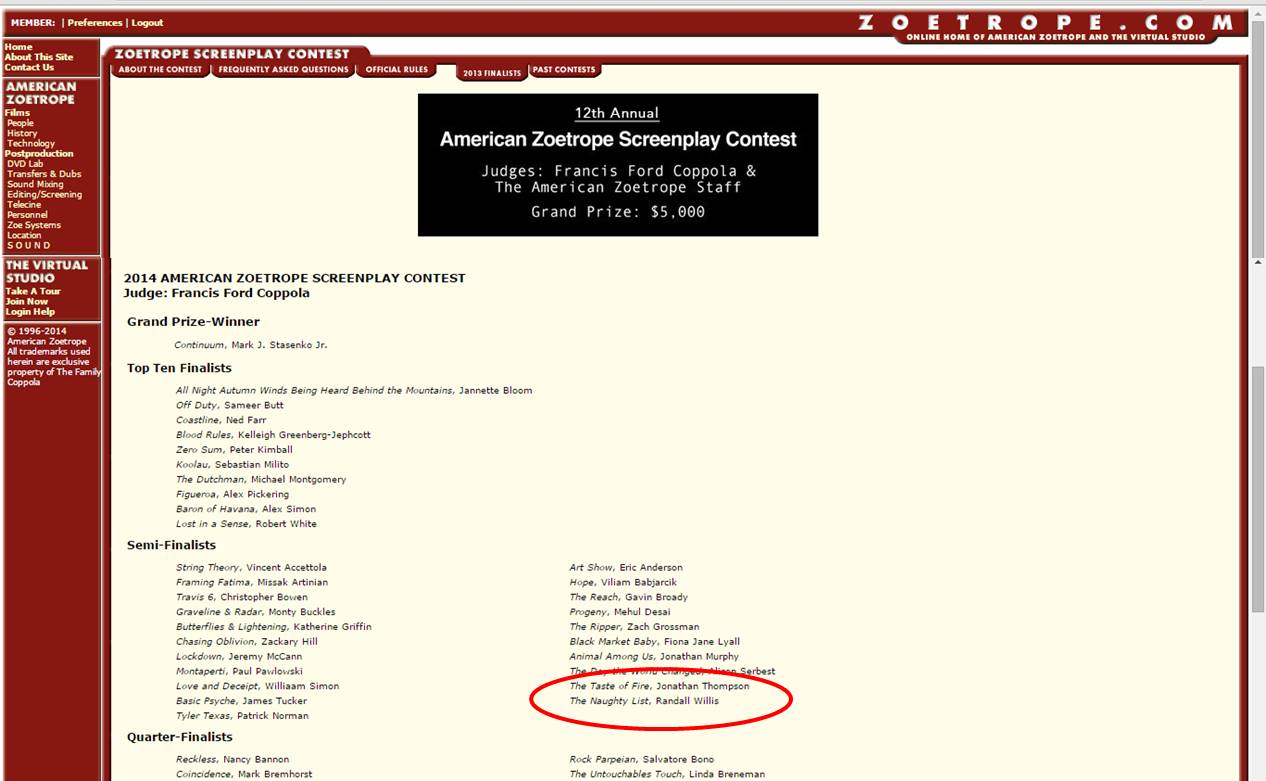
So, no sooner do I finally get around to posting my laurels from Nashville than I find out that my screenplay The Naughty List was selected as a semifinalist in the 12th Annual American Zeotrope Screenwriting Competition, an organization run by Francis Ford Coppola (I seem to recall he was a director of geopolitical documentaries).

I had started to wonder if the screenplay was going to see any love in the competitive world…this is good!

Coming to a theatre near you (please, please, please)

Coming to a theatre near you (please, please, please)

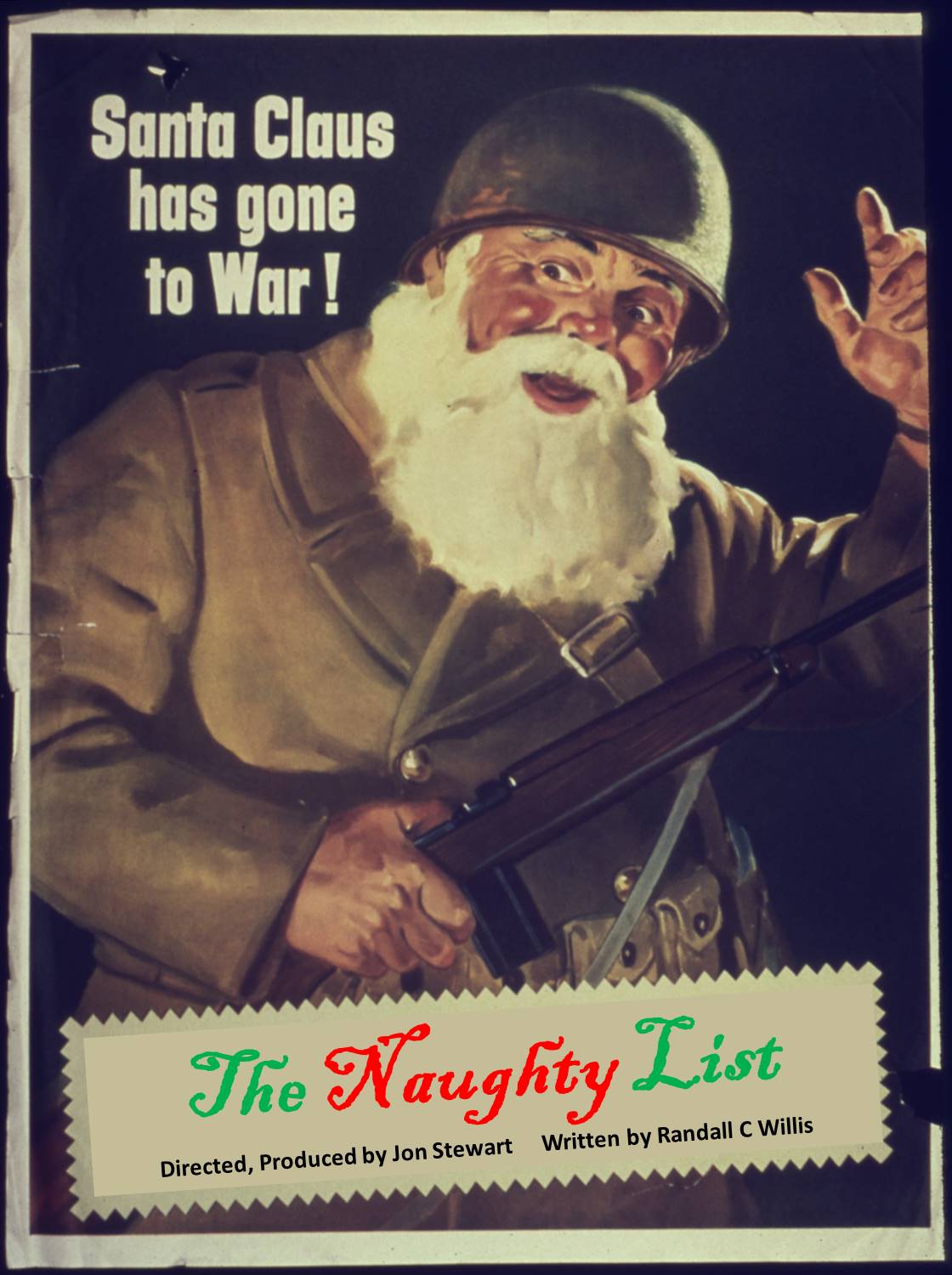
So, what is the story of The Naughty List?

What would you do if you learned decisions you make every year ruin the lives of millions of children?

Oh, and your name is Santa Claus.

After a brush with death just days before Christmas, Santa rescinds the Naughty List only to learn that for some kids, the lump of coal started a life-long downward spiral. In fact, two kids—now warlords—are about to unleash hell on each other and their people.

With a loving heart and snowy balls, child-like Santa dives into the fray. But his magical meddling only makes things worse.

He greases the wheels of war. More children suffer, including a girl desperate to save her family. As his magic fails, Santa knows he must face the oncoming storm as a mortal.

One man. Two armies. Can Santa stop the madness and save a crumbling Christmas?


Belated laurels

Ah yes, almost forgot. This showed up in my in-box back in December. The laurels for my Best Animated Feature Screenplay at the 2014 Nashville Film Festival.

The winner was my screenplay for Tank’s, a story that proves even a fish in water can be a fish out of water.

Tank's for the love!

Tank’s for the love!

To read the opening pages of Tank’s, visit:

Tank’s (Part One)

Tank’s (Part Two)

It gets to us all – Jon Stewart

jon_stewart-chin

For many of us, programs like The Daily Show were our weekly bulwark against the insanity of clashing cultures and ideologies or against insanity itself. Regardless of your personal sociopolitical leanings, shows like this one help many of us to see that we are not going insane or losing our hearing, that the bizarre ironies of peoples’ words and actions are not just figments of our imaginations.

Cain and Abel

Cain and Abel

But where most of us simply allowed the insanity to flow over us and healed our wounds in the salve that was satirical comedy and commiseration, the world’s woes wear on the people who bring us this salve. Such, I think, was the case this week with the announcement that Jon Stewart will shortly hand the reins of The Daily Show to another.

A couple of months ago, I tweeted Jon and The Daily Show to express my concern about his health, both mental and physical. Over the last several months, it seemed that each episode of the program was taking more and more out of the host, that he had to fight to maintain his composure. And he seemed to be losing that fight.

Aging sucks

Several times, his personal comments on recent events bordered on screeching rants, as though the nuanced commentaries we had witnessed for the past 17 years required too much of him. On other occasions, he almost seemed to throw his hands into the air and with a head-bobbing sigh, surrender to the madness that swirled around us all.

Jon Stewart seemed tired, and if not broken, at least seemed wounded.

And please, this is not a condemnation or expression of disappointment. The man has clearly earned his weariness and wounds. (Too Jewy to say he took on our sins?)

Nice hat...where's my chocolate?

Nice hat…where’s my chocolate?

Even the strongest metal abrades to nothingness if repeatedly and relentlessly thrown against a stone wall that seems to regenerate itself at will. For every monolith of stupidity or cruelty that The Daily Show tackled through humour, a dozen others formed behind it. And the show kept pushing.

And so, as much as he will be missed, Jon Stewart will step aside and begin the healing process, while the show will become what it will become under the guidance of another.

Tracey+Stewart+Jon+Stewart+Family+Walking

As he expressed in his announcement, the first part of that healing will likely be him reinforcing his roles as Dad and Husband. Eventually, will we see him back on stage performing stand-up (sure, we all say we’ll go to the gym)? And after that, who knows? (As long as it’s not acting…dear god, Jon, NO!)

The man has earned his rest, and we will applaud and cheer and cry as he walks out the door (and about two weeks later, we’ll start pitching screenplay ideas to you).

Coming to a theatre near you (please, please, please)

Coming to a theatre near you (please, please, please)

Be well, Jon Stewart, and thank you.