I don’t hate movies!

This may sound like an unimportant statement, but as a newly minted screenwriter, I was starting to worry that I seemed to dislike every movie I watched in theatres or via Netflix.

Now, I must admit that I have spent much of my life as a hypercritical asshole, a picker of nits most egregious, so it perhaps came as no surprise that a movie had to be pretty solid to impress me…but when you go through dozens of movies and find all of them meh, you start to worry. Or at least, I did.

You see, I slowly began to doubt my own understanding of what makes for a good film, or more importantly to me, a good story. And as someone who has decided to be a professional storyteller that is a worrisome doubt to have.

Movies that I have found lacking despite their acclaim

Movies that I have found lacking despite their acclaim

The recent fare that I had heard wonderful reviews of or that had won awards:

  • Blue Jasmine – good performance by Cate Blanchett in a completely forgettable movie
  • The East – incredibly slow melodrama in which none of the characters was note-worthy and a moral dilemma on which the screenwriter and director refuse to take a position
  • Life of Pi – hated the book, bored by the movie…would have been more likeable as a Disney flick
  • Vicky Cristina Barcelona – boring people with no ties to the real world (like a need for money) screwing
  • Noah – missed opportunity to explore the more interesting character of Tubal-Cain
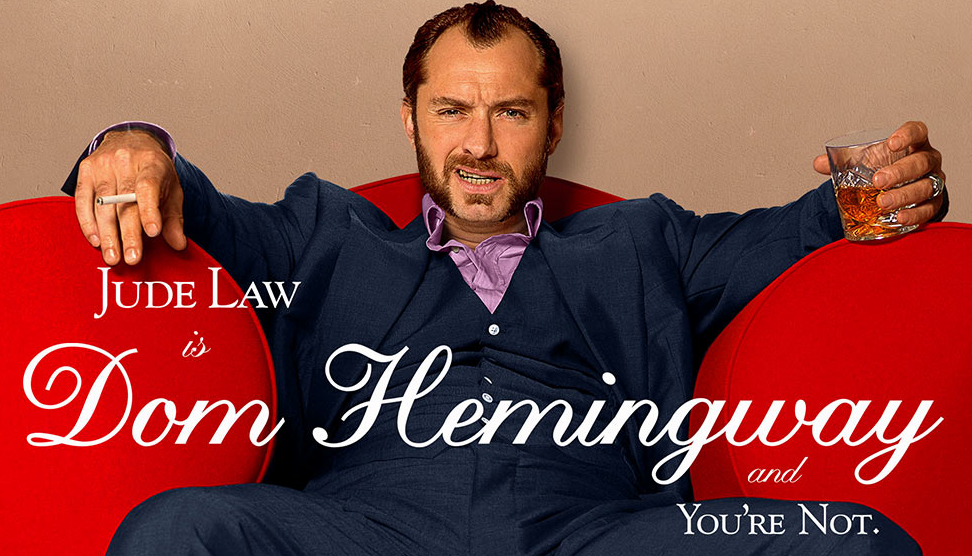
  • Dom Hemingway – a wonderful portrait of the eponymous character, a terribly flawed story (my thoughts)
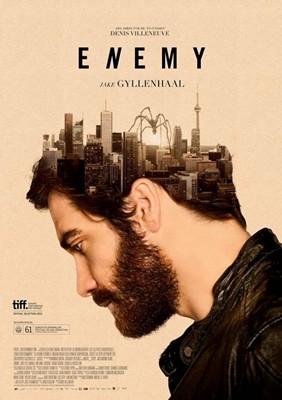
  • Enemy – 2014 Cdn Screen Award as Best Picture, thief of 90 minutes of my life (my thoughts)

I have many colleagues who will defend some or all of these movies to the hilt and yet I found each of them somewhere between seriously flawed and downright insulting.

Clearly, I was the problem. In my zeal to craft my own stories, I had become myopic on what a good story is, what good characters are.

And then I watched The Boy In The Striped Pajamas.

Wow. I was blown away, not just by the subject matter, but by the story itself, the unique perspective and the richly drawn characters.

Sure, there were one or two small moments where I tilted my head askew, but they did not linger. Nor did they snowball in my consciousness as they were few and far between.

Movies that have renewed my faith in storytelling

Movies that have renewed my faith in storytelling

Last night, I watched The Reader.

Not as blown away, but still enthralled. Rich characters, slow revelations, palpable conflict both within and without.

I don’t hate movies.

I have no time for movies that fail…and more importantly, I aspire to and am inspired by movies that succeed.

Doubts remain, but thankfully, they have diminished.

…but I know what I like

Congratulations! You’ve landed a paid writing gig. Finally, all of that hard work and practice is going to pay off.

Mind you, unless the person paying you to develop a screenplay, marketing campaign, novel, whatever, is simply giving away his or her money out of some form of altruistic zealotry gone mad, the benefactor is likely to want to participate in the project, to take some degree of ownership, and therefore to weigh in…with notes.

So, you’ve just received your first batch of notes.

And amazingly, they are relatively minor and/or completely in sync with concerns you had about the work and so give you further impetus to make the changes you kind of knew needed to be made.

But seriously, folks. These notes don’t make any sense. The note-giver clearly didn’t understand the nature of the project he or she assigned you. To make most or any of these changes would be to seriously weaken or outright destroy the project.

Now, what the hell do you do?

shock

Step 1: Curse.

Yes, feel free to curse the gods for this tedious torture of your creative soul. How dare these mere mortals give you notes? The audacity to think they could contribute to this work of Art, when the very notes they provide merely highlight their ignorance.

I don’t have a problem with hosting a pity party of one (or a few close friends). The key is keeping the party short, particularly when working to deadline.

You are an Artist, and Art requires Ego and a degree of Hubris. Without hubris, how would any of us ever have the cahones to show our work to others?

The reality, however, is that we have chosen to work for others, so…

unimpressed

Step 2: Set aside your ego and re-read.

Put a tea-cosy on your vision for a moment and really try to understand the notes you have been given. I’ve heard it said often: What is the note within the notes?

I have found that people often can’t identify or vocalize what they specifically find troubling in a piece of Art. But rather than simply give you no notes, they try to identify things that may have some bearing on their issues…the operative word there being “may”.

If you stand back a little further and ignore the specific requests, can you see something in common between the notes, a greater theme or need from the note-givers?

Do your best to step out of your shoes and into his or hers. A change in perspective may give you a greater insight as to the real challenge the note-giver is facing with your work. You’re the writer; you have one need. A director or a marketing manager will have different needs and perspectives. Respect that.

It is possible, however, that you will still be uncertain (or clueless) as to what to do next. In that case…

what

Step 3: Ask questions/seek clarity.

Acknowledging the note-giver’s concerns or comments is not the same as accepting them. It does, however, give him or her a sense that you respect them and are trying to maintain a collaborative relationship. I cannot begin tell you how much this means to people and pays off in the long run.

Offer your interpretation of the issues to confirm you see things the same way as the note-giver. If you do, brilliant. You can now offer alternatives to the less palatable requests that may satisfy the note-giver’s misgivings.

If you don’t, brilliant. Now, you have the opportunity to gain insights into the note-giver’s perspectives. This will allow you to brainstorm new approaches that will satisfy both parties.

You may also find that many of the requested changes are not a high priority for the note-giver or were merely suggestions of things you could do. For all the opinions people offer throughout their lives, most individuals are incapable of giving effective notes and thus, demands, suggestions and brain farts all look alike to the person receiving them. This holds for the Artist, as well. Don’t allow your and their ignorance to drive you crazy.

So, now that you either have an understanding with the note-giver or realize you are working with a control-obsessed ego-maniacal asshole (it happens)…

gotcha

Step 4: Make your changes or rollover.

What you now do with these notes hinges on a cost-benefit analysis.

Are there ways you can bring greater clarity to the story you have written that will address the needs without either incorporating the specific requests or significantly altering your vision of the story?

If yes, then you have not only improved the work, but you’ve established a wonderful rapport with the note-giver that will likely lead to future opportunities for collaboration.

If not, you need to ask what your goal is for this particular project.

If it is your magnum opus, then feel free to stick your heels in and refuse to make the requested changes, but in the knowledge that you may very well be fired and find it difficult to get work in the future. The note-giver and community may respect your stance and in the final analysis, acknowledge you were correct in your refusal, but it doesn’t happen a lot.

If, however, this project is the first step toward a longer term relationship with the note-giver and/or the hiring community, then go back to Step 2 and think harder as to how to make this work to everyone’s advantage. The onus is on you to do your best work within the framework you are given.

In this latter situation, of course, another alternative is simply to rollover and acquiesce to the requested changes. It is completely possible that the note-giver is right and you simply could not see the problems because your ego was in the way (aka you were too close to the project).

On the flipside, of course, if the note-giver was wrong, you may carry the burden of his or her errors and so find future work with that individual unlikely but then why would you want to work with that asshole again. Or, he or she could step up and take ownership of the error, in which case, you may have found a partner who will trust your instincts more the next time.

Getting notes is never easy, but it’s going to happen whenever you leave your Artistic cave. How you deal with them will have a significant impact on how often you get paid to do your thing.

Canadian Film Day: Hoorah or who cares?

nationalfilmday_photo

Via my social media outlets, I discovered that today is Canadian Film Day (presumably only in Canada).

Oh Canada, our home and native film industry… (although not necessarily native in the sense of indigenous peoples).

The discovery caused me to pause, as I realized that it has never mattered to me that a film is Canadian…only that it is good, entertaining, thought-provoking.

As an artist who is Canadian, I almost feel guilty that this is the case. And as a friend of several writers, directors, performers, etc, who live and work in Canada, I am embarrassed to say that I am not sure I can name 5 films that I know with any confidence are Canadian.

My attempt: Black Christmas, Exotica, The Sweet Hereafter, Decline of the American Empire, Scanners (honesty check: of this list, I have only seen Black Christmas)

Don’t get me wrong; I don’t have a problem with having a Canadian Film Day to celebrate my nation’s achievements. I think it’s great to pat our collective selves on the backs every once in a while.

CanadaPoster11

I guess my bigger question is does it really matter if a movie is Canadian or not, whether from an artistic or audience perspective?

When an industry is in its infancy, it needs to be protected and nurtured, but much as with the Canadian music industry, I think the Canadian film industry is well beyond its infancy. It doesn’t need training wheels. We shouldn’t be coddling it out of some odd sense of nationalism. It is more than capable of competing (and does) with the big boys and girls of the world.

This country has played incubator to world-renowned directors, writers, performers and production companies, and these people and groups became world-renowned by competing in the world. By setting the bar high and achieving even more.

My fear with art-via-nationalism is hearing the phrase “You know, for a Canadian film, this is pretty good.”

I worry that in blindly supporting the Canadian film industry simply because it is Canadian, we won’t push ourselves as hard. That we will be willing to settle for good enough for a Canadian film. That mediocrity will reign, punctuated here and there with islands of brilliance.

As some of you know, I am cowriter of a sketch comedy show–SomeTV!–currently in production in Toronto. One of our mandates as a writing team was that we are NOT writing a Canadian sketch show, regardless of all of the writers being Canadian and residing in Canada for initial broadcast in Canada.

Sure, the show will have Canadian sensibilities given the Canadian writing and acting, but we’re targeting a global stage with this project.

Likewise, none of my film screenplays are targeted as Canadian. Nor all but one of my teleplay concepts (the one revolves around Canada’s Parliamentary system).

Sure, many of them are set in Canada, but that is more an artifact of my knowledge base and personal experiences than anything else. Any of the Canadian locations could be swapped for American or British locations with only a few modifications to the story.

I’m not trying to write The Great Canadian Story. I’m trying to write The Great Story, which may or may not feature Canada and its people.

I wish every movie to do well, even the ones I don’t particularly like. I want all of the artists involved to find personal satisfaction and achieve greatness. I want audiences to be entertained and money to flow.

And maybe this is biting the hand that feeds me (when and if it ever decides to feed me), but I don’t particularly care if those movies, artists, audiences and money are Canadian.

MIC-LOGO-2

PS: I am a strong advocate of any organization that supports the development of new artists who push the envelope in storytelling. Again, though, I advocate these organization whether Canadian or other.


My screenplays:

Tank’s: Animated musical feature, female co-lead; Winner of Best Animated Feature Screenplay at 2014 Nashville Film Festival

An impulsive adolescent fish, ripped from his Amazonian home, struggles to find his place in the world of a pet shop, complicated by feelings for an idealistic, privileged fish and the iron-fisted rule of a villainous eel. A story that proves even a fish in water can be a fish out of water.

Captain Pete: Humourous family drama, female lead, set in Eastern Canada

To reconnect with her increasingly distant son, 35-year-old divorcee Billy tries to protect her son’s pirate-hunting lunatic friend from himself and an intolerant town, and in the process, may help both him and herself reconnect with the world.

The Children of San Miani: Murder thriller, female lead, set in Northern Italy and Canada

A crusading young Turin police officer must partner with a Vatican officer and faces Vatican interference as she tries to prevent another murder linked to a 35-year-old child abuse mystery, and in the process, faces the demons of her own Catholic upbringing.

The Naughty List: Dark adult comedy, holiday-themed

After a near-fatal accident, Santa vows to make amends to the Naughty kids, but when he learns two of them—now warlords—are racing toward war on Christmas Day, he drops everything to intervene as only he can, with catastrophic results.

Winner @ Nashville Film Festival

Me sharing the red carpet with friend and writer Larry Shulruff.

Me sharing the red carpet with friend and writer Larry Shulruff.

Late yesterday, my screenplay Tank’s won best animated feature at the Nashville Film Festival.

Pretty stinking stoked about this as it was a screenplay I had contemplated retiring for a bit to seriously rewrite it later. Still needs a rewrite, but happy to let it rest on its laurels for a bit.

Thanks to all you lovelies who had to listen to me kvetch about this thing for the last couple of years, and in particular to Marsha Mason, whose incredible reading and analysis helped me make this a massively good read.

Dom Hemingway – A Review

CN_DomHemingway

A redemption story of a career criminal who has played the game by an unwritten code, who has done his best to do right by people within the criminal world and been screwed at every turn. The only people he hasn’t done right by, in fact, are his ex-wife and daughter, whom he completely screwed over. (Trailer)

Written and directed by Richard Shepard, who brought us The Matador, Dom Hemingway works on so many levels—from its amazing opening soliloquy (no better way to describe it), through astounding montages of decadence that can only be described as balletic, to tender moments of friendship punctuated with foul language.

But sadly, because it works on so many levels, the places where it doesn’t are glaring. And there is perhaps no bigger failure than the actual story.

There is no doubt that Shepard can write. His use of words to express universal ideas and human frailty are musical. Unfortunately, those skills only serve to create islands of poetry in a story that slowly drowns in conflicting tides. The movie bogs down into little more than a series of fortunately/unfortunately vignettes that ultimately don’t go anywhere.

Likewise, the moment we leave the criminal aspects of the story and Dom has to face the wreck that is his life and relationships, the dialogue becomes wooden and cliché.

Even the redemption angle is eventually undercut by additional scenes that suggest Dom has learned little. Not sure what Shepard’s thought was here—that people don’t really change, perhaps—but it might simply be an unverbalized acknowledgement of Shepard’s own limitations.

The performances of Jude Law and Richard E. Grant cover for many of the story flaws. Law’s Dom is a man who can’t get out of his own self-destructive behaviours long enough to actually succeed and let his skills prove himself. Grant, meanwhile, plays the long-suffering conscience who just wants his friend to be happy, but doesn’t have the energy to watch Dom implode in his own fear yet again. Unfortunately, the minute these amazing men leave the screen, the movie flat lines.

(Side note: Just before the movie started, the theatre screened an ad for Filth (trailer). It was amazing how similar the lead characters of the two movies appear, as Law seemed to be channelling his inner James McAvoy at times.)

Perhaps the best way to describe Dom Hemingway is to say you will feel energized watching it, but a little empty of dissatisfied as you leave the theatre.

I wanted this movie to be better. I wanted it to be the best movie I’d seen all year, the most complete movie. Alas, it wasn’t.

Enemy—The movie with the meta title

Enemy

So, it was $5-Tuesday yesterday at the Carlton Cinema in Toronto and a friend invited me to see a movie called Enemy, starring Jake Gyllenhaal. Like any weary movie-goer, I immediately jumped online to look at the trailer and thought, “Hmmm, weird, but interesting”.

I was half right. The movie was weird.

At this point, I should probably say “SPOILER ALERT”, but truth be told, I am not sure that if I laid out every event that occurred in this movie, you would know what was happening. I sat through it and I don’t know what happened.

As the trailer indicates, the movie is about a man who is dissatisfied with his life—never explains why, he just is—and is merely going through the motions of living until one day when he realizes that his exact doppelganger lives in town.

Terrified at this revelation—never explains why, he just is—he is nonetheless drawn to his twin and after jumping through a series of over-complicated hoops, he meets the twin. At which point, he second-guesses his decision and it is his twin’s turn to go neurotic—never explains why, he just does.

As you may have guessed from my above repetition of “never explains why”, my greatest issue with this movie is unclear character motivation. Perhaps it says more about me and my life history, but I have no idea why any of these characters acts as extremely as they do.

I am confident that it is part of the artistic conceit of the piece that at numerous moment are you fully sure which Jake Gyllenhaal character you are watching onscreen. The challenge with this is that the emotional rollercoaster of each of the characters is such that from cut-to-cut within the same scene, I am never sure which Jake Gyllenhaal character I am watching. I ended up watching the characters’ clothing rather than the actor’s face to try to follow the story.

And the motivations of the secondary characters are just as muddy for me, although at least here, we have different actors and so don’t have the Gyllenhaal rabbit hole with which to contend. Like a faucet tap, the emotions of these characters change with a flick—questioning in one moment, horny in the next, and angry in the third, and all in the span of 30-45 seconds.

A definite statement of who I am, I spent much of the movie trying to predict the reveal of the story based on the clues or purely on conjecture.

Twins separated at birth? Time travel with a glitch? Parallel universes collide? Psychotic episode of one man leading two lives?

No SPOILER ALERT to say none of these came to fruition, but that still doesn’t mean that any of them may not be true. Hell, all of them might be true. I don’t know.

And any hope of a conclusion is muddied by a massive metaphor that scurries through this movie—I won’t tell you what it is—and yet offers no satisfying explanation.

Enemy is described everywhere as a thriller. I’d be more inclined to call it a puzzler…and even that may be too lofty. Head-scratcher and headache-giver might be more accurate.

As I read up on the movie to write this, I learned the film won Canadian Screen Awards (our Oscar) for Best Director and Best Supporting Actress, and was nominated for Best Film. I find that disturbing.

The film was based on the 2002 novel The Double (O Homem Duplicado), by Portuguese author José Saramango. Part of me wants to find the novel to see if it is any clearer than the movie, but as of this moment, a bigger part of me just wants to walk away from this entire episode in my life.


Previous posts about characters in writing and film:

Just Tell The Story – Austin Film Festival

The Dignity of Characters

A Matter of Character

Can You Relate?

I Am Always Right (Motivation)

Dara Marks at Toronto Screenwriting Conference 2013

Unpacking Baggage (Part One)

Unpacking Baggage (Part Two)

Re: Rewrites (Part Two)—Toronto Screenwriting Conference 2014

Chitlik_2

In Part One of this post, we examined Paul Chitlik’s approach to reviewing the structural elements of a story, including the idea that a screenplay is actually comprised of four stories: The plot-based Main Story, the relationship-led Emotional Story, the protagonist’s internal Personal Growth Story, and the humanizing Antagonist’s Story.


Dissecting character

To truly understand your main characters, Chitlik recommends building something of a character profile that you can use as a steady reference while examining how the character acts and speaks within the screenplay. This is critical, Chitlik says, because often when you start writing a screenplay, you really don’t know your main characters and as you write, they will become more defined.

For assistance and more insights, Chitlik highly recommends Lajos Egri’s book The Art of Dramatic Writing.


Protagonist

Physiology – develop a sense of what your character looks like even if you don’t incorporate it into your story (something beyond “tall man in his mid-20s”)

Sociology – imbue the character with a social history: family life, school, jobs, etc.

Psychology – how does your character think and respond to his or her environment? Here is where the personal flaw comes to the fore

How is the character reflected in his/her dialogue? – in how he sounds, the word and grammar he uses, and how he acts

What is your character’s defining line? – Think Dirty Harry, a battle-weary cop with a strong moral center who is begging the criminal to make him shoot “Go ahead, make my day.”


Antagonist

Physiology

Sociology

Psychology

Human quality – what makes your antagonist more than a 2-D character? Why should we empathize with him or her?

How is the character reflected in his or her dialogue?

What is the antagonist’s defining line? – Think Terminator and “I’ll be back.”


Dissecting the screenplay itself

Chitlik then lifts his view slightly higher from the page, offering ways to dissect the screenplay in a more technical manner from its content to the paper itself.


Seeing the Scene

Each scene has all 7 of the structural elements of your story, so be sure you can identify them, although be aware that some elements may not occur within the lines of the scene but rather are implied or referenced within the lines.

Does the scene have any/enough/appropriate conflict? Chitlik finds conflict to be the #1 problem of new writers, which leads us to a discussion of goals

He is adamant that every character within a scene must have his or her own goal, however prominent or minimal to the plot. The conflict, he suggests, comes from the points at which these goals thwart or oppose each other.

Also, look at the emotions of the characters within the scene. Do you maintain them throughout the scene or when they change, do they change when something acts to cause the change?

And for emphasis, re-examine the conflict of the scene.


Looking for Cuts

Chitlik suggests he has never read a screenplay that couldn’t benefit from cutting about 10%.

He suggests you start by looking for scenes that lack conflict, don’t move the story forward (treading water) or fail to illuminate one or more characters in some manner.

Either eliminate these scenes or find some way to incorporate the missing ingredient.

Then look to cut off the heads and tails of scenes, starting later or ending earlier. An example he gives for the tails is leaving the scene when the final challenge arises or is issued, and he points at the work of David E. Kelley in this regard. The resolution of the challenge, he argues, can easily be worked out by the audience through the start or context of a subsequent scene. You don’t have to always spell things out.


Presently Presentable

This is the challenge of first impressions. Chitlik gives the example of a former student who sent him a screenplay she wrote and on the title page, she misspelled her own name. This, he says, did not bode well for what was to be found inside.

Chitlik describes this as the Mercedes Benz theory of script presentation. If you are going to spend $100K on a new Benz and you are presented with two cars—one that is absolutely beautiful and immaculate and one that is dinged up and dirty—which one would you choose to spend your money on?

Look at the pages of your screenplay and ask yourself how much of the page is black and how much white. Before looking at a single word, readers will be repelled by heavy screenplays with long descriptive sections or heavy dialogue. Find ways to break this up to leave more white space on the page.

Chitlik’s other cautions are: Spelling, Punctuation and Grammar.


The Rewrite Plan

Chitlik’s plan is straightforward and iterative:

  1. Write a biography of the protagonist in his/her own words/language
  2. Write a biography of the antagonist in his/her own words/language
  3. Reread the screenplay, making notes on the above topics
  4. Create a new beat sheet of the screenplay, adding new scenes that help your story play out and cutting old ones that don’t work or aren’t necessary
  5. Write new pages and rewrite old ones from the beginning
  6. Go back to Step 3

If it sounds like a lot of work, it is, but Chitlik promises that with each iterative run, the work gets easier and the outcome improves.

tsc-logo

Re: Rewrites (Part One)—Toronto Screenwriting Conference 2014

Chitlik

One of the definite highlights for me at this year’s TSC was the rewrite session offered by screenwriter, director and producer Paul Chitlik, who is now also a professor of screenwriting at Loyola Marymount University. For me, the practical sessions resonate much longer than the advice or adoration panels.

If there was one disappointment with Chitlik’s session it was that the 90 minutes apportioned to him were not nearly enough for him to really explain his process, try as he might. Thus, in many respects, the session was more of an appetite whetter for his book Rewrite: A Step-by-Step Guide to Strengthen Structure, Characters, and Drama in Your Screenplay.


Stages of review

For Chitlik, a good rewrite means taking 8 separate passes at your screenplay, which include:

  1. A review for structure
  2. A review for conflict
  3. A review of descriptive paragraphs
  4. A review of the protagonist’s dialogue
  5. A review of the antagonist’s dialogue
  6. A review of the supporting character’s dialogue
  7. A review of cuts that can be made
  8. A review of the presentation of the screenplay

According to Chitlik, this iterative review process causes many of his students to groan, but his attitude is that if you don’t like your script enough to read it eight times, you seriously need to rewrite your script or you need to throw it away and work on something else.


Structure: The main story elements

Before starting his specific rewrite techniques, Chitlik took us on a bit of an overview of the main elements of the main story, acknowledging that this number will vary depending on who you read or to what storytelling philosophy you ascribe.

His main points or pillars are: Ordinary life, inciting incident, end of Act I (goal or plan), midpoint, low point, final challenge, return to the now-forever-changed normal life.

In the ordinary life, we find our protagonist impressionable and naïve, and from Chitlik’s perspective, our first visual of the protagonist should give us some clue as to his or her character flaw. This is where we see the character in context and how the person’s flaw interferes with his or her normal life.

With the inciting incident, something external to the protagonist impacts his or her world, changing the world forever and forcing the character to take action. Chitlik acknowledges there is a lot of debate on where precisely within a screenplay the inciting incident should occur. He actually prefers later (toward page 15) to give us time to get to know the protagonist.

By the end of Act I, the protagonist has had a chance to reflect on the inciting incident and formulate a response. This is where the story really begins as the protagonist takes the lead. Chitlik acknowledges that this isn’t always the case, however, and offers the example of Thelma & Louise where Thelma doesn’t really take control of her world until the midpoint.

By the midpoint, the protagonist has been pursuing his or her goal but an external force spins the story on its axis, leaving the protagonist to come up with a new goal or plan. For Chitlik, the protagonist should also learn something new about him or herself when this happens.

By the end of Act II, though, the protagonist reaches the low point, ideally triggered by his or her flaw, where all is lost and the goal seems completely unattainable. As Chitlik notes the cliché, the dark night of the soul.

At some point, an external force triggers the protagonist to engage in the final challenge. Here, the protagonist must overcome his or her flaw, and often repairs a relationship. Chitlik notes that while this final challenge is often large and dramatic (e.g., a battle), it can also be quite small and subtle, but it must involve the protagonist overcoming the fatal flaw.

The protagonist then returns to the new normal. Life often moves just as it did in the beginning, but the protagonist’s approach or viewpoint is forever changed in some way.


Chitlik then suggested that the story is actually four stories, each of which has its own version of the 7 story elements, but are ideally intertwined with each other:

The Main Story included the basic plot points or challenges the protagonist faces

The Emotional Story describes the central relationship of the protagonist, whether with the antagonist, a love interest, or some other form

The Personal Growth Story shows how the protagonist comes to face and then overcome his or her flaw

The Antagonist’s Story highlights that the antagonist has his or her own goals in life (wants and needs)

Chitlik adds that we may never see the antagonist’s ordinary life and instead of a flaw, we want to show his or her human quality, which makes the antagonist both more empathetic to the audience and a bit more chilling.


In Part Two of this post, we will look more closely at Chitlik’s advice on dissecting first your main characters and then the actual screenplay itself.

tsc-logo

Talking Comedy—Toronto Screenwriting Conference 2014

(L to R): Jeff Biederman, Katie Ford, Joseph Raso, Andrew Clark

(L to R): Jeff Biederman, Katie Ford, Joseph Raso, Andrew Clark

This past weekend, TSC2014 convened a panel of sitcom showrunners entitled Comedy Is A Funny Business, where the panelists discussed various aspects of developing comedy for Canadian television.

The panel was comprised of Jeff Biederman (showrunner for Spun Out), Joseph Raso (showrunner for Seed) and Katie Ford (showrunner for Working the Engels), and was moderated by Andrew Clark, Director of Humber College’s Comedy Writing and Performance Program.


How do you know you or something is funny?

From Raso’s perspective, most people who want to write comedy typically have good comedic sense, and that it is important to trust your own instincts on what is funny. The rest of the writing process comes down to mechanics. Ford added that it is often about what you watched as a kid, the shows you grew up with.

Biederman mentioned that he had taken improv and stand-up comedy classes several years earlier, but had never really enjoyed them. He still wanted to be associated with comedy, however, so he gravitated to comedy television. Ford is an advocate of such classes, however, as she feels it gives the writer a sense of what you are up against. And Raso echoed those sentiments suggesting it also makes sure that you give actors solid material with which to work.


Can you discuss the seeming renaissance of sitcoms in Canada?

According to Raso, it is important to have a solid premise or conceit for a show, a distinct way to describe the core idea, because simply having ideas for individual episodes won’t cut it. One of the challenges for Canadian sitcoms, he warns, however, is that it is so hard to get networks to see beyond the first year—one and done, as he describes it—which has doomed many shows in the past. For most shows, the first season is difficult as the show hasn’t yet managed an identity or found its audience.

For writers, Biederman adds, this can be a big challenge as it can take a while for a new writer to break through, and there are not a lot of places to build the necessary skills or unique voice needed to be successful.


Can you describe the pitching process?

For Biederman, it is about going in with a story. Rather than try to tell jokes or act things out, he prefers to focus on why this show, what is particularly interesting about this premise. And if you already have a spec pilot script, all the better, because it helps the creator and writer maintain his or her power in the conversation and gives the network something more definitive to look at.

For Ford, it is about walking in with your logline, introducing a sense of theme, outlining a typical episode and then describing the characters. But perhaps most importantly, letting people see your passion for the project and how you connect with the subject matter.

Raso couldn’t agree more. For him, the personal angle is key.

Ford also suggests that it is vital you engage the executive you are pitching because he, she or they are your first audience.


Can you talk about the writers’ room?

Biederman describes the mix as people sharing responsibility for the final product, more as partners than anything in a hierarchical sense. He even brings in outsiders to punch-up the script (e.g., jokes). He describes the room as ruthless but welcoming and admits that it’s not always easy to be in the room or to run it.

Ford agrees, suggesting that it is a collaborative environment, but is by no means a creative free-for-all. Her job is to listen for the voices that add to the show. Raso, meanwhile suggests that the hardest part of the job for him is that he has to say no a lot, but despite that difficulty, it is vital that the room start off with real, honest and open discussion.

Biederman suggests that table reads with the actors can be invaluable to the writers but that they don’t always happen. Scripts for a multi-camera show can change 50 or 60 times over the course of a week, Ford adds, limiting the usefulness of table reads. And single-camera shows tend to work on tighter timelines, so again table reads are not always possible.


So, how does a new writer get into the room?

Biederman suggests starting as a script coordinator rather than try to get in with samples of your writing. The job will give the novice writer invaluable production experience. Ford agrees, suggesting that her own script coordinator kept things together on her show.

Ford also suggests that new writers need to be heard, to get their voice out there by whatever mechanism they can find, whether Twitter feeds, blogs, anything. It’s about demonstrating your strengths and your personality to show you’d be a good fit for the room.

According to Biederman, the make-up of the room has steadily changed over the years. It’s not just television writers, but also stand-up comedians and performers who bring unique voices into the mix.

The biggest place he sees new writers fail is in not sending their work when he offers to look at it. The fear of it being not quite perfect kills a lot of opportunities. Just send the work, he says.


Spec script or spec pilot?

Both Raso and Ford were adamant that they much prefer to read original work over spec scripts. According to Ford, they’re just not interested in reading yet another Big Bang Theory spec or whatever show is popular. She finds it much harder to get a sense of a writer’s unique voice by looking at a script that is trying to be someone else’s voice.

tsc-logo