Dream snatcher

dream web

The other day, I engaged in the following conversation on Twitter:

Him: There are a lot of tweets directed towards aspiring filmmakers telling you to “never quit” and “follow your dreams.” That’s terrible advice.

Him: If you met some guy and he said he wanted to be a professional NBA player would you immediately suggest he follow his dreams and never quit?

Me: If that’s where his happiness is, then yes, I would. Who am I to call down his dreams? Would in fact offer to help.

Him: Attention anyone in the world who is looking for someone to help them become a professional basketball player.

Me: If you never try, how will you ever know what you might accomplish? Why live by someone else’s thoughts on what is feasible?

I understand his point.

So often, people express a desire to become something or someone without a good understanding of what it takes to do that. And in a subset of these situations, the aspiring individual isn’t willing to put in the requisite work to overcome their ignorance or skill-set shortcomings.

I’ve known several people who upon seeing how much joy writing brings me express a desire to write. And then do nothing about it. And unlike the professional NBA player quest described above, writing simply requires a computer or pen & paper. And yet, many of these people refuse to write.

But even knowing this, even if I had complete clairvoyance to a future of procrastination or frustration and agony for them, does this give me the right to tell them they shouldn’t try? I don’t feel that it does.

Despite my conversational counterpart’s sarcastic response (I assume it was sarcasm), I am happy to help anyone become a professional basketball player, if that’s what they want. I have no idea what skills I could possibly bring to that quest, but hell, we all need support to follow our dreams.

chase-catch-dream-big

You don’t have to be an expert in a subject to help someone.

You can help them better understand what they’re attempting so they can make informed decisions. You can offer a couch or spare room if they need a safe haven. You can cook a meal or several for them when money is tight. You can cheer at their successes and offer a shoulder in times of frustration or disappointment.

And most importantly, you can let them know that success or failure—whether internal to them or measured by external yardsticks—has absolutely no impact on whether you will be there for them.

To all of my friends and to people I have yet to meet in life, pursue your dreams with everything you have, make your life choices knowing that I will be there to help you in any way I can.

And do your best to ignore the dream snatchers who think they are doing you a favour by talking you out of your dreams.

go-confidently

And if you’re tired of watching me live my dreams, check out the blog of a friend of mine who has started living her dream life: Pipe’s Adventure.

Screw the cat

First Draft

So, you want to write a screenplay.

Maybe you’ve read some books on screenplay writing—names like Cowgill, McKee and Field dot your bookshelf. Perhaps you’ve taken some screenwriting classes whether at a local university or community centre. You may have even—saints be praised—read some screenplays.

Great. Good on you. Way to go.

Now, before you type your first letter onto a page, do yourself a huge favour and forget all of it.

Okay, don’t forget it, but definitely shelve it. Put it aside, because almost none of it is useful to you yet.

In short, you can’t handle the truth…and that’s okay.

Leave the lessons for Draft Two and onward

Leave the lessons for Draft Two and onward

You’re about to write your first first draft (no accidental duplication there) and your only purpose right now is to tell a story.

Should my inciting incident happen around page 10? Doesn’t matter.

How much detail is okay in my narrative? As much as you need.

When is it okay to use voiceovers? Whenever you want.

None of what you learned really matters at this stage and is more likely to make your job harder than easier. It will become useful, later, when you’re doing rewrites—and you will do a lot of those.

But for right now, all of that information—much of which can appear and may be conflicting—is just a barrier between the blank page before you and the story you want to tell. Or perhaps more importantly, between you and the best story you can tell.

In my experience, it is a 1000X easier to fix bad structure than it is to fix a bad story. (This is not to say that any story cannot be improved.)

If you need three pages of narrative to get you to the first line of dialogue, then write three pages of narrative.

If it takes you 347 pages to tell your story, then that’s what it takes.

If you read yesterday’s pages and they sound like shit, stop reading yesterday’s pages. Keep writing until you’ve told your story.

Contrary to the name of the software package—thanks for the pressure, Final Draft—this is your first draft and it’s going to have a lot of shitty bits and pieces; they all do. I don’t know that in the history of screenwriting, anyone has ever filmed the first draft.

So write like no one is watching; because other than you, no one is. And tell the story you want to tell.

When you finally write “FADE TO BLACK” or “END” or “FIN” (pretentious move, btw), those books, blogs and lessons will still be there to help you get to drafts two, eight and fifteen.

(Please note: When I say ignore everything, I’m also including this blog post. If it is easier for you to tell your story by considering any or all structural and formatting elements, then do so.)

Blaze the trail that works for you, regardless of whether anyone has been down that trail before.

Let the cat write his or her own damned story

Let the cat write his or her own damned story

Standoff (a short story)

The Inquisitor

Too much a creature of urban comforts to ever be called a Nature lover, Henry nonetheless considered himself a Nature liker. And yet, as his eyeballs threatened to dry into powdery husks, he also recognized that Nature had a dark side. And today, that dark side came with bright red epaulets.

In an exchange that may only have been minutes, but felt like hours, Henry held the gaze of his ebon Inquisitor, afraid to look away lest the wraith take wing again, strafing him in violent indignation.

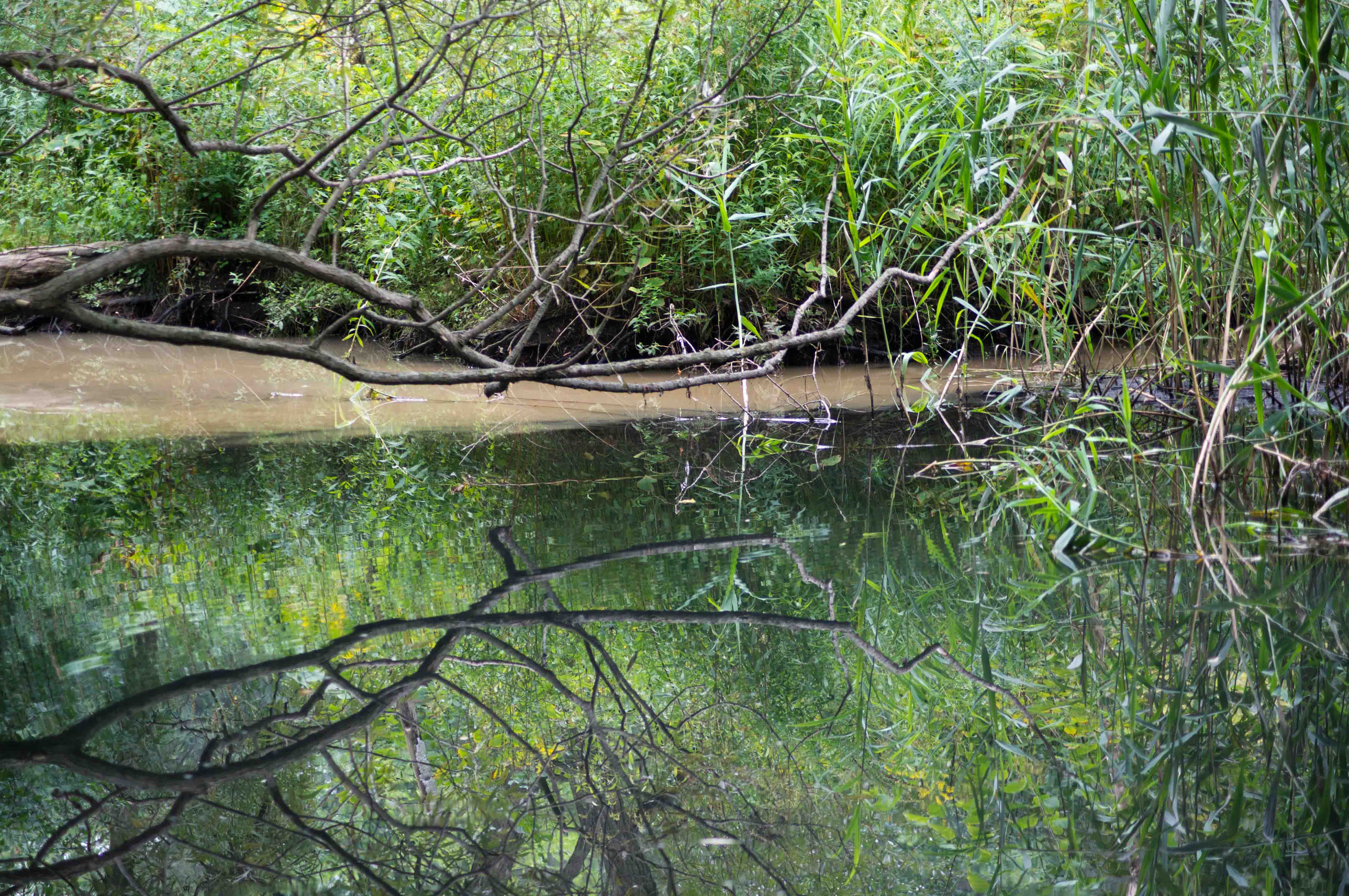
Moments earlier, Henry was taking a lovely stroll along the waterfront, leaving the breezes of the beach for the verdant comfort of the giant reeds and a secluded pond.

His soft-soled shoes barely whispered as he wound his way along the wooden deck that cut a swath across the still, algae-laden waters. Instead, his silent steps were accompanied by the cheerful chirrup of so many sparrows and the steady whine of cicadas complaining about the damp heat.

Merging waters

But as he reached the half-way point, he sensed a change even if he couldn’t yet identify it. The breeze died, the sparrows silenced and the cicadas stilled until all that remained was the low throb of his heart.

And as subtly as the stillness formed, it was macheted by an agonized screech that seemed to quite literally part Henry’s hair.

No sooner had Henry arced through his ducking motion than the demon struck again, piercing eardrum and scalp with equal vigour.

Terror’s impulse to flee was tempered by uncertainty’s steely grip as Henry found himself rooted in place. That something wanted to kill him, he was certain; but the complete absence of movement around him suggested it was all in his mind. His tingling scalp, however, said that whatever was happening was on his head, not in it.

Despite the glaring sunlight that baked the path, trickling tangy sweat into Henry’s fresh wounds, his pupils stretched to their anime widest, searching the chaotic tangle for the slightest signs of movement. He had no reason to believe his tormentor had given up, but all he saw was blue sky, brown tree limbs, green reeds and black water.

Yes, these had all taken on an ominous mantel, but nothing looked capable of launching an attack.

Even as Henry contemplated giving up his search, though, the air was pierced once more with an irritated cry. It was everything he had in him not to turtle.

And that’s when he saw it, the beast with the black eyes of death concealed behind a shroud of serrated alder leaves.

Hunkered down

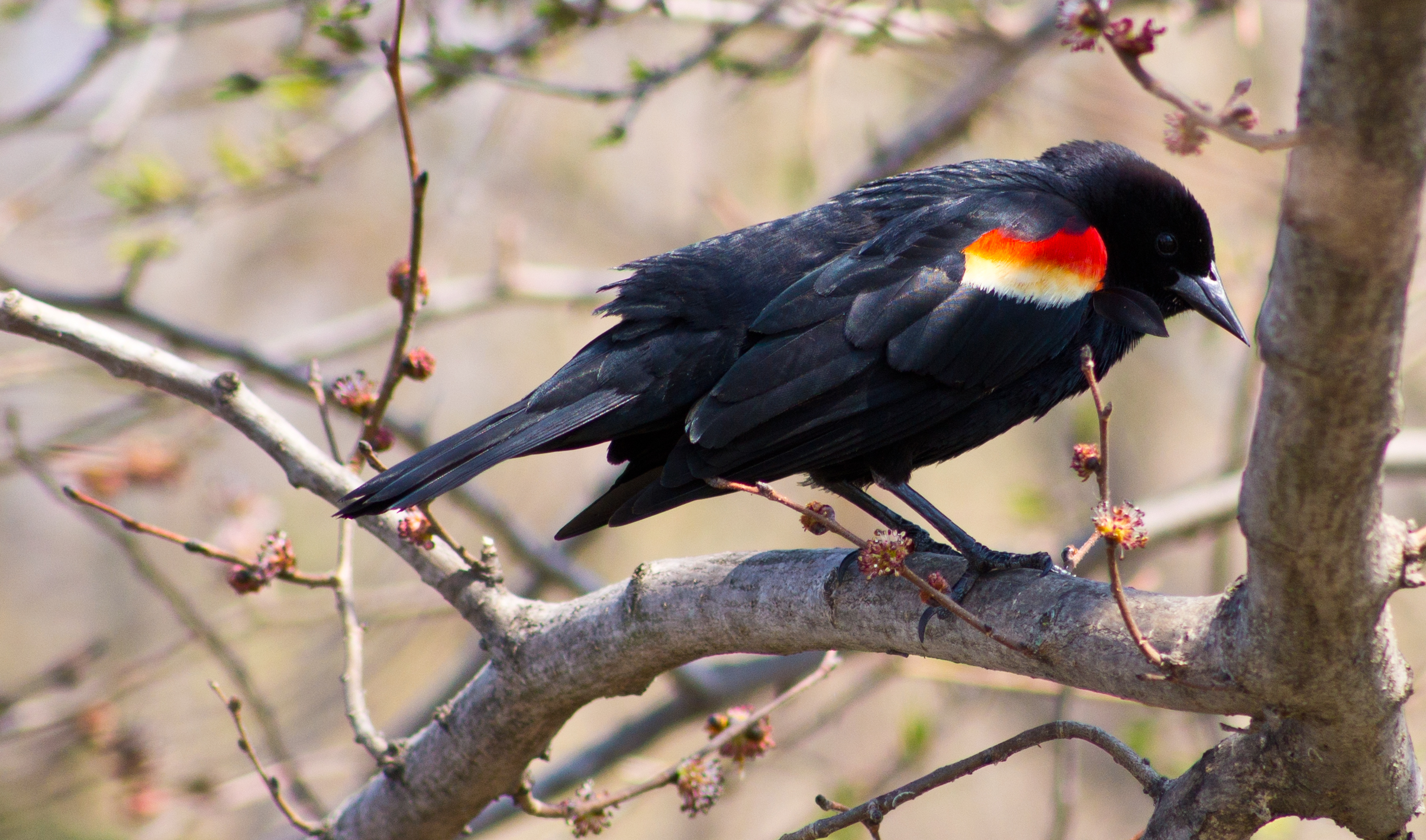
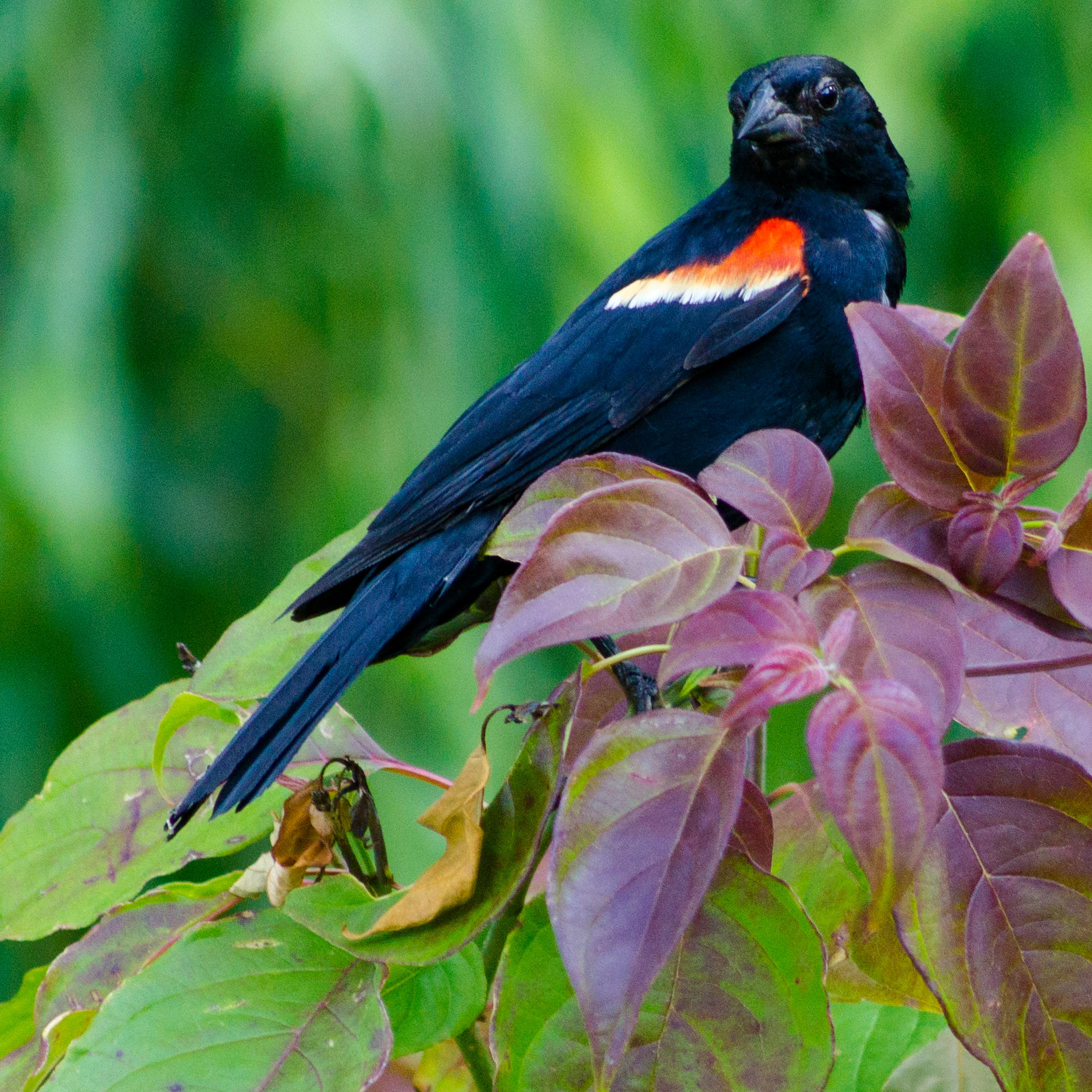
The expressionless face bobbed lower and turned slightly to its left, determined to take in its quarry. Its oil-drop eye blended almost seamlessly with the void its plumage left in the sky, a puncture of midnight in the midday light. The only break in the evil blackness was a splash of blood red atop its shoulder.

“A bird?” Henry questioned silently, a blush threatening to overwhelm his budding sunburn.

Sloughing his tension like a skin, Henry rolled his shoulders to massage them. That was all the demon needed.

With blinding speed, the creature was upon him again. The flapping wings were matched by flailing arms as Henry swung at his attacker to no avail, his body instinctively twisting as the assailant passed.

It didn’t take Henry nearly as long to find the bird now, the monster standing proudly on an exposed limb, cackling his disdain upon his hapless victim.

“What is your problem?” Henry cried to the skies, briefly silencing the bird, which cocked its head a little further as though contemplating the question.

Henry unconsciously mirrored the action when it squawked back.

Annoyed, Henry turned to walk away but his motion was stopped by a shrill pierce. Spreading its wings, the bird quadrupled in size, a Rorschach nightmare.

As Henry relaxed his muscles, the bird drew in its wings. The stare down began.

Redwing on a reed

Unblinking, Henry met the bird’s gaze with his own, his every emotion reflected in that dead pool of emptiness, that glistening eye. A psychic vacuum, the bird seemed to reach into Henry’s body, threatening to engulf his soul.

Mired in a personal La Brea, Henry could feel his will slowly sink into the sulfurous malevolence. Only ego and will kept him from bowing to the inevitable.

“Look, momma,” a child’s voice squeaked through the tension. “Issa red-wing bla’ bird.”

Out of the corner of his eye, which otherwise remained glued to the bird, Henry could see a small boy trundle down the path, pointing wildly with one hand while waving a camera with the other.

More importantly, Henry saw that the bird caught the arrival as well.

Glimpse

Synchronized swimmers of the air, man and bird vaulted for the boy, whose mother remained several yards away, blissfully unaware of the horrors awaiting her budding family.

Every wing beat was matched with a stride, every fluttered feather with airfoiled arm hair. And Henry knew his job was twice as difficult as the bird’s.

Not only did he have to stop the bird from harming the child, but he had to do it without knocking the kid into next Tuesday himself. But one thing at a time.

It is said that when the conditions are just right, you can stop the flight of one bullet with a perfectly timed second bullet.

Henry didn’t know if that was true. Nor did he really have the time to contemplate what conditions such a thing might require.

Pond

All Henry could tell you for certain was that once airborne, a red-winged blackbird is a thousand times more agile than a middle-aged man. That, and it takes about eight days to get the stench of stagnant pond water out of your nostrils.

He has no idea what happened to the kid.

The most dangerous F word

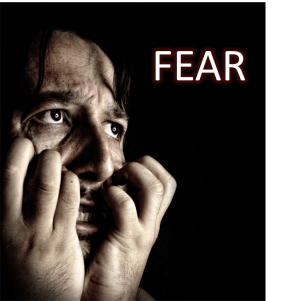
Fear

Hate is fear rationalized. Hate is fear acted upon.

Hate is the belief that fear is finite; that if I bestow some of my fear on you, I am unburdened.

But that is a lie.

Fear isn’t of this universe. It doesn’t live by the E=mc2 paradigm. Fear has limitless potential for growth.

Any more than I can relieve myself of a pestilence by giving it to you, my fear remains and may even grow when I pass it along.

Surely a little fear is okay, keeps us from stepping off cliffs or traveling dark paths.

Fallacy.

Fear doesn’t keep us safe. Knowledge does.

Vista

Knowledge keeps you from stepping off the cliff. Fear keeps you from seeing the spectacular view.

Knowledge removes darkness from the alley. Fear keeps you from seizing new opportunities, from discovering new paths.

Fear doesn’t come into existence of its own accord but like a virus, is passed from person to person.

The newborn infant has no fear until startled by a parental “No”, the opening dose of fear.

infection

We do not naturally fear others until given a reason. And rarely is that reason the other we have chosen to fear, because fear rarely approaches face on.

Fear is the demon that eats us from inside, a parasite that controls our minds for its own perpetuation.

But what is worse, what makes it so insidious, is that fear is easy, demanding little of us other than that we close our senses to the truth.

And it is the facility with which so many of us are willing to do this that makes fear the most dangerous F word.

Burden

Tuesday troubles

Passengers crowd the Brown Line train in the Loop at evening rush hour, Wednesday, July 16, 2008. The CTA plans to eliminate seats in some train cars to alleviate crowding. (Chicago Tribune photo by Alex Garcia) ..OUTSIDE TRIBUNE CO.- NO MAGS,  NO SALES, NO INTERNET, NO TV, CHICAGO OUT.. 00296065A TrainSeats

Edward didn’t expect much from his day as he rode the subway into work.

It was Tuesday. And as any actuary will tell you, Tuesdays are the least eventful work day in any given week. Edward would know. He too was an actuary.

Now, don’t get me wrong. Edward was not dissatisfied with Tuesdays, or any day of the week for that matter. He just didn’t expect much from it, and definitely less than from say a Monday or a Thursday.

Unbeknownst to Edward, however, today was unlike a typical Tuesday. Today, in fact, was a Tuesday that actuaries dread. The outlier. The anomaly. Today was the Tuesday that lurks in the dark crevices of an actuary’s heart.

Jessica hadn’t expected to leave the house so late this morning. But with Maria’s daycare shut down and Todd’s absence at a business conference, nothing was moving particularly smoothly for the young lawyer and suburban mother.

Vomiting herself from the commuter train as the doors inched open, Jessica practically crowd-surfed to get across the chaotic platform and into the stairwell to the subway system. Today was the Witkenstein proposal and although she herself was not presenting it, the command had been all-hands-on-deck in a show of force. Rare is the law firm that doesn’t like to demonstrate its cannon-fodder for clients.

Catching the smallest of slivers through the human maelstrom on the subway platform—her rail-thin form finally offering her some advantage in life—Jessica slid to the rail-side edge just as the string of cars came to a halt. Unfortunately, that same eel-like body structure meant that she was no match for the human surge that blew her through the subway doors and wedged her against a man of middling height, middling complexion and middling posture.

With a middling acknowledgement of her existence, Edward shifted his elbow slightly so that Jessica could grab the same pole to which he clutched for support in the shifting ebb and flow of transit.

Now, if pressed, Jessica would swear an oath that the box in which her travel mug arrived the previous Christmas promised that it was designed with the latest in anti-spill technology. She had even tested it at home several times, marveling at the results.

But as any actuary will tell you, the chances of a scalding burn from the spilling of hot beverages rises 342% when that beverage is being consumed on mass transit. Edward would know. He too was an actuary.

Now, whether the next event fulfilled that statistic or the numbers were slightly off, the simple reality was that the precise moment the subway took a turn in the tunnel was the same moment that Jessica had tried to reposition herself to lessen the strain on her crooked elbow.

This moment was followed shortly thereafter by another moment in which the incorrectly positioned lid of her travel mug became even more incorrectly positioned and her coffee evacuated itself onto Edward’s shirt.

mug stain

Jessica was horrified as she helplessly watched the taupe liquid spread across the stranger’s chest and cascade as a beige waterfall into his trousers.

As surprised as Edward was by the turn of events, a small part of his brain was also relieved that Jessica liked to use non-dairy creamer, which slightly helped to temper the scalding liquid.

“Bloody hell,” Edward bellowed, his pain sensors over-riding his public decorum filters.

“Oh my god, I am so sorry,” Jessica cried as she struggled through her bag to find that pocket Kleenex pack she had purchased just the day before.

As Edward fought to literally calm his nerves, Jessica did what she could to blot his formerly white shirt, unaware of her increased range of motion as a halo of space had formed around the two of them, everyone retreating from the mess.

“Are you okay?” she asked, genuinely concerned that he might need medical treatment.

Edward was too engrossed in the sensation of slightly sticky dampness that was now encasing his genitalia to answer right away.

Coming back to the moment and realizing that skin grafts were unnecessary, Edward simply raised a placating hand.

“No worries,” he offered with a smile. “Accidents happen.”

Edward would know. He was an actuary.

Jessica did her best to return his smile, but her embarrassment was still too great for her to be comfortable. She had little time to worry, however, as the subway pulled into her stop.

“Here’s my card,” she blurted, pressing her card and the remaining Kleenex into his hand. “Please send me your dry cleaning bill.”

Before Edward could tell her that her offer was kind but unnecessary, Jessica slipped out of the car with the crowd. His thoughts then shifted to making a quick stop at the department store between his subway stop and the office.

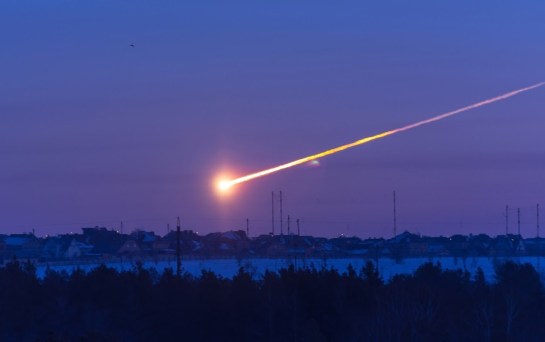
Jessica would have had a funny if embarrassing story to share with her husband later that night had the first of the meteors striking off Japan’s coast not started the cataclysm.

Regardless, the nuclear winter that started later that day taught Edward a valuable lesson.

Actuarial science gets it wrong some times. Tuesdays can be eventful.

meteor

OverTime finds truth under artifice (a review)

When all else is stripped away, only truth remains

When all else is stripped away, only truth remains

“Being naked and too honest makes you predictable and maudlin,” chided one of the characters early in OverTime, which premiered tonight at the Robert Gill Theatre for the Toronto Fringe Festival. And for the next 85 minutes or so, the cast proved the exact opposite was true.

In some ways, watching OverTime was like redecorating a home, peeling back the decades of paint one layer at a time. As each coat is removed, you uncover the laughter and tears of that moment in time. And once the last layer is gone and the history is revealed, all that’s left is the truth.

It is only as the play deepens that we learn that truth is what retired school teacher Carla (Elva Mai Hoover) feared most when she uttered that line to her protégé Darby (Timothy Eckmier). As Carla mentored Darby to become the next great playwright, she argued that mystery must be maintained.

Truth was also the motivation behind the other plotline of the play as young blogger and photographer Jewel (Andrea Brown) struggles to pull her father Linus (Tufford Kennedy) out of the safe environs of the hockey rink. A successful coach on the outside, Linus is a wreck inside, and Jewel wants to ease that burden.

Mentor Carla (Elva Mai Hoover) advises protégé Darby (Timothy Eckmier)

Mentor Carla (Elva Mai Hoover) advises protégé Darby (Timothy Eckmier)

OverTime playwright Romeo Ciolfi did an amazing job weaving these two story lines together. With each passing moment, it felt like another layer of paint was removed to reveal a bit more of the truth. And at least for me, the story was anything but predictable.

Sure, I felt Ciolfi could get a little heavy-handed with the metaphors. I would not have been surprised, on occasion to have seen a surtitle card reading “Metaphor here”, but I never felt they detracted from the increasingly tightly woven story.

What impressed me even more, however, was how the same layered revelations arose from each of the characters. With each passing moment, the characters became deeper and darker. Part of this richness was the writing, but I also credit the cast.

Daughter Jewel (Andrea Brown) struggles to help her father Linus (Tufford Kennedy)

Daughter Jewel (Andrea Brown) struggles to help her father Linus (Tufford Kennedy)

Rarely do I praise an entire cast of a production, but I could not find fault with any of the performances. And no single actor deserves loftier praise than any other. To me, this was an ensemble performance. Remove any one of these actors and I don’t think this play would have been as good.

As with the play, there were times when impassioned performance became overwrought melodrama, but I largely felt these moments were the exception. These actors and their descent into raw truth had me mesmerized for 90 minutes, and I found myself praying we would go into overtime.

Without hesitation, I would watch this performance again and again, just to make sure I didn’t miss anything.

[Adapted from a review that first appeared in Mooney on Theatre.]

Inside definitely Out (a review)

poster

Earlier today, I had the opportunity to see the latest Pixar movie Inside Out in the company of one of the film’s writers and its story supervisor Josh Cooley (a very nice man). And aside from receiving a lovely lecture about story development at the famed animation house, the connection afforded me an opportunity to appreciate the movie much more than I did on simple viewing.

To briefly bring everyone up to speed, Inside Out tells the story of the emotions that rattle around inside the mind of 11-year-old Riley as she struggles with a move across the country. Although we are introduced to 5 main emotions in Riley Headquarters (get it?)—Joy, Sadness, Anger, Disgust and Fear—there is no mistaking that Joy is numero uno in this space.

Joy (voiced by Amy Poehler) sucks the oxygen out of any room she’s in and proves that even the best intentioned of assholes is still an asshole. Her goal in life is to make every moment of Riley’s life a happy one and is not worried about shoving aside the others (ever so happily) to ensure that.

But where Joy has developed a respectful détente with Anger (Lewis Black), Disgust (Mindy Kaling) and Fear (Bill Hader), she firmly but gently has no use for Sadness (Phyllis Smith), practically ostracising the poor creature to the periphery.

With the upset of the move from Minnesota to San Francisco, though, Sadness seems to want to be more involved and in a fracas with Joy, the two get sucked out of headquarters and into the long-term storage hinterlands of Riley’s brain.

At this point, the story basically turns into the Odyssey as the two emotions struggle to return home before Riley falls completely apart at the hands of the others. (To say much more would be to offer spoilers.)

Joy and Sadness wander the hinterlands of long-term memories

Joy and Sadness wander the hinterlands of long-term memories

The challenge I had was in trying to figure out exactly at whom Pixar was targeting the movie.

Superficially, this is a pure kids movie (ages 6 to 10, maybe), unlike many previous Pixar concoctions, which had elements for both kids and adults. Inside Out doesn’t have the depth of Toy Story or The Incredibles to truly speak to adults, much as the most mature 11-year-old isn’t ready for the adult world.

I’m not saying there aren’t adult-focused jokes interspersed throughout the film, but rather exactly that. They are interspersed, like small granules of sugar designed to feed the parents accompanying the kids to the theatre.

Up talked about loss and aging

Up talked about loss and aging

There is no real adult storyline to this film to touch adults as there was in Up or Wall-E. Instead, the film has sweet, adorable moments of baby bums and first goals that might tug at a parent’s heartstrings but never engage the soul.

But as a friend suggested, it is not strictly a kids flick either because it touches on esoteric aspects of the psyche that kids that age would never be able to comprehend, such as abstract thought and the concept of forgotten memories. The problem is these aspects are more conversations of the mind and not the soul. So even here, the adult is largely passed over unless they have an interest in neurology and psychology.

Wall-E dealt with issues of love and environmental destruction

Wall-E dealt with issues of love and environmental destruction

And as a writer, perhaps the biggest sin with Inside Out is there is no sense of what’s at stake.

Sure, Joy is losing her cool as she fights to get back to headquarters. For her, Riley having a down moment is a disaster.

And Sadness isn’t exactly having a picnic as she is routinely sideswiped or ignored by Joy in their efforts to get home. If anything, she increasingly takes the blame for everything onto herself.

But what’s at stake? What if they don’t get back to headquarters?

Does someone die? Is life no longer worth living?

I don’t know because that was never a question on the table. And without stakes, I find it difficult to root for the hero.

And this challenge is made all the more difficult by the fact that the hero (Joy) is also the villain, albeit passively. She is truly her own worst enemy, and so I quickly find myself irritated by her with no great concerns about the outcome.

The six hour conversation and lesson with Cooley helped me see a lot more of what the writers, animators, editors, directors and producers were trying to accomplish. And that did help me understand the movie better. The thing is, few others were going to get this kind of help.

The movie will do well at the box office. Of that I have no doubt. It is a wonderful vivid distraction for young kids.

But it won’t have the staying power of Pixar’s earlier efforts and likely won’t be spoken of again in a few years other than in possibly hushed whispers.

Writing is its own success

(I’m going to post this here, now, so that when I do make it big financially, I can prove I really did believe this while I was still poor.)

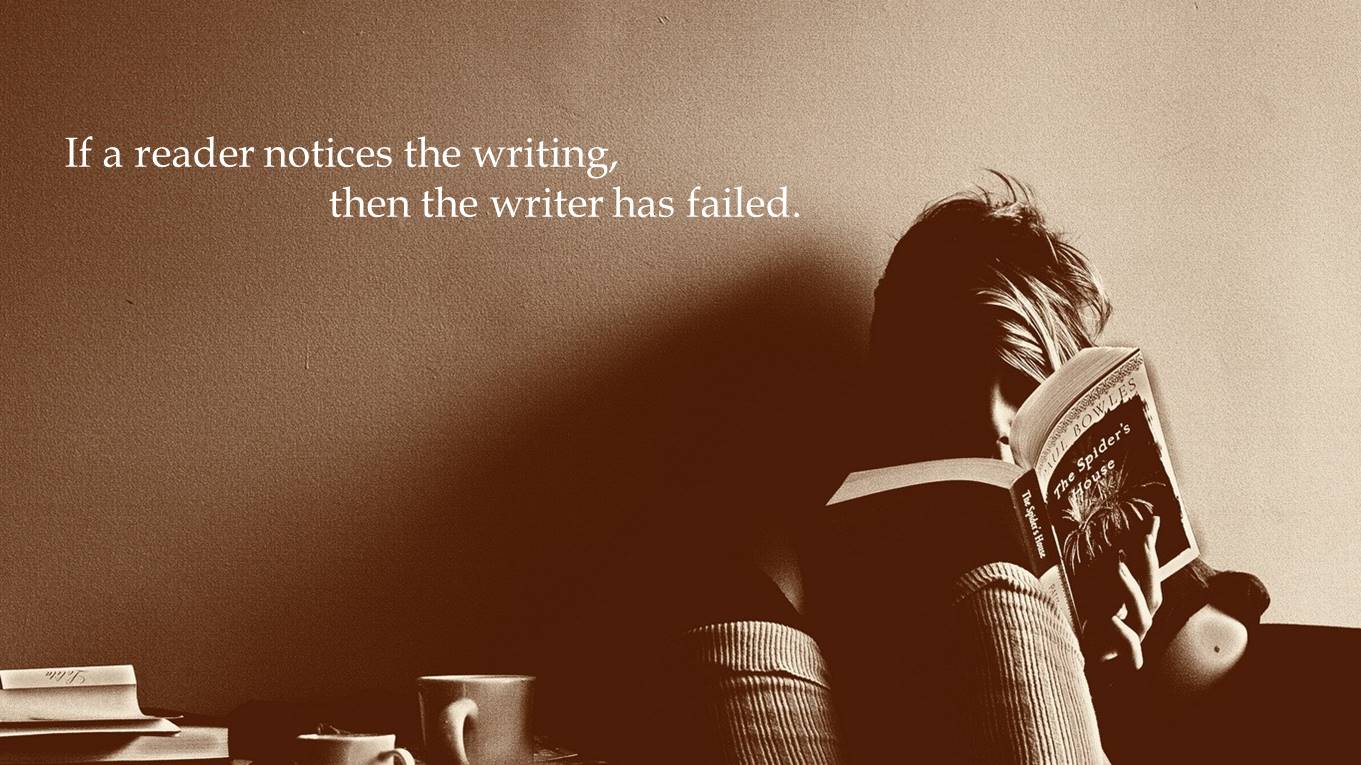
A writer writes

A writer writes

If you don’t love writing for the sake of writing, get out. For the sake of your own sanity, do something else.

I would like to make a career of my screenwriting and novel writing, but if I don’t, I will still do it and be glad that I do.

The truth is that the majority of us (like 99.9997%) will never make it big as writers…not Terry Rossio big, doubtfully Damon Lindelof big, nor Nora Ephron big. Hell, I’m not even sure the simple majority (50%+) will even make a livable wage as writers.

But as much as I want to hit it big and spread the gospel of my genius (he says only half-facetiously), I write because I love writing and I don’t know how to not write.

I can do other things to keep food in the house and a roof over my head, but I don’t want to if I don’t have to. It all interferes with my time for writing.

Perhaps this passive approach to accomplishing something with my writing will keep me from making it big. But I prefer to think that by focusing on the joy of writing, the excitement of expressing my thoughts and feelings, I will be happy throughout the entire process, from now to wherever and whenever I end up.

If nothing else, this attitude means that everything that comes down the road is a known positive rather than a potential disappointment.

Good luck, everyone.

Bonus!

Bonus!

Cormorant (poem)

cormorants-flying-over-cross-lake

Strings of feathered jewels—

Kilometre long, wing-span wide—

Swing their way offshore,

Droplets of former slumbers

Cutting waves that break

A mere metre below.

And yet for all the activity,

All the life in motion,

Air remains calm and silent,

Noises of picine harvests

Forgotten echoes of

Never-ending plunder.

Lines cross lines,

Ballets borne on air,

Eddied whorls tipping

Extended wings askew,

Halting premature end

Of missioned journeys.

Home is the current’s flow,

The wind’s dance;

Time’s of no consequence

When birds take wing.

cormorant-flying-2