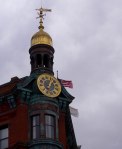
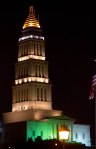
Art-chitecture of Washington

Washington, DC, is an odd town for a variety of reason…it is steeped in history and yet is constantly in a state of renewal as its four quadrants cycle from decay to rebirth to affluence to decadence, and the people within the town, depending on money and power, move from quadrant to quadrant accordingly.

Being the political and international heart of the US, however, means that it is also a showcase–in the museum display sense–of what the US has to offer architecturally.

I’ve tried to capture some of that here.

10 Steps to Writing a Pilot That Sells

No, no! Not that kind of pilot. Although, cute photo. (Image used without permission)

No, no! Not that kind of pilot. Although, cute photo. (Image used without permission)

1) Watch a lot of television; especially stuff you don’t like or think is bad. This will establish the belief within you that you could write something at least that bad and still get it on the air.

2) Conceptualize a show that combines one of your siblings or cousins, the second job you ever had, and a famous moment in history. Every idea after this will sound entirely plausible; and hell, this might actually work as a sitcom.

3) Conceptualize an idea that is morally offensive to you and then see if it was one of the shows in Step 1. If not, then the market is ripe for the picking.

4) Describe the absolute worst day of your life, a day when everything went wrong. Then switch one of the disastrous elements. Then, switch another element. Do this 10 more times. Season One!

If you can’t create 13 variants, your day wasn’t that bad and your life is too good for you to be writing for television. Go write greeting cards.

5) Grab a copy of Bulfinch’s Mythology and reset all of the stories in modern-day Seattle or the smallest town you’ve ever visited. Warning: Brace for complaints that it’s a rehash of Dallas or Friday Night Lights.

6) Grab a copy of Bulfinch’s Mythology and do not reset the stories. Hell, if it worked for The Borgias and The Tudors, it might work here. Call it The Olympians.

7) Start with Episode Two, because pilots suck and you’ll never want to show it to anyone. You need to know/believe your idea works.

8) No matter what your current idea is, when you go to pitch it and you think you’re losing your audience, suddenly reveal “And the protagonist is a ghost!” Vampire, werewolf and zombie are equally acceptable.

9) Stop reading advice on writing a successful pilot and just write your story, already. There is no telling why someone in a suit will get excited by your story, but I can guarantee they won’t if you’re not.

10) If all else fails, generate a top-ten list of ways to write a pilot that will sell and use it as the basis of a book you will later turn into a sitcom.

Dildo out of water

In writing, one of the tips for jazzing up your story is to put your character into an odd situation and watch how he or she deals with the new circumstances. In comedy, we call this being a “fish out of water”.

While traveling through Iceland a year ago, I got to see this on a grand scale. While wandering around a large pond in downtown Reykjavik, I was surprised to find a large dildo in the middle of the sidewalk—it was a few days after the end of Pride Week, so I could only imagine where it came from.

On Golden Dong (near the pond in Reykjavik)

On Golden Dong (near the pond in Reykjavik)

Realizing there was an opportunity here, I sat on a nearby bench and spent an amazing hour or so watching locals and tourists come upon the vulcanized penis. It was a magnificent chance to people-watch and learn about the range of emotions.

Some were disgusted. Some were anxious for their over-inquisitive children. Many were amused. Most arrived quietly and left highly animated.

I’m not sure what this says, but I seemed to be the only one who took a photo of it.

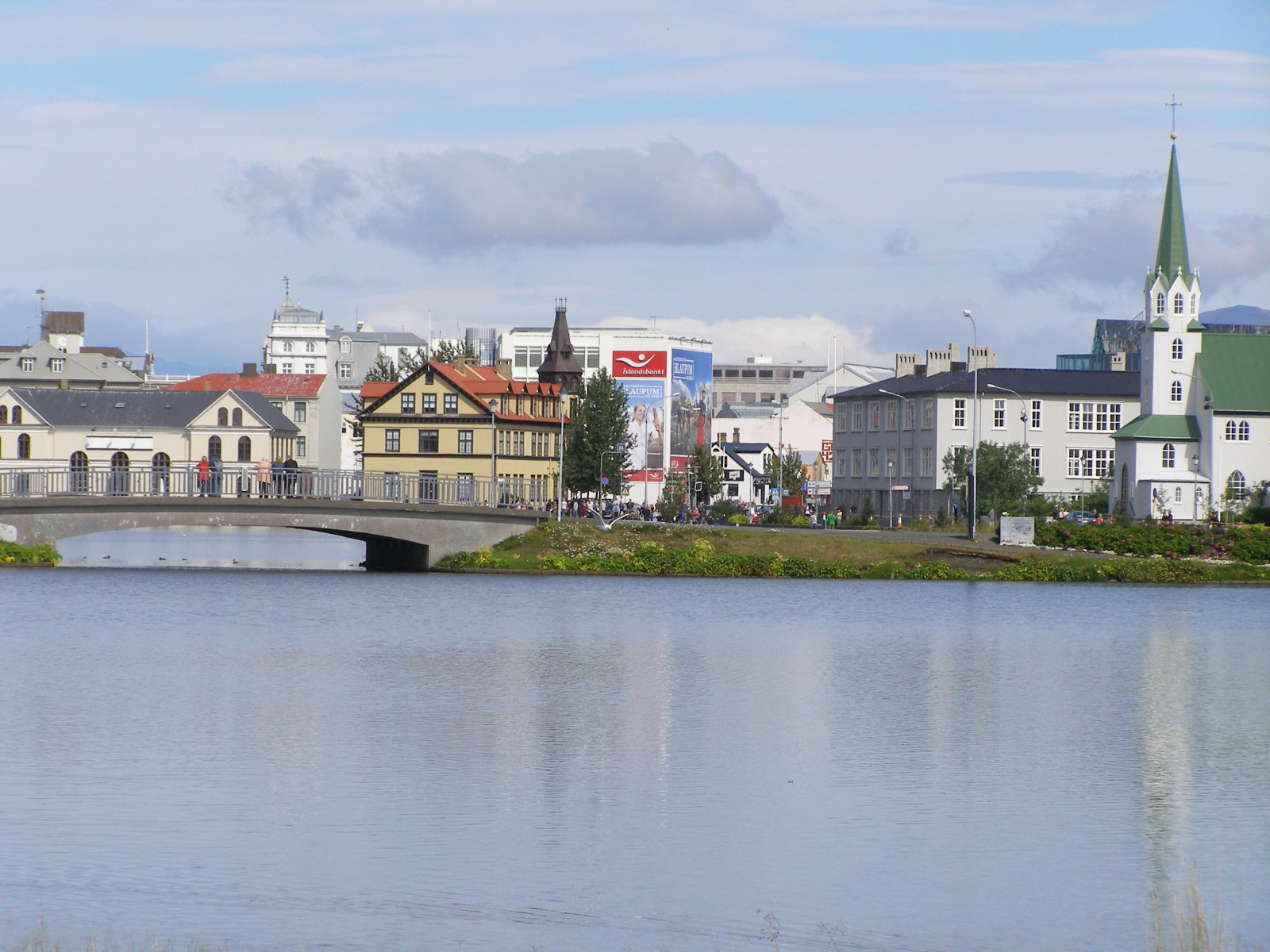
As a North American, I was not used to the beautiful simplicity of a European city (Reykjavik)

As a North American, I was not used to the beautiful simplicity of a European city (Reykjavik)

The pond in Reykjavik was a magical place to write and think

The pond in Reykjavik was a magical place to write and think

Thanks for listening

Just found out that I have 1,003 likes on my blog in just over a month, so I’d like (ha!) to thank everyone for their support and interest.

Image

And, because no good deed goes unpunished, I’d also welcome you to check out some of the other venues where you will find me spouting nonsense (gotta pay the bills, you know).

Toronto Marlies page at Maple Leafs Central – news from the American Hockey League team

Drug Discovery News – commentaries and special features

ImageImage

Covering your ass-ets

So often, when I start a new series of classes or attend a conference on screenwriting, I hear the same refrain: How can I register my stuff so no one steals my ideas?

And, as logic would dictate, the question always comes from the most junior writers in the room, if they have yet to write at all.

There is no denying that the universe is a dangerous place. Global climate change necessitates we choose higher floors in a high-rise to ensure our laptops are not flooded by rising sea levels. I always write with my back to the wall so that people in the condos across the street can’t take telephoto shots of what I’m writing. And whenever I publicly speak the word “tadpole”, I actually mean screenplay…likewise, “garlic”, “symbiont” and “purse” for protagonist, antagonist and onomatopoeia. (Don’t bother memorizing those; I have already changed them.)

All in an effort to make sure that no one steals my ideas. They are mine. I created them. They are owned by me. (Much as with Miss Ann Elk’s theory about the brontosaurus.)

Ah, but wait a tic. Just a mo’. Hold your horses and tell them that you love them.

I forgot one teensy little thing.  A bit of a fly in the old ointment. You see: YOU CAN’T PROTECT IDEAS!

1) I defy you to actually show me a completely new idea, and not just something old that you’ve redecorated.

2) The idea is not the important bit…it’s what you do with the idea. Give 12 people the same idea and you will end up with 12 very different stories.

3) There is every reason to believe that your idea is shit. No offense intended. Most of my ideas are shit. That’s how you find the truly brilliant ones, by moving the shit out of the way so the good ones are more visible. (See also: Miss Ann Elk’s theory about the brontosaurus.)

I applaud you for having ideas, shit or otherwise, because it’s not easy to do and is a valuable first step in your art. But not until you’ve completed your story, however, do you have something to protect.

You have completed your story, haven’t you? If your idea was solid, then you should be anxious to tell the story. If your idea is good, I want to hear your story. Seriously. No kidding. We need more good stories.

The story—not the idea—is where you will shine as an artist. The story tells me everything about you. It puts multiple facets of your personality and belief system on display and says: Hey universe! Here I am!

That, my friends, is worth protecting. That is what you register somewhere so that no one can tell exactly your story without your permission.

Once you’ve reached that point, I then recommend:

Writers’ Guild of America – West (web site is easier to use than the East chapter)

Writers Guild of Canada

The organizations have a reciprocal agreement, so registry with one is sufficient for both the United States and Canada.

Unfortunately, I only know of these two organizations, so if anyone wants to contribute others in Europe, Asia or anywhere else, please do.

Yes, you want to protect your assets, but you’ll be a lot better off putting your energies into creating assets that are worth protecting.

Fort Knox isn’t meant to be a kitty litter box.
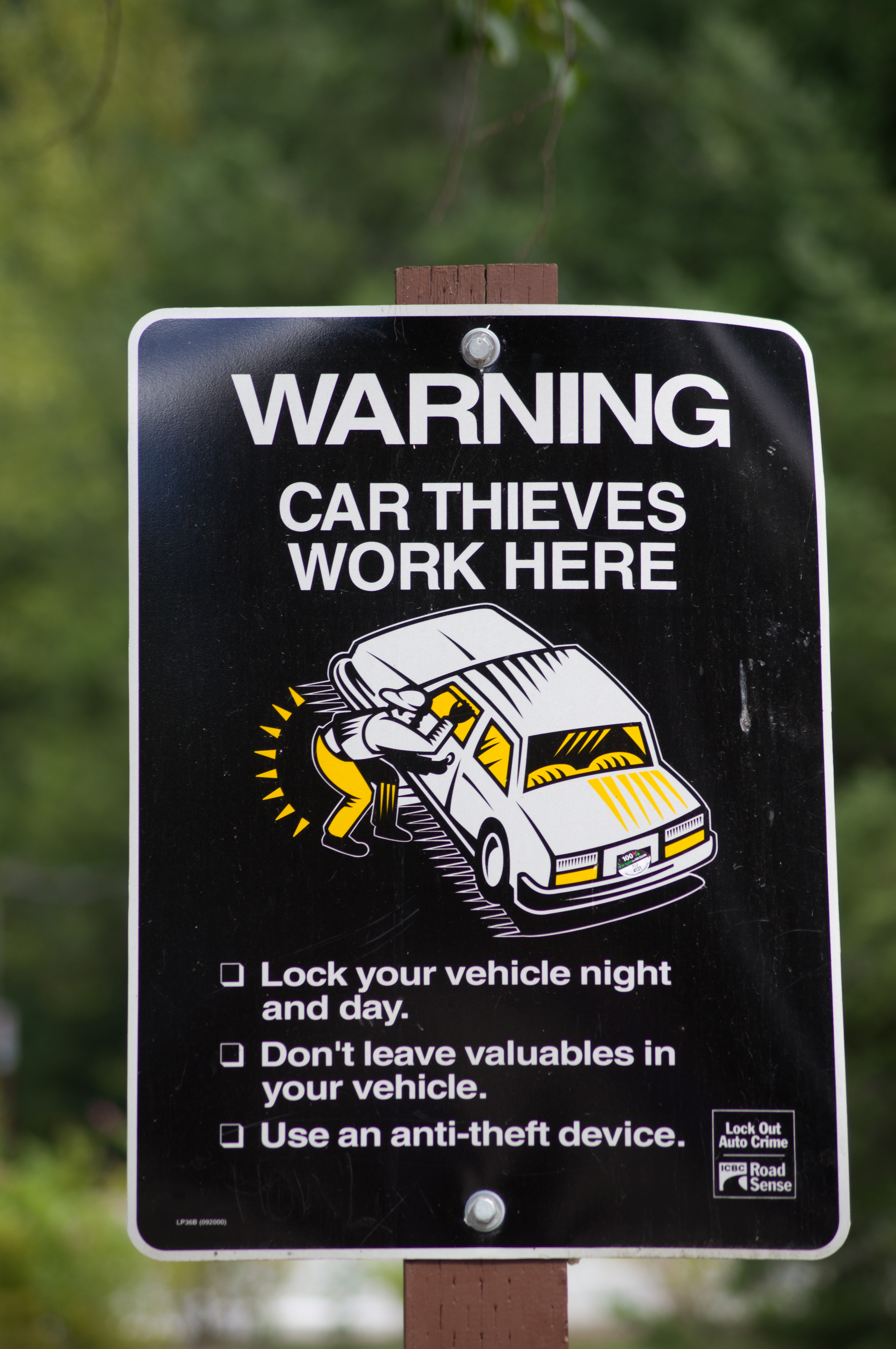
A strange jobs program in British Columbia. (Whistler)


A strange jobs program in British Columbia. (Whistler)

Sign-natures

The Five Man Electrical Band missed the point when they wrote: Signs, Signs, Everywhere there’s signs. Blocking out the scenery. Breaking my mind.”

So much more than identifications or directive missives, signs can be amazing mystical things.

They can be unintentionally funny or provocative. They can hold hidden messages. They can bring wisdom.

Can’t you read the signs?

Declaration of independence

I lost an acquaintance the other day, someone who wafted into my life for a brief period, didn’t like what he saw and wafted back out. But not before admonishing me for “being stuck in one gear…first-person singular” and challenging me to “set aside the superficial…and start ranking the real priorities in your life.”

The following was my response to him, and to all others who would see me curb my enthusiasms for what they see as a more appropriate direction for my life:

[Name], I’m sorry to hear that you struggle with my humours, but appreciate that it is not to all tastes.

I have been very fortunate in recent years (the latest of my 50) to have surrounded myself with wonderful friends who appreciate the unique package I present in life–the ability to write deeply insightful poetry, starkly analytical science, ribald comedy, biting sociopolitical ripostes, and prosaic tutelage–and while I appreciate their love and support, and hope that I return it in spades, I am ultimately happy with the person that I am and require no outside validation nor light.

As I have only come to realize in the past couple of years, I have wasted too many years of my life, trying to live the life that others would wish me to follow, and was slowly driven to self-destructive distraction in my failures to live up to everyone’s expectations, well intentioned or otherwise. I now live for me above and beyond all others.

I wish you the best in your journey and hope you find the truth you seek, as each of us must find our own.

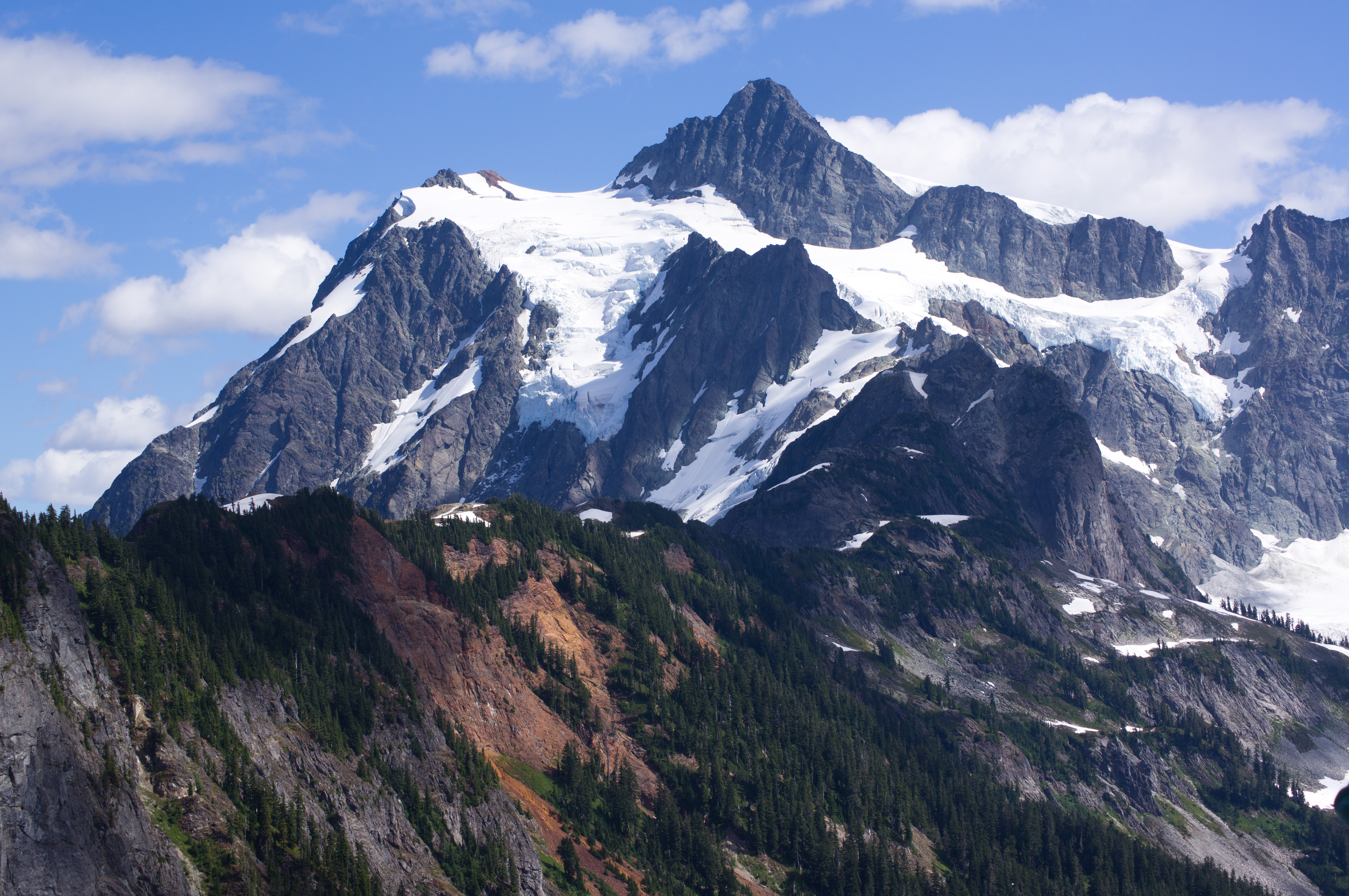
All around, the vistas were laden with new peaks to explore, heights to achieve.

All around, the vistas were laden with new peaks to explore, heights to achieve. (Mt. Baker, Washington)

Maps quest

In another life, I could have been a cartographer. I simply love maps.

Road maps. Old maps. Topographical maps. Biological maps. I love maps.

It is probably truer to say that I love visual information presentation, but let’s stick with maps.

Image

As a kid, I remember staring at maps that came out of the National Geographic or in my books and literally tracing the courses of rivers with my fingers, trying to understand what their winding patters told me about the lands through which they passed.

I would look at maps in history books, and see how topographical features literally and figuratively changed the course of civilization. There are several reasons, for example, why Montreal sits where it does, but most of them are geographical.

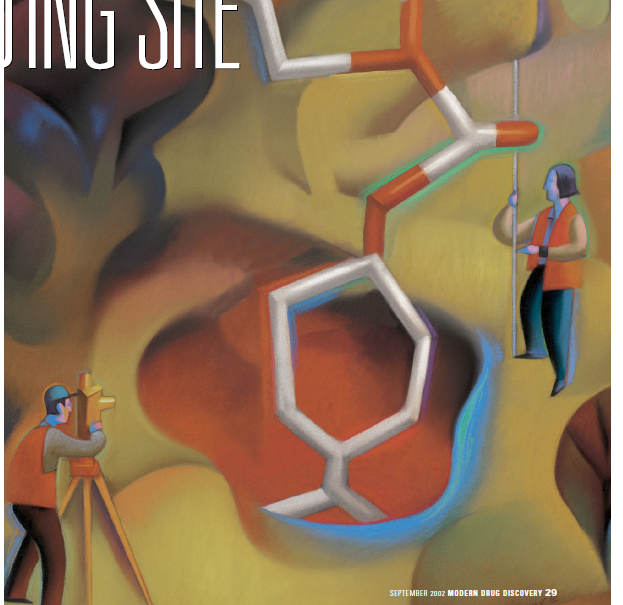
(Magazine art for my article on efforts to understand how proteins bind drug molecules.)

Image

Later in my life, I would draw maps—at first geographical, but later biological. The biochemical mechanisms that cells and organs use to communicate, to rejuvenate, to function are maps unto themselves, each criss-crossing with others, offering alternate routes to the same destination. The latter point is why diseases like cancer are so hard to treat.

Maps allow me to take journeys, but not just in the physical sense of providing direction. They also give a factual tether to my fantastical imaginings. I can go places I may never visit, understand things unfathomable, while pouring over a map.

And map systems like Google Street View have added to those imaginings. Often, when I write, I will visit the setting of my story on Google Street View to help me paint a more vivid picture of the location. Sometimes this makes my narrative sound more like a travel brochure, but that’s my fault and can easily be handled with editing. The important thing is that the reader gets the essence of what I’m trying to convey.

(Lake Maggiore in northern Italy. Setting for the climax of my murder thriller screenplay)

Image

My writing itself is a map. Like Google Street View, I am only giving the reader what fits within a specific frame, in essence guiding the reader. But at the same time, I cannot control what the reader thinks or how the reader feels as he or she journeys through my word jungles.

Just as with my childhood adventures of following rivers and mountain chains, the reader is free to layer his or her own imaginings on top of mine. And so, I have written not just one story, but hundreds or thousands.

Hunh?

I guess I became a cartographer, after all.

(Overview of my neighbourhood in downtown Toronto.)

Image

Write…as rain

I write.

I write because I love playing with words.

I write because my head will explode if I don’t.

I write to explore ideas.

I write because I’m interested in a lot of stuff.

I write because I’m a narcissist.

I write because the stories flow through me.

I write because I’m funny (some of the time).

I write because I have thoughts worth expressing.

I write because the blank page beckons.

I write to release my pain.

I write to share my joy.

I write to add beauty to the world.

I write to keep moving.

I write to share the magnificent visions I see.

I write to exorcise and exercise the voices.

I write to play.

I write because I am a writer.


Why do you?