My Creative Journey – Part One

What follows are a few thoughts on why I write…the moments in my life that led me to embrace my passion. It is an incredibly personal story and I hope it doesn’t make anyone uncomfortable, but rather helps them reflect on why they embrace their own passions.

Image

I need to be creative on my terms.

When I was younger, it was all about acquiring knowledge and being recognized for having acquired that knowledge. In hindsight, I’m not exactly sure what I was planning to do with that knowledge.

In some respects, it was about solving a puzzle, which could range from how does this alarm clock work to how does the universe work. On another level, I think it was about control. Knowing how the universe worked meant knowing that there was a broader sense of organization out there; that the laws of physics and mathematics still held even when my own life seemed in constant flux. The subtle irony of entropy only occurred later.

But it was also about control in the sense that I couldn’t be expected to come up with answers, with solutions, until I had all the information I needed to make that decision. The aggravating reality of that method of control is it only works when you’re the one asking the questions. Nobody else is willing to wait until I have all of the info I need.

At the same time, I needed the safety of analysis and knowledge, I’ve also had a need to be creative. A need that has only recently blossomed as a regular part of my life.

When I was young, I was constantly creating new worlds through my stories. First, as play scenarios and then as the written word. I constantly developed short stories that took me in a million directions. Again, this might have been an attempt at control.

When I wrote, I was the master of my universe. I was the one who decided who lived and who died, who was allied and who was the enemy. I was the protagonist and the antagonist.

It was in 1977, as I started high school, that I first noticed the strength of my writing. That summer, my life changed with the release of Star Wars. So deeply effected was I by the characters and the story, that I immediately went home and started working on the sequel. My version took a very different turn than George Lucas’s—although there were some subplot overlaps—but over the next few weeks, I hand wrote 400 pages of dialogue.

I shared the script with my Grade 9 English teacher, who was impressed with the volume if not the content (my words, not hers). It was in her class that I first realized the power of my words to still and disturb an audience.

On day, Ms. Philp gave us a writing assignment that started with the sentence “I couldn’t believe it when I heard that sound.” It was supposed to be an in-class assignment, but I was onto something and asked if I could take it home to finish it. I guess she sensed something—that this was important to me—and she said yes. While I didn’t finish the story, I did hand her several pages the next day.

After reading the story herself, she decided to read it to the class. Whereas most people had written stories about funny sounds, spooky sounds or weird sounds, I had written about a man who comes upon a murder in an alleyway, first by the sound of bone and sinew breaking, and then by sight. I wrote about the fear and indecision in the witness’s heart as the murderer sees him and he flees for his life.

As Ms. Philp read the story aloud, there was silence in the room—a room of 14 and 15 year olds. No one said a word until she was done reading. It was magical for me.

I wish I could say that there was a rousing round of applause at the end and that this was the day that I decided to become a professional writer. There was no round of applause—although my class seemed to appreciate my story—and Ms. Philp continued to be supportive of my efforts, but there was no effort to foster this creative desire in a young boy struggling to define his world.

The opportunity was there. Everything was laid out for someone to recognize, but nobody tapped into it. Writing continued to be a strange little quirk of my life. I guess it was just easier to find ways to support my interest in science and history by buying me more books, taking me to the Science Centre.

What do you do for a budding writer? Get him a pen and a notebook? Buy him a typewriter?

Eventually, someone did buy me a typewriter—a vehicle to do my homework. But it quickly became the vehicle for my creative outlet, much to my mother’s chagrin. The muse hits me when I have time to be alone with my thoughts. When my day isn’t cluttered with requests for attention and responsibilities. Unfortunately, in my childhood home, those times only tended to occur when my family was asleep.

Routinely, my mother would yell down from her bedroom for me to stop wailing away at the keys. Loudly pounding them into submission. Watching the letter hammers get stuck because the thoughts occurred to me and be translated through my fingertips faster than the typewriter could accommodate. She wanted to be supportive, but not at the cost of a good night’s sleep.

It took no time at all before I had an incredible portfolio of work—half-finished thoughts, short stories—but they languished unread by anyone other than me. I had given voice to the creative urges in my soul but no one heard that voice. It was the proverbial tree in a forest. With no one to even acknowledge the existence of my efforts, did they really exist.

Where was my mentor to guide me through this process? Someone to help me hone my voice. To make my stories better. To help me get my voice heard.

To be continued…

You won’t like this

Many of us spend our lives trying to figure out how to do only the things we like, only the things that feel good, while leaving all of the other stuff behind us. An entire industry—retirement planning—has been built on the belief that if we can put up with the stuff we don’t want to do for a bit, then we can spend the rest of our days comfortably doing only the things we want to do.

Thus, what I’m about to ask you may sound crazy or counter-intuitive.

Have you given any thought to doing something you don’t like?

We read books that match our world view of the way things should be. We see movies and watch television shows that fit comfortable patterns. We hang out with friends and in places that work with our vision for ourselves. But with all due respect to those things and people, these choices limit us.

I’ve read a variety of business books over the years, and I found a number of authors who I think are pretty intelligent, so I read everything they produce. But what dawned on me a couple of years ago was that rather than simply expanding my understanding of how things worked, most of these books really just helped rationalize what I already felt to be true—or at least what I felt ought to be true. (I’m looking at you, Seth Godin.)

I first noticed the inverted reasoning when I read a book entitled Be Unreasonable by Paul Lemberg. His basic thesis was that companies run into trouble because they only do things that would be considered reasonable or expected by their peers and their customers. This behaviour, he holds, severely curtails progress and practically kills innovation.

It is the old “madness is doing the same thing over and over again and expecting a different result” scenario.

His response was to be unreasonable, to do the unexpected, to pretend the box doesn’t even exist. He was quite forthright in his demands on his readers to change their habits, demanding we make specific changes in our behaviours, which I will not go into here.

In principle, I agreed with him, but when it came to actually doing these things, I balked. The things he wanted us to do were completely unreasonable. Ahhh. And there it was. His thesis, slapping me upside the head, or perhaps more accurately, holding the mirror of smug superiority to my face.

Most of what I did was within the normal boundaries of my work or family life. And when I did step outside of those bounds—much to the angst of my bosses or family—my actions were still within the bounds of my personal beliefs, and were thus still limited.

In the years since, I have tried to be more unreasonable as a way of expanding my universe, even if it makes me terribly uncomfortable or those around me nervous. On the macro scale, I quit my job to try to become a working screenwriter…still an effort in progress. At a more micro level, though, I have explored new foods, lifestyles, arts and communities.

Image Dance class, hunh.

I recently watched Anime—Japanese cartoon—for the first time. Don’t see the appeal, but I’m willing to try a few more to see if I can understand the art form better. I listen to a broader selection of music and speak with a broader assortment of people to see what makes them tick and understand how they view the same world in which we both live.

So, I ask you to try doing something unreasonable with your life, however large or small.

If you like rock music, take in a live opera performance.

Gather a few coworkers together and brainstorm the hell out of a work problem…and then present your ideas to someone senior in the management chain.

Rather than go on that golfing weekend, run guns with Somali pirates across the Gulf of Aden (okay, I can’t advocate that one with a clear conscience).

Just because you’re dead certain you don’t like something still doesn’t guarantee you won’t or that you can’t do it. And in doing it—whether you liked it or not—you will have opened up another space in your universe and may find ways to expand your Art.

Thinking outside the balks

Image

If you’re reading this blog post, then you’re probably something like me—that wasn’t meant as an insult—and you’re looking for opportunities to express your true creative self.

Unfortunately, whenever you visit the Want Ads looking for employment, you are met with hundreds of ads all touting their desire for an outside-of-the-box thinker and yet doing so in the most boring way. Talk about making a bad first impression.

So here is my call to all companies: If you want outside-of-the-box thinkers, don’t approach them from inside the box.

Boxes scare creatives because boxes are scary. In hockey, it’s the penalty box. In mythology, it was Pandora’s box—okay, technically jar, but let’s not dwell on semantics. The Boxer rebellion. Boxing Day shopping. Johann Sebastian Box. You get the idea.

To some extent, I blame Human Resource departments, whose job it is to protect the company from legal repercussions rather than actually identify resourceful humans. But senior managers are also to blame, as the majority of them hold their jobs by propping up the walls of their box—often with the corpses of the peons below them.

Several years ago, as Creative Director of a medical advertising agency, I had the opportunity to hire a medical writer.

Now, I am nuts. And the job of medical copywriter in Canada is nuts, because the regulations in Canada are nuts. And working for me is nuts. So when I wanted to hire someone, I needed candidates who were…well…nuts.

Below is an excerpt from the ad I posted on a variety of web-based job sites to get just the right candidate:

We have needs (many of them in fact). But today our biggest need is for a full-time Scientific and Medical Writer to help us create amazingly compelling advertising for our healthcare clients…. 

What type of person are you?

You’ve always been smart—annoyingly so, if we talk to your siblings. You’re just as comfortable talking to a doctor, as you are an artist. You’re always looking for new ways to do things—especially mundane things. You not only dream up big ideas, you can also figure out how to execute them. You are able to convince others to buy into your ideas. You find yesterday’s successes to be today’s challenges. You don’t like taking “no” for an answer. You really want to re-write this ad and send it back to us. And you’ve never met an acronym you didn’t like, including PAAB, RRR, CME, ASC, BID, PM, PI, and ASAP.
Here are some must-haves:
Science degree (BSc. minimum, but dazzle us if you don’t)
Ability to distill clinical data into amazing copy (other distillation expertise will be considered)
Knowledge of the pharmaceutical industry (aside from your medicine cabinet)
A sense of humour in stressful situations.
Nice-to-haves: Did we mention the sense of humour?

Think your skills meet our needs? Then startle us with your creativity. Forward your resume (boring), 3 writing samples (better), and anything else we may find entertaining (don’t worry, we’re easily entertained) to:

I got some amazingly milquetoast applicants, but I also got some incredibly creative applicants and eventually hired an amazingly brilliant writer—who may be reading this and the Canadian market is too small not to constantly ass-kiss.

Like attracts like. So if it looks like you wrote your job ad with a pencil shoved firmly up your backside, you’re not likely to attract the kinds of candidates who think outside of the box. They’re more likely to be outside of your league.

You need to show that creative thinking already flourishes within your company because damned few creatives are willing to be the first and possibly only person who thinks creatively. Without the right amount and type of bullshit, we wither and die in such environments.

Spare the box, hire the creative genius.


PS The job boards to which I posted included:


(Image is property of Robert Mann Packaging and is used her without permission.)

Birth of a reader

Okay. I admit it. I have a book problem.

I, Randall (Randy) C Willis, am a book addict.

In my defense, it is my mother’s fault…she was my first dealer.

From my earliest days, I remember being surrounded by books…books purchased for my enjoyment and edification (I read that word in a book).

Books were my companions. Books were my connection to the greater universe. Books were my babysitter. Books were my escape. Wherever my books are, that place is my home.

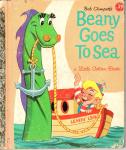
As I said, my mom started the process, as seen below in scans of some of my earliest books. Each of these volumes was published within a couple years of my birth, and either my mother or I have schlepped these things around for almost five decades.

I still smile as I flip through the Counting Book, testing my acumen. So far, so good.

And I sit in awe of the Adventures of Beany & Cecil, which was way too hip for kids as a short trip down YouTube indicates.

At the peak of my addiction, I think I owned 3000 books, give or take. I am presently sitting around 500, the rest being donated over the years to Good Will stores in Canada and the United States.

I know libraries exist, but in a twisted way, that would be like going to a strip club or brothel. A bibliographic quickie instead of a committed relationship (told you it was twisted).

No, I’ll stick with my books, thanks. Constant companions in an inconstant world.

Packing it in

Cardboard conundra;

A thousand puzzles

Demanding attention.

Sticky fingers clawing

Invisible seams;

Tortured screams

Muffle buried treasures.

Swaddled icons

Nestled strategically;

Memories layered

On things forgotten.

The paper-laden tomb

Of a modern day pharaoh;

Heiroglyphic notes

Of fumed pitch.

Life in a box

Awaiting release.

Image

First d(r)aft

Three days. I have three days to come up with another 10 pages from my latest screenplay for a reading and critique in my screenwriting class. And I have nothing.

Well, that’s not technically true. I have something. I have the architecture of my screenplay written out…I know where I want to go and what steps I need to take, broadly speaking, to get there.

But those are just a series of incomplete sentences that barely fill a page. I need 10 pages of a screenplay. I need narrative (not too much, as is my wont) and dialogue, and yet everything I write right now reads like crap. Absolute, utter drivel.

Welcome to the first draft.

I love to brainstorm and come up with new ideas. Ideas for new screenplays. Ideas for scenes within those screenplays.

Brainstorming is exciting. Everything is possible, so I am at my most creative. Nothing comes off the table, and every idea leads to several others.

I love to plan. I like to arrange those ideas into a semblance of order…it is quite literally the assembly of a puzzle. What if I moved this scene from the first part of Act II to just before the climax? How does that change the story?

But at some point, I have to stop brainstorming and planning. I have to start writing. I have to take those incomplete sentences and turn them into coherent scenes of people interacting with people—directly and indirectly—to accomplish goals and thwart those of others.

And even that description of the process sounds interesting. But then I begin typing and my words take on the feel and smell of two-week old cod.

Image

If the mom character was any stiffer, you could iron shirts on her. Why not just have the son respond “Oh yeah!” and euthanize all of your creative ambitions?

You want the boat captain to do what? Even the most psychotic of fishermen wouldn’t contemplate that idiotic move! What was your research: old Popeye cartoons?

You suck! You suck! You suck!

Okay. Feel better now? Had your little tantrum. Your little pity party. Ready to move forward? Take a deep breath.

This is your first draft, and it’s gonna suck. That’s what first drafts do. But it’s the first draft that sucks, not you.

The idea is still sound. Story improvements you can’t see right now will arise in the workshopping process. The dialogue can be massaged and the narrative edited…in your second draft. You can move some of the scenes around to enhance the conflict…in your third draft.

The only thing about what you are doing today that is anywhere near a final draft is the name of the screenwriting software. [NOTE TO FINAL DRAFT: Give some thought to changing the name of your software. Too much pressure for some of us to handle.]

You’ll be fine. Your story will be fine.

Just start typing…

Long weekendless

It’s a long weekend, this weekend in Canada. We’re celebrating Victoria Day, which is a celebration of either the capital of British Columbia, a previous Queen of half the planet, or a friend of mine who blogs Victoriously.

Regardless of what we call it, however, it is a celebration of Spring (welcome to Canada) and of drinking beer on patios and at cottages—the May Two-Four weekend, as some of us older folks recall it (commemorating the Canadian single-serving case of 24 bottles).

What makes this year’s version a little odd for me is that for the last year or so, every weekend has been a long weekend, for I am a freelance writer. On any given Monday or Friday, I can choose not to work. Likewise, on any given Saturday or Sunday, you are likely to find me working. Day nomenclature has ceased to hold meaning for me.

For all intents and purposes—and I have plenty of both—the only real difference between a Wednesday and a Saturday is how many of my friends can come out to play at 2 o’clock in the afternoon. And most of my friends are in entertainment, journalism or science, so even that constriction isn’t very strict.

Admittedly, I am less likely to hold an interview for an article assignment on the weekend, but those are few and far between.

Now, my freedom comes at a price…or lack of a price, as the case may be. My pay packet is smaller than it once was. I have no health benefits but what the government gives me (welcome to Canada!). I often have to make myself go for a walk to ensure I get some exercise.

However…I don’t attend meetings. If my boss is an ass, I’m probably looking in the mirror. My commute is maybe two metres. And my drinking problem doesn’t seem to be suffering (phew!).

This morning, I seriously argued with myself as to whether I was going to work on a feature due next week or take my camera out for a walk…and it could have gone either way (I strangely decided to work on my feature).

I have no family about whom to worry or of whom I need to take care, so I understand I have a luxury of options that many feel they cannot afford.

At the same time, I watch many of my responsible friends—typically the ones who can’t come out to play at either 2 o’clock—and see them dig themselves an early grave, fighting to give their families everything except the one thing their families probably want most of all: themselves.

I may die tonight—exercising that drinking problem—or I may live for another hundred years. I don’t know. But either way, I’m not worried about it. I don’t have a timer on things to accomplish.

That’s a nice feeling.

All y’all have a great series of days that may be a weekend!

Image

What is sexy?

The announcement earlier today about Angelina Jolie’s pre-emptive double mastectomy for fear of future breast cancer made me pause for a moment to consider what makes a woman sexy to me. What follows is purely subjective and I hope it is taken in the spirit in which it is meant.

What makes a woman sexy?

Is it her amazing boobs? (Angelina Jolie)

Image

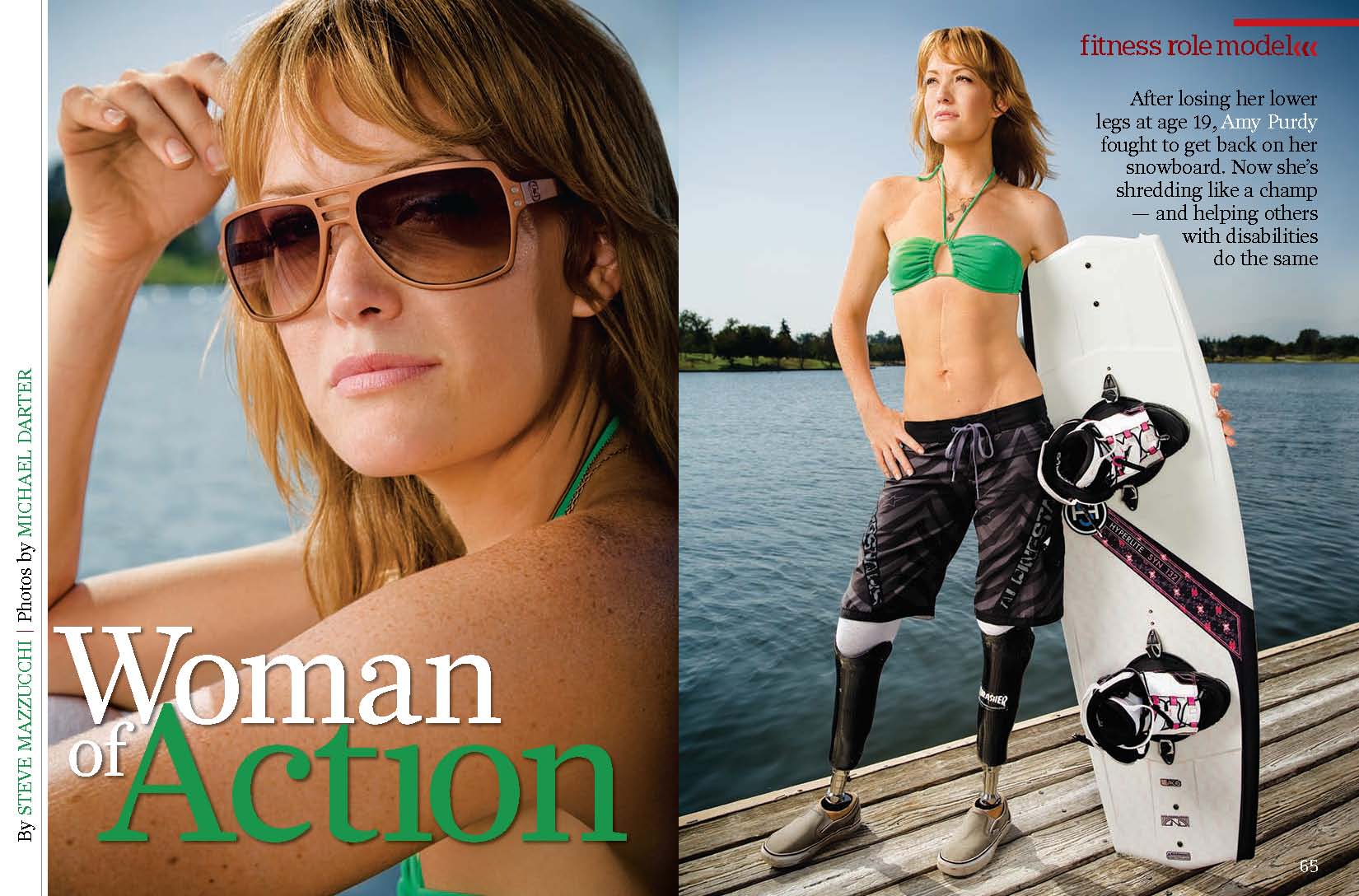
Is it her sinewy legs? (Amy Purdy, activist and meningitis sufferer)

Image

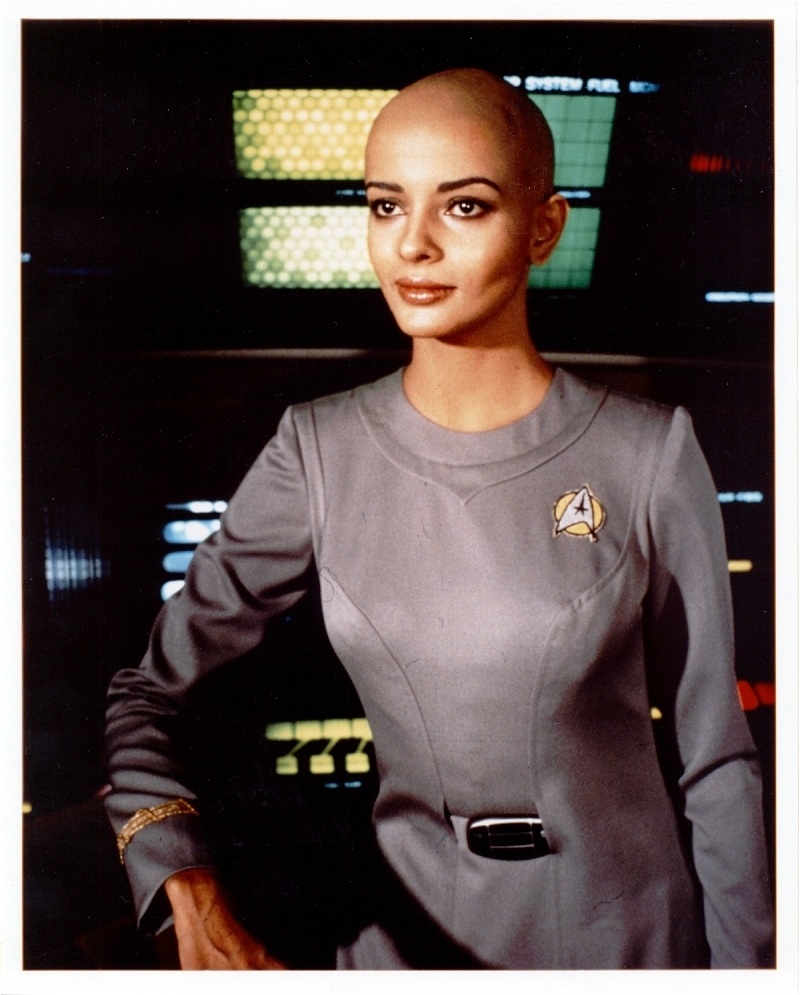
Her flowing hair? (Persis Khambatta from Star Trek: The Motion Picture)

Image

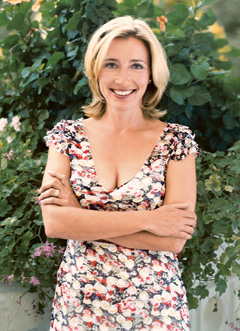
Her fashion runway looks? (Emma Thompson)

Image

Her youth? (Dame Helen Mirren)

Image

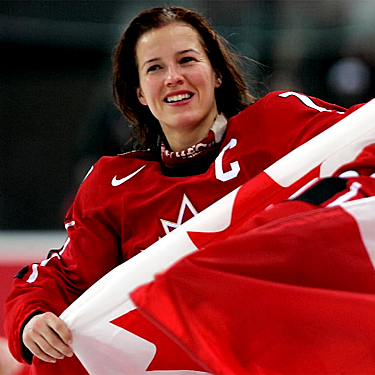
Her demur nature and delicacy? (Team Canada’s Cassie Campbell)

Image

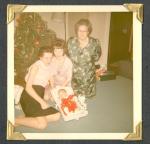
Her fame? (Leela with my grandmother)

Image

No, what makes a woman sexy is who that woman is, not what she is or how she looks. It is what comes from within when you take a moment to get to know her.

That is the sexy that stands the test of time. That is the sexy that makes me want to be in her presence.

(All photos used without permission, except the last one. Copyrights belong to owners.)

Dorothy’s Day

Aside from my wife and my mother, the most important woman in my life was my grandmother Dorothy, who encouraged and advised me at every turn in my life. I stayed with my grandparents while I attended college and my first apartment was literally two doors down the same apartment hallway. She has always been my friend.

Dorothy passed away last year. When she did, I was given an old family photo album and as I have this nice little scanner, I thought hmmmm.

In honour of Mother’s Day and because my grandmother’s birthday was May 15th, I offer the following retrospective album of Gram as I have known her and as I wish you all could have.

If she were still alive, I am confident she would be worried all to hell about my current artistic adventures and spirit journey, but I also know she would give me all her love and support…and maybe a few hands of cribbage to keep me honest.

I miss you, Gram.

Mother’s Day

Beating the race to post the first Mother’s Day tribute on my blog.

With one exception, these are all photos from my trip to British Columbia last autumn, and I am confident that my mom will think she looks like hell in each and everyone of these photos. That’s my mom!