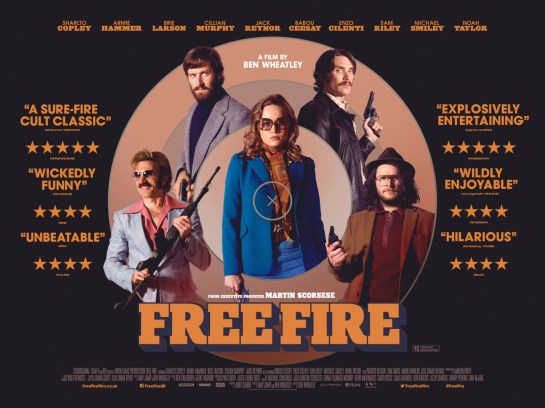
Free Fire still too expensive

free_fire_poster

It seems I am cursed to see the lesser works of great film artists. Such was the case last night as my friends and I discussed Ben Wheatley’s latest release.

My friends spent much of the evening telling me how much I should have seen High Rise and Kill List. Sadly, we saw Free Fire, a 90-minute exploration of how many bullets the human body can take…seriously, that is the movie.

In 1976 or so, IRA terrorists arrive at a derelict warehouse to buy guns, but things suddenly go wrong and a shootout ensues. The End.

Lots of shooting. Lots of bleeding. Lots of “witty” banter. For 90 minutes.

This is The Good, The Bad and The Ugly if all we saw was the Mexican stand-off.

It is every Quentin Tarantino film without the Shakespearean nuance for which Tarantino is known (*sarcasm*).

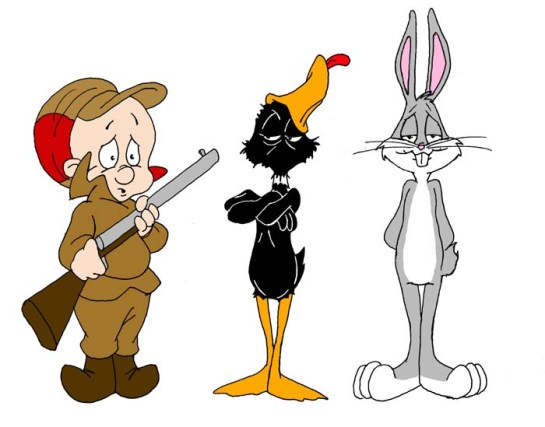
It is Bugs and Daffy arguing over whether it is rabbit season or duck season.

duck_season_rabbit_season_by_dromens

And like a young child’s game of Cops & Robbers or Cowboys & Indians—or whatever other culturally and socially incentive games the kids get up to these days—no one really suffers for the ballistic barrage that enters their bodies. This might as well have been paint ball.

I am told Ben Wheatley (writer and director here) is a very creative artist, whose earlier works bordered on the metaphysical. Free Fire didn’t manage physics, let alone metaphysics.

The entire film was one beat repeated over and over and over again, much like this review.

Running out of shooters or bullets? Let’s simply insert a couple of new shooters. Wow, that was so much fun, let’s do it again.

The movie had a really good cast, including the likes of Brie Larson (The Room), Sharlto Copley (District Nine), Armie Hammer (The Man From U.N.C.L.E.) and Cillian Murphy (you know; the guy that was in that movie).

And there were a few funny one-liners (whatever they made, nobody wants to buy it anymore).

But let me save you $13 and simply suggest you watch the trailer 37 times.

free_fire_guns

The only stars of the movie

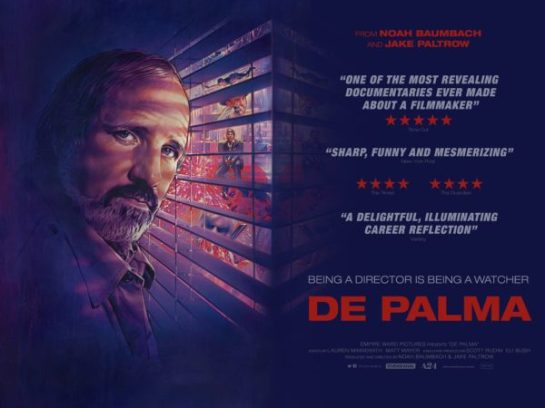
Autopilot biography – Understanding De Palma

De-Palma_UK-quad-600x450

I’m generally not a fan of autobiography. Similarly, I am not a fan of retrospective panels where the topic of the retrospective is the guest.

Although the thinking behind such efforts is who better to tell us the truth of past events than the person who lived them, I find that the idea rarely manifests into a reality. Too often, we are merely presented with a series of events or facts, rather than any real insights into whom these people are and how those events both fed into and were products of those individuals.

This turned out to be the case with the 2015 documentary De Palma, recently released on Netflix.

Over a span of 110 minutes, we hear every thought that famed film director Brian De Palma has about pretty much every movie he ever made, from his days as a film student up to his most recent contributions. And yet, despite all of this exposition, I feel like I am no closer to understanding De Palma than I was when the almost two-hour odyssey began.

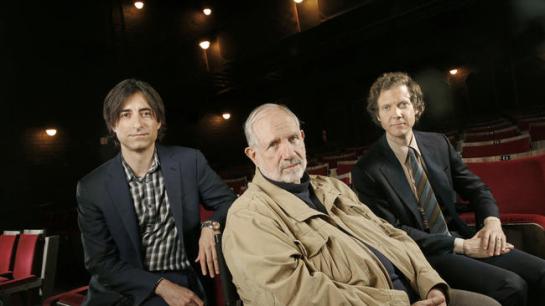
For film buffs and film students, there is plenty to like about this documentary, directed by Noah Baumbach and Jake Paltrow. De Palma discusses his many influences as a cinematographer and director, offering lovely homages to older films through examples of his own.

de-palma

And the film is a nice reflection on a period of time in American cinematography, when the likes of Scorsese, Lucas, and Spielberg were establishing their imprints on film. We get a taste of what it was like to always be on the cusp of the studios, and the struggle to live up to your artistic vision and hearing crickets chirp in empty theatres.

But I didn’t just want a taste. I wanted to understand the artist and his art.

A few years ago, at the Austin Film Festival, I sat in a session where Chris Carter discussed the genesis and ongoing development of The X Files, a series I quite enjoyed for its first few seasons. But rather than learn anything insightful or useful—which is the norm at Austin—I felt like I was sitting in a Comic-Con session, where a lot of the questions began: “Remember that episode where…”

I’m not belittling Comic-Con or fan worship. It has its place.

I just didn’t think that a screenwriters’ conference was that place.

brian-de-palma-steven-spielberg-and-martin-scorsese_large

This is why I don’t like autobiographies, in general. Rare is the book or documentary where a subject is required to delve deep into their experiences, to explore how those experiences moulded them during moments of personal evolution.

Instead, the documentarians tend to be fanboys or -girls, who start every segment with the question: “Remember that movie where…”

[For context, think back to a Chris Farley character on Saturday Night Live.]

Ironically, in discussing the camera work on Carlito’s Way, De Palma kind of summarized my problem with the attempt to catalogue every film in his filmography:

“The thing you learn about the long take is that you can document the emotion happening on the screen in real time,” he explained. “And once you start cutting things up, you lose the emotional rhythm of things.”

This is my issue. There was no emotional center to this documentary. It was too technical or mechanical and lacked almost any sense of humanity and therefore artistry.

And I say almost, because De Palma finally touched on a subject that I wish the entire film had documented as he summed up his thoughts.

“The thing about making movies is every mistake you made is up there on the screen,” he said, almost wistfully. “Everything you didn’t solve, every short-cut you made you will look at it the rest of your life. So, it’s like a record of the things that you didn’t finish, basically.”

And more powerfully:

“People in your life can be threatened by your intense concentration, your complete immersion in what you’re doing,” he continued. “My true wife is my movie, not you.”

Ironically, I am left thinking the same thing at the end of De Palma. What might have been?

See also:

Variety review

VOX review

The Guardian review

The Last Laugh – review

Last Laugh poster

As I sat in Toronto’s Hot Docs Ted Rogers Cinema, munching my popcorn and sipping my soda, I started to get the sneaking suspicion I had accidentally seated myself in a Synagogue, such was the nature of the audience who slowly closed in around me.

And as the theatre lights dimmed, I realized that they were here to see a documentary about the Holocaust, while I was here to see one about comedy. We were both in the right place.

For me, the central theme of The Last Laugh is the question: Is there any topic that is off-limits to comedy?

For the others, it was probably more a question of whether any humour could be found in something as horrific as the wholesale slaughter of 6 million Jews.

Through a series of interviews with comedians—most Jewish—and Holocaust survivors, centering on the thoughts of Renee Firestone, The Last Laugh pivots back and forth between heavy discussions about survival under unreal conditions and light-hearted attempts to understand the dark humours arising from those conditions as expressed by the generations of comedians that followed.

the-last-laugh-brooks

As Mel Brooks pointed out, if he had tried to produce “The Inquisition” sequence of History of the World, Part I back in the late 1400s, he probably wouldn’t have fared as well in 1981. Likewise, other comedians pointed out that when The Producers was released in 1968, the concept of “Spring Time for Hitler” was scandalous, whereas people seeing the Broadway musical now are apt to sing along with the music.

For many, it was a matter of timing. How much time had passed since the original horror? For others, it was a bit more complicated, and it was generations more than years that needed to pass, citing examples where the children of Holocaust survivors—people who themselves did not experience and therefore release the horrors—were more apt to get upset about Holocaust jokes than their parents.

the-last-laugh-2016-sara-silverman

Interestingly, Brooks himself was quick to note that the Holocaust was a line he could not cross himself, but that if someone else made a funny joke, he could laugh at it.

Going back to survivor Firestone, it was very interesting to see her perspectives on this question and the various attempts by comedians like Sara Silverman to touch the subject. For Firestone, none of the jokes seemed to come across as funny, but some she acknowledged were very close to the truth of the experience or how society now thought of it.

Elly Gross-Ferne Pearlstein-Renee Firestone

Writer/director Ferne Pearlstein (centre) with survivors Elly Gross and Renee Firestone

And she could see in hindsight the humour of some of the camp activities as the prisoners (I am at a loss for a better word to describe those held captive) tried to maintain a grip on sanity within the camps, whether it was preparing imaginary dinner parties or performing musical revues.

Countering opinions also entered the fray as people debated the merits of the film Life is Beautiful, most of the comedians considering it terrible and an ironic whitewashing of the horror, or bringing in other recent events such as Jim Crow racism or the events of 9/11.

Life is Beautiful

Ultimately, while I’m not sure the question of off-limit topics was ever really answered, everyone who watched the documentary was affected by it.

Where your heart was broken by a recounted memory, it was shortly thereafter mended by quip.

Where your breath caught in your chest at a recalled horror, it quickly burst forth in a gush of laughter.

After 88 minutes riding waves of conflicting emotions, the audience was neither depressed, nor bemused, but likely to a person, they had asked questions they had never considered before. Can’t really ask more of a documentary.

With my compliments

32510516-vector-illustration-of-orange-speech-bubble-for-well-done-stock-vector

Have you complimented someone today? This week? This month?

It’s amazing what a few words of support and kindness can do for someone who feels like he or she is uncertain or struggling to accomplish specific goals or develop certain skills.

And those kind words are particularly important when they come from someone who is in a position of authority in that subject.

I am an amateur photographer; a good one, in my own opinion. And I am eternally grateful for and happy to hear friends and loved ones tell me when they like a particular photo or group of images.

But recently, I have received some very kind comments from other photographers, whose work impresses the hell out of me, and who, in a few cases, don’t know me beyond what they have seen of my work on Facebook or Instagram or Twitter.

Earlier today, someone I did not know stopped by my Instagram account to comment on an image I posted recently.

Simply wonderful! You got what it takes for a good photographer!

I immediately jumped over to his account and realized that I was being complimented by someone who I believe has amazing talent. This is someone making a career as a professional photographer.

I have likewise built a nice friendship with one of the official photographers for my beloved Toronto Marlies; a man who will periodically compliment me on a particularly good shot. I have told him as much, but I’m not sure he believes how much his kind words and encouragement mean to me.

When someone does well, I like to let them know I think so. I think my compliments are most powerful, however, when they related to writing; my particular strength.

What is your area of expertise or authority?

When was the last time you took a moment to tell someone further down the development chain that he or she had done a really good job on something or that you found his or her work impressive?

Trust me; it will make their day to hear that.

And if you are already spreading encouragement and passion, thank you for that. We need to make sure this spreads.

sunset

You never know what people will like…so don’t try to anticipate; just create

Demystifying Expertise

expertise-equation

Each of us tends to undersell (or completely disbelieve) our expertise on subjects that are near and dear to our hearts. Expertise, we believe, is something other people have.

And yet, I am convinced that we are more expert than we think. And fortunately, we are living in a time where methods to convince others of our expertise has never been easier.

Watch my recent Facebook Live video Demystifying Expertise and see if you agree.


Artists I adore (and you should follow)

barnaby-dixon

Barnaby Dixon – puppetry

As many of you know, I am nutso for puppetry and have somehow managed to know some amazingly talented puppeteers. But as much as I adore my friends, one fellow blows me away not just for his skill as a puppeteer, but also as a puppet designer.

For a guy that looks like he’s 12—I’m over 50, so you all look 12 to me—Barnaby Dixon seems ancient in his craft and wisdom. From the very first YouTube video I watched, he has dazzled me with his love of the art form, his ability to bring the inanimate to life, and his presentation style that draws you in and makes you feel like this is a private conversation. Stellar!

Visit Barnaby’s web site, Facebook page and Twitter account


matt-me-naomi

Baram & Snieckus – comedy

I know, I know. I have to get past my addiction to these beautiful sketch and improv wunderkinds. But I can’t help myself.

Apart, Matt Baram and Naomi Snieckus are wonderfully funny and vulnerable and endearing, but together, they rocket off the charts.

As I have reviewed previously (see below), Baram & Snieckus are to the modern era what Stiller & Meara and Nichols & May were to theirs, people who express the challenges and wonders of social awkwardness, allowing us to laugh at the things that frighten us in our daily lives.

No one is more neurotic than Matt…until Naomi erupts in her own mental mushroom cloud.

And that this husband-and-wife team are beautiful, friendly, giving, caring people is an absolute bonus.

You can follow Matt & Naomi on their web site, Facebook page or Twitter.


See also:

You and Me Both – A revue review

Still Figuring It Out: Baram & Snieckus


filippa

Filippa Levemark – visual arts

As a photographer, I adore nature. As a writer, I adore bizarre or interesting juxtapositions. Thus, I had no choice but to fall in love with Filippa Levemark’s work.

With the seemingly simplest of compositions, Filippa combines nature and human infrastructure to powerfully demonstrate that the two worlds are one and the same. Try as it might, humanity cannot hold itself as distinct from the wildlife that surrounds us, nor should it.

Her work is beautifully approachable and yet is rife with meaning, offering depths that may be missed at first glance.

Based in Sweden, my greatest hope is to find a way for her to bring her works to Canada.

You can follow Filippa on her web site, Facebook and Instagram.


sankoff-and-hein_toronto-star

Irene Carl Sankoff & David Hein – musical theatre

As a student at Toronto’s Second City Training Centre several years ago, I had the great fortune to meet and do improv with a gorgeous and talented actress named Irene Sankoff, a truly giving performer.

Years later, I heard that Irene and her husband David Hein had created the somewhat autobiographical stage musical My Mother’s Lesbian Jewish Wiccan Wedding, which played to wonderful reviews in Toronto. What I didn’t realize was that the musical would explode in the theatre world both in Canada and abroad, setting these two up as a creative force of nature.

And just this past year, they have repeated (and likely surpassed) that success with a new musical Come From Away, based on events in Gander, Newfoundland on 9/11 when hundreds of air passengers found themselves suddenly grounded.

The musical just completed a spectacularly successful run in Toronto and begins Broadway previews on Feb 18 at the Gerald Schoenfeld Theatre in New York, where it is sure to sell out quickly.

But like my Baram & Snieckus comment above, what makes these two particularly special is that they are genuinely wonderful people and have such love for their craft and for the people who come see the show.

Recently, on a frigid Toronto morning, the pair brought coffee and donuts to fans waiting for rush tickets to their final Toronto performance (Toronto Star article). The pair and performers from the show entertained the small crowd, singing songs and chatting with the chilled throng. That is simply beautiful.

Follow Irene & David’s adventures on their web site, Facebook and Twitter.


With Genius, the play’s the thing – a review

genius-poster

Early last year, I saw a trailer for a biographical movie that recounted the love story between a novelist and his editor. For every bit that the novelist was a flamboyant, erratic larger-than-life character, his editor was a buttoned-down, controlled one. And yet, between the two of them, they produced works that sit among the sleeves of Hemingway and Fitzgerald, two of the editor’s other writers.

I was intrigued.

Last June, Genius had its theatrical release in North America, only to disappear almost as quickly. I had completely forgotten about the story, until this week, when the movie launched on Netflix.

Now, I know why it disappeared. Not because it is a bad movie, but rather because it was produced for the wrong medium.

The theatrical release Genius should have had was on a stage, not in a cinema. Although not written intentionally as such, Genius is a play.

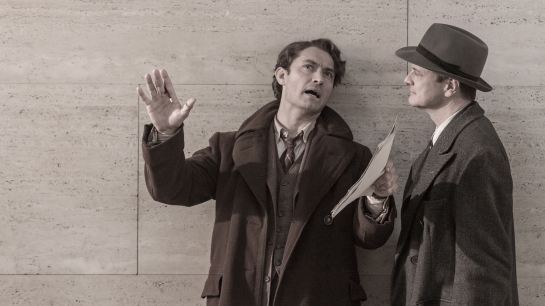
Based on A. Scott Berg’s 1978 National Book Award-winner Max Perkins: Editor of Genius, the film recounts a tempestuous period in the 1930s when the first frenzied pages of Thomas Wolfe’s (Jude Law) autobiographical O Lost found their way onto the desk of Scribner’s editor Max Perkins (Colin Firth). It then follows the bond that forms between the two men as they fight to tame Wolfe’s creative furies, eventually honing it into the retitled Look Homeward, Angel and his sophomore novel Of Time and the River.

genius-women

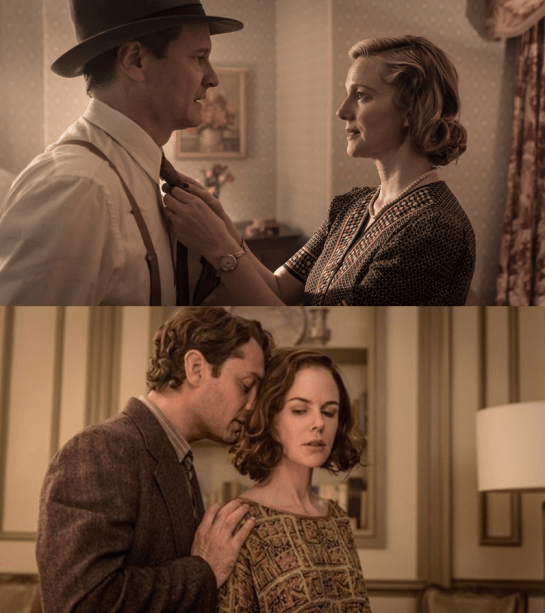
The loves they left behind: Laura Linney (top) and Nicole Kidman

The process was not without its victims, however, and as minor secondary plots, the film unveils the impact of the men’s singular focus on their loved ones: Perkins’ loving wife Louise (Laura Linney) and his five daughters, as well as Wolfe’s loving but jealous benefactor Aline Bernstein (Nicole Kidman).

As I watched the film—directed by Michael Grandage with screenplay by John Logan –I found it structurally constrained and yet exuberantly written. With the exception of links between plot sequences, every scene played out as intimate conversations with the characters largely speaking in poetry, especially Wolfe and Perkins. It was as though Logan was trying to capture the Joyce-like prose of Wolfe’s mania and cast it from the mouths of his characters.

After pausing the movie for a few moments about 40 minutes in, not completely sure what I thought of it, I came back to the film and immediately realized what was challenging me. This was a stage play that was unaware of its identity.

Once I had that in my mind, the movie proceeded to unfold beautifully and naturally.

7X2A6142.cr2

Defining the act of falling in love

As a writer and editor myself, I was enthralled by the ongoing debates over how best to describe the emotions of falling in love and that tortuous feeling of having the words you bled to write being torn asunder with the simple stroke of a red pencil.

I understand, however, that not everyone would be as appreciative or have such a personal connection to these scenes.

The movie was eviscerated by the critics I read, and rightly so if viewed as a movie.

“Hammily acted, overstylized and lacking in subtlety.” – The Guardian

“Dressed-up box full of second- and third-hand notions.” – The New York Times

The Independent reviewer apparently saw what I saw:

“The acting, along with John Logan’s script, belong to the theatre.”

Like many stages plays, there is essentially no build up, and we are immediately dumped into central relationship of Perkins and Wolfe, two artists straining to make the other see his vision for the project at hand. Thus, when Kidman’s Aline or Linney’s Louise show up in the story, we are given almost no backstory to help us understand their perspectives or reactions to the intellectual love affair that blossoms.

And to the subtlety comment, Logan inserted F. Scott Fitzgerald (Guy Pearce) at the nadir of his career as an omen to Wolfe about what lies ahead, and Ernest Hemingway (Dominic West) as an emblem of a man who possessed his life, much as Wolfe tried to do and failed.

genius_future

The fates: Guy Pearce as F. Scott Fitzgerald & Dominic West as Ernest Hemingway

But perhaps the biggest tell for me that this was a stage play—and something that hits the subtlety debate—is the hat that Perkins wears throughout the entirety of the film. No matter where he is, no matter the time of day, no matter how he is otherwise dressed, Perkins wears his grey Fedora. It is what allows him to maintain his control on the world.

And because of its importance to Perkins—the true hero of this story—the hat is what brings power to the film’s close, in a scene that could otherwise be seen as cliché (and may yet be, by some).

The audience for Genius will be a narrow one, unfortunately. It has, however, piqued enough interest in me to look into the works of Thomas Wolfe, as well as A. Scott Berg’s biography of Max Perkins.


See also:

Colin Firth and Jude Law’s literary bromance needs an edit (The Guardian)

Michael Grandage should have stuck to his day job (The Independent)

‘Genius’ puts Max Perkins and Thomas Wolfe in a literary bromance (New York Times)

Story is everywhere

[First part of a weekly series related to my new story analysis service So, What’s Your Story.]

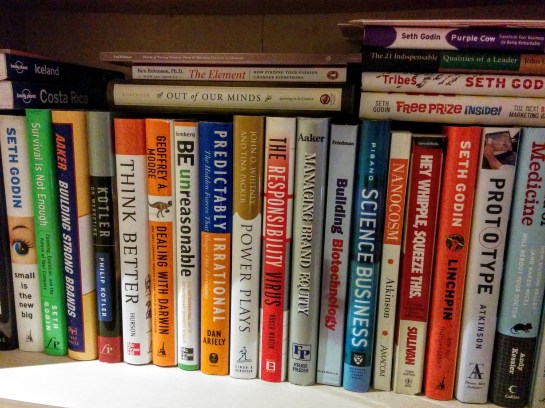
bookshelf

Even the most esoteric subjects have story, with all the elements of a fictional novel or screenplay…even text books about business or biochemistry or writing.

There’s no story in text books!

Yes, there is.

Only here, plot is less about action sequences and more about the interplay of the different aspects of your subject and the causes and effects that drive your theses or perspectives forward. This can be reflected in the cadence of your descriptions, as you walk the reader through your arguments, leading them to your conclusion.

Likewise, your characters are less about personalities and more a sense of the…you guessed it…characteristics of your subjects. In the broadest sense, the conflicts and synergies between the component parts or ideas of any topic are what effectively humanize the topic, providing a familiarity to the reader or viewer.

Without story, your manuscript or presentation has no narrative drive, nothing to draw the reader or viewer forward. Instead, it reads like a specification sheet or spreadsheet; a series of minimally connected facts and figures that provide information but only to the most intrepid reader.

Story is one of the reasons why you can have hundreds (thousands?) of different versions of the same facts, and how publishers and book retailers stay in business.

So, if you’re working on a nonfiction manuscript or presentation, let’s talk and see how well you are bringing your ideas to your audience.

Reach out and tell me: What’s your story?

Twitter: @createdbyrcw

Facebook: https://www.facebook.com/storyanalysis/

Website: [to come]

Rogue One clearly satisfies (no spoilers)

rogueone_one-poster

The latest in the Star Wars galaxy of offerings launched last night to rousing applause, and I was there, in the audience, wearing my 3D goggles.

What did I think of the movie? I’m not really sure that it matters.

Like so many movie franchises out there, if you have bought into the Star Wars series, you are going to see this movie and there is damned little that any number of reviewers could say to dissuade you from that. Personally, I have been invested in this cultural icon since it first launched almost 40 years ago.

So, what is the point of reviewing the movie? None, other than an effort to satisfy my own self-importance.

This was a good movie that opens slowly, offers little in the way of character development, fulfills all of the expected (demanded?) tropes of battles and mentors and silly robots, and essentially adds nothing to the canon of Hollywood history or the art of filmmaking. I don’t know that the movie ever had the opportunity to be great, but if it did, it certainly walked the other way.

That said, the audience applauded or cheered several times throughout the movie, and I think it is fair to say that pretty much everyone left the theatre satisfied with their experience.

And there is my problem with the series, as much as the movie: satisfied.

[Hereafter, I will talk more about specifics within the movie, so you may wish to stop reading now. I will avoid spoilers, speaking more in generalities out of respect for movie-goers.]

star-wars-universe

Ep IV and V changed movies forever. Everything else was merely adequate.

Movies have evolved extensively since the launch of A New Hope in 1977, especially in the area of special effects. With franchises like Alien and Star Trek getting complete reboots, comic book universes unfolding in myriad interwoven ways, and standalones like Interstellar and Inception dazzling the eye, it is becoming increasingly difficult for individual movies to stand out from the crowd, to chart new ground.

If for no other reason, this is why I raved about the recently released Arrival (my review), which stands apart not through its special effects, but rather the execution of its central theme. There is great intelligence behind a beautiful film.

When A New Hope arrived on the scene, it changed the game of movie-making by bringing the scale of a biblical epic to hokey old Westerns and WWI dog fight movies. If Jaws initiated the summer blockbuster craze, A New Hope solidified the idea. And if that’s where it stopped, this crazed then-teenager would have been quite satisfied.

But then came The Empire Strikes Back, which somehow managed to make A New Hope look hokey and dated, although I still contend that the first movie had a better, more complete story. For a young movie goer, The Empire Strikes Back was like riding in a bullet train only to have someone throw on after-burners; it was a whole new level of acceleration that pinned me to my seat.

That feeling has never been duplicated by a Star Wars movie since.

[In fairness, there is one interesting technical achievement in Rogue One, but to describe it would be to spoil a couple of moments in this film.]

Hollywood, instead, has caught up and moved past the franchise. And perhaps even more broadly, entertainment has surpassed even Hollywood in the form of immersive video games, which I do not play.

For its part, the Star Wars universe struggles to achieve the bar, if it really even tries. And each successive movie feels like it was designed with a check list of tropes George Lucas did not invent, but that he executed perfectly in the early films.

Thus, for a Star Wars film, Rogue One is completely adequate.

rebel-crew

Adequate to their task, offering little more

Character development has largely been dispensed with. As the movie opens, we are presented with a seminal moment in the life of Jyn Erso (Felicity Jones), the central character of this movie, and then we catapult ahead 10+ years to find her in imprisoned, where our adventure begins. And with the exception of the odd note dropped into the dialogue, we have no idea what happened in those lost years.

The same is true for almost all of the other characters. Each offers the briefest allusions to why they have arrived in this place at this time, but there is little to hold onto as the story careens forward. Cassian Andor (Diego Luna) has done some bad things in the name of the Rebellion. Chirrut Imwe (Donnie Yen) clings to his belief in the Force like a child clutching a blanket, while his partner Baze Malbus (Jiang Wen) scoffs good-naturedly, mourning his lost faith.

And I have to say that I have no idea why rebel renegade Saw Gerrera (Forest Whitaker) is even in this movie. If his subplot had been written around, the story would not have suffered one iota. Like so many other movie franchises these days, I will put this choice down to something in the cartoon, novel or comic book series.

Perhaps this reveals something about me, but much as I did with Prometheus, I found the robot character to be the most evolved. In Rogue One, K-2SO (Alan Tudyk) stole the show, having the best lines of dialogue and routinely offering broader perspective on the chaotic stumblings of the inferior humans around him.

And as with the original movies, the villains proved the most exciting element of the story.

krennic

Mendelson’s Krennic brings life and depth to this movie

Somehow, the writers and director managed to make Darth Vader even more imposing than he was in any of the other movies. This was something between the uncontrolled fury of Anakin Skywalker in Revenge of the Sith and Lord Vader’s iron control in The Empire Strikes Back. Here, Vader was a cold-hearted menace who toyed with his food as time allowed, but was also happy to get his light saber dirty.

And then we have Orson Krennic (Ben Mendelson), the man charged with the construction of the Death Star and who, but for an inability to tap into the Force, might have made a delicious challenger to Darth Vader. If they do more parallel timeline movies in the future, I would love to see the evolution of this character.

Aside from these few characters, however, the movie was merely passable as a Star Wars film. The plot was straightforward, if a little padded in places, with well-choreographed battles and requisite deaths (no spoilers).

And there must be at least 837 easter eggs in this movie, tiny moments that tie in to the other movies in the series, and as my friend Danny tells me, into the cartoons, as well. While a younger me might have been enthralled by these inserts, the present day me found them distracting, particularly as they almost always served no purpose to the plot and jerked me out of the story as I realized, “Hey, those are the guys from…” (no spoilers).

But as I said at the beginning, none of this likely matters to you if you are a Star Wars fan. You will see this movie, enjoying some parts and complaining about others. It is just what Star Wars has become…and I find that a little sad.
Miss Sloane misses mark – review

sloane-poster

I am a sucker for politics and intrigue, shows like The West Wing and House of Cards (British & American versions) forming a regular staple of my creative diet. Thus, it was with great anticipation that I lined up to see Miss Sloane (trailer), an inside look at the cut-throat world of DC lobbyists, whom many consider the parasitic infection that Washington just cannot (and will not) shake.

Sadly, Jonathan Perera (writer of Miss Sloane) is no Aaron Sorkin or Beau Willimon. In his defence, however, it is likely that neither were Sorkin and Willimon on their first produced screenplays.

The movie follows the string-pulling machinations of Elizabeth Sloane (Jessica Chastain), an ice-water-in-her-veins win-at-all-costs lobbyist who works for one of the most powerful firms in Washington. This woman has no scruples and is willing to get behind anything that earns a paycheque and raises her status inside the Beltway. Anything, it seems, except for the gun lobby.

And when she is presented with an opportunity to make guns more appealing to women in the hopes of killing gun control legislation coming to the floor, she instead jumps ship to a boutique firm (read “poor”), run by Rudolpho Schmidt (Mark Strong), and takes up the opposing cause.

sloane-pairing

More could have been made of Strong’s moral angst over hiring nuclear weapon Chastain

Once the ball starts rolling down hill, it steamrolls over everyone in its path, and the story becomes a ballet between Sloane’s new firm and her old one, led by a very angry George Dupont (Sam Waterston) and his lead hitman Pat Conners (Michael Stuhlbarg). Until recently, Conners was Sloane’s partner in larceny. The rest of the movie is simply watching puppeteers pull strings.

Thus, this movie is a character study of people without character; a morality play completely lacking in morals.

As such, it is incredibly dark and even with its climax and moment of supposed triumph, you leave the theatre positively suicidal at the prospect that this story even starts to approximate reality.

In one way, it is fascinating to watch completely manipulative characters toss around human lives and feelings as though pieces in a game of Risk or Stratego. I think it strikes at our voyeur nature, tying in with the modern fascination in so-called reality television and amounting to little more than emotion porn. This movie could easily have been titled 50 Shades of Sloane.

sloane-puppetry

The strings may be invisible, but the puppet dances

At the same time, with no shred of humanity in these characters, it is difficult if not impossible to invest in the main combatants. At best, we mourn the cannon fodder that litters the field of combat. It is like watching a movie about the invasion of Normandy and really only being able to appreciate the kid who is killed as he steps off the landing craft.

And this is precisely where Perera’s developing skills let him down and his contrast with the current political masters is at its most notable.

Despite the sheer malevolence of Francis and Claire Underwood in House of Cards, there is a vulnerability that helps us understand their razor-clad shells. Go further back to the true master of political intrigue—William Shakespeare—and you see the frailties of the otherwise horrific Macbeth and his Lady. Or perhaps my favourite: Iago from Othello.

frailty-in-venom

Underwood, Macbeth and Iago: Human frailty lies behind the face of a monster

Despite the play’s title, Iago is the true hero of Othello. It is his story that unfolds as he manipulates all those around him, working their weaknesses and frailties against them, truly uncaring of the destructive impact his actions are likely to have on even his own future. And yet, for all the venom and disturbing glee with which Shakespeare imbues his malevolent beast, the Bard is also sure to insert short references to why Iago is so morally misshapen.

To his credit, Perera refused to go in the opposite direction and give us some long-winded sob story of a slight or wound from Sloane’s past to explain her motivations, and in fact, makes it a point, several times, to complain about just such an approach.

But in the absence of any contextualization for the character, even the climax itself comes across as academic exposition rather than revelation. At best, the climax has audacity rather than soul.

There is no moment to cheer the outcome of the story because the outcome is as soul-less as the morass that preceded it.

sloane-perils

That which cannot be controlled must be destroyed

As though sensing this, the final scenes of the movie felt like a bit of a negation of what came before, attempting to soften the edge of Sloane and the story itself. I really wish the movie had ended with the climax.

Given these character challenges, the stellar cast performed well despite being largely wasted.

Chastain does ice well, her face and mannerisms giving away little. Mark Strong was mostly missing in action, through no fault of the actor. His character simply had little to offer. And Stuhlbarg is quickly making a name for himself as malevolent toady, and for that very reason, really needs to find another role to utilize other aspects of his obvious talent.

Miss Sloane was a great idea that suffered in the execution, and I am perhaps being a bit unfair to put the onus on Perera. Director John Madden—best known for Shakespeare in Love and The Best Exotic Marigold Hotel—would have had some influence on how this story played out, and given the pre-diabetic sweetness of his other movies, this story was a surprising choice.

As an academic exercise, I would love to see what Sorkin or Willimon would do with this concept. Each would create very different movies, I think.

In the meantime, I will be interested in seeing where Perera goes next.

See also:

Chastain enlivens political thriller ‘Miss Sloane’ (Lindsay Bahr, Metronews)

Jessica Chastain dominates as a Washington power player (Nigel Smith, The Guardian)

Richard Crouse (video, CTV News)