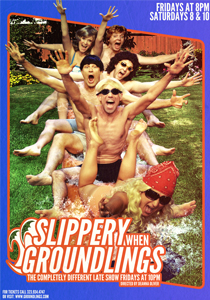
Just got back from seeing a preview of The Groundlings latest improv show entitled Slippery When Groundlings and really have only one response: Watch for the names Jill Sachoff-Matson and Alex Staggs. I don’t know when these two artists will hit it big, but I guarantee you they will.
Unlike the standard Second City shows I am used to watching, this one didn’t seem to have much of a theme beyond irritating people…but then, all sketch and improv comedy seems to be reduced to irritating people. And given the reputation of The Groundlings, I was surprised at how many sketches seemed to be one joke spread over 3 or 4 minutes. I expect that from student shows, but I expect more from main stage casts.
The first third of the show was evenly bad with the exception of a piece called “Carl’s Jr.”, where Sachoff-Matson first caught my attention as a dweeby woman who has been run down and then backed over by life.
The second third picked up somewhat, starting with “Church Camping Trip”, but a solid premise was completely let down by a lack of where to go with it. It’s a good sketch, it just needs more brainstorming. This was followed by Sachoff-Matson’s “Kindergarten”, which actually caused me to laugh out loud. Sachoff-Matson is mesmerizing both physically and in how her mind works, particularly as she portrayed yet another train-wreck character.
But just when I thought I had seen the best part of the show, Alex Staggs shows up with “Giving Up”, a lounge act in which he gets the audience involved with hilarious results. I would be willing to see where Staggs goes with this every night because he exudes comedic range with this.
But the show was rescued by the big musical dance finale “Brittany” where again Sachoff-Matson showed what she can do with a woman completely at odds with her world and her own body.
If I have one complaint about Sachoff-Matson’s overall performance, it is that her three best pieces all largely portrayed the same character. But where this would normally kill it for me, she managed to do so in such unique ways that it wasn’t the mortal sin it might have been.
I don’t know what other sketches they have in the hopper, but there is a definite need to replace several from tonight before this show will be solid from front to back. And while good, the other cast members are going to be challenged to shine as brightly as Sachoff-Matson and Staggs.
From Equalizer to minimizer (a review)

Eighties are the new teens…as in everything you loved about the 1980s is coming to a theatre near you. As the latest example, we have Denzel Washington in the role of Robert McCall in a revisit (can’t really call it a reboot) of the television series The Equalizer.
The central conceit of both the film and television series is that McCall is a retired special forces agent (think CIA) who tries to help people out when they get run over by criminals, corporations or malevolent government forces.
Whereas in the TV show, we see his mission fully formed, the movie is a bit more of a prequel, showing us the transformation of McCall from quiet man to vigilante.
The movie opens with McCall being the happy guy working at a Home Depot, jovially chatting with co-workers and providing something of a father figure to his younger compatriots. But away from the job, we see that he is a loner, a man with a heavy psychological burden that keeps him from sleeping.
And it is this insomnia that links him to young prostitute Teri (aka Alina, played by Chloe Grace Moretz) who is fascinated by this man who sits in a diner at 3 am, drinking tea (he brings his own bag) and reading classic literature (we open with The Old Man and the Sea…the books are a metaphor for the character). Again, the father figure comes into play as McCall is one of the few men who treat her as a human being and challenge her to be the woman she wants to be, not the victim she is.

And it is this bond that causes McCall to act when Teri is hospitalized by her Russian mobster pimp. A noble man, McCall offers to literally buy Teri’s freedom, but when the mobsters simply laugh him off, a life of brutality surfaces in the scarred knight and the world dissolves into chaos.
To give you any plot details beyond this would be to potentially spoil the movie.
Denzel Washington is an amazing actor and is wonderful in the role of Robert McCall. Offering a very different take on the character than his television predecessor Edward Woodward, the two actors share the ability to display a man who is outwardly in control of all situations but at the expense of always holding onto an inner torment that they are afraid to acknowledge, let alone unleash.
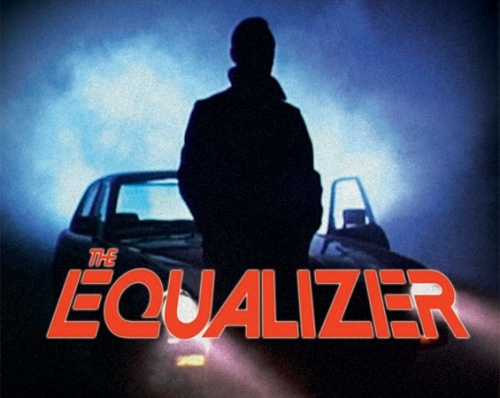
But whereas the TV equalizer rarely got his hands or his clothes dirty (compare TV poster below with film poster above), the film equalizer is willing to release a storm of martial arts and weaponry on the bad guys. Thus, the film is much more action packed than the TV show.
To the credit of director Antoine Fuqua—who also directed Washington in Training Day—despite at least a dozen scenes of intense violence and blood-letting, he does an amazing job of minimizing the amount of actual blood that reaches the screen. In part, he accomplishes this by shooting the most violent scenes in darkness such that you only really see light reflecting off dark puddles. Likewise, when McCall does resort to using make-shift weapons (remember, he works in a Home Depot), the camera often switches to McCall’s face as he uses the weapon rather than to weapon and victim.
Unfortunately, McCall is such a cool and controlled customer that I never really worry about him. I cheer his victories when he vanquishes the dragon, but I find it difficult to really attach myself emotionally to the man. I like the quiet man, but I find the killing machine to be just that, a machine; an automaton that does not touch my heart. And with the exception of a handful of moments, we never really get a chance to appreciate the toll these actions take on him.
The other place I feel the story falls down is in the use of the Russian mobster sent to clean up the mess that McCall started, a man simply known as Teddy. Played by Marton Csokas, Teddy and McCall are equals. The same side of the same coin. Equally smart. Equally charming. Equally viscious. And as such, the only real threat in the entire film to McCall.

(As a side note, if this role is any indication, we want to keep our eye on Marton Csokas. He will do amazing things.)
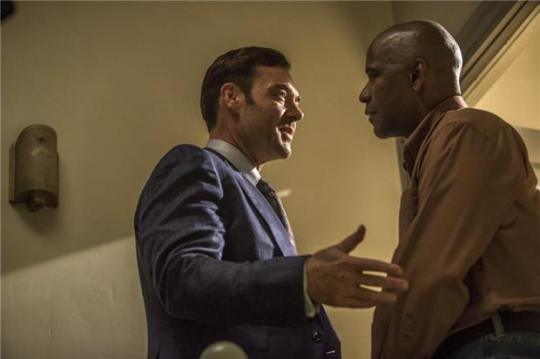
There are a couple of scenes where the two men literally face each other and calmly discuss the situation. One scene in particular is the best thing in this movie from my perspective. While on one level being the calmest moment in the movie, it is also the most chilling because of that calm. You really don’t know what’s going to happen.
And that’s where my problem lies.
Having set up the perfect opponent for McCall, the writer Richard Wenk (who also penned The Expendables 2) doesn’t really deliver. The audience was promised an epic show down between these two characters, but while they do clash, it is anything but epic (photo below is not from clash).
The Equalizer is entertaining. It is a wonderful diversion that requires little thought of its audience. It is Jason Bourne for the middle-aged set (but with enough carnage to keep the young’uns interested). It should, however, have been better.
But when it comes right down to it, the studios don’t really care if you like it, because they are already working on the sequel.
No parity in parody
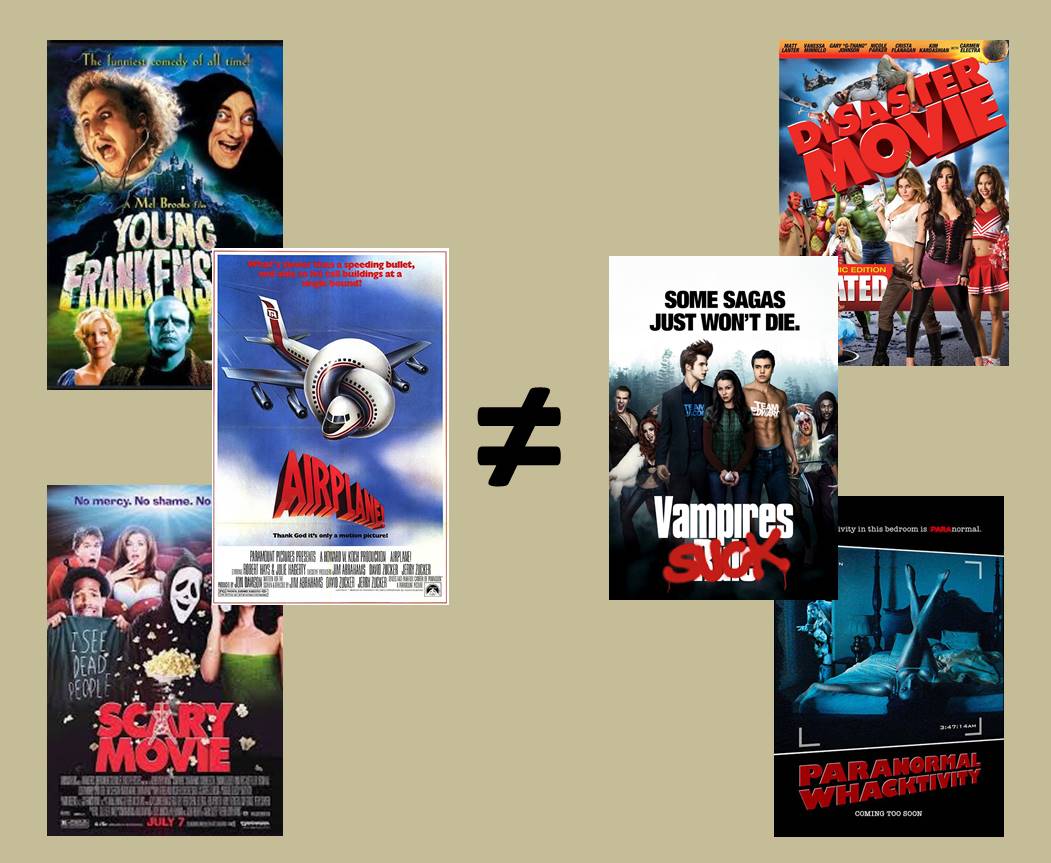
Mel Brooks is a god! Carl Reiner is a god! Carol Burnett is a god! Mike Myers is a really funny Toronto boy, who flew pretty close to the sun. (He may yet be a god, but he has to get back on his feet.)
And among their many talents, these people share the amazingly delicate talent of creating parody…a talent I have yet to seriously attempt beyond the scale of sketch comedy.
Delicate talent? Seriously attempt? Isn’t parody just a matter of picking a genre and inserting dirty jokes and/or completely ham-fisting its various tropes in the mathematical assumption:
Absurd + Puns + Dirty = Funny
I increasingly understand why people think this as I watch more of the recent fare of parodic films that appear to have taken this equation to heart.
Last night, for example, I watched Paranormal Whacktivity, a sexed up romp through the found-footage haunted-home segment that includes films such as Paranormal Activity and Blair Witch. This film was horrific, but not in a good way…nor was it particularly funny or sexy. And it wasn’t very good as a parody because it didn’t even stick to its genre, mixing Paranormal Activity with Ghostbusters, which both involve spirits but are hardly cinematic siblings.
It was useful, however, to my understanding of parody.
When I compare Blazing Saddles, Airplane, Dead Men Don’t Wear Plaid, and Austin Powers: International Man of Mystery to Disaster Movie, Not Another Teen Movie, and Breaking Wind, I realize that the truly classic parodies have something that the new ones don’t: a strong central story.
Somewhere in the evolution of parody films, the movies became less about story and more about ripping off as many genre clichés as possible, offering no firmer links between these scenes than bad jokes, fart noises or perky breasts.
Blazing Saddles wasn’t about taking a bunch of classic scenes from Westerns and simply linking them. It was more about taking iconic characters from the Westerns and creating a classic, if twisted, story. The sheriff abandoned by the town folk, the washed up gunslinger, the evil cattle rustler, the crooked politician.
Similarly with Shrek; although this film has such a strong central story that I’m not sure whether I should even include it in a list of parodies. Yes, it played up almost every fairy tale gimmick, but the story really didn’t model itself on any given style or pre-existing story.
Dead Men Don’t Wear Plaid is another odd case. With a strong through story led by Steve Martin and Rachel Ward (directed by Carl Reiner), it takes parody to a whole new level by incorporating actual scenes from noir films within the scenes with live actors. Thus, Martin’s character may find himself playing across from Barbara Stanwyck or Edward G. Robinson. Now, that is great film writing and editing.
Interestingly, the Wayans’ brothers first entry into this genre—Scary Movie—offers another lesson about parodies: the challenge of dipping into the same well too often.
Although horror/slasher movies are not to my personal tastes, I thought the first one or two films of this series were particularly well done. But as the series continued, picking on more films from within the horror/slasher genre, it started to become a parody of itself. The jokes were no longer fresh. All the best tropes had been used up in the first two movies and so the later films just seemed to be running in place.
Six Star Wars films, one Spaceballs. That works. (NOTE: Spaceballs is one of my least favourite Mel Brooks movies, much to the chagrin of many friends.)
Even the much stronger series of Austin Powers and Police Squad films showed this sense of comedic fatigue.
The original film is a surprise. The first sequel may be enjoyable. Anything after that is milking a dead cow.
I have no doubt that bad parodies will continue to be made…if nothing else, they seem to require little writing and typically have poor production values, and are therefore inexpensive.
My hope, however, is that another Mel Brooks, Keenan Ivory Wayans or Mike Myers comes along to raise us from these creative and comedic doldrums. (NOTE: At present, my money is on Keegan-Michael Key and Jordan Peele, who have the comedic talent and the Hollywood clout to do it right.)
A few personal favourites (hyperlinked to trailer or favourite scene, where available):
Austin Powers: International Man of Mystery
Hot Shots (not so much the sequel)
Silent Movie (I may be only person who likes this one)
Young Frankenstein (all time favourite)
Nebraska: Bumpy lives, flat land (a review)

Much like the Big Sky prairies that serve as its backdrop, Alexander Payne’s 2013 film Nebraska takes a little bit to get going, but when it hits its stride, there is no stopping it.
An irascible old drunkard Woody (Bruce Dern) thinks he’s won a $1,000,000 lottery and is determined to collect his prize in person, walking if he must from his home in Billings, Montana to the prize centre in Lincoln, Nebraska. When his youngest son David (Will Forte) realizes there is no stopping the senile old coot, he takes a few days off work and offers to drive.
Along the way, they stop for a few days in his father’s home town of Hawthorne, Nebraska, where they are joined by his mother Kate (June Squibb) and older brother Ross (Bob Odenkirk). But almost as quickly as the townsfolk and extended family realize the old man has struck it rich, the hands reach out for their cut, led by Woody’s former business partner Ed (Stacy Keach).
As I said, the movie starts out slow. Woody has nothing to say to any of his family, at times appearing to have dementia. David meanwhile faces an empty life and just wants to communicate on some level with his family, never having felt like he could talk to them. Thus, when the two men with nothing in common aside from chromosomes take to the road, it feels very much like the start of an opposites-connect buddy film.

The dialogue is excruciatingly simple in the early going, rarely more than one or two syllable conversations. Despite occupying the passenger seat of the car, Dern’s Woody is never really there, only being forced into human contact by having everything repeated louder. Forte’s David, meanwhile, has a perpetual pout of a puppy begging to be patted on the head.
Eventually, though, if only out of frustration, David begins to take control of the situation and his life. Through his own explorations and by observing his father interact with the home townfolk, he begins to see that there is so much more to his father, and this is where I really started to take note of Forte as an actor, as something more than his MacGruber caricature.
I would say that Dern turns in a solid performance, but his dialogue is so short and his stare so vacant that only once in a while do we get a real glimpse of the tormented soul within the husk of a man. June Squibb’s Kate is something to behold, however (her voice and attitude remind me of Shelley Winters). Starting more as a screeching shrew, she really comes into her own in the latter half of the film with some of the funniest lines and the staunchest defense of her messed up husband. Odenkirk is solid, but isn’t really given much to do here…this is Forte’s movie.
My strongest reaction, however, is reserved for Stacy Keach, who yet again, plays the charming, smarmy bully asshole for which he is famous (think Papa Titus on the sitcom Titus). I can’t remember a role for which Keach didn’t deliver. The man eats up the screen. You can’t not watch him.
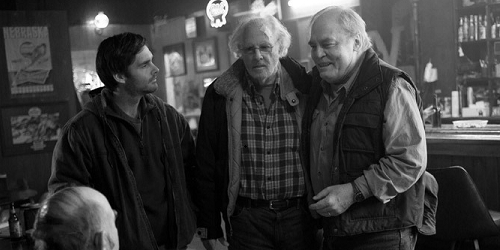
In terms of cinematography, Payne chose to film the entire movie in black and white, giving the whole story a sense of being trapped in another time, and adding to the sense of desolation exhibited by both the geography of the region and the simplicity of the town of Hawthorne, with its barren sidewalks and seemingly abandoned businesses. The whole thing feels like an emotional dead zone and the lack of human spark in all but a few citizens reflects that.
Bob Nelson’s screenplay is a simple one, devoid of plot twists or anxious moments. There are no great moments of revelation, but rather subtle hints at who Woody was when he was a young man. As such, the characters can come across as superficial and on-the-nose. But again, I think this was on purpose rather than a failing. I think he wanted to show us shallow people in a shallow land.
Toward the end, the movie started to take on a bit of a Hollywood ending feel, but although Nelson did start us down that road, he thankfully stopped himself before the point of schmaltzy no return.
All-in-all, I liked Nebraska, although I didn’t think it deserved the accolades it received at Cannes (Palme d’Or nomination, best actor for Dern), the Golden Globes (5 nominations) or the Oscars (6 nominations). It’s just not that deep a film, in my eyes.
You can find a PDF of the screenplay for Nebraska here.
Snow White more an off-grey (a review)
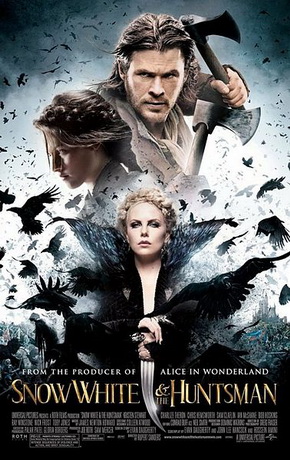
I find it difficult to appreciate a movie in isolation (its, not mine). At the same time that I strive to enjoy the movie, I also try to break down its various elements, ideally without immediate comparison to everything else I have seen.
Some movies make this easier by being truly unique stories (The Voices, for example), whereas others are either so familiar or so derivative that I find it virtually impossible to see it in isolation. The latter situation was the case for Snow White and the Huntsman, the 2012 take of the very familiar Grimm Brothers fairy tale by director Rupert Sanders.
This is not the Disney version, by a mile, but rather a much darker, more sinister take on the story of a young beauty (Kristen Stewart) condemned to death by her vainglorious step mother (Charlize Theron) who fights for her freedom in the dark woods where she meets all kinds of people and mystical creatures, including dwarves. Together, they reach a castle of renegades and Snow leads them into battle against her step mother.
So, we have the check list covered: evil step mother, check; mirror-mirror, check; bring me her heart, check; dwarves, check; poison apple, check; Prince Charming, sorta check.
Doing my best to isolate this movie from everything else, I give it a moderately passing grade. It is a fairy tale, so the dialogue hits the extremes of leaden cliché to screaming cliché.
There is no subtext to this movie…none, zero, nada, zilch. So don’t go looking for any. It is on-the-nose storytelling, which again, makes sense within the context of a fairy tale, but given that the film targets young adults to adults (much too dark for small children), I would have hoped for more.
The screenwriters offered a brief moment, where the huntsman (Chris Hemsworth) begins to let us into why he is so tortured over the death of his wife. But as soon as the moment starts, it slams shut and we are excluded from understanding the character beyond his alcoholic ramblings and Thor-like simplicity. (PS If I hadn’t seen the movie Rush, I might just think this is who Hemsworth is.)
So, where the dialogue wanes, the visuals have to take over and here, the director earns his keep. Special effects do not overwhelm the story, but instead are woven nicely into live action sequences to augment the reality. There was only one scene where I felt the director fell asleep at the SFX wheel and allowed his art director to run amok.
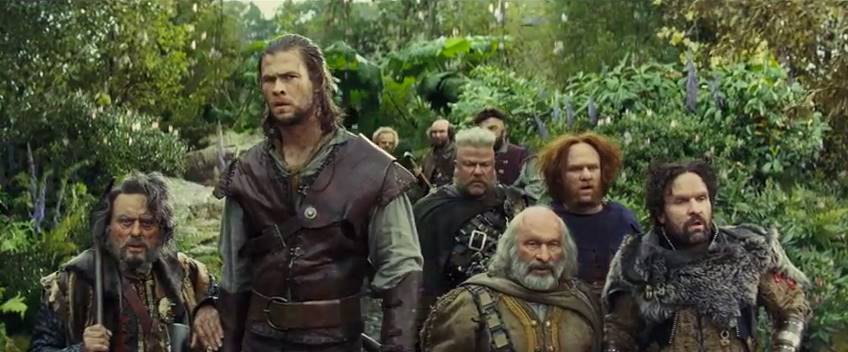
And perhaps my favourite part of the visual effects was how they took normal sized British actors and turned them into dwarves. Masterfully done. Imagine Ian McShane, Bob Hoskins, Ray Winstone, Nick Frost, Toby Jones, Eddie Marsan all about a meter tall yet perfectly proportioned, standing next to or fighting alongside Hemsworth. Don’t know how they did it…don’t want to know.
Where I found the movie particularly weak, however, was in the development of Snow White. Rather than be the protagonist of the story, I felt she was the victim of the story, literally being dragged across the countryside to avoid capture. While she clearly wasn’t the “Oh my. Dear me” victim of the Disney version, she was also not the “Girl Power” version that I think the movie promised.

When she wasn’t being rescued by one or more men, she was being rescued by a mystical inner force of which she was initially unaware and over which she had no control.
I was willing to let her be the victim over the first part of the story, but I needed her to turn around at the midpoint and attempt to kick some ass.
Now, to open the comparative flood gates, this movie has Tolkein written all over it. You’ll see dwarves walking across hill tops. Floating towns will burn. Dark forests will haunt you. Guys with swords and axes will be moody.
Now I appreciate that this is bound to happen, as there are certain pastiches that run rampant throughout fairy tales and epic sagas. I am speaking here more in terms of cinematography, however. In several parts of the journey sequence and the battle scenes, it looked like the director decided to save a few bucks by splicing in rejected footage left behind by Peter Jackson.
For what is it, Snow White and the Huntsman is not the worst 90 minutes I have ever spent watching a movie. It’s just a damned shame that the running time is 127 minutes.
Wolf of Wall Street a never-ending bore (review)

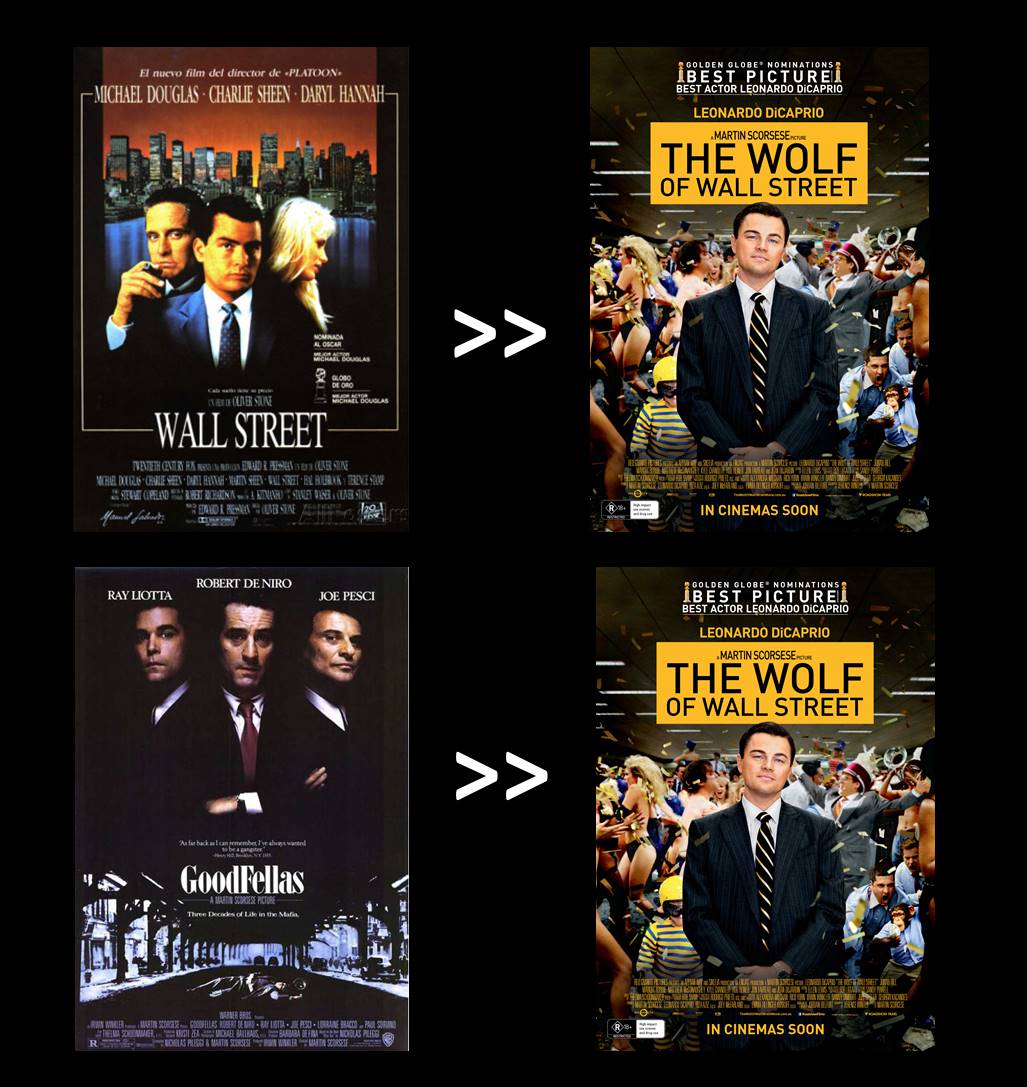
Layer the stylings of Martin Scorsese’s GoodFellas over Oliver Stone’s Wall Street and you have Scorsese’s 2013 treatise about greed in America, The Wolf of Wall Street. Unfortunately, where this should have been a wonderful blending of two great films, it was instead the mutated step-child.
Briefly, the movie follows the adventures of real-life stockbroker Jordan Belfort as he rises from the ashes of Wall Street to lie and cheat his way to fame and fortune from the then despised penny stocks market. Through a haze of booze, drugs and female flesh and relying on balls the size of the tri-state area, he pulls a fleet of nobodies into the middle of the financial maelstrom, becoming everything for which Wall Street is despised. Throw in a little money laundering and he, of course, becomes the target of an FBI and SEC investigation that ultimately brings him down.

If, from the synopsis, you don’t immediately see the influences of Wall Street and GoodFellas, you’re not really trying or you need to go back and watch them again.
I wish I could say it was just the 3-hour running time that interfered with my enjoyment of the film, but GoodFellas was 148 minutes and Wall Street was 126 minutes. Rather, I think the problem was that it felt like the movie was 6 hours long. Time seemed to drag out as though I was getting a contact high from all the Quaaludes the characters were consuming, but without the peaceful overtones.
I appreciate it was based on the life of Jordan Belfort, so perhaps the screenwriter Terrence Winter felt he had to be careful tiptoeing around the contents of Belfort’s book of the same title. But for the love of God, there was no place that Winter felt he could simply skip ahead?
When Leo DiCaprio would narrate the scenes, in some cases turning directly to the camera to do so, my mind immediately jumped to Ray Liotta in GoodFellas. Never more so than when he would try to explain how Wall Street functioned, almost mimicking Liotta’s explanation of the mob, down to the vocal cadence. The two examples below show both men introducing the troops.
And when DiCaprio would try to rally the troops, he became a bombastic Gordon Gecko (Michael Douglas), enthusiastically letting people know that greed was good…or in his case, that there was no nobility in poverty. Hell, in his narrative voice-over, he even mentions Gordon Gecko in an obvious homage that simply highlights how pale an imitator this movie is.
So I am left asking what exactly does The Wolf of Wall Street offer that the other two films didn’t.
Wealth, opulence, greed, excess? Been there, done that.
Booze, sex, drugs, violence? Watched that, saw it.
Illicit business, FBI investigations, wire taps? Old hat, nothing new.
Hubris, hedonism, idolatry? Biblical, but done and doner.
It made almost $400 million worldwide and was nominated for five Academy Awards (winning none), so people liked it.
For comparison, Wall Street earned $44 million globally in 1987 and won Douglas the Best Actor Oscar, while GoodFellas managed $47 million in the US in 1990 and won Joe Pesci the Best Supporting Actor Oscar (of six nominations).
DiCaprio has charm…and so did Liotta and Douglas.
Interestingly, I didn’t feel this one had the cinematographic snap of Scorsese’s earlier works…it didn’t feel like the camera was dancing with the actors as it did in GoodFellas.
Maybe it was simply a matter of timing. Wolf showed up just as the United States was truly starting to recover economically from the banking scandals and burst real estate bubbles, and in an almost self-abusive way, Wolf reminds Americans (and the rest of the world) of a time when money was cheap and easy. It’s definitely not a morality play, for no one is seen to suffer for their excesses.
It is the American dream seen through a tumbler of Scotch. The manifest destiny of anyone willing to gamble with the weaknesses of others. A sign that nothing has changed. That nothing ever changes.
Wall Street was a warning. GoodFellas was the rise and fall of Man. The Wolf of Wall Street is a love letter to unbridled greed.
The Voices gets a hearing (a review)
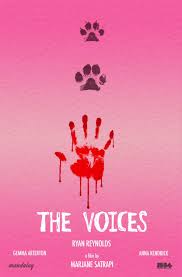
Not one to generally participate in the Toronto International Film Festival, it was a rare evening in which I found myself standing in a rush line to see a movie, but a friend of mine wanted to see the latest Ryan Reynolds film called The Voices. This is not your typical Ryan Reynolds film.
Reynolds is Jerry Hickfang, a good-natured if skittish guy who works in the shipping department of a bathroom fixtures company in Milton, the derelict remains of a town in Nowhere, USA. Jerry is a nice guy, who lives above a derelict bowling alley with his dog Bosco and cat Mr. Whiskers. And of course, Jerry has the hots for office cupcake Fiona, a misplaced Brit with a craving for bigger things, played by Gemma Arterton. For her part, Fiona finds Jerry a little creepy, but is not above using his puppy lust to get a lift during a rain storm.
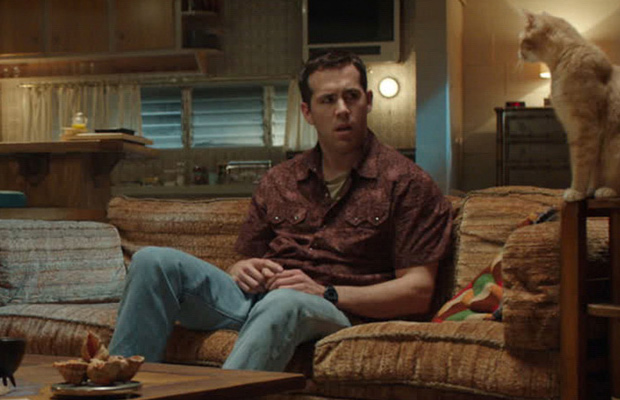
Jerry Hickfang (Ryan Reynolds) struggles to understand Mr. Whiskers’ advice
Oh, and the other thing you probably need to know about Jerry is that he is in court-appointed psychiatric treatment, isn’t really good about taking his meds, and has a family history of hearing voices, but that’s not something he likes to talk about.
So far, so harmless. But after a literal run-in with a deer who begs Jerry to finish him off, the blood-letting never really stops and the rest of the movie becomes a giant slip-and-slide of mostly implied blood and offal.
So, The Voices is a thriller…and a drama…and a comedy…and a farce. You squirm in revulsion (never really reaches horror) as often as you LOL.
Director Marjane Satrapi (who brought us Persepolis) attended the screening and describes the story as completely fucked up. She said she was mesmerized by the screenplay and desperately wanted to meet the man who penned it to see what messed up human could conceptualize such a story. So she was surprised when she met Michael R Perry, a tall normal-looking fellow.

Marjane Satrapi
As Perry explained, he wanted to look at the life of someone of multiple personality disorder from their perspective rather than society’s. And in that, he succeeded.
With Satrapi’s help, the two clearly crafted the oddly idyllic yet troubled world within Jerry’s mind, giving the audience only the briefest glimpse of how the rest of the world saw things. With Jerry, it was all perfect love and butterflies. To the rest of us, it was squalor and pain.
Where the story fell down for me was in explaining why everything went wrong so suddenly. In writing circles, we talk about “Why today?” Why does your story begin today, at this moment, and not 6 weeks ago or 5 months from now? In this case, what was the event that caused Jerry to go from lovable schmuck to… Some might suggest it was the deer accident, but even Mr. Whiskers called that bullshit
The other place I felt let down was that the conflict never escalated, it merely accumulated. Rather than find interesting ways for Jerry’s mania to manifest itself, the writer simply repeated the same event over and over, as though each of the characters voluntarily walked into a wood chipper.
And I don’t know if the ending was presented as written or was something that blossomed out of Satrapi’s mind, but it was lazy and bordered on the ludicrous. It was a bad after-taste on a film that had merits.

Ryan Reynolds, Gemma Arterton, Anna Kendrick
On the plus side, Ryan Reynolds was amazing to watch…this was not the charming goofball romantic comedy, although Jerry was sadly charming when he wasn’t obviously tortured by his snarky brogue-spewing cat. (NOTE: Bosco and Mr. Whiskers easily have the funniest lines in this film.)
Gemma Arterton’s Fiona was a delight. She was delicious to watch as the voluptuous vixen whose biggest fear in life is being bored. Problem solved!
Anna Kendrick (Up in the Air), as tier-two love interest Lisa (see, the writer even repeated this beat), was largely wasted. Her character was pretty two-dimensional. As nice girl looking for a nice guy, her function was to have Jerry explain his condition to the audience (exposition disguised as opening up).
The Voices is definitely worth seeing, if only for what it attempts to do. I can’t help feeling, however, that if they had rewritten the screenplay a few more times, they would have achieved their goals much better than this.
My recommend (and that of my friend) is that this is a Cheapie Tuesday movie (or whatever your local half-price day is).
PS I was unable to find a trailer for this movie, so I offer the following interview with Satrapi at Sundance London…I will warn you, however, that it does include a lot more info about the plot than I gave above.
Ten books that influenced my life
There is a thing going around Facebook these days—electronic chain mail, really—where friends invite each other to list the 10 books that have stuck with them through life. Thanks (??) to my friend Nancy for inviting me to participate.

The Complete Works of William Shakespeare
Since my first introduction to the works of the Bard in Grade 9 (Merchant of Venice) through my many pilgrimages to The Stratford Festival in Southern Ontario, I have been entranced. No matter what is going on in my life, I find solace and refuge in the pages of the Master’s folio. Favourite play: Henry V. My lone tattoo: Julius Caesar V.v.73.
His life was gentle, and the elements
So mix’d in him that Nature might stand up
And say to all the world ‘This was a man!’
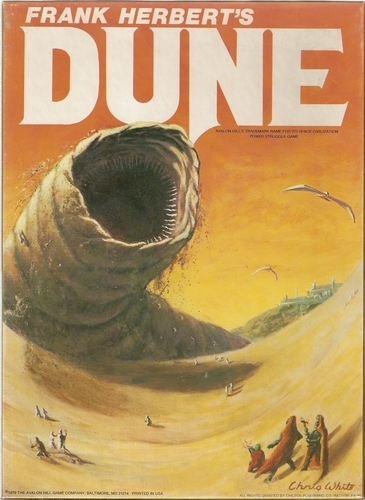
For such a short book—and particularly within such a long series—this is a novel I return to on a regular basis. The story is woven so tightly and yet offers mythic proportions. The language is at once simple and profound…and incredibly quotable. Every time I read the story, I find a new interpretation.
I must not fear. Fear is the mind-killer. Fear is the little-death that brings total obliteration. I will face my fear. I will permit it to pass over me and through me. And when it has gone past, I will turn the inner eye to see its path. Where the fear has gone, there will be nothing. Only I will remain.
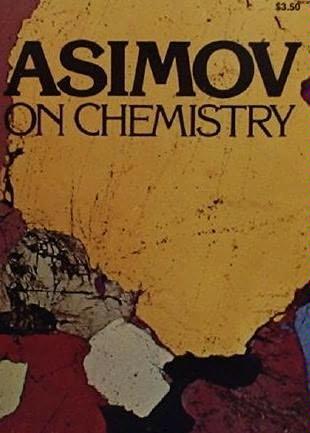
Asimov on Chemistry – Isaac Asimov
To a budding geek, this book and the next on my list were manna from heaven. Although I was a fan of Asimov’s fiction, I found a home in his look at various subjects in science (and eventually theatre and religion). He explained the universe to me in a way that no one else could and gave me the tools to extend that learning to others (whether they wanted to hear it or not).
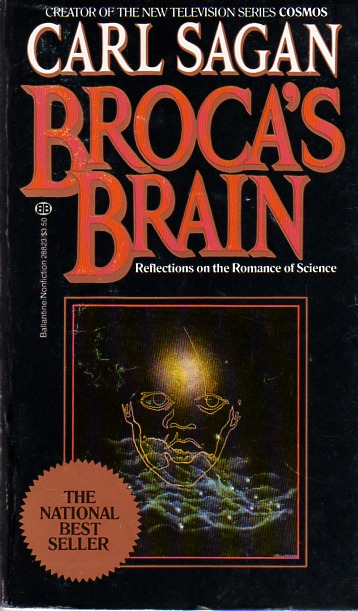
While Cosmos was the book (and television series) that everyone else was talking about, this was the book that first grabbed my attention. Like Asimov, Sagan had a way of contextualizing science that few others have mastered, offering not just a series of facts, but the stories of the people behind those facts, including the dearly departed Paul Broca. Asimov and Sagan likely influenced my decision to move into science writing.
If not for my abhorrence of discomfort, I would be living on the Canadian tundra today, studying and communing with the wolves. That’s how powerful this book was to me. Many criticize Mowat for fabricating many elements of his non-fiction and particularly in this story, but I don’t really care because he grabbed a young mind (mine) and transported me into the minds of the wolves he studied for the Canadian government. To see these creatures as more than just vicious wild dogs was life-changing.
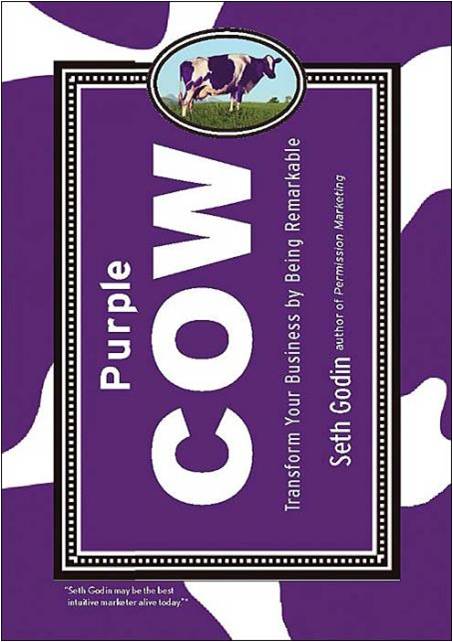
Drive past enough farm fields filled with cows and eventually you cease to see them. Drive past a purple cow, however, and you stop. In short, the premise of a book of blog entries that challenges the reader to skew their view of the world with an eye to drawing the attention of your audience. Less an epiphany than a confirmation of what I already believed, Purple Cow told me there was merit in my mania.

Popular Natural History – Rev. J.G. Wood
Published in 1885 (my edition), the content of this book is not only dated (it includes a discussion of the dodo), it is often outright wrong. But it holds a special place in my heart because I received it from my great-grandmother and it initiated my fascination with antiquarian books, something that continues to this day despite my inability to financially support it. These books—particularly the non-fiction—open a portal into another time and another way of thinking, much as the rest of my book collection will in 100 years.

The Love You Make – Peter Brown & Steven Gaines
The murder of John Lennon in 1980 took what was a passing awareness of The Beatles and turned it into an obsession for me. I had heard the music, I had seen the movies, but I was completely unaware of their context. Thus, the biography of the Fab Four, written by insider Peter Brown (…called to say, you can make it okay, you can get married in Gibraltar, near Spain), blew the lid off my ignorance, pouring kerosene on a flame that has not died in the intervening 34 years.

The Elements of Style – Strunk & White
As a writer and editorialist (I will not call myself a journalist…different craft), you might suspect that this book is close to my heart because it helped me become a better writer. And you would be DEAD WRONG. Just the opposite, in fact.
Instead, this book informed me that my new Editor had absolutely no respect for my writing nor that of my writer/editor colleagues. In our first staff meeting, she cheerfully told us she was looking to make some changes in our magazine and then gave us each a gift of this book. In my eyes, it was tantamount to handing Dostoyevsky a first-grade reading primer and suggesting he rewrite Crime & Punishment in the format of Mr. Whiskers (no self-aggrandizing hyperbole intended). I moved on.

Chambers Dictionary of Etymology – Robert K Barnhart (Ed.)
As a word-jockey, history-buff and all-around geek, I can never be sure if my wife’s gift of an etymology book was a reward or a well-disguised pun-ishment (the hyphen should give you a clue as to why she would punish me). Regardless, the book has served me well as I endeavour to sculpt language to fit my needs, crossing words at their roots to develop new varietals that colour an otherwise mundane existence.
BoJack-sh!t (a review)

Unless this is a satire about satires, I don’t get the new Netflix Original Series BoJack Horseman.
Ostensibly, the zany life of a washed up sitcom star from the 90s, who also happens to be a horse, who is trying to find meaning in a life of idle emptiness, the show is instead an endless string of really bad puns and lame jokes about anthropomorphic animals and Hollywood, punctuated with long speeches to highlight the irony of a scene or episode.
I am surprised the character giving the speech doesn’t hold up a sign reading “Ironic part” or “Satirical condemnation of status quo” just in case the audience was too stoned to realize that’s what the speech was about.
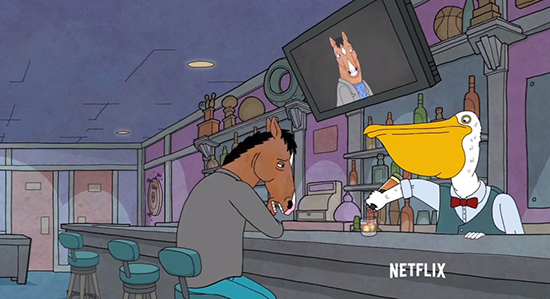
Episode 3 starts with an establishing shot of a bar called The Pelican. We then cut to BoJack sitting at the bar which is being tended by a…wait for it…pelican. Or in Episode 2, BoJack has a run-in with a Navy Seal who is a…here it comes…actual seal. Oh, and at the apex of humour, whenever BoJack’s girlfriend/agent puts him on hold, he listens to music from Cats…oh, did I mention his girlfriend/agent is a cat? Them’s the animal jokes, my friends.
There are attempts at social commentary, of course. In Episode 3, BoJack’s memoir ghost writer tries to make him feel better about a friend by claiming she was a victim of her circumstances and the pressures of society. But silly BoJack…he misunderstands this to mean that no one is responsible for their actions and that the fault universally lies with society, so he can act like a jerk and it’s not his fault. Silly BoJack.
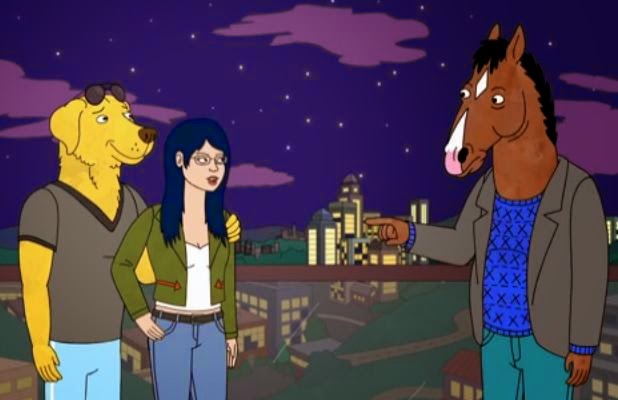
The voice talent is, well, talented. Alison Brie (Madmen, Community), Aaron Paul (Breaking Bad), Amy Sedaris (Strangers with Candy), Paul F. Thompkins (No You Shut Up!) and Will Arnett (everything else)…these people can act.
Show creator Raphael Bob-Waksberg is a mystery to me. An actor and writer, all I can really find out about him is he a member of a sketch comedy group called Olde English.
And the more I read about him, the more I wonder if my original comment wasn’t dead on…this may just be an amazing meta joke perpetrated by a very funny man. Or it’s just not very good.

Because I only lose 25 minutes of my life at a go, I will continue to watch to see if it gets better…dear God, let it get better…or let me in on the divine joke of this comedy.
Lessons from bad movies – The Canyons
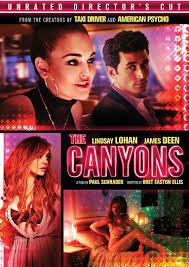
I believe that you can learn something from every experience you have, and because I am trying to learn more about screenwriting and films, this means watching bad movies. Thus, I was intrigued when I saw Netflix was showing a film called The Canyons.
Written by Bret Easton Ellis (American Psycho) and starring Lindsay Lohan and porn-star-going-legit James Deen, The Canyons shows the decay of Hollywood through the eyes of a struggling young actor who is still in love with his former girlfriend who is now the adornment of an unbalanced but oh-so-controlled producer on a trust fund. Paranoid from birth, the producer eventually learns of rekindled flames between the two and slowly his self-control ebbs. To tell you more would be to spoil the (complete lack of) surprise in this film.
Although the story was straightforward and highly predictable, I have to admit to being confused by one very big thing: I don’t know who the protagonist is. Through whose eyes is the audience supposed to see this story?
Lindsay Lohan’s Tara (the girlfriend) shares almost equal screen time with James Deen’s Christian (producer) and Nolan Gerard Funk’s Ryan (actor), and the story’s perspective seems to shift on a whim. If I go purely by a scale of which character left me feeling least icky in their behaviour, I would have to say Ryan was the protagonist. But he feels more like an unwitting pawn in this film.
Interestingly, however, if I was forced onto a limb, I would actually say Christian was the protagonist despite his antagonist schtick. As a character, he is reminiscent of American Psycho’s Patrick Bateman…possibly his baby brother…although there is no comparison between Christian Bale’s performance and James Deen’s.
Speaking of which, the wooden performances of the actors don’t help my quest for a protagonist. (At her best, Lohan’s glamour-gone-gory Tara was reminiscent of Ann-Margret’s characters in Carnal Knowledge and Tommy at their most strung out.) Without distinct emotive clues and any sense of subtext, I really have no clue what any of the characters hopes to accomplish…there simply aren’t any goals, again with the possible exception of Ryan.

To continue piling on, I would be intrigued to find out what kind of movie director Paul Schrader thought he was making.
On the one hand, with rampant over-use of black & white images of derelict movie houses, it seemed Schrader was going for art-house film, using the photographic decay as a metaphor for the social decay of Hollywood (this is the man who wrote Taxi Driver and directed American Gigolo).
At the same time, his rampant insertion of lengthy scenes of graphic sex gave the film a B-movie, soft-core porn feel. Here, Schrader may have been going for a moral decadence metaphor, but if so, I think he failed terribly. Instead, we were left with a humping morass of buttocks and breasts that a 13-year-old boy couldn’t be bothered to whack off to.

But the one scene that truly grabbed my attention was a lunch conversation between Tara and Christian’s assistant Gina, played by Amanda Brooks. What caught my attention, however, was not the scintillating or captivating dialogue (there wasn’t any) or the repressed subtextual exchanges (they were incapable) but rather the fact that even the camera was unable to pay attention to the scene.
On either close up, the camera angle perpetually slid to the left or the right, and sometimes back again. Not panned to capture a background element. Slid, as if someone had forgotten to tighten the flange that holds the camera to the tripod. The camera literally nodded off.
So then, if this movie was so bad, how could I learn a lesson?
The lesson of The Canyons is that if you can get an actor of sufficient name recognition who is trying to prove something (e.g., I’m not washed up) interested in your script, you can get anything made.
Postscript:
As I looked up some background facts on this movie, I learned that The Canyons was the first film to be largely funded via crowd-sourcing. Given the performance of subsequent crowd-sourced films like Zach Braff’s Wish I Was Here (poor) and Kristen Bell’s Veronica Mars (modest), I am beginning to wonder if there isn’t some merit in studios having some influence on whether and how a film gets made.
 createdbyrcw