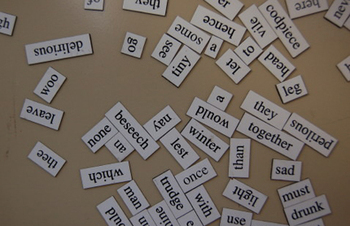
Feel this, would you?

I used to stare at this poster trying to gauge what I felt...sometimes it worked, sometimes not

I used to stare at this poster trying to gauge what I felt…sometimes it worked, sometimes not

I have to admit I find it difficult to write characters. No create them, but to actually make them come alive on the page.

To develop a truly realistic character, you need to be able to give a sense of his or her emotional state, and this is where the wheels tend to fall off for me.

For most of my life, you see, I have focused on facts, not feelings. I might even go so far as to say I have completely shut feelings out of my life—or at least as completely as possible without (yet) ending up in prison as a socio- or psychopath. Thus, I have been ill-equipped to deal with the myriad emotions that form the human condition.

If I look or think back to the writing of my youth, I seemed to be able to manage moral outrage and on occasion, actual rage, but any other emotions, no matter to what extreme, came across as flat. And forget any of the subtle shades in between. I did not do subtlety.

About the only character I could develop was the noble stoic who was a tad self-involved. Hmmm. Seems familiar somehow.

Lacking experience with these various emotions, how could I hope to bring them to my characters?

I’ve never believed emotions were something you could study in the traditional sense.

If I want to understand a polar landscape, I can go online or check a variety of books. Determine the behaviour of a jet that loses one engine? I’m sure there’s a Wiki for that. But emotions, by their very nature, preclude such an academic approach.

Ah, but what about other books and movies?

Good in theory, but without a personal foundation, you run the risk of simply reproducing Glenn Close’s interactions with the rabbit or Peter Lorre’s fear of Moroccan Nazis.

No, to be able to realistically reproduce emotions in my characters, I needed to have experienced them to some extent in my life. Call it Method Writing, if you wish.

Luckily, for a variety of reasons having nothing to do with screenwriting, I have been accessing my emotional centre over the last couple of years. Through a challenging process of self-examination and “coaching”, I have started to feel—allowed myself to feel—emotions like sadness, irritation, pleasure, enthusiasm, boredom and the like. And the impact in my writing has been immediate, if continuing to develop.

When my character is angry, I find myself getting angry. When my character feels loss, I can remember when. Ecstasy? I’m all over it (the emotion, not the chemical).

And I’m not the only one who notices this. As friends, colleagues and classmates read my material, I sense they too experience the emotional rainbow. And sometimes they introduce feelings I never envisioned for a scene.

This isn’t a threat to what I wrote. It is a bonus prize I receive for paying attention and sharing, for they have found something in my words that I did not see or did not know I was channeling.

Maybe it’s gold. Maybe it’s lead. But always, it is valuable.

Like my characters, I am still a work in progress, but at least I feel like I’m progressing.

(Image is property of its owner and is used here without permission. I don’t know how I feel about that.)

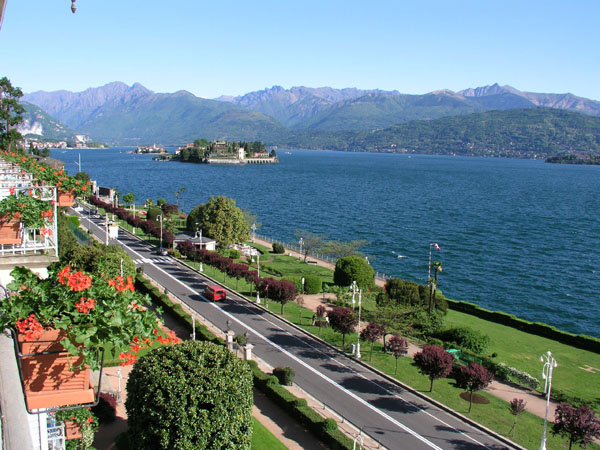
Do you see what I see?

How can you NOT want to describe this place?

How can you NOT want to describe this place?

Now that I have worked on several screenplays, which I have shared with a number of friends and fellow writers, I have come to a conclusion: I am a novelist.

Fret not, fellow travellers. I say this not to suggest I will cease to write screenplays but more in recognition of an inherent weakness in my screenplays, or perhaps more accurately, in myself. I am addicted to narrative.

The problem is I instinctively write what I see, even when I only see it with my mind’s eye. If I were a painter, I would own brushes that only had one or two hairs. The concept of a paint roller would be anathema.

Nothing in a scene is unimportant to me. I see people, things, phenomena in terms of metaphor, although I do my best to avoid poetry.

I cannot simply write: The boat bobbed wildly on the waves. (Even writing that line now was taxing to me.)

Instead, I’m inclined to write: The battle-weary skiff, a patchwork of wood and fibreglass, tossed helplessly on the ocean swells, each wave of its own purpose, refusing to work together toward anything resembling a current.

The former is what is happening. The latter is how I envision it. To me, everything is a character in a story—an antagonist, an ally, a victim—and as such has its own story arc, however small.

I also want to make sure that my reader “sees” the movie I would like to make—the challenge of a pictorial and aural medium presented literally. I want the reader to “feel” the scene before the first word of dialogue is spoken, both to establish the mood of the scene and give a sense of how the line is said.

Unfortunately, in my zeal to be informative, I instead become onerous or tedious. My screenplay becomes a challenge to read as long tracts of narrative slow the story to a crawl. Instead of making it easier to read my manuscript, I’ve made it more challenging and less desirable.

I was once accused of writing a travelogue of Northern Italy in a screenplay. Oh, what I had written was beautiful and made some people dream of travelling to the region—Lago Maggiore—but 90% of what I had written was completely unnecessary to the telling of the story.

So, what to do?

As of this moment, my writing process is my writing process, and I believe that any attempt to significantly change it would simply increase my challenges in writing at all. No, better to have written a first draft badly than to have never written.

Instead, I have chosen to rely on this little miracle I have discovered. They call it Draft Two. This will be my chance to go through my screenplay with a harsh eraser, and remove all of the lines or description that is not absolutely necessary to tell my story or to explain a character’s behaviour.

Sure, this may necessitate some rewriting of dialogue so that I don’t end up with mile-long verbal tracts. But in all likelihood, these speeches were too long and in desperate need of shortening.

One step at a time, though, for today, I continue to write Draft One of my screen-novel.

(Image is property of owner and is used here without permission, but plenty of description if you read my screenplay.)

Child’s play isn’t child’s play

Colloquially, when someone—an adult—states that some activity was child’s play, they are trying to convey that the action was simple or easy, that it took no effort. And yet, their use of the expression couldn’t be more wrong.

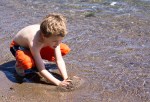
I had the pleasure of spending the afternoon yesterday with a few friends and their kids at the local beach. The kids ranged in age from infant to teen, although the majority were in the 3-5 range, I think—at my age, anyone under 30 looks 12.

Regardless, when lunch was over, the younger set and a few doughy adults headed to the water, where things got serious. Not for the adults, you understand, whose toughest job was to retrieve a tossed flip-flop from the frigid waters of Lake Ontario. No, it was at this moment that the child’s play began in deadly earnest, for four of the middling sprites decided to build a canal system that would have made the Panama and Suez engineers blanch.

Miran, the eldest of the group, became overseer, designing a series of causeways that challenged the imagination. Mounds of sand became islands in the stream. Canal walls were carefully constructed, through trial and error, to ensure sturdiness in the face of aquatic onslaught.

Cole, the lone boy in the group, became a human bulldozer, carving access channels to the lake itself that would help fill the channels with each invading wave. Samantha and Hana, meanwhile, worked bucket brigade, supplementing Cole’s efforts with frequent trips between lake and canal system.

This was not child’s play, despite it being play by children.

With each set back—a minor sand slide, a misplaced deluge, pee break—there would be a momentary expression of frustration followed quickly by brief meeting to discuss options and then an action plan to right the wrong. A lot of adult companies could stand to learn from this lesson.

This is not to say the process was flawless. At one point, Miran decided that she wasn’t crazy about the canals under construction and instead wanted a massive lake, which would have necessitated the removal of a large island. A new corporate executive is born.

She was quickly talked out of this by her subordinates who felt challenged enough to complete the canal system, let alone initiate island removal.

The children worked tirelessly for an hour or so and made substantial headway, but like all good infrastructure projects, senior management (parents) eventually got bored (and not just a little sun-stroked) and wanted to head back to the house.

Reluctantly, the children packed up shop and abandoned the construction site. Unbeknownst to them, however, as quickly as they left the site, another altitudinally-challenged crew appeared to continue the job.

This is how I want to live my life; playing with fervent intensity. I accept there will be momentary setbacks—as I approach 50 years, pee breaks are a necessary evil—but I will not let those setbacks deter me in my goals or disturb the pleasure I get in pursuing them.

I am embracing child’s play 2.0.

Something from nothing

“I don’t know what to write about.”

It is the clarion call of procrastinators worldwide.

There is this pervasive belief that if you are not writing about something then you are not really writing. As though words have no power, no authority unless they are tied to some portentous subject. Free association, it would appear, is not free. And yet, ironically enough, nowhere is this written. It is a myth.

It is just as valid to write about nothing as it is to write about something. To make no conjectures, to postulate no theories, to hold no opinions aside from the personally pleasing juxtaposition of two or more words.

Just as people can speak forever and yet say nothing of lasting import, so too can people wax jibberish and yet speak volumes.

In painting, we can view both delicately rendered images of nature in all its glory (my personal favourite is Robert Bateman) or the seeming chaotic void of splatter on canvas. Both are art, but speak to different tastes and preferences. Why too cannot words, which are merely the medium that in and of themselves hold little meaning?

Write about nothing. Tap into your inner anarchist, your inner artist, to express yourself in splashes of verbiage that may mean little in isolation but so much more in toto.

Embrace the freedom and release the fear that comes from working without a destination or plan. Fill the void with noise of your soul and spirit, only to discover the noise is in fact a song the tune of which you don’t yet recognize.

I think you’ll find that in writing about nothing, you will find something, and you will stand amazed.

Nothing is rarely nothing

Nothing is rarely nothing

I had no idea

Ideas are everywhere, but they don't always look like ideas

Ideas are everywhere, but they don’t always look like ideas

“How the heck did you come up with that?”

It’s a common question I get when talking about my latest ideas, and for years, my answer was a resounding “I dunno…just came to me.”

To a limited extent, the response is correct, but it suggests the process of ideation is much more passive or deus ex machina than it really is.

Ideas surround me, as they do you. They are in the nouns, verbs, adjectives and adverbs that make up our moment-by-moment reality. They are in the streetcar in which I presently ride, the streets down which I presently travel.

In the dark-haired beauty two rows before me who is fixated on adjusting her hair rather than close the window through which the hair-mussing breeze blows. And in the armada of free-range humans who occupy the parkette we just passed, proving themselves houseless rather than homeless.

The challenge for many would-be writers is that these are starting points for ideas rather than fully fledged stories or subjects. These are the writers who wish to be reporters or chroniclers rather than explorers.

Think instead of these idea kernels as pieces of clay, as something that can be moulded into any of a thousand other shapes. Take the kernel and play with it for a while. Give yourself a chance to see what it feels like, smells like, sounds like, tastes like.

Twist it. Turn parts of it over. Reverse its halves.

What is something were feasting on Toronto’s homeless? Imagine a mobile service that will do your hair and makeup while you commute to work. What if a terrorist planted a bomb on a streetcar and it had to travel no slower than 50 mph? Or an aesthetician to the deceased in From Hair to Eternity.

All of these are probably bad ideas, but the ideas have evolved.

Twist it again. Mould it again. Press it onto something else, like so much Silly Putty, and see what sticks.

Keep the good. Set aside the bad. But keep working it until something you really like begins to show itself.

You have no idea the wonders you will discover.

Give up or surrender

Image

You’ve hit a wall. You’ve banged your head on your desk for an hour; two; ten. Staring out the window—your go-to maneuver for the last decade—has gotten you nowhere. Is it time to give up?

Might I recommend surrendering instead?

In case this sounds confusing, there is a difference between the two options.

Giving up is about accepting failure. It’s the belief that there is no solution to your problem or if there is a solution, you’re not the one who will come up with it.

Giving up is about telling yourself that you’re not good enough, strong enough, smart enough to solve your problem. It is defeat.

Surrender is different. Rather than giving up, you’re giving over; ceding control of the situation to whatever power you are most comfortable with—God, time, the elements, the universe.

Surrender is about believing that not only is there an answer to the problem, but also you are capable of delivering that answer—just not without help.

We all know what giving up looks like. It’s turning off the laptop with a frown, and maybe a sigh with drooping shoulders. And almost always, it comes with a fear or reluctance to turn the computer back on.

Surrender is calmly closing the laptop of letting it go idle while you take a walk, read a book or vegetate in a coffee shop. It can even including reviewing your work-to-date if you focus on what’s working, what you’re happy with.

The answer is there for you to pluck, but it’s waiting for you to drop your focus. Like that white spot on the inside of your eyelid that moves every time you try to look at it, the answer doesn’t like your stare, so it hangs in the periphery.

That may actually be source of some of your frustration: the knowledge or sense that the answer’s nearby, but you can’t see it.

Don’t give up. You can do it.

You just need to have faith in your universe and surrender the control you never really had.

Do it

Image

Do it now!

Don’t think about it.

Go!

Don’t hesitate.

Aaaand now!

You’re stalling.

Now, Now, Now!

Suckage is encouraged.

Make it happen!

Don’t let fear stop you.

You are the [insert action]!

Do or do, there is no failure.

Dooooooo it!

It’s better than sex (unless you’re doing the sex, in which case, it is exactly like sex)

Go-go! Get’m-get’m! Ooh-aah!

Yay you!

(Image is property of owner and is used here without permission because I do’ed it!)

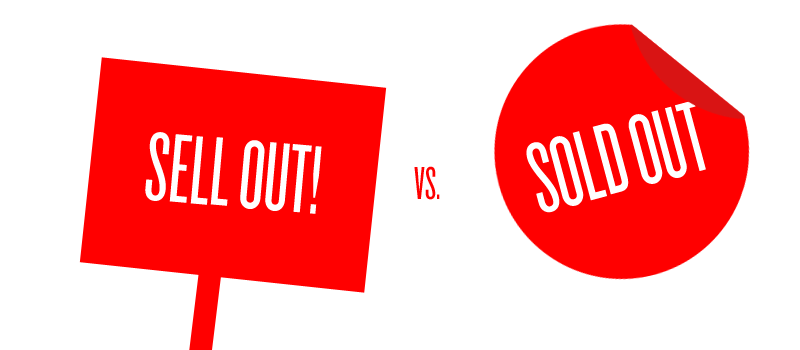
Selling out versus selling

Image

Over the last few years, I have met a lot of artists of various stripes, and almost to a person, one of the major fears each has is the belief that to become a success and to make a living with their Art, they will have to dilute that art. They’ll have to sell out. Some simply fear it in quaking silence, while others fend it off with flecks of foam like some rabid dog chained in a backyard of their own making. To each, their own.

You have a vision for your Art and you must respect that. It is because you are doing your Art that your Art is different from anyone else’s. By the same token, if you do hope to make enough money to keep at it, you must be able to express your Art in some commercial way.

Admittedly, with technologies such as self-publishing (formerly known as vanity publishing) and phones that offer better cinematography than anything Cecile B could have dreamt of, you can go it alone as no one before you could. You can make all of your dreams come true, but the question is, will those dreams come true? Will anyone beyond your mom, your partner and a few close friends bother with your Art once discovered?

I’m not saying to make a living you have to sell out. Don’t despoil your craft in the name of crass commercialism. If you’re truly an artist rather than a hack, it wouldn’t serve your purposes and you’d come to loathe the thing you once loved.

No, I’m talking about finding a line of compromise between your vision and the market’s.

As this is particularly close to my heart right now, let’s say that you’re writing a screenplay. First, congratulations. There may be thousands of screenplays out there, but I am confident there are billions of unfinished scripts and half-thought ideas.

Having completed your screenplay, however, is only the first step. Now you’ve got to share your creation with dozens of other people, each of whom will want to put his or her stamp on the work.

Story editors, readers, producers, directors, actors, financiers, market researchers. To a greater or lesser extent, each of these people has to buy into what you’re selling before your movie will get made.

Sure, if your film is small with a very modest (miniscule) budget, all of these titles may be handled by 3 to 6 people, but even then, you’ll likely run into issues with distribution.

I’m not saying it can’t be done. History is replete with artists who decided to go it alone. But the unwritten backdrop of that history is swamped with the myriad films sitting idle on bookshelves or hard drives, or competing with cavorting kittens and bad karaoke on YouTube or Vimeo.

If you want to share your Art—and I’m betting that you do—then you want outside thought, you want feedback, you want people to contribute.

Don’t look at barriers, but rather seize opportunities to engage. These people are your first audience. Respect them. Use them. Understand them. Do this and you’ll be well on your way to realizing your vision in their world.


(Image is property of owner and is used here without permission because I refuse to let anyone sell out.)

Adapt or die

Image

Recently, I’ve read a couple of screenplays based on novels, and with this albeit low number of examples, let me start by saying thank goodness I have yet to find a book I wish to adapt for screen. The process, it would seem, is tedious and fraught with perils.

Odds are, especially if you are just starting out as a writer, you’ve chosen to adapt a specific book because you love it.

You love the way it is written. You love the story it tells. You love the characters. You may even love the paper on which it’s printed or its cover art.

Congratulations. You’re doomed.

I say this not to be mean but to point out that the book was written as a book for very specific reasons. The format and structure of a novel is incredibly different from that of a film.

At its simplest, you have the space in a novel to indulge yourself in narrative and character introspection. More simply put, you can describe a setting or reaction in such detail that if linearly translated to a screenplay, it would result in ten minutes of film focused exclusively on waves rolling across a beach or on the angle of an eyebrow raised over the left eye of your heroine.

Even simpler, novels are verbal, ironically, while films are visual.

And unless you’re planning on running a voice over throughout your movie—please say no—I have no idea what your characters are thinking. I can try to guess from their facial expressions, but it is a guess and will have as much to do with how easy it was to find a parking place in the megaplex as it does with the actor’s talent.

The novel could afford to be 500 or 1000 pages. Your screenplay can’t.

I love Kenneth Branagh. I love Shakespeare. Branagh did a very linear interpretation of Hamlet for film. I was bored. Mel Gibson’s Hamlet? Held my attention and was entertaining. [Compare the two “alas, poor Yorick” scenes linked here.]

The difference? A very sharp editorial knife.

So, I am going to ask you to take the thing you love and hack it. Cut it with broad strokes and wild abandon. This is no place for finesse.

This isn’t about trimming paragraphs. It is about slashing subplots or entire chapters. It is about burning away all of the decorative niceties until you reach the essence that turns your crank.

Be cruel. Be ruthless. Be honest.

Take that Sistine Chapel and reduce it to the handful of bricks that make you sweaty; that keep you coming back time after time.

It will feel like murder. In some ways, it is. But it’s murder for the greater good, because once you’ve hit that core, you can begin to rebuild. You can start to rescue some of the elements you set aside earlier or add new ones that are truly unique to your vision.

What is that core? I don’t know. That’s for you to decide.

Maybe it was the setting. Perhaps it was the relationship between two characters.

Whatever it is, find it and make that your story. That is what you love. That is why you keep coming back for more.

Honour that and you’ll have a screenplay worth turning into a movie.

(Image is property of owner and is used here without permission. I’m adaptable that way.)

Faith

Image

Faith is believing when common sense tells you not to.

– Fred Gailey (John Payne), Miracle on 34th Street


We all have doubts.

Doubt that we are good enough to accomplish our goals. Doubt that our goals are even realistic or rational.

And sadly, most if not all of us have had or currently have a long line of people who are more than willing to feed those doubts with their own. Often, their superficial motive is to be supportive, to help cushion the blow of failure, to save you from certain doom. But more likely, their motive is to take comfort in the belief that your doubts make it okay for them to have doubts about their own lives.

But, if you’re lucky, you have those special few in your life who have absolutely no doubt in your future success. They’re the ones who listen to your ideas with a smile, an eager nod, and perhaps some sage constructive advice to help make your goals even more realistic.

The latter group are the people you need to heed, for they see the potential of your efforts in the absence of your fears and just as importantly, in the absence of their own.

I am not a religious man—although I have become quite spiritual—so faith has never been top of mind for me until recently. It’s not that I didn’t have faith, in hindsight, but rather that I had a very narrow definition of it. And, like my friends for me, it was easy to have faith in things external. It was faith in myself that I lacked.

More recently, however, I have realized that faith isn’t about rejecting the possibility of failure. Rather it is about accepting the possibility of failure but with the further understanding that failure does not mean your journey has ended.

Failure does not put your destination off limits. It is merely a diversion from your original path to that destination.

I know I am a good writer and story teller, but I also know I have challenges ahead in translating those skills into the money I need to make to continue writing and story telling.

Faith comes in telling myself (and believing) that through hard work on my part (e.g., networking, classes, practice) and unknown forces outside of my control and understanding, those challenges will dissipate at the appropriate time.

Like those well-intentioned naysayers, drawing a line in the sand about giving up (e.g., going back to my former career) only gives voice to my doubts. I will not allow myself to do that anymore.

I have faith that I will endure failure and that I will succeed at whatever it is I am to accomplish, no matter what street I live on.

I wish you that faith as well.


For an interesting piece on questions about talent and faith therein, check out this post from Plotting Bunnies: The ingredients of Writing: Talent…?

(Image is property of owner and is used without permission because I have faith they’ll get my point.)