Selling out versus selling

Image

Over the last few years, I have met a lot of artists of various stripes, and almost to a person, one of the major fears each has is the belief that to become a success and to make a living with their Art, they will have to dilute that art. They’ll have to sell out. Some simply fear it in quaking silence, while others fend it off with flecks of foam like some rabid dog chained in a backyard of their own making. To each, their own.

You have a vision for your Art and you must respect that. It is because you are doing your Art that your Art is different from anyone else’s. By the same token, if you do hope to make enough money to keep at it, you must be able to express your Art in some commercial way.

Admittedly, with technologies such as self-publishing (formerly known as vanity publishing) and phones that offer better cinematography than anything Cecile B could have dreamt of, you can go it alone as no one before you could. You can make all of your dreams come true, but the question is, will those dreams come true? Will anyone beyond your mom, your partner and a few close friends bother with your Art once discovered?

I’m not saying to make a living you have to sell out. Don’t despoil your craft in the name of crass commercialism. If you’re truly an artist rather than a hack, it wouldn’t serve your purposes and you’d come to loathe the thing you once loved.

No, I’m talking about finding a line of compromise between your vision and the market’s.

As this is particularly close to my heart right now, let’s say that you’re writing a screenplay. First, congratulations. There may be thousands of screenplays out there, but I am confident there are billions of unfinished scripts and half-thought ideas.

Having completed your screenplay, however, is only the first step. Now you’ve got to share your creation with dozens of other people, each of whom will want to put his or her stamp on the work.

Story editors, readers, producers, directors, actors, financiers, market researchers. To a greater or lesser extent, each of these people has to buy into what you’re selling before your movie will get made.

Sure, if your film is small with a very modest (miniscule) budget, all of these titles may be handled by 3 to 6 people, but even then, you’ll likely run into issues with distribution.

I’m not saying it can’t be done. History is replete with artists who decided to go it alone. But the unwritten backdrop of that history is swamped with the myriad films sitting idle on bookshelves or hard drives, or competing with cavorting kittens and bad karaoke on YouTube or Vimeo.

If you want to share your Art—and I’m betting that you do—then you want outside thought, you want feedback, you want people to contribute.

Don’t look at barriers, but rather seize opportunities to engage. These people are your first audience. Respect them. Use them. Understand them. Do this and you’ll be well on your way to realizing your vision in their world.


(Image is property of owner and is used here without permission because I refuse to let anyone sell out.)

Adapt or die

Image

Recently, I’ve read a couple of screenplays based on novels, and with this albeit low number of examples, let me start by saying thank goodness I have yet to find a book I wish to adapt for screen. The process, it would seem, is tedious and fraught with perils.

Odds are, especially if you are just starting out as a writer, you’ve chosen to adapt a specific book because you love it.

You love the way it is written. You love the story it tells. You love the characters. You may even love the paper on which it’s printed or its cover art.

Congratulations. You’re doomed.

I say this not to be mean but to point out that the book was written as a book for very specific reasons. The format and structure of a novel is incredibly different from that of a film.

At its simplest, you have the space in a novel to indulge yourself in narrative and character introspection. More simply put, you can describe a setting or reaction in such detail that if linearly translated to a screenplay, it would result in ten minutes of film focused exclusively on waves rolling across a beach or on the angle of an eyebrow raised over the left eye of your heroine.

Even simpler, novels are verbal, ironically, while films are visual.

And unless you’re planning on running a voice over throughout your movie—please say no—I have no idea what your characters are thinking. I can try to guess from their facial expressions, but it is a guess and will have as much to do with how easy it was to find a parking place in the megaplex as it does with the actor’s talent.

The novel could afford to be 500 or 1000 pages. Your screenplay can’t.

I love Kenneth Branagh. I love Shakespeare. Branagh did a very linear interpretation of Hamlet for film. I was bored. Mel Gibson’s Hamlet? Held my attention and was entertaining. [Compare the two “alas, poor Yorick” scenes linked here.]

The difference? A very sharp editorial knife.

So, I am going to ask you to take the thing you love and hack it. Cut it with broad strokes and wild abandon. This is no place for finesse.

This isn’t about trimming paragraphs. It is about slashing subplots or entire chapters. It is about burning away all of the decorative niceties until you reach the essence that turns your crank.

Be cruel. Be ruthless. Be honest.

Take that Sistine Chapel and reduce it to the handful of bricks that make you sweaty; that keep you coming back time after time.

It will feel like murder. In some ways, it is. But it’s murder for the greater good, because once you’ve hit that core, you can begin to rebuild. You can start to rescue some of the elements you set aside earlier or add new ones that are truly unique to your vision.

What is that core? I don’t know. That’s for you to decide.

Maybe it was the setting. Perhaps it was the relationship between two characters.

Whatever it is, find it and make that your story. That is what you love. That is why you keep coming back for more.

Honour that and you’ll have a screenplay worth turning into a movie.

(Image is property of owner and is used here without permission. I’m adaptable that way.)

Faith

Image

Faith is believing when common sense tells you not to.

– Fred Gailey (John Payne), Miracle on 34th Street


We all have doubts.

Doubt that we are good enough to accomplish our goals. Doubt that our goals are even realistic or rational.

And sadly, most if not all of us have had or currently have a long line of people who are more than willing to feed those doubts with their own. Often, their superficial motive is to be supportive, to help cushion the blow of failure, to save you from certain doom. But more likely, their motive is to take comfort in the belief that your doubts make it okay for them to have doubts about their own lives.

But, if you’re lucky, you have those special few in your life who have absolutely no doubt in your future success. They’re the ones who listen to your ideas with a smile, an eager nod, and perhaps some sage constructive advice to help make your goals even more realistic.

The latter group are the people you need to heed, for they see the potential of your efforts in the absence of your fears and just as importantly, in the absence of their own.

I am not a religious man—although I have become quite spiritual—so faith has never been top of mind for me until recently. It’s not that I didn’t have faith, in hindsight, but rather that I had a very narrow definition of it. And, like my friends for me, it was easy to have faith in things external. It was faith in myself that I lacked.

More recently, however, I have realized that faith isn’t about rejecting the possibility of failure. Rather it is about accepting the possibility of failure but with the further understanding that failure does not mean your journey has ended.

Failure does not put your destination off limits. It is merely a diversion from your original path to that destination.

I know I am a good writer and story teller, but I also know I have challenges ahead in translating those skills into the money I need to make to continue writing and story telling.

Faith comes in telling myself (and believing) that through hard work on my part (e.g., networking, classes, practice) and unknown forces outside of my control and understanding, those challenges will dissipate at the appropriate time.

Like those well-intentioned naysayers, drawing a line in the sand about giving up (e.g., going back to my former career) only gives voice to my doubts. I will not allow myself to do that anymore.

I have faith that I will endure failure and that I will succeed at whatever it is I am to accomplish, no matter what street I live on.

I wish you that faith as well.


For an interesting piece on questions about talent and faith therein, check out this post from Plotting Bunnies: The ingredients of Writing: Talent…?

(Image is property of owner and is used without permission because I have faith they’ll get my point.)

Indirect influences

Image

I naturally speak with one voice. If pressed, I can speak with a second, more professional voice; the one that presents concepts to advertising clients or interviews corporate executives for a magazine. But most of the time, I speak with one voice that uses a vocabulary and attitude established over my many decades of life.

I think this is largely the case for everyone, which is why it is not surprising that people tend to write stories with a series characters that can largely sound the same. The protagonist is typically quite distinct. The antagonist is often distinct. But after that, I don’t know that I could tell who was speaking if I didn’t read the names.

These secondary characters, by their very nature, are not our focus as writers, so they tend to have the least developed back stories even in our heads. Other than age or gender, what makes the paperboy different from the local sheriff from the school teacher?

The same thing that makes you different from me. Our experiences, past and present.

One of the tricks for informing a character that I learned in improv was to endow a character with a trait that only you as the performer knew, and ideally a trait that had absolutely nothing to do with the scene that was developing.

In one exercise, I decided that my character had a bad right ankle, so that every time I took a step, my ankle would cause me pain. I didn’t hobble or verbally express the pain with either an “Ow” or “Would you slow down, my ankle hurts”.

The pain was expressed, however, in how my character responded to his environment and the other characters in the scene. What might have been a middle-of-the-road character suddenly became a terse character, someone in a hurry to get things over with, quick to anger or frustrate, less apt to engage in activities.

The bonus aspect of the exercise, for me, was that my fellow improv performers quickly got and responded to my character, but when pressed, could not exactly say why I behaved as I did.

Now change that ankle pain to a foot orgasm (read about it this week online) and see where that character would go (probably jogging).

The sore ankle had no impact on what role the character played in the scene, but more in HOW that character performed that role. And this made the character stand out from all of the others.

I go back to this exercise often, when I find myself creating secondary or tertiary characters that aren’t differentiated from the background. A little something to make them stand out, however briefly, in their scene.

If you find yourself stuck, give it a shot. What could it hurt, other than possibly your ankle?

(Image is property of owners and is used here without permission, because it makes me happy/indifferent/snarky/hot.)

The writer who… (UPDATED)

As an advertising copywriter, I was constantly called upon to summarize a client’s product with a single line, as few words as possible that would capture the brand essence of the product or service. The almighty tagline.

As a magazine writer, I am also called upon to summarize the stories I write into a sentence or fragment. Something that will give the reader the kernel of the story so they can decide whether they want to read it or move on.

And finally, as a budding screenwriter, I am asked to summarize my entire story in a single sentence so prospective producers can get my idea and see the possibilities, artistic but mostly commercial.

And yet, with all of this practice in concise summarization, there is yet one product that eludes my abilities: me as a writer.

At last year’s Austin Film Festival, during a session on how to work the festival, the Langlais brothers—that’s how they describe themselves, but Gene and Paul, for the record—challenged each of us to define ourselves in a single sentence as “the writer who…”. They suggested that if we could define ourselves as producing one type of screenplay, it would make it easier for producers and directors to wrap their heads around who we were and where to go when they needed that kind of screenplay. Call yourself something and then be the best that you can be.

The challenge for me was that I couldn’t even decide on a medium or genre, let alone determine what types of stories I wrote.

About the only medium I have not yet written for is radio and that’s more the result of lack of opportunity than lack of interest.

I am naturally inclined to write comedy, but my last two screenplays have been family drama and murder thriller with the possibility of a horror on the horizon.

For nine months or so, the question has plagued me. I am “the writer who…”

Recently, however, because of a screenwriting course and completely separate conversations about life with a friend, I have had a bit of a breakthrough, if not an actual answer.

Maybe, I’m looking at this challenge on the wrong level. Rather than focusing on the details of what I have done—genres, media, angles, etc—I need instead to take everything I have done to its most basic level. Stripped of the decorative details, what is the essence of what I create?

What is at the core of my favourite comedy sketches? My screenplays? My television shows? My magazine articles? And what am I doing that makes it mine?

I still can’t tell people I’m “the writer who…”, but I think I’m a little bit closer.

(Image is property of owner and is used without permission, about which I am of two minds.)


UPDATE

Interestingly, the Canadian film organization Raindance Toronto just posted an article called Creating a Personal Genre. Although aimed at filmmakers, the article clearly has overtones of what I presented above. Check it out.

(Ab)Use your imagination

Image

Four more reps! C’mon, you can do it. Three more reps! Don’t quit now. Two more reps! You’re a champion. One more rep! Almost there. Annnnnd, you are done. Way to go!

Phew!

As you may be able to tell, I recently started a fitness routine, a boot camp if you will. The nice thing about it is that I can still eat and drink whatever I want and the only reason I break into a sweat is because Toronto’s experiencing a nasty heat/humidity wave.

Just over a week ago, I started a screenwriting boot camp of sorts called Screenwriting U, which is designed to teach you how to create the most stunning and saleable scripts that Hollywood will eat up. (My apologies if this sounds like an infomercial.)

All I know right now is the program—the ProSeries—is kicking my ass.

For the next six months, I will have an assignment practically every day (including weekends) that is designed to push me to excel at EVERY aspect of screenwriting; e.g., concept, plotting, character, conflict, narrative, marketing.

I won’t go into any detail as to what we are doing—that would be improper and unethical as the fine folks at Screenwriting U have to make a living—but I can tell you about the outcomes.

At the moment, we’re working on concepts.

Once most of us come up with a concept that really interests us, we typically start writing right away, whether actual dialogue or mapping out plot points. We’re excited. We want to see our amazing idea come to life. Tomorrow is too far away.

No such luxury here.

In the true Full Metal Jacket sense, the instructors are making us break our ideas down to build them back up. And once we’ve done that, we do it again. And again. And again. Each time with a slightly altered method and/or goal.

In nine days, what was six interesting ideas (to me, at least), has become 30 new ideas, some of which are completely lame whereas others are pretty damned good, and more importantly, a hell of a lot more solid that the originals.

It’s a brainstormers wet dream and nightmare all rolled into one.

No matter how thoroughly I think I have developed an idea, just a little more time (or time away) shows me that I can go a little further with the idea or take it in new directions. As with the writing process itself, it is the permission to fail spectacularly with an eye toward finding something truly amazing.

And like physical exercise…what, I did that once…it is painful as hell in the early going, but it does get easier. And when it gets easier, I’ve got to make it hurt like hell again. I’m building imagination muscle memory. I’m making these thought processes second nature.

Now, if you’ll excuse me, I have to go change…oh, wait, that would be telling.

PS Hal Croasmun, our drill sergeant, is nothing like the guy in Full Metal Jacket, unless you wanted to imagine verbal enthusiasm replacing verbal abuse.

(First image is used without permission because I like to push the envelope, or any other piece of stationery, for that matter. Clip art below clipped without permission.)

Image

Based on my true story

Image

As I wrote yesterday in “Write what you…No!”, I wanted to talk about a variant of writing on a topic in which you have expertise: the true story.

Now let me start off by saying that I have never written anything directly lifted from a true story—at least never attempted to fictionalize one—but I have spent the better part of two years listening to people try to do same, and it seems to me the effort is fraught with pitfalls.

(Ironically, however, I am about to start a project with someone that will be based on his true story, so let’s see if my attitudes change once I’m on the inside.)

The biggest challenge I have seen is that many novice writers forget that they need to tell a story. On the surface, that may sound ridiculous. It is a story. I know. I was there. The problem it seems is that a lot of writers try to chronicle the actual events that occurred rather than try to tell a story. That is a history, not a story.

It’s like sharing a joke with someone and having a third party enter asking what’s so funny. When you think about it, you realize the joke itself is not the funny part and you respond “You had to be there.”

The same holds true for the true story. With rare exceptions, while experiencing the actual events, you experienced emotions and actions that are just too difficult to translate into a narrative. And without your context, the audience loses something.

Likewise, you may be leaving out critical facts that are obvious or second-nature to you but elude us. When this happens, characters do not feel fully developed or plot points don’t seem connected, because we don’t instinctively see the link.

And ironically, despite what I just said, novice writers working on such stories tend to want to stick to the facts as they know it to the detriment of any sense of story…they refuse to fictionalize their story beyond changing names, settings and the odd plot point because to do more would be to remove the truth of their experiences.

Let me give an example.

A friend of mine was trying to develop a screenplay about a family coping with young adult son with a psychological disability, and the young man’s attempts to find his personal space. It was very well written, but at least in its initial stages, it felt like there were plot and motivational holes throughout the manuscript. As we discussed it in class, we learned that this was effectively a fictionalization of the writer’s family.

In her manuscript, the protagonist—the young man—was largely shut down from his family and even they largely repressed their feelings with each other as a coping mechanism. As an audience member, this made it difficult to get into the characters and rather than feel empathy or any form of connection with the protagonist, he just pissed many of us off. We hadn’t lived the experience the writer had, so we couldn’t see her story the way she did.

Try as we would to get the writer to see our dilemma, she was equally adamant that to make the protagonist any other way would make him unrealistic given his condition; a defensible position within limits. She couldn’t let go of enough of the truth to develop a story.

The story must come first if you ever hope to engage an audience. Even fact-laden documentaries and news items focus on a story or narrative. Without that, you are reading a dictionary or encyclopedia entry.

The truth or reality of your personal experiences are vitally important, but only in so much as they are used to bolster or support the story you are trying to tell. It is almost impossible to successfully do it the other way around.

(Image used without permission, and that’s my true story.)

Write what you—No!

Image

The adage I hear a lot in writing circles and books is “Write what you know”. By that, people mean write about the things for which you have a passion, because that passion for the subject will shine through your writing and become infectious to your reader or viewer.

To a large extent, I agree with this sentiment, but I think there has to be codicil. When you know how to write, write what you know.

Let me explain with an anecdote.

When I first started writing, I was coming out of a career as a biochemistry researcher who had spent the bulk of my training in protein biochemistry and genetics. That was where my passion lies. So, perhaps as no surprise, when I decided to become a science writer, I focused much of my initial energies on writing about protein biochemistry. I understood the science; I could see the story quickly; I could write about it with some fluency.

Unfortunately, despite or perhaps because of my passion and fluency, I was completely unreadable to anyone who wasn’t already a protein biochemist. I wasn’t speaking to my audience in terms they could understand but rather in terms I could understand. To a greater or lesser extent, I might as well have been writing in Klingon, which I suspect would have given me a broader audience.

When I finally realized what was happening—thanks to all of the people who beat me about the head—I made a pact with myself. Until I felt that I could really tell a story, I would do my best to avoid writing anything about that at which I was most expert. I had to become my audience: the relative non-experts.

About a year into writing about topics I had to research and for which I had to ask potentially stupid questions, my writing had matured to the point where I could go back to my area of expertise and approach it in the same way. I had finally arrived.

I think the same holds true for any kind of writing, whether news, novels, screenplays, blogs.

Until you are capable of telling a story that your audience can decipher, and more importantly wants to read, you are probably better served to stay away from the topics you know best. To do otherwise means running the risk that you will leave out the “obvious” and the “well, yeah” that you know in your bones, but that could be vitally important to an audience member trying to understand why certain facts or behaviours in your story exist.

Give yourself—and by extension, your audience—a chance to learn your story, to experience it at a visceral level. As you develop your story, you’ll likely find yourself asking questions of your plot or characters that your audience would ask. You want your audience to think, but you never want them to have to research. Until your work becomes part of a school curriculum, it shouldn’t require a study guide.

It is easier to remove the truly superfluous common knowledge or understanding later than it is to convince yourself that the information you need to add isn’t common knowledge.

When you are ready to tackle it, the subject(s) for which you have passion will still be there. Consider them the reward for all the hard work you did up front.

In a future post, I hope to discuss a flavour of this topic: “Based on a true story”.

I can explain

Image

Michael (Jeff Goldblum): Don’t knock rationalization. Where would we be without it? I don’t know anyone who could get through the day without two or three juicy rationalizations. They’re more important than sex.

Sam (Tom Berenger): Ah, come on. Nothing’s more important than sex.

Michael: Oh yeah? Ever gone a week without a rationalization?


Many of us struggle to accept feedback, and in saying that, I put the emphasis on the word “accept”.

It is easy to receive feedback, but to accept feedback takes a certain degree of confidence that most of us struggle to achieve, and the earlier we are in the development of our Art, the worse our ability. It is a cruel irony that this struggle is at its zenith when we most need the feedback.

It seems that the minute someone offers feedback, even if we’ve requested it, our initial response is to explain why the work is the way it is or why the feedback provider is wrong. As Jeff Goldblum’s character in The Big Chill put so eloquently, we rationalize.

Now, before you try to explain why you rationalize or try to convince me that you don’t—you know you were going to—let me tell you that it is a natural response that was bred into us from our earliest days.

As a child, if you came home late or missed an appointment, you were likely met with an angry parent asking where you were. Unfortunately, for the most part, parents don’t actually hear the answer, because with the rarest of exceptions, your answer is unlikely to ameliorate the punishment.

And any attempt on your part to simply accept responsibility with “I am sorry, Mummy. That was disrespectful of me and I shall try to be more thoughtful in the future.” (all 5-year-olds talk like that, right?), was met with continued pressure to explain yourself.

Fast-forward 20, 30, 40, 50 years. A classmate, instructor or colleague has just read your manuscript and has trouble with one or two things. The instinctive reaction—thanks Mom and Dad—is to respond “Uh-huh. Well, you see…”

We immediately want to explain why we made such an astounding choice. We feel we need to prove we’re not stupid or crazy, and in some cases, to prove that our readers are. And this instinct is even worse when we either can’t remember why we made that specific choice—the “I dunno” scenario—or we thought it was a bad choice but felt we had no better ideas—the “I’m a talentless hack” scenario.

If we can just suck all of the oxygen out of the room, the reader will suffocate and no one need know of our disgrace.

STOP! BREATHE! RELAX!

Shut up and listen. Don’t respond other than to indicate that you’re following what the person is telling you.

You’re not being attacked. They don’t hate you. They’re not trying to convince the world that you’re a terrible human being.

Fight the urge to explain yourself and instead think about what you are being told. You may not understand right away, so feel free to ask for clarifications (not offer rebuttals). Take the input away and mull on it.

This is an opportunity to learn something about your work, your abilities and yourself. Take advantage of that.

You likely asked for the feedback, either implicitly or explicitly, and your reader has something to tell you. They may be right. They may be wrong. Annoyingly, it is likely to be somewhere in between. Regardless, they have had a reaction to your work, and you must respect that.

You do not, however, have to act on their feedback. If, after sober reflection, you feel that the feedback is not for your work, then move on, confident that you have heard and considered what they said.

Ahhh.

See? There is still air; you’re not choking. The skies have not darkened. Wagner does not play. You need not walk into the light.

It is tempting rationalize, to try to explain away our feared shortcomings. It has been programmed into us.

Rationalization is a natural reaction, but it isn’t necessary.

(Image used without permission due to alien infestation.)

Weekend plans (re: boots)

Superscript You will believe that a screenwriter can try.

Image

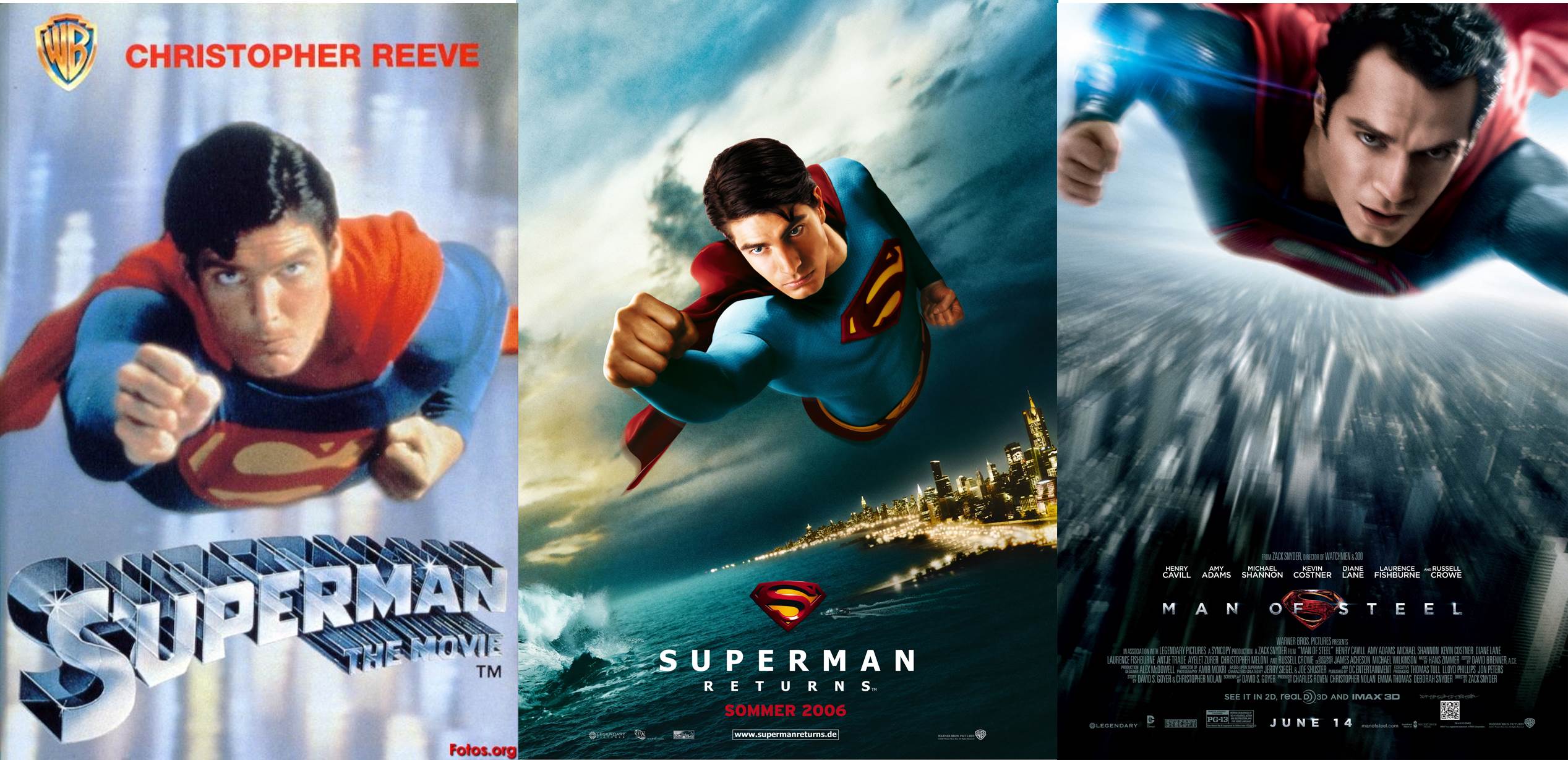
Tonight, I go to see The Man of Steel, the latest reboot of the Superman origin story…but unlike most nights when I go to a movie with friends, tonight I shall take notes, because tomorrow it’s back to the keyboard.

Tomorrow, I will write a screenplay for the next reboot of the Superman origin story.

And then next weekend, I will write a screenplay for the subsequent reboot of the Superman origin story.

And perhaps every weekend after that, I shall write screenplays for subsequent reboots of the Superman origin story.

For, having lately seen Batsmen, Stars Trek and now Supersmen, it would appear that Hollywood only wants what they already know or more importantly, what they already know sells. Originality, it would appear, is anathema in Lotus Land.

In the meantime, I throw my head back and yell: ZOD!!!!!!!!