Is a Serial Serial Killer a Series Killer?

bones card

Okay. That’s it. I’m raising the red card on an issue I’ve been grumbling about—at least privately—for several years now.

To mix my sports metaphors, I am calling a double dabbling penalty on the television series Bones, which I am just catching up on via Netflix. (Spoilers coming if you’re not up to Season 9.)

bones team

I love procedural programs, and as a certified science geek, I particularly like forensic series such as Bones and CSI. If you want to piss me off really quickly, however, I recommend you start a story line involving a serial killer.

Now that may sound counter-intuitive, but I find most serial killer story lines to be incredibly lazy and highly repetitive. More often than not, the episode structure and format are completely blown apart and rather than being about solving a crime, the episodes devolve into a personal vendetta, where the lead investigator—cop or forensic scientist—goes off the rails and alienates his or her team for a few episodes (or season).

“Don’t you get it? He’s taunting me, testing me, letting me know he’s always one step ahead of me.”

Yes. We know this. So let’s move on and get back to solving crimes (aka puzzles). You know, the reason I watch your ruddy show.

Watching a procedural series turn into a psychological drama is like watching a pretty actor try to take on a meaningful meaty role. It’s typically painful to watch and not what I purchased. You’re reneged on our unspoken agreement.

[NOTE: Dexter is held outside as that always was a series about a serial killer hunting down serial killers.]

Csiepisodebuilttokill2

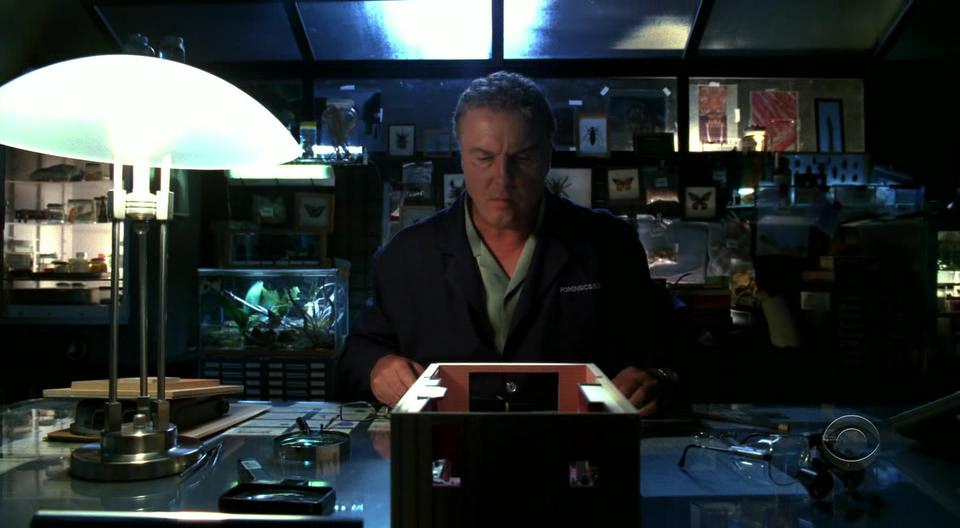
Up until recently, I’d believed that this was just an annoyance I would have to live through. God, how I struggled with Grissom’s Miniature Killer. But Bones just escalated that annoyance to a new level, which is why I raise the red card and call for an ejection…

(Last chance to avoid spoilers.)

…for Bones has used a serial killer to introduce a second serial killer.

Seriously? A serial serial killer?

It’s not bad enough that I had to watch a season or so of Christopher Pelant torment the Jeffersonian team, only to have him torment Bones herself with news that several unsolved murders are connected and that her negligence has allowed a serial killer (The Ghost Killer) to go unchallenged. And all just 24 hours before Pelant is killed by Booth, leaving everyone but Bones questioning if he was just lying to drive her nuts.

bones-ghost-in-the-killer-01

So now, as a fan of the show, I conceivably get to sit through yet another season of the Jeffersonian team getting torn apart by this second serial killer. Can you tell how excited I am?

Remember when Fonzie jumped the shark? Well, Bones just jumped not one, but two (so far only two) serial killers.

As an open note to television writers and showrunners, when you’ve run out of things to say, stop talking. End the series. Take your bows and move on.

I will keep watching Bones, if only because I’m an idiot and have invested 8.5 years of my life to these people. Also, I know there is a significant death coming in early Season 10, not yet on Netflix Canada.

We’ll have to see who outlasts whom, but I know which of us is on life-support.

tv-bones-autopsy-cast-poster-AVAsp7018

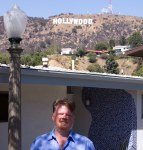
Hollywood Hills – Los Angeles

And then, a friend drove me into the hills around Los Angeles, so I could do a little house-hunting for when I finally make it big.

See also: Graffiti and Signs, Tar Pits, and Farmer’s Market & The Grove

Tar Pits – Los Angeles

And when I wasn’t looking at signs, one of the few touristy things I did in Los Angeles was visit the La Brea Tar Pits and the George C. Page Museum.

See also: Graffiti and Signs – Los Angeles

Graffiti and Signs – Los Angeles

As I mentioned in my recent posts, I visited Los Angeles a couple of weeks ago (my first time there), and took my life into my own hands by braving the city streets on foot (less worried about muggers than drivers).

While I found much of the city surreal (vs Toronto), I was enthralled by the various graffiti and signage that lined places like Melrose Avenue. Here is some of what I saw.

Gotta laugh (seriously, I mean that)

I am so amused by your humours

I am so amused by your humours

I’m my own worst enemy when it comes to stand-up comedy. Not in the performance of it, you understand—been there, done that, bear the scars—but rather in simply being an audience member.

For the uninitiated, stand-up is best described as stripping naked, slathering your body in hot sauce and dragging small razor blades across your skin while being judged by a room full of your parents. And your only salve is laughter.

Which is where my problem starts.

LOL Classic

LOL Classic

Hi. My name is Randy, and I don’t laugh at stand-up comedians. Okay, perhaps rarely laugh is more accurate.

It’s not that I can’t laugh. Get me together with the right group of friends, and I become a giggling gibbon. Hit me with the right joke or observation at the right time, and you’ll turn me into a hyperventilating tear factory. But for the most part, I only LOL when texting.

If I get where you’re going, I will nod. If I like what you said, I’ll smile. If I really like it, the smile will show teeth. But the laugh is elusive.

At a stand-up comedy show several years ago, a colleague accused me of being a comedy snob, suggesting that I refused to laugh to make myself look cool. Ironically, this made me laugh.

If my name were ever to appear in Roget’s Thesaurus, I can promise you that “cool” would only ever appear as an antonym. (Case in point, I just referenced Roget’s Thesaurus.)

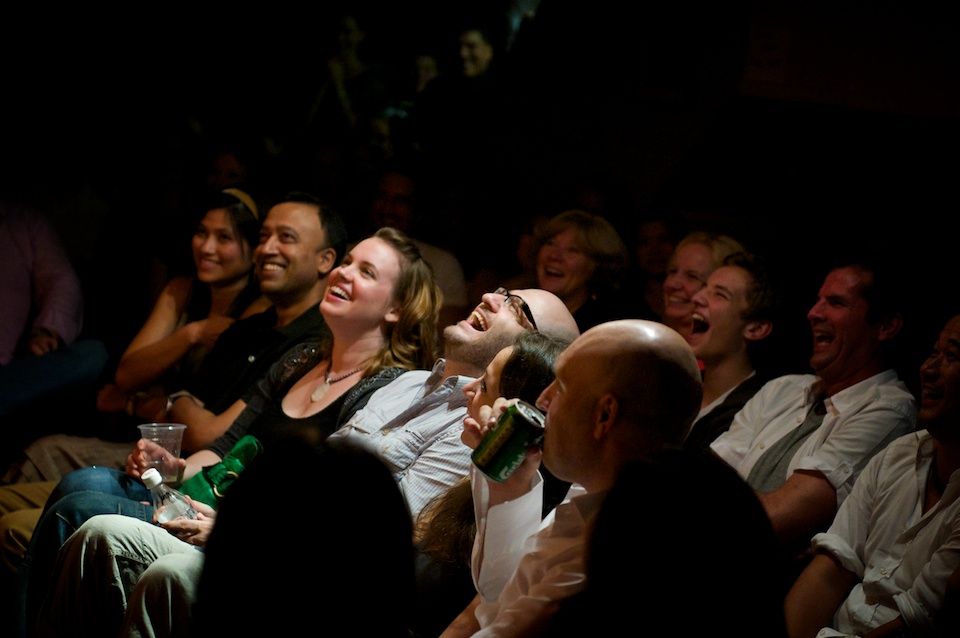
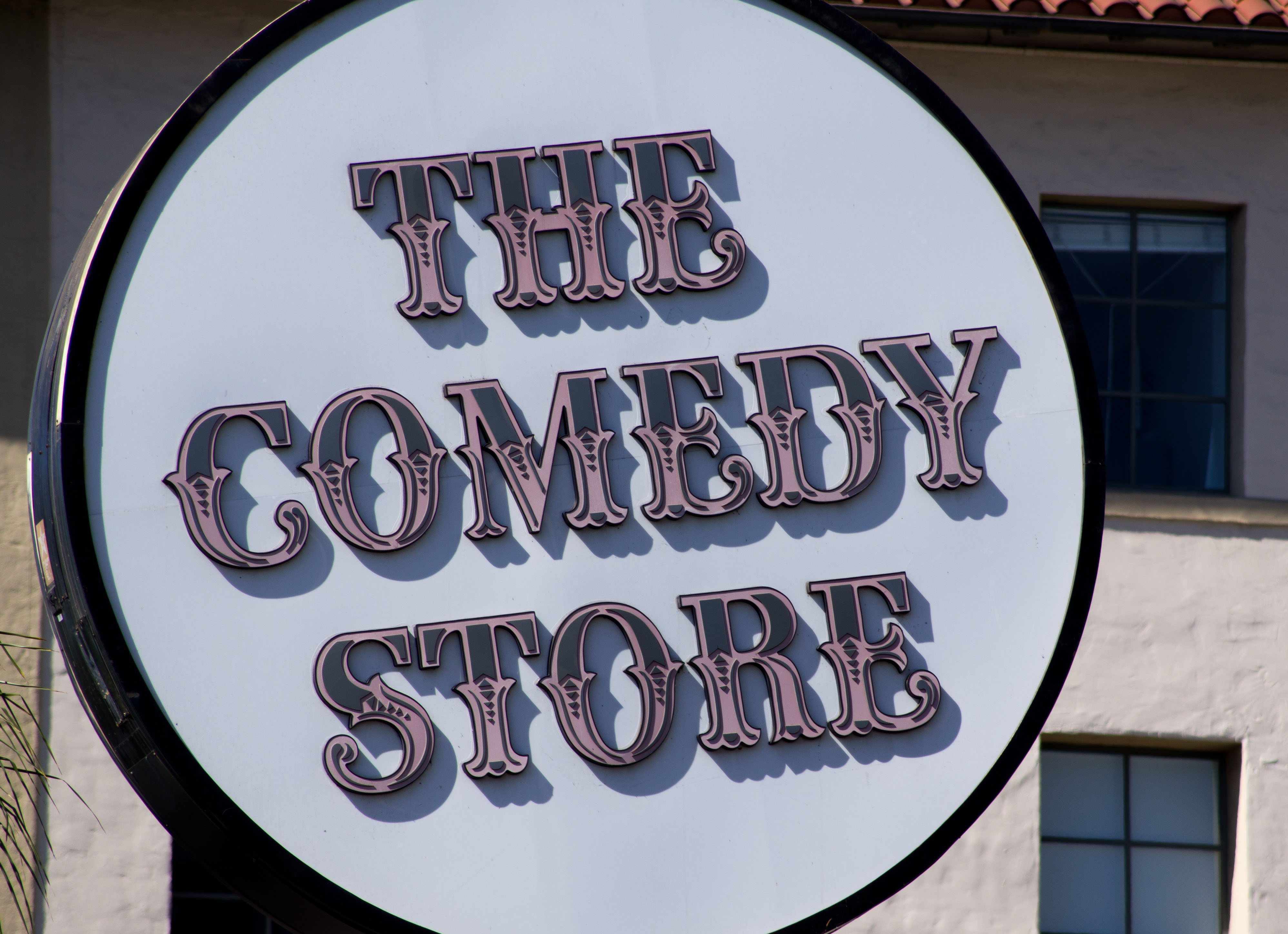
So I knew I was in trouble a couple of weeks ago when the host of The Comedy Store in Los Angeles decided to sit me dead centre in front row, literally at the shins of the comedians.
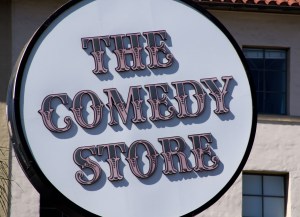
The Comedy Store

The Comedy Store

I sat there. A long-torsoed beacon of attention. I was the Lighthouse of Alexandria (yet another cool reference) to those rolling on the oft-stormy seas of stand-up.

Comedian #1 takes the stage. She’s quickly warming the audience and then, “So, where you from?”. Toronto, says I. Cue the Canada jokes.

No problem. I come from a funny country with a funny reputation. Ask me a question, I’ll answer it best I can. I am more than happy to participate to help the comedian.

[Side note: I do not heckle, anyone. Comedy is hard enough without the drunken asshole. Likewise, I do not interject into someone’s set. The audience is there to enjoy the comedian’s wit, not mine.]

When engaged by the comedian, I will play along and maintain the game. I will not (or at least try not to) be funnier than the comedian.

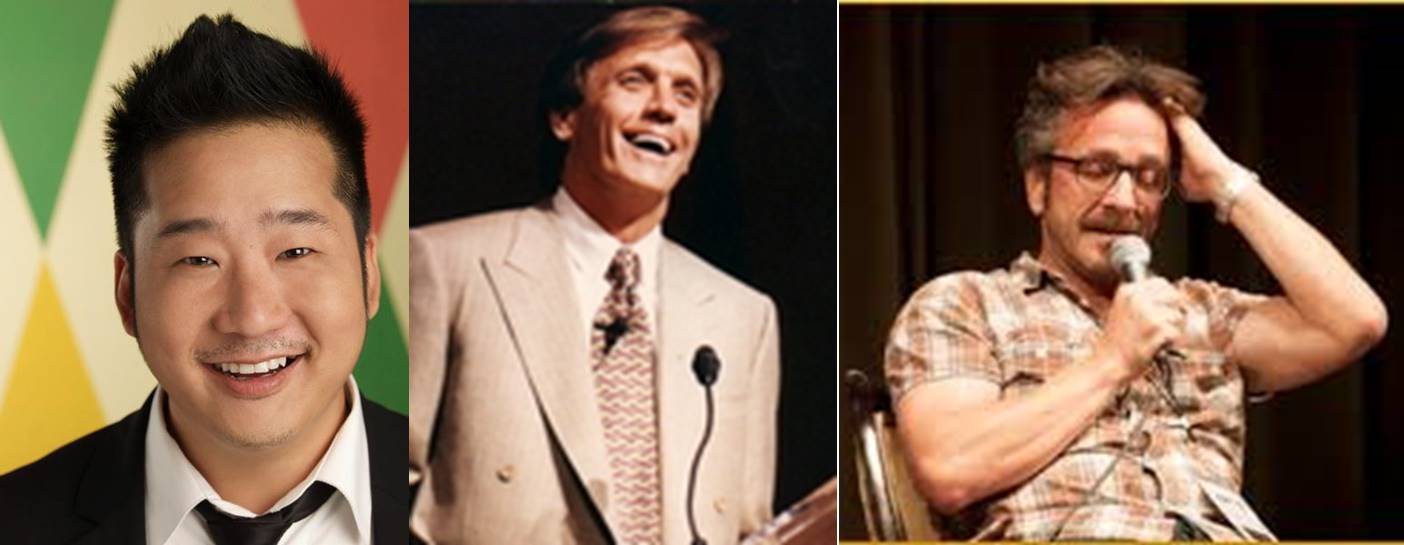
Only one of the three A-list comedians (Argus Hamilton, Bobby Lee, Marc Maron) paid me more than passing attention, each one more than capable of holding their sets to their own material, addressing the audience with little more than a passing “You know what I mean?” or “How many of you…”

Bobby Lee, Angus Hamilton, Marc Maron

Bobby Lee, Angus Hamilton, Marc Maron

They talked to the whole audience, not just those of us they could see.

Then came the B-listers.

Like any artist, comedians at this stage are less able to roll with failing bits. And even when a bit is working, the big guy in the front row who refuses to laugh becomes the focus of attention.

After the third B-lister, I started to feel sorry for the audience, who quickly learned everything about me and Canada, the information oft repeated as no two comedians paid much attention to anything that happened five minutes before they hit the stage.

Over the five hours I watched the show—I arrived at 8:30 and didn’t leave until 2:00—I swear I was being spoken to or about or was on the microphone for one hour. I literally had more air time than all but one comedian. (Part of my air time included a rousing rendition of Oh, Canada and a duet of Tie a Yellow Ribbon.)

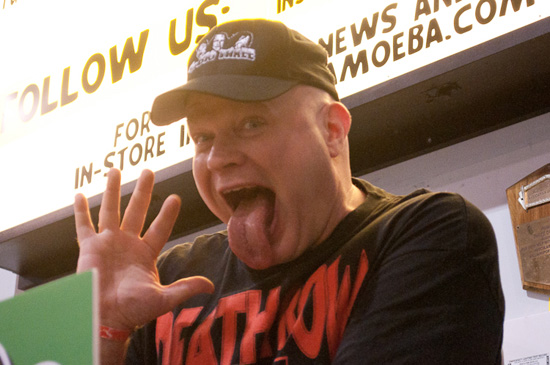
In five hours, I was told that I had an abnormally long torso (I do), I dress like Steve Irwin (I was), I work in maintenance or engineering (I don’t), I have beautiful hair (it is nice), and was asked twice to mimic cunnilingus (I respectfully refused). [Side note: Don Barris is a very very very strange man.]

Don Barris (his cunnilingus face)

Don Barris (his cunnilingus face)

And all, I am confident, because I refused to be the giggling gibbon.

I wasn’t defiant (except for the cunnilingus part). I never crossed my arms. I tried to be positive and supportive in my eye contact (perhaps that was mistaken as a challenge). And yet, I received a pretty good workout.

So, I think my choices are: laugh despite my personal opinions or ask to be seated in the shadowiest corner of the bar.

Either way, it will be a while before I attend another stand-up comedy show.

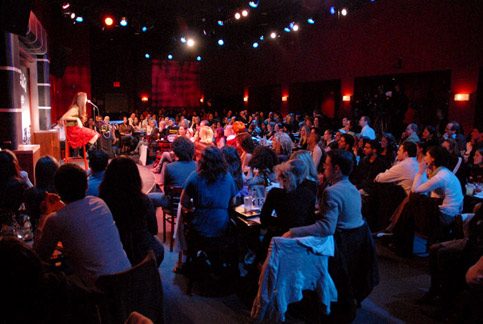
Sitting in back of the bar

Sitting in back of the bar

On shaky Groundlings (a review)

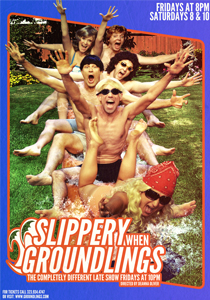
94629-swg

Just got back from seeing a preview of The Groundlings latest improv show entitled Slippery When Groundlings and really have only one response: Watch for the names Jill Sachoff-Matson and Alex Staggs. I don’t know when these two artists will hit it big, but I guarantee you they will.

Unlike the standard Second City shows I am used to watching, this one didn’t seem to have much of a theme beyond irritating people…but then, all sketch and improv comedy seems to be reduced to irritating people. And given the reputation of The Groundlings, I was surprised at how many sketches seemed to be one joke spread over 3 or 4 minutes. I expect that from student shows, but I expect more from main stage casts.

The first third of the show was evenly bad with the exception of a piece called “Carl’s Jr.”, where Sachoff-Matson first caught my attention as a dweeby woman who has been run down and then backed over by life.

Jill Sachoff-Matson

Jill Sachoff-Matson

The second third picked up somewhat, starting with “Church Camping Trip”, but a solid premise was completely let down by a lack of where to go with it. It’s a good sketch, it just needs more brainstorming. This was followed by Sachoff-Matson’s “Kindergarten”, which actually caused me to laugh out loud. Sachoff-Matson is mesmerizing both physically and in how her mind works, particularly as she portrayed yet another train-wreck character.

But just when I thought I had seen the best part of the show, Alex Staggs shows up with “Giving Up”, a lounge act in which he gets the audience involved with hilarious results. I would be willing to see where Staggs goes with this every night because he exudes comedic range with this.

Alex Staggs

Alex Staggs

Following the short intermission, Ariane Price gave us her send up of sad-sack informercials with “Emulsion”, another audience participation bit that was incredibly tight because of the character Price portrayed. You felt so sorry for her Eastern European refugee glam-girl wannabe that your heart melted and you wanted to give her a hug.

Ariane Price

Ariane Price

The problem was, the crew then wasted all that good will with “Sub”, a throwaway bit about an aged substitute teacher who has trouble reading fine print on an attendance sheet. That’s it. That’s the bit.

But the show was rescued by the big musical dance finale “Brittany” where again Sachoff-Matson showed what she can do with a woman completely at odds with her world and her own body.

If I have one complaint about Sachoff-Matson’s overall performance, it is that her three best pieces all largely portrayed the same character. But where this would normally kill it for me, she managed to do so in such unique ways that it wasn’t the mortal sin it might have been.

I don’t know what other sketches they have in the hopper, but there is a definite need to replace several from tonight before this show will be solid from front to back. And while good, the other cast members are going to be challenged to shine as brightly as Sachoff-Matson and Staggs.

groundlings

From Equalizer to minimizer (a review)

equalizer movie poster

Eighties are the new teens…as in everything you loved about the 1980s is coming to a theatre near you. As the latest example, we have Denzel Washington in the role of Robert McCall in a revisit (can’t really call it a reboot) of the television series The Equalizer.

The central conceit of both the film and television series is that McCall is a retired special forces agent (think CIA) who tries to help people out when they get run over by criminals, corporations or malevolent government forces.

Whereas in the TV show, we see his mission fully formed, the movie is a bit more of a prequel, showing us the transformation of McCall from quiet man to vigilante.

The movie opens with McCall being the happy guy working at a Home Depot, jovially chatting with co-workers and providing something of a father figure to his younger compatriots. But away from the job, we see that he is a loner, a man with a heavy psychological burden that keeps him from sleeping.

And it is this insomnia that links him to young prostitute Teri (aka Alina, played by Chloe Grace Moretz) who is fascinated by this man who sits in a diner at 3 am, drinking tea (he brings his own bag) and reading classic literature (we open with The Old Man and the Sea…the books are a metaphor for the character). Again, the father figure comes into play as McCall is one of the few men who treat her as a human being and challenge her to be the woman she wants to be, not the victim she is.

denzel-washington

And it is this bond that causes McCall to act when Teri is hospitalized by her Russian mobster pimp. A noble man, McCall offers to literally buy Teri’s freedom, but when the mobsters simply laugh him off, a life of brutality surfaces in the scarred knight and the world dissolves into chaos.

To give you any plot details beyond this would be to potentially spoil the movie.

Denzel Washington is an amazing actor and is wonderful in the role of Robert McCall. Offering a very different take on the character than his television predecessor Edward Woodward, the two actors share the ability to display a man who is outwardly in control of all situations but at the expense of always holding onto an inner torment that they are afraid to acknowledge, let alone unleash.

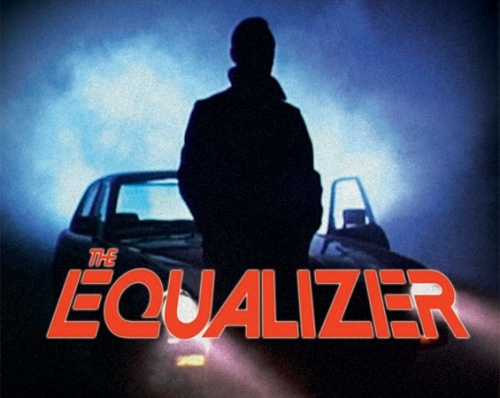
But whereas the TV equalizer rarely got his hands or his clothes dirty (compare TV poster below with film poster above), the film equalizer is willing to release a storm of martial arts and weaponry on the bad guys. Thus, the film is much more action packed than the TV show.

The-Equalizer-TV-Poster

To the credit of director Antoine Fuqua—who also directed Washington in Training Day—despite at least a dozen scenes of intense violence and blood-letting, he does an amazing job of minimizing the amount of actual blood that reaches the screen. In part, he accomplishes this by shooting the most violent scenes in darkness such that you only really see light reflecting off dark puddles. Likewise, when McCall does resort to using make-shift weapons (remember, he works in a Home Depot), the camera often switches to McCall’s face as he uses the weapon rather than to weapon and victim.

Unfortunately, McCall is such a cool and controlled customer that I never really worry about him. I cheer his victories when he vanquishes the dragon, but I find it difficult to really attach myself emotionally to the man. I like the quiet man, but I find the killing machine to be just that, a machine; an automaton that does not touch my heart. And with the exception of a handful of moments, we never really get a chance to appreciate the toll these actions take on him.

The other place I feel the story falls down is in the use of the Russian mobster sent to clean up the mess that McCall started, a man simply known as Teddy. Played by Marton Csokas, Teddy and McCall are equals. The same side of the same coin. Equally smart. Equally charming. Equally viscious. And as such, the only real threat in the entire film to McCall.

The-Equalizer-13-Marton-Csokas

(As a side note, if this role is any indication, we want to keep our eye on Marton Csokas. He will do amazing things.)

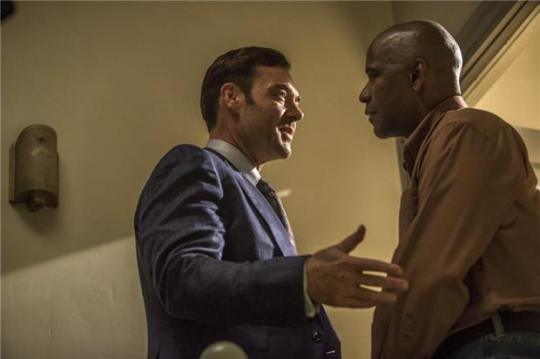
There are a couple of scenes where the two men literally face each other and calmly discuss the situation. One scene in particular is the best thing in this movie from my perspective. While on one level being the calmest moment in the movie, it is also the most chilling because of that calm. You really don’t know what’s going to happen.

And that’s where my problem lies.

Having set up the perfect opponent for McCall, the writer Richard Wenk (who also penned The Expendables 2) doesn’t really deliver. The audience was promised an epic show down between these two characters, but while they do clash, it is anything but epic (photo below is not from clash).

the-equalizer-marton-csokas-and-denzel-washington

The Equalizer is entertaining. It is a wonderful diversion that requires little thought of its audience. It is Jason Bourne for the middle-aged set (but with enough carnage to keep the young’uns interested). It should, however, have been better.

But when it comes right down to it, the studios don’t really care if you like it, because they are already working on the sequel.

No parity in parody

Parody

Mel Brooks is a god! Carl Reiner is a god! Carol Burnett is a god! Mike Myers is a really funny Toronto boy, who flew pretty close to the sun. (He may yet be a god, but he has to get back on his feet.)

And among their many talents, these people share the amazingly delicate talent of creating parody…a talent I have yet to seriously attempt beyond the scale of sketch comedy.

Delicate talent? Seriously attempt? Isn’t parody just a matter of picking a genre and inserting dirty jokes and/or completely ham-fisting its various tropes in the mathematical assumption:

Absurd + Puns + Dirty = Funny

I increasingly understand why people think this as I watch more of the recent fare of parodic films that appear to have taken this equation to heart.

Last night, for example, I watched Paranormal Whacktivity, a sexed up romp through the found-footage haunted-home segment that includes films such as Paranormal Activity and Blair Witch. This film was horrific, but not in a good way…nor was it particularly funny or sexy. And it wasn’t very good as a parody because it didn’t even stick to its genre, mixing Paranormal Activity with Ghostbusters, which both involve spirits but are hardly cinematic siblings.

It was useful, however, to my understanding of parody.

When I compare Blazing Saddles, Airplane, Dead Men Don’t Wear Plaid, and Austin Powers: International Man of Mystery to Disaster Movie, Not Another Teen Movie, and Breaking Wind, I realize that the truly classic parodies have something that the new ones don’t: a strong central story.

Somewhere in the evolution of parody films, the movies became less about story and more about ripping off as many genre clichés as possible, offering no firmer links between these scenes than bad jokes, fart noises or perky breasts.

Blazing Saddles wasn’t about taking a bunch of classic scenes from Westerns and simply linking them. It was more about taking iconic characters from the Westerns and creating a classic, if twisted, story. The sheriff abandoned by the town folk, the washed up gunslinger, the evil cattle rustler, the crooked politician.

Similarly with Shrek; although this film has such a strong central story that I’m not sure whether I should even include it in a list of parodies. Yes, it played up almost every fairy tale gimmick, but the story really didn’t model itself on any given style or pre-existing story.

Dead Men Don’t Wear Plaid is another odd case. With a strong through story led by Steve Martin and Rachel Ward (directed by Carl Reiner), it takes parody to a whole new level by incorporating actual scenes from noir films within the scenes with live actors. Thus, Martin’s character may find himself playing across from Barbara Stanwyck or Edward G. Robinson. Now, that is great film writing and editing.

Interestingly, the Wayans’ brothers first entry into this genre—Scary Movie—offers another lesson about parodies: the challenge of dipping into the same well too often.

Although horror/slasher movies are not to my personal tastes, I thought the first one or two films of this series were particularly well done. But as the series continued, picking on more films from within the horror/slasher genre, it started to become a parody of itself. The jokes were no longer fresh. All the best tropes had been used up in the first two movies and so the later films just seemed to be running in place.

Six Star Wars films, one Spaceballs. That works. (NOTE: Spaceballs is one of my least favourite Mel Brooks movies, much to the chagrin of many friends.)

Even the much stronger series of Austin Powers and Police Squad films showed this sense of comedic fatigue.

The original film is a surprise. The first sequel may be enjoyable. Anything after that is milking a dead cow.

I have no doubt that bad parodies will continue to be made…if nothing else, they seem to require little writing and typically have poor production values, and are therefore inexpensive.

My hope, however, is that another Mel Brooks, Keenan Ivory Wayans or Mike Myers comes along to raise us from these creative and comedic doldrums. (NOTE: At present, my money is on Keegan-Michael Key and Jordan Peele, who have the comedic talent and the Hollywood clout to do it right.)


A few personal favourites (hyperlinked to trailer or favourite scene, where available):

Dead Men Don’t Wear Plaid

Airplane

The Cheap Detective

Austin Powers: International Man of Mystery

Hot Shots (not so much the sequel)

Rustler’s Rhapsody

Shrek

Scary Movie

Blazing Saddles

Silent Movie (I may be only person who likes this one)

Young Frankenstein (all time favourite)