Fitting a pitch

Image

The line has been drawn in the sand. I’ve painted myself into a corner. It’s time to s#!t or get off the pot. [Insert other cliché expression indicating you’re stalling and we all know it.]

It is time for me to start pitching my television show ideas to production companies. No more fine tuning. No more market analysis. Get out there and sell, boy.

I was at an information session over the weekend where a Head of Development for a local production company was talking to new comedy writers (and me) about what producers are looking for in new sitcom pitches, and perhaps just as importantly, what they do not want to see.

Much of what he had to tell me was very familiar, but one factoid took me quite by surprise and shook me off the procrastination horse. Nobody, it seems, wants to see your pilot script (at least not in Canada).

They haven’t got time to wade through it and really just want to know three simple facts:

  • What’s your story idea?
  • How expensive will it be to make?
  • Can we sell it in the U.S. or in Europe?

And all of this, the producer assures us, can be handled in no more than 3 pages and for some, ideally in one.

What’s your story idea? Tell me about the scenario, the characters and what I can expect to see in a typically episode.

How expensive will it be to make? One or a couple of sets works in Canada…multiple location shoots gets expensive.

Can we sell it abroad? Make it Canadian enough to get government tax incentives but not so Canadian that Americans and Europeans won’t want it. Broad and universal is the name of the game.

No pilot script? Too many changes after everyone has had their hands in your concept…although, if you have one, you can use it as a sample of your writing.

Oh.

Hunh.

Well.

Suddenly, I have gone from having one sitcom ready to pitch to producers to three sitcoms, two animated kids programs, one anthology series (think Quantum Leap) and two educational/lifestyle programs. [This is aside from the sketch comedy show on which I am a writer, but is someone else’s puppy to pitch.]

Time to figure out what production companies develop shows similar to mine and arrange some meetings. Time to make this career leap pay some bills.

Wish me luck (and please check in every now and again to keep me honest).

(Photo used without permission from the delightful blog Picnics in the Park.)

Flight paths

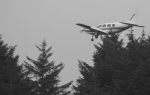
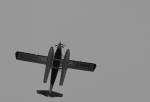
Having spent a fair amount of time in airports, I have seen plenty of jets, but airborne behemoths still impress me, so recent trips to Washington, DC and British Columbia added new flavours to my fascination.

Birth of a reader

Okay. I admit it. I have a book problem.

I, Randall (Randy) C Willis, am a book addict.

In my defense, it is my mother’s fault…she was my first dealer.

From my earliest days, I remember being surrounded by books…books purchased for my enjoyment and edification (I read that word in a book).

Books were my companions. Books were my connection to the greater universe. Books were my babysitter. Books were my escape. Wherever my books are, that place is my home.

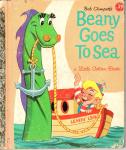
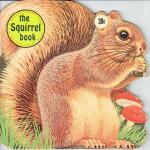
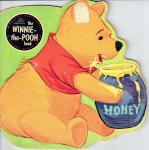
As I said, my mom started the process, as seen below in scans of some of my earliest books. Each of these volumes was published within a couple years of my birth, and either my mother or I have schlepped these things around for almost five decades.

I still smile as I flip through the Counting Book, testing my acumen. So far, so good.

And I sit in awe of the Adventures of Beany & Cecil, which was way too hip for kids as a short trip down YouTube indicates.

At the peak of my addiction, I think I owned 3000 books, give or take. I am presently sitting around 500, the rest being donated over the years to Good Will stores in Canada and the United States.

I know libraries exist, but in a twisted way, that would be like going to a strip club or brothel. A bibliographic quickie instead of a committed relationship (told you it was twisted).

No, I’ll stick with my books, thanks. Constant companions in an inconstant world.

Found it!

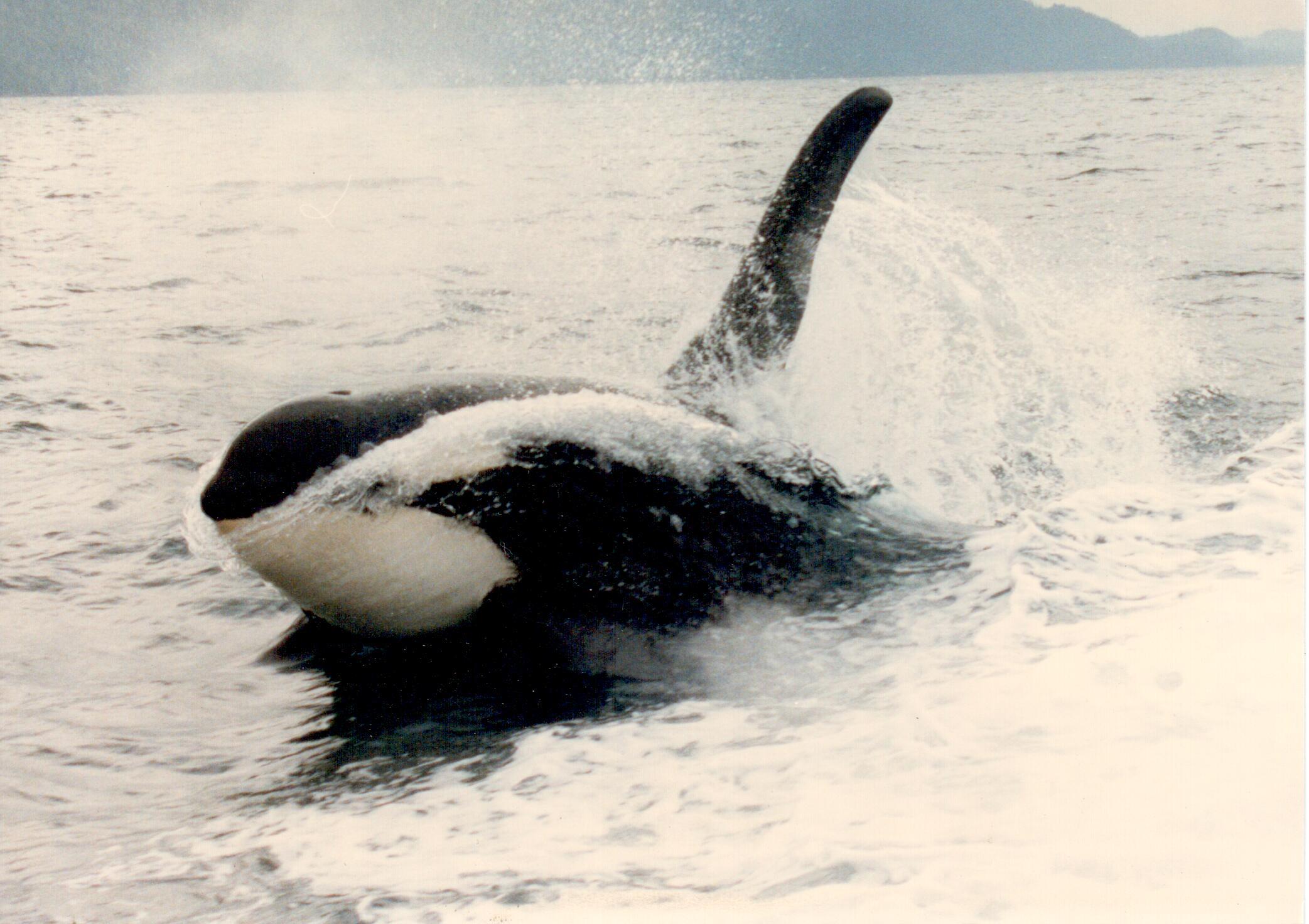
I was sure that I only had the one framed print left…convinced that I had lost the negative and other prints. The most amazing photo I have taken so far in my life.

I’ve taken better photos since that day 20 years ago, but never have a taken a photo where I was willing to sacrifice all other photos for this ONE to turn out. (For the young ones out there, back in the day of film, you had to wait quite some time to know if a photo turned out.)

But while pouring through a box of old photos this past weekend, I found both another copy of the photo as well as the negative! OMG! Woohoo!

Image

Taken on an orca-watching trip through the Inside Passage between Vancouver Island and the British Columbia mainland, near Port Hardy.

I was ready to let the photo gods kill the other 14 rolls of film I took on that trip for this one moment to work…and it did.

If you told me that as of tomorrow, I would never be allowed to take another photo in my life, I would be saddened but satisfied that I had at least taken this one.

Packing it in

Cardboard conundra;

A thousand puzzles

Demanding attention.

Sticky fingers clawing

Invisible seams;

Tortured screams

Muffle buried treasures.

Swaddled icons

Nestled strategically;

Memories layered

On things forgotten.

The paper-laden tomb

Of a modern day pharaoh;

Heiroglyphic notes

Of fumed pitch.

Life in a box

Awaiting release.

Image

Patterns and redirections

Sometimes things just don’t look right when you’re taking a walk, or they can seem to lead your mind one way and then switch-back in another direction.

I had a few of these moments in my recent walk through downtown Toronto.

Unintended misogyny

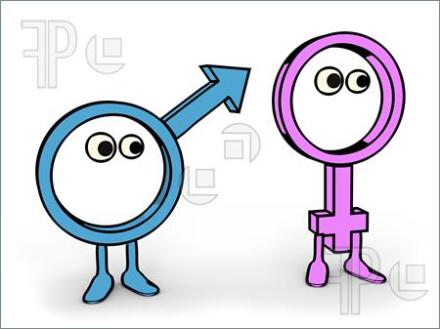
According to the Cambridge Dictionaries Onlinemisogyny (n) Feelings of hating women or the belief that men are much better than women.
Image

Let me state for the record that I do not hate women, but over the last decade or so, I have come to realize the insidious ways in which I felt (or made it appear that I felt) men to be superior to women.

As a male writer, I have historically written stories from the male perspective. My protagonists were male. My antagonists were male. My peripheral characters were predominantly male. And when I did include a female character, she tended to be rather two-dimensional (see also my blog post For my friend Emma).

Several years ago, I had the fortunate happenstance to take a sketch comedy writing class at Toronto’s Second City Training Centre under the guidance of actress and writer Aurora Browne, best known locally as one of the actors from the show Comedy Inc. and former mainstage performer at Second City. Perhaps not surprisingly, the class was mostly comprised of men. And to a man, we wrote sketches about guys.

After the first couple of classes, however, when we had each produced a few sketches, Aurora challenged the men in the room to either rewrite one of their existing sketches or write a completely new sketch with a woman (or several) in the lead.

It was at that moment that I realized my unintended misogyny.

Aurora was tired of trying to find material with strong and/or well-defined female characters. She was tired of simply playing the girlfriend, the ex-wife, the nurse, the teacher. Not that there was anything inherently wrong in playing any of these roles, but more that they were almost always written as two-dimensional…if they could even be said to aspire to a second dimension.

This was her opportunity to put her heels into the dirt in moulding the next generation of comedy writers.

From my perspective, the task was amazingly daunting and very surprising, as I found myself breaking down walls and obstructions I never realized I had put in place. I had to think how might a woman character function differently in this scene, without getting cliché, and how would that change the dynamics of the scene. Or even would it?

In the years since, no matter what I write—sketch, screenplay, teleplay, poem—I watch for places where I might fall into gender bias. The minute I decide on my main characters, I ask myself if the protagonist or antagonist could be a woman (sadly, I still typically default to males). If the answer is yes, then I take a second run at my idea to see which way would make for a better story.

As a result, I have both dramatically increased the repertoire of characters I can bring to life and greatly enriched my stories. In fact, the two most recent screenplays I am developing have female protagonists, as do a couple of my television pilot concepts—not out of a sense of political correctness or fairness, but because those choices made the most sense for the story.

So thanks, Aurora, for the creative kick upside the head.

(Illustration used without permission.)
Errand air alike

Early yesterday, I had an errand to run that would involve a 45-minute round trip walk, so I decided to take my camera.

Annoyingly, the subject of my errand was not available when I got there (ironically, a photograph) but my little walk ended up being a 2-hour tour of the area.

Over the next couple of days, I will post a selection of the photos taken, but here’s the first batch: The birds and the bugs.

For my friend Emma

…and all my other female actor friends and colleagues, a simple request to storytellers and writers:

When creating a female character for your story (or any character, for that matter), please describe her in terms that reflect who she is and not in terms of how she relates to another.

Image

Phrases like ex-girlfriend or soccer mom provide only a limited degree of context and tell us nothing at all about your vision for that character.

Is she a psychotic Glen Close type of character or is she a nurturing Barbara Billingsley type of character?

To what does she aspire?

If presented with a spider, she would [fill in the blank].

Around a board room table, her position would be [location], she would be dressed [adjective], her posture would be [adjective] and her eyes would express [noun].

If the character is important enough to move your story along, the character is important enough to be a human being (or whatever species you are dealing with).

If not, then you probably don’t need the character in your story.