Behind fences

As you may have noticed, I like to take the mundane in life and move it in a whole new direction, exploring avenues that are not obvious at first blush.

Such was the case with a series of scenarios that I photographed recently in Alexandria, Virginia, and Washington, DC.

Toronto Screenwriting Conference – Day Two Highlights

Personal highlights or take-aways from Day Two of the Toronto Screenwriting Conference:

tsc-logo

Darlene Hunt – Masterclass (creator, showrunner for Showtime’s The Big C)

Take your time responding to questions: When someone is asking you about a specific line or scene, whether in meeting on or set, give yourself time to think about it, because you may not remember exactly why you wrote that scene that way. At the same time, even if you can explain why you went that way, make sure you remain open to new interpretations or new ideas that may work better.

Bob Kushell—Anatomy of a Pilot (creator of BBC series Way to Go)

Pilots suck: All pilots suck to one extent or another and he explains why using the analogy of an approaching tornado. You’re living your life when suddenly you hear that a tornado is coming. Quickly, you run into the storm shelter with several other people and try to prepare for the coming storm. At the same time, as each of you goes about your tasks, you remind one of the people about that time she ran over your cat, which is why you don’t like her. But hey, you love the fact that another individual’s here despite those awkward feelings after that drunken fling at the cottage. Oh, but you still need to prepare for the coming tornado.

Within an ever-shortening time span (now around 21 minutes), you need to fill in useless backstory that everyone in the show should know (it’s their backstory) and still manage to tell a coherent plot that somehow illustrates the show’s premise.

Penny Penniston—Not Just Talk: How Writers Think About Dialogue (professor at Northwestern University)

Dialogue is not conversation: If words were keys on a piano keyboard, then the difference between conversation and dialogue is the difference between noise and music. Dialogue is precise and crafted, gives voice and describes themes. It gives clear direction to the artists interpreting it and a chance for them to show off. And like learning to play music, learning to craft dialogue takes practice to develop muscle memory, but at the same time, understanding the theory behind dialogue will allow you to step back from your work and find the good and bad things about it.

Aaron Korsh – Masterclass (creator and showrunner of USA Network’s Suits)

Understand your scene’s goal: Reading a scene out loud can be very helpful when it comes to determining if it’s working, as some scenes may read well, but something goes wrong when it becomes audible. And if the scene isn’t working, it’s often because you haven’t really established what the scene’s dynamic or purpose is.

Hero of a Thousand Voices

I hear dead people.

I also hear living people, imaginary people and people who aren’t even people.

I am a writer, and I am highly confused.

Since quitting my day job to commit full-time to writing, I have found the voices that run rampant through my head have amplified, in volume and seemingly in number.

Before I quit, the anxieties and activities of daily living dampened the voices, shoved them to the periphery, surely as a functioning if not coping mechanism.

Now, without those distractions, the voices push outward, stretching their muscles after years of confinement, exploring their new world with the glee of a four-year-old on a steady diet of Coco Puffs. And here I sit, trying to control or harness them, sticking my pinky in a fire hose opened to maximum flood.

I have so many stories to tell, to record, to witness. But as soon as I sit down to transcribe one, a dozen others poke their heads out of the ground; conceptual prairie dogs wondering if the coast is clear.

I’ve always believed that creativity breeds creativity. I am experiencing that in spades, these days.

I will admit that after so many years of holding it back, part of me wants to let the voices flow unchecked. I want to stand at the foot of the waterfall and let the deluge wash over me, cleansing the grime of repressed enthusiasm from my soul.

But at some point, in some way, I still have to function in this universe. I want to recount these stories to someone, and for them to be intelligible, I have to direct my journey through the eddies that buffet me.

I hear voices. And I struggle with how to deal with them all.

At times, the onslaught of voices is one more wave than I can handle. (Photo taken at Carilla Beach, Costa Rica)

At times, the onslaught of voices is one more wave than I can handle. (Photo taken at Carilla Beach, Costa Rica)

Witness

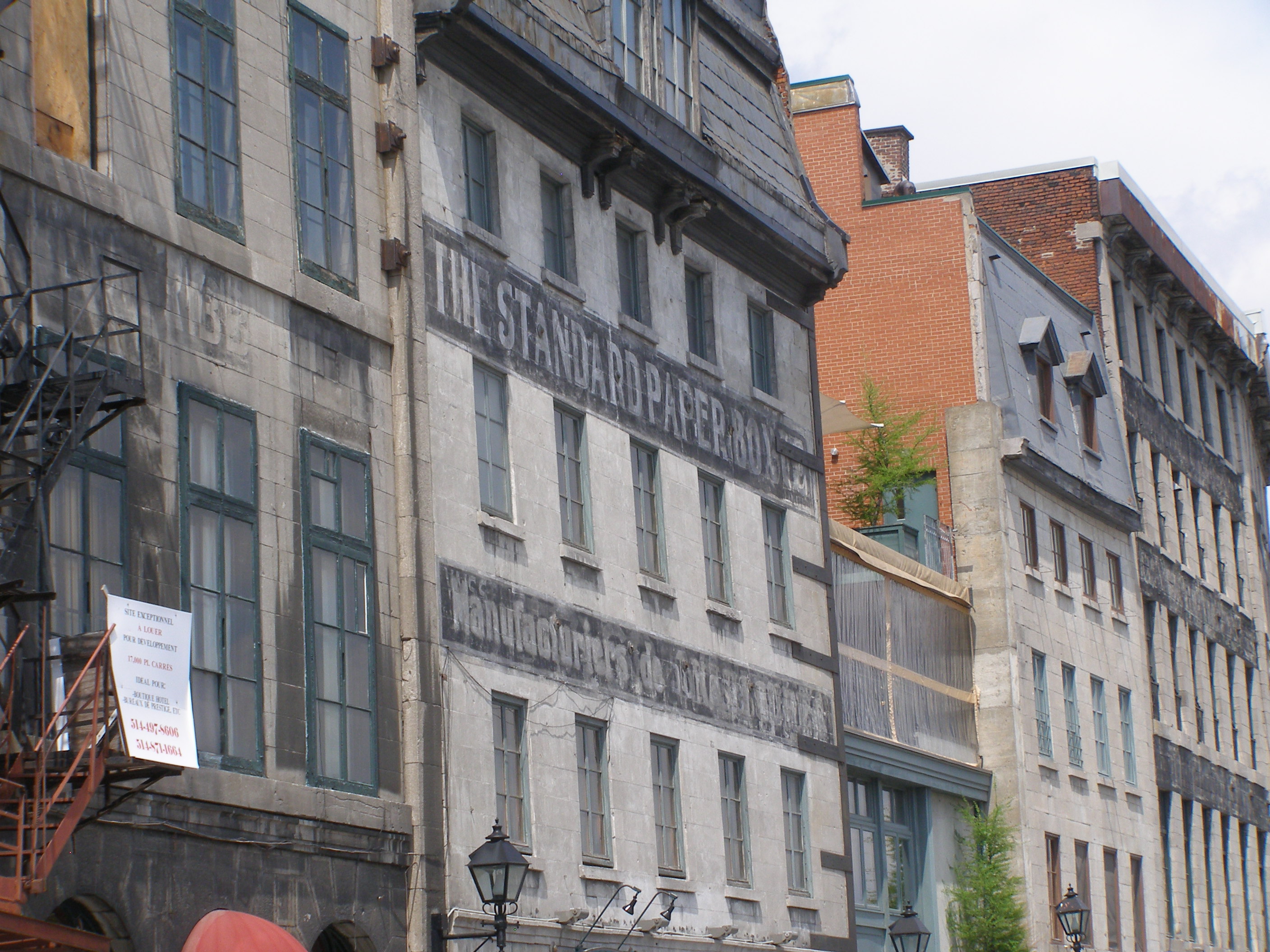
The building stands along the rue de la commune,

A sentinel on the waterfront of Montreal.

A few tourists walk by and the silence of morn

Is broken by the clack of cobblestones under the hooves

Of a horse pulling a caleche;

But the building is mute and observes.


It wears the marks of its hundred and fifty years

And hearkens back to Dickensian times.

The brick no longer white but stained

With the soot and rain of life in the city.

The windows are small, clouded irises

Through which pass the events of history.

The doors of the loading docks have been long painted shut

But the wood bears the scars of wagons poorly maneuvered.

She is a silent witness.


The wind blows ever so gently on an autumn’s morn

And the breeze passes the cracks and crevices

Of the wood and brick.

If you listen closely, you can just make out

The echoes of yesterday.

A foreman, en français, berates the workers

For being too careless with today’s papers

As they toss them into the backs of waiting wagons;

Threatening that the cost of bundles too damaged to sell

Will be deducted from their wages, mere pennies,

A meagre mouthful for the hungry families.


As your eyes scan up from the street

And you pass the windows,

You can see the signs of former residents.

Amongst the jumbled letters of words over words,

Signs painted over signs, you can still make out

The once proud letters of

Le Standard: toute la monde, tout le temps

A car drives by and the rhythmic beating

Of its wheels on the bricks echoes against the building;

Reviving the forgotten sounds of a printing press

Bringing the news to thousands of Montrealers.


Your eye continues skyward to a large bay window

On the top floor and you are startled by a reflection.

In the early morning sun, the light glints

Off dust-laden windows

And a spectre appears behind the panes.

Old Monsieur O’Toole, proprietor and publisher,

Still stands at his window, looking out over the river,

From his office and apartment above the presses.

The throb of the machines is a lullaby for the old man;

A mother’s heartbeat in the womb

Formed by the newspaper’s walls.

He smiles as he listens to the rantings of Gilles Garnier,

The foreman of the dock, remembering him

As an eager young lad who delivered the paper

For a much younger O’Toole

When Canada and The Standard were new.


These windows and this paper have been witness

To the founding of a nation,

Its history both ancient and new.

The presses have described the rhetoric of politicians,

George-Etienne, Wilfred and John A.,

Arguing the desirability of a union, a confederation.

It has announced the call to arms of Canadian boys

To fight for British guns in the fields of South Africa

And told of the death of a mighty monarch, la reine Victoria.

She has counted the bodies at Vimy Ridge

And, from these windows, has cried with joy

Of the end of the “war to end all wars”,

Only to weep at the start of the next one.

She called for calm on that infamous black Tuesday in October

And was instrumental in the programs to feed and clothe

The poor in its aftermath.


But now the building is silent,

A victim of post-war modernization;

A derelict in a sea of decay, the city fathers calling

For yet another committee to decide its fate.

A cloud crosses the sky, disturbing the light,

And O’Toole vanishes from the window.

The breeze dies and the Frankish rantings subside.

The presses have stopped and are long gone.

History proceeds.

Fading history clings tightly to the crumbling facade on Montreal's river front.

Fading history clings tightly to the crumbling facade on Montreal’s river front.

With the passage of time, Montreal's history fades into dust.

With the passage of time, Montreal’s history fades into dust.

Toronto Screenwriting Conference – Day One Highlights

Image

I am hoping to a more complete write-up shortly about the sessions I attended at the Toronto Screenwriting Conference this weekend, but here are some personal highlights/insights from today’s sessions.

Glen Mazzara – The Odyssey of Writing (former show runner for The Walking Dead)

Be your own writer: Mazzara shared his earliest experiences in starting as a writer and he said that in the early days of his career, he tried to write things that he thought screenplay readers wanted to see, but that ultimately, this was a failing approach. In his eyes, you have to write topics that reflect and come from you. Things that represent who you are and in what you are interested.

Making sense of your characters: He also offered an interesting tip on how to make sure the emotional/story arcs of your characters make sense. He suggested approaching it like an actor, whom he says is only interested in and therefore reads his own lines. Move through your screenplay, tracking only one character at a time—ignoring all others—and see if their progress makes sense. Are they angry in one scene and suddenly laughing in the next? Does that make sense? It’ll also allow you to tighten up their dialogue, he says. You then do this for each character in your screenplay to ensure each tracks correctly.

Dara Marks – Engaging the Feminine Heroic (renowned Hollywood script doctor)

Too often, we only explore how a character responds to outside forces (masculine heroic). For a character to be whole, Marks says, we must also examine what is happening within a character (feminine heroic).

At the beginning of a story, the character receives the external call to life and responds by striving for a goal. But to do this, she says, the character must sacrifice other aspects of themselves that will slow or stop their progress. This sacrifice is not without a cost and the internal psyche suffers a wound because part of it is no longer valued.

Unfortunately, the problem with striving is that it is doomed to failure—we can’t ever achieve enough of our goal. A crisis of faith occurs in the masculine self, that triggers an awakening of potential in the feminine self—internal fortitude.

Externally, the character falls as the call to life becomes a battle for life as its illusions are shattered, and when the outer self becomes vulnerable the internal self is emboldened and can heal the wounds, turning pain and suffering into creativity and love.

Thus, it is the sacred marriage of the internal and external selves that allows the character to discover its true self.

David Hudgens – Breakdown of the One-Hour Drama (showrunner of Parenthood)

On receiving notes: The most important thing about receiving notes on your screenplay is understanding what’s the note behind the note. The note itself is often directed at something that may be relatively minor, but in its essence, it speaks to a deeper issue in the writing. Look for that essence.

Beau Willimon – Masterclass (co-creator of Netflix’s House of Cards)

Writing screenplays ≠ making movies: It is entirely possible to have a good career writing screenplays for movies without ever getting any of your movies made. It’s a numbers game, as studios constantly contract out for hundreds of screenplays, hoping that at least one of them will turn into a profitable movie, but they can’t afford to make all of the movies to find out.

The word was “lemon”

A short piece written at a local Flash Fiction show.

That old beater my dad kept in the barn hadn’t run in all the years that I could remember, but it made a hell of a playground for the kids in the neighbourhood.

One day, it was the Batmobile, screaming out of the Batcave as the Caped Crusader and his gender-neutral sidekick were off to feel all funny down there at the sight of a leather-clad Catwoman.

Other times, it was Sir Francis Drake’s Golden Hind, plying the English Channel looking for Spanish galleons or sliding on the breeze through the Caribbean, searching for buccaneer plunder.

But most of the time, it was just my dad’s old beater, sitting there year after year, slowly filling up with mouse droppings or owl scat.

I remember one summer—I was about six—when my dad and grandfather tried to get the old car running. I learned a whole new language that summer, although it was about four years later before I found out that motherfuckingsonofabitchdickwadcrankbitch wasn’t one word.

That was the summer that we found out that cats like to crawl under the hood of a car and nap on the motor. You wouldn’t think it would be hard to get cat fur out of a fan belt, but you’d be wrong. Mom never really liked Mr. Wiggles anyway.

That was also the summer that dad went away. Whenever I would ask my mom about it, she would just cry, and my grandmother would try to distract me with cookies. So now, not only do I not know what happened to my father, but I am also a 300-pound diabetic.

Maybe that’s why I kept the car, as a reminder of the man I never got to know. Mom just shakes her head and my wife wonders why I don’t get rid of that old lemon. I dunno. Maybe they’re right.

All I know is that sometimes I’ll go out late at night to sit in the car and if I’m really still, I can still hear the sounds of the wind rippling in the sails and the sailors pulling on the rigging. You know, I never noticed how much my dad looks like Sir Francis Drake.

Drake protects the shores of Toronto from marauding pirates

Drake protects the shores of Toronto from marauding pirates

Gotta let it out

Do you ever feel like there is an idea inside you just waiting to burst forth? Like you can’t control the energy that is welling up?

It is there, just below the surface, and no matter how much you try to suppress it–it’s not ready; I’ll embarrass myself; what will others think–you really have no choice but to show it to anyone who passes by.

Congratulations, you’re an artist. Welcome to the club. Oh, and you might want to stand back…someone else is ready to explode.

(Photos taken at Geyser, Iceland.)

You might be a writer

(Inspired by a post on The Writing Corp blog and of course, Mr. Jeff Foxworthy)

If you’ve ever freaked out because your partner loaned your pen to someone and neglected to get it back…

If you own 17 notebooks and still have a house littered with random pieces of paper containing ideas…

If your friends won’t tell you anything anymore for fear it’ll end up in your next novel, screenplay or comedy sketch…

If you’ve heard voices in your head and your first thought was grab something to write with…

If you go on a tropical vacation and only the back of your neck gets sunburned…

If you’ve developed the skill to write coherent notes to yourself without removing your eyes from the person sitting across from you…

If every jacket you own and every room in your house contains a writing pad of one size or another…

If you instinctively know what inks will smear and which pens write upside down…

If you’ve ever found yourself looking forward to a long bus or train ride…

If reaching a crisis is as satisfying as achieving a climax…

(Personally, I’m still working on the writing while looking someone in the eye, otherwise, I’m good.)

The Devil’s in the detales

Attention to detail is craftsmanship.

Fixation on detail is neurosis.

It’s important to be diligent when working on a project, but not so diligent that the project is dead before it starts.

Relax. Let your natural skills and energies flow through you as you explore your art.

It is those little quirks that make the piece yours and not the same as every other piece ever produced.

The ceiling of the trophy room of the Hockey Hall of Fame, which used to be a bank. (Toronto)

The ceiling of the trophy room of the Hockey Hall of Fame, which used to be a bank. (Toronto)

Go fly a kite

Have you ever taken your camera out for a stroll and accidentally come upon a party? Well, it happened to me while wandering The Mall in Washington, DC, approaching the Washington Monument.

What started as a couple of kites fluttering through the sky on a sunny, windy day quickly degenerated into a morass of people all trying to get kites into the air, lines crossing and wrapping around tree limbs. Kids practically being lifted off the ground by kites much too large.

It was as though a rainbow had exploded and rained down on the people below. Chaotic, but definitely spirit-lifting.