On shaky Groundlings (a review)

94629-swg

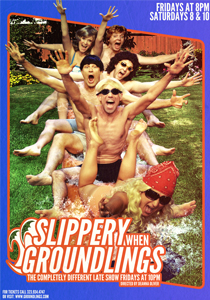
Just got back from seeing a preview of The Groundlings latest improv show entitled Slippery When Groundlings and really have only one response: Watch for the names Jill Sachoff-Matson and Alex Staggs. I don’t know when these two artists will hit it big, but I guarantee you they will.

Unlike the standard Second City shows I am used to watching, this one didn’t seem to have much of a theme beyond irritating people…but then, all sketch and improv comedy seems to be reduced to irritating people. And given the reputation of The Groundlings, I was surprised at how many sketches seemed to be one joke spread over 3 or 4 minutes. I expect that from student shows, but I expect more from main stage casts.

The first third of the show was evenly bad with the exception of a piece called “Carl’s Jr.”, where Sachoff-Matson first caught my attention as a dweeby woman who has been run down and then backed over by life.

Jill Sachoff-Matson

Jill Sachoff-Matson

The second third picked up somewhat, starting with “Church Camping Trip”, but a solid premise was completely let down by a lack of where to go with it. It’s a good sketch, it just needs more brainstorming. This was followed by Sachoff-Matson’s “Kindergarten”, which actually caused me to laugh out loud. Sachoff-Matson is mesmerizing both physically and in how her mind works, particularly as she portrayed yet another train-wreck character.

But just when I thought I had seen the best part of the show, Alex Staggs shows up with “Giving Up”, a lounge act in which he gets the audience involved with hilarious results. I would be willing to see where Staggs goes with this every night because he exudes comedic range with this.

Alex Staggs

Alex Staggs

Following the short intermission, Ariane Price gave us her send up of sad-sack informercials with “Emulsion”, another audience participation bit that was incredibly tight because of the character Price portrayed. You felt so sorry for her Eastern European refugee glam-girl wannabe that your heart melted and you wanted to give her a hug.

Ariane Price

Ariane Price

The problem was, the crew then wasted all that good will with “Sub”, a throwaway bit about an aged substitute teacher who has trouble reading fine print on an attendance sheet. That’s it. That’s the bit.

But the show was rescued by the big musical dance finale “Brittany” where again Sachoff-Matson showed what she can do with a woman completely at odds with her world and her own body.

If I have one complaint about Sachoff-Matson’s overall performance, it is that her three best pieces all largely portrayed the same character. But where this would normally kill it for me, she managed to do so in such unique ways that it wasn’t the mortal sin it might have been.

I don’t know what other sketches they have in the hopper, but there is a definite need to replace several from tonight before this show will be solid from front to back. And while good, the other cast members are going to be challenged to shine as brightly as Sachoff-Matson and Staggs.

groundlings

Besotted Voce – A few (hundred) words on character voice

Voices-graphic-2

No matter with whom you speak, to an outside observer, the two of you sound different.

I’m not talking about the pitch or timber of your voices—although those likely are different—but rather those other factors that make your speech distinct: cadence, word choice, sentence structure, etc.

For five years, I worked as an editor and writer on a couple magazines in Washington, DC, and over that time, I found that I could tell which of my workmates wrote which articles without looking at their bylines…even without our names, the pieces had our fingerprints all over them.

How Mark Lesney opened an article was very different from the way Nancy McGuire would.

Mike Felton explained his thesis very differently from David Filmore.

And the two Randys were polar opposites in sentence construction: Mr. Frey being pithy, while Mr. Willis would wax poetically at the drop of a proverbial hat.

Some might argue that these differences reflect variations in style, but I believe the situation is less superficial than style. Instead, it reflects who we are as individuals; our personalities, our experiences, our beliefs, and our feelings both emotional and physical. We speak/write as the people we are at that particular moment. I as me and you as you (this sentence screams for a “Goo-goo goo-jube”).

Ideally, this same variety of voice should occur in the fictional characters we create, whether for screenplays, novels, short stories, sketches or whatever.

With all but the shortest lines of dialogue, a reader or listener should be able to tell which lines correspond to the same speaker even in the absence of any overt identifying marks such as the character’s name.

A simple example: Despite achieving the same goal in response to another person, the following lines say them differently:

“You’re nuts.”

“You are insane.”

“You’re one crazy motherfucker.”

“That, sir, is the most ridiculous thing I have ever heard.”

* silent stare *

With these five lines, we see differences in:

  • Relative status (e.g., tone)
  • Degrees of personal control (e.g., length, use of contractions)
  • Emotional state (e.g., length, word choice)
  • Possibly educational or social background (e.g., vocabulary, use of jargon)

It can be a challenge for one mind (the writer’s) to create several distinct voices. It is a form of consciously willed multiple personality disorder. Thus, early drafts of a literary work may sound flat because too many of the characters are speaking with the writer’s voice rather than their own.

In theory, this is an easy thing to fix during revisions. Simply take the sentence and knowing what you do about your character—his or her emotional and psychological state, status, social and educational background, life experiences, physical challenges—make the line more accurately reflect how the character would speak.

One complicating factor is that a seemingly simple change in response by one character may elicit a change in the response of the dialogue partner(s). I am likely to respond very differently if presented with any of the five reactions above. And thus, the writer has triggered a change-reaction that reverberates through the scene.

A second complicating factor is that the change in dialogue may also need to be paralleled with a change in physical action. A high-status character is more apt to be purposeful in her actions and responses, whereas a low-status character may be more physically erratic or perhaps flinching in his response. And again, the change-reaction echoes through the scene.

This may sound daunting. It isn’t…but it is a lot of work.

The trick is becoming comfortable with the many voices you need as a writer. We all start with our own voice, the omnipotent godhead that creates the fictional universe; but the trick comes in developing the skills to inhabit other bodies, other souls as you create other characters and then being able to shift back and forth as required without going insane (well, not fully insane, at any rate).

My best advice to any writer who struggles with this is not to take yet another writing class, but rather to take an improv class or several. Despite the terror that this advice may elicit in some (most?) of you, I can think of no better way of understanding—and more importantly, exercising—the differences between different characters.

You’ll quickly find improv is not about funny; rather it is about truth. And once you’re comfortable with experiencing the truth of a character, the rest of this is much less daunting.


As seems to be a routine now, today’s post was prompted by the amazing words of Marsha Mason and the Why The Face blog she posted earlier today.

PS The magazines from my Washington days were Modern Drug Discovery and Today’s Chemist At Work (because Today’s Chemist in the Boudoir was already taken).

Talking Comedy—Toronto Screenwriting Conference 2014

(L to R): Jeff Biederman, Katie Ford, Joseph Raso, Andrew Clark

(L to R): Jeff Biederman, Katie Ford, Joseph Raso, Andrew Clark

This past weekend, TSC2014 convened a panel of sitcom showrunners entitled Comedy Is A Funny Business, where the panelists discussed various aspects of developing comedy for Canadian television.

The panel was comprised of Jeff Biederman (showrunner for Spun Out), Joseph Raso (showrunner for Seed) and Katie Ford (showrunner for Working the Engels), and was moderated by Andrew Clark, Director of Humber College’s Comedy Writing and Performance Program.


How do you know you or something is funny?

From Raso’s perspective, most people who want to write comedy typically have good comedic sense, and that it is important to trust your own instincts on what is funny. The rest of the writing process comes down to mechanics. Ford added that it is often about what you watched as a kid, the shows you grew up with.

Biederman mentioned that he had taken improv and stand-up comedy classes several years earlier, but had never really enjoyed them. He still wanted to be associated with comedy, however, so he gravitated to comedy television. Ford is an advocate of such classes, however, as she feels it gives the writer a sense of what you are up against. And Raso echoed those sentiments suggesting it also makes sure that you give actors solid material with which to work.


Can you discuss the seeming renaissance of sitcoms in Canada?

According to Raso, it is important to have a solid premise or conceit for a show, a distinct way to describe the core idea, because simply having ideas for individual episodes won’t cut it. One of the challenges for Canadian sitcoms, he warns, however, is that it is so hard to get networks to see beyond the first year—one and done, as he describes it—which has doomed many shows in the past. For most shows, the first season is difficult as the show hasn’t yet managed an identity or found its audience.

For writers, Biederman adds, this can be a big challenge as it can take a while for a new writer to break through, and there are not a lot of places to build the necessary skills or unique voice needed to be successful.


Can you describe the pitching process?

For Biederman, it is about going in with a story. Rather than try to tell jokes or act things out, he prefers to focus on why this show, what is particularly interesting about this premise. And if you already have a spec pilot script, all the better, because it helps the creator and writer maintain his or her power in the conversation and gives the network something more definitive to look at.

For Ford, it is about walking in with your logline, introducing a sense of theme, outlining a typical episode and then describing the characters. But perhaps most importantly, letting people see your passion for the project and how you connect with the subject matter.

Raso couldn’t agree more. For him, the personal angle is key.

Ford also suggests that it is vital you engage the executive you are pitching because he, she or they are your first audience.


Can you talk about the writers’ room?

Biederman describes the mix as people sharing responsibility for the final product, more as partners than anything in a hierarchical sense. He even brings in outsiders to punch-up the script (e.g., jokes). He describes the room as ruthless but welcoming and admits that it’s not always easy to be in the room or to run it.

Ford agrees, suggesting that it is a collaborative environment, but is by no means a creative free-for-all. Her job is to listen for the voices that add to the show. Raso, meanwhile suggests that the hardest part of the job for him is that he has to say no a lot, but despite that difficulty, it is vital that the room start off with real, honest and open discussion.

Biederman suggests that table reads with the actors can be invaluable to the writers but that they don’t always happen. Scripts for a multi-camera show can change 50 or 60 times over the course of a week, Ford adds, limiting the usefulness of table reads. And single-camera shows tend to work on tighter timelines, so again table reads are not always possible.


So, how does a new writer get into the room?

Biederman suggests starting as a script coordinator rather than try to get in with samples of your writing. The job will give the novice writer invaluable production experience. Ford agrees, suggesting that her own script coordinator kept things together on her show.

Ford also suggests that new writers need to be heard, to get their voice out there by whatever mechanism they can find, whether Twitter feeds, blogs, anything. It’s about demonstrating your strengths and your personality to show you’d be a good fit for the room.

According to Biederman, the make-up of the room has steadily changed over the years. It’s not just television writers, but also stand-up comedians and performers who bring unique voices into the mix.

The biggest place he sees new writers fail is in not sending their work when he offers to look at it. The fear of it being not quite perfect kills a lot of opportunities. Just send the work, he says.


Spec script or spec pilot?

Both Raso and Ford were adamant that they much prefer to read original work over spec scripts. According to Ford, they’re just not interested in reading yet another Big Bang Theory spec or whatever show is popular. She finds it much harder to get a sense of a writer’s unique voice by looking at a script that is trying to be someone else’s voice.

tsc-logo

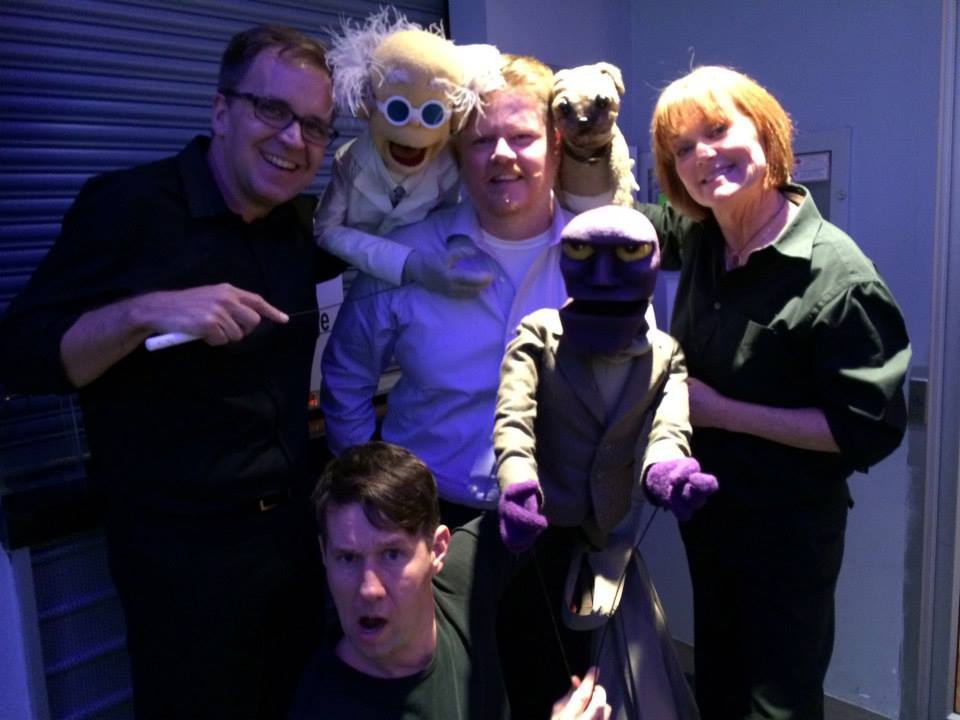
Writing for puppets

Monty meets Muppets!

Monty meets Muppets!

As some of you may know, I am one of the comedy writers for a sketch show called SomeTV!, which is currently in production in Toronto. As our godhead Nic likes to describe it, the show takes the no-sacred-cows approach of Monty Python’s Flying Circus and combines it with the playful anarchy of The Muppet Show (no hubris here, eh?).

Now, for some, that may sound like the greatest writing gig ever. Those some have clearly never written for puppets.

Human actors—or as we call them, Fleshies—can be tricky enough to deal with. Prone to completely misunderstanding the point of a scene or sketch, they tend to have difficulty learning lines that make no sense to them.

Luckily, their natural insecurity, despite the outward facing ego, means that they can be molded into subservience, if only in two- to five-minute chunks, the longest most are willing to go without checking their make-up or cell phones for calls from their managers.

At their core, Fleshies are the rhesus monkeys of the performance world, clinging to each other for some semblance of affection but ultimately willing to give that up for warmth and sustenance.

Not so puppet actors, aka the Felts or Felties.

Flesh v Felt

These are the apex predators of the performance world and should always be treated as such. Sure, they look cute and cuddly, with their giant heads, bulging eyes and disarming colours, but that’s exactly what they want you to think.

You don’t write for Felties so much as start a sentence that is perpetually interrupted with ideas or lines the bastards think are smarter, funnier, crazier.

Fleshies forget their lines because they’re not too bright…Felties “forget” because they are malicious egotists.

Adding to the challenge is the near-impossibility of figuring out a Feltie. He, she or it is the poster-child for multiple personality disorder.

You think you’re writing a scene for a young Spanish girl, when out of nowhere a tall Jovian Codswadder shows up to take the scene in an entirely new direction. (To this day, the only thing I know about Codswadders is they come from Jupiter, where given the crushing gravity, their height makes no sense.)

Not the home of young Spanish girls

NOT the home of young Spanish girls

It’s like dealing with someone with hyperactive comedic Tourettes, and trust me, I’ve taken enough improv classes in Toronto to know what that looks like.

Felties are also astoundingly lazy creatures. Sure, they look frenetic on the television screens, but in reality, these buggers will literally not lift a finger without someone doing it for them. Our show has an entire team of Feltie fluffers whose entire job is to see to the every-last needs of these freaks. We’re talking major OCD: obsessive-compulsive demands.

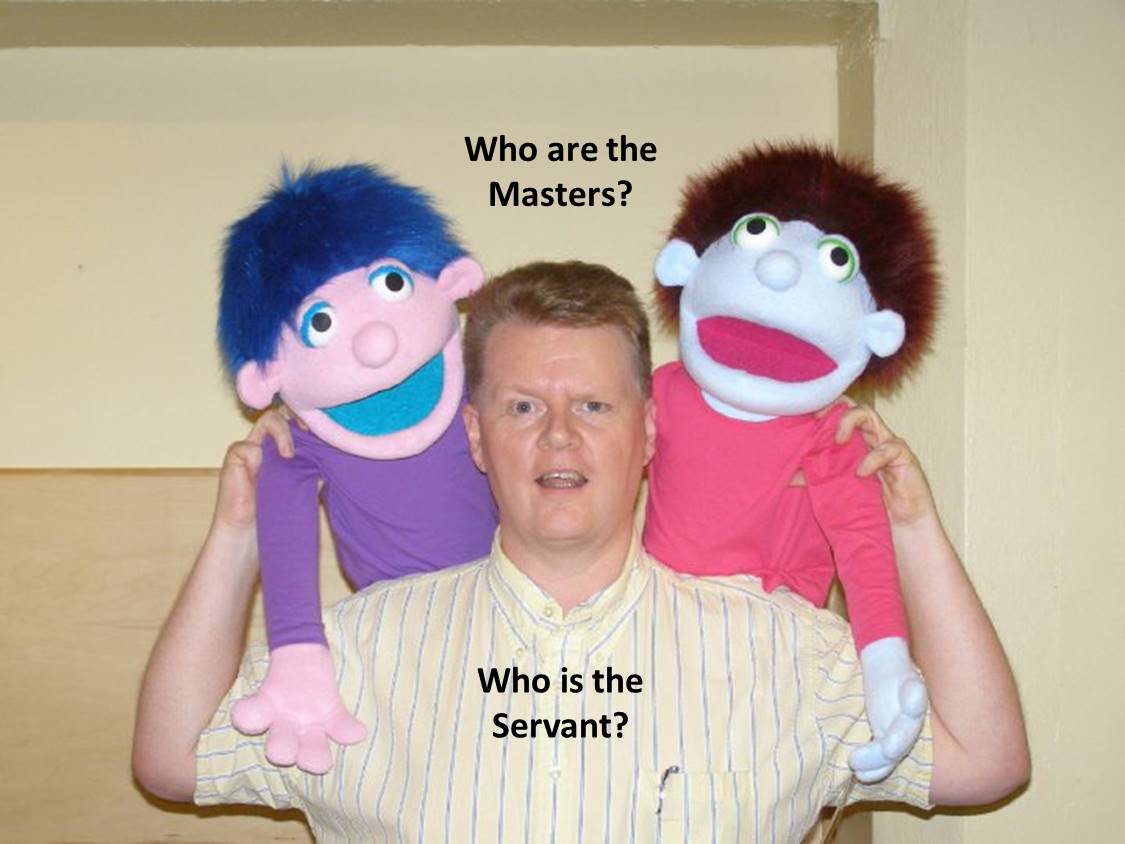
Trust me, the dictionary writers of the world have the concept of “puppet master” completely backwards.

Masterclass

To be fair, the Felties do sometimes come up with lines that are funnier than the stuff I wrote. But on the flip side, they get away with lines that no intelligent Fleshie could ever hope to pull off.

This has two impacts: 1) the Feltie doesn’t have to try very hard to get a laugh, and 2) they can be as crude, rude and insulting as they want, knowing everyone just thinks “awwww, how cute”.

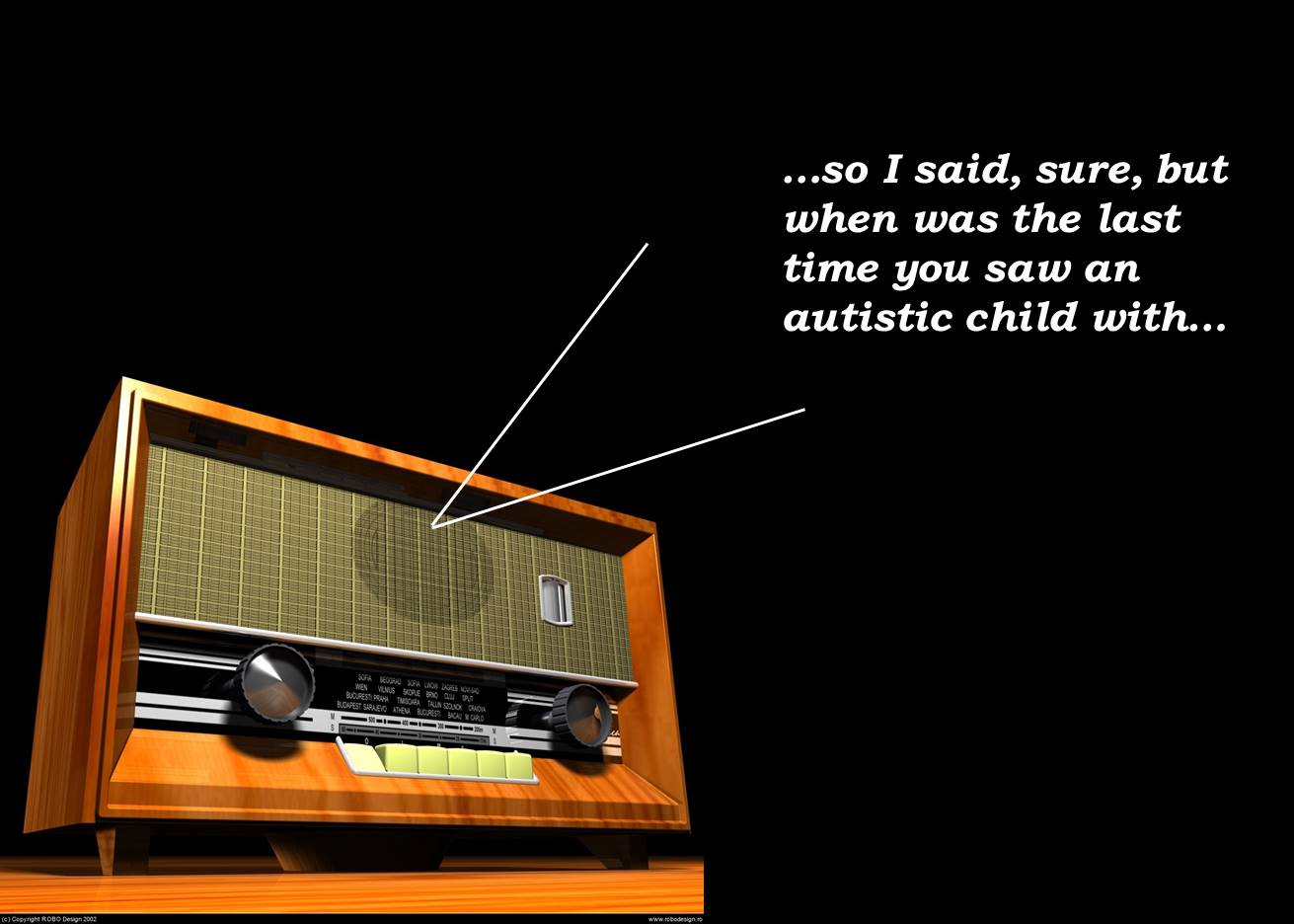
There’s a reason you don’t hear a lot of puppet radio programs…the shit they come up with is repugnant.

NPR = Nasty Puppet Radio

NPR = Nasty Puppet Radio

So, why do I stay? Why do I continue to write for these self-glorified hand-warmers?

Most days, I don’t know.

But then the rent comes due and I realize that my best chances at succeeding as a “comedy writer” is to have my words (or some semblance thereof) come out of a Feltie’s mouth…and those lint-sucking leeches know it, too.


SomeTV! is being produced by Lemon Productions Inc.

Like us on Facebook: SomeTV!Lemon Productions Inc.

Follow us on Twitter: @SomeTVNews

Puppet Up! visits Toronto (UPDATED)

PuppetUp! logo

As some of you know who’ve watched this space, I am fixated on puppets and improv and so, several months back, I started a social media campaign to bring Puppet Up! uncensored to Toronto.

For the uninitiated, I recommend you click the link to see what this show is all about. Briefly, however, it is the Jim Henson Company taking their puppetry genius and applying it to a largely improvised comedy show designed for adults.

Well, shortly after starting my campaign, the Henson Company announced the show was coming to Toronto. While I realistically have to believe the wheels were in motion long before I started whining on Facebook and Twitter, I will happily claim responsibly for them coming.

In the weeks leading up to the show, like a 15-year-old girl at a Bieber concert, I followed everything PuppetUp! on TV and online. I tweeted with the show organizers on an almost daily basis, and then when one of the puppeteers (Grant Baciocco) made the mistake of letting the world know he was in rehearsals, the stalking began.

PuppetUp! shines into the night

PuppetUp! shines into the night

My first show was opening night (October 22) and within seconds of the lights going down, my mind was completely blown! This was everything I imagined and then some. It was everything I had in me not to run down from the balcony, up the aisle and onto the stage, grabbing a puppet as I passed the wall of hollow bodies. As one, the audience laughed, cringed, oohed and ahhed at the antics that both sent up and paid noble tribute to the late Jim Henson.

But then, dear god, I found out that you could have your picture taken with some of the puppets after the show…I am proud to say I did not swoon (on the outside).

(L-to-R) Brian Clark, Grant Baciocco and Peggy Etra surround me with puppet love

(L-to-R) Brian Clark, Grant Baciocco and Peggy Etra surround me with puppet love

Opening night was going to have to hold me for another week as 7 hours after the lights came up, I was in a cab, heading to the airport and a week-long date with the Austin Film Festival. The conference was great but I positively bounced at the idea that when I got home, I had two more shows to see…the final weekend matinees.

Sitting at the feet of the master

Sitting at the feet of the master

On Saturday (Nov 2), there I was, second row, stage left…effectively at the feet of show co-creator and host Patrick Bristow. Rather than have to squint at the puppeteers and watch the big screens, I now had close up access to the puppeteers, who became more fascinating than what was happening onscreen, to me. The show was great, although a few of the bits in the first act failed…which made them even funnier. It was in that show that I truly fell in love with the talent of puppeteer Colleen Smith. WOW!

And it was after that show that I finally got to meet Grant Baciocco, who was as charming and affable while wielding a camera as he was on Twitter.

Brian Clark and Peggy Etra welcome me back (Grant Baciocco on camera)

Brian Clark and Peggy Etra welcome me back (Grant Baciocco on camera)

My love and enthusiasm for this show was so big that I decided there and then that I had to buy tickets for the final show and I had to bring two friends along for me even though it would mean going out of pocket. I was so tickled, I had to share this with people. Texting madly to check my friends’ availability and enthusiasm, I then popped open my laptop and purchased the best available tickets for the Sunday, 8 pm show for all three of us.

Matinee ticket and 3 tix for the final performance

Matinee ticket and 3 tix for the final performance

Then came the show on Sunday (Nov 3). Again, sitting at Patrick Bristow’s feet. Shouting suggestions left, right and centre. Feeling like we were developing a bond, even though I knew he probably couldn’t see more than two feet into the audience.

Nary a flaw in this show. The musical numbers popped. The classics practically brought tears. Colleen and Grant were amazing. Brian Clark, Peggy Etra, Michael Oosterom and Ted Michaels were on fire. And I got to add Michael to my photographic portfolio of puppeteers.

(L-to-R) Was able to add Michael Oosterom to the list of puppeteers with Brian Clark and Peggy Etra (Grant Baciocco on camera)

(L-to-R) Was able to add Michael Oosterom to the list of puppeteers with Brian Clark and Peggy Etra (Grant Baciocco on camera)

To make the afternoon even more special, as I waited in line at a nearby restaurant to grab dinner between the 4pm and 8pm shows, who should walk in behind me other than Patrick Bristow. Still needing a picture with two of the puppeteers, I couldn’t die quite yet, but I was getting close. Patrick was wonderful and charming and was nice enough to pose for a photo.

Patrick Bristow and I await dinner near the theatre (no earthquake, just shaky camera)

Patrick Bristow and I await dinner near the theatre (no earthquake, just shaky camera)

So here we are. Eight pm on Sunday night. I met Leela in the foyer of the theatre and left the ticket at Will Call for my friend, Michael. If I vibrated any faster, I might have been able to pass through walls. I was going to get to share this with two really important people in my life. This was my birthday gift to me…sharing PuppetUp!

There were a couple bumpy bits in the first part of the show, but it was still amazing. And the closing half was A-FIRKIN-MAZING! Every bit went perfectly. Even from the balcony, Patrick would take my suggestions (I was in the balcony, not Patrick). Leela, who is a tough comedic audience, laughed raucously throughout the show (high praise if any of the PuppetUp! people are reading this).

Leela and Michael were both great to hang back with me…I wanted to be one of the last people to get my photo done tonight so I could let everyone know how much I appreciated their performances and talents. And beauty of beauty, the entire cast was out for photos on the last night. I was going to complete the set of puppeteers for the photo.

Finale photo with (L to R) Brian D Clark, Michael Oosterom, Ted Michaels, Colleen Smith. Buried is Peggy Etra, and Grant Baciocco is on camera duty.

Finale photo with (L to R) Brian D Clark, Michael Oosterom, Ted Michaels, Colleen Smith. Buried is Peggy Etra, and Grant Baciocco is on camera duty.

As I was waiting for my turn, Patrick passed through the lobby and asked me to hang back. Interesting.

After having my picture done and convincing my friend Michael to get his done, Patrick came out from a back room and handed me a puppet from the concession stand as thanks for all the support and enthusiasm I offered them while they were in Toronto. Nice! She (the puppet is a girl) is sitting on my desk as I type this.

The new lady in my life thanks to Patrick Bristow and the folks at PuppetUp!

The new lady in my life thanks to Patrick Bristow and the folks at PuppetUp!

I was able to shake everyone’s hand and let them know how much I enjoyed knowing them. I am currently hooking up with many of the puppeteers on Twitter and Facebook. And have promised them all that I will initiate the next social media campaign to get them to come back to Toronto.

Based on their experiences in Toronto, both in the theatre and on the town, I think they’d be open to the idea.

And now, sadly, PuppetUp! has left Toronto, but not without leaving an incredibly big mark on my heart. Thanks, folks. It was a special couple of weeks.

Cross-border puppetry – Puppet Up!

PUT_wide

As many of you well know, I am interested in puppetry and am currently working as a writer on a sketch comedy television show in development called SomeTV! that involves both human (fleshies) and puppet actors (felties). More on this later.

In the meantime, I am also striving to get an irreverent show called Puppet Up! to come to Canada (more specifically Toronto) and perform. A product of Henson Alternative, these people have taken the inside humour of the Muppet Show and ratcheted it up a thousand-fold.

I’ll let them describe the show:

What happens when Henson puppeteers are unleashed? You get a new breed of intelligent nonsense that is “Puppet Up: Uncensored” – a live, outrageous, comedy, variety show for adults only. Enjoy an unpredictable evening when six talented, hilarious, expert puppeteers will improvise songs and sketches based on your suggestions! With a motley group of characters brought to life by the world renowned puppeteers of The Jim Henson Company, this is not your average night at the improv and it is definitely not for children. But all others are welcome to enjoy the uninhibited anarchy of live puppet performance as never seen before!

PU

Strangely, it seems the show is bashful and so I am asking for everyone’s help to encourage them to come to Toronto with a social media campaign entitled: Bring Puppet Up to Toronto. (How’s that for imaginative!?)

I’ve set up a Facebook page that I ask you to “Like” and “Share” with your friends, colleagues, and that guy you met once who glommed onto your page when you weren’t looking.

As well, please visit the Puppet Up! Facebook page and let them know they should visit Toronto…even if you don’t live here.

And if you follow me on Twitter, please retweet and favourite the relevant posts…most of the other posts are completely irrelevant.

PUT tweet

As Animal is my witness, I will wear them down and they will either have to come to Toronto or file an injunction!

And even if you don’t do any of these things (I feel tears coming on), then at least enjoy these YouTube videos…they are very funny and you should get something for having read this far.

Thanks.

12 Awkward Days of Christmas – Miskreant Puppets

Puppet Up! Hit the Streets of Edinburgh

Neil Patrick Harris and Nathan Filion in Doctor’s Office – Neil’s Puppet Dreams

Where do babies come from – Puppet Up!

Not for nothing – REQUEST FOR HELP

ssnolan3

How do you write about nothing?

I know how to not write. In fact, I was very good at that in the past, but gratefully not writing is no longer much of an option for me.

I’m not talking about not writing, however. Instead, I am talking about writing scenes where superficially nothing happens, where a character walks through the mundane actions of life. What they are doing is unimportant to them, a robotic response to an overwhelming thought or scenario. There is an astronomic exchange of information and yet no words are spoken.

In a novel or short story, you can have an inner dialogue, revealing the character’s thoughts, but in a film, you have only silence. Sure, there’s always the trusty voiceover, but I personally think that unless the character is recalling a past statement, voiceovers are a crutch. And a voiceover weakens a scene when you compare it with silence.

Think of the last time you were faced with silence in response to something you said or did. Think of the dis-ease (yes, that’s where “disease” comes from) you experienced as you tried to figure out what the other party was thinking. In many of those situations, I bet that shouting would have been preferable to silence.

In an improv class I took—I am sorry that this is my version of “This one time, in band camp…”—we were doing a status exercise wherein one character would try to take status away from the other one, proving themselves superior through statement or action. While many student pairs would do their best to out-pompous, out-preen or out-bravado each other, I took a different tack. I went completely silent.

No matter what my partner said or did, I faced him stoically or indifferently, deigning to give him the merest glance on occasion while going about my activities. And the louder or larger he got, the less I minded or acknowledged him. The more he talked, the weaker he appeared.

Silence is powerful. And even if the silence is due to idiocy, it comes across as thoughtfulness.

Think of scenes in movies where a character has chosen to deal with a problem by thinking about it. With a good actor, you can see all the thoughts as they play out in his or her mind. The body, the face, the eyes tell you all you need to know about the emotional swells washing through the actor. A single word breaks that tension and weakens the moment. As a storyteller, why would you ever give that up?

Which brings me back to my original question: How do you write nothing?

Perhaps I am delving too far into the domains of the director and actor, but there has to be a way to ensure both those artists know what you, the writer, intend. But I’ll be damned if I know how.

So, I open the question to you, my fellow artists.

What do you do, what have you learned, what have you seen that tells you how to write nothing and yet convey a world of thought and feeling?

Please share your thoughts here as I can’t be the only one who wants to know.

A matter of character

Method improv taken a tad too far

Method improv taken a tad too far

When we create stories, we try to come up with truly amazing characters; characters that will resonate in our audience’s memory, long after they’ve finished with our story. Unfortunately, what usually happens is we end up with characters that flatten on the page, becoming two-dimensional versions of our goal. The character may flare momentarily when their plot becomes particularly exciting, but for the most part, they are lifeless and have no depth.

Like subtext in our dialogue, so much that makes a character real has nothing to do with what they are saying or doing. It’s the intangibles, the subtleties that inform their speech and actions.

Would Darth Vader, for example, have been nearly as imposing without the emphysema? What would you think of Forrest Gump without his omnipresent blankness?

Years ago, in an improv class, we did an exercise in character when the instructor told us to endow our character with some physical attribute, but not to share that attribute with others, whether verbally or by incorporating it into the scene. Let the attribute impact your character and see what happens was the request.

I decided that my character’s left foot caused him excruciating pain every time he took a step. As the scene unfolded and my character found it necessary to move, I found that my sentences grew shorter, more clipped, and my patience with people wore thin. Requests to come look at this or hand me that were met with general reluctance and irritation. Everything about my character screamed leave me alone.

I did not wince when I walked. I did not massage my foot while seated. I did my level best to give no outward sense of what was wrong.

When the instructor surveyed the other students, both within the scene and watching, about what our various attributes were, none of us really knew. All they could say was that my character was very angry and a bit of an asshole.

When told I had an extremely painful foot, it was obvious. And please realize, I am NOT an actor. This was not about my Oscar-worthy performance.

But it does show that by making a very small choice about a character, a choice that has nothing to do with plot, you can significantly inform that character and how he or she interacts with others and his or her environment.

When I worked on my first screenplay, I looked for something that affirmed how cool a customer my antagonist was. I wanted something subtle that would indicate he had the ultimate confidence in himself and his manifest destiny. Something that said I have all the time in the world because the world will wait for me.

It was my last point that settled it for me. My character would never use contractions in his speech. From his perspective, every word he uttered was important, was specifically chosen for maximum impact and so why would he remove any of the letters. And because his destiny was your destiny, you would sit patiently and absorb everything he had to say, no matter how long it took.

Now the average reader or movie goer may never consciously notice this, but for many, they’ll experience the malevolent calm of the character.

And perhaps more importantly, as with the sore foot in the previous example, the contraction-free speech informed how I wrote the character. It forced me to slow down as I wrote his dialogue, to consider each and every word he spoke, to ensure they fit the creature I had created. Ironically, that I the writer served him the way he would expect to be served.

Based on the reader feedback to date, it is working.

Look at the characters you’ve created and ask yourself what physical tic, affectation or neurosis informs their lives. If you can’t identify one, can you introduce one to increase the depth of the character or heighten his or her reactions?

Even if it only helps you to better understand and write your character, the exercise will have been worth it.

(Images are property of owners and are used here without permission, because I didn’t eel like asking.)

Too cool for fish school

Too cool for fish school

Indirect influences

Image

I naturally speak with one voice. If pressed, I can speak with a second, more professional voice; the one that presents concepts to advertising clients or interviews corporate executives for a magazine. But most of the time, I speak with one voice that uses a vocabulary and attitude established over my many decades of life.

I think this is largely the case for everyone, which is why it is not surprising that people tend to write stories with a series characters that can largely sound the same. The protagonist is typically quite distinct. The antagonist is often distinct. But after that, I don’t know that I could tell who was speaking if I didn’t read the names.

These secondary characters, by their very nature, are not our focus as writers, so they tend to have the least developed back stories even in our heads. Other than age or gender, what makes the paperboy different from the local sheriff from the school teacher?

The same thing that makes you different from me. Our experiences, past and present.

One of the tricks for informing a character that I learned in improv was to endow a character with a trait that only you as the performer knew, and ideally a trait that had absolutely nothing to do with the scene that was developing.

In one exercise, I decided that my character had a bad right ankle, so that every time I took a step, my ankle would cause me pain. I didn’t hobble or verbally express the pain with either an “Ow” or “Would you slow down, my ankle hurts”.

The pain was expressed, however, in how my character responded to his environment and the other characters in the scene. What might have been a middle-of-the-road character suddenly became a terse character, someone in a hurry to get things over with, quick to anger or frustrate, less apt to engage in activities.

The bonus aspect of the exercise, for me, was that my fellow improv performers quickly got and responded to my character, but when pressed, could not exactly say why I behaved as I did.

Now change that ankle pain to a foot orgasm (read about it this week online) and see where that character would go (probably jogging).

The sore ankle had no impact on what role the character played in the scene, but more in HOW that character performed that role. And this made the character stand out from all of the others.

I go back to this exercise often, when I find myself creating secondary or tertiary characters that aren’t differentiated from the background. A little something to make them stand out, however briefly, in their scene.

If you find yourself stuck, give it a shot. What could it hurt, other than possibly your ankle?

(Image is property of owners and is used here without permission, because it makes me happy/indifferent/snarky/hot.)

Jonathan Winters on YouTube

Just a sampling of the man’s genius

Jonathan Winters roasts Johnny Carson

Jonathan Winters on the Jack Paar Show – The Stick

Jonathan Winters as an Airline Pilot

Jonathan Winters on the Jack Paar Show – stand up

Jonathan Winters with Art Carney

It’s a Mad, Mad, Mad, Mad World

Image

(image used without permission)