O Canada, why the fuss?

o_canada_4

I am old. Well, okay, not old so much as crotchety. I like things how I knew them, and I get cranky when I have to learn a new way when the old way was perfectly acceptable—if only to me.

Thus, as with so many Canadians, when I heard that The Tenors had altered the lyrics of Canada’s national anthem at the MLB All-Star Game last night, I was initially outraged (see video).

But as the evening wore on, and I watched diatribe after diatribe on social media, I began to realize that in many ways, this was a litmus test on what it is to live in Canada, a nation that at the best of times, struggles to define itself if only because it is constantly evolving.

In my life time, we have had two official changes to the English lyrics for O Canada.

Three decades ago, it was a reversion of sorts from “O Canada, glorious and free” to “God keep our land glorious and free”. As a then anti-religious zealot, I was outraged that you would introduce religion into my anthem, being completely ignorant of the fact that it had been there in the beginning (as makes sense for our history). I am less a zealot today, but continue to sing the God-free version.

More recently, Canada’s Parliament has debated rewriting the refrain “in all thy sons command” to “in all of us command”, suggesting that women are invested in this country as well as men. I did not rage against this, but many Canadians did, most ignorant that this change too is something of a reversion to an older lyric “dost in us command”.

My point is that the song, like the nation and its people, continues to evolve.

Jazz

A nation for all

And while we as individuals may only wish to accept the version with which we grew up or alternatively, the “official” version enacted by Parliamentary vote, Canadians as a populace have decided to live in a nation that is open to change, open to new views on the world, open to rediscovery of our history as a nation.

My instinctive reaction to last night’s events at the All-Star Game was to cry “Shame”, and if the anthem was used to spread hate or fear, I might still be justified in that cry. Rather, it was used to spread love and acceptance, and what (or so we hold) could be more Canadian?

Perhaps this is too much. Perhaps I am being over-indulgent. But if your heart is pure and you sing the song with pride, what do I care what lyrics you sing? Sing about the Canada you know and love, and sing it loudly so we can all share in that love.

O Canada early years

See also:

Full history of “O Canada”

How the Tenors struck out with O Canada at the MLB All-Star Game

An-anthem-a: A sporting nation sings

Brooklyn Nets v Boston Celtics

Copyright 2014 NBAE (Photo by Brian Babineau/NBAE via Getty Images)

This past weekend, Toronto played host to the NBA All-Star Game and among the dozens of events, Canadian recording artist Nelly Furtado was asked to sing O’ Canada. In keeping with her musical stylings (I believe), Ms Furtado decided to sing an interpretation of the song that was slower in tempo and a bit more soul-searching than its typical performance, which annoyed a few people.

Now, I am a sing-it-straight person. I believe national anthems should be performed as intended (let’s not get into changing the lyrics). Thus, when someone opens up with a bit of musical show-boating, I get annoyed. (Call back to Roseanne Barr singing The Star Spangled Banner.)

But you know, that’s my problem.

The controversy, however, opened up another question for me:

Why do we play the national anthem(s) at sporting events?

I could understand an argument for truly international events like the Olympics (played when the winner is chosen) or World Cup (do they play anthems here?), where nationalistic fervor is part of the equation.

But what, for example, about a hockey game between the Toronto Maple Leafs and Chicago Blackhawks is particularly nationalistic?

This question is especially germane when you consider the many of the players that perform for these teams are from countries other than the United States and Canada (including Russia, Sweden, Czech Republic, Slovakia, Finland, etc.), and play in mixed squads.

We don’t play the anthem(s) before live theatre. We don’t play the anthem(s) before sitting down to a meal.

We don’t play the anthem(s) before our hair or dental appointments. We don’t play the anthem(s) before a meeting of the UN Security Council.

So why do we play them before regional/local sporting events?

hockey-canada-national-anthem

(Photo by Jana Chytilova/NHLI via Getty Images)

I love my country. I like my national anthem. I really don’t care if we play it at sporting events.

Whiplash and soul crushing (a review)

Whiplash-Movie-Poster-6

Good guys not only finish last, but they also end up in tears, sitting in abandoned hallways, facing a life devoid of love ones.

Or at least that’s the moral of the movie Whiplash, which tells the story of a young jazz drummer (Andrew Neiman, played by Miles Teller) attending a prestigious music school in New York. Neiman’s lone dream is to become the next Buddy Rich.

(Warning: The following contains teasers of spoilers…tried my best.)

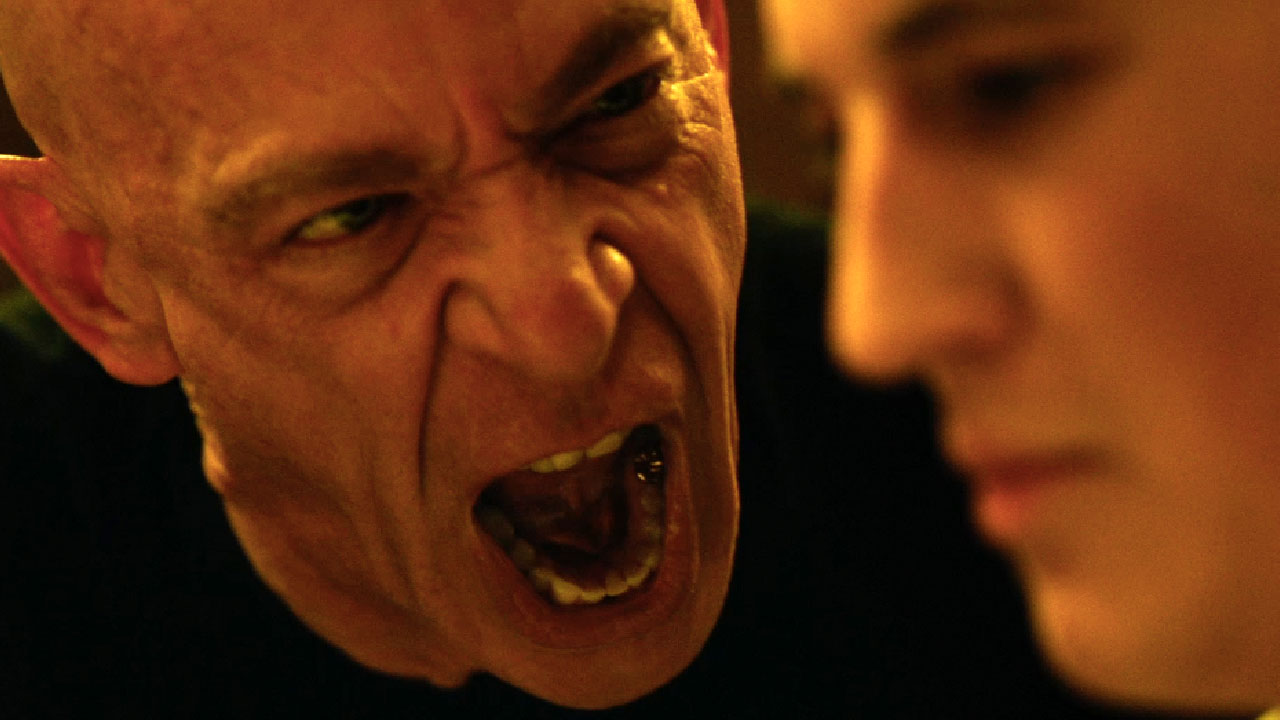
While practicing late one night, Neiman finds he is being observed by Terrence Fletcher (played by JK Simmons), the god-like instructor of the school’s top band, which has won both national and international acclaim. The interaction doesn’t go well.

But the erstwhile Svengali sees something in Neiman and eventually invites him to join his class, which is where the student begins to see the master less as a dedicated and willful but nurturing teacher and more as the manipulative, malevolent force striving for an unreachable ideal.

Perfection or death is Fletcher’s creed, and if you’re not willing to kill yourself over your failings, he is willing and eager to do it for you. You are using up valuable oxygen.

The beast will be satisfied (JK Simmons, Miles Teller)

The beast will be satisfied (JK Simmons, Miles Teller)

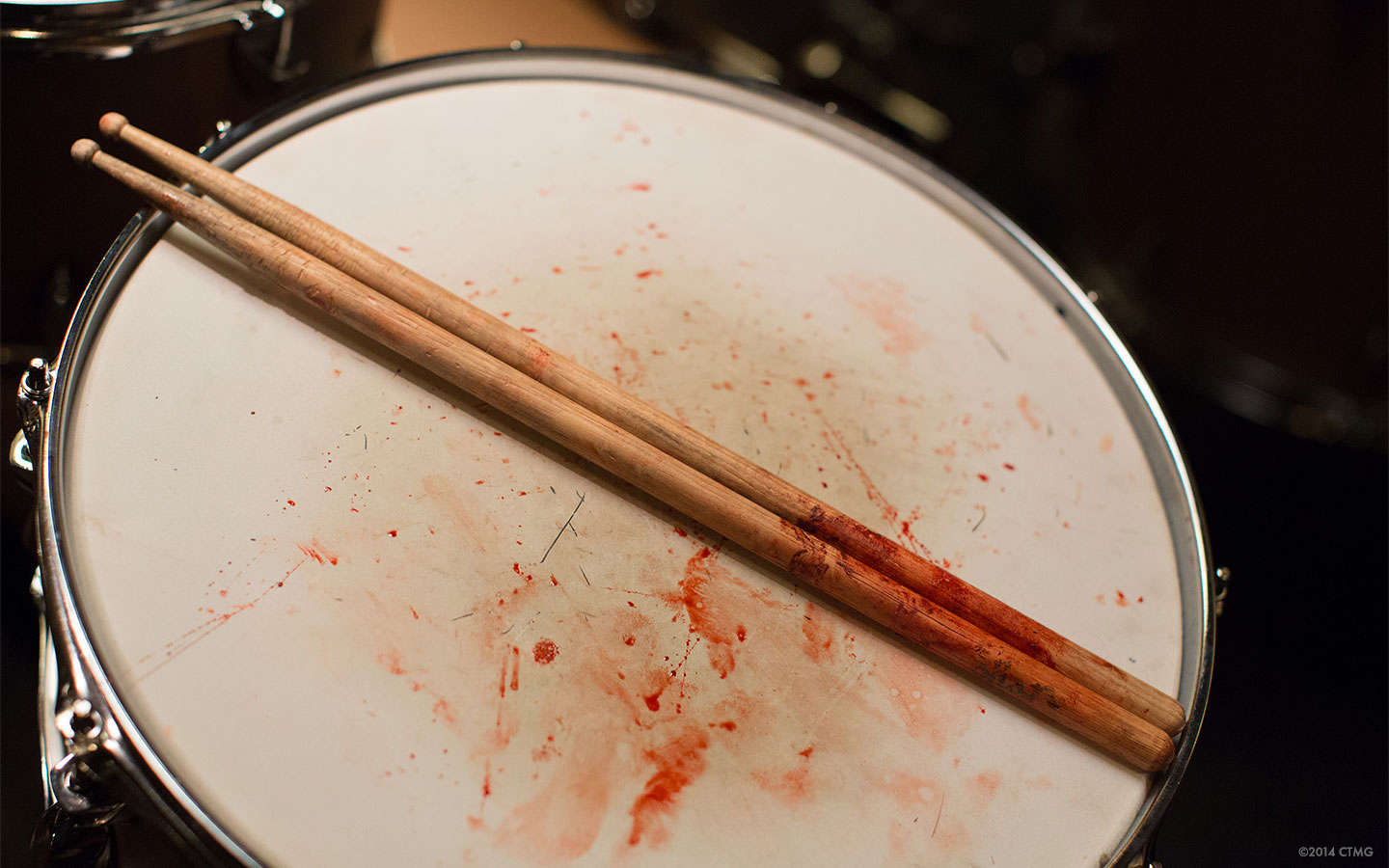
Even in the face of this unending physical and emotional torture, which includes an airborne chair, however, Neiman is willing to sacrifice everything to become the Charlie Parker of the drums. And that sacrifice extends to his budding romance as well as his family.

Nothing will stand in the way

Nothing will stand in the way

But even that is not enough for Fletcher and we watch Neiman self-immolate while the monster emotionally fiddles with everyone’s lives. Unsatisfied with Neiman’s ashes, however, the master lures the student back with a siren song of greatness in a move that only the audience can see is designed to destroy Neiman yet again.

Perfection is everything (Miles Teller)

Perfection is everything (Miles Teller)

But just when Satan achieves his final triumph, he is surprised to learn that his fallen Angel has learned a few things. And this is the ultimate Fall of Man of which we hear in poetry.

The final moments of the film are like watching Luke Skywalker take Darth Vader’s offered hand on the catwalks of Cloud City and unite to rule the Empire, destroying both the Emperor and the Rebellion in one moment.

Throughout the film, the heart palpitates until threatening to arrest from the crushing weight of the increasingly up-tempo music (think frenzied, not dancing) and Fletcher’s relentless pounding on Neiman’s soul. By the end of the movie, you will be exhausted and sated by the ecstasy of what has been achieved.

It will only be later, in the calm aftermath of normal life, that you will begin to understand the dreadful cost of that achievement, not just for Neiman but also for humanity.

If the documentary Blackfish drove people away from marine parks, it wouldn’t surprise me if Whiplash drove parents away from music schools.

Simmons won Oscar, BAFTA, Golden Globe & SAG

Simmons won Oscar, BAFTA, Golden Globe & SAG

Simmons won the Academy Award for Best Supporting Actor (and Golden Globe, BAFTA and SAG) for his performance as Fletcher, although as crucial to the story as his role was, it could be argued he was a co-lead. And although I admit to not seeing the films of any other performers in this Oscar category, I am surprised the award was given to Simmons.

The man’s performance was quite good—he played Fletcher so malevolently, I would probably take a swing at Simmons if I saw him—but it didn’t feel like the character required a lot of the veteran actor aside from pushing the portrayal beyond anyone’s comfort zone.

Where the film definitely deserved its Oscar and BAFTA wins was for sound. The music was amazing and despite being constantly interrupted, it still managed to deliver its power and its physical toll on mere flesh and blood. Each piece became its own rush toward a climax that never arrived, pushing you until your body screamed for catharsis and was instead met with a cut to the next scene. (Editing was pretty impressive.)

Again, however, despite all of these wonderful facets, it was the moral Fall of Man in the face of all this magnificent music that bothered me. For if nothing else, it made me question the purity of artistic expression and whether it was worth the exorbitant cost of another human soul.

The moment of our greatest achievement, writer/director Damien Chazelle tells us, is also the moment of our greatest loss. I find that sad.

Beaches Jazz Festival – Toronto

This weekend is the 26th Annual Beaches International Jazz Festival in the east end of Toronto, an oddly named celebration of eclectic music of all origins and stripes…not just jazz. In fact, in two years that I have visited this festival, I have yet to hear jazz more than 10% of the time.

Nonetheless, it is a very well attended party that keeps me largely locked in my home for three nights as it takes up 20+ blocks of street closures.

After being coerced into the melee by a couple of friends today, I offer the following images.

Canada – a musical tribute

It took me a few days, but I finally saw the musical tribute to my home and native land, written and performed by Canada’s Ambassador to the Stars (the actual stars, not the vainglorious ones) astronaut Chris Hadfield and his brother Dave.

It’s a beautiful little song, although I have to admit, parts of it feel really kind of hokey and it completely plays to many of the (don’t care if they’re true) stereotypes of my people.

Regardless, I hope everyone enjoys it (and comes to visit, if you don’t already live here…plenty of poutine to go around).

Meanwhile, in BC – Chilliwack

Not just a Canadian band of the 70s and 80s, Chilliwack is also a small town in Southern BC, a couple of hours west of Vancouver.

It also happens to be where my mom lived until a few days ago (before she moved).

So let me ask you, Whatcha Gonna Do?

See also, photos of: Fort Langley/Harrison Hot Springs

Is writing Art?

Questions you are unlikely to ever hear:

  • How close to the edge of the canvas can I apply acrylic paint?
  • If I’m sculpting the bust of Zeus, at what moment should I work on his nose?
  • Is it okay to drum the body of an acoustic guitar with my fingers rather than pluck the strings?

Painting. Sculpture. Music. Three of the myriad art forms where practitioners typically acquire some degree of training, and then step away from that training to develop  their own style.

Art comes where the rules end

Art comes where the rules end

Questions you can fully expect to hear:

  • In a 90-page screenplay, on what page should the inciting incident occur?
  • In a poem, should I complete a thought within a line or break it up into two or more lines?
  • Can I describe more than one character’s point-of-view within a scene in my novel?

Writing.

Every day, billions of people across the planet write. Post-It notes. Shopping lists. Emails. Love letters. And perhaps because of this ubiquity—perhaps because writing is rivaled only by speech as a form of expression—the world tends to view writing in a different category from all of the other arts, assuming people see it as an art form at all.

Everybody writes, so how special can it be

Everybody writes, so how special can it be

Obviously, there are better writers and worse writers, but more often than not, that reality is viewed as difference in skill, not art or craftsmanship. It is as though the world believes that if we all applied ourselves a little more, we could all write a great novel or play.

If asked, I am confident few would think that the only difference between them and Mozart, Yo-Yo Ma or the guy playing bassoon in the subway (my friend Jeff Burke) was time in.

Certainly, most acknowledge the greatness of Shakespeare, Dickens, Moliere, Hemingway (forgive my Western bias), but those are seen as rare exceptions to the norm.

Art comes where the rules end

Art comes where the rules end

People will buy paintings on the roadside. You will sometimes stop and listen to a musician in the park. But how many of us will stop and buy a novel or collection of poems anywhere other than the bookstore or online?

And sadly, this sense that pretty much anyone can be a writer pervades the writing community itself in insidious ways, and is particularly debilitating to new writer artists timidly trying to develop their craft.

Unlike almost any other art form, to my eye, writers get hung up in the right way to do things, as suggested by the questions above. As an example, this post was prompted by similar questions raised by a novelist blogger I follow.

It is okay to emulate aspects of others’ writings, to follow certain conventions of grammar and syntax. But at the end of the day, you have to ask yourself why you write; because it is a passion within you or to please the universe?

“Write the way you want to write,” was my advice to her questions on acceptable style (my italics). “As your colleagues suggested, this is just your style and will either be liked or not liked by your readers.”

“Never be afraid to be yourself…your readers will respect that in you,” I concluded, “and anyone who doesn’t is frankly not your reader.”

No one questions the difference between the skill of painting a house and the art of painting a landscape. Why should the same not be true for writing a Tweet and writing a poem?

Writing is an Art Form, to answer the title question, and you—the writer—are an Artist.

Learn from those who have come before and who practice now, but be brave and divine your own path.

Music and the soul

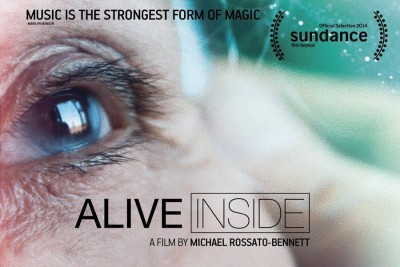
Alive Inside movie poster from the Sundance Film Festival

Alive Inside movie poster from the Sundance Film Festival

I am not a musician. I do not play an instrument, nor do I sing (not well, at least), and I do not understand how music is constructed. I do, however, like music and firmly believe that if we ever discover proof of a human soul, it will translate itself to us in the form of music.

I have, of course, no evidence to support this belief, although a recent experience at the Nashville Film Festival suggested I may be on the right track. The event was the showing of a documentary called Alive Inside: A story of memory and music.

The film, directed by Michael Rossato-Bennett, follows the story of social worker Dan Cohen who has spent the last several years bringing iPods to nursing homes across the United States. Cohen has found that even with the most neurologically shut down senior (e.g., clients with Alzheimer’s disease or other forms of dementia), revive when they music from their youth.

Director Michael Rossato-Bennett (l) and social worker Dan Cohen (r)

Director Michael Rossato-Bennett (l) and social worker Dan Cohen (r)

Slowly, as the story plays out, we are introduced to human husks that reside in these homes and palliative care centres. People who had once been husbands and wives, mothers and fathers, sons and daughters, but who have been reduced to masses of barely interactive biological matter by their medical conditions.

And yet, when the headphones are placed over their ears and music pours down thin white wires into ear buds, those husks are infused with life. Like a balloon that only shows its true form upon inflation, the inert bodies and death masks take the form and substance of the human beings they once were.

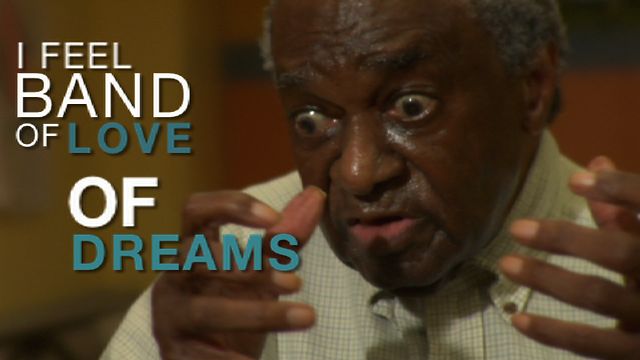
Henry comes alive again as the music reaches inside

Henry comes alive again as the music reaches inside

Eyes glow with life, spines regain flexibility, paralysis becomes movement, and disengaged spirits connect with the world. If only for a few hours, the catatonic fog lifts and a human is reborn.

The science—discussed in part with Dr. Oliver Sacks—suggests that the familiar, beloved music of the individual’s past activates that part of his or her brain as yet left untouched by disease, effectively relinking the connections between their worlds within and without. That may be true, scientifically.

What was certain to me was that the music either reignited the spark that makes us human or provided the fuel that converted a seriously diminished spark into a sputtering flame. The results were miraculous.

Even in cases where disease hadn’t erased the person’s individuality but dampened it with manic-depression or multiple sclerosis, the music seemed to quieten the internal maelstrom enough for the person to re-emerge. The woman immobile without her walker, shoved it aside to dance to Spanish guitar.

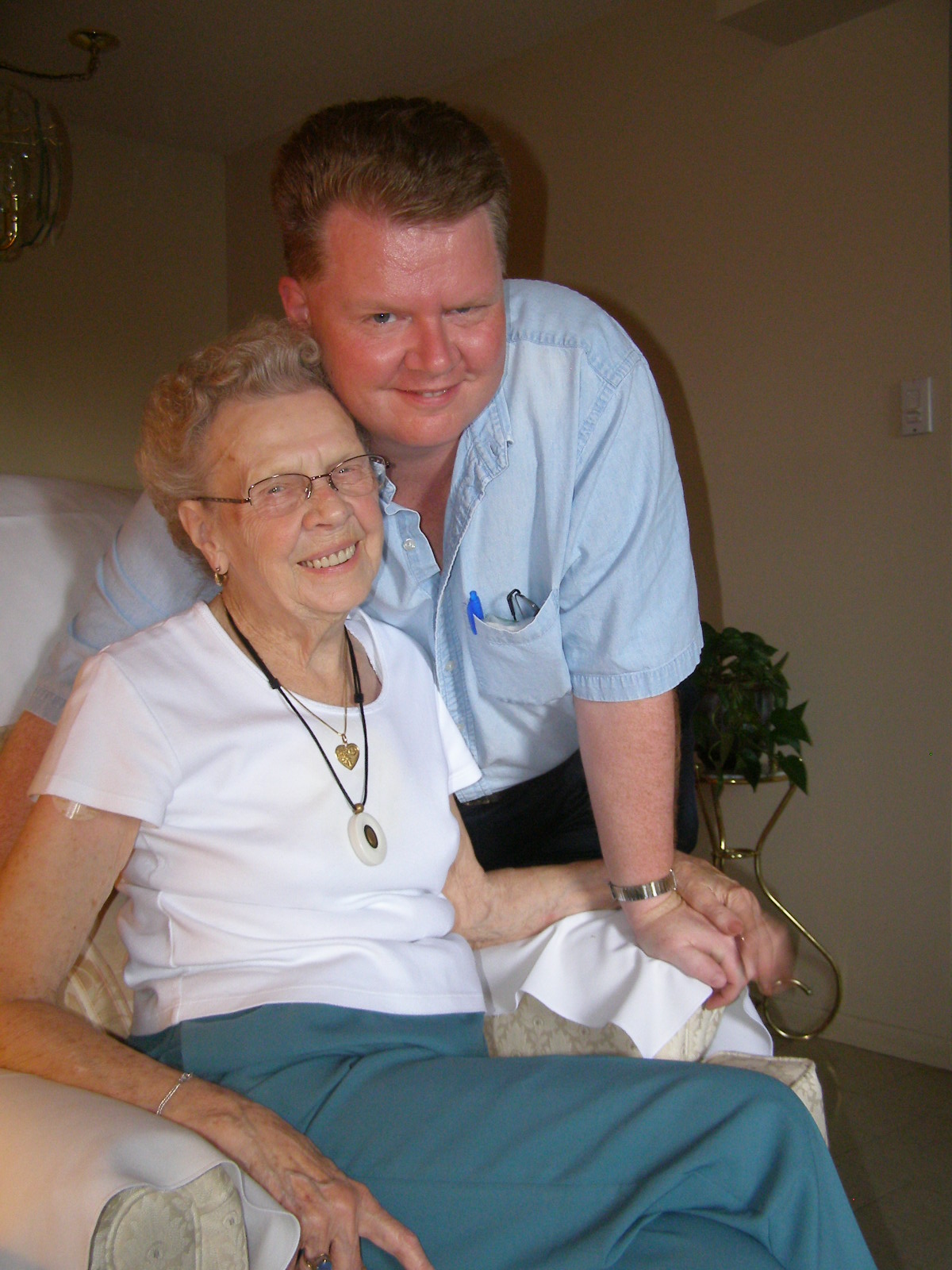
The story of Alive Inside had a personal connection for me as I immediately thought back to my now-deceased grandmother Dorothy who fortunately had maintained her mental faculties except at the very end. Her apartment, as I remember it, was constantly filled with music, her CD player rarely turned off. New CDs coming into her home every Christmas, every birthday. Elvis, Michael Buble, The Mills Brothers, Motown and light opera. She was at her most contented when listening to music.

The caregiver...

The caregiver…

...becomes the care-receiver.

…becomes the care-receiver.

But the world was completely different when she was in the hospital—a life of cardiac issues catching up with her eventually. In the anemic, lifeless wards where wonderful warriors did their best to stave off the inevitable, I could see Dorothy’s spirit wane with each passing day. Even if I didn’t always think she was physically ready, my happiest days were knowing she was going home.

When something upsets the norm, ceases to function correctly or goes completely dormant, it is easy to set it aside and forget about it. When that something is a loved one, setting them aside is never easy but it is often easier than coping with the problem. And once set aside, forgetting becomes that much easier.

Seeing that a person is still inside that morbid husk of a human, however, changes everything. Knowing that we have committed a living, breathing, connectable loved one to solitary exile becomes less palatable, less conscionable.

Music isn’t the solution. It doesn’t reverse what has happened to the person biomedically. Within minutes or hours of the music ceasing, the individual typically deflates to his or her former shell.

But we who have witnessed the transformation, we have been permanently changed because we can never see that human shell the same way ever again.

We know that shell is not lifeless, and once we know that, there is no going back.

If you get the opportunity to see Alive Inside, please do. And be sure to bring plenty of facial tissues.

Cadence and Orson Welles

My favourite shot of Welles as I believe that smile and those eyes tell me everything I need to know about the man

My favourite shot of Welles as I believe that smile and those eyes tell me everything I need to know about the man

Being a good writer necessitates having a good eye and a good ear.

The good eye is the attention to details that will help you paint a word-picture of what you have seen with your physical eyes and processed in your mind’s eye. It’s not necessarily about writing long-winded passages of backgrounds or going into minute detail of a character’s physical attributes (I’ve done plenty of that), but rather in choosing the most precise and meaningful words to describe the environment or the person.

The good ear is the attention to how people communication and how they speak, not always the same thing. Again, it involves finding the right words and inflections (at least implied inflections) that give the reader and actor clues as to who this person is. And perhaps just as importantly, it is about finding just the right cadence for your character’s speech patterns.

If you listen really closely to a conversation, you’ll realize that there is little difference between speaking and singing. There is a rhythm, a cadence to speaking. Conversation is an improvised duet sung a capella. But unlike a traditional song which may have a subset of arrangements, each of us sings to our own tune, with our own rhythms and inflections. It is one of the many things that sets us apart from each other.

When writing characters, it is important to keep this in mind as all too often, a group of characters can have a certain monotone, which I use not to imply flatness so much as sameness. Often, I believe, it occurs when the writer neglects to add variety to his characters’ speech patterns and instead writes them with one voice; his or hers.

The best writers don’t make this mistake…or at least minimize its occurrences. Each character he or she presents us is truly unique, jumps off the page or screen, provides his or her own internal musical accompaniment.

One of my favourite writers of the last decade or so is Aaron Sorkin whose overall writing has its cadence but whose characters also tango (or more often tarantella) across the screen. Read the pilot to The West Wing or the screenplay for The Social Network and you will know you’re reading Sorkin.

But for me, perhaps a better example is Orson Welles, the man who would be Kane.

Recently, someone discovered a long-lost unproduced screenplay by Welles called The Way to Santiago, written in 1940-41. Another blogger discussed the find recently, and provided a link to the actual screenplay (see link below). You only have to read a couple of pages to remind yourself (or educate yourself on) how Orson Welles wrote and the energies he imbued in his characters, each one a snowflake of facets and reflections.

The opening page of The Way to Santiago

The opening page of The Way to Santiago

Now, listen to the films or read the screenplays of The Third Man, The Magnificent Ambersons, Touch of Evil. Although you may question the choice of actors, you can clearly hear or see the distinctions in the characters. Bathe in the richness and depth of each one as he or she is captured for this brief moment. This is the stuff of which dreams are made.

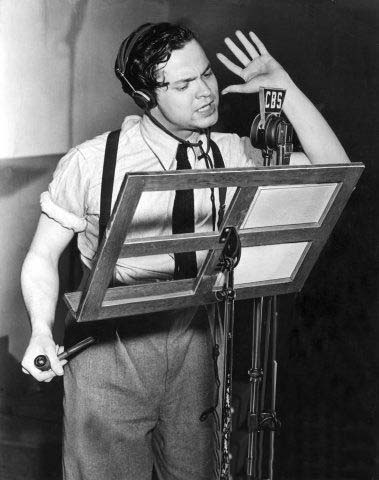
It is also interesting to consider that Welles got his start on stage and in radio, where the human voice plays such a larger role in conveying a story than it does in film. There is much less to occupy the mind onstage or in radio and so dialogue carries a significant burden of not only informing but also entrancing the listener.

Although the stories I write are distinctly different from the Wellesian oeuvre, there is much I can and do learn from this master of the written word. He is worth the read and the listen.

A classic image of Welles in his radio days

A classic image of Welles in his radio days

Links of interest:

The Way to Santiago at Cinephilia and Beyond

The Way to Santiago, starring Howard Hesseman on Vimeo (A valiant but not brilliant attempt)

“Thank You, Mr. Welles: Definitive actor, consummate director, and true auteur” at Curnblog.com

“Screenplays by Orson Welles” (listing) on Wikipedia

Me and Orson Welles A light but adorable movie that probably portrays Welles’ character better than Welles

Summer in the City – Toronto-style

No monsters today, just people taking in the sights and enjoying the beautiful weather on a Sunday afternoon.