Brain of a thousand voices

Hairy

Do you become the characters you write as you write them?

Please understand, I’m not asking if you’re writing a serial killer, do you go out and take a few lives in the neighbourhood simply to get in the right frame of mind (or at least, I’m not asking you to admit it here). Rather, do you inhabit the thoughts and moods of your characters as you type/write?

I’ve often wondered what it would look like if I video recorded me writing my screenplays or novels. Do my body language and facial features reflect the inner turmoil of my characters? I know my typing does.

If I am writing people who are angry, my poor keyboard takes an absolute pounding as I act out all of the aggression that’s flowing through my characters’ actions and words. Likewise, if I am creating a scene that starts slowly and then builds to a crescendo, I find the mood of the scene is reflected in the tarantella of my fingers across the keys.

I have also noted some physical cues. The more tense a scene, the more my jaws hurt from all that clenching. My libido shifts in a love scene (sorry if that is TMI). A smile lights my face in humourous scenes. And I have actually achieved tears in particularly emotional scenes.

For the moment, I will assume that I am just emotionally in tune with my characters, but I cannot yet rule out a slow nervous breakdown.

Thus, I would love to hear other writers’ experiences in this area.

Clean

You have the write to know

Write

I write about writing. I’ve seen dozens of blogs that do the same and suspect there are hundreds if not thousands more blogs about writing I have yet to find.

I routinely visit web sites dedicated to writing, reading amazing posts from amazing (and some not so amazing) writers. And I have two bookshelves dedicated to various aspects of writing, from dictionaries and tomes on prose to bound witticisms and opinions on the minutiae of character, plot and the perfect turn of joke.

I have taken classes on sketch comedy, screenwriting and story editing, and have listened in on dozens of podcasts and teleconferences given by the kings and queens of screenwriting—the latest given by Robert McKee. And I have recently started going to writing conferences, bending and rubbing elbows with writers established and in the birthing process.

Conference

All of this information and guidance has been invaluable to helping me understand my craft. But for all those thousands of hours of effort, I’m really not sure that any of it has helped me be a better writer.

In truth, I think there are only really two things you need to do to be a better writer:

  1. Write
  2. Share what you’ve written

Unless you’re willing to write, write some more, write yet again, and then when your body has given up the ghost with exhaustion, write again, you will never get better. All of the academic training and guidance in the world will not make you a better writer if you are not willing to write.

Leonid_Pasternak_001

Writing can be like literally shoving fingers into brain to extract words

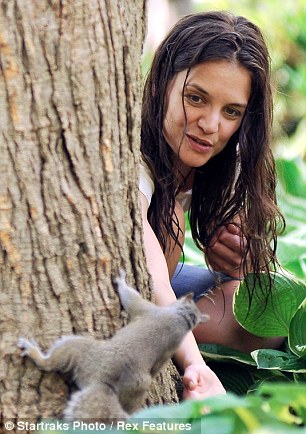
But writing is a very insular process, so it is equally important that you share what you have written…with literally anyone: your mom, your partner, your dog, the guy on the subway, the squirrel at the park.

How does the other party respond to your work? Are you communicating well? Do they see, hear, taste, what you see, hear, taste?

I am not asking do they like what you wrote. Personal tastes are just that. Rather, you want to know do they respond to what you’ve written…good, bad or ugly.

Oh, and I was only being half-facetious about the dog and squirrel…try it. You’ll be amazed at what happens.

Because most animals can’t read—I blame the current education models—you’ll be forced to read your work to them…the minute your work moves from visual to aural, a different part of your brain opens up and you hear whether you are affected by your work. Invaluable.

Love the internet for this stuff..."woman talking to squirrel"

Love the internet for this stuff…”woman talking to squirrel”

So read all you want, whether online or in those ancient paper constructs we call books. Attend conferences, lectures, podcasts and classes. I applaud your effort, your drive.

But I reiterate…there are only really two things you need to do to be a better writer:

  1. Write
  2. Share what you’ve written

Good luck.

The job you hate is killing your creative spirit

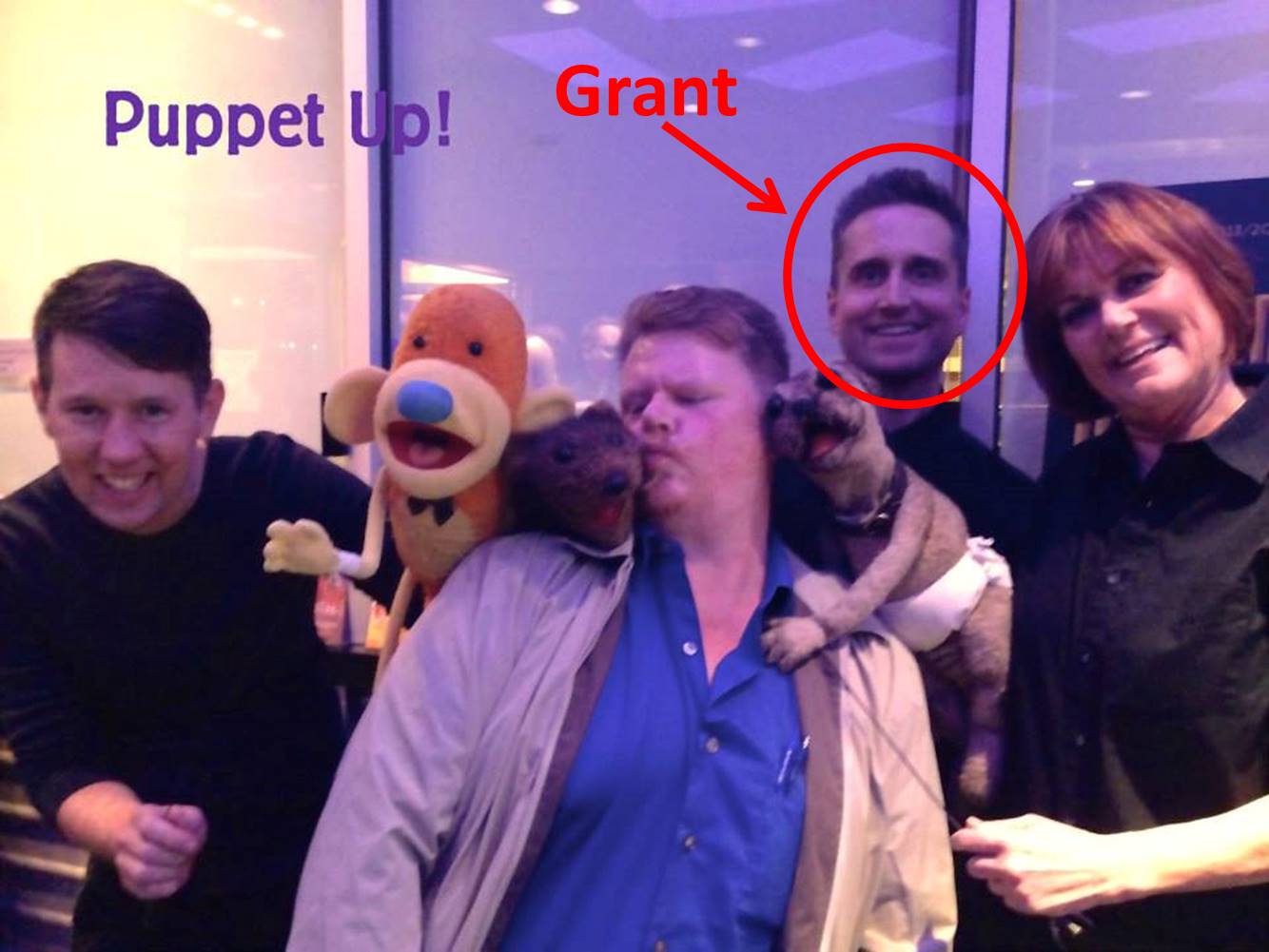
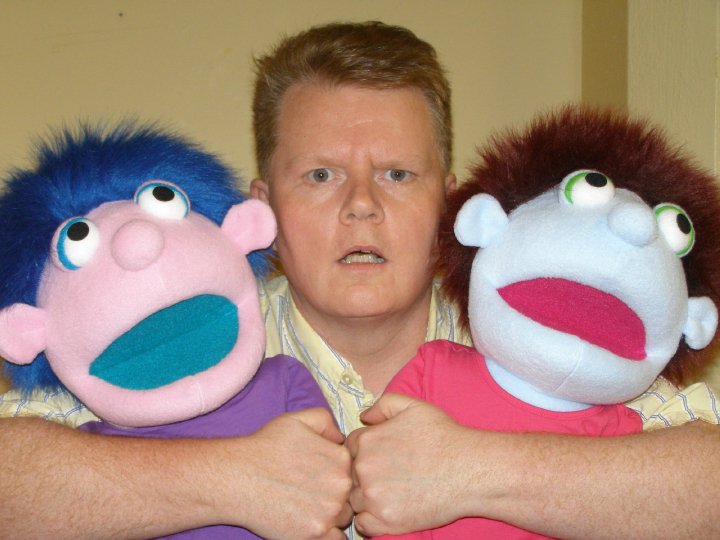
The wonderful Grant and his weasel buddy join me for a post-show photo (also shown Peggy Etra and Brian Clark).

The wonderful Grant and his weasel buddy join me for a post-show photo (also shown Peggy Etra and Brian Clark).

Grant Baciocco is an amazingly talented actor and puppeteer I had the good fortune to meet online and then in person when he came to Toronto with the improv puppetry show PuppetUp! (about which I have raved extensively elsewhere).

Well, aside from his amazing talent, he also has a wonderful creative spirit, both in the sense of what he creates and how he tries to inspire others to be open to their own inner creative spirit. To this latter point, he has a wonderful blog Grantblog: Ruminations & Pomposity that I heartily recommend.

At the beginning of each week, he posts Creative Mondays and today was no exception. Today he talked about “A job you hate”, which I excerpt below:

For years after college, about ten in fact, I worked as a substitute teacher.  It was an okay job, certainly flexible enough and I was making money, but by the end of those ten years I was starting to burn out because it was not the job I wanted to be doing.  I was good at it and several times I was told I should get my teaching credential because I was such a good teacher.  But deep inside of me I could feel a darkness building up because I was doing a job I absolutely hated.

The moment I made the decision to stop subbing and focus on The Radio Adventures of Dr. Floyd, it felt like a weight was instantly lifted from my chest.  I attempted, for the millionth time, to lose weight and it was actually working (lost 80 pounds).  I was just a million times happier than I was when I was subbing.  And guess what?  I became more creative!  This was the creative boom era for Dr. Floyd, because I was doing something I love.

Grant’s is a lesson too many of us learn very late in life (NOTE: I did not say “too late in life”…it is NEVER too late).

In my case, I was fortunate enough to have a series of occupations I loved for a period…scientist, science writer, media relations, advertising copywriter…but with each, I stayed in the occupation long after I had fallen out of love with the choice. I had to be a certain amount of miserable before I was brave enough to jump.

But two years ago, I completely jumped ship to pursue my true love: story telling (screenplays, novel, sketches, short stories). I’m still not making money off any of this, so I live on freelance magazine writing and ad copywriting. But to Tiffany’s point, it is what I do to eat and sleep under a roof.

If you are fortunate to know your passion—it can take time to figure out what it is—then you must make it happen to find happiness (hunh, “happen” and “happiness”…so similar).

And if you haven’t fully defined your passion yet, go with your gut until you do. Explore the universe of opportunities, until you do. You may not end up the financially richest person on the planet, but you’ll definitely be one of the spiritually richest.

If you don’t want to take it from me, then take it from Grant. Find your happiness and pursue it with everything you have. Despite appearances, you really do have nothing to lose and everything to gain.


You can follow Grant on Twitter: @ToasterBoy

Lessons from bad movies – The Canyons

canyons poster

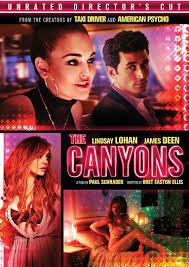
I believe that you can learn something from every experience you have, and because I am trying to learn more about screenwriting and films, this means watching bad movies. Thus, I was intrigued when I saw Netflix was showing a film called The Canyons.

Written by Bret Easton Ellis (American Psycho) and starring Lindsay Lohan and porn-star-going-legit James Deen, The Canyons shows the decay of Hollywood through the eyes of a struggling young actor who is still in love with his former girlfriend who is now the adornment of an unbalanced but oh-so-controlled producer on a trust fund. Paranoid from birth, the producer eventually learns of rekindled flames between the two and slowly his self-control ebbs. To tell you more would be to spoil the (complete lack of) surprise in this film.

Although the story was straightforward and highly predictable, I have to admit to being confused by one very big thing: I don’t know who the protagonist is. Through whose eyes is the audience supposed to see this story?

Lindsay Lohan’s Tara (the girlfriend) shares almost equal screen time with James Deen’s Christian (producer) and Nolan Gerard Funk’s Ryan (actor), and the story’s perspective seems to shift on a whim. If I go purely by a scale of which character left me feeling least icky in their behaviour, I would have to say Ryan was the protagonist. But he feels more like an unwitting pawn in this film.

Interestingly, however, if I was forced onto a limb, I would actually say Christian was the protagonist despite his antagonist schtick. As a character, he is reminiscent of American Psycho’s Patrick Bateman…possibly his baby brother…although there is no comparison between Christian Bale’s performance and James Deen’s.

Speaking of which, the wooden performances of the actors don’t help my quest for a protagonist. (At her best, Lohan’s glamour-gone-gory Tara was reminiscent of Ann-Margret’s characters in Carnal Knowledge and Tommy at their most strung out.) Without distinct emotive clues and any sense of subtext, I really have no clue what any of the characters hopes to accomplish…there simply aren’t any goals, again with the possible exception of Ryan.

Lohan-Margret

To continue piling on, I would be intrigued to find out what kind of movie director Paul Schrader thought he was making.

On the one hand, with rampant over-use of black & white images of derelict movie houses, it seemed Schrader was going for art-house film, using the photographic decay as a metaphor for the social decay of Hollywood (this is the man who wrote Taxi Driver and directed American Gigolo).

At the same time, his rampant insertion of lengthy scenes of graphic sex gave the film a B-movie, soft-core porn feel. Here, Schrader may have been going for a moral decadence metaphor, but if so, I think he failed terribly. Instead, we were left with a humping morass of buttocks and breasts that a 13-year-old boy couldn’t be bothered to whack off to.

the-canyons-04_article

But the one scene that truly grabbed my attention was a lunch conversation between Tara and Christian’s assistant Gina, played by Amanda Brooks. What caught my attention, however, was not the scintillating or captivating dialogue (there wasn’t any) or the repressed subtextual exchanges (they were incapable) but rather the fact that even the camera was unable to pay attention to the scene.

On either close up, the camera angle perpetually slid to the left or the right, and sometimes back again. Not panned to capture a background element. Slid, as if someone had forgotten to tighten the flange that holds the camera to the tripod. The camera literally nodded off.

So then, if this movie was so bad, how could I learn a lesson?

The lesson of The Canyons is that if you can get an actor of sufficient name recognition who is trying to prove something (e.g., I’m not washed up) interested in your script, you can get anything made.


Postscript:

As I looked up some background facts on this movie, I learned that The Canyons was the first film to be largely funded via crowd-sourcing. Given the performance of subsequent crowd-sourced films like Zach Braff’s Wish I Was Here (poor) and Kristen Bell’s Veronica Mars (modest), I am beginning to wonder if there isn’t some merit in studios having some influence on whether and how a film gets made.

Too many voices (spoil the screenplay)

Superfluous

Congratulations! You have just outlined your next screenplay. Or maybe you’ve written “Fade Out”. That’s quite an accomplishment and you should be proud of yourself.

Go ahead. Take a moment to luxuriate. I can wait.

Okay, now I need you to kill one of your characters…or two…or maybe even three.

What? Oh, I know you’re not writing a thriller, but murder will be good for you. And even if you are writing a thriller, you’ll feel better after you pull the plug on certain characters.

Having written a few screenplays and having read 50X more, one common thread I find is that writers (me included) create too many characters, some of which are completely unnecessary.

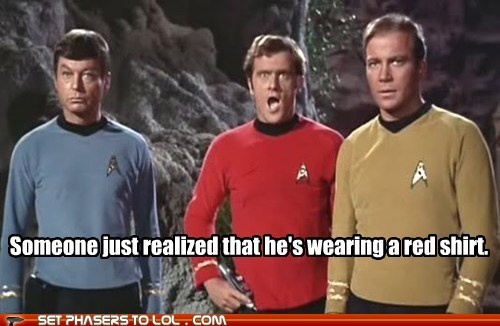
Now, I’m not talking about the red-shirted cannon-fodder that fills the background…the cab driver, the concierge, waiter, ex-boyfriend, whatever. No, I’m talking about those characters just below the protagonist, antagonist, side kick/mentor/love-interest who help move your characters through a plot point (or several) and then disappear completely.

red shirts

Let me give you an example from a murder thriller collecting dust on my hard drive…The Children of San Miani.

In my story, a journalist provides a young detective with just enough information to introduce her to the lead suspect, a victim’s rights advocate with a major reason to want the first murder victim dead.

In reviewing my first draft, I realized that the moment the journalist connected the detective and the advocate, he completely disappeared from the story. He became superfluous to (story) need, so I simply stopped talking about him.

This begged the question: Did I need the journalist character at all?

With very little thought, I quickly realized I could accomplish all of the journalist’s plot points without the journalist, either by ascribing his actions to other main characters or to the story itself. And poof, he was gone.

The result was a story that was that much tighter. A story that was a bit less confusing and yet still maintained the mystery I needed for the thriller.

Look at your story. Focus on those second-tier characters.

Are there some that don’t make it to the end of your story; that simply trigger or drive a scene or two forward?

Can those triggers or drives be handled by another character in your story, maybe a main character? Or perhaps those actions can extend the life of another secondary character who just plops into your story from the ether?

In some cases, the answer may be no; that in the grand scheme of things, this character is vital if temporary.

Fine. Keep the character. You are the best judge of what is needed for your story. But I’ll bet at least one character can go.

1248-left4dead-no-mercy-wallpaper-wallchan-1280x960

Show no mercy. Cut the strings. Release the Kraken. (Oops, sorry. Wrong movie.)

Don’t smother your screenplay. By eliminating the unnecessary, people will better understand and appreciate your story more quickly.

And when you may only get one read (if that), the easier you make it on your audience, the better.

(Images are property of owners and are used here without permission, and may be completely superfluous.)

Unlucky Lucy – a review

lucy_ver21_xlg

What if every time…

Number Line #1

someone tried to tell you something…

Whispering+in+ear_jpg

they inserted a photo or video…

student

that showed the same thing they said?

mirror

Pretty irritating, eh?

Welcome to the first 30 minutes of Luc Besson’s Lucy, released to theatres this weekend.

(I’ve done my best to avoid spoilers, below.)

What could have been—should have been—an amazing sci-fi thriller about the possible repercussions of a young drug mule who becomes exposed to the drug and slowly finds her brain building to 100% functional capacity, was instead a massive disappointment weighted down by a ton of metaphoric sledgehammers and drowning in a sea of over-exposition.

To be sure, there is a really interesting movie somewhere in the middle of the morass that ironically becomes its own metaphor by the end of the movie. But it’s as though Besson the Director didn’t trust the story written by Besson the Screenwriter to simply let the story explore itself.

As the drug takes hold of Lucy, she goes from being an interesting female character (if a little cliché) to an automaton who simply narrates…literally narrates…what is happening inside her.

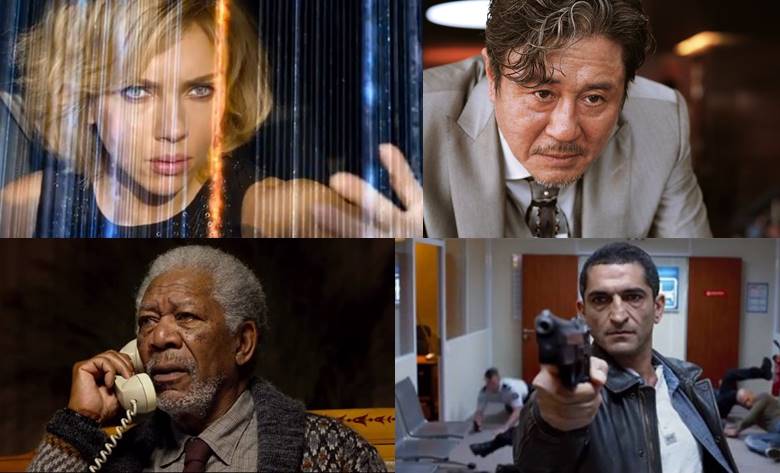
The drug lord Mr. Jang has the emotional range of complete indifference to mild irritation, which no doubt also expresses the feelings of acclaimed actor Min-Sik Choi, who portrayed him.

Even the calming voice and reason of Morgan Freeman’s Prof. Norman quickly gives way to befuddled camera-mugging and WTF?

The only truly interesting character was French police detective Pierre Del Rio, played beautifully by Amr Waked, who clearly functions as the eyes of the audience. As a friend of mine pointed out, even he at one point turns to Lucy and asks “What do you need me for?” What, indeed.

Lucy cast

To be certain, the visual effects in several parts of the movie were stunning, but as with so many movies I’ve seen in the past few years (e.g., Prometheus, Transcendence), the visual effects have become sleight-of-hand to keep you (or try) from seeing the weaknesses of plot and character.

The action sequences highlighted in the trailers take about as much time in the full movie as they did in the trailer, and so little is ever in doubt with the plot that the movie truly cannot be described a thriller.

But perhaps where the movie was most disappointing was in its promise to explore the nature of what it is to be human when faced with super-human capabilities. THIS is what the movie should have been about!

But Besson largely discards the question as quickly as he raises it in two short scenes involving a call home to mom and a simple kiss. And in both cases, Lucy coldly explains her conundrum, her human fears represented by the odd tear drop down an otherwise lifeless cheek. Rather than see Lucy struggle with her transformation, we watch her turn into a robot bent on a mission…a mission that she basically accomplishes without struggle.

But just to be sure we get the great metaphysical concepts behind the story, Besson then reverts to his earlier legerdemain, smacking the audience around with a brutally metaphoric journey through time and space. I give you intergalactic sperm meteors…you’ll know then when you see them.

And all this rancour without even touching on the biochemical, biomedical, anthropological and astronomical issues that run rampant in this mere 90 minutes.

This could have been an amazing movie. It wasn’t.

(Images are property of owners and are used here without permission.)

How I Met Your Series Finale

tv-set-with-a-broken-screen-81240769

Earlier today, my friend Marsha Mason posted her weekly blog on Why The Face. This week, Marsha chose to focus on series finales of television programs, picking up on the How I Met Your Mother phenomenon now that the teeth-gnashing and hair-pulling have died down.

Marsha considered this outpouring from the perspective of the magnanimous response of the show’s creators. An excerpt of her blog post:

And while they did what they felt they needed to do to bring their story to its completion, there was no way they were going to tell their audience that any of their feelings were wrong.

A beautiful way to look at the uproar.

But of course, Marsha’s post also made me think about the challenges of writing a series finale (damn you, Marsha, you made me think again).

I truly feel for showrunners who are faced with this task. It is a daunting task made that much more difficult by a dedicated audience, who for the most part can only be disappointed.

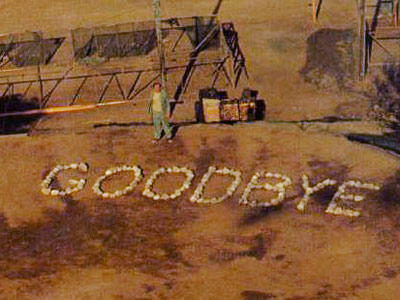
For me, the best series finales were done by shows like The Fugitive and M*A*S*H, where luckily, the writers had a hard end point in their story, i.e., the capture of the real killer and the end of the Korean conflict, respectively. In these cases, the resolutions between characters was more obvious (not to give the sense that the episodes would have been easy to write or weren’t written well). Similarly, The West Wing had the end of Bartlett’s 8-yr term and the inauguration of the new POTUS.

Mash-Goodbye_l

For other shows, the challenge is that the lives of the characters typically continue beyond the finale, if only in their fantasy worlds. From their perspectives, this isn’t the end of their lives; it’s Tuesday.

Thus, writers are forced to pencil in a flurry of seemingly arbitrary events to explain why the characters are parting ways or moving on, and typically, this means leaving a lot of unresolved questions for the audience. Closure is impossible when nothing is truly closing.

Take, for example, the end of The Sopranos…the family sits down to dinner in a restaurant…fade to black. After years of a series filled with violence that would make Titus Andronicus blush, the pure normality of this ending was almost a let down, and yet, rang as a true moment in human lives.

sopranos_final_scene_1

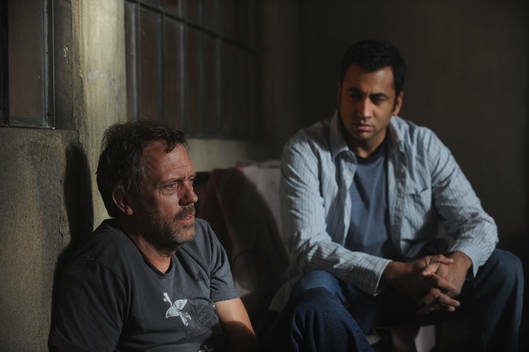
The alternative is to go big, such as the ludicrous ending of my beloved series House. The final 20 minutes or so looks like it was written by a group of pubescent boys hopped up on 24 consecutive hours of Grand Theft Auto. For god’s sake, it’s Gregory House…you couldn’t have him die of something he and his team couldn’t diagnose in time, only to have a letter arrive a week later from House showing he knew the diagnosis months ago?

houseandkutnerburning

Of course, the biggest complication is likely that most series have run out of steam well before they are given the opportunity for a series finale. All of the really great opportunities to end the series have long passed, the characters have little left to say to each other and it is only the blood-from-a-stone networks and die-hard fans who keep applying the paddles to the moribund concept. I give you the finale of Seinfeld. For this reason, I really do not look forward to the series finale of The Big Bang Theory.

TelevisionSeinfeldFinale

(I feel an admonition from Lee Aronsohn coming on.)

In these cases, better the mercy killing of cancellation than the sad wheeze of life-support equipment.

(Images are property of owners and are used here without permission…finale!)

charACTer

Anyone writing stories NEEDS to read the blog post by Chuck Wendig listed below!

http://terribleminds.com/ramble/2014/06/03/just-what-the-humping-heck-is-character-agency-anyway/

Wendig blog

Seriously. Please read this!

His pivotal point: “The story exists because of the character. The character does not exist because of the story.”

Too often, I read screenplays where the protagonist is merely swept along like a bobbing cork on a sea of conflict. They merely REACT to the injustice around them rather than ACT to change it. They are the victim of the story.

To my mind, a much more interesting character is one who takes action when presented with conflict and then deals with the repercussions of that action. In some stories (the best ones to my mind), the protagonist is his or her own worst enemy, bringing conflict upon him or herself.

It is not enough to chase your hero up a tree and then throw rocks at him. He can also catch some of the rocks and throw them back, perhaps hitting innocent bystanders who then turn on him as well.

As a reader and viewer, it is through the actions of your characters that we learn their perspectives, their world views, and thus, their flaws. And if your story has a redemptive angle, it is through the complete failure of this world view and the character’s re-evaluation of it that he or she is reborn.

Just like giving the same premise to 12 writers results in 12 different stories, placing any of 12 different characters into the identical situation with identical opponents will result in 12 different outcomes if the characters are real.

Honour that in your writing and honour your characters.

They are called char-ACT-ers, after all, not char-REACT-ers.


Wendig is on Twitter: 

Our story so far…

Bradbury

It’s been roughly two years since I stepped off the ledge of the normal world and into the free fall of who I am…and perhaps it is not surprising that I am still discovering who that is.


For the uninitiated, a brief recap:

After spending the better part of my adult life as a scientist, magazine writer, communications manager and ad copywriter/creative director, I realized I wasn’t happy. Adding fuel to that fire was the death of my beloved grandmother and of my marriage (thankfully not an acrimonious separation). But where I might have let these events take me to darker depths, I realized that I had never been freer in my life…and the freedom felt good.

Thus, with nothing to hold onto and therefore nothing to lose, I stepped into the abyss of uncertainty and am pursuing my life as a storyteller. And nicely, two years in, I am starting to see dividends.


After taking screenwriting classes for a while, I now feel confident that I know what I am doing and have no problem trusting my instincts when it comes to storytelling. I’m good at this.

My latest and possibly most commercial screenplay to date, The Naughty List, awaits external validation in 4 different screenplay competitions. (I may be good at this, but my name is hardly renown at this point.)

My first screenplay Tank’s has slowly climbed its way up the “charts” of screenplay competitions over the past year, and after being a Second Rounder at the Austin Film Festival, it took top prize in the Nashville Film Festival as Best Animated Feature Screenplay.

SomeTV!, the sketch comedy show that I co-wrote, is in front of cameras, and I am told by our Producer/God-head that the initial cuts look amazing. You’ll see the footage as soon as I can send you to it.

Eye of the Beholder, the novel I am co-writing with Agah Bahari—based on the real events of his life in Iran—is starting to write itself (a wonderful moment for a writer) and already has anticipatory buzz in New York entertainment circles.

Eye of the Beholder

I wrote a short children’s book, Butch Goes To Work, that teaches children about working dogs and the abilities of people with disabilities. It is currently seeking a publisher.

Really, really slowly (sorry Kevin Scott), I am co-writing a comedy album in the understanding that what doesn’t lend itself to YouTube is perfect fodder for iTunes!

I almost signed an agreement to develop a screenplay treatment of a mystery novel, and even though this project didn’t come to fruition, I will continue to work with the novelist on future projects.

And I am in the process of taking my new life to the next level by moving to Los Angeles. When the move will take place is still a question.

I am grateful to the folks involved in the magazine and advertising work that continues to pay my bills. And I am over-the-top grateful to all of my friends, family and other supporters who applaud my journey at every turn.

I am a storyteller. I tell stories. And I have never been happier.

PS I don’t know if Bradbury actually said the quote at the front of this piece, but he or whomever was right.

And that’s the (mostly) truth – my new bio

Okay, so my producer for SomeTV!, the sketch comedy insanity currently in production in Toronto, asked me to provide him a short bio for the group’s web site.

Keeping in mind the sheer brilliance/stupidity of what we are attempting, I sent him this:

A born story-teller and punster, Randall told his first knock-knock joke in the Obstetrics Department of a Toronto hospital at the ripe old age of today. His early comedic repertoire consisted of poop jokes, fart jokes and snot jokes, but on learning that Vaudeville was dead, he learned how to write. After several failed attempts at living other people’s lives (scientist, journalist, press agent, ad man), he has more recently focused his energy on sketch comedy and screenwriting. In 2014, Randall won the Nashville Film Festival award for Best Animated Feature for his screenplay Tank’s. His influences are caffeine, Mel Brooks, sleep deprivation and human frailty.

Would love to hear your thoughts!

Randy (the one in the middle)

Image