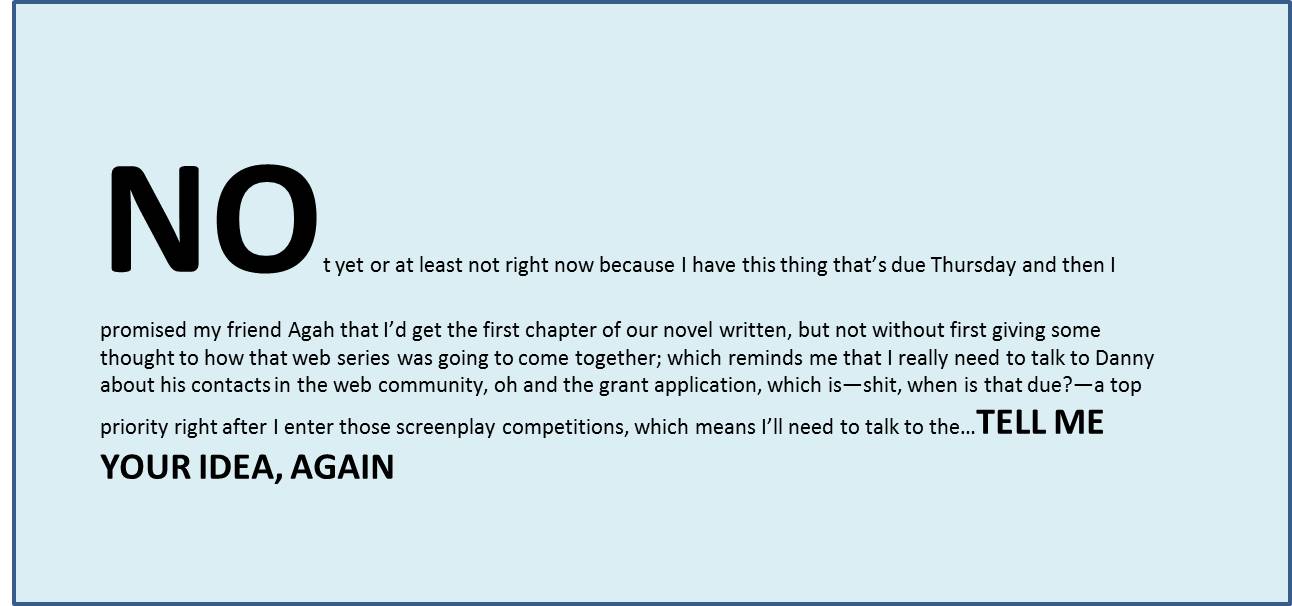
No

Not yet

I love what I do.

I love writing. I love coming up with new ideas to write. I love helping other people put their ideas into words and then into action.

This is why I struggle with one of the shorter words in the English language: No.

Hello, my name is Randy, and I am addicted to new projects.

There was a time when my inability to tell people no stemmed from my fear of letting them down. Or more accurately, my fear of them never asking again and my value as a person being reduced to zero.

Not so now, luckily. Now, I find my value internally. I am, therefore I have value.

Interestingly, though, I still struggle to say no. But now, it’s a curse of enthusiasm and confidence, now fear and self-loathing.

And to complicate things further, that same enthusiasm and confidence attracts people who are more timid in one or both. People with ideas but lack voice, or with voice but lack means.

I am glad that they see me as a vector through which to explore and advance their visions. At the same time, I have to remember that my bandwidth is limited. It is less the hours in a day and more the daily ration of creative energy that limits me.

(BTW, this is why I don’t upbraid myself for spending hours on the computer or playing Solitaire. That is my period of recharge.)

At some point, I have to limit my involvement in others’ works. I have to save enough space for my paying gigs, lest I be hungry and homeless, and for my creative projects, lest I be frustrated and unhappy.

I have to say “No”.

You recently published a book and want to turn it into a screenplay? Great!

You’ve got an idea for a comedy sketch event? Fantastic!

I came up with another great concept for a movie? Congratulations! (Yes, even I drain my batteries.)

I’m not saying I won’t help, but don’t take it personally if I limit my involvement. It is not a reflection on you or your idea but rather on me and my limitations.

Today, I can work with you. Tomorrow, I may only be able to listen to you. The next day, I may not even be able to do that.

Oh, and I’ll do my best to recognize and respect those same boundaries in your life.

No doesn’t mean your idea sucks. No doesn’t mean I never want to work with you. No simply means I can’t, not right now, no matter how much I might want to. There are shades of No.

I can’t because I already have plenty on my plate. I can’t because I have to keep myself a priority. I can’t simply because I can’t.

But I wish you all the best in your efforts.
Yellow sub no2

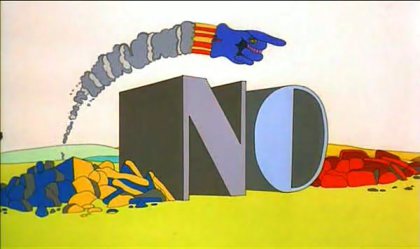
In a slightly unrelated brain fart, the concept of No reminded me of one of my favourite revelations from the movie Yellow Submarine, the animated Beatles film.

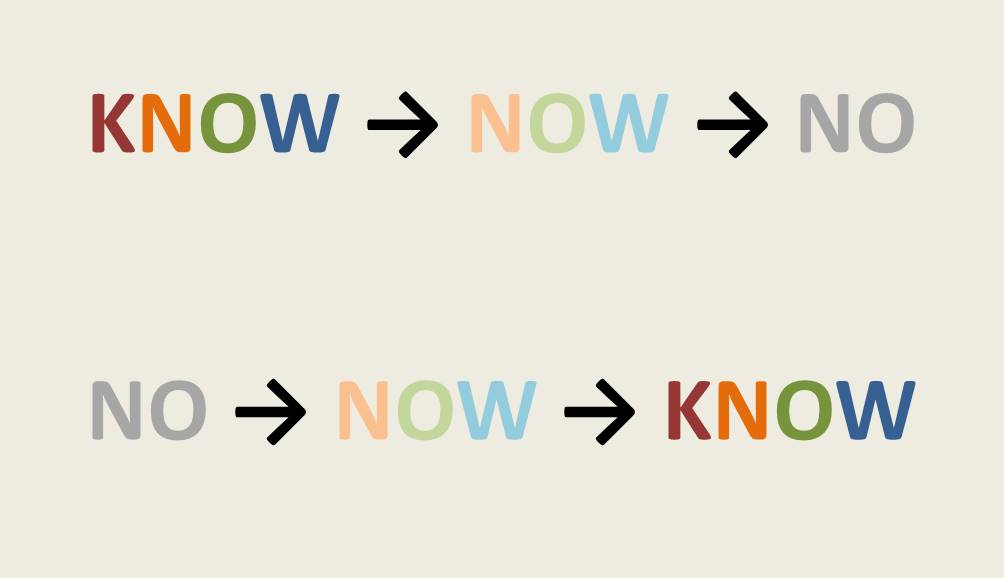
Early in the film, as the forces of evil are over-taking Pepperland, a ballistic glove called Glove chases people and smashes things with his giant fist, including the letters in the giant Technicolor word “KNOW”. First, he smashes the K to make the word “NOW”. He then smashes the W to make the word “NO”, which becomes black-and-white.

Late in the movie, when the Beatles—disguised as Sgt. Pepper’s Lonely Hearts Club Band—lead the people’s revolt to reclaim their land, the smashed letters reverse and become colour again.

What surprised me was that having watched the film at least a dozen times before, it wasn’t until late in my “adulthood” that I realized the message embedded within the two events.
No pic


Consider my mind blown!
Screenwriting, not choreography

Write-dance

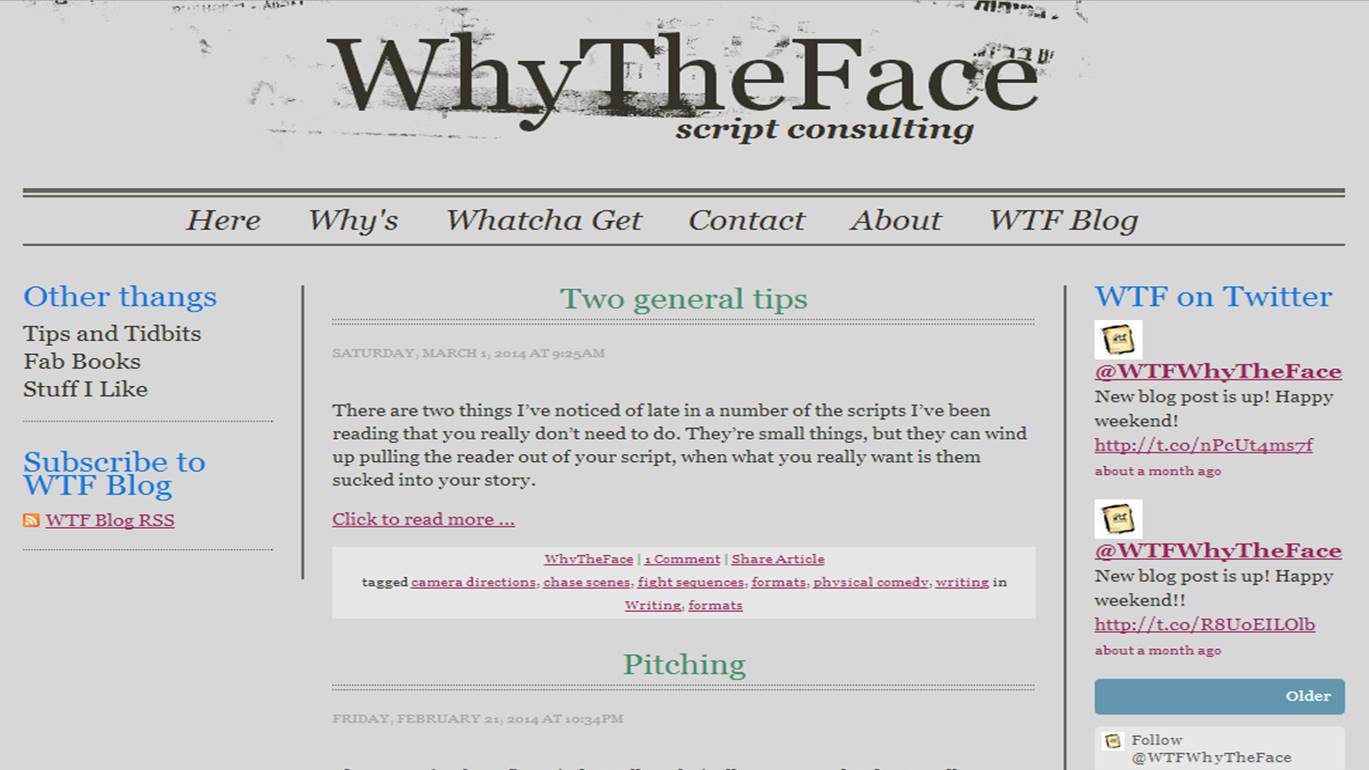
In her weekly blog Why The Face, my friend Marsha Mason (more “Hey, there!” than Goodbye Girl) hits briefly on two topics of particular angst in new screenwriters: camera directions and over-written action sequences.

For me, both of these come down to the same issue: the screenwriter’s need to choreograph his or her story so that the reader “sees” the movie as the screenwriter “sees” it.

Below, with permission, I have reproduced Marsha’s original post and my comments on it.

WTF

Why The Face, March 1, 2014:

There are two things I’ve noticed of late in a number of the scripts I’ve been reading that you really don’t need to do.  They’re small things, but they can wind up pulling the reader out of your script, when what you really want is them sucked into your story.

1) Camera directions: leave them out. When someone falls in love with your script, the director that attaches to it will be the one to figure out what camera angles they’ll use and when.

And…

2) Detailed descriptions of fight sequences/car chases/long physical comedy bits: once someone falls in love with your script, there will be stunt choreographers, fight directors, and your star actor/comedian, people whose specialty it is to design these sequences for the production, based on the needs/wants of the director/producer/star.

A better idea is to describe the feeling and the tone so the reader knows what you’re aiming for, rather than going on for a page or more.  Ie “An epic car chase ensues.   More Seth Rogen behind the wheel than Al Unser Jr., it goes for blocks, barely missing nuns and orphaned children.”

Essence of, then right back into your story.

My comments:

Couldn’t agree more. Too many people feel they have to direct their screenplay to ensure the reader “sees” what they “saw” in writing it.

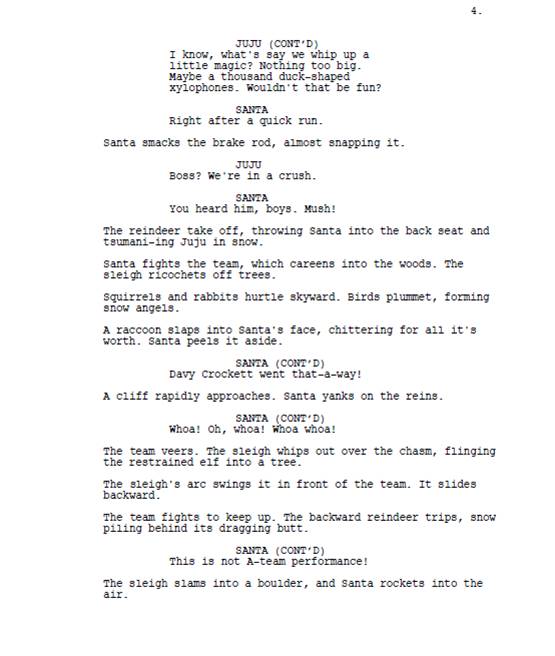
In a few screenplays I read recently, the writer went to great lengths to choreograph fight scenes, offering the minutiae of balletic movements.

“Raising his knee, he blocks X’s kick, and then twirls to chop X across the back of the neck. Stunned by the blow, X falls forward but recovers quickly enough to tuck and roll back to his feet. Etc. Etc. Etc.”

A fight sequence should have a sense of energy, urgency. These are people struggling. You want that to play out emotionally. You want the reader to break out in a sweat, his or her pulse elevating while reading the scene.

Instead, you slow down the reading with lengthy descriptions. The reader has to wade through line after line of description.

As Marsha describes, you can offer the fight in broader strokes to elicit feeling or tone.

Alternatively, you can present a sequence in short, staccato phrases and sentences. It is like having 20 hockey players firing pucks at you, at will. You become powerless in the onslaught, never precisely sure from where the next shot is coming.

Because the descriptions are short, they take little time for the reader to absorb before he or she moves onto the next one. Each line comes faster and faster, until the reader finds him or herself in the fight.

And then suddenly, it is over and the reader is left drained, but exhilarated.

In action sequences, less is more.

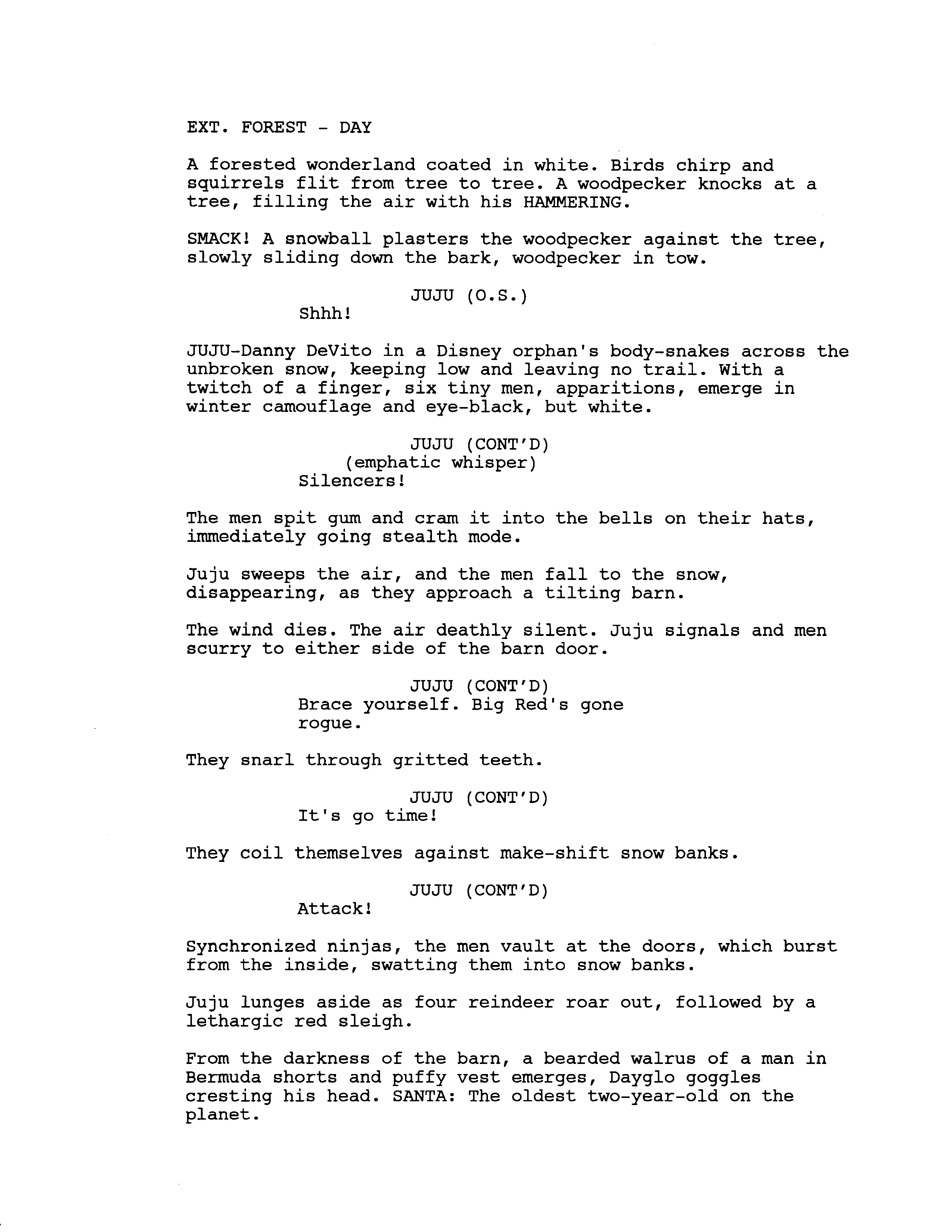
Sleigh


(Note: The above sequence is from my latest screenplay The Naughty List, a holiday-themed film for adults. Think The Santa Clause meets Good Morning, Vietnam.)

Anyone connected to Mike Myers (or his camp)?

Hey my social media community,
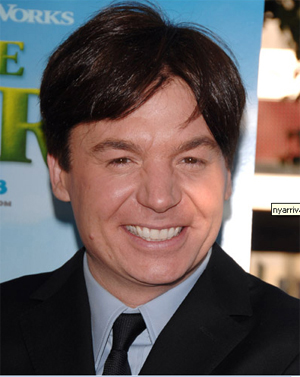
Anyone have a connection to Mike Myers or his camp, and would be willing to link me up or act as a go-between?
I have a screenplay for which he would be the perfect lead (in my head) and would love to make the connection.
If you do, I’d be happy to give you as many details as I can via email…and of course, all the love I can muster!
I promise…this is legitimate…no silly ideas…I have never felt so positive about a story, ever. It has everything an A-list actor could want.
Thanks for dreaming along with me….Randy
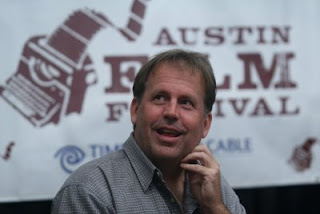
PS This is the same screenplay that WILL win the Austin Film FestivalScriptapalooza and Nicholl prizes in 2014.

Mike Myers

(Image used without permission)


Focus – a 400th blog entry

400 celebration monument

Well, it has taken about 10 months, but I have managed to reach my 400th blog entry. Now, admittedly, a few of these were reposts from someone else’s blogs, but the majority were the ramblings of li’l ol’ me.

So, first, thank you all for your patience and support. You have been victim of a seemingly ceaseless assault of verbal and visual abuse that bordered on the ludicrous with two or more posts as day for several months.

But, second, you may have noticed I have slowed down in that onslaught for the past month or so. I promise, it is not for lack of ideas but more for volume and variety of media with which I deal on a daily basis. And it is this volume that has had me thinking lately (and I hate thinking).

I have spread myself too thin…I am trying to do too many things such that I don’t know that I’m doing anything. Thus, for the next little while, at least, I am going to focus my efforts on just a few projects that I think will have the greatest impact.

This is not a resolution—I don’t do those anymore—but an admission that if I don’t finalize something, I will never get out of the basement apartment and will perpetually be tied to my previous careers as sources of $$$.

So, my completion priorities for early 2014 (in no particular order):

  1. Re-evaluate, rewrite and sell/option my screenplay Tank’s.
  2. Rewrite and sell/option my Santa screenplay The Naughty List (working title).
  3. Establish a screenplay reading/coverage service to make money now!
  4. Generate a book on creativity and writing from my blog entries.

That last one was actually one of the motivating factors for creating the blog in the first place…to finally make myself write down my thoughts, experiences and understanding of the creative process with particular focus on writing. This is not to say the postings will disappear from my blog, but my plan is to assemble the most salient ones, with editing, into a book format for sale.

For all of those with whom I am working on projects not listed above as a priority, I have not forsaken you and will continue to work on those projects…just not as a top priority. I can only hope you understand (and suspect you all will).

And again, to my blog followers, I thank you for your patronage and hope to continue to amuse, intrigue or stimulate you…just at a more leisurely pace for both of us.

Love to you all…Randy

From perspective to perception

A railway track is perspective trying to make a point

A railway track is perspective trying to make a point

What makes your writing unique from all others is your perspective, the way thoughts, words and actions are interpreted in your mind.

If 10 people witness the same collision between two cars, each one will recount a slightly varied story from another. Some may gauge the speeds of the vehicles differently or not remember the same car braking first.

Less what you remember and more how you remember is influenced consciously and unconsciously by your personal experiences, your beliefs and your moods. As good a reason as any for the police and court system not to rely on a single eye witness account whenever possible.

The same is true for your writing.

Although our imaginations give us some ability to write fanciful stories and characters outside our day-to-day scope, a close examination of our oddest creations will show that they are largely reinterpretations of things we have read or experienced in other stories.

Dragons, for example, are likely an amalgamation of flying raptors (e.g., eagles), strange lizards (e.g., monitors) and giant fossilized remains that humans have dug up for millennia. How else to explain the similarity of a T. rex skull and monitor lizards?

How to make a dragon with 3 simple ingredients!

How to make a dragon with 3 simple ingredients!

At the same time, it was the unique experience of these three factors in combination that may have resulted in the first dragon description. A truly unique perspective.

To consider it another way, think on the meaning of perspective in the visual arts:

The art of drawing solid objects on a two-dimensional surface so as to give the right impression of their height, width, depth, and position in relation to each other when viewed from a particular point.

Giving the right impression of [facts]…from a particular point [of view].

But what if you changed that point of view?

3-Point Perspective

Changing perspectives is perhaps the easiest way to approach cliché writing and makes the predictable unexpected.

If you want to tell a love story that is essentially Romeo & Juliet, tell it from the perspective of rival street gangs in New York. Oh, but wait; they already made that one.

Then how about from the perspective of fish in a pet shop and instead of rival families, it is the divide between fresh and salt water? Crazy, hunh? (NOTE: I already wrote this one, so please go write something else.)

The same holds true whether you’re considering an entire story, a single scene, an individual line of dialogue or a character trait.

How might the floor of a dance club look if you changed your perspective from that of an evening reveller to that of an observer seated on a ceiling rafter? Probably like one of those wild life documentaries describing the mating habits of some ridiculous animal.

Or what might your backyard “look” like if your only sense was touch?

By changing your perspective in even the smallest of ways (you don’t have to blind yourself), you can dramatically alter your perception of the world.

So, the next time you find yourself stuck for an idea or facing a cliché moment in your writing, try looking at your world upside-down or through another character’s eyes.

Take a new perspective and you’ll reach a whole new point.

(Drawing is property of owner and is used here without permission because I take a different perspective on these things.)

Award season 2013

As the alcohol sets in and the year ends, I thought I’d take a moment to consider the 2013 Randys, the seminal moments and/or people of the past year.

Every year is special but this was truly a year for the books (or Kindles/Kobos if you’re one of those people).

Most engaging conversation: Weekly meetings with friend, Agah Bahari

Friend, child of the universe and novel buddy (as in we're writing a novel) Agah

Friend, child of the universe and novel buddy (as in we’re writing a novel) Agah

Silliest playtime: Conversations with Kevin Scott, Marsha Mason, Nic Lemon

Just set the camera to reward and place a diaper on the furniture...there will be pee

Just set the camera to record and place a diaper on the furniture…there will be pee

Most raucous laughter: Monthly bonfires organized by Janine Short

Conversation runs the gamut from politics to coitus interruptus and everything in between

Conversation runs the gamut from politics to coitus interruptus and everything in between

Most head-spinning period: Austin Film Festival, both the sessions and attendees

Terry Rossio on AFF panel

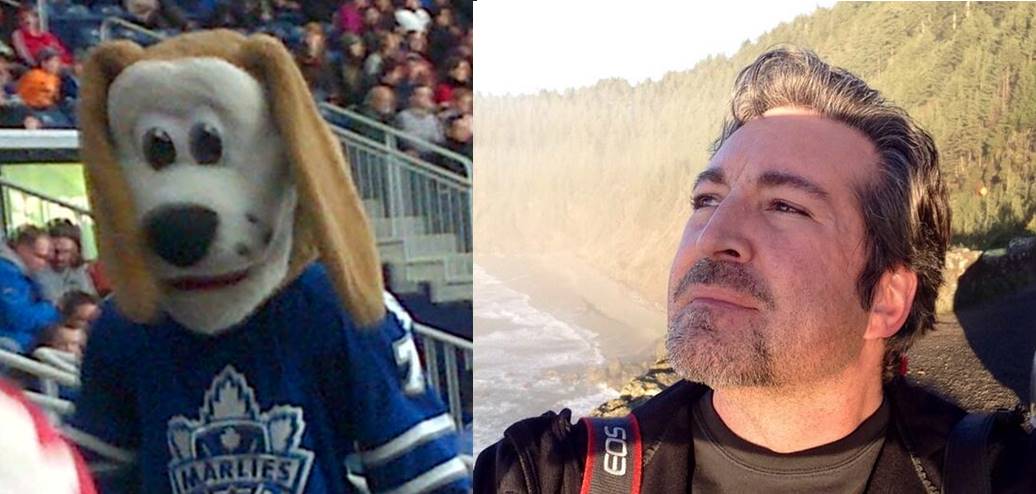
Oddest friendship (tie): Virtual connection to blogger Ned Hickson; Duke #75, mascot of the Toronto Marlies

One is a pro hockey mascot and the other is a humorist (US spelling here)

One is a pro hockey mascot and the other is a humorist (US spelling here)

Most humbing moment: Little Joe’s Heart campaign and response

We lost a little fighter this year...he will not be forgotten

We lost a little fighter this year…he will not be forgotten

Friend of the year (tie): Leela Holliman, Nic Lemon, Marsha Mason

This is Leela...you met Nick and Marsha above

This is Leela…you met Nick and Marsha above

Dream come true: Travelling Costa Rica (bonus: with my brother, Shawn “Chongo” Solnik)

One of the few photos of my brother NOT flipping the bird...here he flips fish

One of the few photos of my brother NOT flipping the bird…here he flips fish

Greatest moment of the year: Photo with cast of PuppetUp!

I don't care if you're sick of hearing about these guys

I don’t care if you’re sick of hearing about these guys

First page of new screenplay (opinions please)

Hey guys,

I am working on a new screenplay and would love your split second reaction to this opening page.

Does it grab your attention? Are you intrigued? Do you want to know what happens next?

Any thoughts…positive, negative, inflammatory…are welcomed.

And so the new story begins

And so the new story begins

Music to my ego

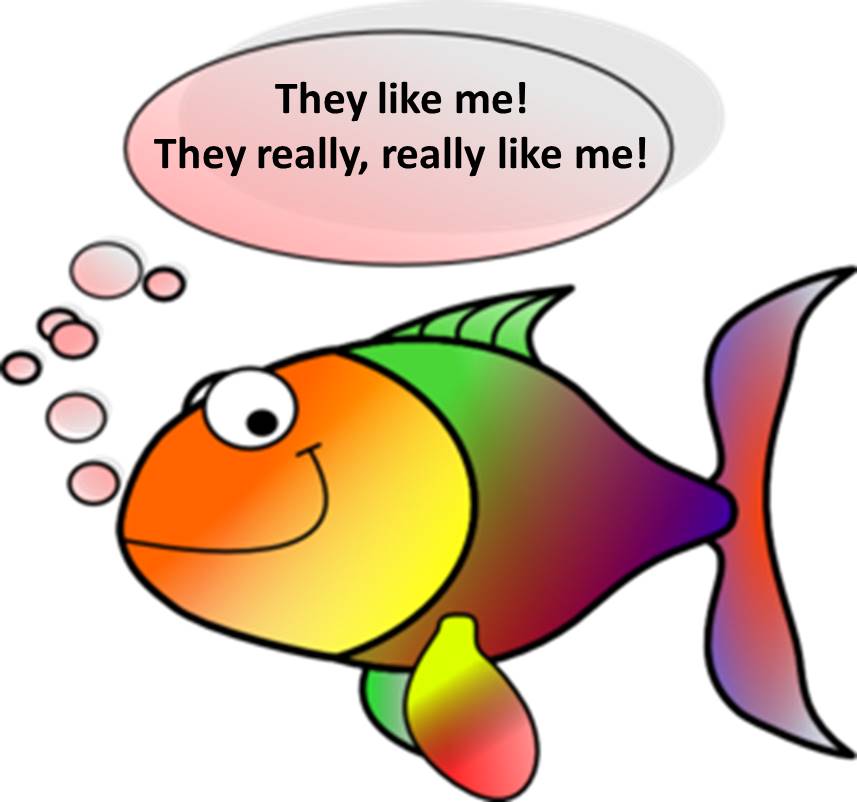
Like fish

When you first start exploring any art form, you are typically rapt in the joy of expression, but you are also at your most ego-vulnerable. Thus, it is nice every now and again to receive some positive feedback and it is even better when that feedback comes from someone who represents your art’s industry (rather than your mom).

As many of you know, one of my screenplays was a Second Rounder in the 2013 Austin Film Festival screenplay competition. Part of achieving that status is receiving readers’ notes that explain why you moved forward in the competition and why you stopped. A couple of days ago, I received the notes for my feature Tank’s.

Wow.

Below, I offer some of the positive feedback (I received negative too).

An exhilarating, imaginatively conceived, meticulously crafted, professionally polished animation intended fairy tale, a love story set in the cosmos of fish.”

Obviously the work of a talented, experienced writer who knows animated light comedy, how it works, and how to do it.”

The linear narrative is redeemed, however, by the enthralling depiction of fish as people, their humanly drawn nautical universe, and a buoyant, lighthearted mood pervading the narrative.”

Is the writer competitive here with, say, the creative minds at Pixar? Without question, yes.”

“The storytelling is befitting of the silly/adult humor of Dreamworks while still maintaining the light family-friendly air of a Disney cartoon musical.”

Kind of makes me want to keep writing, you know?

JB

(Images are property of owners and are used here without permission because I am that good)


Cadence and Orson Welles

My favourite shot of Welles as I believe that smile and those eyes tell me everything I need to know about the man

My favourite shot of Welles as I believe that smile and those eyes tell me everything I need to know about the man

Being a good writer necessitates having a good eye and a good ear.

The good eye is the attention to details that will help you paint a word-picture of what you have seen with your physical eyes and processed in your mind’s eye. It’s not necessarily about writing long-winded passages of backgrounds or going into minute detail of a character’s physical attributes (I’ve done plenty of that), but rather in choosing the most precise and meaningful words to describe the environment or the person.

The good ear is the attention to how people communication and how they speak, not always the same thing. Again, it involves finding the right words and inflections (at least implied inflections) that give the reader and actor clues as to who this person is. And perhaps just as importantly, it is about finding just the right cadence for your character’s speech patterns.

If you listen really closely to a conversation, you’ll realize that there is little difference between speaking and singing. There is a rhythm, a cadence to speaking. Conversation is an improvised duet sung a capella. But unlike a traditional song which may have a subset of arrangements, each of us sings to our own tune, with our own rhythms and inflections. It is one of the many things that sets us apart from each other.

When writing characters, it is important to keep this in mind as all too often, a group of characters can have a certain monotone, which I use not to imply flatness so much as sameness. Often, I believe, it occurs when the writer neglects to add variety to his characters’ speech patterns and instead writes them with one voice; his or hers.

The best writers don’t make this mistake…or at least minimize its occurrences. Each character he or she presents us is truly unique, jumps off the page or screen, provides his or her own internal musical accompaniment.

One of my favourite writers of the last decade or so is Aaron Sorkin whose overall writing has its cadence but whose characters also tango (or more often tarantella) across the screen. Read the pilot to The West Wing or the screenplay for The Social Network and you will know you’re reading Sorkin.

But for me, perhaps a better example is Orson Welles, the man who would be Kane.

Recently, someone discovered a long-lost unproduced screenplay by Welles called The Way to Santiago, written in 1940-41. Another blogger discussed the find recently, and provided a link to the actual screenplay (see link below). You only have to read a couple of pages to remind yourself (or educate yourself on) how Orson Welles wrote and the energies he imbued in his characters, each one a snowflake of facets and reflections.

The opening page of The Way to Santiago

The opening page of The Way to Santiago

Now, listen to the films or read the screenplays of The Third Man, The Magnificent Ambersons, Touch of Evil. Although you may question the choice of actors, you can clearly hear or see the distinctions in the characters. Bathe in the richness and depth of each one as he or she is captured for this brief moment. This is the stuff of which dreams are made.

It is also interesting to consider that Welles got his start on stage and in radio, where the human voice plays such a larger role in conveying a story than it does in film. There is much less to occupy the mind onstage or in radio and so dialogue carries a significant burden of not only informing but also entrancing the listener.

Although the stories I write are distinctly different from the Wellesian oeuvre, there is much I can and do learn from this master of the written word. He is worth the read and the listen.

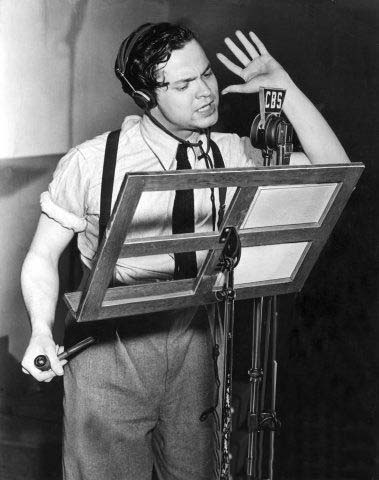
A classic image of Welles in his radio days

A classic image of Welles in his radio days

Links of interest:

The Way to Santiago at Cinephilia and Beyond

The Way to Santiago, starring Howard Hesseman on Vimeo (A valiant but not brilliant attempt)

“Thank You, Mr. Welles: Definitive actor, consummate director, and true auteur” at Curnblog.com

“Screenplays by Orson Welles” (listing) on Wikipedia

Me and Orson Welles A light but adorable movie that probably portrays Welles’ character better than Welles

The Throw – Austin Film Festival (part two)

Terry Rossio, Pirates franchise

In Part One of this post, we talked about Terry Rossio‘s comments at the Austin Film Festival regarding the different kinds of cuts in films: storyline cuts and storyteller cuts. But how do you establish these cuts?

With the throw, which Rossio divides into two categories (a fixation, it seems): the strong throw and the soft throw.

[Added note: Rossio provided a film clip to demonstrate each of these throws but I was only able to record so many in my notebook…hopefully, you’ll be able to figure them out for yourself.]

Strong throws can be very obvious and are used for a variety of reasons. He offered the example of the movie Slumdog Millionaire, where a strong throw is used to set up a flashback. Alternatively, a throw can be used to convey story information so that the audience can discern the link between two scenes. Rossio quotes someone from Pixar who once suggested: “Give the audience 2+2 and they will love you forever.” Throws can also be used to move us through a montage, where each snippet is linked in some way.

Rossio described the discovery throw, where one scene is the answer to the question raised in the previous scene. As an example, he offered the scene in Aladdin where Jafar and Iago complain they will need a new victim to attain the lamp, “a diamond in the rough”, at which point, we move to Aladdin running across a roof with guards yelling “Stop thief!”

And he described the comic throw—also known as the Gilligan cut—where a character repeatedly comments on something (e.g., refusing to wear a dress), only to see the character immediately in that situation (e.g., Gilligan in a dress).

And finally, Rossio suggested strong throws can be used to set up reversals in a story, where we see characters moving a story in one direction, only to see the exact opposite in the next scene.

Soft throws, Rossio suggests, are much more common in film and are by nature more varied and artistic, providing a greater range of effects.

Such throws can provide a promise of things to come for an audience, such as in Raiders of the Lost Ark when Indy remind his partner what a cautious fellow he is, only to then grab a gun from his desk and head into the fray. Alternatively, such throws can also imply that the next events will be really boring in this scene and that something is more interesting elsewhere. The example he gave was from The Empire Strikes Back, when Luke is leaving Hoth for Dagoba, a long boring journey, and so he tells R2D2 “I’d like to leave it on manual control for a while.” A signal that we’ll kill time here, so let’s go watch Han and Leia run the blockade.

Such throws can also be used to cut off a scene before key information is revealed, creating a sense of mystery and a promise of an answer to come. Rossio warns, however, that this type of throw can feel very manipulative to an audience. The example he gives is again from The Empire Strikes Back, when Luke is in a hurry to leave Dagoba to rescue Han and Leia but Yoda and Obi-Wan’s apparition try to hold him back. As Luke leaves, Obi-wan says “That boy is our last hope.” only to have Yoda correct him, “No, there is another.” Is that Leia in Cloud City?

Rossio describes these throws as connective tissue in a film or screenplay, unifying disparate elements and speaking to the audience in a subliminal, symbolic or subtextual manner.

There is the intentional misdirect throw, to keep the audience from figuring out what’s going on too quickly, and the throw to set up a passage of time, often so characters can have sex, Rossio quips. The train entering the tunnel.

Soft throws can also help set up a change in the state or tone of the movie or to introduce a new character. Rossio gives the example of the movie Key Largo, when the suspicious guests of a Florida fishing resort reveal themselves to be mobsters who take the other guests hostage. A second later, we meet the mysterious boss (Edward G. Robinson) upstairs. The mood of the story has changed, for the worse for Humphrey Bogart and Lauren Bacall.

These cuts can also be used as an internal cut within a single scene to cue the passage of time in a scene that would take too long to play out and would bore the audience. The cigarette that is lit and rested in a clean ashtray, only to be followed seconds later by another cigarette being placed in a full ashtray—ah, the 70s.

As Rossio explains, whether strong or soft, the throw allows the audience to fill in the gaps within a movie. He offered a quote that suggested “Filmmaking is giving the audience the experience of completing the image.” And he added the idea that no scene should be complete except for the last one. There should always be something that prompts the audience to move willingly from this spot to the next one.

He then offered a self-deprecating moment by presenting a quote that suggested a very popular use of throws is to give a movie a sense of consistency or connectivity when in fact the story makes little or no logical sense at all. The quote was referencing a movie that Rossio wrote and acknowledge had a plot that was all over the place.

In the Q&A session afterward, someone asked Rossio if throws were something for which you should aim in the first draft of a screenplay and his answer was basically no, that it was something you added in later drafts. His thinking was that in a first draft, you don’t really know if your scenes are in the right places and if things will need to move around for the sake of the best story.

You only look to incorporate a throw once the story is pretty much set, he says, adding that not every scene abutment requires a throw and you should never simply add one for the sake of adding one, if it will look arbitrary or out of place. The throw, he says, should smooth the transition between scenes, not highlight them by standing out.


(Image is property of owner and is used here without permission for a sense of continuity.)