charACTer

Anyone writing stories NEEDS to read the blog post by Chuck Wendig listed below!

http://terribleminds.com/ramble/2014/06/03/just-what-the-humping-heck-is-character-agency-anyway/

Wendig blog

Seriously. Please read this!

His pivotal point: “The story exists because of the character. The character does not exist because of the story.”

Too often, I read screenplays where the protagonist is merely swept along like a bobbing cork on a sea of conflict. They merely REACT to the injustice around them rather than ACT to change it. They are the victim of the story.

To my mind, a much more interesting character is one who takes action when presented with conflict and then deals with the repercussions of that action. In some stories (the best ones to my mind), the protagonist is his or her own worst enemy, bringing conflict upon him or herself.

It is not enough to chase your hero up a tree and then throw rocks at him. He can also catch some of the rocks and throw them back, perhaps hitting innocent bystanders who then turn on him as well.

As a reader and viewer, it is through the actions of your characters that we learn their perspectives, their world views, and thus, their flaws. And if your story has a redemptive angle, it is through the complete failure of this world view and the character’s re-evaluation of it that he or she is reborn.

Just like giving the same premise to 12 writers results in 12 different stories, placing any of 12 different characters into the identical situation with identical opponents will result in 12 different outcomes if the characters are real.

Honour that in your writing and honour your characters.

They are called char-ACT-ers, after all, not char-REACT-ers.


Wendig is on Twitter: 

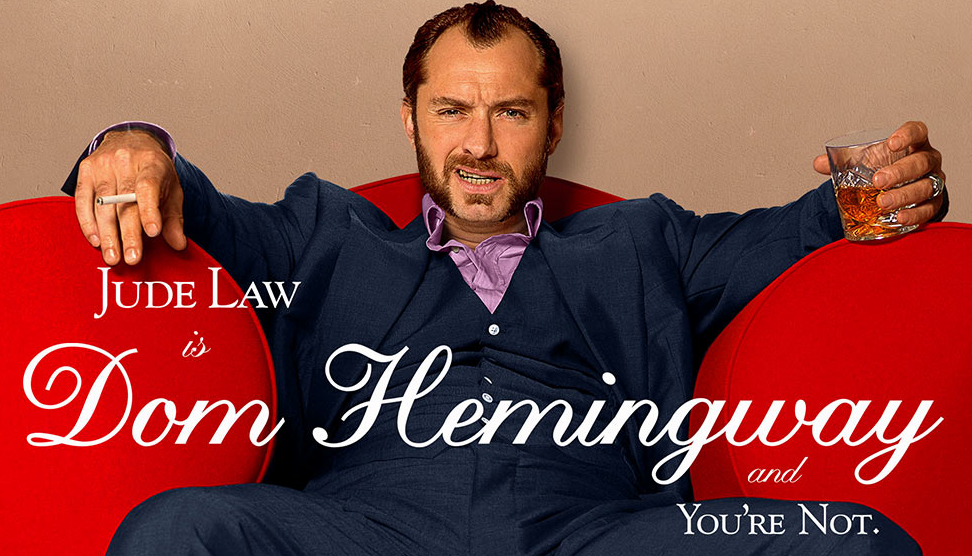
Dom Hemingway – A Review

CN_DomHemingway

A redemption story of a career criminal who has played the game by an unwritten code, who has done his best to do right by people within the criminal world and been screwed at every turn. The only people he hasn’t done right by, in fact, are his ex-wife and daughter, whom he completely screwed over. (Trailer)

Written and directed by Richard Shepard, who brought us The Matador, Dom Hemingway works on so many levels—from its amazing opening soliloquy (no better way to describe it), through astounding montages of decadence that can only be described as balletic, to tender moments of friendship punctuated with foul language.

But sadly, because it works on so many levels, the places where it doesn’t are glaring. And there is perhaps no bigger failure than the actual story.

There is no doubt that Shepard can write. His use of words to express universal ideas and human frailty are musical. Unfortunately, those skills only serve to create islands of poetry in a story that slowly drowns in conflicting tides. The movie bogs down into little more than a series of fortunately/unfortunately vignettes that ultimately don’t go anywhere.

Likewise, the moment we leave the criminal aspects of the story and Dom has to face the wreck that is his life and relationships, the dialogue becomes wooden and cliché.

Even the redemption angle is eventually undercut by additional scenes that suggest Dom has learned little. Not sure what Shepard’s thought was here—that people don’t really change, perhaps—but it might simply be an unverbalized acknowledgement of Shepard’s own limitations.

The performances of Jude Law and Richard E. Grant cover for many of the story flaws. Law’s Dom is a man who can’t get out of his own self-destructive behaviours long enough to actually succeed and let his skills prove himself. Grant, meanwhile, plays the long-suffering conscience who just wants his friend to be happy, but doesn’t have the energy to watch Dom implode in his own fear yet again. Unfortunately, the minute these amazing men leave the screen, the movie flat lines.

(Side note: Just before the movie started, the theatre screened an ad for Filth (trailer). It was amazing how similar the lead characters of the two movies appear, as Law seemed to be channelling his inner James McAvoy at times.)

Perhaps the best way to describe Dom Hemingway is to say you will feel energized watching it, but a little empty of dissatisfied as you leave the theatre.

I wanted this movie to be better. I wanted it to be the best movie I’d seen all year, the most complete movie. Alas, it wasn’t.

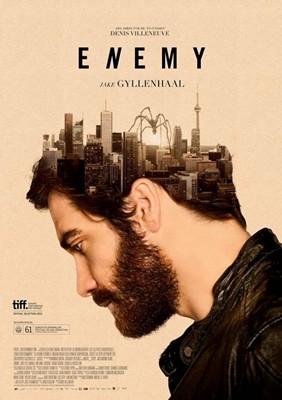
Enemy—The movie with the meta title

Enemy

So, it was $5-Tuesday yesterday at the Carlton Cinema in Toronto and a friend invited me to see a movie called Enemy, starring Jake Gyllenhaal. Like any weary movie-goer, I immediately jumped online to look at the trailer and thought, “Hmmm, weird, but interesting”.

I was half right. The movie was weird.

At this point, I should probably say “SPOILER ALERT”, but truth be told, I am not sure that if I laid out every event that occurred in this movie, you would know what was happening. I sat through it and I don’t know what happened.

As the trailer indicates, the movie is about a man who is dissatisfied with his life—never explains why, he just is—and is merely going through the motions of living until one day when he realizes that his exact doppelganger lives in town.

Terrified at this revelation—never explains why, he just is—he is nonetheless drawn to his twin and after jumping through a series of over-complicated hoops, he meets the twin. At which point, he second-guesses his decision and it is his twin’s turn to go neurotic—never explains why, he just does.

As you may have guessed from my above repetition of “never explains why”, my greatest issue with this movie is unclear character motivation. Perhaps it says more about me and my life history, but I have no idea why any of these characters acts as extremely as they do.

I am confident that it is part of the artistic conceit of the piece that at numerous moment are you fully sure which Jake Gyllenhaal character you are watching onscreen. The challenge with this is that the emotional rollercoaster of each of the characters is such that from cut-to-cut within the same scene, I am never sure which Jake Gyllenhaal character I am watching. I ended up watching the characters’ clothing rather than the actor’s face to try to follow the story.

And the motivations of the secondary characters are just as muddy for me, although at least here, we have different actors and so don’t have the Gyllenhaal rabbit hole with which to contend. Like a faucet tap, the emotions of these characters change with a flick—questioning in one moment, horny in the next, and angry in the third, and all in the span of 30-45 seconds.

A definite statement of who I am, I spent much of the movie trying to predict the reveal of the story based on the clues or purely on conjecture.

Twins separated at birth? Time travel with a glitch? Parallel universes collide? Psychotic episode of one man leading two lives?

No SPOILER ALERT to say none of these came to fruition, but that still doesn’t mean that any of them may not be true. Hell, all of them might be true. I don’t know.

And any hope of a conclusion is muddied by a massive metaphor that scurries through this movie—I won’t tell you what it is—and yet offers no satisfying explanation.

Enemy is described everywhere as a thriller. I’d be more inclined to call it a puzzler…and even that may be too lofty. Head-scratcher and headache-giver might be more accurate.

As I read up on the movie to write this, I learned the film won Canadian Screen Awards (our Oscar) for Best Director and Best Supporting Actress, and was nominated for Best Film. I find that disturbing.

The film was based on the 2002 novel The Double (O Homem Duplicado), by Portuguese author José Saramango. Part of me wants to find the novel to see if it is any clearer than the movie, but as of this moment, a bigger part of me just wants to walk away from this entire episode in my life.


Previous posts about characters in writing and film:

Just Tell The Story – Austin Film Festival

The Dignity of Characters

A Matter of Character

Can You Relate?

I Am Always Right (Motivation)

Dara Marks at Toronto Screenwriting Conference 2013

Unpacking Baggage (Part One)

Unpacking Baggage (Part Two)

Re: Rewrites (Part One)—Toronto Screenwriting Conference 2014

Chitlik

One of the definite highlights for me at this year’s TSC was the rewrite session offered by screenwriter, director and producer Paul Chitlik, who is now also a professor of screenwriting at Loyola Marymount University. For me, the practical sessions resonate much longer than the advice or adoration panels.

If there was one disappointment with Chitlik’s session it was that the 90 minutes apportioned to him were not nearly enough for him to really explain his process, try as he might. Thus, in many respects, the session was more of an appetite whetter for his book Rewrite: A Step-by-Step Guide to Strengthen Structure, Characters, and Drama in Your Screenplay.


Stages of review

For Chitlik, a good rewrite means taking 8 separate passes at your screenplay, which include:

  1. A review for structure
  2. A review for conflict
  3. A review of descriptive paragraphs
  4. A review of the protagonist’s dialogue
  5. A review of the antagonist’s dialogue
  6. A review of the supporting character’s dialogue
  7. A review of cuts that can be made
  8. A review of the presentation of the screenplay

According to Chitlik, this iterative review process causes many of his students to groan, but his attitude is that if you don’t like your script enough to read it eight times, you seriously need to rewrite your script or you need to throw it away and work on something else.


Structure: The main story elements

Before starting his specific rewrite techniques, Chitlik took us on a bit of an overview of the main elements of the main story, acknowledging that this number will vary depending on who you read or to what storytelling philosophy you ascribe.

His main points or pillars are: Ordinary life, inciting incident, end of Act I (goal or plan), midpoint, low point, final challenge, return to the now-forever-changed normal life.

In the ordinary life, we find our protagonist impressionable and naïve, and from Chitlik’s perspective, our first visual of the protagonist should give us some clue as to his or her character flaw. This is where we see the character in context and how the person’s flaw interferes with his or her normal life.

With the inciting incident, something external to the protagonist impacts his or her world, changing the world forever and forcing the character to take action. Chitlik acknowledges there is a lot of debate on where precisely within a screenplay the inciting incident should occur. He actually prefers later (toward page 15) to give us time to get to know the protagonist.

By the end of Act I, the protagonist has had a chance to reflect on the inciting incident and formulate a response. This is where the story really begins as the protagonist takes the lead. Chitlik acknowledges that this isn’t always the case, however, and offers the example of Thelma & Louise where Thelma doesn’t really take control of her world until the midpoint.

By the midpoint, the protagonist has been pursuing his or her goal but an external force spins the story on its axis, leaving the protagonist to come up with a new goal or plan. For Chitlik, the protagonist should also learn something new about him or herself when this happens.

By the end of Act II, though, the protagonist reaches the low point, ideally triggered by his or her flaw, where all is lost and the goal seems completely unattainable. As Chitlik notes the cliché, the dark night of the soul.

At some point, an external force triggers the protagonist to engage in the final challenge. Here, the protagonist must overcome his or her flaw, and often repairs a relationship. Chitlik notes that while this final challenge is often large and dramatic (e.g., a battle), it can also be quite small and subtle, but it must involve the protagonist overcoming the fatal flaw.

The protagonist then returns to the new normal. Life often moves just as it did in the beginning, but the protagonist’s approach or viewpoint is forever changed in some way.


Chitlik then suggested that the story is actually four stories, each of which has its own version of the 7 story elements, but are ideally intertwined with each other:

The Main Story included the basic plot points or challenges the protagonist faces

The Emotional Story describes the central relationship of the protagonist, whether with the antagonist, a love interest, or some other form

The Personal Growth Story shows how the protagonist comes to face and then overcome his or her flaw

The Antagonist’s Story highlights that the antagonist has his or her own goals in life (wants and needs)

Chitlik adds that we may never see the antagonist’s ordinary life and instead of a flaw, we want to show his or her human quality, which makes the antagonist both more empathetic to the audience and a bit more chilling.


In Part Two of this post, we will look more closely at Chitlik’s advice on dissecting first your main characters and then the actual screenplay itself.

tsc-logo

Kid Lit publisher/illustrator needed

Looking for recommendations for a Kid Lit publisher for a new story I have written but do not yet have illustrated. Story is aimed at 3- to 5-year-olds.

Alternatively, looking for an illustrator who is used to working for no cash and can work with me on this to find a publisher.

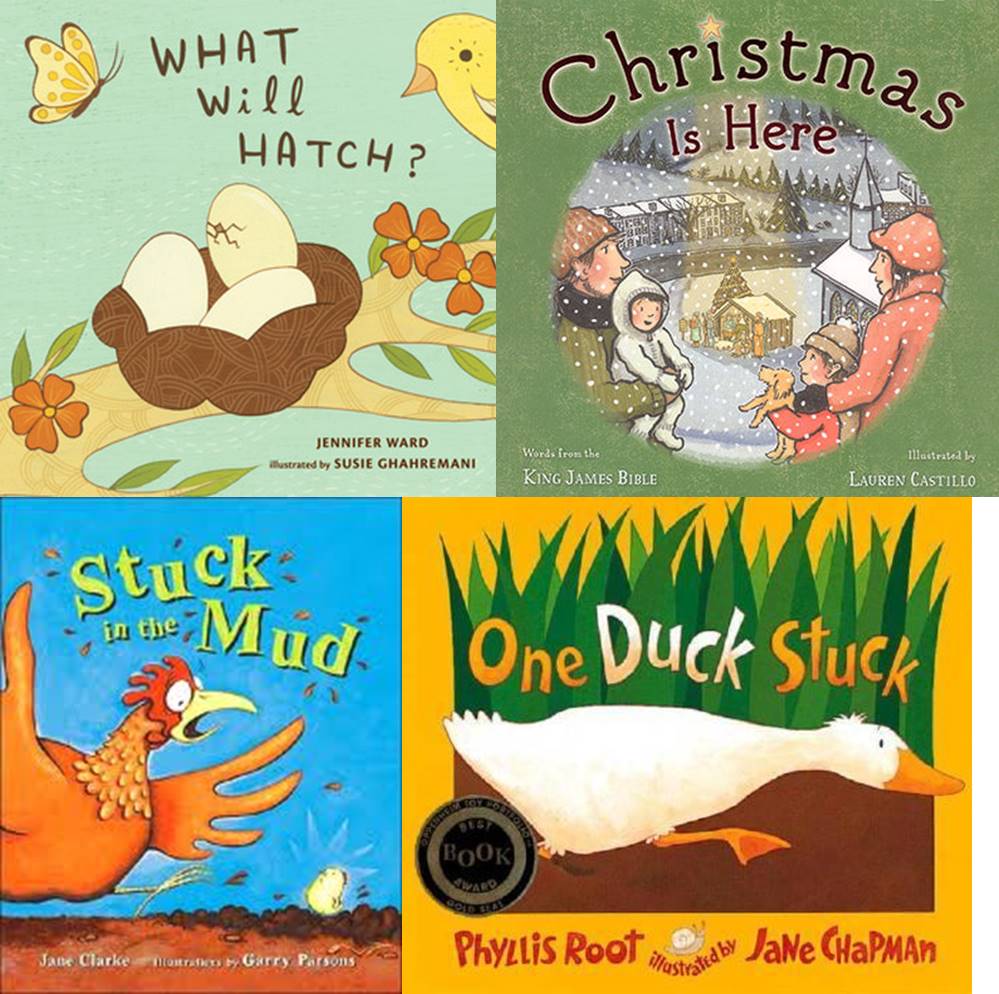
In my head, the imagery for the story could be along the lines of any of the books in the image below, but I am open to other styles as well…this is just what resonates in my head.

In my head, these styles could work with my story, but remaining open to other ideas!

In my head, these styles could work with my story, but remaining open to other ideas!

Ultimately, I will go to the usual sources for these types of things, but thought I would check with my loving, supportive and talented social network to lend a hand, an ear, an eye…whatever you’ve got, really.

Any recommendations or thoughts, Universe?

Feel free to DM me…happy to share the story with people….thanks…Randy

The subway ride

I don’t actually know what the following is, other than: the beginning.

subway-1

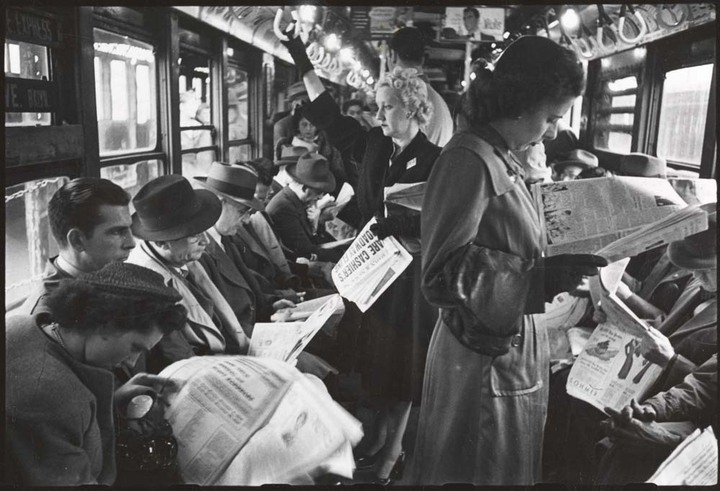
The subway was crowded that morning. It was always crowded when it rained.

It was like no matter how far people had to travel, they were terrified of getting wet. It’s probably closer to the truth to say that most of them had lost several umbrellas in the windy corridors created by the city’s office towers. And yet, to a person, every man and woman carried a neatly folded umbrella, their multiple layers showing nary a single bead of dampness.

By the second station on my route to work, I had lapsed into my typical fog of who cares. At this stage in my life, work was just something I had to do to make money. I had long ago given up on any hope of finding fulfillment or happiness on the job, if only because the company had a strict no-dating policy. Without interoffice sex, my desk was just another place to sort papers.

It didn’t take long before the fog in my head was matched by a fog on the windows of the subway car. The body heat of the mingled strangers turned damp coats and hats into instant humidifiers, rain water mingling with sweat and post-shower damp to coat the walls and windows of the subway with rivulets of diluted deodorant, cologne and perfume. All we needed were a few handprints on the window and the subway car would have looked like the back seat of a sedan parked at a drive-in where the kids inside were doing everything but watching the movie.

I had managed to grab a seat that morning, an unexpected bonus for getting up a little earlier. Even living at the end of the line was no guarantee of finding any comfort in local transit. Too often, I spent my time staring down the tops of flat-chested teens too self-absorbed to give up a seat or leather-skinned grandmothers so desiccated they made your tear ducts hurt. That morning, however, I had managed a forward-facing seat. So people could look down my top and I got to stare right into their crotches.

It was a rough ride into town that morning. The constant start and stop of the train as it waited for the guy up ahead to get his shit together, and the tropical humidity that was slowly growing in my shorts made the decorated plywood seat under my ass that much more uncomfortable. Within 20 minutes, I found myself chafing like a newborn in a day-old diaper.

Tugging at my trouser legs to try and unbunch the material from my crotch, I felt something soft and dry against the back of my left hand. Looking over, I realized it was a leg.

A gorgeous leg. A leg that begged to be touched, but could just as easily crush your balls with the slightest twitch. A leg that worked out regularly, but had never seen a gym in its life. And standing right next to it was another leg, which also shimmered in the grey opalescence of flawless stockings.

Recognizing my transgression and not wanting to be rude, I moved up from the legs. Past the immaculate tweed skirt, the crisp peach blouse, the mottled brown scarf and up to the reddest smile I have ever seen in my life.

This red, I was certain, existed nowhere else in the world. This was a red created for one woman and set aside, the formula for this colour being instantly destroyed as it would appear flawed on anyone else.

I smiled at that red, those lips, and nodded slightly. It was an apology for the unintended intimacy. Words seemed out of place for some reason. The slight rise of her right cheek told me I had been forgiven.

Summoning everything I had in me, I tore my eyes away from that mouth and back to the zoo I called my ride into work.

The fog had definitely lifted from my morning, but it had been replaced with an equally numbing intoxication that I couldn’t handle. Although numbing probably wasn’t the right word, because there was damned little I wasn’t feeling at this moment.

I don’t know if it was 10 seconds or 10 minutes later when the subway jostled around a bend, but what I do know is that the leg found my hand this time. And as the curve of the tracks lingered, so too did the leg, sliding its silken fibers up and down the back of my hand until it began to pull the hairs out one by one.

As the train pulled back onto a straighter course, however, the leg stayed exactly where it had landed, determined to either erase every hair off the back of my hand or gain my attention. It was about to complete the first, but it was mission accomplished on the second.

(Image is property of owner and is used here without permission but a lot of inner dialogue.)

Writing “Line by Line”

Do you want to be a writer but don’t have any ideas?
Are you afraid of looking like a fool?
Don’t have time to complete a project?

Then check out the blog “Line by Line”, a project to create a story one line at a time by anyone who wants to contribute.

No money down! No payments ever! No long-term commitments! No sense, at all!

At “Line by Line”, you’ll read sentences like:
“Without realizing I was doing so, my hand reached out for the vial, and Dorgon hesitated before finally releasing it to me, nervously licking his eyelid.”
and
“Instead, I pulled myself to my feet using his adam’s apple for leverage and pushing his face into the floor, such that I finally had the upper hand.”

Check it out!

This innovative new idea for building a story, line by line, day by day, was hatched by Ionia Martin and Julian Froment.

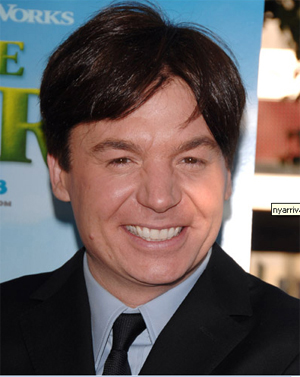
Anyone connected to Mike Myers (or his camp)?

Hey my social media community,
Anyone have a connection to Mike Myers or his camp, and would be willing to link me up or act as a go-between?
I have a screenplay for which he would be the perfect lead (in my head) and would love to make the connection.
If you do, I’d be happy to give you as many details as I can via email…and of course, all the love I can muster!
I promise…this is legitimate…no silly ideas…I have never felt so positive about a story, ever. It has everything an A-list actor could want.
Thanks for dreaming along with me….Randy
PS This is the same screenplay that WILL win the Austin Film FestivalScriptapalooza and Nicholl prizes in 2014.

Mike Myers

(Image used without permission)


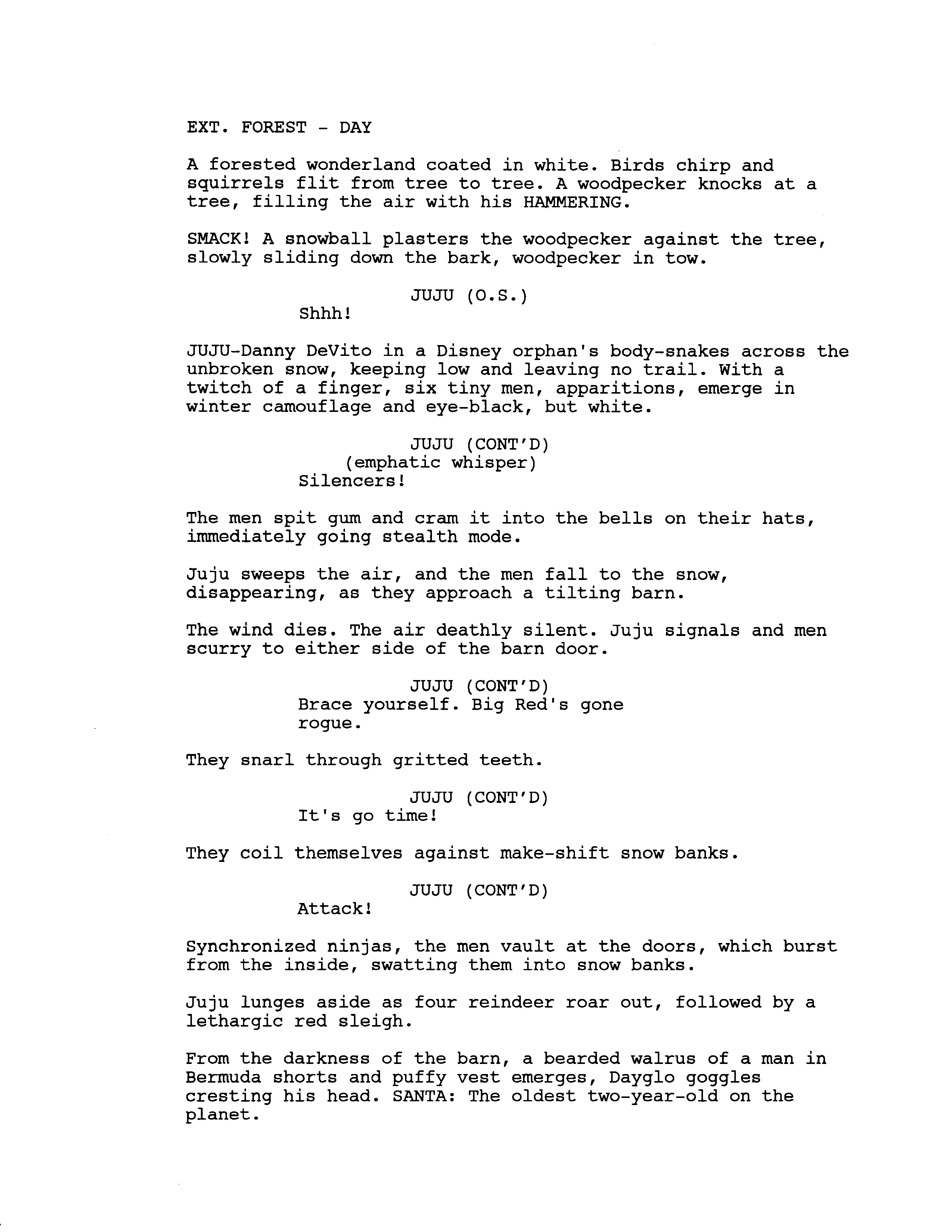
First page of new screenplay (opinions please)

Hey guys,

I am working on a new screenplay and would love your split second reaction to this opening page.

Does it grab your attention? Are you intrigued? Do you want to know what happens next?

Any thoughts…positive, negative, inflammatory…are welcomed.

And so the new story begins

And so the new story begins

Happy Thanksgiving, America

img_0166_sm

Still waiting for the conversation that begins:

Native American slowly walks up to POTUS and kind of shuffles his feet, looking everywhere but at POTUS.

POTUS: Hey sweetie, whassup?

NA: Hey Anglo. You know I think the world of you, right?

POTUS: Oh, oh.

NA: I was sooo excited when I invited you to move in.

POTUS: You made me so happy that day.

NA: Yeah, we were going to do so much stuff together. Discover the world. Make new friends. Redecorate the place. It was going to be great.

POTUS: Was?

NA: Yeah. *pause* Look, you’re a great people and all that…

POTUS: Spit it out.

NA: It just hasn’t worked out like I thought it would.

POTUS: What’re you talking about? We’re having the time of our lives!

NA: YOU! You’re having the time of YOUR life. You shut me out of everything.

POTUS: Sweetie. *attempts hug*

NA: Don’t touch me! This is hard for me to say, but it’s… it’s over between us.

POTUS: This is because of that football team in Washington, isn’t it?

NA: Don’t try to trivialize this!

POTUS: So, you just want me to move back in with my mother?

NA: I don’t care where you move. I just want my place back.

POTUS: Come on. Look at me. We can work this out.

NA: Fine! I didn’t want to tell you this. But I’ve… started to see the Chinese.

POTUS: What? *laughs*

NA: What’s so damned funny?

POTUS: I started seeing the Chinese, too!

NA: *laughs* Oh, my Earth Mother! Are we a pair or what?

They hug and when POTUS is at work the next day, NA throws his stuff onto the front lawn (in Canada).

(Image is property of owner and is used without permission, so deport me!)