My Creative Journey – Part One

What follows are a few thoughts on why I write…the moments in my life that led me to embrace my passion. It is an incredibly personal story and I hope it doesn’t make anyone uncomfortable, but rather helps them reflect on why they embrace their own passions.

Image

I need to be creative on my terms.

When I was younger, it was all about acquiring knowledge and being recognized for having acquired that knowledge. In hindsight, I’m not exactly sure what I was planning to do with that knowledge.

In some respects, it was about solving a puzzle, which could range from how does this alarm clock work to how does the universe work. On another level, I think it was about control. Knowing how the universe worked meant knowing that there was a broader sense of organization out there; that the laws of physics and mathematics still held even when my own life seemed in constant flux. The subtle irony of entropy only occurred later.

But it was also about control in the sense that I couldn’t be expected to come up with answers, with solutions, until I had all the information I needed to make that decision. The aggravating reality of that method of control is it only works when you’re the one asking the questions. Nobody else is willing to wait until I have all of the info I need.

At the same time, I needed the safety of analysis and knowledge, I’ve also had a need to be creative. A need that has only recently blossomed as a regular part of my life.

When I was young, I was constantly creating new worlds through my stories. First, as play scenarios and then as the written word. I constantly developed short stories that took me in a million directions. Again, this might have been an attempt at control.

When I wrote, I was the master of my universe. I was the one who decided who lived and who died, who was allied and who was the enemy. I was the protagonist and the antagonist.

It was in 1977, as I started high school, that I first noticed the strength of my writing. That summer, my life changed with the release of Star Wars. So deeply effected was I by the characters and the story, that I immediately went home and started working on the sequel. My version took a very different turn than George Lucas’s—although there were some subplot overlaps—but over the next few weeks, I hand wrote 400 pages of dialogue.

I shared the script with my Grade 9 English teacher, who was impressed with the volume if not the content (my words, not hers). It was in her class that I first realized the power of my words to still and disturb an audience.

On day, Ms. Philp gave us a writing assignment that started with the sentence “I couldn’t believe it when I heard that sound.” It was supposed to be an in-class assignment, but I was onto something and asked if I could take it home to finish it. I guess she sensed something—that this was important to me—and she said yes. While I didn’t finish the story, I did hand her several pages the next day.

After reading the story herself, she decided to read it to the class. Whereas most people had written stories about funny sounds, spooky sounds or weird sounds, I had written about a man who comes upon a murder in an alleyway, first by the sound of bone and sinew breaking, and then by sight. I wrote about the fear and indecision in the witness’s heart as the murderer sees him and he flees for his life.

As Ms. Philp read the story aloud, there was silence in the room—a room of 14 and 15 year olds. No one said a word until she was done reading. It was magical for me.

I wish I could say that there was a rousing round of applause at the end and that this was the day that I decided to become a professional writer. There was no round of applause—although my class seemed to appreciate my story—and Ms. Philp continued to be supportive of my efforts, but there was no effort to foster this creative desire in a young boy struggling to define his world.

The opportunity was there. Everything was laid out for someone to recognize, but nobody tapped into it. Writing continued to be a strange little quirk of my life. I guess it was just easier to find ways to support my interest in science and history by buying me more books, taking me to the Science Centre.

What do you do for a budding writer? Get him a pen and a notebook? Buy him a typewriter?

Eventually, someone did buy me a typewriter—a vehicle to do my homework. But it quickly became the vehicle for my creative outlet, much to my mother’s chagrin. The muse hits me when I have time to be alone with my thoughts. When my day isn’t cluttered with requests for attention and responsibilities. Unfortunately, in my childhood home, those times only tended to occur when my family was asleep.

Routinely, my mother would yell down from her bedroom for me to stop wailing away at the keys. Loudly pounding them into submission. Watching the letter hammers get stuck because the thoughts occurred to me and be translated through my fingertips faster than the typewriter could accommodate. She wanted to be supportive, but not at the cost of a good night’s sleep.

It took no time at all before I had an incredible portfolio of work—half-finished thoughts, short stories—but they languished unread by anyone other than me. I had given voice to the creative urges in my soul but no one heard that voice. It was the proverbial tree in a forest. With no one to even acknowledge the existence of my efforts, did they really exist.

Where was my mentor to guide me through this process? Someone to help me hone my voice. To make my stories better. To help me get my voice heard.

To be continued…
Success Stories

Image

About 10 years ago, I had the opportunity to attend a science writers’ workshop outside Boston. In one of the sessions, the speaker spoke on the risks of anecdotal evidence using the following example:

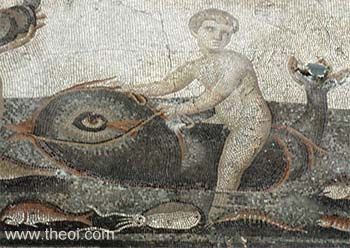
Dolphins are highly intelligent mammals, but also seem to have an inherent sense of humanity (for lack of a better word) as evidenced by the number of stories where dolphins have saved the lives of stranded sailors and fishermen by pushing them toward shore.

Unfortunately, there is a problem with this conclusion based on this evidence, which I will address later in this post.


In learning the craft of my arts—whether business/marketing, science writing or screenwriting—I have relied on various authors to teach me the benefits of specific approaches. And one of the most popular ways to describe these benefits is through the use of success stories.

My most recent read was The Element: How Finding Your Passion Changes Everything by Ken Robinson, a quite enjoyable book that ties nicely with my current thinking on my Art. (Nothing like rationalizing your own opinions with support from books you know to agree with you—but that’s another blog post.)

As Malcolm Gladwell so deftly does for business endeavours, Robinson weaves his discussion of the cross-over point between talent and passion with numerous success stories, most of which take the form of:

  • Young person faces adversity when she goes against the norm
  • Struggling to find her way, she is marginalized by the local community and authorities
  • Through personal tenacity and/or the support and guidance of a mentor, she blossoms in her Art
  • She is now worth bajillions of dollars and/or helps gazillions of people/animals

Who is Robinson talking about? Paul McCartney, Arianna Huffington, Richard Branson, and several others less famous.

These stories are inspiring and uplifting. Everybody enjoys an “against all odds” story.

Tell the same anecdote about a farm boy on Tatooine and you have Star Wars. An addled boxer in Philadelphia, you have Rocky. An addled boxer in New York, you have Raging Bull. Another addled boxer in New York, you have Cinderella Man. Anyways…

One thing that bothers me about these stories, however, is that they establish a linear relationship between individuality and success (which I can buy) at a success rate of approximately 100% (where it all falls down).

What about the individuals who followed a parallel process and didn’t become Paul McCartney, Richard Branson or Arianna Huffington? Who bucked the trend, stood up for themselves and were run over by society?

Failure is an option, friends. It shouldn’t be glossed over. You can theoretically do everything right and still not achieve the success you were looking for.

Again, I agree with the theses these (wow, that’s an odd juxtaposition) books describe—that following our individual strengths/talents/passions and relying on inner fortitude rather than simply conforming to society’s will is our best chance at happiness as individuals—but I balk at anything that smacks of guarantees or promotes unrealistic expectations of success.

Where is the balance? Where are the cautionary tales?

I don’t think any of the authors set out to perpetrate a scam. They’re not trying to pull the wool over anyone’s eyes or sell you snake oil. They’re truly trying to inspire people with feel-good stories, which is commendable. Their audiences, however, are typically so full of hope, so looking for a beacon, that they are apt to see these anecdotes through rouge-hued specs and so mistake proof-of-possibility for proof-of-concept.

It’s a case of reader be aspirational but realistic. Your efforts may not work the first time through, but that doesn’t mean you shouldn’t keep trying.


And the problem with the dolphin anecdote:

We will almost never hear about the times the dolphins pushed the stranded sea-farers further out to sea rather than to shore, because those people probably drowned. Thus, the anecdotal evidence is skewed in favour of success stories.

(Image is the property of its owner and is used here without permission.)

Approaches not panaceas

Image

As I said in Birth of a Reader, I am addicted to books. But even with my addiction, I must admit that every now and again, I wish there were no books on writing and most specific to me, screenwriting.

I say this not because the books available are particularly badly written, but more because they are well written by the author but often poorly understood by the reader; readers who more often than not are looking for the One True Way to screenplay writing.

The same is true in business books. If you tell me your favourite business author, I can tell you how—and possibly what—you think.

Seth Godin. Philip Kotler. Clayton Christensen. John C. Maxwell. Each of these authors has their own approach to various aspects of business, and the more you engage with each, the more your mind thinks in those directions. (It is probably more that they help you rationalize where you were going anyways.)

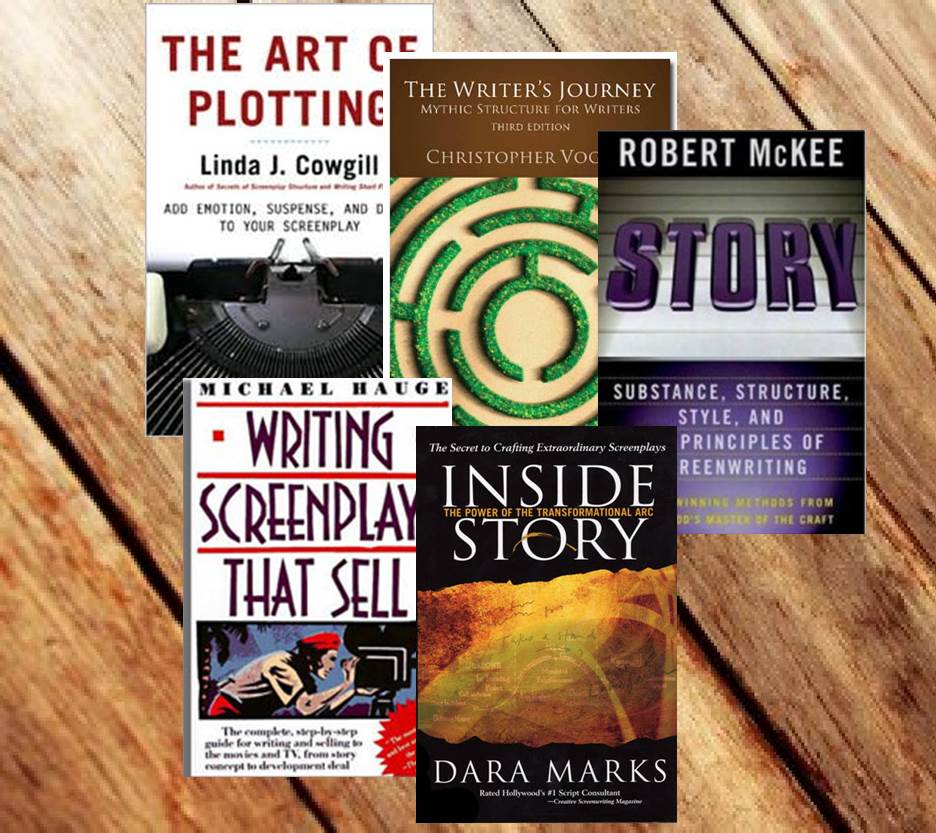
Linda Cowgill. Chris Vogler. Robert McKee. Michael Hague. Paul Joseph Gulino. Dara Marks. Each of these authors also has a trigger onto which student after student latches, like a remora on a shark, looking for their next artistic meal. Each offers an approach to screenplay writing that he or she found particularly useful.

Unfortunately, too many students miss the point that these are approaches or ways of thinking about screenwriting and not road maps to success. Each book offers one or more lessons that a writer can incorporate into his or her work today to make it better, but none of them are the One True Way.

In fact, too close a focus on any one author and you will never find Your True Way.

Too much focus on Dara Marks’ Inside Story and you will find yourself in a tailspin about Theme, as you struggle to force-fit your characters’ actions and dialogue around a theme that may or may not be true to your story.

If you find yourself able to quote Chris Vogler’s The Writer’s Journey, you’re likely describing your characters in terms of mythic archetypes a la Joseph Campbell and drawing parallels with The Wizard of Oz and Star Wars.

I’m not saying that novice writers should avoid these authors. I am simply saying that each should be approached cautiously as the novice writer—or seasoned writer, for that matter—can’t hope to achieve everything these authors discuss. The authors have the luxury of looking at a screenplay as a completed item and so discuss aspects and approaches for which you and/or your screenplay may not yet be ready. There is a reason that you will still find many of these books on the shelves of seasoned screenwriters…because they continue to find new lessons in old books as they develop their craft.

The authors and their tomes are more like a screenwriting buffet, offering you a variety of flavours that hopefully provide nourishment, but can also cause artistic indigestion.

So, sorry folks. The books offer no clues as to the One True Way. It doesn’t exist. And like everyone that came before you and will likely come after, you will continue to struggle as you search for Your True Way.

PS I own and have read books by all of the authors discussed here (and in Book larnin’), and every time I reread them, I find something new to apply to my screenwriting—including, interestingly enough, from the business writers.

I am always right (motivation)

Image

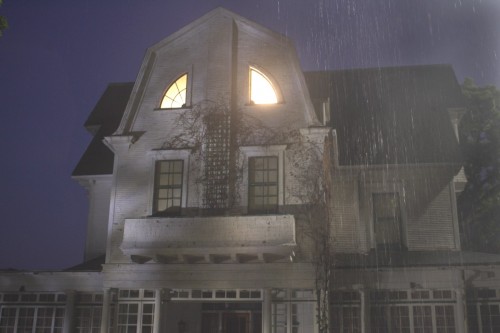
If I move into a beautiful New England home with my beautiful family and on our first night, the walls run red with blood and a disconnected voice cries “Get out!”, I go to a hotel and move the next day.

I do not search for an explanation (or at least not that night). I do not instinctively head for the dusty attic, the dank dark basement or that rather nasty looking shed under the menacing weeping willow in the darkest corner of the back yard.

So when I read about characters doing just that in a novel or screenplay or watch actors do it at the movies, I find myself thinking they deserve whatever comes next because they are idiots. What the hell motivated them to have that stupid response? Out of the gate, I disconnect from the character.

Now, despite the title of this blog post, I am not suggesting that only my instincts should be followed in screenplays, novels, etc.—these would be damned short stories if everyone did—but rather it is a call to writers to help me, as a reader or viewer, understand why the character behaved the way he or she did. Until I do, I cannot really bond with the character.

This isn’t easy, but it is necessary.

Whenever a character responds to something or takes an action, you have to ask yourself, why did he or she do that? And over the course of your story, are all of that character’s choices consistent with his or her personal journey from before your story’s opening to its conclusion?

And as if that isn’t difficult enough, you then have to ask yourself, have I written the story in such a way that the audience can see the logic of the choices, even if only in hindsight?

This last point is crucial, because as writers, we often know or understand things about our characters that never make it to the page. Thus, while everything may seem completely consistent and logical to us, it may still be confusing to our audience, who is not privy to the machinations within the head of the writer god.

At the same time, you never want to spell it out for the audience, because then story reading or watching becomes too passive an exercise and the audience doesn’t engage. You need to feed your audience just enough information that it can begin to make inferences about your characters’ behaviours and so become connected with your characters.

The good news is that this is unlikely to happen in your first draft or at best, will happen in drips and drabs.

As you develop your story past draft one, you will find moments of inconsistency or more likely, your trusted readers and advisers will find inconsistencies. Take those in and mull them over. Odds are, fixing those issues will not require a major refocus of your story…just a heavy-brush rewrite. And your story will improve.

So if the walls run red with blood, a disconnected voice cries “Get out!” and your protagonist doesn’t, I better understand why.

Image

(Images are the property of the owners and are used here without permission.)

Fitting a pitch

Image

The line has been drawn in the sand. I’ve painted myself into a corner. It’s time to s#!t or get off the pot. [Insert other cliché expression indicating you’re stalling and we all know it.]

It is time for me to start pitching my television show ideas to production companies. No more fine tuning. No more market analysis. Get out there and sell, boy.

I was at an information session over the weekend where a Head of Development for a local production company was talking to new comedy writers (and me) about what producers are looking for in new sitcom pitches, and perhaps just as importantly, what they do not want to see.

Much of what he had to tell me was very familiar, but one factoid took me quite by surprise and shook me off the procrastination horse. Nobody, it seems, wants to see your pilot script (at least not in Canada).

They haven’t got time to wade through it and really just want to know three simple facts:

  • What’s your story idea?
  • How expensive will it be to make?
  • Can we sell it in the U.S. or in Europe?

And all of this, the producer assures us, can be handled in no more than 3 pages and for some, ideally in one.

What’s your story idea? Tell me about the scenario, the characters and what I can expect to see in a typically episode.

How expensive will it be to make? One or a couple of sets works in Canada…multiple location shoots gets expensive.

Can we sell it abroad? Make it Canadian enough to get government tax incentives but not so Canadian that Americans and Europeans won’t want it. Broad and universal is the name of the game.

No pilot script? Too many changes after everyone has had their hands in your concept…although, if you have one, you can use it as a sample of your writing.

Oh.

Hunh.

Well.

Suddenly, I have gone from having one sitcom ready to pitch to producers to three sitcoms, two animated kids programs, one anthology series (think Quantum Leap) and two educational/lifestyle programs. [This is aside from the sketch comedy show on which I am a writer, but is someone else’s puppy to pitch.]

Time to figure out what production companies develop shows similar to mine and arrange some meetings. Time to make this career leap pay some bills.

Wish me luck (and please check in every now and again to keep me honest).

(Photo used without permission from the delightful blog Picnics in the Park.)

Packing it in

Cardboard conundra;

A thousand puzzles

Demanding attention.

Sticky fingers clawing

Invisible seams;

Tortured screams

Muffle buried treasures.

Swaddled icons

Nestled strategically;

Memories layered

On things forgotten.

The paper-laden tomb

Of a modern day pharaoh;

Heiroglyphic notes

Of fumed pitch.

Life in a box

Awaiting release.

Image

Unintended misogyny

According to the Cambridge Dictionaries Onlinemisogyny (n) Feelings of hating women or the belief that men are much better than women.

Image

Let me state for the record that I do not hate women, but over the last decade or so, I have come to realize the insidious ways in which I felt (or made it appear that I felt) men to be superior to women.

As a male writer, I have historically written stories from the male perspective. My protagonists were male. My antagonists were male. My peripheral characters were predominantly male. And when I did include a female character, she tended to be rather two-dimensional (see also my blog post For my friend Emma).

Several years ago, I had the fortunate happenstance to take a sketch comedy writing class at Toronto’s Second City Training Centre under the guidance of actress and writer Aurora Browne, best known locally as one of the actors from the show Comedy Inc. and former mainstage performer at Second City. Perhaps not surprisingly, the class was mostly comprised of men. And to a man, we wrote sketches about guys.

After the first couple of classes, however, when we had each produced a few sketches, Aurora challenged the men in the room to either rewrite one of their existing sketches or write a completely new sketch with a woman (or several) in the lead.

It was at that moment that I realized my unintended misogyny.

Aurora was tired of trying to find material with strong and/or well-defined female characters. She was tired of simply playing the girlfriend, the ex-wife, the nurse, the teacher. Not that there was anything inherently wrong in playing any of these roles, but more that they were almost always written as two-dimensional…if they could even be said to aspire to a second dimension.

This was her opportunity to put her heels into the dirt in moulding the next generation of comedy writers.

From my perspective, the task was amazingly daunting and very surprising, as I found myself breaking down walls and obstructions I never realized I had put in place. I had to think how might a woman character function differently in this scene, without getting cliché, and how would that change the dynamics of the scene. Or even would it?

In the years since, no matter what I write—sketch, screenplay, teleplay, poem—I watch for places where I might fall into gender bias. The minute I decide on my main characters, I ask myself if the protagonist or antagonist could be a woman (sadly, I still typically default to males). If the answer is yes, then I take a second run at my idea to see which way would make for a better story.

As a result, I have both dramatically increased the repertoire of characters I can bring to life and greatly enriched my stories. In fact, the two most recent screenplays I am developing have female protagonists, as do a couple of my television pilot concepts—not out of a sense of political correctness or fairness, but because those choices made the most sense for the story.

So thanks, Aurora, for the creative kick upside the head.

(Illustration used without permission.)

For my friend Emma

…and all my other female actor friends and colleagues, a simple request to storytellers and writers:

When creating a female character for your story (or any character, for that matter), please describe her in terms that reflect who she is and not in terms of how she relates to another.

Image

Phrases like ex-girlfriend or soccer mom provide only a limited degree of context and tell us nothing at all about your vision for that character.

Is she a psychotic Glen Close type of character or is she a nurturing Barbara Billingsley type of character?

To what does she aspire?

If presented with a spider, she would [fill in the blank].

Around a board room table, her position would be [location], she would be dressed [adjective], her posture would be [adjective] and her eyes would express [noun].

If the character is important enough to move your story along, the character is important enough to be a human being (or whatever species you are dealing with).

If not, then you probably don’t need the character in your story.

What more did you need?

Image

There is an allegory that was better told by Karl Malden on The West Wing, but it goes something along the lines of:

There was a man who lived by a river, and one day, he heard a weather report that said the river was going to flood and that everyone should move to higher ground. A devout man, he said, “God will protect me. I do not have to leave my home.”

The rains started and a policeman came knocking on the man’s door, telling him he had to evacuate. The man smiled and said, “The Lord will protect me. I’ll be okay.”

The river flooded and the man was stranded on his roof, when a rescuer in a boat rowed by, telling him to get into the boat. The man shook his head and said “I have prayed and God will protect me.”

Eventually, the river swept the house away and the man drowned, and when he got to heaven, he stood confused before God and asked, “Lord, you let me drown. I am a good man, why did you not protect me?”

And God looked down and replied, “I sent you a weather report, a police officer and a rescuer in a boat. What more did you need?”


I recount this story because I have a colleague who is going through similar stages with her screenplay.

After months of feedback from writing groups and instructors that suggested several issues with her screenplay, the most prominent being the passivity of her protagonist and complete lack of conflict in her story, my colleague stood fast by her story. She defended her choices vigorously and left us in no doubt that she was going down the right road.

As it is her story, that is her right, and so many of us stopped discussing these issues with her.

More recently, she’s had the opportunity to send her screenplay to a film producer she knows, who was more than happy to give my colleague her thoughts. A few days later, she shared the feedback with us and smack in the middle was several issues related to the behaviour and actions of the protagonist. My colleague was unimpressed and vaulted upon her Steed of Rationalization, charging into the night.

A week or so later, my colleague received feedback from a film director and again, was smacked with a lack of central conflict and a passive protagonist. And again, this elicited response of being misunderstood and dismissive anger.

And the screenwriting gods looked down and replied, “I sent you a screenwriters group, a film producer and a film director. What more did you need?”


We all want people to agree with our views, particularly when it comes to something as personal as our art. Agreement validates us as individuals and confirms that our art has merit in the world beyond.

But in the search for that agreement, we must be prepared for disagreement. And while it is always our prerogative to ignore contrary opinions, we lose the right to complain when the contrary feedback is consistent and still we choose ignore it (or worse, rail against it).

I don’t believe that anyone has to accept external feedback; positive or negative. But if you want your art to be more than mental masturbation, you should be prepared to listen to all input and incorporate what makes sense to improve your art.

Otherwise, shut up and let the rest of us evacuate the flood plain.

Long weekendless

It’s a long weekend, this weekend in Canada. We’re celebrating Victoria Day, which is a celebration of either the capital of British Columbia, a previous Queen of half the planet, or a friend of mine who blogs Victoriously.

Regardless of what we call it, however, it is a celebration of Spring (welcome to Canada) and of drinking beer on patios and at cottages—the May Two-Four weekend, as some of us older folks recall it (commemorating the Canadian single-serving case of 24 bottles).

What makes this year’s version a little odd for me is that for the last year or so, every weekend has been a long weekend, for I am a freelance writer. On any given Monday or Friday, I can choose not to work. Likewise, on any given Saturday or Sunday, you are likely to find me working. Day nomenclature has ceased to hold meaning for me.

For all intents and purposes—and I have plenty of both—the only real difference between a Wednesday and a Saturday is how many of my friends can come out to play at 2 o’clock in the afternoon. And most of my friends are in entertainment, journalism or science, so even that constriction isn’t very strict.

Admittedly, I am less likely to hold an interview for an article assignment on the weekend, but those are few and far between.

Now, my freedom comes at a price…or lack of a price, as the case may be. My pay packet is smaller than it once was. I have no health benefits but what the government gives me (welcome to Canada!). I often have to make myself go for a walk to ensure I get some exercise.

However…I don’t attend meetings. If my boss is an ass, I’m probably looking in the mirror. My commute is maybe two metres. And my drinking problem doesn’t seem to be suffering (phew!).

This morning, I seriously argued with myself as to whether I was going to work on a feature due next week or take my camera out for a walk…and it could have gone either way (I strangely decided to work on my feature).

I have no family about whom to worry or of whom I need to take care, so I understand I have a luxury of options that many feel they cannot afford.

At the same time, I watch many of my responsible friends—typically the ones who can’t come out to play at either 2 o’clock—and see them dig themselves an early grave, fighting to give their families everything except the one thing their families probably want most of all: themselves.

I may die tonight—exercising that drinking problem—or I may live for another hundred years. I don’t know. But either way, I’m not worried about it. I don’t have a timer on things to accomplish.

That’s a nice feeling.

All y’all have a great series of days that may be a weekend!

Image