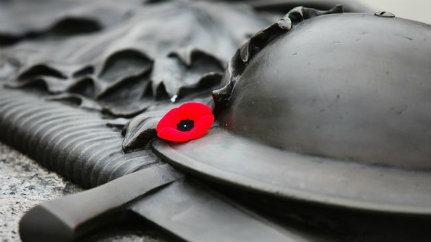
Every year, as October transitions into November, I go in search of a new red poppy pin in honour of Remembrance Day on November 11. It is a tradition in my family and across Canada to append the crimson flower to our lapel as a reminder of the bloody sacrifices made a century ago.
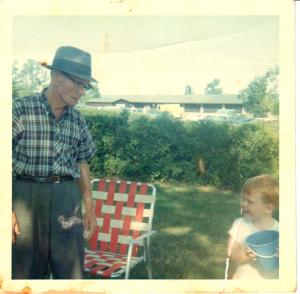
I also wear it to honour my great-grandfather Francis Sowden, who came home from the Great War, unlike so many others, including siblings on my great-grandmother’s side who are sadly just names without faces to me so many years later.
I am one of few in my generation to have known Francis Sowden.
Recently, I have heard people complain that the commemorative symbol of the poppy has been co-opted by those who want to hail it as a symbol of the glory of serving in the military, if not actually the glory of war itself. This bothers me.
I greatly thank all those who have, do and will serve in the military both in Canada and abroad, many risking their lives to keep others safe. Although I was an unthinking idiot in my youth, I have learned that these people, while frail humans, are noble titans who see conflict as a last resort.
For all that nobility, however, the poppy must remain a separate symbol.
A painting from the Royal Ontario Museum that haunts my dreams. (sadly, I cannot remember artist)
The poppy reminds us of the horrific toll of war. It is a crimson stain upon our lapels that taints us all and reminds us of the fragility of the peace that surrounds us. The bloody hue taunts our civilized smugness with a warning of how easily we can fall into the pit of violence, whether as individuals, communities or countries.
While we wear the blood red poppy to honour the fallen of World War I, we also wear it as a badge of shame that the war ever took place, and that the war to end all wars wasn’t.
This dual purpose must never be diminished. We must strive to be better.
And next year, as October transitions into November, I will go in search of a new red poppy pin in honour of Remembrance Day on November 11.
I will never forget.
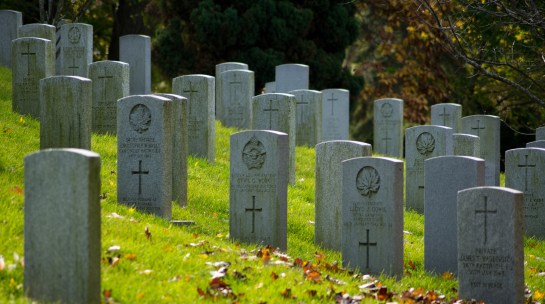
A cemetery near my home reminds me of the sacrifices
My annual pilgrimage to the Canadian National Exhibition, an end-of-summer ritual in Toronto. Sadly, The Ex is our national fair that seems to get smaller and smaller each year.
The grand old lady has definitely seen better days, but she still entertains the crowds.
He ain’t half heavy, he’s my half-brother – The Adopted Hollies
If you haven’t got a penny, then half a penny’ll do. If you haven’t got a ha’ penny, then God bless you. – some British thing (not the Hollies)
I read an article this weekend that described the murder of a man by his half-brother. Normally, I don’t read these kinds of stories, but I was drawn to this one because of the phrase half-brother, which made me wonder why this phrase was still in common use.
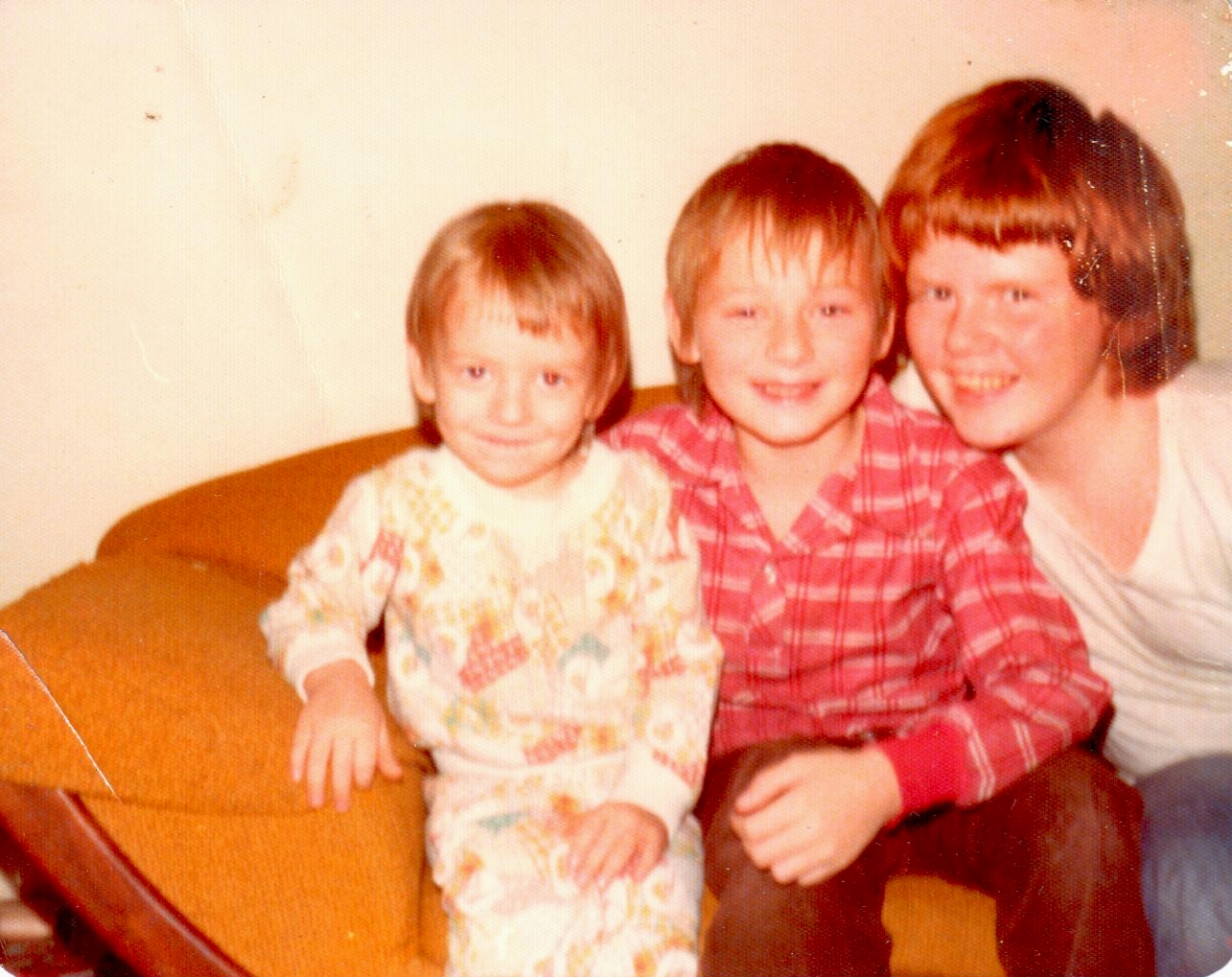
What the hell is a half brother? (Shawn, Scott, me)
I appreciate that historically there may have been a reason to keep track of who one’s siblings were from a legacy perspective. Family homes and farms (and for the wealthy, estates) possibly hung in the balance when Dad died…although I question how often this was a concern. And no self-respecting Shakespearean comedy or drama would be complete without an evil half-brother. But why now?
To quote the Bard:
What’s in a name? that which we call a rose
By any other name would smell as sweet;
Likewise, to quote Merriam-Webster:
Blood (n): the fluid that circulates in the heart, arteries, capillaries, and veins of a vertebrate animal carrying nourishment and oxygen to and bringing away waste products from all parts of the body.
So again, I ask why the fixation on a surname and the concept of blood ties?
The last time blood ties mattered
I never knew my father—not something I take personally; just a fact—and so I have no particular attachment to my last name aside from convenience and familiarity. I feel no compunction to continue the family name. Other people have the surname of Willis…let them continue it if they want.
And my brothers and I only share one common parent—our mom—and so have different surnames. Does this make them any less my brothers, however, than a pair of siblings who shared the genetic legacy of the same pair of parents (pairents)? Not for me (you’d have to ask them their perspectives on this).
For the famous, an argument can be made that sharing DNA somehow opens doors from one generation to the next: Ken Griffey Jr., Drew Barrymore, Robert Downey Jr., Robert Kennedy Jr., Paris Hilton.
Not sure how that last one works
But in most of those cases, sustained success comes from inherent talent and drive, not simply DNA. (I still don’t understand why Paris Hilton is famous.) Likewise, for every case of possible nepotistic success, there are hundreds or thousands of cases of success despite lineage (no disrespect to parents anywhere).
Perhaps I am the anomaly on this, but I simply don’t understand the importance of the nomenclature to who I am as an individual or how I respond to a family member versus a close non-genetically linked person (aka friend).
Agah, Nicholas and Marsha are my siblings despite the lack of genetic links
Scott and Shawn are my brothers more for our shared experiences than because of any genetic connection, much as Agah and Nicholas are my brothers and Marsha my sister for our shared affection and experiences.
Call me Ishmael, for all I care…if we are good friends, you have likely called me worse.
In the meantime, I’ll use my bloodlines to circulate oxygen to tissues and white cells to fight infection.
Brothers…no half-measures
My preferred quote:
We few, we happy few, we band of brothers;
For he to-day that sheds his blood with me
Shall be my brother; be he ne’er so vile,
This day shall gentle his condition:
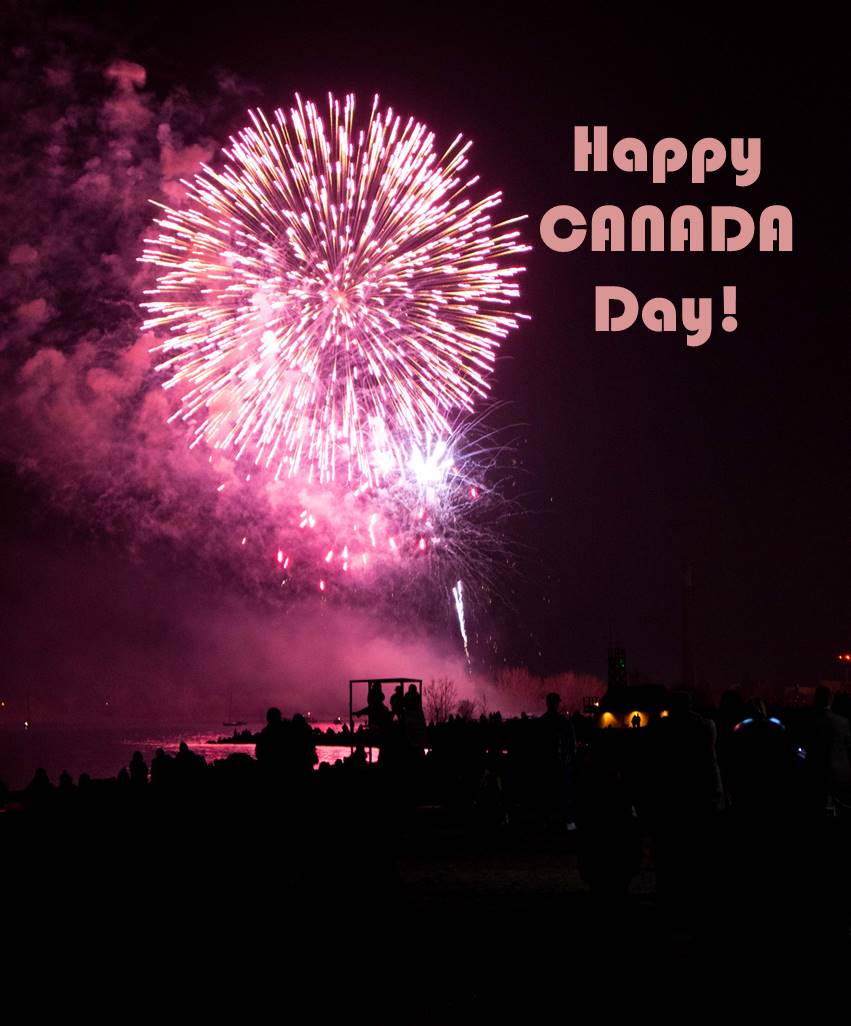
It’s time again to express my gratitude for everything that my home & native land has given me, and to wish you all–Canadian or not, here or abroad–a safe and wonderful year.
My only wish is that you all have the good fortune I have experienced and know the love that I know.
Watched Rashida Jones‘ documentary Hot Girls Wanted about the amateur porn industry and can honestly say I have no idea what I think of it.
Part of the challenge is I have no idea what the point of it was other than to document the experiences of several young women (18-25 y) as they approach and experience the lifestyle. We can argue day and night about whether the lack of an overt agenda or POV is a good thing, but to my mind, it presented the women as neither victims nor empowered…simply as women who made a choice.
To be blunt: These women chose to go to Fuck Camp to make money and escape home.
It is interesting to watch the impact of their decisions on their lives and particularly their relationships with families and boyfriends. And I had to laugh at the irony of one woman who was clear in her rationale about her decision until it came to talking to her father about it.
And I must admit that I was surprised at how cavalier (my biased standards, not theirs) the women were about what they were doing, the potential hazards of the situations they found themselves in, and any thoughts as to how this might impact future life decisions beyond the 3-6 months they made money (not a typo…a woman’s “marketability” typically only lasts 3-6 months).
One of the few images I’m willing to show
Over its 82-minute span, the documentary drags a little in places and often covers the same ground, no doubt to reinforce some of the more graphic elements. And it is graphic, stopping short of showing the actual sexual acts, but giving you enough of the rest (e.g., nudity, bondage, choking, vomiting) to bring across the essence of what these women are doing.
And in the end, the take-away is whatever you take away from this story.
No matter what your opinion going in, this will only reinforce that opinion. It doesn’t seem to be aimed at making you change your mind about the merits or evils of this industry. The same woman who feels exploited in one scene expresses a sense of empowerment in the next, and in some cases, about the same act.
Adult women making adult decisions about the adult industry. Good or bad is for you to decide for yourself.
The phrase that irritated me for the thousand times a week it bore into the back of my head now haunts me.
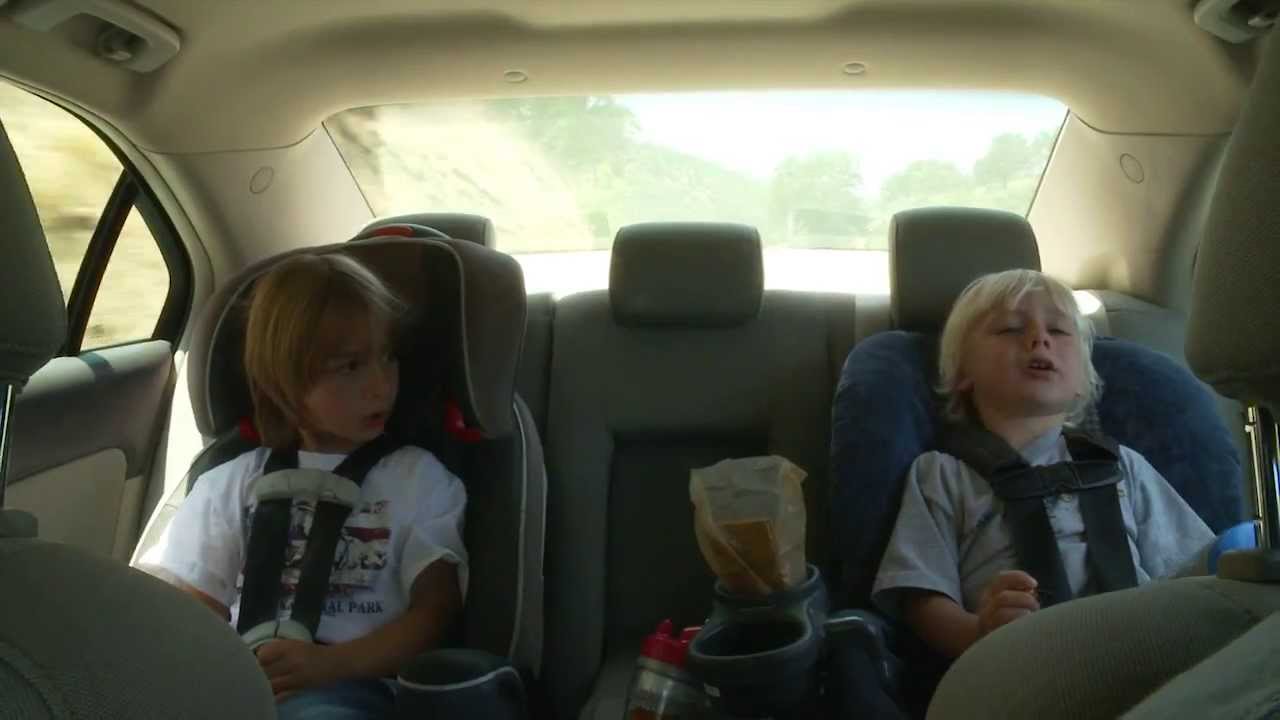
It had taken forever for me to convince the boys to leave their seat belts alone, to keep their hands from compressing the buttons that stood between confinement and filial battle. And more than once, I found myself wishing that rather than cross their laps, the belts crossed their mouths, stilling the staccato tarantella that skipped across my brain.
Silently, I would curse my husband for wanting children so close in age; built-in playmates, he would argue as though siblings were naturally adept at civility and sharing. Never marry someone who was an only child, I would remind myself; too many delusions of a happy peaceful family to dispel.
“Are we there, yet?”
The words and whine a cattle prod to my ear drums, my head involuntarily snapping to one side, threatening to glance off the door frame, the open window insufficient to drown the drone from the back seat.
“Are we—“
“Has the car stopped moving?” I’d shout at the rear-view mirror as though it was the source of my agony rather than simply a reflection of what I’d left behind.
For a second—a glorious second—the car would go silent, but the silence was an illusion, a prelude to crises yet to come. Inquisitive urges not quelled so much as turned aside, as unsatisfied attention-seeking demanded to be slaked.
“Mo-o-om!” came the high-pitched cry.
“I’m not doing anything,” its wounded echo, pre-emptorially defending actions yet unchallenged.
“Enough,” I charged, confronting the miniature offenders with turned head.
The light was green, or at least that’s what the report said, as though the colour protected me from my guilt any better than it protected my car from the panel van approaching from the left; as though an absence of fault even approximates an absence of self-loathing anguish.
The car was a write-off, and after six months of my husband’s words telling me it wasn’t my fault while his eyes told another story, so was my marriage.
And now, sitting here in my wheelchair, all I can think of is “Are we there, yet?”
Much like the Big Sky prairies that serve as its backdrop, Alexander Payne’s 2013 film Nebraska takes a little bit to get going, but when it hits its stride, there is no stopping it.
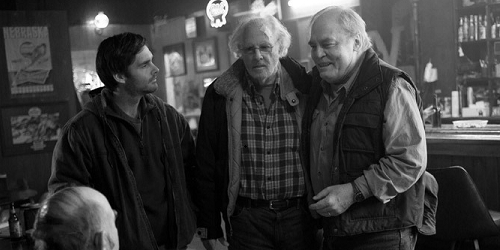
An irascible old drunkard Woody (Bruce Dern) thinks he’s won a $1,000,000 lottery and is determined to collect his prize in person, walking if he must from his home in Billings, Montana to the prize centre in Lincoln, Nebraska. When his youngest son David (Will Forte) realizes there is no stopping the senile old coot, he takes a few days off work and offers to drive.
Along the way, they stop for a few days in his father’s home town of Hawthorne, Nebraska, where they are joined by his mother Kate (June Squibb) and older brother Ross (Bob Odenkirk). But almost as quickly as the townsfolk and extended family realize the old man has struck it rich, the hands reach out for their cut, led by Woody’s former business partner Ed (Stacy Keach).
As I said, the movie starts out slow. Woody has nothing to say to any of his family, at times appearing to have dementia. David meanwhile faces an empty life and just wants to communicate on some level with his family, never having felt like he could talk to them. Thus, when the two men with nothing in common aside from chromosomes take to the road, it feels very much like the start of an opposites-connect buddy film.
The dialogue is excruciatingly simple in the early going, rarely more than one or two syllable conversations. Despite occupying the passenger seat of the car, Dern’s Woody is never really there, only being forced into human contact by having everything repeated louder. Forte’s David, meanwhile, has a perpetual pout of a puppy begging to be patted on the head.
Eventually, though, if only out of frustration, David begins to take control of the situation and his life. Through his own explorations and by observing his father interact with the home townfolk, he begins to see that there is so much more to his father, and this is where I really started to take note of Forte as an actor, as something more than his MacGruber caricature.
I would say that Dern turns in a solid performance, but his dialogue is so short and his stare so vacant that only once in a while do we get a real glimpse of the tormented soul within the husk of a man. June Squibb’s Kate is something to behold, however (her voice and attitude remind me of Shelley Winters). Starting more as a screeching shrew, she really comes into her own in the latter half of the film with some of the funniest lines and the staunchest defense of her messed up husband. Odenkirk is solid, but isn’t really given much to do here…this is Forte’s movie.
My strongest reaction, however, is reserved for Stacy Keach, who yet again, plays the charming, smarmy bully asshole for which he is famous (think Papa Titus on the sitcom Titus). I can’t remember a role for which Keach didn’t deliver. The man eats up the screen. You can’t not watch him.
In terms of cinematography, Payne chose to film the entire movie in black and white, giving the whole story a sense of being trapped in another time, and adding to the sense of desolation exhibited by both the geography of the region and the simplicity of the town of Hawthorne, with its barren sidewalks and seemingly abandoned businesses. The whole thing feels like an emotional dead zone and the lack of human spark in all but a few citizens reflects that.
Bob Nelson’s screenplay is a simple one, devoid of plot twists or anxious moments. There are no great moments of revelation, but rather subtle hints at who Woody was when he was a young man. As such, the characters can come across as superficial and on-the-nose. But again, I think this was on purpose rather than a failing. I think he wanted to show us shallow people in a shallow land.
Toward the end, the movie started to take on a bit of a Hollywood ending feel, but although Nelson did start us down that road, he thankfully stopped himself before the point of schmaltzy no return.
All-in-all, I liked Nebraska, although I didn’t think it deserved the accolades it received at Cannes (Palme d’Or nomination, best actor for Dern), the Golden Globes (5 nominations) or the Oscars (6 nominations). It’s just not that deep a film, in my eyes.
You can find a PDF of the screenplay for Nebraskahere.
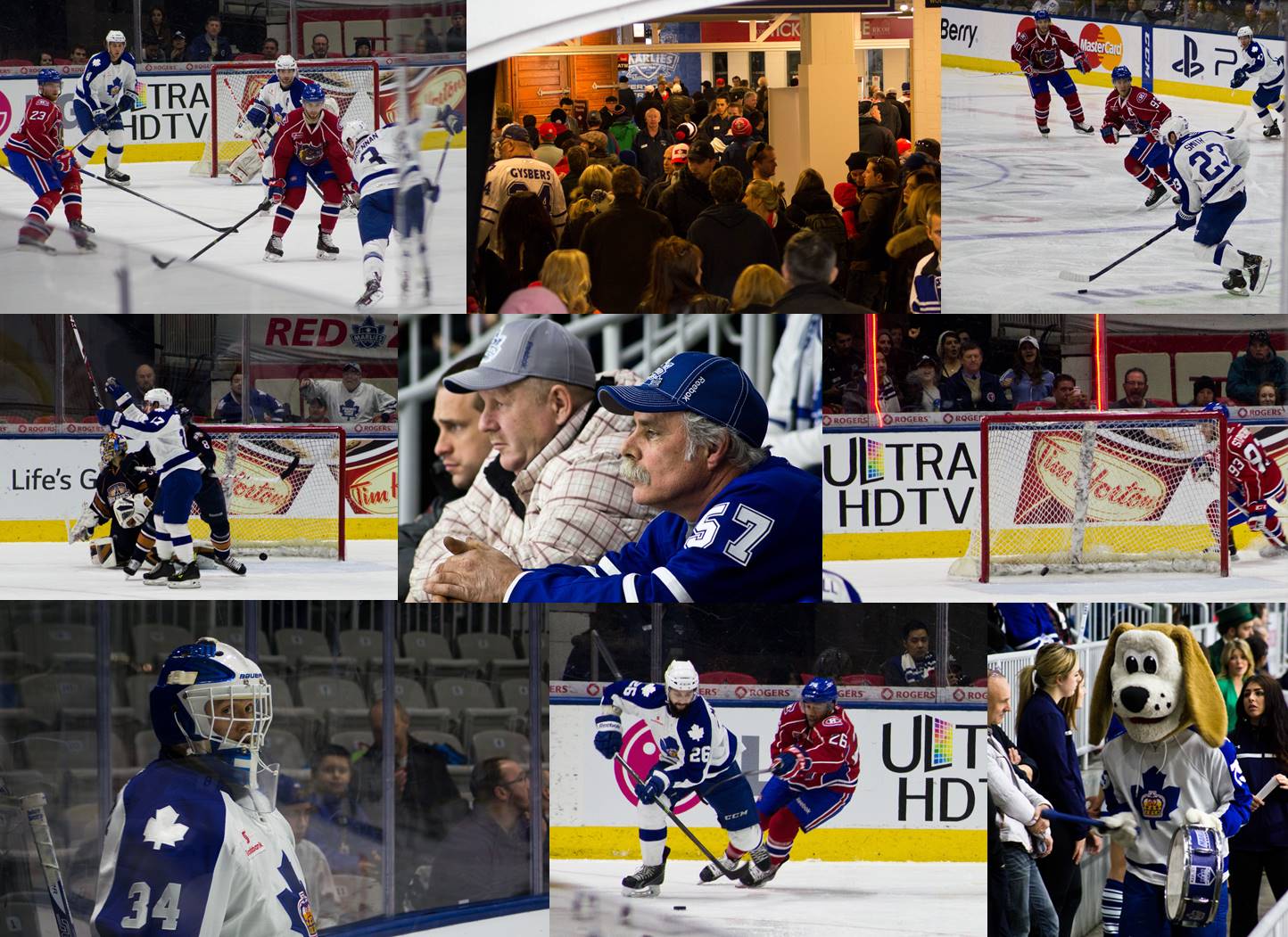
(It took 4 days, but I was finally able to pull my depressed head out of my @$$ and write a final address to the players of the Toronto Marlies hockey club, who lost the AHL Western Conference Final earlier this week.)
Well, gentlemen, it has been a hell of a ride this season—one full of soaring highs and crushing lows—but throughout it, please know that your fans have been immensely proud of you and all that you have achieved.
We cheered when you soared. We hurt when you hurt. Our hearts broke at exactly the same moments yours did. And we did all this because you are a second family to each of us.
My friends are probably sick of hearing about you guys. My Facebook and Twitter connections will get a brief respite from the near-daily onslaught of things Marlies-related. But all of them know, I will be back to crow about my boys and the wonderful organization soon enough.
While I continue with the preoccupations of summer and hope you do the same, know that I am counting the days until I hear the first reports of training camp, the sewing of names onto jerseys, the irritated rumble of the Zamboni prepping that first sheet, the spine-chilling slice of metal blades into perfect ice.
For as much as I will enjoy the sun, sand and water of The Beaches, I cannot wait for the sweet embrace of the Ricoh’s front doors and the buzz of another Marlies season opener. When I peer once again into the South end of the ice and watch my boys start the dream yet again.
All the best, gentlemen. Be well. Rest up. And for God’s sake, stay hungry.
Mother, Nehiyaw, Metis, & Itisahwâkan - career communicator. This is my collection of opinions, stories, and the occasional rise to, or fall from, challenge. In other words, it's my party, I can fun if I want to. Artwork by aaronpaquette.net





































 createdbyrcw