Blood red poppies

Remembrance Day

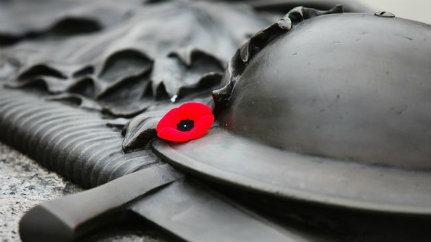
Every year, as October transitions into November, I go in search of a new red poppy pin in honour of Remembrance Day on November 11. It is a tradition in my family and across Canada to append the crimson flower to our lapel as a reminder of the bloody sacrifices made a century ago.

I also wear it to honour my great-grandfather Francis Sowden, who came home from the Great War, unlike so many others, including siblings on my great-grandmother’s side who are sadly just names without faces to me so many years later.
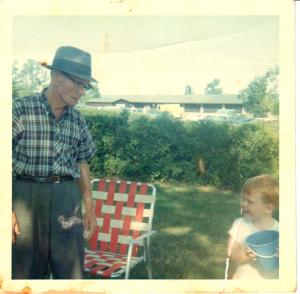
I am one of few in my generation to have known Francis Sowden.

I am one of few in my generation to have known Francis Sowden.

Recently, I have heard people complain that the commemorative symbol of the poppy has been co-opted by those who want to hail it as a symbol of the glory of serving in the military, if not actually the glory of war itself. This bothers me.

I greatly thank all those who have, do and will serve in the military both in Canada and abroad, many risking their lives to keep others safe. Although I was an unthinking idiot in my youth, I have learned that these people, while frail humans, are noble titans who see conflict as a last resort.

For all that nobility, however, the poppy must remain a separate symbol.

A painting from the Royal Ontario Museum that haunts my dreams. (sadly, I cannot remember artist)

A painting from the Royal Ontario Museum that haunts my dreams. (sadly, I cannot remember artist)

The poppy reminds us of the horrific toll of war. It is a crimson stain upon our lapels that taints us all and reminds us of the fragility of the peace that surrounds us. The bloody hue taunts our civilized smugness with a warning of how easily we can fall into the pit of violence, whether as individuals, communities or countries.

While we wear the blood red poppy to honour the fallen of World War I, we also wear it as a badge of shame that the war ever took place, and that the war to end all wars wasn’t.

This dual purpose must never be diminished. We must strive to be better.

And next year, as October transitions into November, I will go in search of a new red poppy pin in honour of Remembrance Day on November 11.

I will never forget.

A cemetery near my home reminds me of the sacrifices

A cemetery near my home reminds me of the sacrifices
Race in writing

One race, many peoples (from mediadiversified.org)

One race, many peoples (from mediadiversified.org)

I’ve spent a few months now reading dozens of teleplays, and one thing that stood out as a new trend for me was the phrase “mixed-race” when describing a character.

“Attracted to the noise, JOANNE (27, tall, mixed-race) looks up from her laptop. A smile blossoms across her face.”

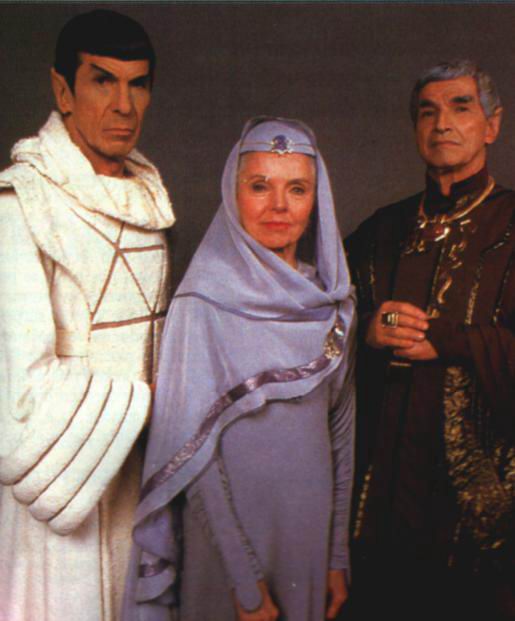
Now, lest anyone take offence, I really don’t care to what race a character is attributed. Nor do I care if the character has parentage of different races or even different species (looking at you, Spock).

Instead, what struck me was that in only one of these teleplays did the fact that the character was mixed-race in any way influence the story and/or the character’s worldview. Which begs the question:

Why mention race at all?

In a screen- or teleplay, you should only be telling me things I need to know to understand the story or interpret a character’s behaviours and attitudes. Unless being 7 feet tall means a character can do something no one else can do and the plot in some way turns on that ability, then I don’t need to know the character is 7 feet tall.

Likewise, if a character is a Korean-Italian and the only thing this fact influences is possibly his or her name, who cares? Where are the subtextual or textual influences of this genetic melange?

Spock was every bit his warring human and vulcan sides

Spock was every bit his warring human and vulcan sides

In the case of Spock, entire stories were built around the internal and sometimes external conflicts arising from his mixed heritage. He fought constantly to suppress his human side and that influenced his relationships and reactions with everyone else.

In the single teleplay I read where the character’s mixed lineage did matter, the character struggled with being treated as an outsider by both communities. Thus, in being ostracized by both cultures, she built the defence of being a rebellious loner and responded to her world thusly.

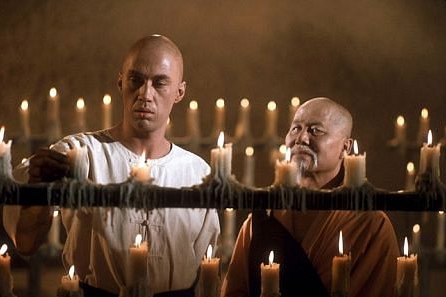
American father, Chinese mother, Kwai Chang Caine lived conflicting cultures

American father, Chinese mother, Kwai Chang Caine lived conflicting cultures

In none of the other teleplays was anything like this even remotely the case. In none of those scenarios, did the writer use the choice to inform the character. In fact, in almost every mixed-race teleplay, the writer never specified what races had been mixed.

That’s how unimportant this fact was to these writers. And there’s the real shame.

Although I don’t know what the writers intended by making their characters mixed race, I suspect it was simply to make themselves look socially conscious.

What they achieved, at least in my eyes, was the exact opposite.

Close but no Clouseau

600full-the-pink-panther-poster

So, I just finished watching the 2006 reboot of The Pink Panther with Steve Martin, Kevin Kline and Jean Reno, and all I can think is nice try.

Hollywood has always loved its remakes and reboots—this is not a new phenomenon—and sometimes they pay off. For example, I particularly enjoyed the Star Trek reboot of 2009, although its follow-up remake of Wrath of Khan was a bust for me.

But I seriously believe there are a handful of quintessential films that simply cannot be remade or rebooted, and in each case, I suspect it is because the lead character was so completely defined by the actor who played him or her.

Such is the case with Inspector Clouseau.

One of these men is an imposter

One of these men is an imposter

In the 2006 reboot and its unfathomably inexplicable sequel in 2009, Clouseau was performed by Steve Martin, a man for whom I have the utmost respect as a comedian and actor. But the key term there is “performed”. Steve Martin portrayed Inspector Clouseau.

But Peter Sellers was Inspector Clouseau. He didn’t portray or perform the honoured member of the Surete, he gave birth to the man, he lived the man, he was the man.

And when the beloved actor, comedian, writer, raconteur passed away in 1980, so too should have any thought of reviving Clouseau. For all intents and purposes, Sellers’ tombstone might also have read “Here reposes Chief Inspector Jacques Clouseau”.

Sellers was that kind of an actor. He was a shape-shifter, a modern-day Proteus. Upon donning the hat, moustache and trench coat, Sellers ceased to be and Clouseau emerged.

And in giving birth to Clouseau, he launched onto the world a character that would become immortal, and thus a character who cannot simply be portrayed.

Perhaps one day, an actor will come along who can inhabit the character, be the character enough to do it justice, but I can’t think of anyone. And even if such an actor exists, someone with that kind of talent is better served giving genesis to new characters of the immortal prowess of Clouseau.

So, bless director Shawn Levy and Martin for trying, although over-trying might be more appropriate. You and the rest of the cast and crew had pretty much no chance to leave a footprint given that your predecessor left craters.

* * * * *

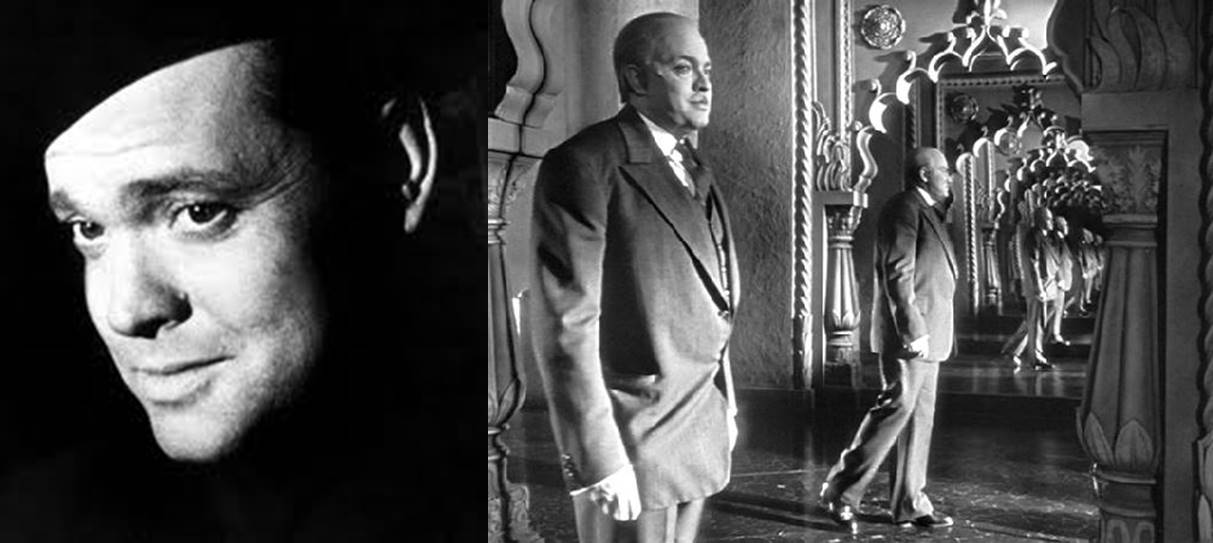
For reference, another actor I put in the unrebootable/unremakeable category is Orson Welles.

Can you imagine anyone else trying to step into the roles of Charles Foster Kane (Citizen Kane) or Harry Lime (The Third Man)? I can’t.

Harry Lime and Charles Foster Kane

Harry Lime and Charles Foster Kane

You are your own inspiration

An actor friend recently expressed “I don’t wanna” about leaving town for an upcoming gig. I assumed it was less about fearing the gig and more about leaving home, but I wanted to let her know it wasn’t about wanna or even hafta.

Enjoy.

dream

Real

2_istock_000012358529xsmall

Am I as lifeless as the image

That dances before me,

Within its two-dimensional bonds

Of height and width?

Or does it ask the same questions

As it stares through this portal of glass,

Breathing and thinking in a world

That also offers depth and duration?

Which of us is the corpus

And which the reflection?

Both? Neither?

When we part company,

Who moves first?

And if I smash the glass,

Which of us ceases to exist,

Except in the multitude of shards

That fall to Earth?

girlbrokenmirror

(Images are property of owners and upon reflection, are used here without permission.)

Ergo ego

(Property of evolution.berkeley.edu)

(Property of evolution.berkeley.edu)

Be as egocentric as you want, but always remember: You were one point mutation away from being somebody else.

(PS To the genetics nerds out there, I know they messed up the “original” strands in this diagram as the originals from different strands cannot be identical but rather should be complementary.)

Souls before sentience

As human beings, we tend to make a lot of noise about sentience. The challenge I find, at the deepest level, with this is that we seem to equate feeling with awareness in its broadest sense.

To me, feeling focuses inward, toward me, whereas awareness focuses outward, on what is out there. Thus, I’m more interested in soul. Not in the religious sense of who goes to heaven, but in the sense of unity with the greater universe.

One look into the eyes of animals tells you, humans are not the only ones with souls. What do you think?

The writer who… (UPDATED)

As an advertising copywriter, I was constantly called upon to summarize a client’s product with a single line, as few words as possible that would capture the brand essence of the product or service. The almighty tagline.

As a magazine writer, I am also called upon to summarize the stories I write into a sentence or fragment. Something that will give the reader the kernel of the story so they can decide whether they want to read it or move on.

And finally, as a budding screenwriter, I am asked to summarize my entire story in a single sentence so prospective producers can get my idea and see the possibilities, artistic but mostly commercial.

And yet, with all of this practice in concise summarization, there is yet one product that eludes my abilities: me as a writer.

At last year’s Austin Film Festival, during a session on how to work the festival, the Langlais brothers—that’s how they describe themselves, but Gene and Paul, for the record—challenged each of us to define ourselves in a single sentence as “the writer who…”. They suggested that if we could define ourselves as producing one type of screenplay, it would make it easier for producers and directors to wrap their heads around who we were and where to go when they needed that kind of screenplay. Call yourself something and then be the best that you can be.

The challenge for me was that I couldn’t even decide on a medium or genre, let alone determine what types of stories I wrote.

About the only medium I have not yet written for is radio and that’s more the result of lack of opportunity than lack of interest.

I am naturally inclined to write comedy, but my last two screenplays have been family drama and murder thriller with the possibility of a horror on the horizon.

For nine months or so, the question has plagued me. I am “the writer who…”

Recently, however, because of a screenwriting course and completely separate conversations about life with a friend, I have had a bit of a breakthrough, if not an actual answer.

Maybe, I’m looking at this challenge on the wrong level. Rather than focusing on the details of what I have done—genres, media, angles, etc—I need instead to take everything I have done to its most basic level. Stripped of the decorative details, what is the essence of what I create?

What is at the core of my favourite comedy sketches? My screenplays? My television shows? My magazine articles? And what am I doing that makes it mine?

I still can’t tell people I’m “the writer who…”, but I think I’m a little bit closer.

(Image is property of owner and is used without permission, about which I am of two minds.)


UPDATE

Interestingly, the Canadian film organization Raindance Toronto just posted an article called Creating a Personal Genre. Although aimed at filmmakers, the article clearly has overtones of what I presented above. Check it out.