Jason Bourne should have stayed home (review)

bourne poster

Super-assassin Jason Bourne is trying to figure out who he really is. In doing so, he falls into a web of deceit and potentially world-crippling black ops, including the one that gave birth to him. People try to neutralize him…silly people.

Cars race through crowded streets. Shots are fired from every direction. People die just as they start to provide answers. More shots are fired. Bourne gets answers but no real resolution or peace.

If you expected any more from a Jason Bourne movie, then you will be seriously disappointed with the latest installment of the series based the lead character of the novels by Robert Ludlum. In fact, if you want more from a Jason Bourne story, read the novels by Robert Ludlum because they are insanely better than any of the movies.

[Some SPOILERS hereafter]

In the latest installment of the series, Matt Damon’s titular character is brought out of hiding by his former nemesis-turned-ally Nicky Parsons (Julia Stiles), who has hacked into the CIA server and stolen the complete dossiers of the agency’s Black Ops. She wants to turn the information over to a Julian Assange kind of character, but asks for Bourne’s help, enticing him with information about his father’s involvement in his creation as super-killer (think X-Files Fox Mulder).

After a momentary “I’m getting too old for this shit” and some personal sacrifice on the end of a bullet, Bourne is alone again and we are off to the races.

Bourne cast

The CIA Director (Tommy Lee Jones) wants him dead, relying on another super-assassin The Asset (Vincent Cassel) to get the job done, while IT-savvy CIA analyst Heather Lee (Alicia Vikander) sees an opportunity to advance her career and maybe replace her boss by bringing Bourne in. Oh, and in the background, there is something about the CIA having access to the personal information of everyone on the planet via the Internet and a Sergey Brin-like character.

Unless this is your first Jason Bourne movie, you know how this all plays out…and if it is your first Jason Bourne film, why should I spoil it for you?

If you are looking for 123 minutes in which to simply check your brain at the door, then this is an entertaining way to do that. Stuff blows up, people fight, lots of car chases. But nothing really happens that hasn’t happened in the previous movies. Much like a roller coaster, the ride can be exhilarating at moments, but once the ride stops, so does the exhilaration.

And that was my problem with the movie…the thrill is quite literally gone for me. Jason Bourne has become his own cliché, and the writers and directors of this series are simply repeating moments from the other incarnations.

Where they had an opportunity to do something truly interesting with this story—the moments we spend exploring Bourne’s relationship with and confusion about his father—the writer-director Paul Greengrass and writer Christopher Rouse give us the barest taste and scurry back to blowing shit up. Rather than offer any sense of discovery and revelation, they simply have a former agency hack fill in the background under threat of death.

Is toady ex machina a thing?

In the earlier incarnations of this series, I never knew what to expect. In this incarnation, I knew exactly what to expect and it was delivered each and every time with a pretty pink ribbon. Or was that faded red tape?

I’m going back to the books. At least Robert Ludlum knew how to write.

As for shit blowing up, back-stabbing political conspiracy, and disquieting Internet voyeurism, 123 minutes of Jason Bourne just can’t compete with 20 minutes of CNN.

Bourne books

Surprise, but never lie

Roff

I recently saw the following advice from filmmaker and screenwriter Don Roff posted on the Facebook page of the PAGE International Screenwriting Awards:

Always mystify, torture, mislead and surprise the audience as much as possible. — Don Roff

Although I agree with the sentiment, I don’t think it is complete (Note: I was unable to locate the source of the quote to learn if Roff said more on the subject). Thus, I offer the following codicil:

Mislead and surprise, but NEVER lie to your audience. Everything must be possible within the context of the universe you have built in your story. If you lose the trust of the audience, you’ve lost them forever.

Movie memories for 2015

Posters_1

For a guy trying to make it as a screenwriter, it takes a lot for me to go out and pay to watch a movie. I think it’s, at least in part, because I don’t deal well with disappointment and particularly when I’ve had to pay for it.

Luckily, my friends had some luck dragging me out of the house this year, so below, I offer one-line critiques of the various films I saw in theatres (with hyperlinks to longer reviews I’ve written).

Taken 3: When the hell did I see this, and more importantly, why?

Paddington: Charming and a lot of fun.

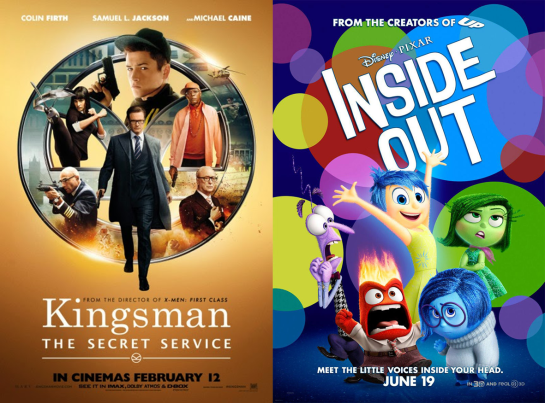
Kingsman: A rollicking good time.

It Follows: It bores me

Ex Machina: Oh My Deus, was this written by a robot devoid of emotions?

Age of Ultron: Miss a movie, lose a thread; think I am out of this series.

Mad Max Fury Road: You will believe a man can drive…that is all.

Inside Out: Underwhelmed, but appreciate I am only one.

Self/Less: Flawed but interesting

Posters_2

Trainwreck: Not one, but Schumer can do better

Ant-Man: Most fun I’d had all year…Rudd is perfect for this

Man from UNCLE: Stylish throwback that I liked more than most people did

The Martian: Surprise hit for me; kudos to all including author of book

Steve Jobs: A metaphor for dysfunction…and sadly, not in a good way

In the Heart of the Sea: More like in the heart of my sleep

Star Wars The Force Awakens: Visually stunning, overly sentimental, disappointingly regurgitated story

Spectre: Good movie with a stupid ending…am I outgrowing Bond?

Posters_3

Documentaries can change the world

Save

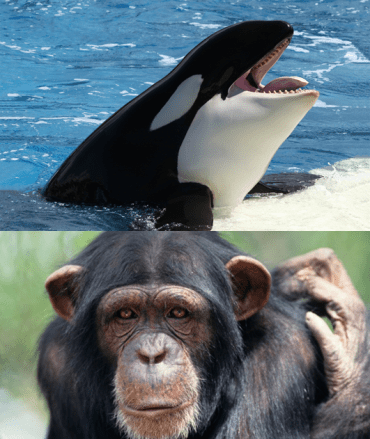
Just when you thought it was safe to go back near the water, SeaWorld announced that it will phase out its world-famous—and more recently, infamous—killer whale shows. The decision comes after months of pressure from community and animal-rights groups outraged by scenes depicted in the documentary Blackfish.

To further show the power of documentaries, however, the U.S. National Institutes of Health (NIH) recently announced that it would phase out the use of chimpanzees in biomedical research, transferring its remaining test subjects to an ape sanctuary.

NIH officials have given numerous reasons for the decision, citing the weakness of animal models for human disease and technological advances that make such animals less necessary. Many, however, suspect the government agency is bowing to pressure from community groups fearing the post-apocalyptic world highlighted in the documentary series Planet of the Apes.

In particular, the actions of former laboratory test subject Koba scared the shit out of everyone.

There is no doubt that this trend of documentaries changing animal policies will intensify. For example, it is anticipated that the 2016 release of Ice Age: Collision Course will prompt the U.S. government to change its policies regarding the Scrat…whatever the feck that is.

Heart of Coppola

Zeotrope

Francis Ford Coppola likes me! He really likes me!

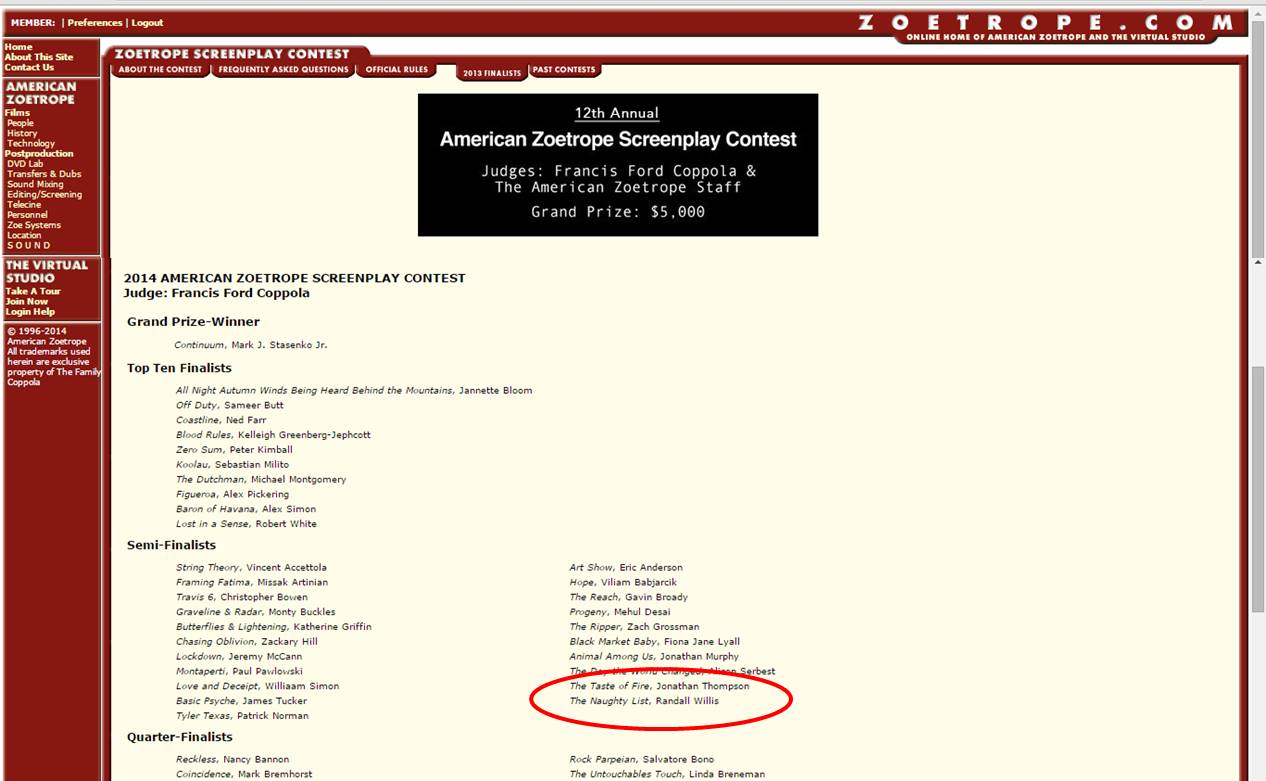
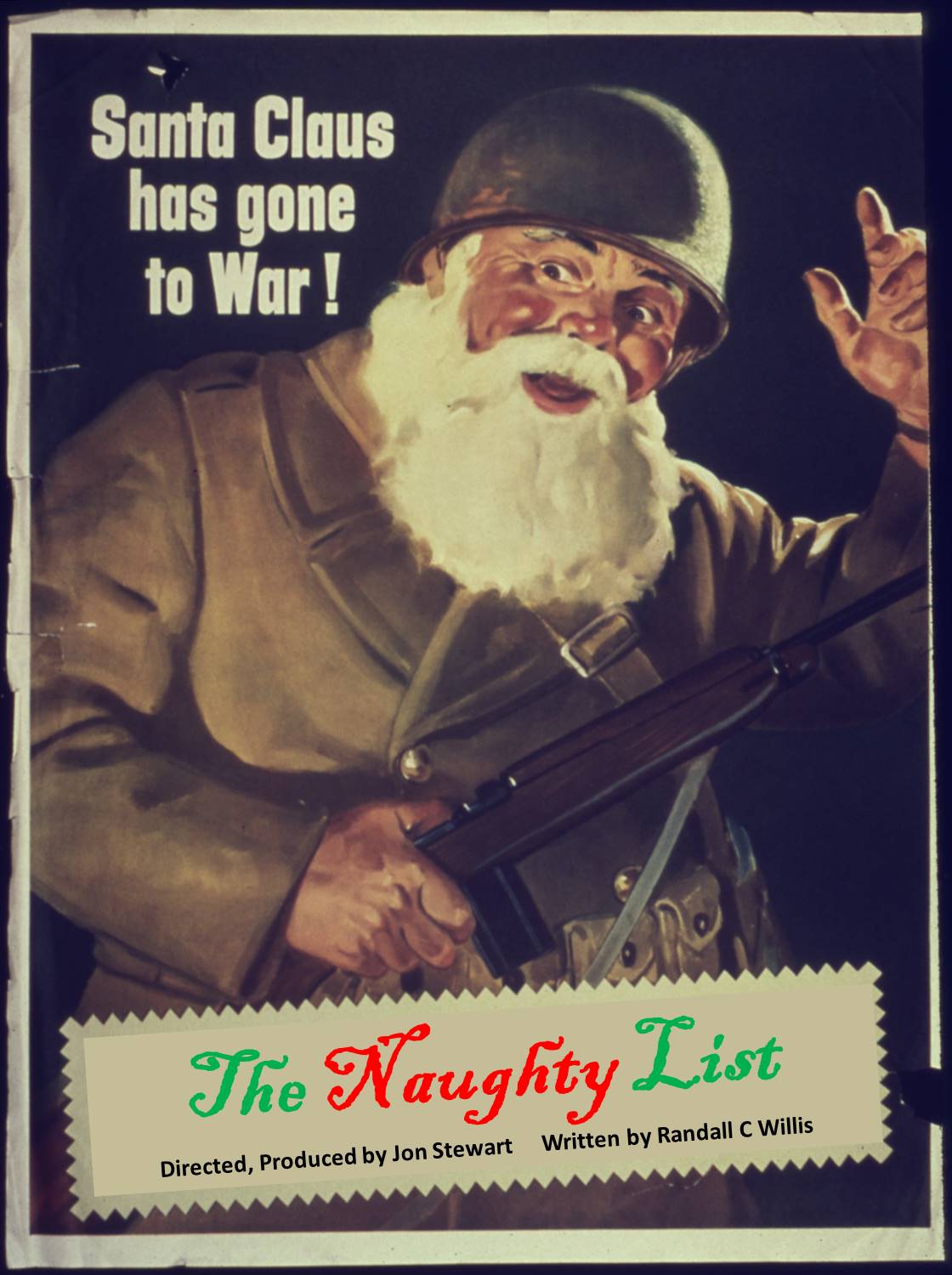
So, no sooner do I finally get around to posting my laurels from Nashville than I find out that my screenplay The Naughty List was selected as a semifinalist in the 12th Annual American Zeotrope Screenwriting Competition, an organization run by Francis Ford Coppola (I seem to recall he was a director of geopolitical documentaries).

I had started to wonder if the screenplay was going to see any love in the competitive world…this is good!

Coming to a theatre near you (please, please, please)

Coming to a theatre near you (please, please, please)

So, what is the story of The Naughty List?

What would you do if you learned decisions you make every year ruin the lives of millions of children?

Oh, and your name is Santa Claus.

After a brush with death just days before Christmas, Santa rescinds the Naughty List only to learn that for some kids, the lump of coal started a life-long downward spiral. In fact, two kids—now warlords—are about to unleash hell on each other and their people.

With a loving heart and snowy balls, child-like Santa dives into the fray. But his magical meddling only makes things worse.

He greases the wheels of war. More children suffer, including a girl desperate to save her family. As his magic fails, Santa knows he must face the oncoming storm as a mortal.

One man. Two armies. Can Santa stop the madness and save a crumbling Christmas?


No parity in parody

Parody

Mel Brooks is a god! Carl Reiner is a god! Carol Burnett is a god! Mike Myers is a really funny Toronto boy, who flew pretty close to the sun. (He may yet be a god, but he has to get back on his feet.)

And among their many talents, these people share the amazingly delicate talent of creating parody…a talent I have yet to seriously attempt beyond the scale of sketch comedy.

Delicate talent? Seriously attempt? Isn’t parody just a matter of picking a genre and inserting dirty jokes and/or completely ham-fisting its various tropes in the mathematical assumption:

Absurd + Puns + Dirty = Funny

I increasingly understand why people think this as I watch more of the recent fare of parodic films that appear to have taken this equation to heart.

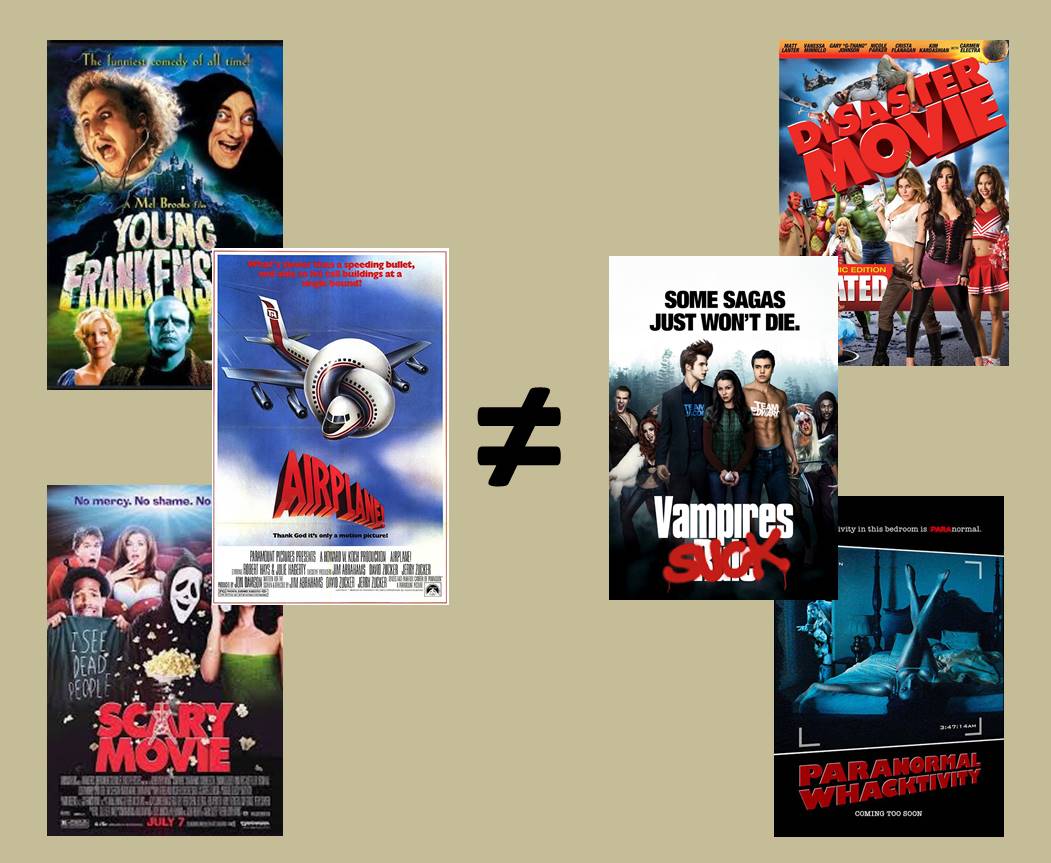
Last night, for example, I watched Paranormal Whacktivity, a sexed up romp through the found-footage haunted-home segment that includes films such as Paranormal Activity and Blair Witch. This film was horrific, but not in a good way…nor was it particularly funny or sexy. And it wasn’t very good as a parody because it didn’t even stick to its genre, mixing Paranormal Activity with Ghostbusters, which both involve spirits but are hardly cinematic siblings.

It was useful, however, to my understanding of parody.

When I compare Blazing Saddles, Airplane, Dead Men Don’t Wear Plaid, and Austin Powers: International Man of Mystery to Disaster Movie, Not Another Teen Movie, and Breaking Wind, I realize that the truly classic parodies have something that the new ones don’t: a strong central story.

Somewhere in the evolution of parody films, the movies became less about story and more about ripping off as many genre clichés as possible, offering no firmer links between these scenes than bad jokes, fart noises or perky breasts.

Blazing Saddles wasn’t about taking a bunch of classic scenes from Westerns and simply linking them. It was more about taking iconic characters from the Westerns and creating a classic, if twisted, story. The sheriff abandoned by the town folk, the washed up gunslinger, the evil cattle rustler, the crooked politician.

Similarly with Shrek; although this film has such a strong central story that I’m not sure whether I should even include it in a list of parodies. Yes, it played up almost every fairy tale gimmick, but the story really didn’t model itself on any given style or pre-existing story.

Dead Men Don’t Wear Plaid is another odd case. With a strong through story led by Steve Martin and Rachel Ward (directed by Carl Reiner), it takes parody to a whole new level by incorporating actual scenes from noir films within the scenes with live actors. Thus, Martin’s character may find himself playing across from Barbara Stanwyck or Edward G. Robinson. Now, that is great film writing and editing.

Interestingly, the Wayans’ brothers first entry into this genre—Scary Movie—offers another lesson about parodies: the challenge of dipping into the same well too often.

Although horror/slasher movies are not to my personal tastes, I thought the first one or two films of this series were particularly well done. But as the series continued, picking on more films from within the horror/slasher genre, it started to become a parody of itself. The jokes were no longer fresh. All the best tropes had been used up in the first two movies and so the later films just seemed to be running in place.

Six Star Wars films, one Spaceballs. That works. (NOTE: Spaceballs is one of my least favourite Mel Brooks movies, much to the chagrin of many friends.)

Even the much stronger series of Austin Powers and Police Squad films showed this sense of comedic fatigue.

The original film is a surprise. The first sequel may be enjoyable. Anything after that is milking a dead cow.

I have no doubt that bad parodies will continue to be made…if nothing else, they seem to require little writing and typically have poor production values, and are therefore inexpensive.

My hope, however, is that another Mel Brooks, Keenan Ivory Wayans or Mike Myers comes along to raise us from these creative and comedic doldrums. (NOTE: At present, my money is on Keegan-Michael Key and Jordan Peele, who have the comedic talent and the Hollywood clout to do it right.)


A few personal favourites (hyperlinked to trailer or favourite scene, where available):

Dead Men Don’t Wear Plaid

Airplane

The Cheap Detective

Austin Powers: International Man of Mystery

Hot Shots (not so much the sequel)

Rustler’s Rhapsody

Shrek

Scary Movie

Blazing Saddles

Silent Movie (I may be only person who likes this one)

Young Frankenstein (all time favourite)


Wolf of Wall Street a never-ending bore (review)

Poster math

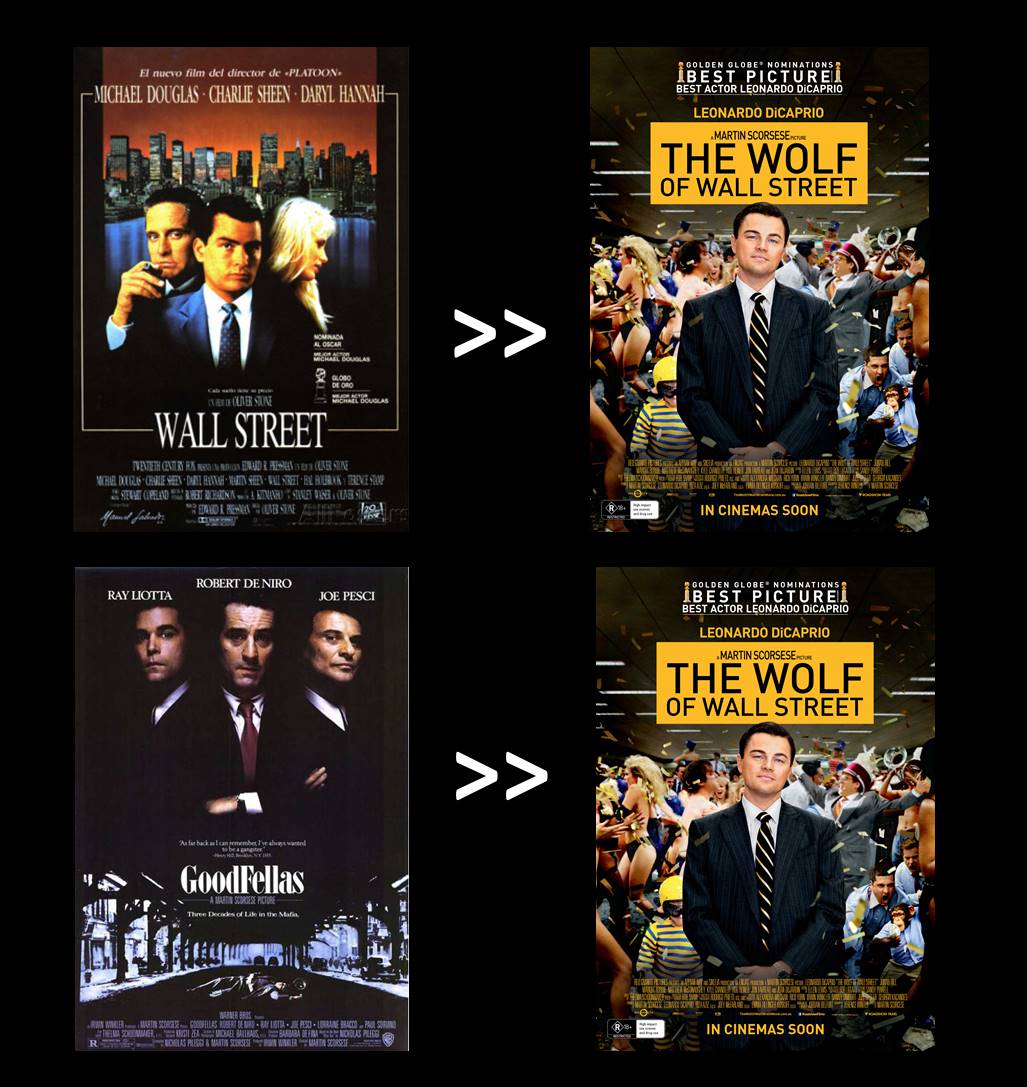
Layer the stylings of Martin Scorsese’s GoodFellas over Oliver Stone’s Wall Street and you have Scorsese’s 2013 treatise about greed in America, The Wolf of Wall Street. Unfortunately, where this should have been a wonderful blending of two great films, it was instead the mutated step-child.

Briefly, the movie follows the adventures of real-life stockbroker Jordan Belfort as he rises from the ashes of Wall Street to lie and cheat his way to fame and fortune from the then despised penny stocks market. Through a haze of booze, drugs and female flesh and relying on balls the size of the tri-state area, he pulls a fleet of nobodies into the middle of the financial maelstrom, becoming everything for which Wall Street is despised. Throw in a little money laundering and he, of course, becomes the target of an FBI and SEC investigation that ultimately brings him down.

4c78

If, from the synopsis, you don’t immediately see the influences of Wall Street and GoodFellas, you’re not really trying or you need to go back and watch them again.

I wish I could say it was just the 3-hour running time that interfered with my enjoyment of the film, but GoodFellas was 148 minutes and Wall Street was 126 minutes. Rather, I think the problem was that it felt like the movie was 6 hours long. Time seemed to drag out as though I was getting a contact high from all the Quaaludes the characters were consuming, but without the peaceful overtones.

I appreciate it was based on the life of Jordan Belfort, so perhaps the screenwriter Terrence Winter felt he had to be careful tiptoeing around the contents of Belfort’s book of the same title. But for the love of God, there was no place that Winter felt he could simply skip ahead?

When Leo DiCaprio would narrate the scenes, in some cases turning directly to the camera to do so, my mind immediately jumped to Ray Liotta in GoodFellas. Never more so than when he would try to explain how Wall Street functioned, almost mimicking Liotta’s explanation of the mob, down to the vocal cadence. The two examples below show both men introducing the troops.

And when DiCaprio would try to rally the troops, he became a bombastic Gordon Gecko (Michael Douglas), enthusiastically letting people know that greed was good…or in his case, that there was no nobility in poverty. Hell, in his narrative voice-over, he even mentions Gordon Gecko in an obvious homage that simply highlights how pale an imitator this movie is.

So I am left asking what exactly does The Wolf of Wall Street offer that the other two films didn’t.

Wealth, opulence, greed, excess? Been there, done that.

Booze, sex, drugs, violence? Watched that, saw it.

Illicit business, FBI investigations, wire taps? Old hat, nothing new.

Hubris, hedonism, idolatry? Biblical, but done and doner.

It made almost $400 million worldwide and was nominated for five Academy Awards (winning none), so people liked it.

For comparison, Wall Street earned $44 million globally in 1987 and won Douglas the Best Actor Oscar, while GoodFellas managed $47 million in the US in 1990 and won Joe Pesci the Best Supporting Actor Oscar (of six nominations).

DiCaprio has charm…and so did Liotta and Douglas.

Interestingly, I didn’t feel this one had the cinematographic snap of Scorsese’s earlier works…it didn’t feel like the camera was dancing with the actors as it did in GoodFellas.

Maybe it was simply a matter of timing. Wolf showed up just as the United States was truly starting to recover economically from the banking scandals and burst real estate bubbles, and in an almost self-abusive way, Wolf reminds Americans (and the rest of the world) of a time when money was cheap and easy. It’s definitely not a morality play, for no one is seen to suffer for their excesses.

It is the American dream seen through a tumbler of Scotch. The manifest destiny of anyone willing to gamble with the weaknesses of others. A sign that nothing has changed. That nothing ever changes.

Wall Street was a warning. GoodFellas was the rise and fall of Man. The Wolf of Wall Street is a love letter to unbridled greed.

Movie math

The Voices gets a hearing (a review)

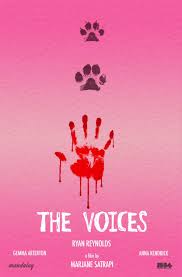
poster

Not one to generally participate in the Toronto International Film Festival, it was a rare evening in which I found myself standing in a rush line to see a movie, but a friend of mine wanted to see the latest Ryan Reynolds film called The Voices. This is not your typical Ryan Reynolds film.

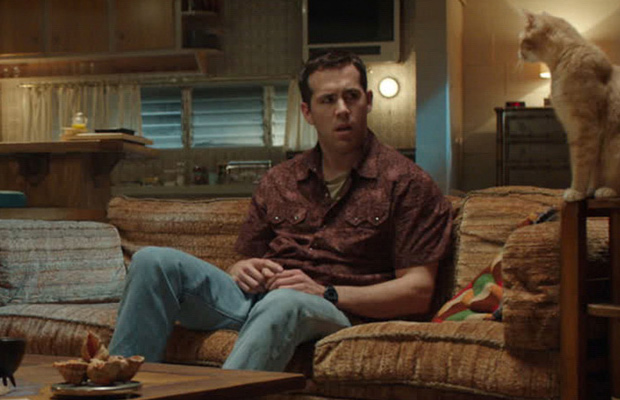
Reynolds is Jerry Hickfang, a good-natured if skittish guy who works in the shipping department of a bathroom fixtures company in Milton, the derelict remains of a town in Nowhere, USA. Jerry is a nice guy, who lives above a derelict bowling alley with his dog Bosco and cat Mr. Whiskers. And of course, Jerry has the hots for office cupcake Fiona, a misplaced Brit with a craving for bigger things, played by Gemma Arterton. For her part, Fiona finds Jerry a little creepy, but is not above using his puppy lust to get a lift during a rain storm.

Jerry Hickfang (Ryan Reynolds) struggles to understand Mr. Whiskers' advice

Jerry Hickfang (Ryan Reynolds) struggles to understand Mr. Whiskers’ advice

Oh, and the other thing you probably need to know about Jerry is that he is in court-appointed psychiatric treatment, isn’t really good about taking his meds, and has a family history of hearing voices, but that’s not something he likes to talk about.

So far, so harmless. But after a literal run-in with a deer who begs Jerry to finish him off, the blood-letting never really stops and the rest of the movie becomes a giant slip-and-slide of mostly implied blood and offal.

So, The Voices is a thriller…and a drama…and a comedy…and a farce. You squirm in revulsion (never really reaches horror) as often as you LOL.

Director Marjane Satrapi (who brought us Persepolis) attended the screening and describes the story as completely fucked up. She said she was mesmerized by the screenplay and desperately wanted to meet the man who penned it to see what messed up human could conceptualize such a story. So she was surprised when she met Michael R Perry, a tall normal-looking fellow.

Marjane Satrapi

Marjane Satrapi

As Perry explained, he wanted to look at the life of someone of multiple personality disorder from their perspective rather than society’s. And in that, he succeeded.

With Satrapi’s help, the two clearly crafted the oddly idyllic yet troubled world within Jerry’s mind, giving the audience only the briefest glimpse of how the rest of the world saw things. With Jerry, it was all perfect love and butterflies. To the rest of us, it was squalor and pain.

Where the story fell down for me was in explaining why everything went wrong so suddenly. In writing circles, we talk about “Why today?” Why does your story begin today, at this moment, and not 6 weeks ago or 5 months from now? In this case, what was the event that caused Jerry to go from lovable schmuck to… Some might suggest it was the deer accident, but even Mr. Whiskers called that bullshit

The other place I felt let down was that the conflict never escalated, it merely accumulated. Rather than find interesting ways for Jerry’s mania to manifest itself, the writer simply repeated the same event over and over, as though each of the characters voluntarily walked into a wood chipper.

And I don’t know if the ending was presented as written or was something that blossomed out of Satrapi’s mind, but it was lazy and bordered on the ludicrous. It was a bad after-taste on a film that had merits.

Ryan Reynolds, Gemma Arterton, Anna Kendrick

Ryan Reynolds, Gemma Arterton, Anna Kendrick

On the plus side, Ryan Reynolds was amazing to watch…this was not the charming goofball romantic comedy, although Jerry was sadly charming when he wasn’t obviously tortured by his snarky brogue-spewing cat. (NOTE: Bosco and Mr. Whiskers easily have the funniest lines in this film.)

Gemma Arterton’s Fiona was a delight. She was delicious to watch as the voluptuous vixen whose biggest fear in life is being bored. Problem solved!

Anna Kendrick (Up in the Air), as tier-two love interest Lisa (see, the writer even repeated this beat), was largely wasted. Her character was pretty two-dimensional. As nice girl looking for a nice guy, her function was to have Jerry explain his condition to the audience (exposition disguised as opening up).

The Voices is definitely worth seeing, if only for what it attempts to do. I can’t help feeling, however, that if they had rewritten the screenplay a few more times, they would have achieved their goals much better than this.

My recommend (and that of my friend) is that this is a Cheapie Tuesday movie (or whatever your local half-price day is).


PS I was unable to find a trailer for this movie, so I offer the following interview with Satrapi at Sundance London…I will warn you, however, that it does include a lot more info about the plot than I gave above.

Lessons from bad movies – The Canyons

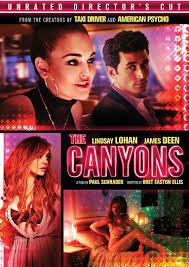
canyons poster

I believe that you can learn something from every experience you have, and because I am trying to learn more about screenwriting and films, this means watching bad movies. Thus, I was intrigued when I saw Netflix was showing a film called The Canyons.

Written by Bret Easton Ellis (American Psycho) and starring Lindsay Lohan and porn-star-going-legit James Deen, The Canyons shows the decay of Hollywood through the eyes of a struggling young actor who is still in love with his former girlfriend who is now the adornment of an unbalanced but oh-so-controlled producer on a trust fund. Paranoid from birth, the producer eventually learns of rekindled flames between the two and slowly his self-control ebbs. To tell you more would be to spoil the (complete lack of) surprise in this film.

Although the story was straightforward and highly predictable, I have to admit to being confused by one very big thing: I don’t know who the protagonist is. Through whose eyes is the audience supposed to see this story?

Lindsay Lohan’s Tara (the girlfriend) shares almost equal screen time with James Deen’s Christian (producer) and Nolan Gerard Funk’s Ryan (actor), and the story’s perspective seems to shift on a whim. If I go purely by a scale of which character left me feeling least icky in their behaviour, I would have to say Ryan was the protagonist. But he feels more like an unwitting pawn in this film.

Interestingly, however, if I was forced onto a limb, I would actually say Christian was the protagonist despite his antagonist schtick. As a character, he is reminiscent of American Psycho’s Patrick Bateman…possibly his baby brother…although there is no comparison between Christian Bale’s performance and James Deen’s.

Speaking of which, the wooden performances of the actors don’t help my quest for a protagonist. (At her best, Lohan’s glamour-gone-gory Tara was reminiscent of Ann-Margret’s characters in Carnal Knowledge and Tommy at their most strung out.) Without distinct emotive clues and any sense of subtext, I really have no clue what any of the characters hopes to accomplish…there simply aren’t any goals, again with the possible exception of Ryan.

Lohan-Margret

To continue piling on, I would be intrigued to find out what kind of movie director Paul Schrader thought he was making.

On the one hand, with rampant over-use of black & white images of derelict movie houses, it seemed Schrader was going for art-house film, using the photographic decay as a metaphor for the social decay of Hollywood (this is the man who wrote Taxi Driver and directed American Gigolo).

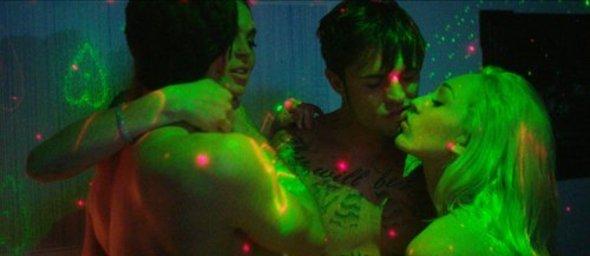
At the same time, his rampant insertion of lengthy scenes of graphic sex gave the film a B-movie, soft-core porn feel. Here, Schrader may have been going for a moral decadence metaphor, but if so, I think he failed terribly. Instead, we were left with a humping morass of buttocks and breasts that a 13-year-old boy couldn’t be bothered to whack off to.

the-canyons-04_article

But the one scene that truly grabbed my attention was a lunch conversation between Tara and Christian’s assistant Gina, played by Amanda Brooks. What caught my attention, however, was not the scintillating or captivating dialogue (there wasn’t any) or the repressed subtextual exchanges (they were incapable) but rather the fact that even the camera was unable to pay attention to the scene.

On either close up, the camera angle perpetually slid to the left or the right, and sometimes back again. Not panned to capture a background element. Slid, as if someone had forgotten to tighten the flange that holds the camera to the tripod. The camera literally nodded off.

So then, if this movie was so bad, how could I learn a lesson?

The lesson of The Canyons is that if you can get an actor of sufficient name recognition who is trying to prove something (e.g., I’m not washed up) interested in your script, you can get anything made.


Postscript:

As I looked up some background facts on this movie, I learned that The Canyons was the first film to be largely funded via crowd-sourcing. Given the performance of subsequent crowd-sourced films like Zach Braff’s Wish I Was Here (poor) and Kristen Bell’s Veronica Mars (modest), I am beginning to wonder if there isn’t some merit in studios having some influence on whether and how a film gets made.

Robin

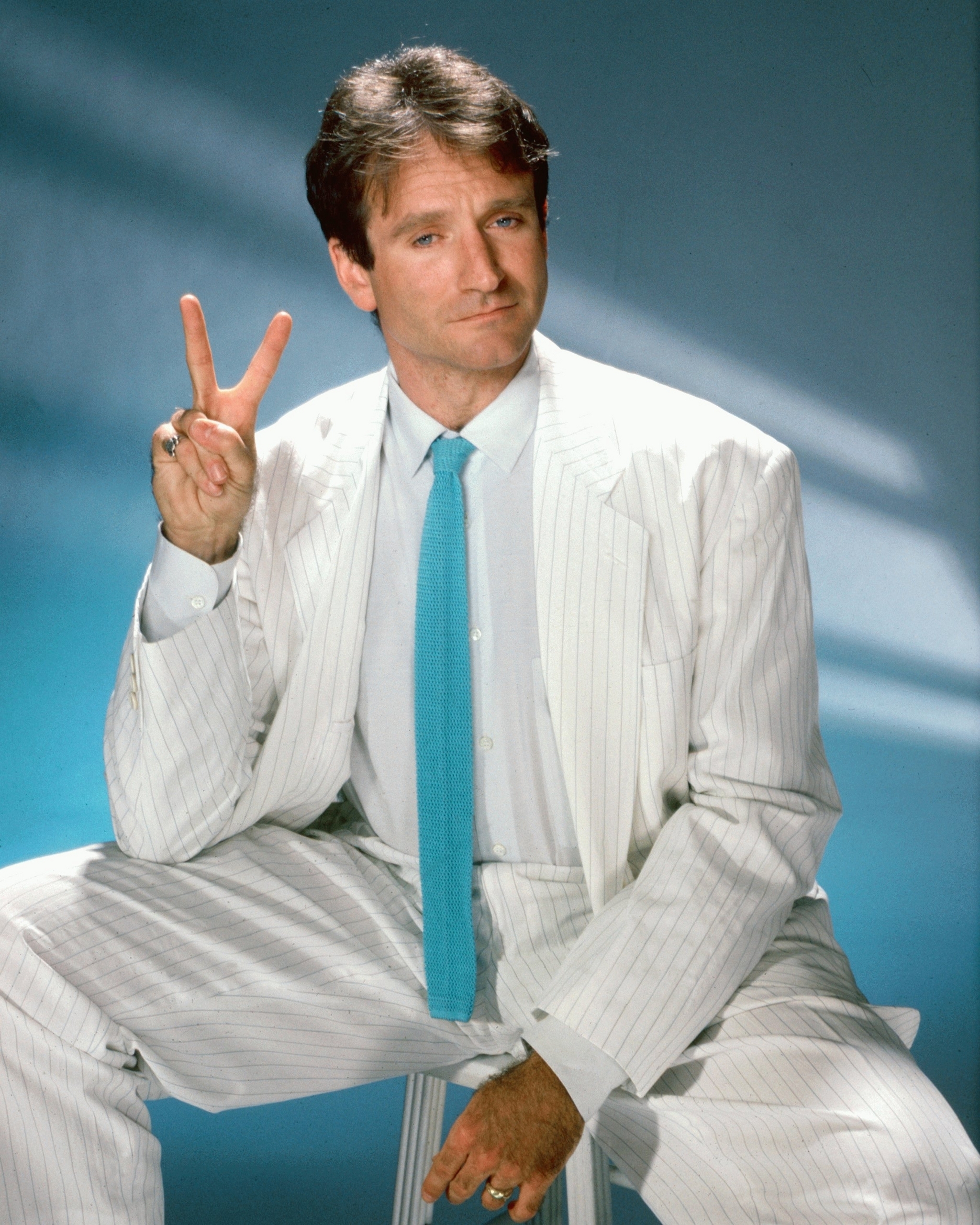
Robin-Williams-1999-robin-williams-19521877-2048-2560

Laughter has died,

But for a moment,

As the jester reposes

Into tranquility.

Frenzied fantasies

Silenced of a sudden,

Cut off from a world

Unable to keep up.

Rest frightened clown;

Be still and be whole;

Clap hands with peace,

As we clap hands in mourning.

The hurricane is stilled;

Black clouds soften;

Yet we will laugh anew

Bearing scars of ache.

Robin Williams meant the world to me. A supernova of mirth and tears, bravery and anger…and always, just a man.

Today, the man found his end, as so many of his ilk have.

But his legacy will echo for eternity to brighten our nights and nourish our souls.

Sleep, noble prince, assured that we are better for knowing you.