Falling in love…again?

Keep your story options open

Keep your story options open

So beautiful. The fullness. The curves. You make me smile. I want to be with you forever. You’re perfect. I love you.

This is the greatest paragraph ever written. The most beautiful dialogue ever conceived. A scene that will be remembered for eternity.

Many of the posts I’ve written have been about cutting yourself some slack, about overcoming the inner demons of doubt. Giving yourself permission to fail. That perfection isn’t your goal.

Well, now we need to remember that not only is perfection not your goal, it is not even possible. There is always room for improvement, so please don’t ever fall in love with your work.

When creating a new work—a novel, screenplay, whatever—it is important to leave yourself as many options as possible, to keep all of the doors open until you reach a combination that works best for you.

Too often, however, writers jump into their work, pursuing the idea that offered the first blush of love. In their zeal to express that love, they put on blinders to other possibilities. Perhaps it is a pure love, but I’m confident for a few of us, it’s also probably fear of never finding another love.

And once we express that love, we are loathe to question it, even when presented with another option. This is the only way the scene can be written. This is the best way to achieve the point of the scene. Everything else is weaker.

Maybe you’re right, once or twice in a work (or career), but rare are those moments. So let me recommend something scandalous.

Start seeing other options.

I’m not asking you to fall in love with them or to fall out of love with your original idea, but infidelity can be healthy. It may even make you appreciate your first love all the more. (Why do I suddenly feel like Silvio Berlusconi?)

Just dip your toe in the water, if this idea makes you nervous.

If your lovers currently meet in a restaurant, explore what would happen if they met in a post office, a house of mirrors, a sanitorium.

Too much too soon?

Then change the type of restaurant. How would your scene change if they were at an expensive restaurant, McDonalds, a hot dog cart, on a picnic?

Try this with any and every aspect of your story, and do it as early as possible. The longer you work on a project, developing its specifics, the harder it will be to change any aspect of it beyond cosmetic editing.

That path you see to your goal may be less of a path and more of a cavernous rut you’ve worn by running over the same idea time and again. Wait too long and you don’t see anything else. You can’t see beyond its limits.

Don’t let that happen to the concept that you love and more importantly, to the creative spirit you continue to nurture. It may be painful. You may have to walk away from the one you love, but trust me, you will fall in love again. I promise.

(The image is property of the owner and is used optioned here without permission.)

Feel this, would you?

I used to stare at this poster trying to gauge what I felt...sometimes it worked, sometimes not

I used to stare at this poster trying to gauge what I felt…sometimes it worked, sometimes not

I have to admit I find it difficult to write characters. No create them, but to actually make them come alive on the page.

To develop a truly realistic character, you need to be able to give a sense of his or her emotional state, and this is where the wheels tend to fall off for me.

For most of my life, you see, I have focused on facts, not feelings. I might even go so far as to say I have completely shut feelings out of my life—or at least as completely as possible without (yet) ending up in prison as a socio- or psychopath. Thus, I have been ill-equipped to deal with the myriad emotions that form the human condition.

If I look or think back to the writing of my youth, I seemed to be able to manage moral outrage and on occasion, actual rage, but any other emotions, no matter to what extreme, came across as flat. And forget any of the subtle shades in between. I did not do subtlety.

About the only character I could develop was the noble stoic who was a tad self-involved. Hmmm. Seems familiar somehow.

Lacking experience with these various emotions, how could I hope to bring them to my characters?

I’ve never believed emotions were something you could study in the traditional sense.

If I want to understand a polar landscape, I can go online or check a variety of books. Determine the behaviour of a jet that loses one engine? I’m sure there’s a Wiki for that. But emotions, by their very nature, preclude such an academic approach.

Ah, but what about other books and movies?

Good in theory, but without a personal foundation, you run the risk of simply reproducing Glenn Close’s interactions with the rabbit or Peter Lorre’s fear of Moroccan Nazis.

No, to be able to realistically reproduce emotions in my characters, I needed to have experienced them to some extent in my life. Call it Method Writing, if you wish.

Luckily, for a variety of reasons having nothing to do with screenwriting, I have been accessing my emotional centre over the last couple of years. Through a challenging process of self-examination and “coaching”, I have started to feel—allowed myself to feel—emotions like sadness, irritation, pleasure, enthusiasm, boredom and the like. And the impact in my writing has been immediate, if continuing to develop.

When my character is angry, I find myself getting angry. When my character feels loss, I can remember when. Ecstasy? I’m all over it (the emotion, not the chemical).

And I’m not the only one who notices this. As friends, colleagues and classmates read my material, I sense they too experience the emotional rainbow. And sometimes they introduce feelings I never envisioned for a scene.

This isn’t a threat to what I wrote. It is a bonus prize I receive for paying attention and sharing, for they have found something in my words that I did not see or did not know I was channeling.

Maybe it’s gold. Maybe it’s lead. But always, it is valuable.

Like my characters, I am still a work in progress, but at least I feel like I’m progressing.

(Image is property of its owner and is used here without permission. I don’t know how I feel about that.)

Do you see what I see?

How can you NOT want to describe this place?

How can you NOT want to describe this place?

Now that I have worked on several screenplays, which I have shared with a number of friends and fellow writers, I have come to a conclusion: I am a novelist.

Fret not, fellow travellers. I say this not to suggest I will cease to write screenplays but more in recognition of an inherent weakness in my screenplays, or perhaps more accurately, in myself. I am addicted to narrative.

The problem is I instinctively write what I see, even when I only see it with my mind’s eye. If I were a painter, I would own brushes that only had one or two hairs. The concept of a paint roller would be anathema.

Nothing in a scene is unimportant to me. I see people, things, phenomena in terms of metaphor, although I do my best to avoid poetry.

I cannot simply write: The boat bobbed wildly on the waves. (Even writing that line now was taxing to me.)

Instead, I’m inclined to write: The battle-weary skiff, a patchwork of wood and fibreglass, tossed helplessly on the ocean swells, each wave of its own purpose, refusing to work together toward anything resembling a current.

The former is what is happening. The latter is how I envision it. To me, everything is a character in a story—an antagonist, an ally, a victim—and as such has its own story arc, however small.

I also want to make sure that my reader “sees” the movie I would like to make—the challenge of a pictorial and aural medium presented literally. I want the reader to “feel” the scene before the first word of dialogue is spoken, both to establish the mood of the scene and give a sense of how the line is said.

Unfortunately, in my zeal to be informative, I instead become onerous or tedious. My screenplay becomes a challenge to read as long tracts of narrative slow the story to a crawl. Instead of making it easier to read my manuscript, I’ve made it more challenging and less desirable.

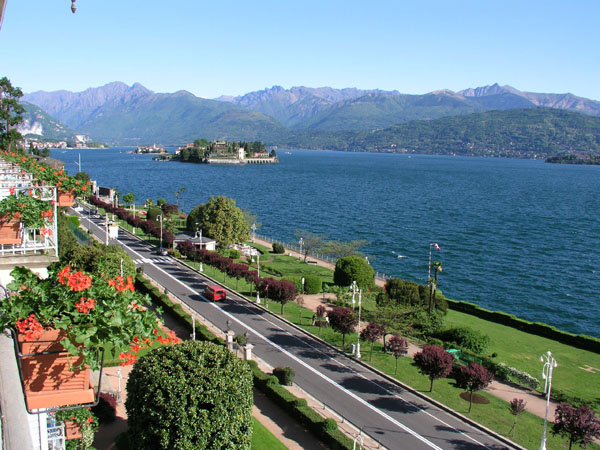
I was once accused of writing a travelogue of Northern Italy in a screenplay. Oh, what I had written was beautiful and made some people dream of travelling to the region—Lago Maggiore—but 90% of what I had written was completely unnecessary to the telling of the story.

So, what to do?

As of this moment, my writing process is my writing process, and I believe that any attempt to significantly change it would simply increase my challenges in writing at all. No, better to have written a first draft badly than to have never written.

Instead, I have chosen to rely on this little miracle I have discovered. They call it Draft Two. This will be my chance to go through my screenplay with a harsh eraser, and remove all of the lines or description that is not absolutely necessary to tell my story or to explain a character’s behaviour.

Sure, this may necessitate some rewriting of dialogue so that I don’t end up with mile-long verbal tracts. But in all likelihood, these speeches were too long and in desperate need of shortening.

One step at a time, though, for today, I continue to write Draft One of my screen-novel.

(Image is property of owner and is used here without permission, but plenty of description if you read my screenplay.)

Tank’s – a screenplay (cont’d)

Image

Our continuing saga (see part one here) of impetuous young Tony and his pursuit of individuality at the possible expense of his life.

When last we left Tony, he had led a nasty caiman on a merry chase, faking it out at the last second.

Tony takes off, leaving the caiman to spit out stones.

The guys catch up to Tony, applauding. Tony bows.

JUAN

That was totally awesome!

CARLOS

I thought you were a goner.

RICKY

That was–

OLD FIN (O.S.)

Foolhardy.

Tony turns to see OLD FIN.

TONY

Grandfather.

OLD FIN

And dangerous. You must think you’re pretty hot stuff.

TONY

Escaped the jaws of death.

OLD FIN

You escaped an eating machine, son; an unthinking garbage disposal. And you risked everyone’s lives in the process.

TONY

It was just me and the caiman.

OLD FIN

You need to learn about taking responsibility for your actions; caring for the fish around you. Your father—

TONY

What about my father?

RICKY

Tony!

TONY

My father took responsibility for his community, and he got snatched by the Net. Maybe if he’d spent more time with his son and less on everyone else’s problems…

CARLOS

Easy, Tony.

Old Fin waves the boys off.

TONY

He was all about sacrifice, when it meant taking care of others, but when I needed him… You can keep your responsibility.

Old Fin reaches for Tony’s shoulder.

OLD FIN

I miss him, too. He had to be the fish he was destined to be. Just as you have to be the fish you will become.

TONY

That’s… C’mon guys.

The boys swim off.

OLD FIN

Destiny won’t wait, son. It happens whether you’re ready or not.

EXT. FURTHER ALONG THE RIVER – DUSK

Amongst the plants and rocks, four long pink legs extend to the surface. The boys take a wide berth, Tony lagging behind, kicking pebbles.

JUAN

Watch out. Danger from above.

Tony darts around the legs, but then he turns with a grin.

RICKEY

What’re you doing?

TONY

Nothing. Just stretching my fins.

Yawning, he tickles one of the feet.

EXT. ABOVE THE SURFACE – SAME TIME

The legs are attached to two cranes. SIDNEY screams and jumps into SEYMOUR’s wings.

SIDNEY

Something touched my leg!

Seymour angrily drops Sidney into the water.

SEYMOUR

You idiot. Those are just fish.

SIDNEY

Well, they’re cold and wet. It’s nasty.

SEYMOUR

Nasty? Sid, what are we?

Sidney thinks long and hard.

SIDNEY

Cousins?

SEYMOUR

Cranes, Sid.

SIDNEY

We’re not cousins?

SEYMOUR

Focus! What do cranes eat?

Sidney screws up his face, like his head’s about to explode.

SIDNEY

Hamburgers!

SEYMOUR

Fish! We eat fish!

Sidney whips out chopsticks.

SIDNEY

Sushi!

Seymour slaps the chopsticks away and then pushes Sid’s head into the water. Sid steps back, spluttering.

SEYMOUR

And this time, Sid, hold your breath.

Seymour plunges his head into the water, pulling up a fish, which he quickly swallows. The two start looking for dinner.

EXT. BELOW THE SURFACE – SAME TIME

Fish scatter in pandemonium. Clouds of silt explode from the riverbed as enormous bills dart from the surface and stab into the ground, slicing side to side to catch fish.

Plants are uprooted, stones flung in all directions, fish cower in crevices and under large rocks as the river fills with a cacophany of SCREAMS and thrashing EXPLOSIONS of air and water.

Tony and his friends flee, pursued by Seymour.

JUAN

You had to do it, didn’t you?

TONY

They’re gaining on us.

They careen around rocks and weeds as the cranes inch closer.

JUAN

Over there!

INT. OLD BUCKET – CONTINUOUS

Juan, Tony and Ricky dart to the back, breathing heavily.

RICKY

They got Carlos!

Juan dashes for the opening and is bowled over by Carlos.

CARLOS

Aaaaaaaah!

TONY (laughing)

Carlos, the bullet.

The THRASHING outside subsides. The guys float quietly.

CARLOS

Whaddya think?

A beam of light penetrates the darkening water outside of the bucket, which shakes and the floor tilts.

CARLOS (CONT’D)

Earthquake!

They swim for the mouth, which rises, the spotlight getting brighter. Seeing Carlos struggle, Juan and Ricky swim back to help him. Tony waits anxiously.

TONY

Harder!

CARLOS

I’m trying!

Tony swims to help, just as they push Carlos out. Before Tony can escape, however, the bucket breaks the water’s surface.

TONY

Nuts.

Tony races for the bottom and turns to make a break for the surface. As he makes his run, a net appears.

EXT. FLAT-BOTTOMED METAL BOAT – SAME TIME

A hand reaches into the bucket and fishes for Tony, who scurries around trying not to get caught.

TONY

Hey! Watch the scales. Let go!

The hand throws Tony into a clear bag of water.

TONY (CONT’D)

Okay. Now you’ve made me mad!

The hand tosses the bag into a cardboard box.

INSERT: BOX LABEL THAT READS “ECUADOR PET SUPPLIES”.

The lid of the box closes. Everything GOES DARK.

OPENING CREDITS

(to be continued)

Tank’s – a screenplay

Image

The following is the opening for my first screenplay. Tank’s  is the story of Tony, an impetuous young fish who gets snatched from his tropical homeland and transported to Tank’s, a pet shop in Rochester, NY. There, he quickly falls for Maya, a royal daughter of the salt water community, and runs afoul of the iron-finned rule of an eel named Kang.

(Image is property of owner and is used here without permission but my sincerest Tank’s.)


FADE IN

EXT. AERIAL VIEW OF A RAINFOREST – AFTERNOON

A canopy of trees extends forever to a distant range of mountains, birds swooping in and out. A break in the forest exposes a broad meandering river that empties into the sea.

One bird descends to skirt along the water. Crocodiles slide from the shore, disrupting the peaceful wading of cranes who take to the air.

A thicket of tree roots plunge into the river, large insects crawling along or flying amongst the gnarled roots. A squirt of water shoots up at a dragonfly, which splashes into the water, to be eaten by a large fish.

EXT. BELOW THE SURFACE – SAME TIME

Schools of fish swim among the roots. Larger fish swim alone, oblivious to the schools that scatter and reform.

A cloud of bleary water blooms across the bottom of the river, causing most of the fish to scatter to the clearer upper layers. A few fish swim between the layers, trailing bleary streams.

The serenity is shattered as four sleek black mollies fly by, weaving chaotically through the weeds. TONY, JUAN, RICKY and CARLOS, hyper adolescents, flip a pebble back and forth, while trying to evade tackle.

TONY

Carlos fades back for a long throw…

Chubby Carlos swerves the wrong way, sliding into the mud and being tackled by the others.

Laughing, they slowly climb out of the tangle. Carlos remains on the bottom, dazed.

TONY (CONT’D)

Hey, look! A flat fish.

Tony pumps his tail to reinflate him. Juan looks to the surface, catching the waning sunlight.

JUAN

It’s late. Gotta go help Mom with the brood.

TONY

A hundred and thirty-nine brothers and sisters and you have to help?

RICKY

Me, too. Summer school.

TONY

C’mon. You’re ruining things for Carlos. He can barely speak.

Tony slaps his fin over Carlos’s mouth.

TONY (CONT’D)

Hush, pal. Save your strength.

Tony slowly backs away. The guys follow.

JUAN

Duty calls, Tony.

TONY

Duties come later. Today is for adventure.

Tony grabs Carlos by the gills.

TONY (CONT’D)

Look at this guy. Ready to grab life by the gills and kiss it on the mouth.

Carlos recoils in disgust.

TONY (CONT’D)

We’re young.

Tony swims into a shadow. The guys stare, mouths agape.

TONY (CONT’D)

We have no fear!

JUAN/RICKY/CARLOS (scattering)

Aaaaaaaaaah!

TONY

Hunh?

Tony looks up and comes face to face with a grinning caiman.

TONY (CONT’D)

Oh.

Tony sticks a fin in the caiman’s nostrils, making it sneeze.

Tony flees, pursued by the caiman. As Tony leads the merry chase, other fish scramble to safety.

The caiman gets close but never quite reaches Tony.

TONY (CONT’D)

C’mon, armor-butt.

Tony suddenly favours his left fin.

TONY (CONT’D)

Cramp! Ow, ow!

The caiman pounces. Tony flits aside and the caiman gets a mouthful of gravel.

TONY (CONT’D)

Psych!

Tony takes off, leaving the caiman to spit out stones.

(To be continued.)

Not quite dead – an update

Hey folks,

For those of you who may be wondering, did he lose all of his fingers in a fire, the answer is no, I just haven’t really had the capacity or inspiration to write much of late.

Between a beautiful week in Victoria (as evidenced by the photographs) to a serious chest cold (worst vacation souvenir EVAR!) to moving to a new apartment, I just haven’t had the brain space to put pen to paper (I’m old fashioned that way) for anything more than my screenwriting homework.

I am, however, a writer at the chromosomal level, and so I fully expect to be back in full verbosity in the near future, when I will continue to astound (?), inspire (?), inflame (?) and amuse (??) you.

Until then, I wish you well and say “Ooh, look, it’s a bee!”


New neighbourhood

ImageImage

Selling out versus selling

Image

Over the last few years, I have met a lot of artists of various stripes, and almost to a person, one of the major fears each has is the belief that to become a success and to make a living with their Art, they will have to dilute that art. They’ll have to sell out. Some simply fear it in quaking silence, while others fend it off with flecks of foam like some rabid dog chained in a backyard of their own making. To each, their own.

You have a vision for your Art and you must respect that. It is because you are doing your Art that your Art is different from anyone else’s. By the same token, if you do hope to make enough money to keep at it, you must be able to express your Art in some commercial way.

Admittedly, with technologies such as self-publishing (formerly known as vanity publishing) and phones that offer better cinematography than anything Cecile B could have dreamt of, you can go it alone as no one before you could. You can make all of your dreams come true, but the question is, will those dreams come true? Will anyone beyond your mom, your partner and a few close friends bother with your Art once discovered?

I’m not saying to make a living you have to sell out. Don’t despoil your craft in the name of crass commercialism. If you’re truly an artist rather than a hack, it wouldn’t serve your purposes and you’d come to loathe the thing you once loved.

No, I’m talking about finding a line of compromise between your vision and the market’s.

As this is particularly close to my heart right now, let’s say that you’re writing a screenplay. First, congratulations. There may be thousands of screenplays out there, but I am confident there are billions of unfinished scripts and half-thought ideas.

Having completed your screenplay, however, is only the first step. Now you’ve got to share your creation with dozens of other people, each of whom will want to put his or her stamp on the work.

Story editors, readers, producers, directors, actors, financiers, market researchers. To a greater or lesser extent, each of these people has to buy into what you’re selling before your movie will get made.

Sure, if your film is small with a very modest (miniscule) budget, all of these titles may be handled by 3 to 6 people, but even then, you’ll likely run into issues with distribution.

I’m not saying it can’t be done. History is replete with artists who decided to go it alone. But the unwritten backdrop of that history is swamped with the myriad films sitting idle on bookshelves or hard drives, or competing with cavorting kittens and bad karaoke on YouTube or Vimeo.

If you want to share your Art—and I’m betting that you do—then you want outside thought, you want feedback, you want people to contribute.

Don’t look at barriers, but rather seize opportunities to engage. These people are your first audience. Respect them. Use them. Understand them. Do this and you’ll be well on your way to realizing your vision in their world.


(Image is property of owner and is used here without permission because I refuse to let anyone sell out.)

Adapt or die

Image

Recently, I’ve read a couple of screenplays based on novels, and with this albeit low number of examples, let me start by saying thank goodness I have yet to find a book I wish to adapt for screen. The process, it would seem, is tedious and fraught with perils.

Odds are, especially if you are just starting out as a writer, you’ve chosen to adapt a specific book because you love it.

You love the way it is written. You love the story it tells. You love the characters. You may even love the paper on which it’s printed or its cover art.

Congratulations. You’re doomed.

I say this not to be mean but to point out that the book was written as a book for very specific reasons. The format and structure of a novel is incredibly different from that of a film.

At its simplest, you have the space in a novel to indulge yourself in narrative and character introspection. More simply put, you can describe a setting or reaction in such detail that if linearly translated to a screenplay, it would result in ten minutes of film focused exclusively on waves rolling across a beach or on the angle of an eyebrow raised over the left eye of your heroine.

Even simpler, novels are verbal, ironically, while films are visual.

And unless you’re planning on running a voice over throughout your movie—please say no—I have no idea what your characters are thinking. I can try to guess from their facial expressions, but it is a guess and will have as much to do with how easy it was to find a parking place in the megaplex as it does with the actor’s talent.

The novel could afford to be 500 or 1000 pages. Your screenplay can’t.

I love Kenneth Branagh. I love Shakespeare. Branagh did a very linear interpretation of Hamlet for film. I was bored. Mel Gibson’s Hamlet? Held my attention and was entertaining. [Compare the two “alas, poor Yorick” scenes linked here.]

The difference? A very sharp editorial knife.

So, I am going to ask you to take the thing you love and hack it. Cut it with broad strokes and wild abandon. This is no place for finesse.

This isn’t about trimming paragraphs. It is about slashing subplots or entire chapters. It is about burning away all of the decorative niceties until you reach the essence that turns your crank.

Be cruel. Be ruthless. Be honest.

Take that Sistine Chapel and reduce it to the handful of bricks that make you sweaty; that keep you coming back time after time.

It will feel like murder. In some ways, it is. But it’s murder for the greater good, because once you’ve hit that core, you can begin to rebuild. You can start to rescue some of the elements you set aside earlier or add new ones that are truly unique to your vision.

What is that core? I don’t know. That’s for you to decide.

Maybe it was the setting. Perhaps it was the relationship between two characters.

Whatever it is, find it and make that your story. That is what you love. That is why you keep coming back for more.

Honour that and you’ll have a screenplay worth turning into a movie.

(Image is property of owner and is used here without permission. I’m adaptable that way.)

Indirect influences

Image

I naturally speak with one voice. If pressed, I can speak with a second, more professional voice; the one that presents concepts to advertising clients or interviews corporate executives for a magazine. But most of the time, I speak with one voice that uses a vocabulary and attitude established over my many decades of life.

I think this is largely the case for everyone, which is why it is not surprising that people tend to write stories with a series characters that can largely sound the same. The protagonist is typically quite distinct. The antagonist is often distinct. But after that, I don’t know that I could tell who was speaking if I didn’t read the names.

These secondary characters, by their very nature, are not our focus as writers, so they tend to have the least developed back stories even in our heads. Other than age or gender, what makes the paperboy different from the local sheriff from the school teacher?

The same thing that makes you different from me. Our experiences, past and present.

One of the tricks for informing a character that I learned in improv was to endow a character with a trait that only you as the performer knew, and ideally a trait that had absolutely nothing to do with the scene that was developing.

In one exercise, I decided that my character had a bad right ankle, so that every time I took a step, my ankle would cause me pain. I didn’t hobble or verbally express the pain with either an “Ow” or “Would you slow down, my ankle hurts”.

The pain was expressed, however, in how my character responded to his environment and the other characters in the scene. What might have been a middle-of-the-road character suddenly became a terse character, someone in a hurry to get things over with, quick to anger or frustrate, less apt to engage in activities.

The bonus aspect of the exercise, for me, was that my fellow improv performers quickly got and responded to my character, but when pressed, could not exactly say why I behaved as I did.

Now change that ankle pain to a foot orgasm (read about it this week online) and see where that character would go (probably jogging).

The sore ankle had no impact on what role the character played in the scene, but more in HOW that character performed that role. And this made the character stand out from all of the others.

I go back to this exercise often, when I find myself creating secondary or tertiary characters that aren’t differentiated from the background. A little something to make them stand out, however briefly, in their scene.

If you find yourself stuck, give it a shot. What could it hurt, other than possibly your ankle?

(Image is property of owners and is used here without permission, because it makes me happy/indifferent/snarky/hot.)

The writer who… (UPDATED)

As an advertising copywriter, I was constantly called upon to summarize a client’s product with a single line, as few words as possible that would capture the brand essence of the product or service. The almighty tagline.

As a magazine writer, I am also called upon to summarize the stories I write into a sentence or fragment. Something that will give the reader the kernel of the story so they can decide whether they want to read it or move on.

And finally, as a budding screenwriter, I am asked to summarize my entire story in a single sentence so prospective producers can get my idea and see the possibilities, artistic but mostly commercial.

And yet, with all of this practice in concise summarization, there is yet one product that eludes my abilities: me as a writer.

At last year’s Austin Film Festival, during a session on how to work the festival, the Langlais brothers—that’s how they describe themselves, but Gene and Paul, for the record—challenged each of us to define ourselves in a single sentence as “the writer who…”. They suggested that if we could define ourselves as producing one type of screenplay, it would make it easier for producers and directors to wrap their heads around who we were and where to go when they needed that kind of screenplay. Call yourself something and then be the best that you can be.

The challenge for me was that I couldn’t even decide on a medium or genre, let alone determine what types of stories I wrote.

About the only medium I have not yet written for is radio and that’s more the result of lack of opportunity than lack of interest.

I am naturally inclined to write comedy, but my last two screenplays have been family drama and murder thriller with the possibility of a horror on the horizon.

For nine months or so, the question has plagued me. I am “the writer who…”

Recently, however, because of a screenwriting course and completely separate conversations about life with a friend, I have had a bit of a breakthrough, if not an actual answer.

Maybe, I’m looking at this challenge on the wrong level. Rather than focusing on the details of what I have done—genres, media, angles, etc—I need instead to take everything I have done to its most basic level. Stripped of the decorative details, what is the essence of what I create?

What is at the core of my favourite comedy sketches? My screenplays? My television shows? My magazine articles? And what am I doing that makes it mine?

I still can’t tell people I’m “the writer who…”, but I think I’m a little bit closer.

(Image is property of owner and is used without permission, about which I am of two minds.)


UPDATE

Interestingly, the Canadian film organization Raindance Toronto just posted an article called Creating a Personal Genre. Although aimed at filmmakers, the article clearly has overtones of what I presented above. Check it out.