No parity in parody

Parody

Mel Brooks is a god! Carl Reiner is a god! Carol Burnett is a god! Mike Myers is a really funny Toronto boy, who flew pretty close to the sun. (He may yet be a god, but he has to get back on his feet.)

And among their many talents, these people share the amazingly delicate talent of creating parody…a talent I have yet to seriously attempt beyond the scale of sketch comedy.

Delicate talent? Seriously attempt? Isn’t parody just a matter of picking a genre and inserting dirty jokes and/or completely ham-fisting its various tropes in the mathematical assumption:

Absurd + Puns + Dirty = Funny

I increasingly understand why people think this as I watch more of the recent fare of parodic films that appear to have taken this equation to heart.

Last night, for example, I watched Paranormal Whacktivity, a sexed up romp through the found-footage haunted-home segment that includes films such as Paranormal Activity and Blair Witch. This film was horrific, but not in a good way…nor was it particularly funny or sexy. And it wasn’t very good as a parody because it didn’t even stick to its genre, mixing Paranormal Activity with Ghostbusters, which both involve spirits but are hardly cinematic siblings.

It was useful, however, to my understanding of parody.

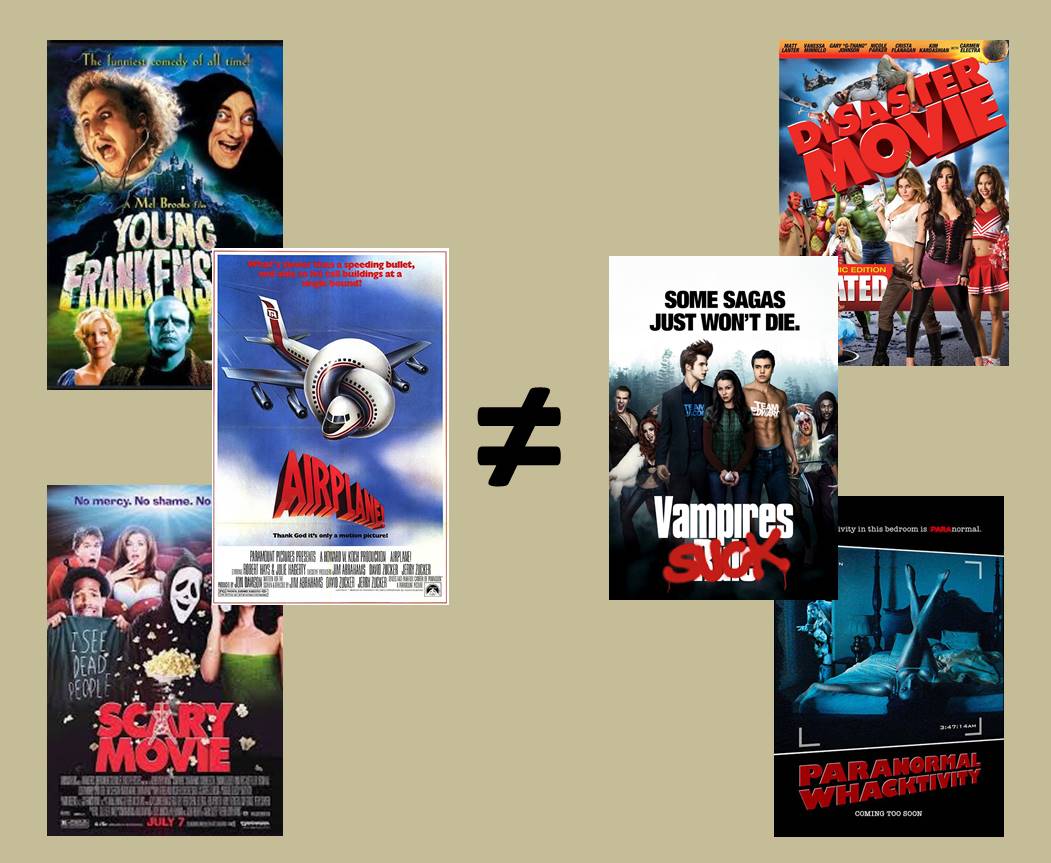
When I compare Blazing Saddles, Airplane, Dead Men Don’t Wear Plaid, and Austin Powers: International Man of Mystery to Disaster Movie, Not Another Teen Movie, and Breaking Wind, I realize that the truly classic parodies have something that the new ones don’t: a strong central story.

Somewhere in the evolution of parody films, the movies became less about story and more about ripping off as many genre clichés as possible, offering no firmer links between these scenes than bad jokes, fart noises or perky breasts.

Blazing Saddles wasn’t about taking a bunch of classic scenes from Westerns and simply linking them. It was more about taking iconic characters from the Westerns and creating a classic, if twisted, story. The sheriff abandoned by the town folk, the washed up gunslinger, the evil cattle rustler, the crooked politician.

Similarly with Shrek; although this film has such a strong central story that I’m not sure whether I should even include it in a list of parodies. Yes, it played up almost every fairy tale gimmick, but the story really didn’t model itself on any given style or pre-existing story.

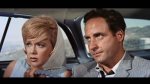
Dead Men Don’t Wear Plaid is another odd case. With a strong through story led by Steve Martin and Rachel Ward (directed by Carl Reiner), it takes parody to a whole new level by incorporating actual scenes from noir films within the scenes with live actors. Thus, Martin’s character may find himself playing across from Barbara Stanwyck or Edward G. Robinson. Now, that is great film writing and editing.

http://www.youtube.com/watch?v=jAzV-BM3h5Q

Interestingly, the Wayans’ brothers first entry into this genre—Scary Movie—offers another lesson about parodies: the challenge of dipping into the same well too often.

Although horror/slasher movies are not to my personal tastes, I thought the first one or two films of this series were particularly well done. But as the series continued, picking on more films from within the horror/slasher genre, it started to become a parody of itself. The jokes were no longer fresh. All the best tropes had been used up in the first two movies and so the later films just seemed to be running in place.

Six Star Wars films, one Spaceballs. That works. (NOTE: Spaceballs is one of my least favourite Mel Brooks movies, much to the chagrin of many friends.)

Even the much stronger series of Austin Powers and Police Squad films showed this sense of comedic fatigue.

The original film is a surprise. The first sequel may be enjoyable. Anything after that is milking a dead cow.

I have no doubt that bad parodies will continue to be made…if nothing else, they seem to require little writing and typically have poor production values, and are therefore inexpensive.

My hope, however, is that another Mel Brooks, Keenan Ivory Wayans or Mike Myers comes along to raise us from these creative and comedic doldrums. (NOTE: At present, my money is on Keegan-Michael Key and Jordan Peele, who have the comedic talent and the Hollywood clout to do it right.)


A few personal favourites (hyperlinked to trailer or favourite scene, where available):

Dead Men Don’t Wear Plaid

Airplane

The Cheap Detective

Austin Powers: International Man of Mystery

Hot Shots (not so much the sequel)

Rustler’s Rhapsody

Shrek

Scary Movie

Blazing Saddles

Silent Movie (I may be only person who likes this one)

Young Frankenstein (all time favourite)


You have the write to know

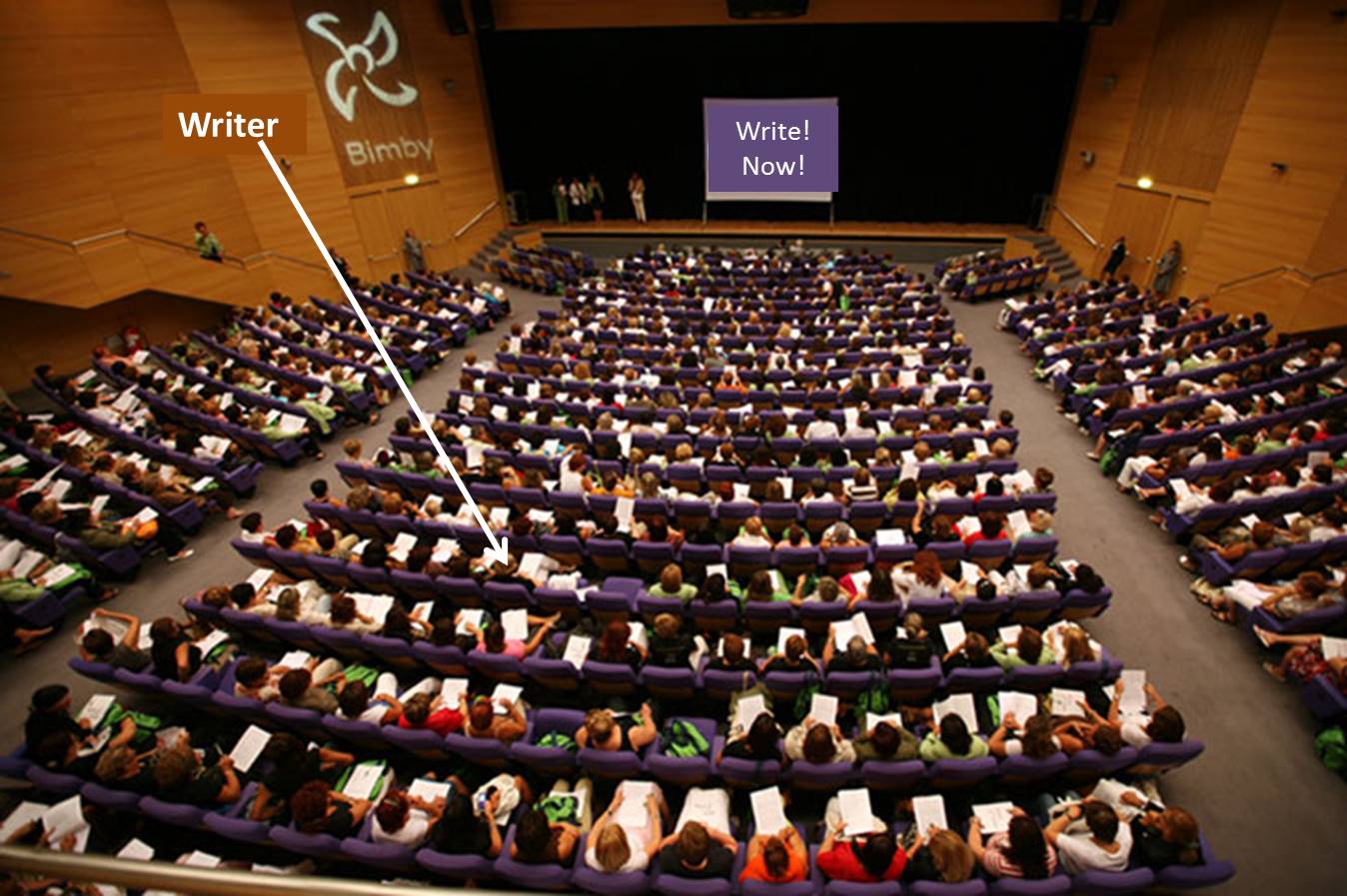
Write

I write about writing. I’ve seen dozens of blogs that do the same and suspect there are hundreds if not thousands more blogs about writing I have yet to find.

I routinely visit web sites dedicated to writing, reading amazing posts from amazing (and some not so amazing) writers. And I have two bookshelves dedicated to various aspects of writing, from dictionaries and tomes on prose to bound witticisms and opinions on the minutiae of character, plot and the perfect turn of joke.

I have taken classes on sketch comedy, screenwriting and story editing, and have listened in on dozens of podcasts and teleconferences given by the kings and queens of screenwriting—the latest given by Robert McKee. And I have recently started going to writing conferences, bending and rubbing elbows with writers established and in the birthing process.

Conference

All of this information and guidance has been invaluable to helping me understand my craft. But for all those thousands of hours of effort, I’m really not sure that any of it has helped me be a better writer.

In truth, I think there are only really two things you need to do to be a better writer:

  1. Write
  2. Share what you’ve written

Unless you’re willing to write, write some more, write yet again, and then when your body has given up the ghost with exhaustion, write again, you will never get better. All of the academic training and guidance in the world will not make you a better writer if you are not willing to write.

Leonid_Pasternak_001

Writing can be like literally shoving fingers into brain to extract words

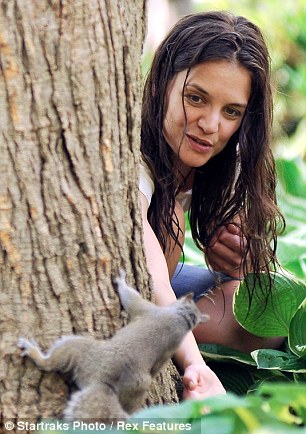
But writing is a very insular process, so it is equally important that you share what you have written…with literally anyone: your mom, your partner, your dog, the guy on the subway, the squirrel at the park.

How does the other party respond to your work? Are you communicating well? Do they see, hear, taste, what you see, hear, taste?

I am not asking do they like what you wrote. Personal tastes are just that. Rather, you want to know do they respond to what you’ve written…good, bad or ugly.

Oh, and I was only being half-facetious about the dog and squirrel…try it. You’ll be amazed at what happens.

Because most animals can’t read—I blame the current education models—you’ll be forced to read your work to them…the minute your work moves from visual to aural, a different part of your brain opens up and you hear whether you are affected by your work. Invaluable.

Love the internet for this stuff..."woman talking to squirrel"

Love the internet for this stuff…”woman talking to squirrel”

So read all you want, whether online or in those ancient paper constructs we call books. Attend conferences, lectures, podcasts and classes. I applaud your effort, your drive.

But I reiterate…there are only really two things you need to do to be a better writer:

  1. Write
  2. Share what you’ve written

Good luck.

The job you hate is killing your creative spirit

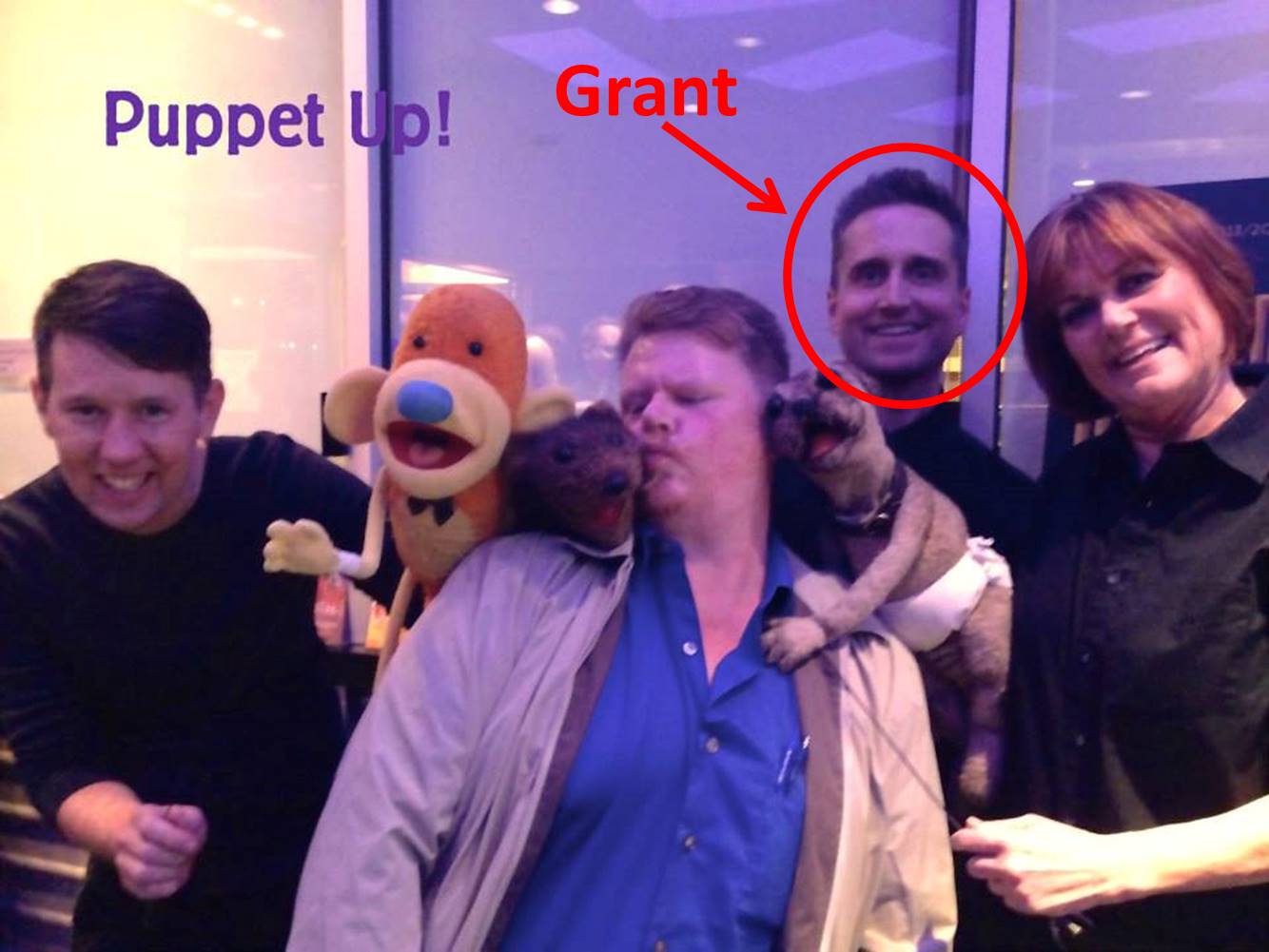
The wonderful Grant and his weasel buddy join me for a post-show photo (also shown Peggy Etra and Brian Clark).

The wonderful Grant and his weasel buddy join me for a post-show photo (also shown Peggy Etra and Brian Clark).

Grant Baciocco is an amazingly talented actor and puppeteer I had the good fortune to meet online and then in person when he came to Toronto with the improv puppetry show PuppetUp! (about which I have raved extensively elsewhere).

Well, aside from his amazing talent, he also has a wonderful creative spirit, both in the sense of what he creates and how he tries to inspire others to be open to their own inner creative spirit. To this latter point, he has a wonderful blog Grantblog: Ruminations & Pomposity that I heartily recommend.

At the beginning of each week, he posts Creative Mondays and today was no exception. Today he talked about “A job you hate”, which I excerpt below:

For years after college, about ten in fact, I worked as a substitute teacher.  It was an okay job, certainly flexible enough and I was making money, but by the end of those ten years I was starting to burn out because it was not the job I wanted to be doing.  I was good at it and several times I was told I should get my teaching credential because I was such a good teacher.  But deep inside of me I could feel a darkness building up because I was doing a job I absolutely hated.

The moment I made the decision to stop subbing and focus on The Radio Adventures of Dr. Floyd, it felt like a weight was instantly lifted from my chest.  I attempted, for the millionth time, to lose weight and it was actually working (lost 80 pounds).  I was just a million times happier than I was when I was subbing.  And guess what?  I became more creative!  This was the creative boom era for Dr. Floyd, because I was doing something I love.

Grant’s is a lesson too many of us learn very late in life (NOTE: I did not say “too late in life”…it is NEVER too late).

In my case, I was fortunate enough to have a series of occupations I loved for a period…scientist, science writer, media relations, advertising copywriter…but with each, I stayed in the occupation long after I had fallen out of love with the choice. I had to be a certain amount of miserable before I was brave enough to jump.

But two years ago, I completely jumped ship to pursue my true love: story telling (screenplays, novel, sketches, short stories). I’m still not making money off any of this, so I live on freelance magazine writing and ad copywriting. But to Tiffany’s point, it is what I do to eat and sleep under a roof.

If you are fortunate to know your passion—it can take time to figure out what it is—then you must make it happen to find happiness (hunh, “happen” and “happiness”…so similar).

And if you haven’t fully defined your passion yet, go with your gut until you do. Explore the universe of opportunities, until you do. You may not end up the financially richest person on the planet, but you’ll definitely be one of the spiritually richest.

If you don’t want to take it from me, then take it from Grant. Find your happiness and pursue it with everything you have. Despite appearances, you really do have nothing to lose and everything to gain.


You can follow Grant on Twitter: @ToasterBoy

Our story so far…

Bradbury

It’s been roughly two years since I stepped off the ledge of the normal world and into the free fall of who I am…and perhaps it is not surprising that I am still discovering who that is.


For the uninitiated, a brief recap:

After spending the better part of my adult life as a scientist, magazine writer, communications manager and ad copywriter/creative director, I realized I wasn’t happy. Adding fuel to that fire was the death of my beloved grandmother and of my marriage (thankfully not an acrimonious separation). But where I might have let these events take me to darker depths, I realized that I had never been freer in my life…and the freedom felt good.

Thus, with nothing to hold onto and therefore nothing to lose, I stepped into the abyss of uncertainty and am pursuing my life as a storyteller. And nicely, two years in, I am starting to see dividends.


After taking screenwriting classes for a while, I now feel confident that I know what I am doing and have no problem trusting my instincts when it comes to storytelling. I’m good at this.

My latest and possibly most commercial screenplay to date, The Naughty List, awaits external validation in 4 different screenplay competitions. (I may be good at this, but my name is hardly renown at this point.)

My first screenplay Tank’s has slowly climbed its way up the “charts” of screenplay competitions over the past year, and after being a Second Rounder at the Austin Film Festival, it took top prize in the Nashville Film Festival as Best Animated Feature Screenplay.

SomeTV!, the sketch comedy show that I co-wrote, is in front of cameras, and I am told by our Producer/God-head that the initial cuts look amazing. You’ll see the footage as soon as I can send you to it.

Eye of the Beholder, the novel I am co-writing with Agah Bahari—based on the real events of his life in Iran—is starting to write itself (a wonderful moment for a writer) and already has anticipatory buzz in New York entertainment circles.

Eye of the Beholder

I wrote a short children’s book, Butch Goes To Work, that teaches children about working dogs and the abilities of people with disabilities. It is currently seeking a publisher.

Really, really slowly (sorry Kevin Scott), I am co-writing a comedy album in the understanding that what doesn’t lend itself to YouTube is perfect fodder for iTunes!

I almost signed an agreement to develop a screenplay treatment of a mystery novel, and even though this project didn’t come to fruition, I will continue to work with the novelist on future projects.

And I am in the process of taking my new life to the next level by moving to Los Angeles. When the move will take place is still a question.

I am grateful to the folks involved in the magazine and advertising work that continues to pay my bills. And I am over-the-top grateful to all of my friends, family and other supporters who applaud my journey at every turn.

I am a storyteller. I tell stories. And I have never been happier.

PS I don’t know if Bradbury actually said the quote at the front of this piece, but he or whomever was right.

And that’s the (mostly) truth – my new bio

Okay, so my producer for SomeTV!, the sketch comedy insanity currently in production in Toronto, asked me to provide him a short bio for the group’s web site.

Keeping in mind the sheer brilliance/stupidity of what we are attempting, I sent him this:

A born story-teller and punster, Randall told his first knock-knock joke in the Obstetrics Department of a Toronto hospital at the ripe old age of today. His early comedic repertoire consisted of poop jokes, fart jokes and snot jokes, but on learning that Vaudeville was dead, he learned how to write. After several failed attempts at living other people’s lives (scientist, journalist, press agent, ad man), he has more recently focused his energy on sketch comedy and screenwriting. In 2014, Randall won the Nashville Film Festival award for Best Animated Feature for his screenplay Tank’s. His influences are caffeine, Mel Brooks, sleep deprivation and human frailty.

Would love to hear your thoughts!

Randy (the one in the middle)

Image

Unexpected surprises: Steve Allen autobiography

Steve Allen

So, as I was waiting to join my friends in a taping of our sketch comedy show SomeTV!, I decided to check out a nearby second-hand book store.

Under normal circumstances, this would be a complete love-fest for me, but as funds have been a tad tight lately, I was really only in the store to browse (yeah…that could happen). Well, as I moved through the section of film and television books, I happened across an autobiography of Steve Allen, who among other things was the first host of The Tonight Show.

As I had nothing but respect for Allen’s comedic timing and his ability to get amazing, ad-libbed comments out of pretty much anyone, I picked the book up only to see that they were only asking $2.99 for the book, entitled Mark It And Strike It.

Despite this price being five times the cover price of the book, I decided I could afford the few dollars and bought it.

Wow! Was I in for a surprise!

That Allen manages to include information about his childhood, marriages and early jobs is the only reason that this volume could ever be called an autobiography. The reality is that a full two-thirds of the book are dedicated to a vast range of subjects that reflect more Allen’s thoughts on and opinions about the world in which he lives in 1960 (yes, the book is three years older than me).

Allen discusses the vast gulf that separates Art from Science. The loss of spirituality, or perhaps more accurately, the misappropriation of spirituality in the United States. McCarthyism and anti-Communist terrors that permeated society. Issues of racism and sexism that were tearing the country apart. The nature of humour and comedy and its tortuous demise at the hands of populism.

Aside from my surprise at finding such topics in an autobiography and in the ideas being expressed within the pages, the greatest reflection came as I reached the end of the book and realized that almost 55 years later how little has changed.

The Arts still suffer in a school system fixated on the STEM disciplines (science, technology, engineering, mathematics).

There is still rampant use of God and Jesus as weapons across the United States in defense of excluding other cultures.

Admittedly, anti-Communist sentiment has subsided as Communism itself has subsided, but it was quickly replaced by anti-Muslim sentiments.

One need only look at the leadership of the United States and the parasitic pundits to realize that racism and sexism still cling like so much fecal matter.

And the recent controversy over the Colbert Report shows that satire and wit remain under constant attack.

Yes, this was possibly the most effective $2.99 I have ever spent in my life as it gave me more than a few hours of entertainment…it gave me a never-ending stream of subjects to contemplate.


(PS This is not intended as a comment on the United States as we have more than our share of problems in Canada. I simply discussed the US as that was Steve Allen’s context.)


For more about Steve Allen, check out these links:

Frank Zappa on The Steve Allen Show

Steve Allen’s Man on the Street

Steve Allen Online (official web site)

Writing for puppets

Monty meets Muppets!

Monty meets Muppets!

As some of you may know, I am one of the comedy writers for a sketch show called SomeTV!, which is currently in production in Toronto. As our godhead Nic likes to describe it, the show takes the no-sacred-cows approach of Monty Python’s Flying Circus and combines it with the playful anarchy of The Muppet Show (no hubris here, eh?).

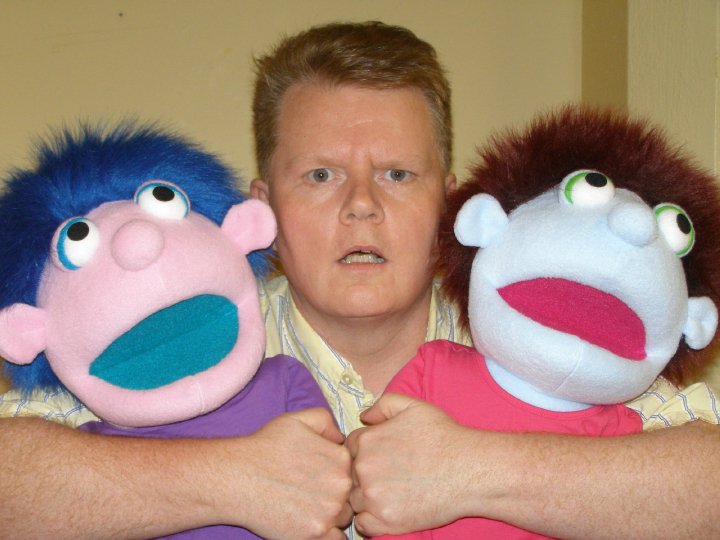
Now, for some, that may sound like the greatest writing gig ever. Those some have clearly never written for puppets.

Human actors—or as we call them, Fleshies—can be tricky enough to deal with. Prone to completely misunderstanding the point of a scene or sketch, they tend to have difficulty learning lines that make no sense to them.

Luckily, their natural insecurity, despite the outward facing ego, means that they can be molded into subservience, if only in two- to five-minute chunks, the longest most are willing to go without checking their make-up or cell phones for calls from their managers.

At their core, Fleshies are the rhesus monkeys of the performance world, clinging to each other for some semblance of affection but ultimately willing to give that up for warmth and sustenance.

Not so puppet actors, aka the Felts or Felties.

Flesh v Felt

These are the apex predators of the performance world and should always be treated as such. Sure, they look cute and cuddly, with their giant heads, bulging eyes and disarming colours, but that’s exactly what they want you to think.

You don’t write for Felties so much as start a sentence that is perpetually interrupted with ideas or lines the bastards think are smarter, funnier, crazier.

Fleshies forget their lines because they’re not too bright…Felties “forget” because they are malicious egotists.

Adding to the challenge is the near-impossibility of figuring out a Feltie. He, she or it is the poster-child for multiple personality disorder.

You think you’re writing a scene for a young Spanish girl, when out of nowhere a tall Jovian Codswadder shows up to take the scene in an entirely new direction. (To this day, the only thing I know about Codswadders is they come from Jupiter, where given the crushing gravity, their height makes no sense.)

Not the home of young Spanish girls

NOT the home of young Spanish girls

It’s like dealing with someone with hyperactive comedic Tourettes, and trust me, I’ve taken enough improv classes in Toronto to know what that looks like.

Felties are also astoundingly lazy creatures. Sure, they look frenetic on the television screens, but in reality, these buggers will literally not lift a finger without someone doing it for them. Our show has an entire team of Feltie fluffers whose entire job is to see to the every-last needs of these freaks. We’re talking major OCD: obsessive-compulsive demands.

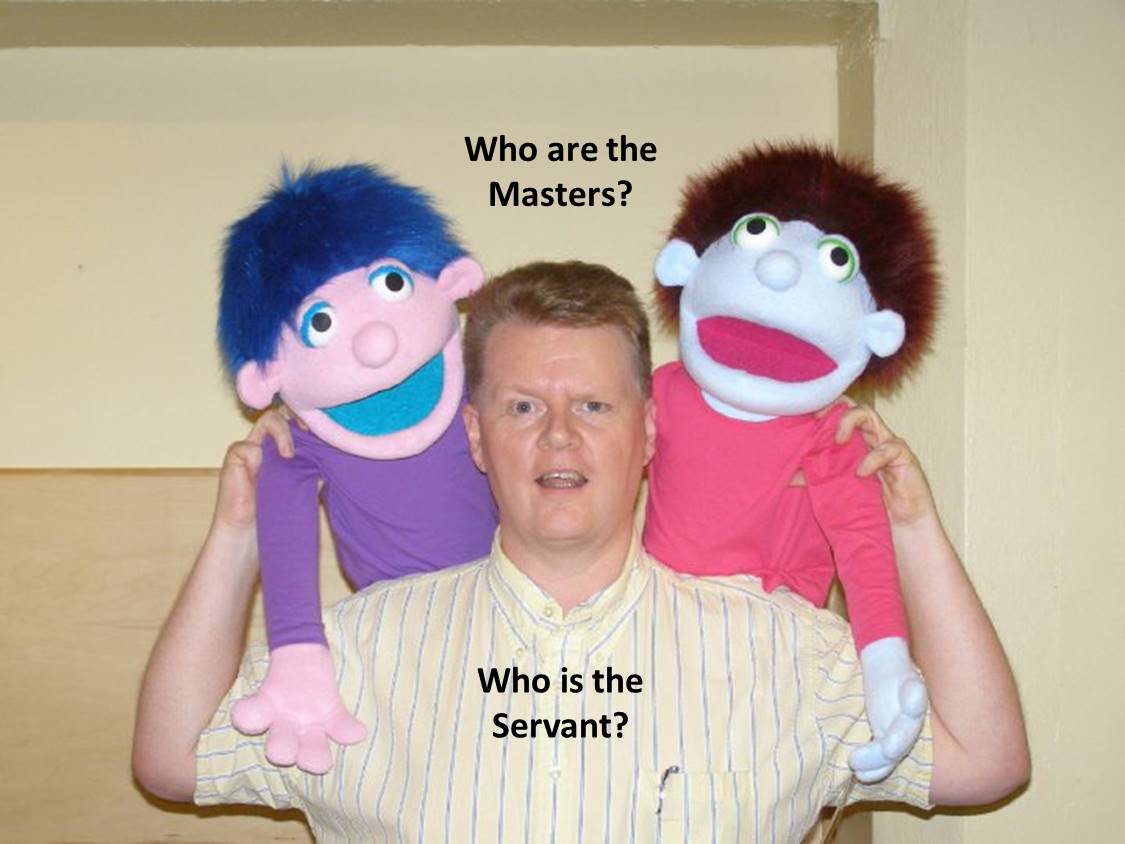
Trust me, the dictionary writers of the world have the concept of “puppet master” completely backwards.

Masterclass

To be fair, the Felties do sometimes come up with lines that are funnier than the stuff I wrote. But on the flip side, they get away with lines that no intelligent Fleshie could ever hope to pull off.

This has two impacts: 1) the Feltie doesn’t have to try very hard to get a laugh, and 2) they can be as crude, rude and insulting as they want, knowing everyone just thinks “awwww, how cute”.

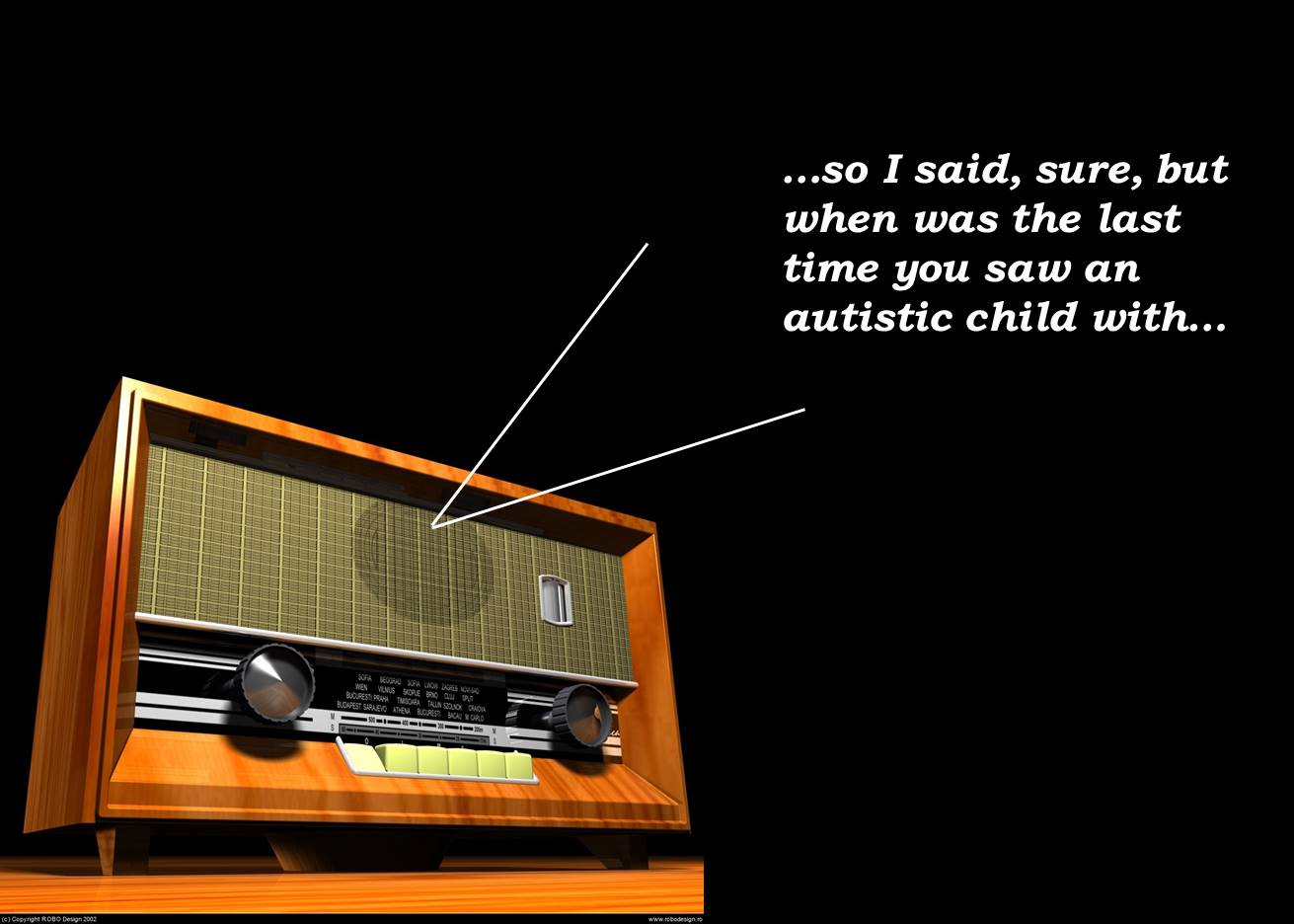
There’s a reason you don’t hear a lot of puppet radio programs…the shit they come up with is repugnant.

NPR = Nasty Puppet Radio

NPR = Nasty Puppet Radio

So, why do I stay? Why do I continue to write for these self-glorified hand-warmers?

Most days, I don’t know.

But then the rent comes due and I realize that my best chances at succeeding as a “comedy writer” is to have my words (or some semblance thereof) come out of a Feltie’s mouth…and those lint-sucking leeches know it, too.


SomeTV! is being produced by Lemon Productions Inc.

Like us on Facebook: SomeTV!Lemon Productions Inc.

Follow us on Twitter: @SomeTVNews

It’s a sad, sad, sad, sad world

Go to YouTube and search for Sid Caesar.

Right now. Don’t wait.

I’ll still be here when you get back.

Comedy lost another titan today with the passing of Sid Caesar at the age of 91.

A man who defined television sketch comedy as we know it today.

A man who trained and/or gave voice to some of the greatest comedic minds of the 20th century, including Carl Reiner, Mel Brooks, Mel Tolkein, Danny Simon, Larry Gelbart, Neil Simon and Woody Allen through shows like Caesar’s Hour and Your Show of Shows.

A physical giant, Caesar was capable of playing the brutish husband or the nebbish boyfriend. He brought laughs and tears. And he was the first to let his co-stars shine. Stars like Imogene Coca, Nanette Fabray, Howard Morris and Carl Reiner.

I am confident that all of these people would have influenced my life in one way or another without the likes of Sid Caesar, but he formed the nexus around which my comedic galaxy spun.

Thank you, Sid. Know that you were loved.


Related posts:

My Favorite Life

My Creative Journey

Jonathan Winters


My Favorite Life

Peter O'Toole as Alan Swan

Peter O’Toole as Alan Swan

The announcement of Peter O’Toole’s death came as a bit of a shock to me. Not so much that he died—he was a very old gentleman—but rather in how it affected me. I felt like I’d lost a friend whom I had not seen in quite some time.

Fairly or unfairly, I give Peter O’Toole a lot of credit for the life that I am leading right now: the life of a creative artist who plies his art with words. You see, Peter O’Toole was the biggest name in a little movie that might not have seen the light of my consciousness had he not been in it.

The movie is My Favorite Year.

My Favorite Year poster

For the uninitiated (For shame, Swanny), the movie tells the story of a couple days in life of a budding young comedy writer working in the 1950s on the King Kaiser Show; a clear homage to Sid Caesar’s Show of Shows. On the day the movie opens, Benjamin is going to meet his greatest hero, fading matinee idol Alan Swan; a clear homage to Errol Flynn. Unfortunately, Swann’s star has faded into alcoholism and practical destitution, and it becomes Benjamin’s job to keep Swann sober enough for the live television performance. The rest is a love story between these two men; one ascending, the other wishing he were dead.

If that doesn’t want to make you see the movie, you’re dead yourself.

The thing is, for all the university science degrees and work I had done, my life was incomplete. What I didn’t realize right away upon seeing My Favorite Year—mostly because the young are stupid and blind—was that I desperately wanted to be Benjamin. More accurately, I WAS Benjamin, I just didn’t know it.

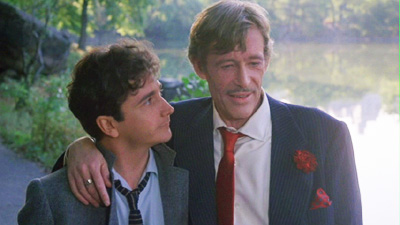
Benjamin Stone stares lovingly at his idol and now friend Alan Swan

Benjamin Stone stares lovingly at his idol and now friend Alan Swan

I was a creative writer. I was a comedy writer. But I didn’t know how to express it beyond my own personal doodlings. And even if I had, science seemed the more rationale move (btw, I love science…really, I do).

As I’ve related in previous posts on my creative journey, it wasn’t until my wife took me aside one day and cornered me into answering what I wanted to do more than anything that I realized and embraced my inner Benjamin.

My life of today was still about a decade away, but that moment, that recognition, that admission started the ball rolling.

I had a visual to go by, a guide. I couldn’t go back in time to write for a 1950s sketch comedy show, but I could work toward the modern equivalents.

The other posts will tell you what I did, but without having seen My Favorite Year, I might not have been able to articulate my dream that fateful day.

And without Peter O’Toole, there might not have been a My Favorite Year to see.

So thank you, Mr. O’Toole. Aside from being one of the finest actors to walk this stage, you made dreams come true. This dreamer will be eternally grateful.


Links of possible interest:

My Favorite Year trailer

If I were truly plastered (scene)

This is for ladies only (scene)

Who the hell is Niblick? (scene)

(Images are property of owners and are used here without permission, but a lot of love and gratitude)