Substance over volume

ddnews

When you meet someone who does not speak your language, there is a cliché response of talking louder to make yourself understood. There is something within many of us that says if we simply pump up the volume, we can overcome the disconnect.

A couple of months ago, Tufts University released their latest estimates for the average cost of developing a new drug: $2.6 billion (I’ve seen estimates up to $5 billion). Eleven years ago, the same group calculated the costs at $0.8 billion.

Now, every time these estimates arise, the hand-wringing begins over how the costs were calculated, which factors make sense and which are over-reaching. What no one seems to argue, however, is that drugs are less expensive to develop today than they were a decade ago.

So what has this to do with speaking louder?

The same period has seen amazing technological achievements designed to facilitate and accelerate drug discovery and development.

Combinatorial chemistry was heralded as a way to expand compound libraries from hundreds to hundreds of thousands. High-throughput and high-content screening, as well as miniaturization and automation, were lauded as ways to screen all of these compounds faster under the paradigm of “fail early, fail often”. And given the masses of data these technologies would churn out, the informatics revolution was supposed to convert data into knowledge and knowledge into healthcare.

And yet, for all of these improvements in throughput, I question whether we have seen much improvement in the number or quality of drugs being produced. We certainly haven’t made them less expensive.

Please understand, I don’t place any fault in the technologies. These are truly marvels of engineering. Rather, I question the applications and expectations of the technologies.

Almost two years ago, GSK CEO Andrew Witty told a London healthcare conference: “It’s entirely achievable that we can improve the efficiency of the industry and pass that forward in terms of reduced prices.”

The pivotal question here, I believe, is how one defines efficiency.

I wonder how many people simply felt economies-of-scale would improve discovery, much as mass production made Henry Ford a rich man. But drugs are not cars, and where throughput and scale make sense when you have a fully characterized end product, they have their limitations during exploration.

When I was a protein biochemist in an NMR structural biology lab, I spent some time trying to wrap my head around two concepts: precision and accuracy. A 3-Å protein structure is very precise but if the structure isn’t truly reflective of what happens in nature, it is meaningless. A 30-Å protein structure is much less precise, but if it is more accurate, more in tune with nature, then it is likely more useful.

By comparison, I wonder if our zeal to equate efficiency with throughput hasn’t improved our precision at the cost of our accuracy. If you ask the wrong question, all of the throughput in the world won’t get you closer to the right answer.

In researching the DDNews Special Reports over the last couple of years, I have spoken at length to several pharma and biotech specialists about this topic, and many feel that the industrialization of drug discovery and development has underwhelmed if not outright failed. Several have suggested it is time to step back and learn to ask better questions of our technologies.

But getting back to the costs issue.

I know many will rightly point out that the largest expense comes from clinical trials. To address this challenge, new technologies and methodologies are being developed to get the most useful information out of the smallest patient populations.

Here again, however, no one segment of the drug development process stands in isolation, and I think back to the compounds reaching the clinic and question the expense of incremental improvements.

Oncolytics CEO Brad Thompson discussed the challenge in Cancer in the Clinic (June 2014 DDNews).

“If you could double [overall survival], you could show that in a couple of hundred patients. If you want to do a 10-percent improvement, you’re talking thousands of patients to do it to the statistical level that everybody would prefer to see. How do you run a study like that?”

That is a huge difference in financial expenditure that begs the question is an efficacy improvement of just 10 percent of value.

From an individual patient perspective, assuredly. From a pharmacoeconomic perspective, maybe not, and particularly with the growing prevalence of high-cost targeted biologics. Maybe we need to aim for bigger improvements before moving candidates forward, which happens long before the clinic.

Again, I’m not placing blame. The history of any industry is filled with experimentation in different methodologies and technologies. Everyone involved had the best of intentions.

But after a couple of decades of middling results, perhaps it is time to question how and when many of these advancements are applied. Simply yelling at a higher volume doesn’t seem to be enough.

[This piece was originally published in the January 2015 issue of DDNews. A lot has happened in the year since, including some amazing results in the field of immuno-oncology that might just address the demand for high-performance treatments even if only for a select patient population. For more on that, see my June 2015 Special Report “Body, heal thyself”.]

The Force Awakens…to a Khan job (SPOILERS)

tfa_poster

J. J. Abrams is on my shit list.

That statement alone should tell you everything you need to know about my experience with Star Wars: The Force Awakens (Ep. VII).

As background: I am old enough to have seen Star Wars: A New Hope (Ep. IV) in theatres as a young teenager. And I was so impressed by the film that I immediately came home from the theatre and wrote a sequel…400 hand-written pages of a screenplay. My first screenplay, in fact, at the ripe maturity of 13 years.

Star Wars is my birthright. I will defend it tooth and nail.

Thus, J. J. Abrams is on my shit list.

After the underwhelming prequels (Ep. I-III), I looked forward to Abrams’ take on the saga. I was a big fan of his reboot of Star Trek, although I had a bit of a nagging doubt after the reboot sequel Into Darkness. But if anyone had a sense of the epic, almost operatic scale of the Star Wars universe, it should have been Abrams.

Star_Wars_Episode_VII_42318

And to some extent, he fulfilled his end of the bargain.

Shivers went down my spine when we scaled across the vast deserts of Tatooine…I mean Jakku.

I worried when R2…I mean BB-8, was captured by the Jawas…I mean scrap metal scavengers.

I bounced happily with the music of the Mos Eisley cantina…I mean the Takodana cantina.

I cheered when R2 successfully arrived at the Rebel base…I mean BB-8 arrived at the Resistance base with the vital information.

I sat back in awe as I saw the might of the Death Star…I mean Starkiller Base, for the first time.

J. J. Abrams is on my shit list.

To get back to Star Trek: Into Darkness, briefly, we all knew that Abrams was rewriting the story of Kirk’s greatest nemesis Khan Noonien Singh. And the movie didn’t disappoint in its grand opening flourishes and early Starfleet intrigue.

But then, at some point, it was like Abrams had run out of ideas and so simply inserted the last 20 pages or so of the original Wrath of Khan screenplay, hoping we wouldn’t notice.

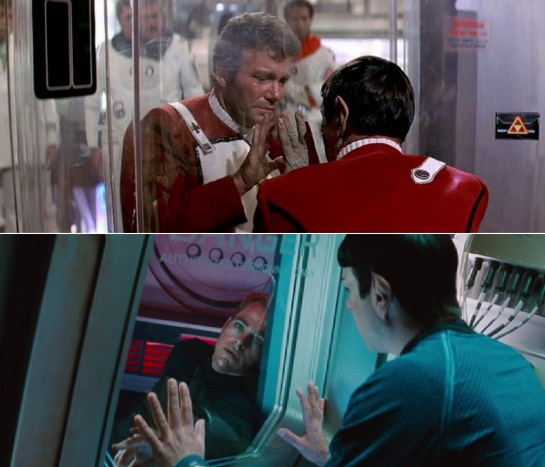
The least tweaked moment of overlap between the two movies was the scene between Spock and Kirk across the glass as one dies from radiation sickness. Abrams simply swapped the positions of the two characters.

twokstid

Some might consider this an homage to the original. A friend of mine, in discussing The Force Awakens, called it alt-universe mirroring. I call it bullshit, and lazy bullshit at that.

Now, Into Darkness was not intended to be a prequel to any of the older Star Trek movies, so I can buy into the alt-universe idea a bit. But The Force Awakens is Ep VII of a saga. It is not an alt-universe but the same freaking universe 30 years later.

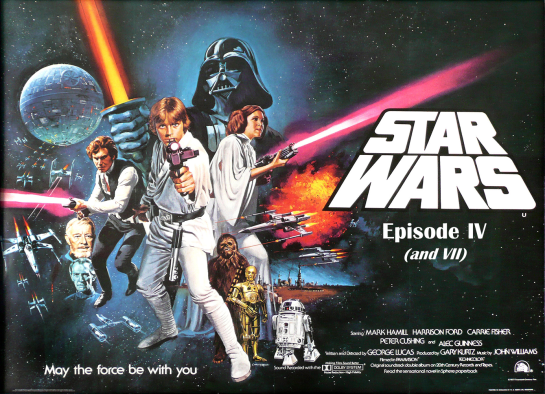
An homage is the holographic chess set. An homage is NOT a beat-for-beat repetition of Ep IV, even if jumbled up a little bit and with a few scenes from Ep V and Ep VI thrown in.

The spell of childhood memories faded rapidly as The Force Awakens played out on the screen, and I spent much of movie sitting with an attitude of “Really?”

And as I walked home from the theatre…a 40-minute walk…I just got angrier and angrier as the volume and sheer audacity of the parallels continued to sink in.

J. J. Abrams is on my shit list.

Droid capture

“You’re pretty bang on, but it’s what I was expecting,” explained a friend whose ear I bent. “It’s the old ‘the same, but different’.”

“I saw it more as a mirroring of the previous six films; a device to draw in new fans and satiate old fans,” another friend said.

I call bullshit…not of my friends, you understand, but of the idea that The Force Awakens needed to remind us of the saga up to now or reinvigorate fans.

Please, how could anything from the Star Wars saga fail to draw box office records?

I know I’m in the minority here. Most fans won’t clue into any of the parallels but instead simply wrap themselves in the old familiar or marvel at the new spectacle. Cool, I am glad they enjoyed the film.

Even I will likely see it again as my first viewing was in regular 3D—strange to think of that as a thing—and not in IMAX or AVX.

And as much as I would buy Henry IV, Part Three if Shakespeare wrote a sequel to his first two Henry IVs, I will eventually add this movie to my Star Wars collections.

But J. J. Abrams is on my shit list, and I will approach any of his future movies with suspicion and cynicism.

And that, more than anything, I am saddest about.

Ep IV_VII

12 Days of Gratitude – Me

I’d like to introduce you to…well…me. I’m a true Renaissance man…and by that, I mean someone who under the best of conditions feels about 500 years old.

I’m a writer, scientist, photographer, comedian, puppeteer and hockey fanatic; and yet, despite having a lot in common with me, I have not always been my biggest fan. No matter how well I succeeded in life, I always thought I could do better, or that I would be discovered and shunned as a fraud. Well, screw me!

Now, I recommend that as many of you get to know me as possible…I’m pretty damned cool!


(Part Eleven of my 12 Days of Gratitude…because the rest of the news sucks)

12 Days of Gratitude – Marsha

mowsh

This is my friend Marsha (aka Mowsh), who is not only a beautiful and talented actor, she is also incredibly fun, funny and loving.

You will be hard-pressed to find someone more willing to offer a warm smile, sly wink or caring shoulder.

If you know Marsha, consider yourself lucky. If you don’t know Marsha, you should rectify that soon.

(Part One of my 12 Days of Gratitude…because the rest of the news sucks)

Call me disappointed – Review of In the Heart of the Sea

in-the-heart-of-the-sea_banner1

Bluntly, In the Heart of the Sea was such a disappointing movie that I can’t even come up with a metaphor about a man driven mad by a desire for revenge against a ghostly leviathan. And that statement is made all the sadder by director Ron Howard’s attempt to do just that with almost every character in the movie.

For the under-informed, In the Heart of the Sea is the story of the writing of the novel Moby Dick by Herman Melville. It is also the story of the story that led to the writing of the novel Moby Dick. In short, the film occurs in two timelines that unto themselves cannot disguise the fact that neither plot line is satisfying.

Adding to this sense of disappointment is the fact that my friends and I saw the movie in 3-D IMAX, neither of which was needed to tell this narrative, which is surprising given the majestic concept of a whale attacking ships in the open ocean.

Even the actors couldn’t manage enough dimensions to be considered flat, let alone 3-D. Somehow, stalwarts like Brendan Gleeson, Ben Winshaw and Thor…I mean Chris Hemsworth…failed to bring life to this bilge water. Hell, even the great white sperm whale was unable to add excitement to this movie.

Moby Thor

If you want the experience I think Ron Howard was targeting, watch Apollo 13 and every time Tom Hanks appears on screen, imagine him in a cape with a Viking helmet. You’ll have a much more enjoyable experience.

As one of my friends suggested, it was as though Howard was going through a checklist of clichés.

Man vs. inner demons  √

Man vs. the elements  √

Man vs. society/class system  √

Man vs. nature/whale  √

Man vs. himself/his past  √

Unfortunately, Howard missed the most important one:

Man vs. coherent story with a point to make  X

Having read the novel Moby Dick and watched two film versions—Gregory Peck is a God—this version actually did damage to the franchise. It somehow took an exciting tale and examination of the destructive demons that possess us all, and turned it into a melodramatic soulless mess.

The only real positive that I can offer this film was that for all the time spent watching nothing happen, I never reached the bum-squirming phase where I positively itched to flee the theatre.

This was a Hollywood gimme, and yet somewhow they managed to blow it.


Other reviews:

Danny F. Santos (coming)

Less than a whale of a tale (Toronto Star)

It’s Man vs Leviathan (New York Times)

Chris Hemsworth Anchors a Whale of a Tale (Forbes)

Feedback, not criticism (or worse)

customerstalking

A friend of mine recently wrote a screenplay for a sitcom. Not a spec of an existing show, mind you, but rather an entirely new idea she developed.

In accomplishing this feat, she joined rarified company. For every person who has written a television pilot, there may be a thousand people who have written a spec script and millions who have never put pen to paper (finger to keyboard).

And like any good writer, she wanted her work to be as good as it could be, so she asked a handful of people she knew—including me—to read it and give her feedback.

Unfortunately, as I later learned on sending her my feedback, she was ready to chuck in the writing game because of scathing criticism from another reviewer, who essentially told her that her pilot was complete crap (or worse).

My friend is talented and is in the process of maturing her style. And the feedback I gave her was honest and critical, but it was also designed to help her improve, not make her quit. The pilot was still raw, but there was merit in many aspects of it, and the rest could be easily improved.

Sadly, it seems her other reviewer was less interested in helping her find the gems in her work.

To the writers out there, I say, pick your reviewers wisely, and before you take any of the feedback to heart, consider the source and get input from more than one person.

Feedback that is overly critical or overly praising is largely useless…and potentially lethal.

To the reviewers out there, I say, be honest but be constructive. It does no one any good to rip a work to shreds and leave it in tatters. It doesn’t make you more powerful. This isn’t even about you but about the work.

At the end of this post, I have links to pieces I have written previously on receiving and giving feedback. And below, without giving away my friend’s identity or her concept, I offer the opening of my notes to her.

Good luck and good writing to everyone!


My favourite insight of all time on writing for television is that pilots suck. Let me repeat that:

PILOTS SUCK!

The challenge with a pilot is you have to do soooo much structural heavy-lifting and still try to tell a coherent story.

  1. You need to establish the premise.
  2. You need to establish the perspective of your protagonist and therefore your concept.
  3. You need to not only introduce all of the regular characters and their relationships to each other, but also make them engaging.
  4. You need to give the audience a sense of what a typical episode might look like so they know when they can go pee.
  5. And did I mention that you also need to tell a coherent story?
  6. Oh, and one last thing for the sitcom writers…you have to be funny.


So, massive kudos to you for writing a sitcom pilot and doing a decent job of it. You’ve covered all of the points above, but you haven’t really nailed them yet. And for me, nailing them hinges on your decisions about point #2…

Cookie-Monster-Quote-Wallpaper-Download

See also:

Giving Feedback – The Reviewer Strikes Back

Receiving Feedback – Part One

Receiving Feedback – Part Two

The Last Word – a short story

library

(A writing exercise in which the first word was “shelf”.)


“Shelf seven.”

The words struck David’s ear drums like so many flies on a glue strip, their significance dying almost on contact.

“Did you want the catalogue code, too?”

The glue strips over-burdened, David’s head tilted to one side, involuntarily signalling his very real lack of comprehension.

“Sir?”

David’s irises shrank to pin points, his brain doing its best to pull focus back to the moment at hand. Emerald green flecks glinted in the near spotlight that bathed the librarian.

David fought not to shake his head in the hope of releasing the cob webs that had yet again taken hold of his brain. He wet his tongue, a dry mouth crusting his silence.

“Perhaps you could write that down for me,” he smiled at the eternally patient woman behind the counter.

Despite David’s complete lack of social graces, he was an easy patron for the woman. He knew exactly what book he was looking for, rather than simply presenting her with a laundry list of random words that only may have appeared in the book title or subject matter.

Slowly drawing a scrap of paper from a tidy stack, the woman dragged her pencil in tight arcs and lines. With each stroke, David was certain that he could hear the graphite crack and flake from the pencil’s tip until finally, the room went silent again.

Looking up, he caught the librarian’s eye, which crinkled as she slid the paper across the counter.

David smiled as he swiped the sheet and dissolved into the stacks, leaving behind a rapidly dissipating vapour trail of Old Spice and anxiety.

Moving swiftly down row after row, David had the sensation of being swept along by a rainbow-glittered tornado, the multicoloured book spines flashing by, muted here and there by cellophane wrappers designed to keep fingerprints and legibility at bay.

Despite his knowledge of perspective—a Grade 8 art class quickly coming to mind—the stacks seemed to narrow the further he journeyed into the bowels of the bibliographic beast. And all the air was drowned in the musty thoughts of insistent authors in cacophonic sensory overload.

David’s chameleon-like eyes worked in solitude, taking turns glancing from the dampening destiny sheet clutched between his fingers and the digital tattoos that graced the spines.

His left eye was first to light upon the congruence, a match that was shortly confirmed by his right eye. Binocular certitude.

This was the book.

Taking a deep calming breath that did little more than trigger a coughing spasm, David rubbed his hands against his trouser legs, only to realize he was smearing pulped paper onto his leg. The librarian’s note had given up the fight to remain whole under persistent perspiring assault.

Without being aware of his actions, David flipped the book’s pages through trembling fingers, eyes scanning for familiar references.

The red wagon on Bakersfield Hill.

The mustard-stained tuxedo on prom night.

The tow motor accident at the soda factory.

The surreal night at the library looking for a book available nowhere else.

It was all here, written in black sans-serif letters on egg-shell pages. So alien to see it captured on vellum and yet so familiar to a constantly refreshing memory.

Clearing his throat, David flipped ahead in the book, trying not to glance at the intervening pages, instead saving his energies for whatever he found on the last pages before the Appendix.

David smiled as he struck the back cover and realized there was no Appendix. He’d had emergency surgery shortly after his 21st birthday.

But the smile faded just as quickly as the memory as he peripherally espied the final words of the book to his left.

As though resisting a coiled spring, David turned his gaze upon the final paragraph, his temples literally throbbing with the rush of blood to his brain.

His eyes all but excised the first word. Then the second. Then the third.

Words became phrases. Phrases became sentences. Sentences revealed thoughts. That’s how writing worked.

The stacks rang with raucous laughter. Library patrons became meercats at the disturbing intrusive sound, unable to identify its source or direction.

They remained unaware that in the darkest corner of the library, a man had just learned how his life would end.

An ending, it turns out, that was pretty fucking funny.

110330-book-stack-hmed-8a.grid-6x2

Fears and tears

solitude-and-leadership

Tears come unbidden, unwelcome,

Blurring my vision,

But refusing to fall.

It’s the wind.

It’s a cold.

It’s allergies.

Anything but sadness,

Anger, frustration.

Throat clenches;

Chest tightens;

But the scream

Will not come;

Restricted in my lungs,

Blocked by still sealed lips.

So much pain;

So much sorrow.

The pulse quickens.

The mind races.

But legs remain static.

I run away

By running inward;

Afraid to cry

For fear of never stopping.

My silence deafens me;

Acrid saline blinds me;

Anguish deadens my soul;

And yet, I feel it all.

Race in writing

One race, many peoples (from mediadiversified.org)

One race, many peoples (from mediadiversified.org)

I’ve spent a few months now reading dozens of teleplays, and one thing that stood out as a new trend for me was the phrase “mixed-race” when describing a character.

“Attracted to the noise, JOANNE (27, tall, mixed-race) looks up from her laptop. A smile blossoms across her face.”

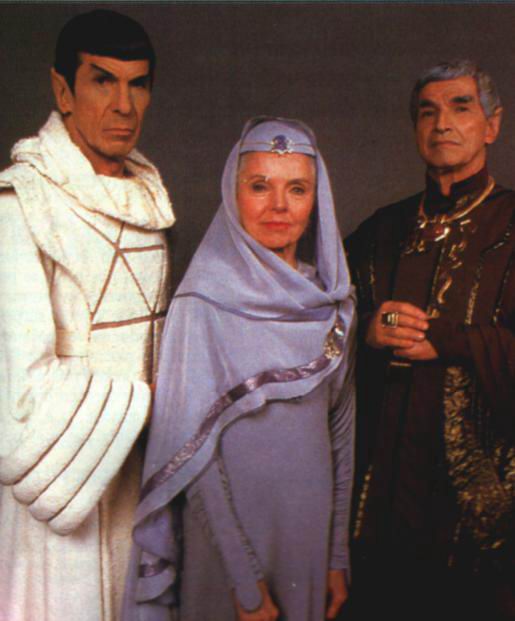
Now, lest anyone take offence, I really don’t care to what race a character is attributed. Nor do I care if the character has parentage of different races or even different species (looking at you, Spock).

Instead, what struck me was that in only one of these teleplays did the fact that the character was mixed-race in any way influence the story and/or the character’s worldview. Which begs the question:

Why mention race at all?

In a screen- or teleplay, you should only be telling me things I need to know to understand the story or interpret a character’s behaviours and attitudes. Unless being 7 feet tall means a character can do something no one else can do and the plot in some way turns on that ability, then I don’t need to know the character is 7 feet tall.

Likewise, if a character is a Korean-Italian and the only thing this fact influences is possibly his or her name, who cares? Where are the subtextual or textual influences of this genetic melange?

Spock was every bit his warring human and vulcan sides

Spock was every bit his warring human and vulcan sides

In the case of Spock, entire stories were built around the internal and sometimes external conflicts arising from his mixed heritage. He fought constantly to suppress his human side and that influenced his relationships and reactions with everyone else.

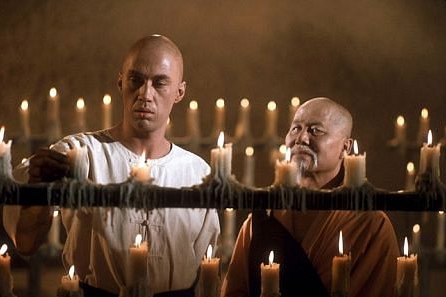
In the single teleplay I read where the character’s mixed lineage did matter, the character struggled with being treated as an outsider by both communities. Thus, in being ostracized by both cultures, she built the defence of being a rebellious loner and responded to her world thusly.

American father, Chinese mother, Kwai Chang Caine lived conflicting cultures

American father, Chinese mother, Kwai Chang Caine lived conflicting cultures

In none of the other teleplays was anything like this even remotely the case. In none of those scenarios, did the writer use the choice to inform the character. In fact, in almost every mixed-race teleplay, the writer never specified what races had been mixed.

That’s how unimportant this fact was to these writers. And there’s the real shame.

Although I don’t know what the writers intended by making their characters mixed race, I suspect it was simply to make themselves look socially conscious.

What they achieved, at least in my eyes, was the exact opposite.

Illiterate in 3 languages…all English

canadianEnglish

“That which we call a rose, would by any other name, smell…”

William Shakespeare, Bad Line Break theatre

As many of you know (or have quickly surmised), I am Canadian, and more specifically, Anglo Canadian. Unto itself, that’s a pretty cushy thing to be in this country.

In choosing to live as a writer, however, I added an otherwise unnecessary twist to my life—I forced myself to learn English as a second language.

Wait. Didn’t you just self-identify as an English-speaking Canadian?

Yes, I did. But I’m a Canadian English-speaking Canadian.

And one of the first things you realize when you become a Canadian writer is that you will probably starve for lack of work.

Now, I’m not knocking Canadian writing, whether fiction, for film and television, journalism, what have you. It is easily some of the most beautiful writing available in the English world. But it is often written to (if not for) an incredibly small market, and opportunities to succeed are therefore often few and far between.

If feels like 8 writers encompass the entire Canadian television landscape. And name a Canadian movie. (I’ll wait.)

Nope and nope.

Nope and nope.

Okay, now name one not directed by David Cronenberg or Denys Arcand.

I was once offered a job as the Editor of a Canadian biotech magazine—yes, I used to be even more nerdy—for $30kpa. And yet, already on my resume was a job working for an American biotech mag that started around $65kpa.

Bottom line is thank goodness for my passion to write, because my passion for money has taken a beating.

(Side note: This was a choice I made and for which I take full responsibility. I don’t mean this to be a “life is so unfair” rant.)

What this has meant, therefore, is that to make it as a writer, I have had to learn English as a second language. In this case, American English.

Recently, the BBC published a short article that tried to explain Canadian English within the context of its British and American counterparts. Rightly, the author noted that the differences were more than a matter of spelling (e.g., centre v center; honor v honour). Rather, the differences also manifested in idioms, speech patterns and word choice.

As long as everyone's having fun

As long as everyone’s having fun

As with most Canadians, I had a bit of a leg up on learning American as our proximity to the border (mere kilometres and even fewer miles) means we are inundated daily by American film and television programming. But I also had the additional benefit of having been married to an American, and a Southerner to boot (more on “boots” later).

Where I would recommend taking the 401 across north Toronto, Leela would suggest taking 66 from Fairfax into Washington. Luckily, we were both practical enough to set aside arguments about whether we needed to go to hospital or the hospital.

All this to say that although the differences between Canadian English and American English can be subtle, they can easily explode before the eyes of the unsuspecting.

Writing for an American biotech magazine and working with American editors was something of an ESL boot camp. And over the intervening 15 years, I like to think I honed my American skills to the point where you suspect I am from Minnesota or Western New York (hello, North Tonawanda).

In fact, I’m going to rely heavily on my multi-Angloism as most of my writing, whether for money or in my screen- and novel writing, is aimed at American audiences. And although my primary goal remains writing the best story, my secondary goal is writing it in the most innocuous way. I don’t want my writing to “read” Canadian.

Versus

Truth be told, I don’t want my writing per se to be noticeable at all. If it is, I’ve taken the reader out of the story.

This is not to say that I want my stories to be bland, but rather that I want all of the art to be in the story itself, rather than the more mechanical aspects.

In my Canadian stories (so far a sitcom pilot and screenplay), which are set in Canada, involve Canadians and target Canadian audiences, I write Canadian. For pretty much everything else, I write American.

Should I start targeting British audiences, then I’ll spend more time learning British English, and make fewer spelling changes.

In the meantime, I’ll continue to bounce back and forth between the multiple Englishes like a character out of Monty Python.

What’s it aboot?

Anyone can make fun of how Canadians communicate (or don’t). Goodness knows Canadians do. But I have to admit that I struggle with the whole “oot and aboot” phrasing that American audiences in particular seem to see as a Canadian phrase.

It’s not that I think we pronounce these words correctly so much as we don’t say “oot”. Rather, we say “oat”.

As I mentioned, I was married to a Southerner, and one day, we had a lengthy conversation about the word “South”. Try as she might, Leela could not get me to pronounce the “ou” without it taking on a surreal emphasis akin to “owwwwwww”.

Instead, I would say “Soath”. And instead of “about”, I would say “aboat”. And as I made a point of listening closely to Anglo-Canadians speak, I never heard a single one say “aboot”. It was always “aboat”.

That being stated, I will totally cop to “eh”. It’s us. End of story.