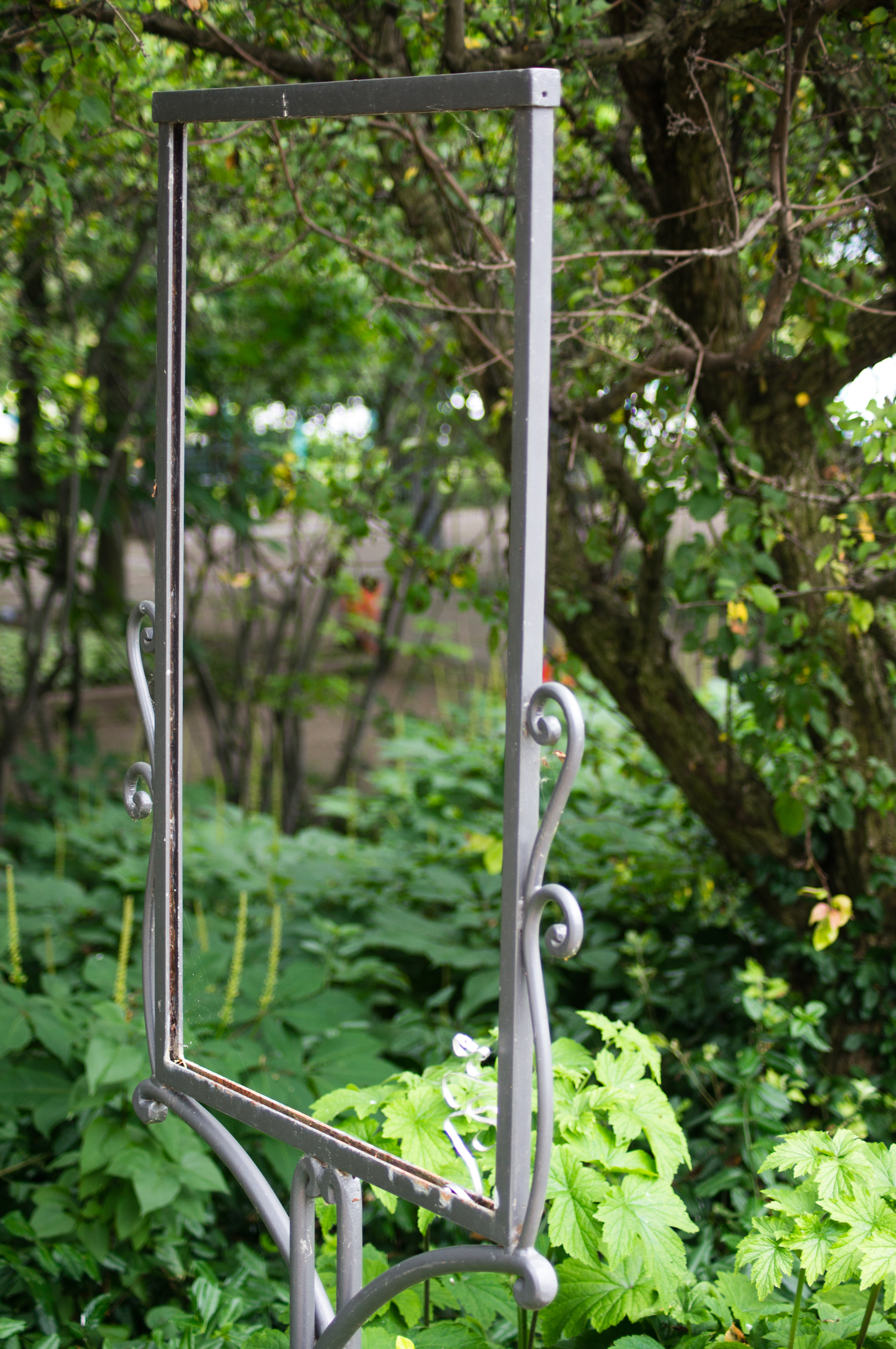
Watery applause
filters through my window;
an atmospheric
stream of consciousness,
rafting my mind
to memories thought lost,
of friends, of love,
of pain, of loss.
Flushing rivulets
clear out the old
to make space for
sunnier days ahead.
Watery applause
filters through my window;
an atmospheric
stream of consciousness,
rafting my mind
to memories thought lost,
of friends, of love,
of pain, of loss.
Flushing rivulets
clear out the old
to make space for
sunnier days ahead.
A thousand years ago (give or take), I listened to a radio theatre program called X Minus One, which told a story about a society that makes its first attempts to leave its planet only to slowly realize it lives within a bubble of water in our universe.
I have not been able to look at a dew droplet in quite the same way ever since.
I lie here, staring at the ceiling, and I miss you.
The stillness gently stirred by your breathing,
The sound of your hair sliding from the pillow,
The scents of the day rising from your skin,
The emanating heat of your body in repose.
A space lies empty beside me, undisturbed;
Duvet in quiet slumber, chaos contained;
Sheets unpressed by the weight of day.
Only one heart beats in the silence.
Only one mind wanders in the dark.
Only one body occupies the space of two.
I lie here, vision blurred, alone and I miss you.
Faith is believing when common sense tells you not to.
– Fred Gailey (John Payne), Miracle on 34th Street
We all have doubts.
Doubt that we are good enough to accomplish our goals. Doubt that our goals are even realistic or rational.
And sadly, most if not all of us have had or currently have a long line of people who are more than willing to feed those doubts with their own. Often, their superficial motive is to be supportive, to help cushion the blow of failure, to save you from certain doom. But more likely, their motive is to take comfort in the belief that your doubts make it okay for them to have doubts about their own lives.
But, if you’re lucky, you have those special few in your life who have absolutely no doubt in your future success. They’re the ones who listen to your ideas with a smile, an eager nod, and perhaps some sage constructive advice to help make your goals even more realistic.
The latter group are the people you need to heed, for they see the potential of your efforts in the absence of your fears and just as importantly, in the absence of their own.
I am not a religious man—although I have become quite spiritual—so faith has never been top of mind for me until recently. It’s not that I didn’t have faith, in hindsight, but rather that I had a very narrow definition of it. And, like my friends for me, it was easy to have faith in things external. It was faith in myself that I lacked.
More recently, however, I have realized that faith isn’t about rejecting the possibility of failure. Rather it is about accepting the possibility of failure but with the further understanding that failure does not mean your journey has ended.
Failure does not put your destination off limits. It is merely a diversion from your original path to that destination.
I know I am a good writer and story teller, but I also know I have challenges ahead in translating those skills into the money I need to make to continue writing and story telling.
Faith comes in telling myself (and believing) that through hard work on my part (e.g., networking, classes, practice) and unknown forces outside of my control and understanding, those challenges will dissipate at the appropriate time.
Like those well-intentioned naysayers, drawing a line in the sand about giving up (e.g., going back to my former career) only gives voice to my doubts. I will not allow myself to do that anymore.
I have faith that I will endure failure and that I will succeed at whatever it is I am to accomplish, no matter what street I live on.
I wish you that faith as well.
For an interesting piece on questions about talent and faith therein, check out this post from Plotting Bunnies: The ingredients of Writing: Talent…?
(Image is property of owner and is used without permission because I have faith they’ll get my point.)
I naturally speak with one voice. If pressed, I can speak with a second, more professional voice; the one that presents concepts to advertising clients or interviews corporate executives for a magazine. But most of the time, I speak with one voice that uses a vocabulary and attitude established over my many decades of life.
I think this is largely the case for everyone, which is why it is not surprising that people tend to write stories with a series characters that can largely sound the same. The protagonist is typically quite distinct. The antagonist is often distinct. But after that, I don’t know that I could tell who was speaking if I didn’t read the names.
These secondary characters, by their very nature, are not our focus as writers, so they tend to have the least developed back stories even in our heads. Other than age or gender, what makes the paperboy different from the local sheriff from the school teacher?
The same thing that makes you different from me. Our experiences, past and present.
One of the tricks for informing a character that I learned in improv was to endow a character with a trait that only you as the performer knew, and ideally a trait that had absolutely nothing to do with the scene that was developing.
In one exercise, I decided that my character had a bad right ankle, so that every time I took a step, my ankle would cause me pain. I didn’t hobble or verbally express the pain with either an “Ow” or “Would you slow down, my ankle hurts”.
The pain was expressed, however, in how my character responded to his environment and the other characters in the scene. What might have been a middle-of-the-road character suddenly became a terse character, someone in a hurry to get things over with, quick to anger or frustrate, less apt to engage in activities.
The bonus aspect of the exercise, for me, was that my fellow improv performers quickly got and responded to my character, but when pressed, could not exactly say why I behaved as I did.
Now change that ankle pain to a foot orgasm (read about it this week online) and see where that character would go (probably jogging).
The sore ankle had no impact on what role the character played in the scene, but more in HOW that character performed that role. And this made the character stand out from all of the others.
I go back to this exercise often, when I find myself creating secondary or tertiary characters that aren’t differentiated from the background. A little something to make them stand out, however briefly, in their scene.
If you find yourself stuck, give it a shot. What could it hurt, other than possibly your ankle?
(Image is property of owners and is used here without permission, because it makes me happy/indifferent/snarky/hot.)
A few more images from my Canada Day wanderings.
As an advertising copywriter, I was constantly called upon to summarize a client’s product with a single line, as few words as possible that would capture the brand essence of the product or service. The almighty tagline.
As a magazine writer, I am also called upon to summarize the stories I write into a sentence or fragment. Something that will give the reader the kernel of the story so they can decide whether they want to read it or move on.
And finally, as a budding screenwriter, I am asked to summarize my entire story in a single sentence so prospective producers can get my idea and see the possibilities, artistic but mostly commercial.
And yet, with all of this practice in concise summarization, there is yet one product that eludes my abilities: me as a writer.
At last year’s Austin Film Festival, during a session on how to work the festival, the Langlais brothers—that’s how they describe themselves, but Gene and Paul, for the record—challenged each of us to define ourselves in a single sentence as “the writer who…”. They suggested that if we could define ourselves as producing one type of screenplay, it would make it easier for producers and directors to wrap their heads around who we were and where to go when they needed that kind of screenplay. Call yourself something and then be the best that you can be.
The challenge for me was that I couldn’t even decide on a medium or genre, let alone determine what types of stories I wrote.
About the only medium I have not yet written for is radio and that’s more the result of lack of opportunity than lack of interest.
I am naturally inclined to write comedy, but my last two screenplays have been family drama and murder thriller with the possibility of a horror on the horizon.
For nine months or so, the question has plagued me. I am “the writer who…”
Recently, however, because of a screenwriting course and completely separate conversations about life with a friend, I have had a bit of a breakthrough, if not an actual answer.
Maybe, I’m looking at this challenge on the wrong level. Rather than focusing on the details of what I have done—genres, media, angles, etc—I need instead to take everything I have done to its most basic level. Stripped of the decorative details, what is the essence of what I create?
What is at the core of my favourite comedy sketches? My screenplays? My television shows? My magazine articles? And what am I doing that makes it mine?
I still can’t tell people I’m “the writer who…”, but I think I’m a little bit closer.
(Image is property of owner and is used without permission, about which I am of two minds.)
UPDATE
Interestingly, the Canadian film organization Raindance Toronto just posted an article called Creating a Personal Genre. Although aimed at filmmakers, the article clearly has overtones of what I presented above. Check it out.
Ouch, sayeth I
As sinews disrupt
Their femured rest
To lie astride the knob.
Where once my leg
Did show spritely measure
Now it does lie askew
Rent for rent’s sake.
Principled currency have I
Yet usurious interest
Abandons my very soul
To restless piscine slumber,
To don wearied galoshes
Of most compressed clay.
Stir not thy ire
Brooklyn-ed Vincent
Thy due is nigh
As the night is dewed
I would not lie now
Lest I should lie forever,
A cornerstone of commerce,
Tenement to history.
Vis’t me but anon
And thy dower is done;
Do me in here
And you’ll none, I fear.
(Image is property of owner and is used here without permission, so please don’t hurt me.)
The sounds of the city
Echo through my brain,
Filling the void with
Impulses that dissipate
As suddenly as formed.
Photonic reflections
Bombard my eyes and
Yet I see nothing
As I stare into
The darkening distance.
As empty as the bookshelves
That lie to either side,
My mind is a canvas,
Devoid of tint or brushstroke,
The words of yesterday
Replaced by so much silence.
The mind has wandered,
I know not where,
To seek adventure
In environs yet new,
To channel its destiny
In fields not yet furrowed,
Leaving only a husk of humanity,
A shed skin, abandoned shell,
To signal its former home
In the expanding universe.
I cannot know
If it will return,
But remain a sentinel
On constant watch ‘til death.
(Image is property of owner and is used here without permission. I don’t recall why.)
PIECES OF ME...
Mother, Nehiyaw, Metis, & Itisahwâkan - career communicator. This is my collection of opinions, stories, and the occasional rise to, or fall from, challenge. In other words, it's my party, I can fun if I want to. Artwork by aaronpaquette.net
Life at any age can be amazing! We only need to grab hold & experience it!
The internet web log of Michael Cedarwood. I used to be a stripper. Now I'm a writer.
Thoughts on creativity, Pharma and whatnot
Mindfulness, Philosophy, Spirituality, Meditation, Awareness, Religion, Nature Photography
Living for Happiness
A perspective from the other side of the hockey ocean
Romance Author
Author of Kritsotopoula, Girl of Kritsa and Rodanthe's Gift
Our opinions don't stink!
Rantings and Ravings on all things Screenwriting and Movies
My Elicits, an Inception... Learning to Live in Perfection