Back to visit the Ex

My annual pilgrimage to the Canadian National Exhibition, an end-of-summer ritual in Toronto. Sadly, The Ex is our national fair that seems to get smaller and smaller each year.

The grand old lady has definitely seen better days, but she still entertains the crowds.

Illiterate in 3 languages…all English

canadianEnglish

“That which we call a rose, would by any other name, smell…”

William Shakespeare, Bad Line Break theatre

As many of you know (or have quickly surmised), I am Canadian, and more specifically, Anglo Canadian. Unto itself, that’s a pretty cushy thing to be in this country.

In choosing to live as a writer, however, I added an otherwise unnecessary twist to my life—I forced myself to learn English as a second language.

Wait. Didn’t you just self-identify as an English-speaking Canadian?

Yes, I did. But I’m a Canadian English-speaking Canadian.

And one of the first things you realize when you become a Canadian writer is that you will probably starve for lack of work.

Now, I’m not knocking Canadian writing, whether fiction, for film and television, journalism, what have you. It is easily some of the most beautiful writing available in the English world. But it is often written to (if not for) an incredibly small market, and opportunities to succeed are therefore often few and far between.

If feels like 8 writers encompass the entire Canadian television landscape. And name a Canadian movie. (I’ll wait.)

Nope and nope.

Nope and nope.

Okay, now name one not directed by David Cronenberg or Denys Arcand.

I was once offered a job as the Editor of a Canadian biotech magazine—yes, I used to be even more nerdy—for $30kpa. And yet, already on my resume was a job working for an American biotech mag that started around $65kpa.

Bottom line is thank goodness for my passion to write, because my passion for money has taken a beating.

(Side note: This was a choice I made and for which I take full responsibility. I don’t mean this to be a “life is so unfair” rant.)

What this has meant, therefore, is that to make it as a writer, I have had to learn English as a second language. In this case, American English.

Recently, the BBC published a short article that tried to explain Canadian English within the context of its British and American counterparts. Rightly, the author noted that the differences were more than a matter of spelling (e.g., centre v center; honor v honour). Rather, the differences also manifested in idioms, speech patterns and word choice.

As long as everyone's having fun

As long as everyone’s having fun

As with most Canadians, I had a bit of a leg up on learning American as our proximity to the border (mere kilometres and even fewer miles) means we are inundated daily by American film and television programming. But I also had the additional benefit of having been married to an American, and a Southerner to boot (more on “boots” later).

Where I would recommend taking the 401 across north Toronto, Leela would suggest taking 66 from Fairfax into Washington. Luckily, we were both practical enough to set aside arguments about whether we needed to go to hospital or the hospital.

All this to say that although the differences between Canadian English and American English can be subtle, they can easily explode before the eyes of the unsuspecting.

Writing for an American biotech magazine and working with American editors was something of an ESL boot camp. And over the intervening 15 years, I like to think I honed my American skills to the point where you suspect I am from Minnesota or Western New York (hello, North Tonawanda).

In fact, I’m going to rely heavily on my multi-Angloism as most of my writing, whether for money or in my screen- and novel writing, is aimed at American audiences. And although my primary goal remains writing the best story, my secondary goal is writing it in the most innocuous way. I don’t want my writing to “read” Canadian.

Versus

Truth be told, I don’t want my writing per se to be noticeable at all. If it is, I’ve taken the reader out of the story.

This is not to say that I want my stories to be bland, but rather that I want all of the art to be in the story itself, rather than the more mechanical aspects.

In my Canadian stories (so far a sitcom pilot and screenplay), which are set in Canada, involve Canadians and target Canadian audiences, I write Canadian. For pretty much everything else, I write American.

Should I start targeting British audiences, then I’ll spend more time learning British English, and make fewer spelling changes.

In the meantime, I’ll continue to bounce back and forth between the multiple Englishes like a character out of Monty Python.

What’s it aboot?

Anyone can make fun of how Canadians communicate (or don’t). Goodness knows Canadians do. But I have to admit that I struggle with the whole “oot and aboot” phrasing that American audiences in particular seem to see as a Canadian phrase.

It’s not that I think we pronounce these words correctly so much as we don’t say “oot”. Rather, we say “oat”.

As I mentioned, I was married to a Southerner, and one day, we had a lengthy conversation about the word “South”. Try as she might, Leela could not get me to pronounce the “ou” without it taking on a surreal emphasis akin to “owwwwwww”.

Instead, I would say “Soath”. And instead of “about”, I would say “aboat”. And as I made a point of listening closely to Anglo-Canadians speak, I never heard a single one say “aboot”. It was always “aboat”.

That being stated, I will totally cop to “eh”. It’s us. End of story.

Leadership focuses on others

[See video here…Viacom pulled YouTube video above]

When you have really touched co-workers’ lives, when you have helped people grow by nurturing them and fostering their inherent talents, when you have taught people through example, then and only then can you walk away knowing that you have done a good job.

Anyone can shill the product or service that your organization offers, but it takes a special person to see beyond his or her ego and know that it’s about others and making the world a better place.

Looking forward to your next adventures, Jon. Thank you.

Dream snatcher

dream web

The other day, I engaged in the following conversation on Twitter:

Him: There are a lot of tweets directed towards aspiring filmmakers telling you to “never quit” and “follow your dreams.” That’s terrible advice.

Him: If you met some guy and he said he wanted to be a professional NBA player would you immediately suggest he follow his dreams and never quit?

Me: If that’s where his happiness is, then yes, I would. Who am I to call down his dreams? Would in fact offer to help.

Him: Attention anyone in the world who is looking for someone to help them become a professional basketball player.

Me: If you never try, how will you ever know what you might accomplish? Why live by someone else’s thoughts on what is feasible?

I understand his point.

So often, people express a desire to become something or someone without a good understanding of what it takes to do that. And in a subset of these situations, the aspiring individual isn’t willing to put in the requisite work to overcome their ignorance or skill-set shortcomings.

I’ve known several people who upon seeing how much joy writing brings me express a desire to write. And then do nothing about it. And unlike the professional NBA player quest described above, writing simply requires a computer or pen & paper. And yet, many of these people refuse to write.

But even knowing this, even if I had complete clairvoyance to a future of procrastination or frustration and agony for them, does this give me the right to tell them they shouldn’t try? I don’t feel that it does.

Despite my conversational counterpart’s sarcastic response (I assume it was sarcasm), I am happy to help anyone become a professional basketball player, if that’s what they want. I have no idea what skills I could possibly bring to that quest, but hell, we all need support to follow our dreams.

chase-catch-dream-big

You don’t have to be an expert in a subject to help someone.

You can help them better understand what they’re attempting so they can make informed decisions. You can offer a couch or spare room if they need a safe haven. You can cook a meal or several for them when money is tight. You can cheer at their successes and offer a shoulder in times of frustration or disappointment.

And most importantly, you can let them know that success or failure—whether internal to them or measured by external yardsticks—has absolutely no impact on whether you will be there for them.

To all of my friends and to people I have yet to meet in life, pursue your dreams with everything you have, make your life choices knowing that I will be there to help you in any way I can.

And do your best to ignore the dream snatchers who think they are doing you a favour by talking you out of your dreams.

go-confidently

And if you’re tired of watching me live my dreams, check out the blog of a friend of mine who has started living her dream life: Pipe’s Adventure.

Blood and name calling

He ain’t half heavy, he’s my half-brother – The Adopted Hollies

If you haven’t got a penny, then half a penny’ll do. If you haven’t got a ha’ penny, then God bless you. – some British thing (not the Hollies)

I read an article this weekend that described the murder of a man by his half-brother. Normally, I don’t read these kinds of stories, but I was drawn to this one because of the phrase half-brother, which made me wonder why this phrase was still in common use.

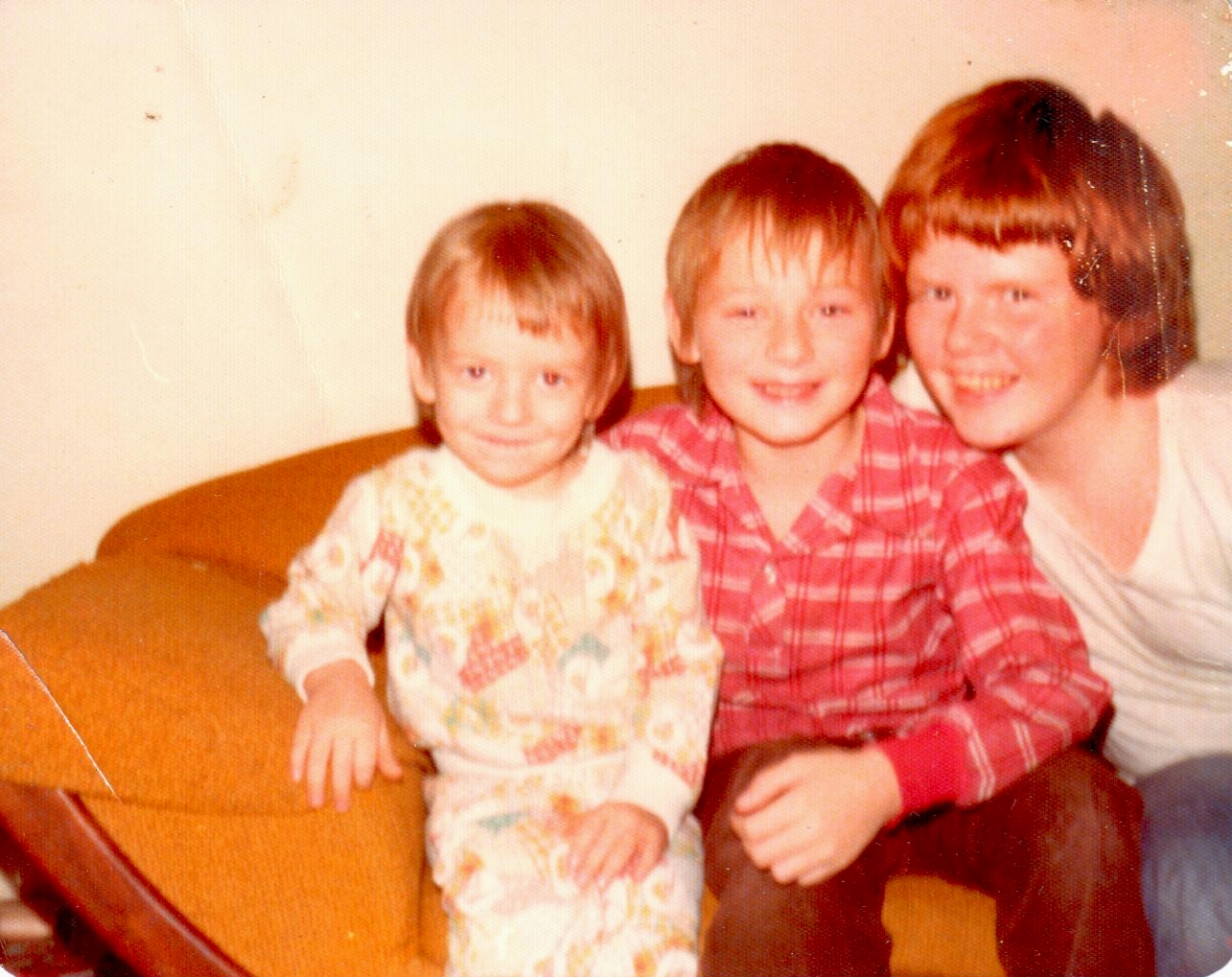
What the hell is a half brother? (Shawn, Scott, me)

What the hell is a half brother? (Shawn, Scott, me)

I appreciate that historically there may have been a reason to keep track of who one’s siblings were from a legacy perspective. Family homes and farms (and for the wealthy, estates) possibly hung in the balance when Dad died…although I question how often this was a concern. And no self-respecting Shakespearean comedy or drama would be complete without an evil half-brother. But why now?

To quote the Bard:

What’s in a name? that which we call a rose

By any other name would smell as sweet;

Likewise, to quote Merriam-Webster:

Blood (n): the fluid that circulates in the heart, arteries, capillaries, and veins of a vertebrate animal carrying nourishment and oxygen to and bringing away waste products from all parts of the body.

So again, I ask why the fixation on a surname and the concept of blood ties?

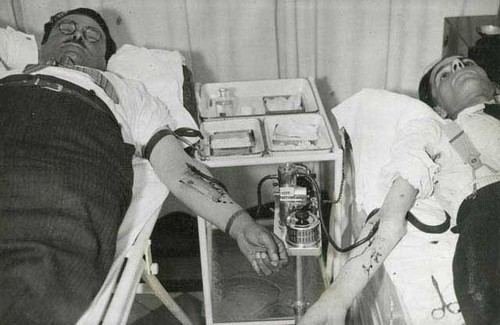
The last time blood ties mattered

The last time blood ties mattered

I never knew my father—not something I take personally; just a fact—and so I have no particular attachment to my last name aside from convenience and familiarity. I feel no compunction to continue the family name. Other people have the surname of Willis…let them continue it if they want.

And my brothers and I only share one common parent—our mom—and so have different surnames. Does this make them any less my brothers, however, than a pair of siblings who shared the genetic legacy of the same pair of parents (pairents)? Not for me (you’d have to ask them their perspectives on this).

For the famous, an argument can be made that sharing DNA somehow opens doors from one generation to the next: Ken Griffey Jr., Drew Barrymore, Robert Downey Jr., Robert Kennedy Jr., Paris Hilton.

Not sure how that last one works

Not sure how that last one works

But in most of those cases, sustained success comes from inherent talent and drive, not simply DNA. (I still don’t understand why Paris Hilton is famous.) Likewise, for every case of possible nepotistic success, there are hundreds or thousands of cases of success despite lineage (no disrespect to parents anywhere).

Perhaps I am the anomaly on this, but I simply don’t understand the importance of the nomenclature to who I am as an individual or how I respond to a family member versus a close non-genetically linked person (aka friend).

Agah, Nicholas and Marsha are my siblings despite the lack of genetic links

Agah, Nicholas and Marsha are my siblings despite the lack of genetic links

Scott and Shawn are my brothers more for our shared experiences than because of any genetic connection, much as Agah and Nicholas are my brothers and Marsha my sister for our shared affection and experiences.

Call me Ishmael, for all I care…if we are good friends, you have likely called me worse.

In the meantime, I’ll use my bloodlines to circulate oxygen to tissues and white cells to fight infection.

Brothers...no half-measures

Brothers…no half-measures

My preferred quote:

We few, we happy few, we band of brothers;
For he to-day that sheds his blood with me
Shall be my brother; be he ne’er so vile,
This day shall gentle his condition:

Sidewalking

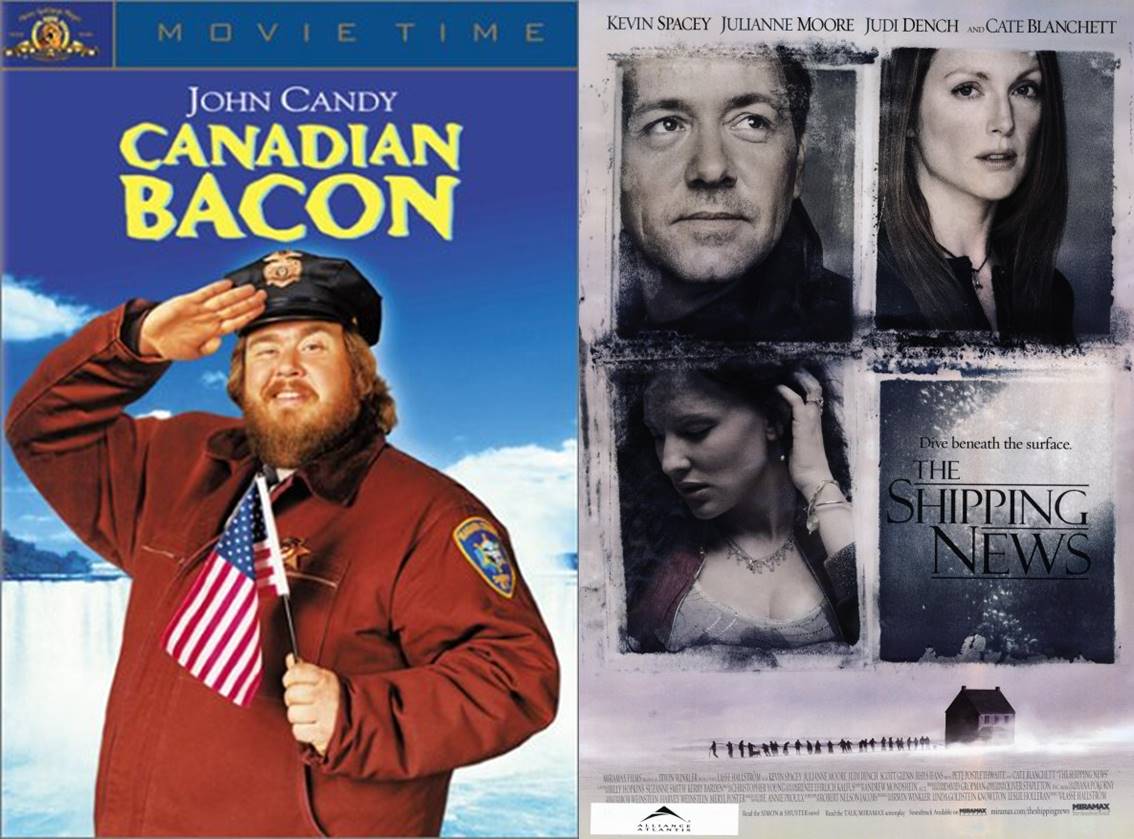
Of to visit with a friend at a local baconery (not bakery, but baconery…a restaurant called Rashers dedicated solely to bacon) and decided to take my camera with me, catching some of the gardens and a surprise guest along the way.

Screw the cat

First Draft

So, you want to write a screenplay.

Maybe you’ve read some books on screenplay writing—names like Cowgill, McKee and Field dot your bookshelf. Perhaps you’ve taken some screenwriting classes whether at a local university or community centre. You may have even—saints be praised—read some screenplays.

Great. Good on you. Way to go.

Now, before you type your first letter onto a page, do yourself a huge favour and forget all of it.

Okay, don’t forget it, but definitely shelve it. Put it aside, because almost none of it is useful to you yet.

In short, you can’t handle the truth…and that’s okay.

Leave the lessons for Draft Two and onward

Leave the lessons for Draft Two and onward

You’re about to write your first first draft (no accidental duplication there) and your only purpose right now is to tell a story.

Should my inciting incident happen around page 10? Doesn’t matter.

How much detail is okay in my narrative? As much as you need.

When is it okay to use voiceovers? Whenever you want.

None of what you learned really matters at this stage and is more likely to make your job harder than easier. It will become useful, later, when you’re doing rewrites—and you will do a lot of those.

But for right now, all of that information—much of which can appear and may be conflicting—is just a barrier between the blank page before you and the story you want to tell. Or perhaps more importantly, between you and the best story you can tell.

In my experience, it is a 1000X easier to fix bad structure than it is to fix a bad story. (This is not to say that any story cannot be improved.)

If you need three pages of narrative to get you to the first line of dialogue, then write three pages of narrative.

If it takes you 347 pages to tell your story, then that’s what it takes.

If you read yesterday’s pages and they sound like shit, stop reading yesterday’s pages. Keep writing until you’ve told your story.

Contrary to the name of the software package—thanks for the pressure, Final Draft—this is your first draft and it’s going to have a lot of shitty bits and pieces; they all do. I don’t know that in the history of screenwriting, anyone has ever filmed the first draft.

So write like no one is watching; because other than you, no one is. And tell the story you want to tell.

When you finally write “FADE TO BLACK” or “END” or “FIN” (pretentious move, btw), those books, blogs and lessons will still be there to help you get to drafts two, eight and fifteen.

(Please note: When I say ignore everything, I’m also including this blog post. If it is easier for you to tell your story by considering any or all structural and formatting elements, then do so.)

Blaze the trail that works for you, regardless of whether anyone has been down that trail before.

Let the cat write his or her own damned story

Let the cat write his or her own damned story

Standoff (a short story)

The Inquisitor

Too much a creature of urban comforts to ever be called a Nature lover, Henry nonetheless considered himself a Nature liker. And yet, as his eyeballs threatened to dry into powdery husks, he also recognized that Nature had a dark side. And today, that dark side came with bright red epaulets.

In an exchange that may only have been minutes, but felt like hours, Henry held the gaze of his ebon Inquisitor, afraid to look away lest the wraith take wing again, strafing him in violent indignation.

Moments earlier, Henry was taking a lovely stroll along the waterfront, leaving the breezes of the beach for the verdant comfort of the giant reeds and a secluded pond.

His soft-soled shoes barely whispered as he wound his way along the wooden deck that cut a swath across the still, algae-laden waters. Instead, his silent steps were accompanied by the cheerful chirrup of so many sparrows and the steady whine of cicadas complaining about the damp heat.

Merging waters

But as he reached the half-way point, he sensed a change even if he couldn’t yet identify it. The breeze died, the sparrows silenced and the cicadas stilled until all that remained was the low throb of his heart.

And as subtly as the stillness formed, it was macheted by an agonized screech that seemed to quite literally part Henry’s hair.

No sooner had Henry arced through his ducking motion than the demon struck again, piercing eardrum and scalp with equal vigour.

Terror’s impulse to flee was tempered by uncertainty’s steely grip as Henry found himself rooted in place. That something wanted to kill him, he was certain; but the complete absence of movement around him suggested it was all in his mind. His tingling scalp, however, said that whatever was happening was on his head, not in it.

Despite the glaring sunlight that baked the path, trickling tangy sweat into Henry’s fresh wounds, his pupils stretched to their anime widest, searching the chaotic tangle for the slightest signs of movement. He had no reason to believe his tormentor had given up, but all he saw was blue sky, brown tree limbs, green reeds and black water.

Yes, these had all taken on an ominous mantel, but nothing looked capable of launching an attack.

Even as Henry contemplated giving up his search, though, the air was pierced once more with an irritated cry. It was everything he had in him not to turtle.

And that’s when he saw it, the beast with the black eyes of death concealed behind a shroud of serrated alder leaves.

Hunkered down

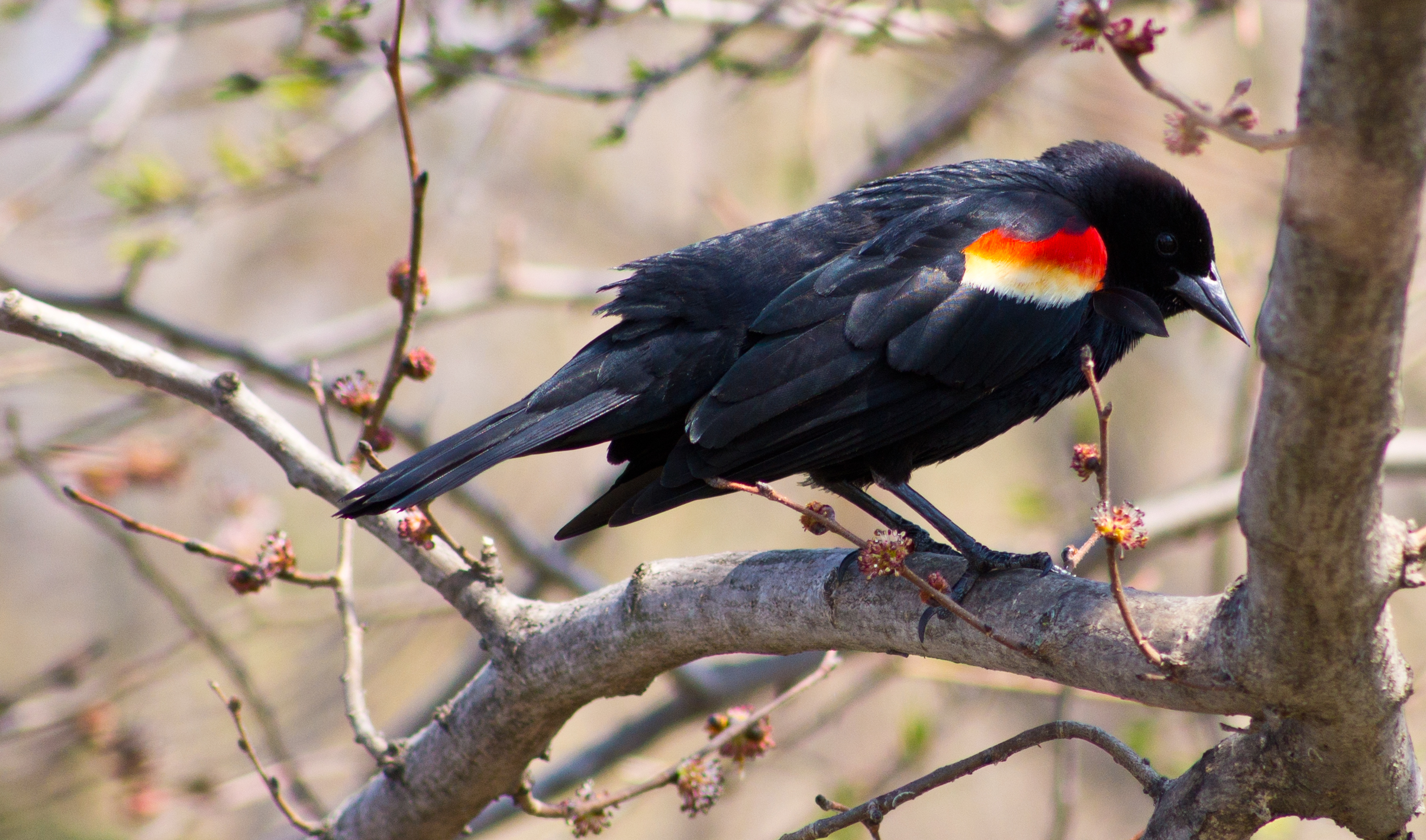
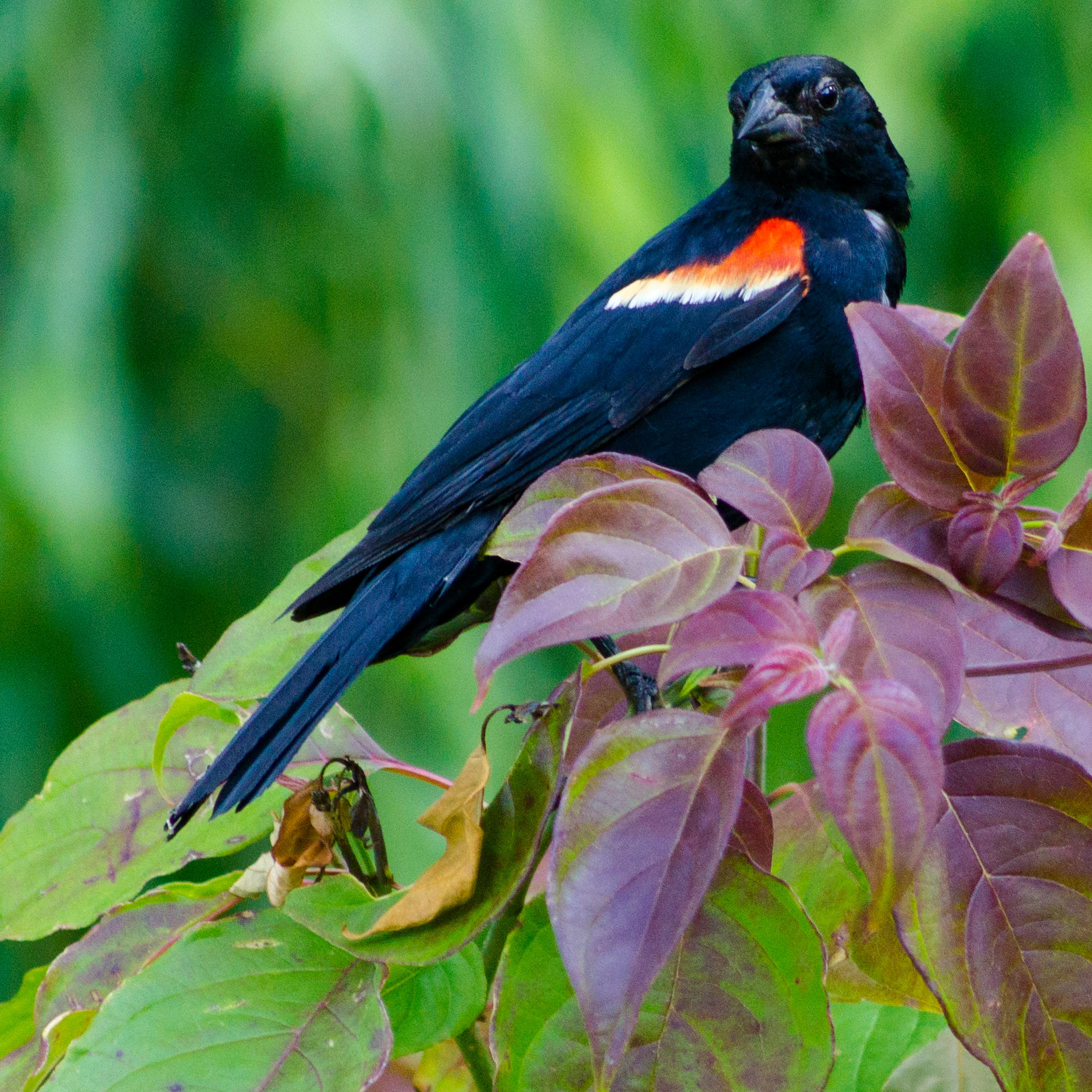
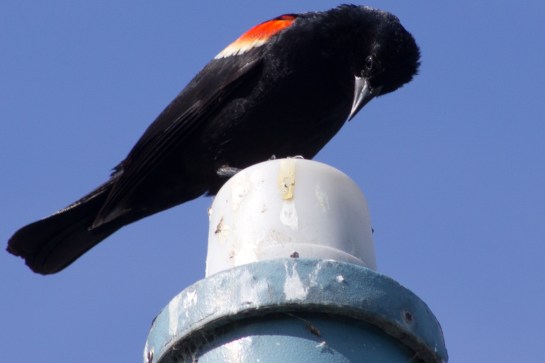
The expressionless face bobbed lower and turned slightly to its left, determined to take in its quarry. Its oil-drop eye blended almost seamlessly with the void its plumage left in the sky, a puncture of midnight in the midday light. The only break in the evil blackness was a splash of blood red atop its shoulder.

“A bird?” Henry questioned silently, a blush threatening to overwhelm his budding sunburn.

Sloughing his tension like a skin, Henry rolled his shoulders to massage them. That was all the demon needed.

With blinding speed, the creature was upon him again. The flapping wings were matched by flailing arms as Henry swung at his attacker to no avail, his body instinctively twisting as the assailant passed.

It didn’t take Henry nearly as long to find the bird now, the monster standing proudly on an exposed limb, cackling his disdain upon his hapless victim.

“What is your problem?” Henry cried to the skies, briefly silencing the bird, which cocked its head a little further as though contemplating the question.

Henry unconsciously mirrored the action when it squawked back.

Annoyed, Henry turned to walk away but his motion was stopped by a shrill pierce. Spreading its wings, the bird quadrupled in size, a Rorschach nightmare.

As Henry relaxed his muscles, the bird drew in its wings. The stare down began.

Redwing on a reed

Unblinking, Henry met the bird’s gaze with his own, his every emotion reflected in that dead pool of emptiness, that glistening eye. A psychic vacuum, the bird seemed to reach into Henry’s body, threatening to engulf his soul.

Mired in a personal La Brea, Henry could feel his will slowly sink into the sulfurous malevolence. Only ego and will kept him from bowing to the inevitable.

“Look, momma,” a child’s voice squeaked through the tension. “Issa red-wing bla’ bird.”

Out of the corner of his eye, which otherwise remained glued to the bird, Henry could see a small boy trundle down the path, pointing wildly with one hand while waving a camera with the other.

More importantly, Henry saw that the bird caught the arrival as well.

Glimpse

Synchronized swimmers of the air, man and bird vaulted for the boy, whose mother remained several yards away, blissfully unaware of the horrors awaiting her budding family.

Every wing beat was matched with a stride, every fluttered feather with airfoiled arm hair. And Henry knew his job was twice as difficult as the bird’s.

Not only did he have to stop the bird from harming the child, but he had to do it without knocking the kid into next Tuesday himself. But one thing at a time.

It is said that when the conditions are just right, you can stop the flight of one bullet with a perfectly timed second bullet.

Henry didn’t know if that was true. Nor did he really have the time to contemplate what conditions such a thing might require.
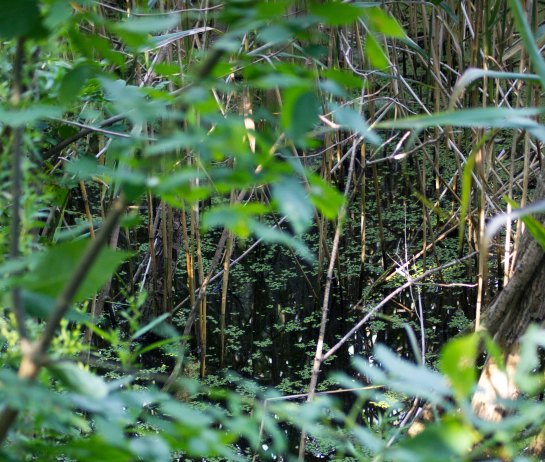
Pond

All Henry could tell you for certain was that once airborne, a red-winged blackbird is a thousand times more agile than a middle-aged man. That, and it takes about eight days to get the stench of stagnant pond water out of your nostrils.

He has no idea what happened to the kid.