You have the write to know

Write

I write about writing. I’ve seen dozens of blogs that do the same and suspect there are hundreds if not thousands more blogs about writing I have yet to find.

I routinely visit web sites dedicated to writing, reading amazing posts from amazing (and some not so amazing) writers. And I have two bookshelves dedicated to various aspects of writing, from dictionaries and tomes on prose to bound witticisms and opinions on the minutiae of character, plot and the perfect turn of joke.

I have taken classes on sketch comedy, screenwriting and story editing, and have listened in on dozens of podcasts and teleconferences given by the kings and queens of screenwriting—the latest given by Robert McKee. And I have recently started going to writing conferences, bending and rubbing elbows with writers established and in the birthing process.
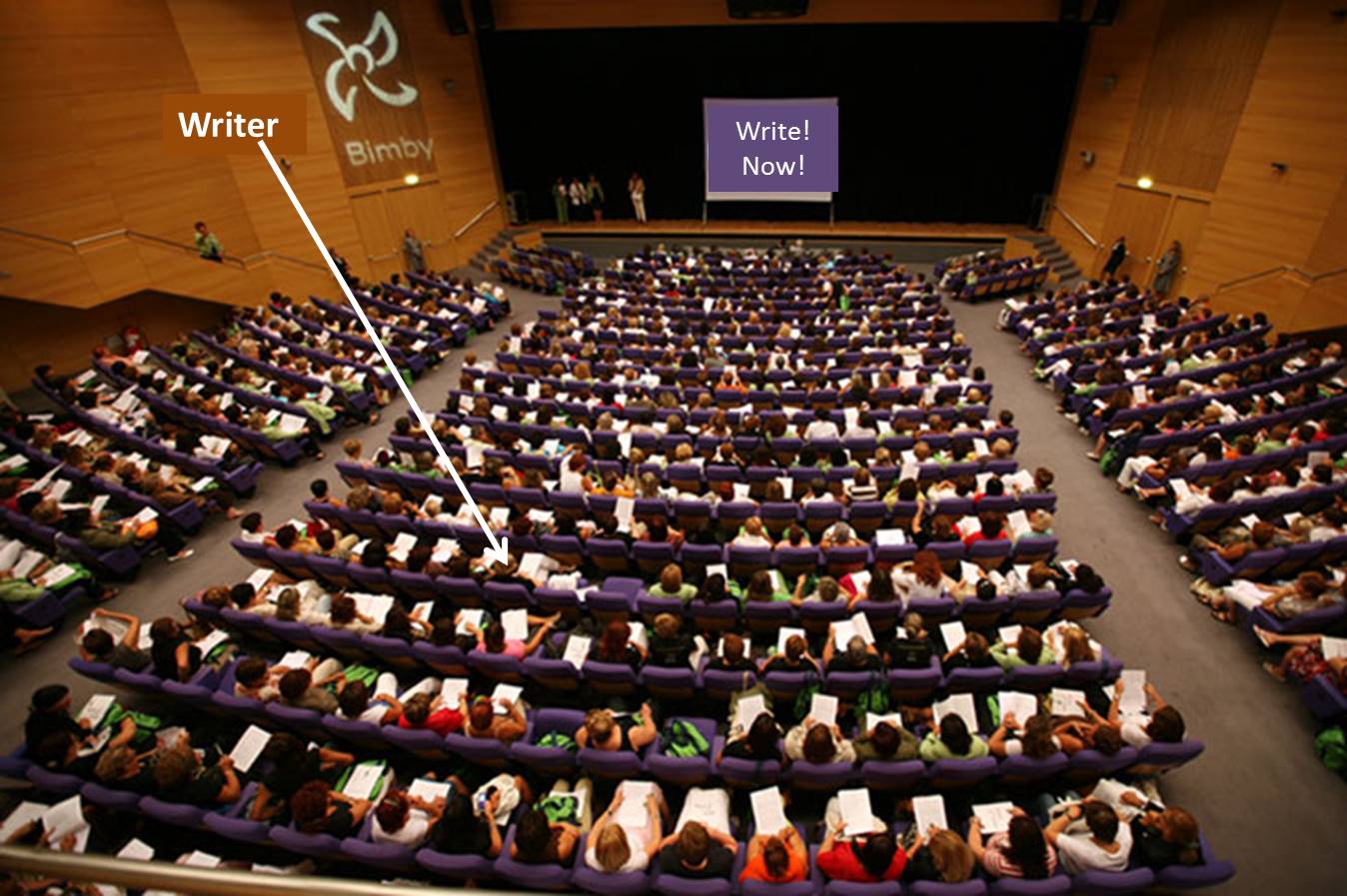
Conference

All of this information and guidance has been invaluable to helping me understand my craft. But for all those thousands of hours of effort, I’m really not sure that any of it has helped me be a better writer.

In truth, I think there are only really two things you need to do to be a better writer:

  1. Write
  2. Share what you’ve written

Unless you’re willing to write, write some more, write yet again, and then when your body has given up the ghost with exhaustion, write again, you will never get better. All of the academic training and guidance in the world will not make you a better writer if you are not willing to write.

Leonid_Pasternak_001

Writing can be like literally shoving fingers into brain to extract words

But writing is a very insular process, so it is equally important that you share what you have written…with literally anyone: your mom, your partner, your dog, the guy on the subway, the squirrel at the park.

How does the other party respond to your work? Are you communicating well? Do they see, hear, taste, what you see, hear, taste?

I am not asking do they like what you wrote. Personal tastes are just that. Rather, you want to know do they respond to what you’ve written…good, bad or ugly.

Oh, and I was only being half-facetious about the dog and squirrel…try it. You’ll be amazed at what happens.

Because most animals can’t read—I blame the current education models—you’ll be forced to read your work to them…the minute your work moves from visual to aural, a different part of your brain opens up and you hear whether you are affected by your work. Invaluable.
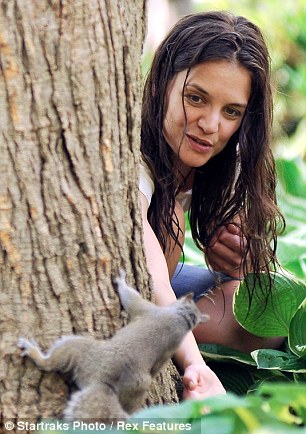
Love the internet for this stuff..."woman talking to squirrel"

Love the internet for this stuff…”woman talking to squirrel”

So read all you want, whether online or in those ancient paper constructs we call books. Attend conferences, lectures, podcasts and classes. I applaud your effort, your drive.

But I reiterate…there are only really two things you need to do to be a better writer:

  1. Write
  2. Share what you’ve written

Good luck.

The job you hate is killing your creative spirit

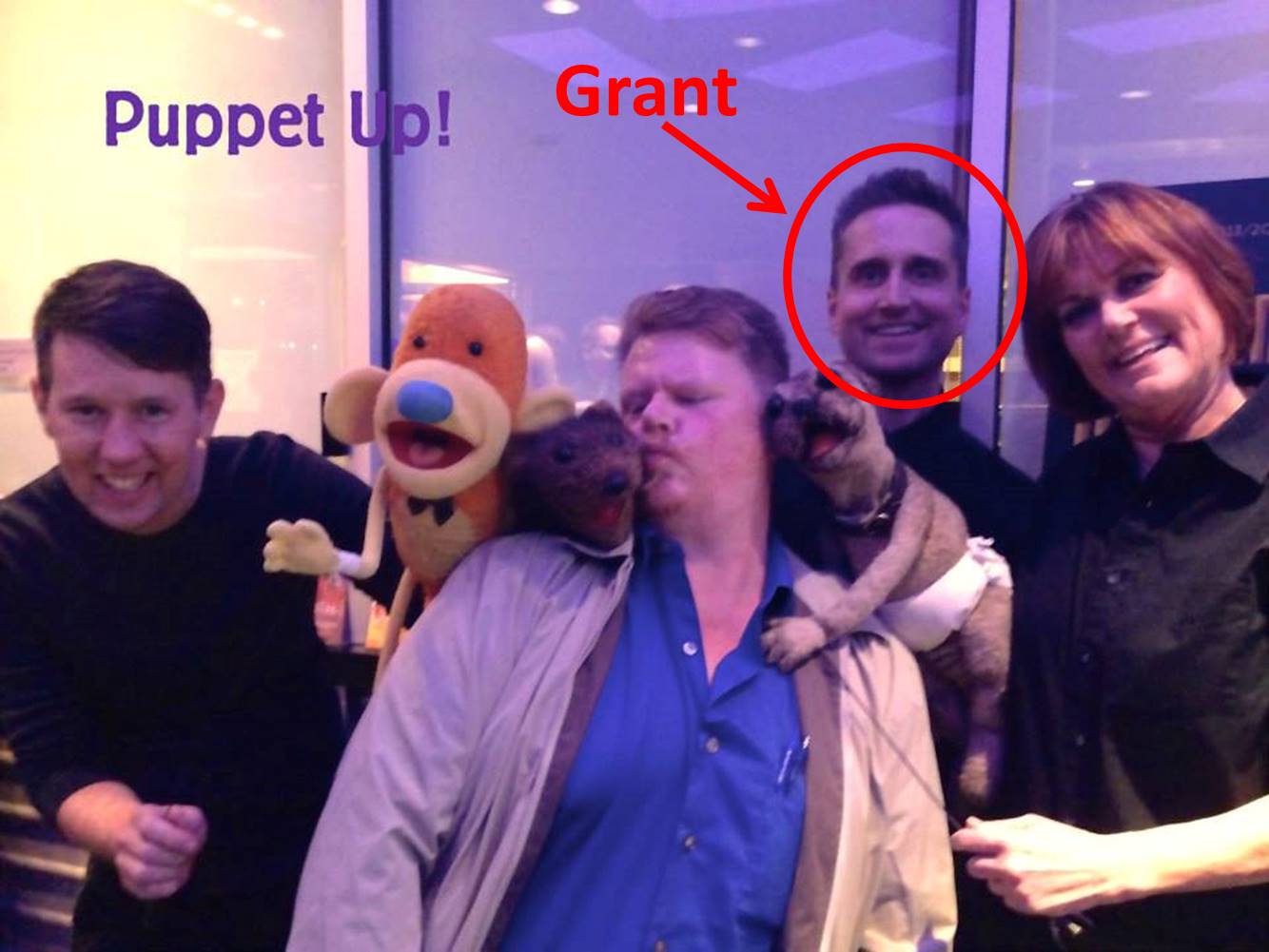
The wonderful Grant and his weasel buddy join me for a post-show photo (also shown Peggy Etra and Brian Clark).

The wonderful Grant and his weasel buddy join me for a post-show photo (also shown Peggy Etra and Brian Clark).

Grant Baciocco is an amazingly talented actor and puppeteer I had the good fortune to meet online and then in person when he came to Toronto with the improv puppetry show PuppetUp! (about which I have raved extensively elsewhere).

Well, aside from his amazing talent, he also has a wonderful creative spirit, both in the sense of what he creates and how he tries to inspire others to be open to their own inner creative spirit. To this latter point, he has a wonderful blog Grantblog: Ruminations & Pomposity that I heartily recommend.

At the beginning of each week, he posts Creative Mondays and today was no exception. Today he talked about “A job you hate”, which I excerpt below:

For years after college, about ten in fact, I worked as a substitute teacher.  It was an okay job, certainly flexible enough and I was making money, but by the end of those ten years I was starting to burn out because it was not the job I wanted to be doing.  I was good at it and several times I was told I should get my teaching credential because I was such a good teacher.  But deep inside of me I could feel a darkness building up because I was doing a job I absolutely hated.

The moment I made the decision to stop subbing and focus on The Radio Adventures of Dr. Floyd, it felt like a weight was instantly lifted from my chest.  I attempted, for the millionth time, to lose weight and it was actually working (lost 80 pounds).  I was just a million times happier than I was when I was subbing.  And guess what?  I became more creative!  This was the creative boom era for Dr. Floyd, because I was doing something I love.

Grant’s is a lesson too many of us learn very late in life (NOTE: I did not say “too late in life”…it is NEVER too late).

In my case, I was fortunate enough to have a series of occupations I loved for a period…scientist, science writer, media relations, advertising copywriter…but with each, I stayed in the occupation long after I had fallen out of love with the choice. I had to be a certain amount of miserable before I was brave enough to jump.

But two years ago, I completely jumped ship to pursue my true love: story telling (screenplays, novel, sketches, short stories). I’m still not making money off any of this, so I live on freelance magazine writing and ad copywriting. But to Tiffany’s point, it is what I do to eat and sleep under a roof.

If you are fortunate to know your passion—it can take time to figure out what it is—then you must make it happen to find happiness (hunh, “happen” and “happiness”…so similar).

And if you haven’t fully defined your passion yet, go with your gut until you do. Explore the universe of opportunities, until you do. You may not end up the financially richest person on the planet, but you’ll definitely be one of the spiritually richest.

If you don’t want to take it from me, then take it from Grant. Find your happiness and pursue it with everything you have. Despite appearances, you really do have nothing to lose and everything to gain.


You can follow Grant on Twitter: @ToasterBoy

500

500b

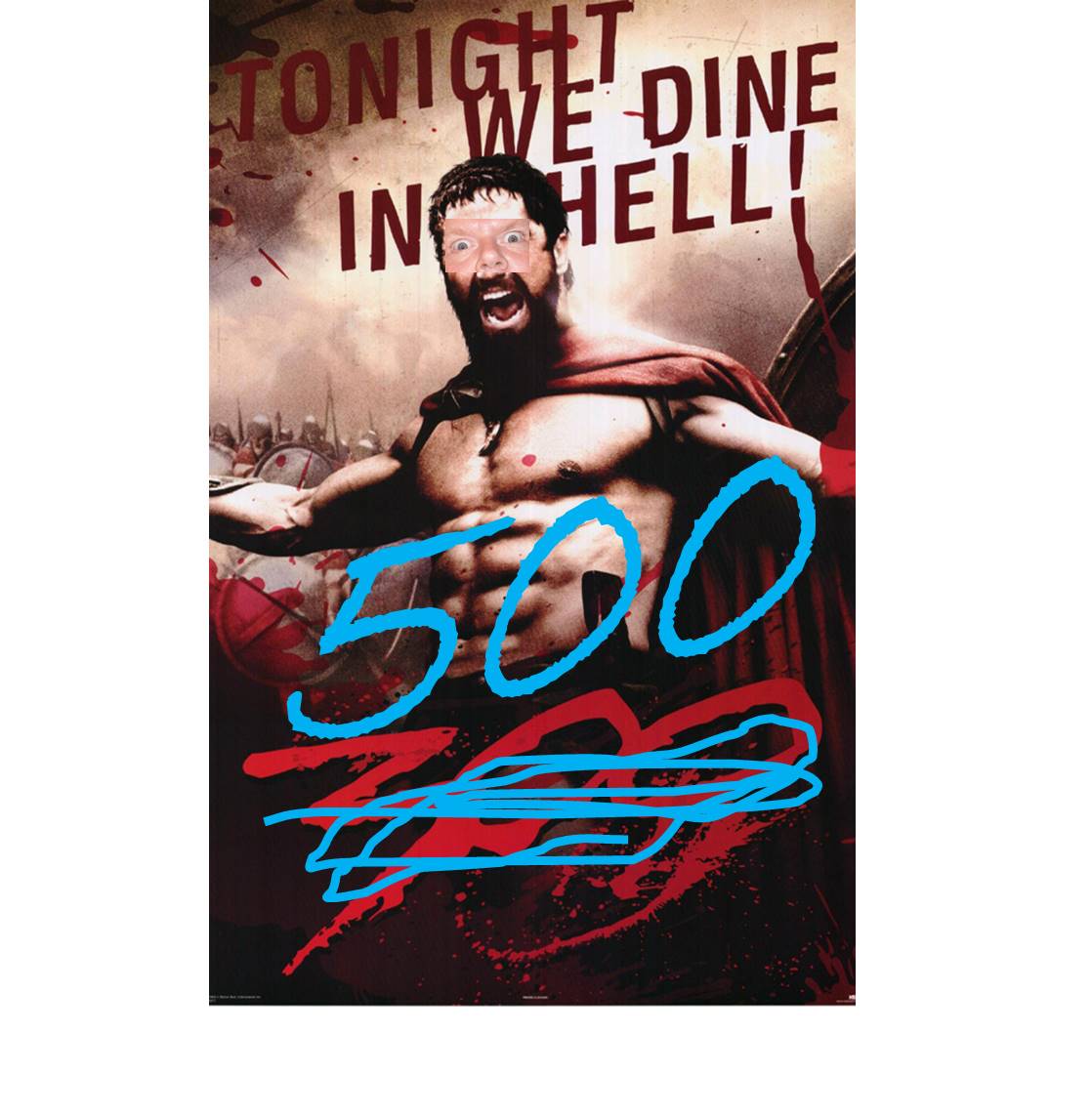
So I have hit the milestone blog post: 500.

For some of you, who have followed me from the earliest days, you are no doubt thinking: “500? Really? Seems like 5,000.” For those of you relatively new to the wonder that is my blog, please note closely the previous statement.

I dithered over what to write for my 500th post, and have decided I’m going to talk about you…well, some of you.

I “follow” quite a few blogs…I read many fewer…and I seek out even fewer. I’m sorry for those I don’t visit more regularly…hours in a day and all that. It’s some of that last group, I want to highlight here…those glorious few who make me stop whenever I see they’ve posted something new.

crows

Filippa Levemarks Blog

The paintings that this woman creates and the themes she explores by mixing media and mixing subject-matter blow me away. Rare is the image that doesn’t elicit some emotion in me. Hers is a style I have seen nowhere else and is worth exploring.


Jack Flacco

To read Jack’s blog is to have no clear idea as to who Jack is, and I mean that as a compliment. Jack takes on any subject it seems, but always in a thought-provoking and welcoming way that makes you want to contribute with a comment. His latest topics have been: monotasking, Veronica Mars, infectious pandemic readiness and phone addiction.


bareknuckle

Bare Knuckle Writer

As the title suggests, Steph Snow is a no-holds-barred writer who likes to talk (or rant) about writing. With generous dollops of humour, she discusses the creative fortunes and practices that torture her soul on a seemingly daily basis. Misery truly does like company.


ionia julian

Readful Things Blog/Julian Froment’s Blog

I list these two blogs together because they are both discussions of the written word—e.g., reviews of books and authors, discussions of book marketing—and because the bloggers (Ionia Martin & Julian Froment) are beautifully connected at the soul (I don’t ask questions about any other forms of connections). Amazing people whose love for words is only surmounted by their love for each other.


Schelley Cassidy Photography

As a photo-hobbiest, I deeply appreciate the craft and skills that other photographers bring to the world. In this case, however, Schelley and I seem to share a greater fascination for the minute rather than the panoramic, as suggested by her regular feature “What is it?” where you only see an aspect of an object and are left guessing as to what that object is.


Ron Scubadiver’s Wild Life

If I couldn’t have my life, I would want Ron’s. A world traveller and freelance journalist, Ron is an amazing photographer, capturing incredible aspects of life in the many places he has visited. I particular enjoy his collections of people photos, often taken at a festival or gathering, which are incredibly natural and inviting.


ned

Ned’s Blog

Ned Hickson is not right in the head. And that’s what I love about him. A journalist in the Pacific Northwest and volunteer firefighter (or latex-coat fetishist…can’t really tell), Ned brings an irreverent sense of humour to everything he writes, earning him several accolades including his own NSA file. Ned also has a book to his credit, which I believe he has to return to the library next Tuesday.


Curnblog

More a collective than a personal blog, Curnblog offers amazing insights into all things film, whether examining an individual film or genre from angles such as sociology, creativity or cinematography. Predominantly the work of James Curnow, the blog is like having your own little film school where you can access new and unusual topics on a weekly basis without the pressure of essays, theses or exams.


There are so many other blogs to which I would like to direct you, but I am happy that you made it this far down the page. Perhaps for my 1000th blog post!

My gratitude for your patience and enduring interest.

post-milestone-500-1x

charACTer

Anyone writing stories NEEDS to read the blog post by Chuck Wendig listed below!

http://terribleminds.com/ramble/2014/06/03/just-what-the-humping-heck-is-character-agency-anyway/

Wendig blog

Seriously. Please read this!

His pivotal point: “The story exists because of the character. The character does not exist because of the story.”

Too often, I read screenplays where the protagonist is merely swept along like a bobbing cork on a sea of conflict. They merely REACT to the injustice around them rather than ACT to change it. They are the victim of the story.

To my mind, a much more interesting character is one who takes action when presented with conflict and then deals with the repercussions of that action. In some stories (the best ones to my mind), the protagonist is his or her own worst enemy, bringing conflict upon him or herself.

It is not enough to chase your hero up a tree and then throw rocks at him. He can also catch some of the rocks and throw them back, perhaps hitting innocent bystanders who then turn on him as well.

As a reader and viewer, it is through the actions of your characters that we learn their perspectives, their world views, and thus, their flaws. And if your story has a redemptive angle, it is through the complete failure of this world view and the character’s re-evaluation of it that he or she is reborn.

Just like giving the same premise to 12 writers results in 12 different stories, placing any of 12 different characters into the identical situation with identical opponents will result in 12 different outcomes if the characters are real.

Honour that in your writing and honour your characters.

They are called char-ACT-ers, after all, not char-REACT-ers.


Wendig is on Twitter: 

10K views and 1 year later

Hey all,

Just surpassed the 10,000 view mark on the blog (as well as my 1-year anniversary), so I wanted to thank you for looking at the blog, reading the blog, commenting on the blog and recommending the blog.

I am grateful to all of you, but particularly want to thank those who take a moment to post and exchange your thoughts on what I write or photograph. For you to put out that effort means the world to me.

Here’s to the next 10,000 views!

Thank you…Randy

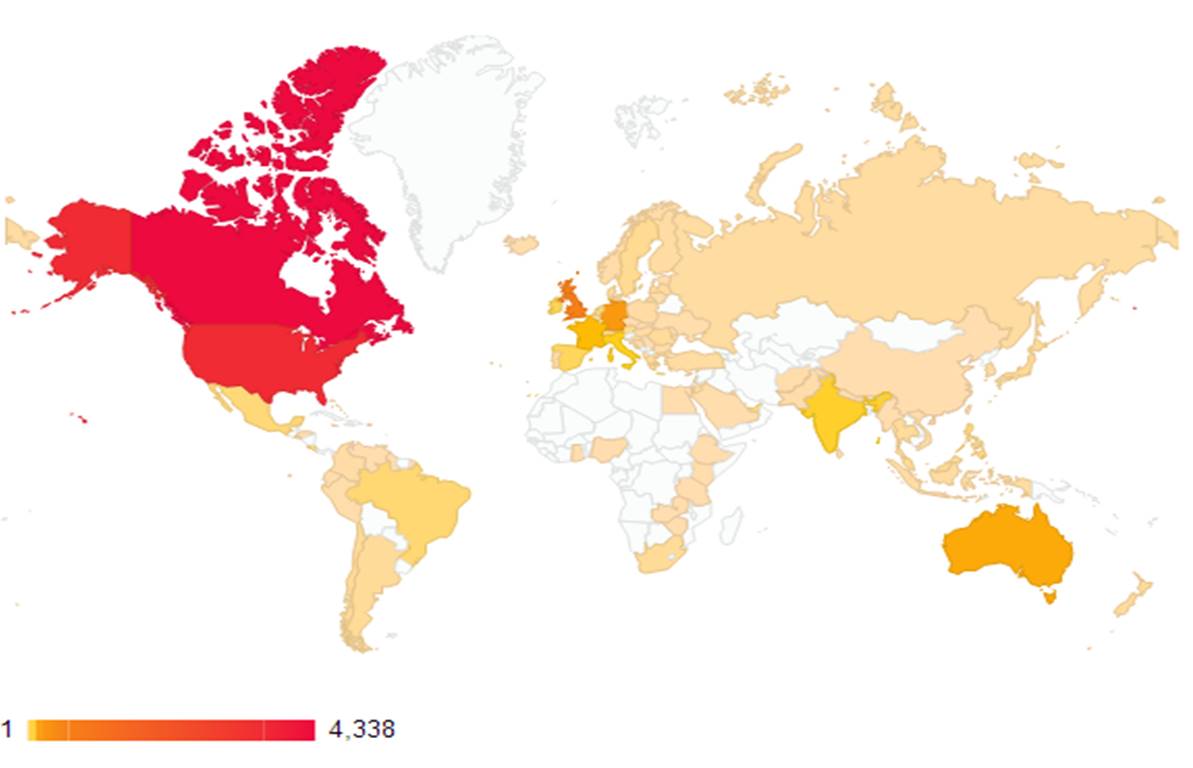
My blog universe as of March 17, 2014

My blog universe as of March 17, 2014

Writing “Line by Line”

Do you want to be a writer but don’t have any ideas?
Are you afraid of looking like a fool?
Don’t have time to complete a project?

Then check out the blog “Line by Line”, a project to create a story one line at a time by anyone who wants to contribute.

No money down! No payments ever! No long-term commitments! No sense, at all!

At “Line by Line”, you’ll read sentences like:
“Without realizing I was doing so, my hand reached out for the vial, and Dorgon hesitated before finally releasing it to me, nervously licking his eyelid.”
and
“Instead, I pulled myself to my feet using his adam’s apple for leverage and pushing his face into the floor, such that I finally had the upper hand.”

Check it out!

This innovative new idea for building a story, line by line, day by day, was hatched by Ionia Martin and Julian Froment.

White space

blank-paper

Earlier today, I read a blog post by my dear friend Marsha Mason, the latest in a series for Why The Face. In today’s post, she touched on the subject of use of white space in writing, whether a screenplay, query letter, whatever.

“The goal of white space,” she explains, “is to never be at the detriment of your story…but to force you to condense, to economize, to pack as much punch as you can into less.”

I agree with her conclusion, but question if the goal of white space isn’t so much bigger.

For the uninitiated, white space is literally the empty space between lines of text and/or images, the complete absence of content which appears white on the printed page or computer screen.

As I suggested in my response to Marsha’s post, I have worked for several years in careers such as magazine publishing, web design, advertising and now screenwriting, and in all that time, I have found that white space is easily the least understood and most underutilized aspect of creativity.

For whatever reason, people seem to believe that an absence of something is an absence of work. Marsha’s comment about the need to be concise and economical in your word choice partly puts the lie to this conjecture, but it doesn’t go far enough.

We live our lives like we fill our pages, with mostly useless things designed to ground us but which, in fact, anchor us and restrict our movement. It is a restriction that we accept voluntarily and without which many of us could not function, or at least fear we couldn’t.

At this moment, I have five browser windows open and yet am ignoring all but one, and only because that one is playing music. And at the same time that I write this post, my mind is on several other posts and some projects I am neglecting.

Nature abhors a vacuum. True. But think of the greater image.

More than 99.99999% of the known universe is actually NOTHING! Only the absence of ubiquitous light keeps it from being literally white space.

In screenwriting, white space is there to let your reader run free with his or her own interpretation of your work. Restrict their thoughts with clutter, and they resist. Prevent their thoughts with too much specificity, and they disengage.

Let your story breathe, as you yourself should. Your readers will be happier for it. And so will you be.

(Image is property of owner; I stole it.)

Communication or Noise – My 200th post

Image

In honour of my 200th posting to my blog, I wanted to get some feedback from you, my readers and guests, about the blog.

I worry sometimes that my eagerness to write, my enthusiasm for ideas and visions, puts some people off. That the messages I try to convey are received and perceived as spam, an intrusive noise in the recipient’s day.

This blog is just one example.

Whereas most people post once a week or every couple of weeks, I am posting almost twice a day on average (200 posts in 120 days). I recently joked with a friend that I had only just discovered that other people post to WordPress, too.

My one solace is that social media outlets like WordPress, Facebook, Twitter and LinkedIn are voluntary. That you—my community—have chosen to follow me, to connect with me, and that should I become onerous or boring, it is within your power to ignore me or disconnect entirely. And some people have. I respect that and I thank them for their time, wishing them well.

Working in advertising and owning several email accounts, I understand the invasiveness of spam, the personal violation of being picked out a crowd by someone only looking for personal gain. I don’t want to be that person. I want to share, not push.

But I also want you to know that what you think matters to me. I will always welcome and respect your feedback and commentary, but reserve the right to determine how best to incorporate it, if I do.

In fact, I have initiated a couple of polls to solicit your direct feedback on the volume and content of this blog. I would greatly appreciate you taking a quick second to offer your thoughts.

You are my community, and I am grateful for that.

Write what you—No!

Image

The adage I hear a lot in writing circles and books is “Write what you know”. By that, people mean write about the things for which you have a passion, because that passion for the subject will shine through your writing and become infectious to your reader or viewer.

To a large extent, I agree with this sentiment, but I think there has to be codicil. When you know how to write, write what you know.

Let me explain with an anecdote.

When I first started writing, I was coming out of a career as a biochemistry researcher who had spent the bulk of my training in protein biochemistry and genetics. That was where my passion lies. So, perhaps as no surprise, when I decided to become a science writer, I focused much of my initial energies on writing about protein biochemistry. I understood the science; I could see the story quickly; I could write about it with some fluency.

Unfortunately, despite or perhaps because of my passion and fluency, I was completely unreadable to anyone who wasn’t already a protein biochemist. I wasn’t speaking to my audience in terms they could understand but rather in terms I could understand. To a greater or lesser extent, I might as well have been writing in Klingon, which I suspect would have given me a broader audience.

When I finally realized what was happening—thanks to all of the people who beat me about the head—I made a pact with myself. Until I felt that I could really tell a story, I would do my best to avoid writing anything about that at which I was most expert. I had to become my audience: the relative non-experts.

About a year into writing about topics I had to research and for which I had to ask potentially stupid questions, my writing had matured to the point where I could go back to my area of expertise and approach it in the same way. I had finally arrived.

I think the same holds true for any kind of writing, whether news, novels, screenplays, blogs.

Until you are capable of telling a story that your audience can decipher, and more importantly wants to read, you are probably better served to stay away from the topics you know best. To do otherwise means running the risk that you will leave out the “obvious” and the “well, yeah” that you know in your bones, but that could be vitally important to an audience member trying to understand why certain facts or behaviours in your story exist.

Give yourself—and by extension, your audience—a chance to learn your story, to experience it at a visceral level. As you develop your story, you’ll likely find yourself asking questions of your plot or characters that your audience would ask. You want your audience to think, but you never want them to have to research. Until your work becomes part of a school curriculum, it shouldn’t require a study guide.

It is easier to remove the truly superfluous common knowledge or understanding later than it is to convince yourself that the information you need to add isn’t common knowledge.

When you are ready to tackle it, the subject(s) for which you have passion will still be there. Consider them the reward for all the hard work you did up front.

In a future post, I hope to discuss a flavour of this topic: “Based on a true story”.

Always Here If You Need Me Award?

Image

A wonderful moment this morning as I logged into my blog and learned that good bloggo-patriot Julian Froment had nominated me for the Always Here If You Need Me Award.

As Julian explained, the award was designed to celebrate the love and support you get from those special few in the blogosphere who not only appreciate what you post but also make an extra effort to comment and provide support and feedback.

I am touched that Julian feels this way about me, and likewise, greatly appreciate his support and enthusiasm for my blog.

The rules of the award are:

  • Post a picture of the award somewhere on your blog.
  • List 5 things that make you happy.
  • Nominate 3 people who have always been there for you, who have always provided support and enthusiasm for your efforts, and to whom you feel you could turn when you’re dealing with challenges. Comment on their blogs and let them know of the nomination.

So, here we go.

Happy-time station

  1. Laughter…it may seem a tad obvious, but I find too much time without experiencing laughter (mine or someone else’s) causes my brain to wilt
  2. Physical contact…I have become a much more tactile person in my later life, so merely making physical contact with objects or people helps ground me and gives me a sense of connection with my environment
  3. The smell of a used book store…the must of a second-hand shop is intoxicating for me, taking my mind to not just the myriad stories within the pages but also of the books themselves…from whom are they second-hand?
  4. Beer…a perfectly pulled pint is a thing of beauty; to envelope myself in the dark chocolates of a magnificent porter or to watch the bubbles whorl in a pint of Guinness or Boddington’s is sheer poetry; and of course, the creaminess of a Kilkenny as it rolls over my tongue and bathes the taste buds in silk.
  5. Sounds of Nature…living in a concrete canyon, I do my best to find ways to envelope myself in the sounds of nature, whether in local parks or by distant travel; it is music to my being

Image

My supportive triptych

I would of course love to nominate Julian, but that sounds like a feedback loop waiting to happen, so at the risk of nominating many of the same people as previous:

  • Shareen Ayoub (A Day in the Life of Shareen A), whose irreverent sense of humour beautifully parallels mine and who freely engages with me through our blogs or on Twitter
  • Ned Hickson (Humor at the Speed of Life), who has become a drinking buddy in all but drink, Ned and I have engaged in a few comedic one-upmanship battles where he has a bit of a geographic advantage (next one starts at 9am EDT, Ned)
  • Victoria Crouchman (Victoriously), who was a friend long before either of us entered the blogosphere but who has also been an ardent champion of my efforts and loyal supporter as I face life’s challenges; her blog is an inspiration to keep moving forward

Image

(Images used without permission, because that’s the way I roll.)