O Canada, why the fuss?

o_canada_4

I am old. Well, okay, not old so much as crotchety. I like things how I knew them, and I get cranky when I have to learn a new way when the old way was perfectly acceptable—if only to me.

Thus, as with so many Canadians, when I heard that The Tenors had altered the lyrics of Canada’s national anthem at the MLB All-Star Game last night, I was initially outraged (see video).

But as the evening wore on, and I watched diatribe after diatribe on social media, I began to realize that in many ways, this was a litmus test on what it is to live in Canada, a nation that at the best of times, struggles to define itself if only because it is constantly evolving.

In my life time, we have had two official changes to the English lyrics for O Canada.

Three decades ago, it was a reversion of sorts from “O Canada, glorious and free” to “God keep our land glorious and free”. As a then anti-religious zealot, I was outraged that you would introduce religion into my anthem, being completely ignorant of the fact that it had been there in the beginning (as makes sense for our history). I am less a zealot today, but continue to sing the God-free version.

More recently, Canada’s Parliament has debated rewriting the refrain “in all thy sons command” to “in all of us command”, suggesting that women are invested in this country as well as men. I did not rage against this, but many Canadians did, most ignorant that this change too is something of a reversion to an older lyric “dost in us command”.

My point is that the song, like the nation and its people, continues to evolve.

Jazz

A nation for all

And while we as individuals may only wish to accept the version with which we grew up or alternatively, the “official” version enacted by Parliamentary vote, Canadians as a populace have decided to live in a nation that is open to change, open to new views on the world, open to rediscovery of our history as a nation.

My instinctive reaction to last night’s events at the All-Star Game was to cry “Shame”, and if the anthem was used to spread hate or fear, I might still be justified in that cry. Rather, it was used to spread love and acceptance, and what (or so we hold) could be more Canadian?

Perhaps this is too much. Perhaps I am being over-indulgent. But if your heart is pure and you sing the song with pride, what do I care what lyrics you sing? Sing about the Canada you know and love, and sing it loudly so we can all share in that love.

O Canada early years

See also:

Full history of “O Canada”

How the Tenors struck out with O Canada at the MLB All-Star Game

Bombast of Victoria Day – part two

As promised, a few more shots of colour and fire from Monday’s Victoria Day celebrations along the eastern Beaches of Toronto.

See also:

Bombast of Victoria Day – part one

Bombast of Victoria Day – part one

Although not officially summer, the Victoria Day Weekend (aka May 2-4 weekend) signals the beginning of warmer weather and summer breezes in much of Canada. It is the weekend that everyone starts to plant their gardens, and when people abandon the big city for cottage country.

It is also the first of two weekends of fireworks (the other being July 1, Canada Day), and I am fortunate enough to live down the beach from one of the biggest fireworks shows in Toronto. Here are a handful of shots (blasts) from last night.

An-anthem-a: A sporting nation sings

Brooklyn Nets v Boston Celtics

Copyright 2014 NBAE (Photo by Brian Babineau/NBAE via Getty Images)

This past weekend, Toronto played host to the NBA All-Star Game and among the dozens of events, Canadian recording artist Nelly Furtado was asked to sing O’ Canada. In keeping with her musical stylings (I believe), Ms Furtado decided to sing an interpretation of the song that was slower in tempo and a bit more soul-searching than its typical performance, which annoyed a few people.

Now, I am a sing-it-straight person. I believe national anthems should be performed as intended (let’s not get into changing the lyrics). Thus, when someone opens up with a bit of musical show-boating, I get annoyed. (Call back to Roseanne Barr singing The Star Spangled Banner.)

But you know, that’s my problem.

The controversy, however, opened up another question for me:

Why do we play the national anthem(s) at sporting events?

I could understand an argument for truly international events like the Olympics (played when the winner is chosen) or World Cup (do they play anthems here?), where nationalistic fervor is part of the equation.

But what, for example, about a hockey game between the Toronto Maple Leafs and Chicago Blackhawks is particularly nationalistic?

This question is especially germane when you consider the many of the players that perform for these teams are from countries other than the United States and Canada (including Russia, Sweden, Czech Republic, Slovakia, Finland, etc.), and play in mixed squads.

We don’t play the anthem(s) before live theatre. We don’t play the anthem(s) before sitting down to a meal.

We don’t play the anthem(s) before our hair or dental appointments. We don’t play the anthem(s) before a meeting of the UN Security Council.

So why do we play them before regional/local sporting events?

hockey-canada-national-anthem

(Photo by Jana Chytilova/NHLI via Getty Images)

I love my country. I like my national anthem. I really don’t care if we play it at sporting events.

Nudes and Nature

Debbie Boostrom

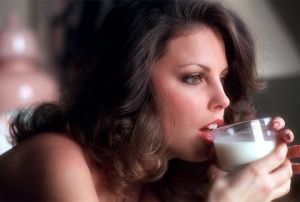
If ever there was a campaign for “Milk, it does the body good”

A thousand years ago, when I was a much younger man, I found myself in possession of an issue of Playboy, where I discovered a lovely young woman named Debbie Boostrom.

I was smitten (let’s agree to leave it at that).

I remember sharing my discovery of Ms. Boostrom with some school friends at a hockey rink (where all good Canadian things happen). And at some point, as we admired her physique, I found myself saying aloud:
“Man, can you imagine what she looks like in a bathing suit!”

That my friends chose to remain my friends is a testament to their patience…or possibly to their respective inabilities to make friends.

In any event, I too joined them in shock at the idea that it would be good to alter such loveliness…and especially cover it.

Well, a thousand years later, I find myself in similar shock, but less with nudes than with nature.

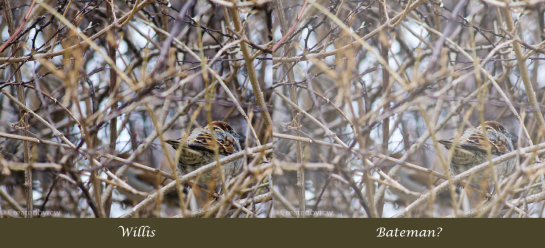
Recently, on the way to a hockey game (see what I mean), I took an amazing photograph of a sparrow in a thorn bush.

SONY DSC

Given my fascination with nature, my initial inclination is to focus in on the bird, but in this case, I decided to keep the image relatively wide, the bird blending in beautifully with its surroundings.

I was smitten (let’s agree to leave it at that).

As I was discussing the photo with a friend earlier today, I commented that the photo would make a great painting. If I put a wash over it, it might look like something wildlife artist Robert Bateman would paint.

Batemix

Just assumed Bateman was born on a foggy day

Hunh.

Yet again, I want to take something I smit (that’s a word, right?) for its natural beauty and alter it…even cover it. Such delicate detail and I want to blur the lines.

Maybe this is some deep-seated desire to mar the things I love to spare myself the pain of inevitable rejection…although Ms. Boostrom has reportedly passed on and there must be 439 other sparrows in that ruddy bush.

Perhaps I am a closeted Puritan who believes there is evil in anything that brings pleasure. Nah, my love of hockey and bacon, and my Jabba the Hutt-like lair (and body structure) suggest otherwise.

Or maybe I’ve stumbled onto a hybrid art form.

Yes, you too can Batemanize your family portraits!

I don’t know…maybe I’m just weird. I should go to the rink and think about this some more.

To wash or not to wash?

Blood red poppies

Remembrance Day

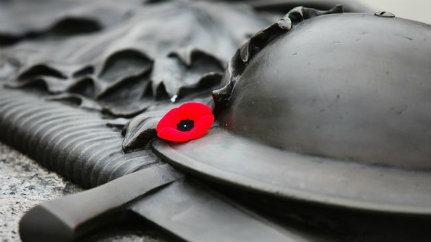
Every year, as October transitions into November, I go in search of a new red poppy pin in honour of Remembrance Day on November 11. It is a tradition in my family and across Canada to append the crimson flower to our lapel as a reminder of the bloody sacrifices made a century ago.

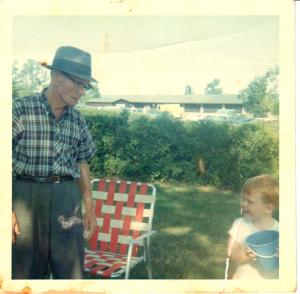
I also wear it to honour my great-grandfather Francis Sowden, who came home from the Great War, unlike so many others, including siblings on my great-grandmother’s side who are sadly just names without faces to me so many years later.

I am one of few in my generation to have known Francis Sowden.

I am one of few in my generation to have known Francis Sowden.

Recently, I have heard people complain that the commemorative symbol of the poppy has been co-opted by those who want to hail it as a symbol of the glory of serving in the military, if not actually the glory of war itself. This bothers me.

I greatly thank all those who have, do and will serve in the military both in Canada and abroad, many risking their lives to keep others safe. Although I was an unthinking idiot in my youth, I have learned that these people, while frail humans, are noble titans who see conflict as a last resort.

For all that nobility, however, the poppy must remain a separate symbol.

A painting from the Royal Ontario Museum that haunts my dreams. (sadly, I cannot remember artist)

A painting from the Royal Ontario Museum that haunts my dreams. (sadly, I cannot remember artist)

The poppy reminds us of the horrific toll of war. It is a crimson stain upon our lapels that taints us all and reminds us of the fragility of the peace that surrounds us. The bloody hue taunts our civilized smugness with a warning of how easily we can fall into the pit of violence, whether as individuals, communities or countries.

While we wear the blood red poppy to honour the fallen of World War I, we also wear it as a badge of shame that the war ever took place, and that the war to end all wars wasn’t.

This dual purpose must never be diminished. We must strive to be better.

And next year, as October transitions into November, I will go in search of a new red poppy pin in honour of Remembrance Day on November 11.

I will never forget.

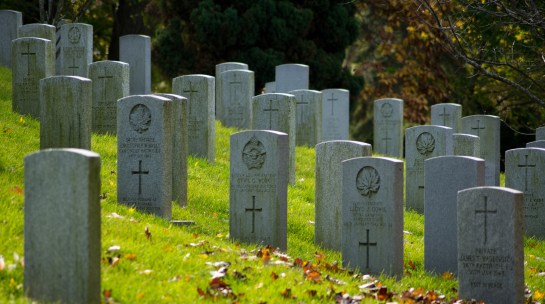
A cemetery near my home reminds me of the sacrifices

A cemetery near my home reminds me of the sacrifices

To vote, or not to vote…that is your decision

I used to think that not voting was a valid form of political protest, but I now understand that it is only the first step.

man-putting-ballot-in-a-box-during-elections-in-canada

If you choose not to vote, I respect that. But I challenge you that it accomplishes nothing.

If you choose not to vote as a protest, I presume that you want to change the system in some way. And yet, you have offered no alternative.

The election will go on whether you vote or not. The raccoon that raids my recycling bins won’t vote either.

When people protest through marches, sit-ins or hunger strikes, they make themselves visible. When you don’t vote, you remain largely invisible. So if you’re not going to vote—a right I voted to defend, in some ways—then do something.

Hold a “we didn’t vote” rally. Gather other non-voters and raise your voices in protest. Offer your own platform; suggest an alternative to the current electoral system.

If your idea is viable, you might gain support from voters. You might actually create the change you seek.

But if you simply do not vote, then you are not only invisible to the rest of us, but you remain complicit in the system you despise.

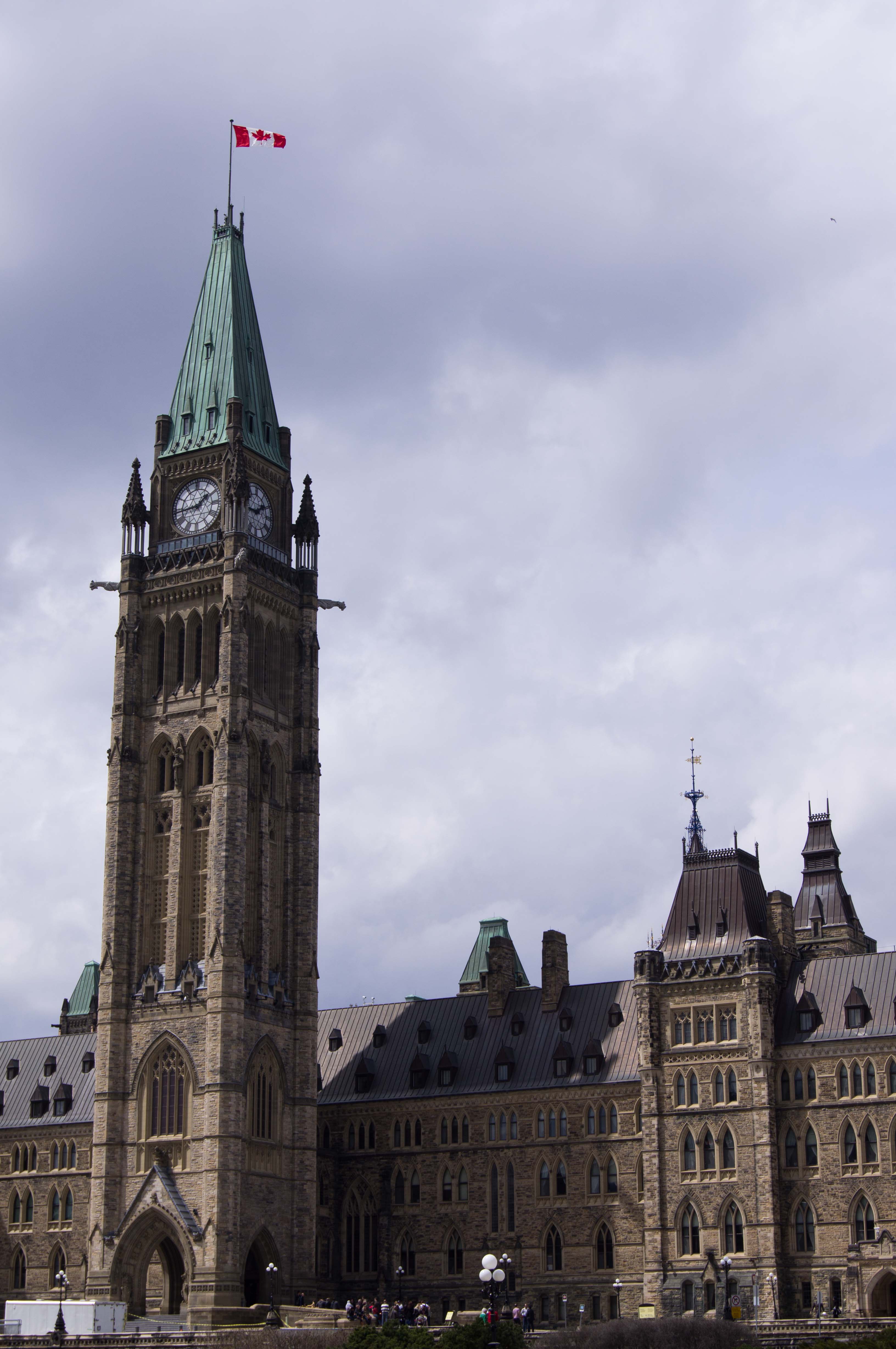
Parliament Hill

Autumn in the backyard

As I was putting trash into the bins behind the house, I was caught by the profusion of colour pouring down the wall at the back of the yard. What is usually variegated blanket of green had exploded into a rainbow.

Marlies season opener

After a long and dreary hockey-free summer, I was delighted when my beloved Toronto Marlies started their new season at Toronto’s Ricoh Coliseum. The visitors were the Manitoba Moose.

Because of other plans on Sunday, I had my camera with me for the game. I was entertaining family at the game, so I did my best to only take warm up shots, so to speak.

Next series is Sat. Oct. 17/Sun. Oct. 18 vs the Albany Devils. Both games start at 3 pm.

Race in writing

One race, many peoples (from mediadiversified.org)

One race, many peoples (from mediadiversified.org)

I’ve spent a few months now reading dozens of teleplays, and one thing that stood out as a new trend for me was the phrase “mixed-race” when describing a character.

“Attracted to the noise, JOANNE (27, tall, mixed-race) looks up from her laptop. A smile blossoms across her face.”

Now, lest anyone take offence, I really don’t care to what race a character is attributed. Nor do I care if the character has parentage of different races or even different species (looking at you, Spock).

Instead, what struck me was that in only one of these teleplays did the fact that the character was mixed-race in any way influence the story and/or the character’s worldview. Which begs the question:

Why mention race at all?

In a screen- or teleplay, you should only be telling me things I need to know to understand the story or interpret a character’s behaviours and attitudes. Unless being 7 feet tall means a character can do something no one else can do and the plot in some way turns on that ability, then I don’t need to know the character is 7 feet tall.

Likewise, if a character is a Korean-Italian and the only thing this fact influences is possibly his or her name, who cares? Where are the subtextual or textual influences of this genetic melange?

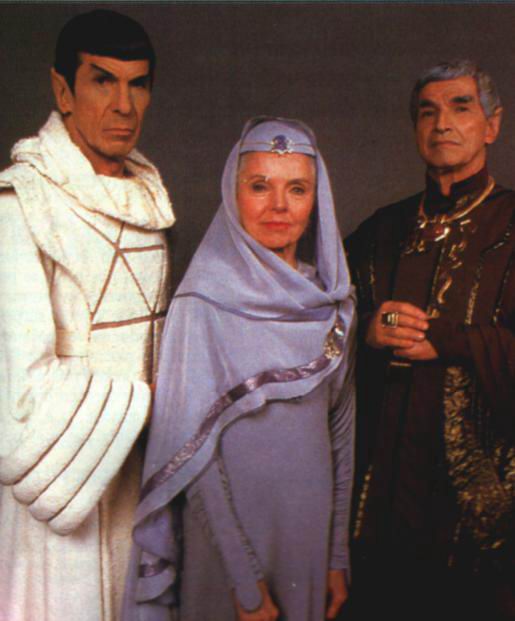
Spock was every bit his warring human and vulcan sides

Spock was every bit his warring human and vulcan sides

In the case of Spock, entire stories were built around the internal and sometimes external conflicts arising from his mixed heritage. He fought constantly to suppress his human side and that influenced his relationships and reactions with everyone else.

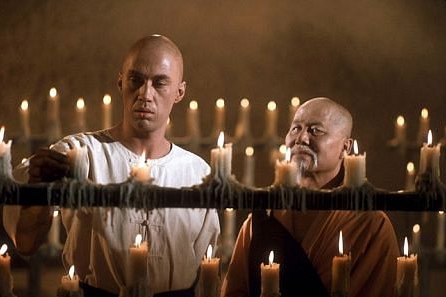
In the single teleplay I read where the character’s mixed lineage did matter, the character struggled with being treated as an outsider by both communities. Thus, in being ostracized by both cultures, she built the defence of being a rebellious loner and responded to her world thusly.

American father, Chinese mother, Kwai Chang Caine lived conflicting cultures

American father, Chinese mother, Kwai Chang Caine lived conflicting cultures

In none of the other teleplays was anything like this even remotely the case. In none of those scenarios, did the writer use the choice to inform the character. In fact, in almost every mixed-race teleplay, the writer never specified what races had been mixed.

That’s how unimportant this fact was to these writers. And there’s the real shame.

Although I don’t know what the writers intended by making their characters mixed race, I suspect it was simply to make themselves look socially conscious.

What they achieved, at least in my eyes, was the exact opposite.