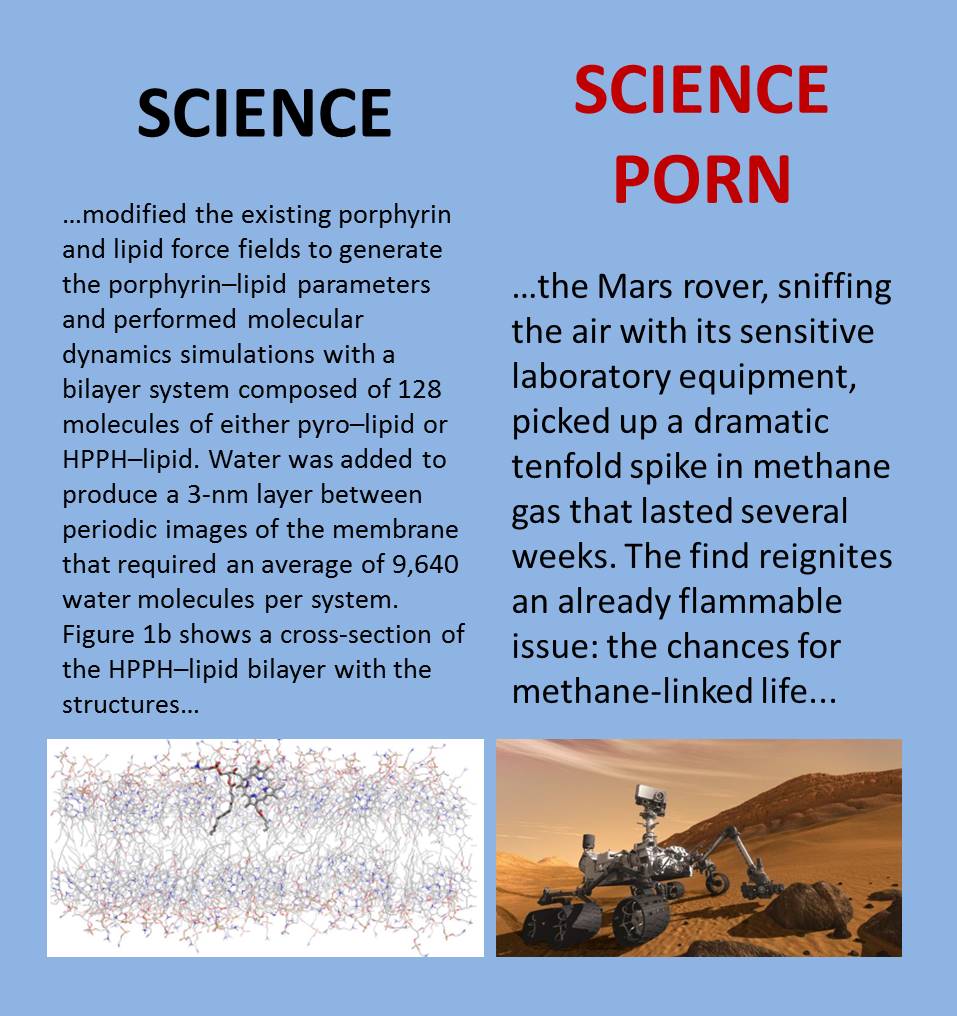
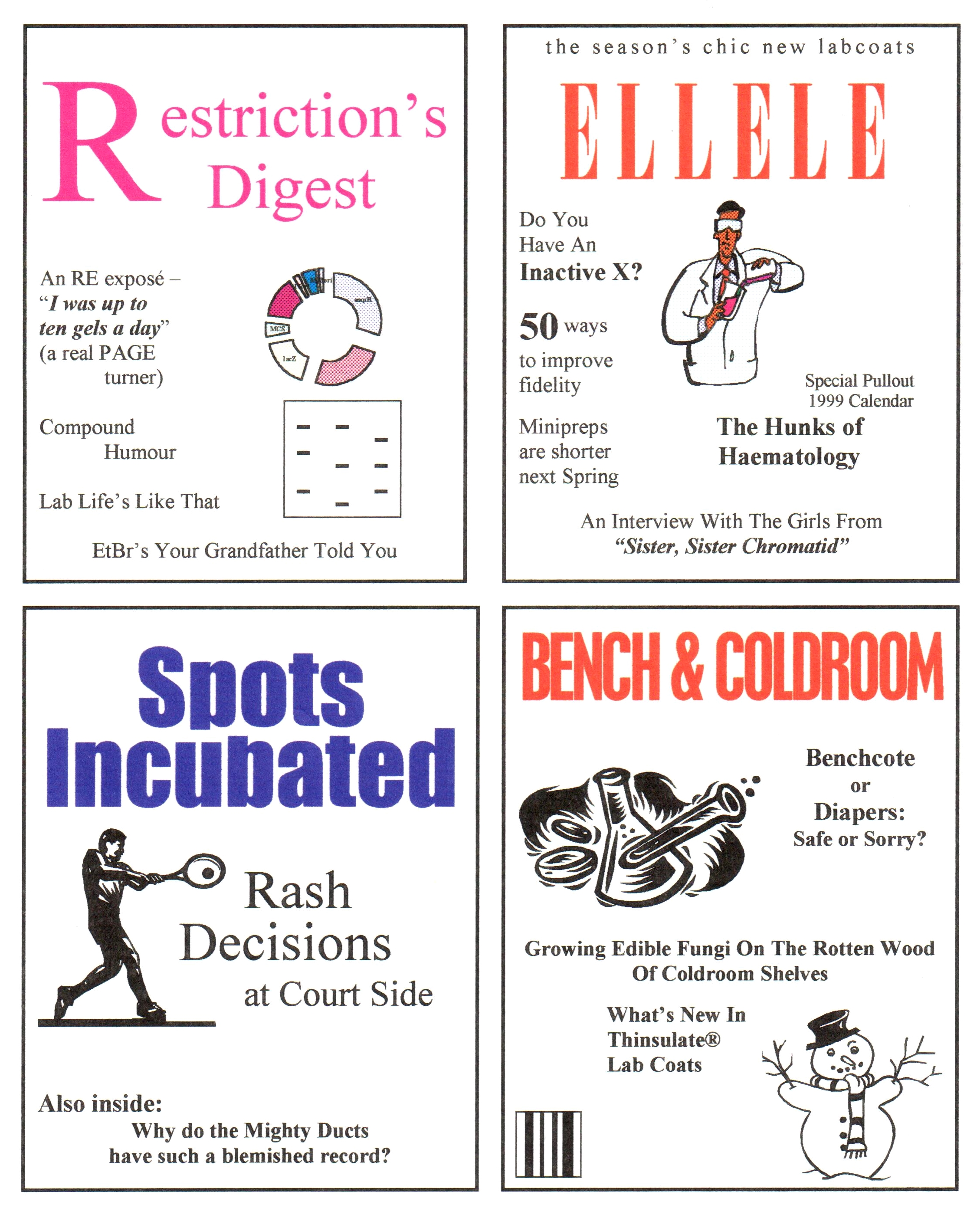
Illiterate in 3 languages…all English

canadianEnglish

“That which we call a rose, would by any other name, smell…”

William Shakespeare, Bad Line Break theatre

As many of you know (or have quickly surmised), I am Canadian, and more specifically, Anglo Canadian. Unto itself, that’s a pretty cushy thing to be in this country.

In choosing to live as a writer, however, I added an otherwise unnecessary twist to my life—I forced myself to learn English as a second language.

Wait. Didn’t you just self-identify as an English-speaking Canadian?

Yes, I did. But I’m a Canadian English-speaking Canadian.

And one of the first things you realize when you become a Canadian writer is that you will probably starve for lack of work.

Now, I’m not knocking Canadian writing, whether fiction, for film and television, journalism, what have you. It is easily some of the most beautiful writing available in the English world. But it is often written to (if not for) an incredibly small market, and opportunities to succeed are therefore often few and far between.

If feels like 8 writers encompass the entire Canadian television landscape. And name a Canadian movie. (I’ll wait.)
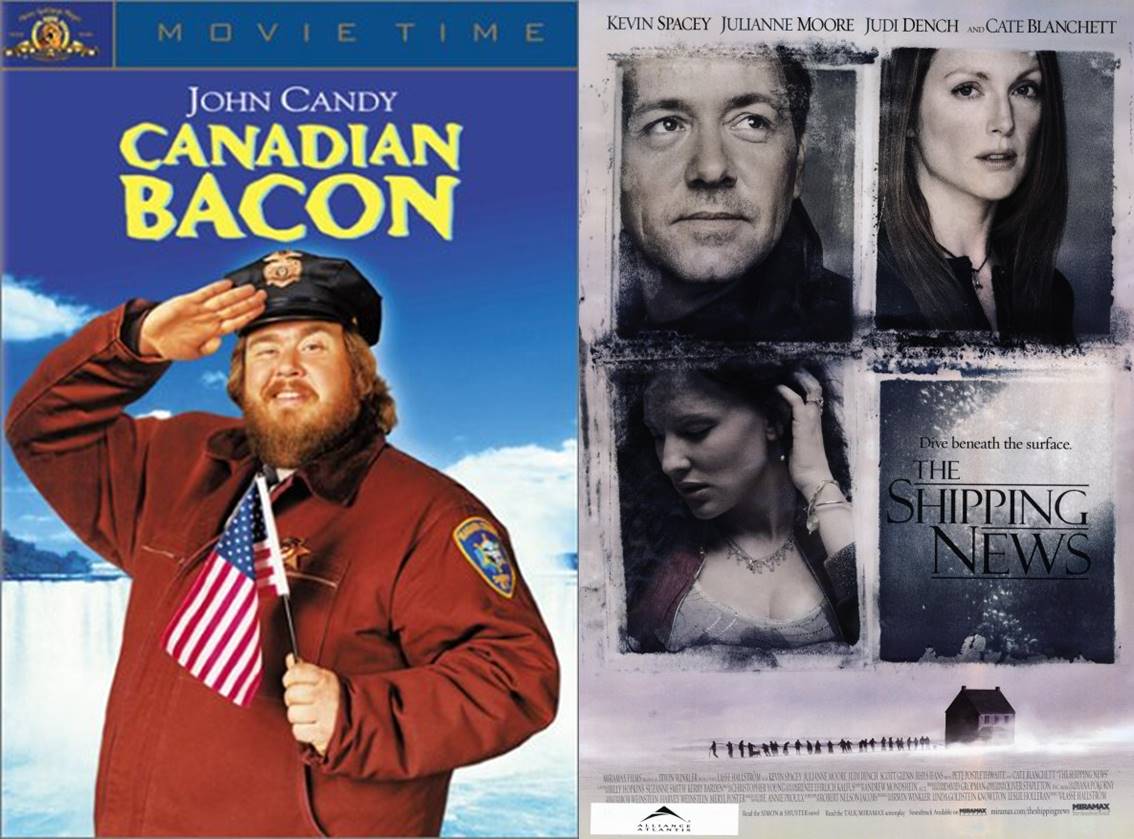
Nope and nope.

Nope and nope.

Okay, now name one not directed by David Cronenberg or Denys Arcand.

I was once offered a job as the Editor of a Canadian biotech magazine—yes, I used to be even more nerdy—for $30kpa. And yet, already on my resume was a job working for an American biotech mag that started around $65kpa.

Bottom line is thank goodness for my passion to write, because my passion for money has taken a beating.

(Side note: This was a choice I made and for which I take full responsibility. I don’t mean this to be a “life is so unfair” rant.)

What this has meant, therefore, is that to make it as a writer, I have had to learn English as a second language. In this case, American English.

Recently, the BBC published a short article that tried to explain Canadian English within the context of its British and American counterparts. Rightly, the author noted that the differences were more than a matter of spelling (e.g., centre v center; honor v honour). Rather, the differences also manifested in idioms, speech patterns and word choice.

As long as everyone's having fun

As long as everyone’s having fun

As with most Canadians, I had a bit of a leg up on learning American as our proximity to the border (mere kilometres and even fewer miles) means we are inundated daily by American film and television programming. But I also had the additional benefit of having been married to an American, and a Southerner to boot (more on “boots” later).

Where I would recommend taking the 401 across north Toronto, Leela would suggest taking 66 from Fairfax into Washington. Luckily, we were both practical enough to set aside arguments about whether we needed to go to hospital or the hospital.

All this to say that although the differences between Canadian English and American English can be subtle, they can easily explode before the eyes of the unsuspecting.

Writing for an American biotech magazine and working with American editors was something of an ESL boot camp. And over the intervening 15 years, I like to think I honed my American skills to the point where you suspect I am from Minnesota or Western New York (hello, North Tonawanda).

In fact, I’m going to rely heavily on my multi-Angloism as most of my writing, whether for money or in my screen- and novel writing, is aimed at American audiences. And although my primary goal remains writing the best story, my secondary goal is writing it in the most innocuous way. I don’t want my writing to “read” Canadian.

Versus

Truth be told, I don’t want my writing per se to be noticeable at all. If it is, I’ve taken the reader out of the story.

This is not to say that I want my stories to be bland, but rather that I want all of the art to be in the story itself, rather than the more mechanical aspects.

In my Canadian stories (so far a sitcom pilot and screenplay), which are set in Canada, involve Canadians and target Canadian audiences, I write Canadian. For pretty much everything else, I write American.

Should I start targeting British audiences, then I’ll spend more time learning British English, and make fewer spelling changes.

In the meantime, I’ll continue to bounce back and forth between the multiple Englishes like a character out of Monty Python.

What’s it aboot?

Anyone can make fun of how Canadians communicate (or don’t). Goodness knows Canadians do. But I have to admit that I struggle with the whole “oot and aboot” phrasing that American audiences in particular seem to see as a Canadian phrase.

It’s not that I think we pronounce these words correctly so much as we don’t say “oot”. Rather, we say “oat”.

As I mentioned, I was married to a Southerner, and one day, we had a lengthy conversation about the word “South”. Try as she might, Leela could not get me to pronounce the “ou” without it taking on a surreal emphasis akin to “owwwwwww”.

Instead, I would say “Soath”. And instead of “about”, I would say “aboat”. And as I made a point of listening closely to Anglo-Canadians speak, I never heard a single one say “aboot”. It was always “aboat”.

That being stated, I will totally cop to “eh”. It’s us. End of story.

Inside definitely Out (a review)

poster

Earlier today, I had the opportunity to see the latest Pixar movie Inside Out in the company of one of the film’s writers and its story supervisor Josh Cooley (a very nice man). And aside from receiving a lovely lecture about story development at the famed animation house, the connection afforded me an opportunity to appreciate the movie much more than I did on simple viewing.

To briefly bring everyone up to speed, Inside Out tells the story of the emotions that rattle around inside the mind of 11-year-old Riley as she struggles with a move across the country. Although we are introduced to 5 main emotions in Riley Headquarters (get it?)—Joy, Sadness, Anger, Disgust and Fear—there is no mistaking that Joy is numero uno in this space.

https://www.youtube.com/watch?v=zkBSRadEv8A

Joy (voiced by Amy Poehler) sucks the oxygen out of any room she’s in and proves that even the best intentioned of assholes is still an asshole. Her goal in life is to make every moment of Riley’s life a happy one and is not worried about shoving aside the others (ever so happily) to ensure that.

But where Joy has developed a respectful détente with Anger (Lewis Black), Disgust (Mindy Kaling) and Fear (Bill Hader), she firmly but gently has no use for Sadness (Phyllis Smith), practically ostracising the poor creature to the periphery.

With the upset of the move from Minnesota to San Francisco, though, Sadness seems to want to be more involved and in a fracas with Joy, the two get sucked out of headquarters and into the long-term storage hinterlands of Riley’s brain.

At this point, the story basically turns into the Odyssey as the two emotions struggle to return home before Riley falls completely apart at the hands of the others. (To say much more would be to offer spoilers.)

Joy and Sadness wander the hinterlands of long-term memories

Joy and Sadness wander the hinterlands of long-term memories

The challenge I had was in trying to figure out exactly at whom Pixar was targeting the movie.

Superficially, this is a pure kids movie (ages 6 to 10, maybe), unlike many previous Pixar concoctions, which had elements for both kids and adults. Inside Out doesn’t have the depth of Toy Story or The Incredibles to truly speak to adults, much as the most mature 11-year-old isn’t ready for the adult world.

I’m not saying there aren’t adult-focused jokes interspersed throughout the film, but rather exactly that. They are interspersed, like small granules of sugar designed to feed the parents accompanying the kids to the theatre.

Up talked about loss and aging

Up talked about loss and aging

There is no real adult storyline to this film to touch adults as there was in Up or Wall-E. Instead, the film has sweet, adorable moments of baby bums and first goals that might tug at a parent’s heartstrings but never engage the soul.

But as a friend suggested, it is not strictly a kids flick either because it touches on esoteric aspects of the psyche that kids that age would never be able to comprehend, such as abstract thought and the concept of forgotten memories. The problem is these aspects are more conversations of the mind and not the soul. So even here, the adult is largely passed over unless they have an interest in neurology and psychology.

Wall-E dealt with issues of love and environmental destruction

Wall-E dealt with issues of love and environmental destruction

And as a writer, perhaps the biggest sin with Inside Out is there is no sense of what’s at stake.

Sure, Joy is losing her cool as she fights to get back to headquarters. For her, Riley having a down moment is a disaster.

And Sadness isn’t exactly having a picnic as she is routinely sideswiped or ignored by Joy in their efforts to get home. If anything, she increasingly takes the blame for everything onto herself.

But what’s at stake? What if they don’t get back to headquarters?

Does someone die? Is life no longer worth living?

I don’t know because that was never a question on the table. And without stakes, I find it difficult to root for the hero.

And this challenge is made all the more difficult by the fact that the hero (Joy) is also the villain, albeit passively. She is truly her own worst enemy, and so I quickly find myself irritated by her with no great concerns about the outcome.

The six hour conversation and lesson with Cooley helped me see a lot more of what the writers, animators, editors, directors and producers were trying to accomplish. And that did help me understand the movie better. The thing is, few others were going to get this kind of help.

The movie will do well at the box office. Of that I have no doubt. It is a wonderful vivid distraction for young kids.

But it won’t have the staying power of Pixar’s earlier efforts and likely won’t be spoken of again in a few years other than in possibly hushed whispers.

Left-handed (DNA) compliment

While attending the surprise birthday party for a friend in the sciences, I noticed he owned a coffee mug from a group called Life Sciences Career Development Society based at the University of Toronto. Actually, to be more accurate, what caught my eye was the DNA double-helix on the mug…and the fact that it was wrong.

Wrong

BOOM! My head explodes.

As someone with biochemistry & genetics degrees who has written about the life sciences for ~15 years, this seemingly innocuous error drives me crazy. This must be how copy editors feel when they see a misused semi-colon (and I’m sorry about that).

right v wrong

For the non-biochemists, through a characteristic known as chirality (look it up…too hard to explain here), the typical DNA double-helix in human cells—the famous Watson-Crick-Franklin structure or B-DNA—has a right-handed helix. This means that if you could see the double-helix (above) and let your fingers follow along the curve of one side as it wraps around the other, you could only do this comfortably with your right hand.

You can see that in an example of a single helix that curves either to the left (left) or the right (right).

handed

Unfortunately, somewhere in the mists of science illustrations time, an artist drew the double-helix of DNA in the wrong direction and that double-helical abomination has perpetuated ad nauseum, including irritatingly enough, in science publications and scientific logos such as a recent health article in the Toronto Star (image below), the cover of a sci-fi novel and the LSCDS logo.

DNA - backwards

And if I only saw this in 50% of the images, I’d be irritated but probably not the raving loony I am now. But no, this freak of nature is everywhere. The correct right-handed DNA illustration is the anomaly.

So why does this matter? Maybe it doesn’t, and I am just a raving loony.

Certifiable loony!

Certifiable loony!

But for me, I struggle with what else might be wrong in a life science or healthcare story if they can’t get the DNA helix right. Do I trust the math of an investment planner who doesn’t know that four quarters equals one dollar?

Luckily, the fix is an easy one. Simply mirror the image you have (not turn it upside down) and the left-handed double-helix becomes a right-handed one. (In a mirror, your actual left hand looks like a right hand.)

So, medical illustrators everywhere, please fix your catalogues of scientific illustrations. My head can’t take too many more explosions.

So much better

Nerves already calming.

[Also, from a design perspective, up and to the right is more palatable for North American audiences as it implies future success (e.g., rising value). Has nothing to do with handedness, here.]

For the more biochemically savvy:

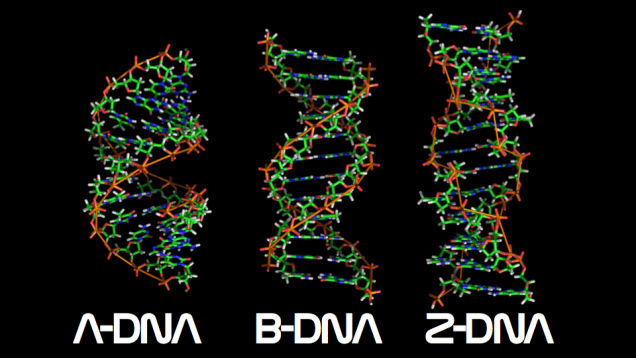
Yes, there is left-handed DNA, which is also known as Z-DNA. But as you can see from the illustration below, its structure is significantly different from the smooth-flowing curves of B-DNA (and the equally unusual A-DNA).

Two rights don't make a left

Two rights don’t make a left

Off the pedestal, Western medicine

hubris

Western medicine can be a smug son-of-a-bitch. Seriously.

Now, it would be unfair to lump this attitude on all practitioners of Western medicine, but I haven’t the time to survey all of its adherents and gauge individual opinions so that I can name names of those who are the smug bastards and those who believe in thoughtful open-minded consideration.

To provide some context, I have a B.Sc. in molecular biology and a M.Sc. in medical genetics, and have written about the latest biotechnical and biomedical advances for about 15 years. I have also written about Western medicine for about 7 years.

Given this background, it may seem odd to some that I am writing a complaint about the attitudes of Western medicine, but what may not be as obvious about that background is the amount of hubris and self-satisfaction I have seen in questionable practices with limited benefits.

Old wisdom isn't useless because it is old

Old wisdom isn’t useless because it is old

Recently, there was an article in New Scientist magazine that described the rediscovery of a possible treatment against superbugs (e.g., MRSA), a therapy chronicled in an Anglo-Saxon era manuscript. The roughly 1000-year-old remedy is being studied in a modern lab and early results suggest that it may prove effective against the bugs that threaten modern lives on a weekly basis.

(BTW, there is a thousand miles between early results and coming to a pharmacy near you.)

But what struck me most was the response to the findings in various media, which bordered on shock and awe that something relevant to today could come from such an ancient source. Even CBC’s The National (Canada’s national news broadcast) commented that the discovery came from an era when leaches were considered good medicine.

Which leads me to scream:

Science wasn’t invented in 20th century, people.

The grand assumption seems to be that anything that happened in medicine before the First World War was complete voodoo and not worthy of consideration in an era of rational thought.

Everyone involved in health remedies before the modern medical era was either a charlatan or a moron, and either way was dangerous to the people around them. The human capacity for sober scientific enquiry did not occur until shortly after the invention of the Erlenmeyer flask, the spectrometer and the harnessing of the X-ray.

I call bullshit.

If you can grind it or infuse it, you can medicate with it

If you can grind it or infuse it, you can medicate with it

Folkloric medicines are based on scientific inquiry by people without test tubes and spectrometers. The approach may have been less statistical in nature, but everyone from apothecaries to shamans (shamen?) ran clinical trials the old-fashioned way.

Take this. Do you feel better? Great. It’s a keeper. Did you die? Yes. Nuts, try something else on the next guy.

Having actually looked at modern clinical trials, the only differences between then and now are the test patient population size and the accounting of the results. And I don’t know that we can say definitively that these parameters have improved things.

I am not advocating that we discard modern medicine—it has merit—but rather than it must get off its high-horse and approach historical medicine with an open mind so that more rediscoveries like this latest one can happen and be tested.

TCM has worked for millennia

TCM has worked for millennia

China has about 20% of the planet’s population, so there might be something to Traditional Chinese Medicines (TCMs). The same goes for India and folkloric Indian medicines (FIMs). Or Anglo-Saxons or Sumerians or the indigenous peoples of the Americas. These people were not morons.

Our ignorance and outright hubris is a hangover of the Age of Reason as we dismiss everything that came before because it was often presented in raiments of spirits and ritual.

Modern does not guarantee success

Modern does not guarantee success

We should not let our fascination with the instrumentational bells and whistles of the modern scientific method blind us to the wonders of the not-so-modern scientific method, which lacked in instrumentation but not in knowledge and understanding.

Before you blithely dismiss something as troglodyte quackery, perhaps you should ask yourself:

What would Hippocrates do?

And as to the CBC’s comment about the era of leeches, both leeches and maggots have a long history up to this day of facilitating health in people (see Leeches and Maggots).

The job you hate is killing your creative spirit

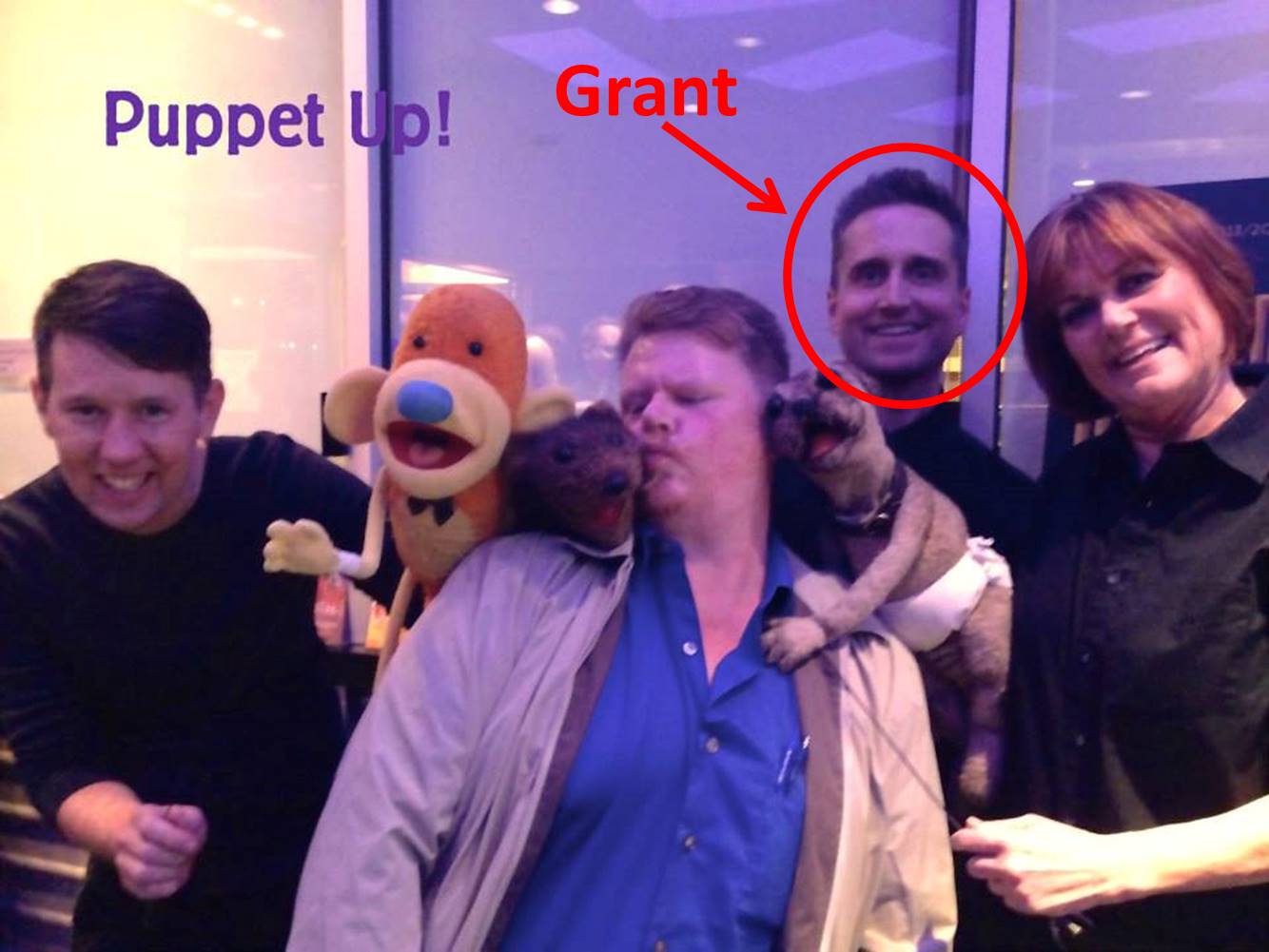
The wonderful Grant and his weasel buddy join me for a post-show photo (also shown Peggy Etra and Brian Clark).

The wonderful Grant and his weasel buddy join me for a post-show photo (also shown Peggy Etra and Brian Clark).

Grant Baciocco is an amazingly talented actor and puppeteer I had the good fortune to meet online and then in person when he came to Toronto with the improv puppetry show PuppetUp! (about which I have raved extensively elsewhere).

Well, aside from his amazing talent, he also has a wonderful creative spirit, both in the sense of what he creates and how he tries to inspire others to be open to their own inner creative spirit. To this latter point, he has a wonderful blog Grantblog: Ruminations & Pomposity that I heartily recommend.

At the beginning of each week, he posts Creative Mondays and today was no exception. Today he talked about “A job you hate”, which I excerpt below:

For years after college, about ten in fact, I worked as a substitute teacher.  It was an okay job, certainly flexible enough and I was making money, but by the end of those ten years I was starting to burn out because it was not the job I wanted to be doing.  I was good at it and several times I was told I should get my teaching credential because I was such a good teacher.  But deep inside of me I could feel a darkness building up because I was doing a job I absolutely hated.

The moment I made the decision to stop subbing and focus on The Radio Adventures of Dr. Floyd, it felt like a weight was instantly lifted from my chest.  I attempted, for the millionth time, to lose weight and it was actually working (lost 80 pounds).  I was just a million times happier than I was when I was subbing.  And guess what?  I became more creative!  This was the creative boom era for Dr. Floyd, because I was doing something I love.

Grant’s is a lesson too many of us learn very late in life (NOTE: I did not say “too late in life”…it is NEVER too late).

In my case, I was fortunate enough to have a series of occupations I loved for a period…scientist, science writer, media relations, advertising copywriter…but with each, I stayed in the occupation long after I had fallen out of love with the choice. I had to be a certain amount of miserable before I was brave enough to jump.

But two years ago, I completely jumped ship to pursue my true love: story telling (screenplays, novel, sketches, short stories). I’m still not making money off any of this, so I live on freelance magazine writing and ad copywriting. But to Tiffany’s point, it is what I do to eat and sleep under a roof.

If you are fortunate to know your passion—it can take time to figure out what it is—then you must make it happen to find happiness (hunh, “happen” and “happiness”…so similar).

And if you haven’t fully defined your passion yet, go with your gut until you do. Explore the universe of opportunities, until you do. You may not end up the financially richest person on the planet, but you’ll definitely be one of the spiritually richest.

If you don’t want to take it from me, then take it from Grant. Find your happiness and pursue it with everything you have. Despite appearances, you really do have nothing to lose and everything to gain.


You can follow Grant on Twitter: @ToasterBoy

Ergo ego

(Property of evolution.berkeley.edu)

(Property of evolution.berkeley.edu)

Be as egocentric as you want, but always remember: You were one point mutation away from being somebody else.

(PS To the genetics nerds out there, I know they messed up the “original” strands in this diagram as the originals from different strands cannot be identical but rather should be complementary.)

Just say k(no)w

What once was common knowledge may now be a lie

What once was common knowledge may now be a lie

There was a time in my life when knowledge was vitally important to me. A time when nothing was more important than learning new facts that would help me understand my universe. I wanted to be smart and being smart meant knowing lots of stuff.

This belief lasted decades. Kept my shelves full of books. Kept me glued to documentaries. And in many circles, made me “that” guy.

More recently, however, I have come to decide that knowledge isn’t all that important in my life. That its pursuit, while never a waste of time, can never be an end unto itself. And as much as anything else, I have decided this because I have learned that knowledge is transitory.

I don’t mean transitory in the sense that I will ultimately forget the very facts I spent all that time learning, although this is true. You can’t believe how much stuff I don’t remember. Rather, it is the malleability of the knowledge itself to which I refer.

Facts are not absolute and unchanging. Facts are incredibly well supported theories given what we know right now. Tomorrow, those thoughts I considered facts today may no longer hold.

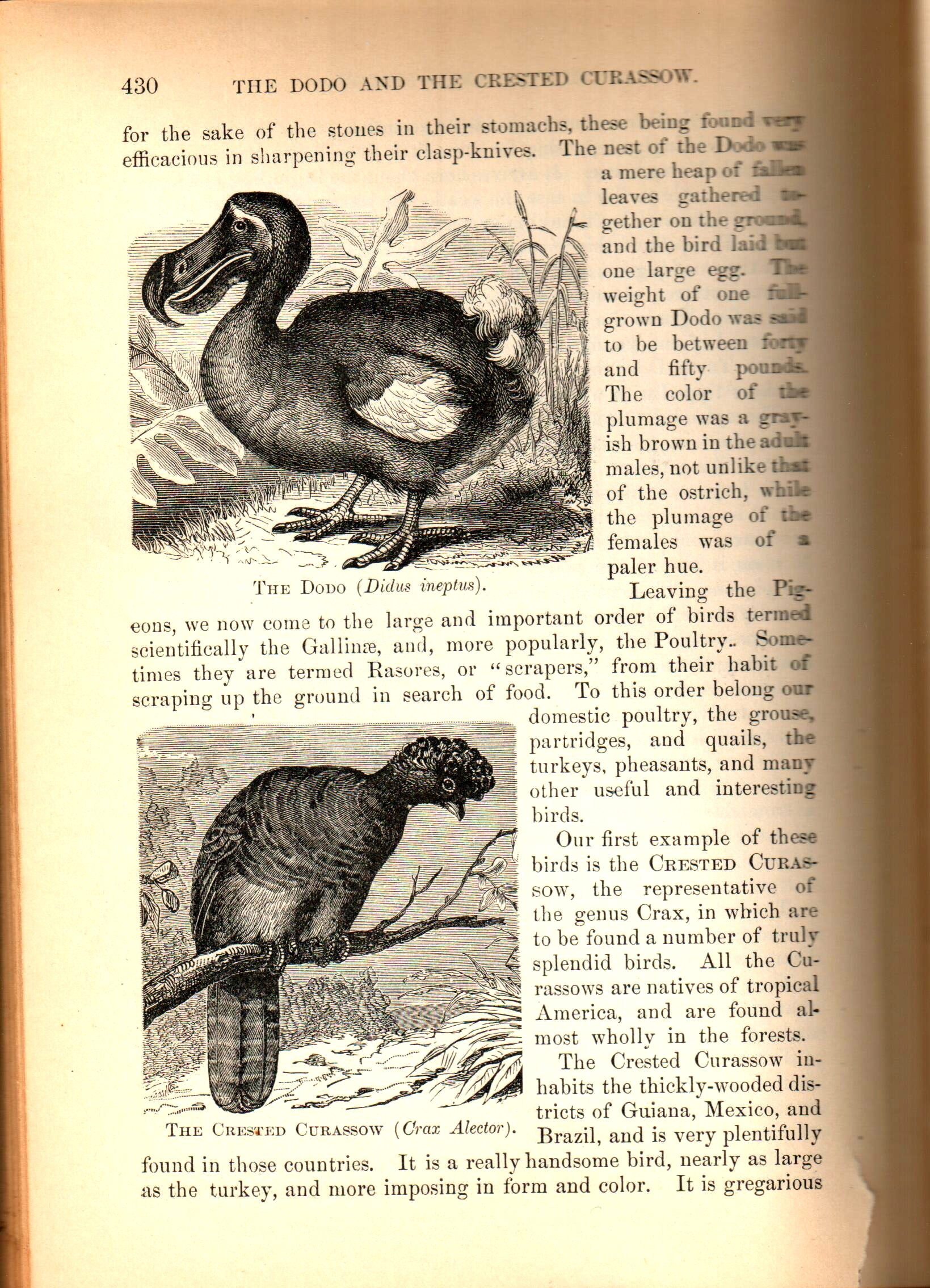
I look at the book I received from my great-grandmother decades ago—a very trusting woman who understood a young child’s thirst for knowledge. When this natural history was published in 1886, its contents were fact. In the intervening 127 years between now and then, however, many of the “facts” have changed or been significantly reinterpreted.

The same is true for the science I studied and practiced only 20 years ago. In many ways, I might as well have been chipping rocks to make spears as measuring compounds on scales and in Erlenmeyer flasks.

Knowledge doesn’t just expand—more true for some than others, sadly—but it also morphs into new and wondrous things, like so much quicksilver. Grasp knowledge too tightly and it runs everywhere, and again like quicksilver, may poison you and the people around you.

I no longer feel the need to know anything but merely to allow knowledge to wash back and forth over me like a tide, and with each arc of the moon, taking what I need to function that day and leaving the rest to chance or another day.

I don’t know and for the first time in my life, I am comfortable with that.

Who's the dodo now, eh?

Who’s the dodo now, eh?

Write what you—No!

Image

The adage I hear a lot in writing circles and books is “Write what you know”. By that, people mean write about the things for which you have a passion, because that passion for the subject will shine through your writing and become infectious to your reader or viewer.

To a large extent, I agree with this sentiment, but I think there has to be codicil. When you know how to write, write what you know.

Let me explain with an anecdote.

When I first started writing, I was coming out of a career as a biochemistry researcher who had spent the bulk of my training in protein biochemistry and genetics. That was where my passion lies. So, perhaps as no surprise, when I decided to become a science writer, I focused much of my initial energies on writing about protein biochemistry. I understood the science; I could see the story quickly; I could write about it with some fluency.

Unfortunately, despite or perhaps because of my passion and fluency, I was completely unreadable to anyone who wasn’t already a protein biochemist. I wasn’t speaking to my audience in terms they could understand but rather in terms I could understand. To a greater or lesser extent, I might as well have been writing in Klingon, which I suspect would have given me a broader audience.

When I finally realized what was happening—thanks to all of the people who beat me about the head—I made a pact with myself. Until I felt that I could really tell a story, I would do my best to avoid writing anything about that at which I was most expert. I had to become my audience: the relative non-experts.

About a year into writing about topics I had to research and for which I had to ask potentially stupid questions, my writing had matured to the point where I could go back to my area of expertise and approach it in the same way. I had finally arrived.

I think the same holds true for any kind of writing, whether news, novels, screenplays, blogs.

Until you are capable of telling a story that your audience can decipher, and more importantly wants to read, you are probably better served to stay away from the topics you know best. To do otherwise means running the risk that you will leave out the “obvious” and the “well, yeah” that you know in your bones, but that could be vitally important to an audience member trying to understand why certain facts or behaviours in your story exist.

Give yourself—and by extension, your audience—a chance to learn your story, to experience it at a visceral level. As you develop your story, you’ll likely find yourself asking questions of your plot or characters that your audience would ask. You want your audience to think, but you never want them to have to research. Until your work becomes part of a school curriculum, it shouldn’t require a study guide.

It is easier to remove the truly superfluous common knowledge or understanding later than it is to convince yourself that the information you need to add isn’t common knowledge.

When you are ready to tackle it, the subject(s) for which you have passion will still be there. Consider them the reward for all the hard work you did up front.

In a future post, I hope to discuss a flavour of this topic: “Based on a true story”.