
Tag Archives: freedom
Finding inspiration
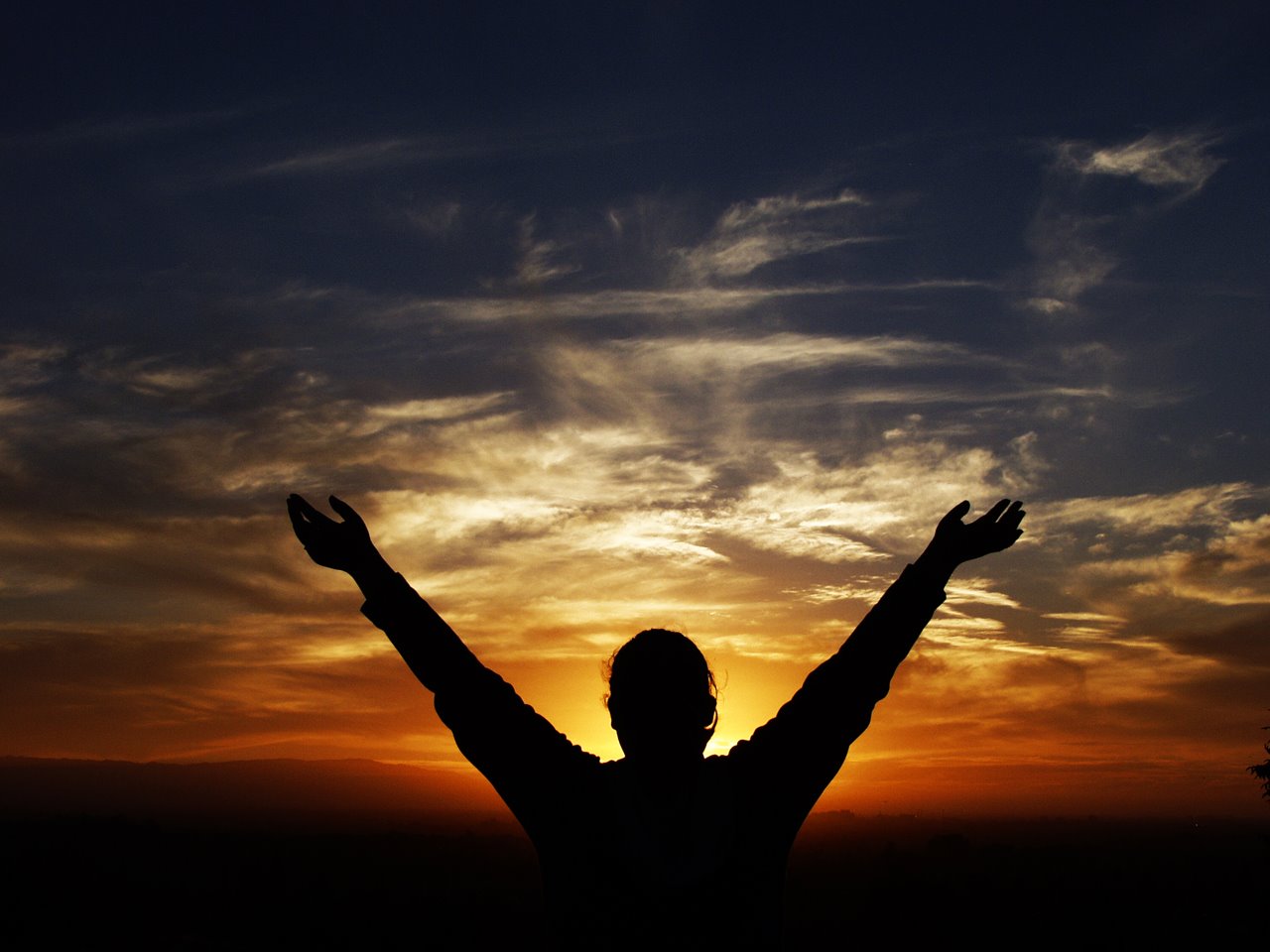
Where do you find inspiration? What causes one moment to pass completely unnoticed and another to trigger a flurry of activity?
Truth be told, I don’t think inspiration comes from outside but rather from within. The exact same moment viewed at different times by the exact same individual may result in completely different responses depending on the openness of the individual to inspiration.
When you are open to inspiration, you witness and experience life through a completely different lens, one that sees connections and patterns between events and objects that do not necessarily exist in the forms themselves.
The priests sitting in the bar become a foil for the man trying to pick up women. The dog urinating on a building becomes the unwitting initiator of the death of 275 people in an office tower. The crows on the telephone lines become dark angels surveilling the land, awaiting the arrival of a malevolent spirit.
The irony of inspiration coming from within, however, is that it is something you cannot really will into existence. You can easily sit for hours with pen poised over paper, awaiting inspiration’s wafting arrival, only to realize that days have gone by without result. And trying to force your way through artistic constipation only seems to worsen the situation as you strain against the blockage by forcing invisible connections. Rarely, if ever, will inspiration make itself known to you in this way.
All you can really do is till the soil in which inspiration will implant itself and hopefully germinate. Rather than clear away all distraction, you may find it better to envelope yourself in distraction. By allowing the mental and spiritual noise to flow over, under and through you, you remove the hard edges of the real world and let the boundaries criss-cross in chaotic flux, searching for new patterns that your mind’s eye can mark.
It may also be helpful to engage your mind in someone else’s art, whether of the same medium as yours or no, but remembering to also give your mind permission to wander.
There is no exam at the end of the novel you’re reading. No request to reproduce the painting you are viewing. No critical essay to argue once the concerto has ceased.
So let yourself go and let yourself respond—consciously and viscerally—to the art. Let a word, image or note ricochet through your mind until it attaches itself to an earlier thought or feeling. Don’t try to define or even understand the clusters that form but rather observe them until the need to create takes hold.
Inspiration is about the initial amount of discovery, not the final product. An ephemeral spirit, inspiration is likely to dissipate at your first attempt to put a leash on it. You cannot present inspiration with a road map and expect it to clear the path ahead. Rather, you must follow inspiration as it meanders, bearing witness to the miracles it triggers.
Where do you find inspiration?
Everywhere and anywhere, when you are ready to let it be seen.
Sentience
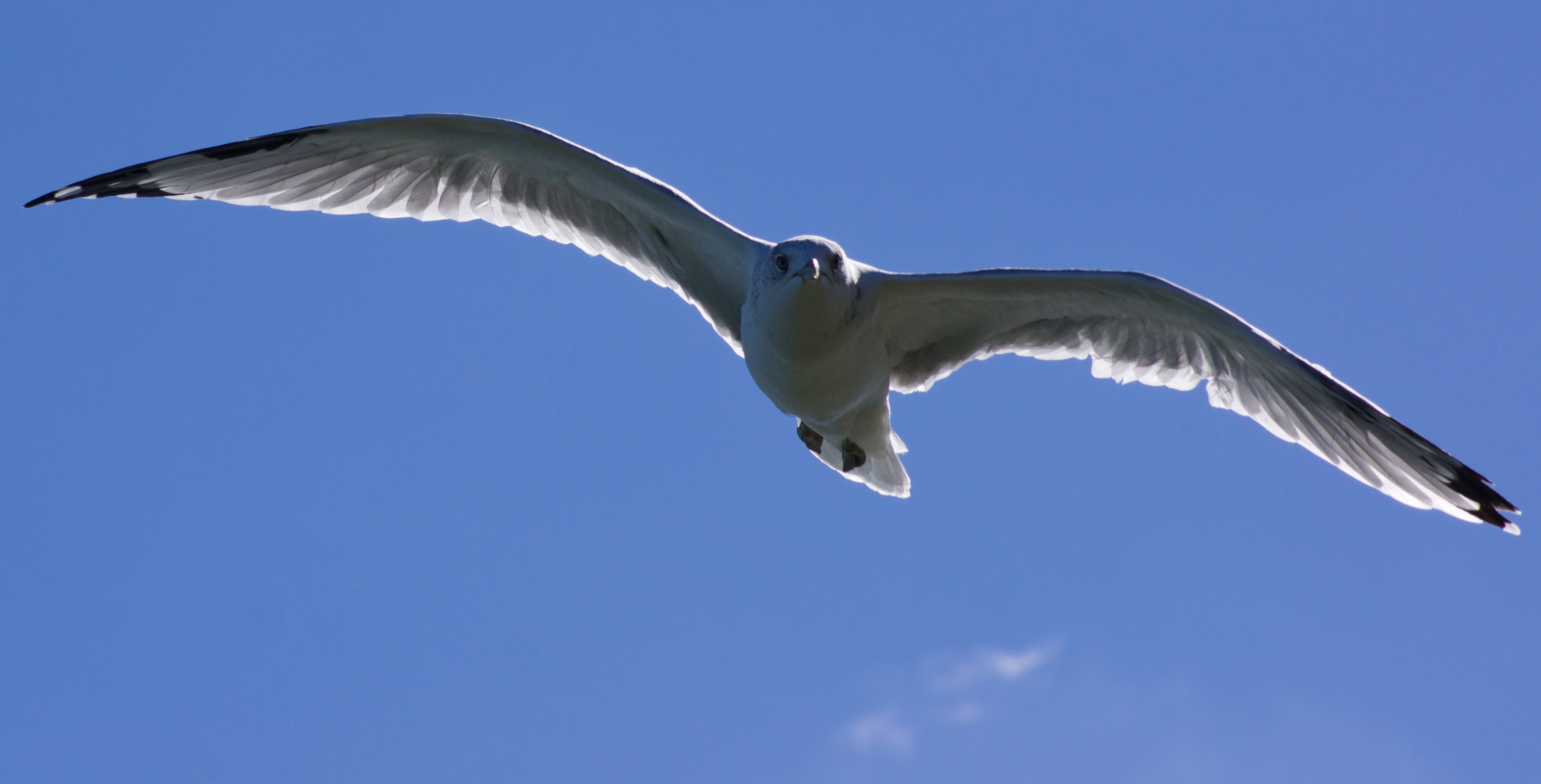
A majestic shot taken at the nearby beach. Click on it for full effect of image.
Birds don’t think how to fly.
Fish don’t consider buoyancy.
Spiders don’t judge perspective.
Hyenas don’t debate food.
Awareness, knowledge, understanding
Are all well and good until
They become proxies for fear.
Do. Experience. Live.
Safe is not safe

Yesterday, I watched the interview of Billy Crystal on The Daily Show and aside from the startling reminder of just how funny Crystal is as he approaches his 65th birthday, I was deeply effected by a story he told.
In his earliest days as a standup, he performed one night at Catch A Rising Star, where he absolutely crushed his audience—20 minutes of pure gold. And yet, when he had dinner later that night with Jack Rollins, the man who discovered Woody Allen and made him a star, Rollins was unimpressed with Crystal’s set. This drove Crystal crazy and when he finally worked up the courage to ask why, Rollins complained that Crystal had played it safe.
Crystal’s entire set, he explained, was material that he knew would be appreciated by his audience, and Rollins acknowledged it was funny. But it also left him cold, as it told him nothing about the man behind the humour. It said nothing about who Crystal was and what he thought about the world.
Never be afraid to bomb, Rollins advised Crystal, and it has been Crystal’s advice to aspiring comics ever since.
Too often, writers of all media and genres face the same challenge. With an eye to being popular (liked) and commercial, we play it safe. We don’t push ourselves, our talents, or our audiences hard enough. We hold back for fear of offending. The results are shelves of books and DVDs that are milquetoast, bland, generic, and channels that are devoid of anything stimulating.
It’s not entirely the writer’s fault. Some of us have agents and managers cautioning us before the next deal. Editors and producers “honing” and “refining” out creativity in the hope of better numbers. But we let them do this to us and to our Art. Playing it safe may get you that next deal, but will it keep the deals coming?
When your work reads like the next writer’s work, which reads like the last writer’s work, why does anyone need to choose you or your idea?
Like them or no, there is no denying the talent that went into shows like The Big Bang Theory (4 physicists and an actress?), Breaking Bad (a meth-cooking school teacher?) and The Big C (a cancer comedy?). Or the book 50 Shades of Grey (mom reads porn?). Or the movie Memento (an inside-out movie?).
None of these were safe choices. None of these was obvious. All of these made people uncomfortable.
Go to the edge with your writing. Stare down the precipice and smile.
Don’t just face your fears; laugh at them and then take a giant step forward into the unknown.
In life, safe is an illusion. In Art, it is a lie.
As an artist, the most dangerous thing you can do is play it safe.
(Image is property of owner and is used here without permission because I like to live dangerously.)
Free fall update
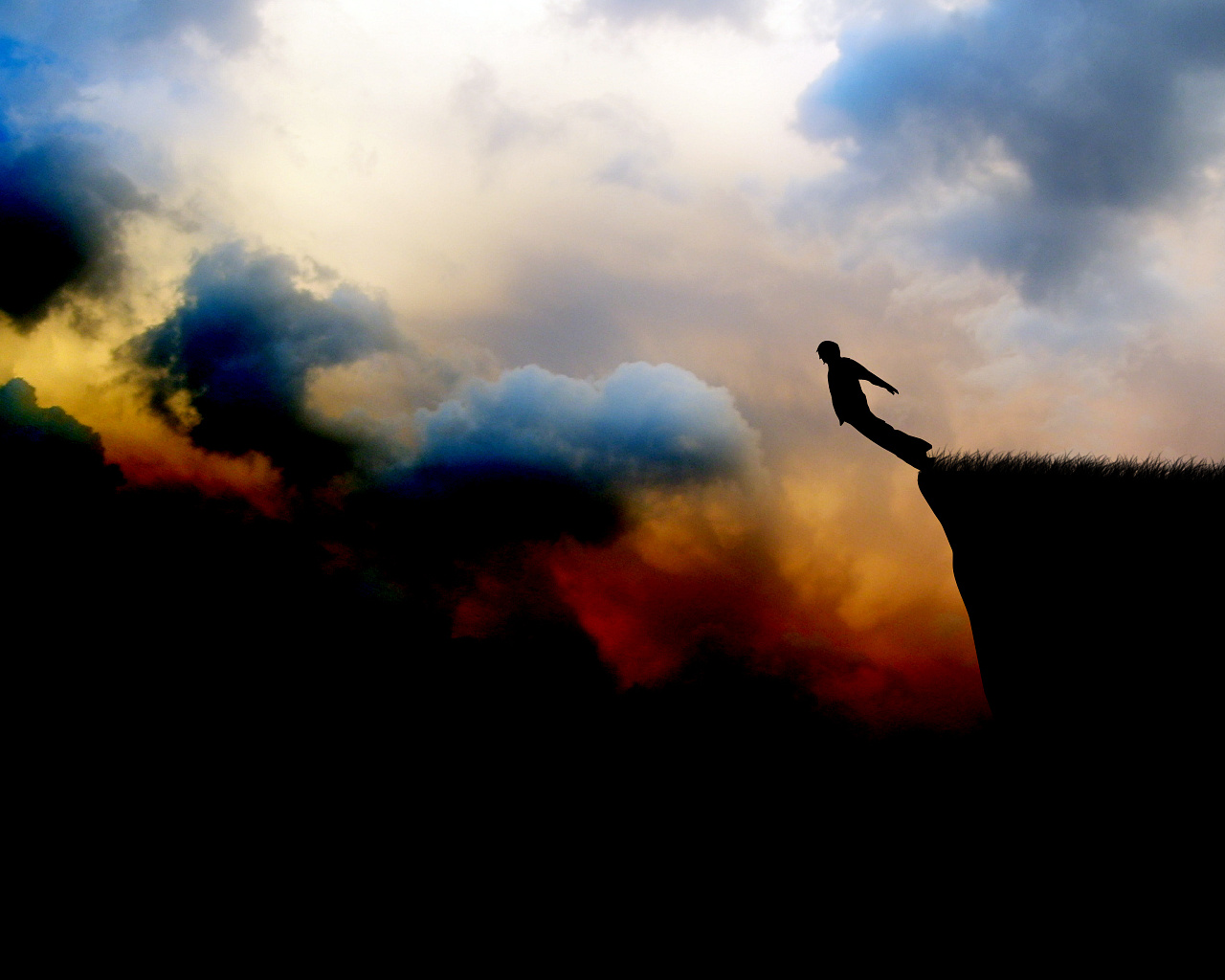
With a pretty steady acceleration of about 9.8 m/s2 and a consistent headwind coming from below, I am happy to report that my free fall through the universe remains largely unchanged from my last check-in.
The ground remains nowhere in sight although recent episodes of blue-shifting suggest it is down there somewhere. Otherwise, the view continues to be spectacular, if a tad blurry.
The best movie metaphor I can offer for my journey thus far is a mashup between Indiana Jones & The Last Crusade and 2001: A Space Odyssey. It is as though I combined Indiana’s leap from the lion’s head over the yawning chasm with Dave’s journey into the monolith to find it full of stars. (My journey’s been full of actors, some of whom will one day be stars.)
When I stepped off the cliff in May 2012, I could not see the bottom. That there was even a bottom to be seen was pure conjecture. In some respects, that may have made it easier to step off. Ironically, not seeing what awaited me was less frightening.
As I fall—which I don’t see as a negative expression—I have come to realize that I care less and less about my potential destination. Instead, I am enjoying the freedom of soaring in whatever direction takes my fancy (falling is just soaring on a downward bias).
And in my journey, I am meeting an endless array of interesting people. Some are also soaring, while others are flailing in resistance. And still others have convinced themselves they are stable and stationary. Whatever floats their sense of well-being.
The forecast for tomorrow is a continued breeze with periodic pockets of turbulence in a sea of exhilaration. Can’t wait.
Something from nothing
“I don’t know what to write about.”
It is the clarion call of procrastinators worldwide.
There is this pervasive belief that if you are not writing about something then you are not really writing. As though words have no power, no authority unless they are tied to some portentous subject. Free association, it would appear, is not free. And yet, ironically enough, nowhere is this written. It is a myth.
It is just as valid to write about nothing as it is to write about something. To make no conjectures, to postulate no theories, to hold no opinions aside from the personally pleasing juxtaposition of two or more words.
Just as people can speak forever and yet say nothing of lasting import, so too can people wax jibberish and yet speak volumes.
In painting, we can view both delicately rendered images of nature in all its glory (my personal favourite is Robert Bateman) or the seeming chaotic void of splatter on canvas. Both are art, but speak to different tastes and preferences. Why too cannot words, which are merely the medium that in and of themselves hold little meaning?
Write about nothing. Tap into your inner anarchist, your inner artist, to express yourself in splashes of verbiage that may mean little in isolation but so much more in toto.
Embrace the freedom and release the fear that comes from working without a destination or plan. Fill the void with noise of your soul and spirit, only to discover the noise is in fact a song the tune of which you don’t yet recognize.
I think you’ll find that in writing about nothing, you will find something, and you will stand amazed.
Nothing is rarely nothing
I had no idea

Ideas are everywhere, but they don’t always look like ideas
“How the heck did you come up with that?”
It’s a common question I get when talking about my latest ideas, and for years, my answer was a resounding “I dunno…just came to me.”
To a limited extent, the response is correct, but it suggests the process of ideation is much more passive or deus ex machina than it really is.
Ideas surround me, as they do you. They are in the nouns, verbs, adjectives and adverbs that make up our moment-by-moment reality. They are in the streetcar in which I presently ride, the streets down which I presently travel.
In the dark-haired beauty two rows before me who is fixated on adjusting her hair rather than close the window through which the hair-mussing breeze blows. And in the armada of free-range humans who occupy the parkette we just passed, proving themselves houseless rather than homeless.
The challenge for many would-be writers is that these are starting points for ideas rather than fully fledged stories or subjects. These are the writers who wish to be reporters or chroniclers rather than explorers.
Think instead of these idea kernels as pieces of clay, as something that can be moulded into any of a thousand other shapes. Take the kernel and play with it for a while. Give yourself a chance to see what it feels like, smells like, sounds like, tastes like.
Twist it. Turn parts of it over. Reverse its halves.
What is something were feasting on Toronto’s homeless? Imagine a mobile service that will do your hair and makeup while you commute to work. What if a terrorist planted a bomb on a streetcar and it had to travel no slower than 50 mph? Or an aesthetician to the deceased in From Hair to Eternity.
All of these are probably bad ideas, but the ideas have evolved.
Twist it again. Mould it again. Press it onto something else, like so much Silly Putty, and see what sticks.
Keep the good. Set aside the bad. But keep working it until something you really like begins to show itself.
You have no idea the wonders you will discover.
Give up or surrender
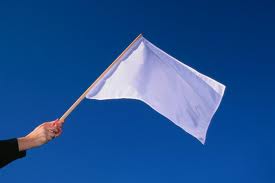
You’ve hit a wall. You’ve banged your head on your desk for an hour; two; ten. Staring out the window—your go-to maneuver for the last decade—has gotten you nowhere. Is it time to give up?
Might I recommend surrendering instead?
In case this sounds confusing, there is a difference between the two options.
Giving up is about accepting failure. It’s the belief that there is no solution to your problem or if there is a solution, you’re not the one who will come up with it.
Giving up is about telling yourself that you’re not good enough, strong enough, smart enough to solve your problem. It is defeat.
Surrender is different. Rather than giving up, you’re giving over; ceding control of the situation to whatever power you are most comfortable with—God, time, the elements, the universe.
Surrender is about believing that not only is there an answer to the problem, but also you are capable of delivering that answer—just not without help.
We all know what giving up looks like. It’s turning off the laptop with a frown, and maybe a sigh with drooping shoulders. And almost always, it comes with a fear or reluctance to turn the computer back on.
Surrender is calmly closing the laptop of letting it go idle while you take a walk, read a book or vegetate in a coffee shop. It can even including reviewing your work-to-date if you focus on what’s working, what you’re happy with.
The answer is there for you to pluck, but it’s waiting for you to drop your focus. Like that white spot on the inside of your eyelid that moves every time you try to look at it, the answer doesn’t like your stare, so it hangs in the periphery.
That may actually be source of some of your frustration: the knowledge or sense that the answer’s nearby, but you can’t see it.
Don’t give up. You can do it.
You just need to have faith in your universe and surrender the control you never really had.
Canada Day relaxations
Thank goodness the Fathers of Confederation picked July 1 as the day to form the Dominion of Canada.
The thought of possibly celebrating on something like February 3 literally sends shivers down my spine and would have kept me from getting any pictures of people just relaxing on the warm summer’s day.
-

- Taking in a Blue Jays game at the Rogers Centre
-

- A young lady whizzes by on roller blades, showing her pride in her handbag
-

- Poor pooch must run a marathon every time this long-legged lady goes walking
-

- Life vests are the call for women taking in the water
-

- Lake Ontario waters were calm for these intrepid kayakers
-

- Hawking the benefits of milk at a waterfront festival
-

- Electronic devices were the call of the day for park visitors
-

- A chance to listen to some bad karaoke or your wife
-

- Why is Canada great? Because this guy can make a living as a street performer
Communication or Noise – My 200th post

In honour of my 200th posting to my blog, I wanted to get some feedback from you, my readers and guests, about the blog.
I worry sometimes that my eagerness to write, my enthusiasm for ideas and visions, puts some people off. That the messages I try to convey are received and perceived as spam, an intrusive noise in the recipient’s day.
This blog is just one example.
Whereas most people post once a week or every couple of weeks, I am posting almost twice a day on average (200 posts in 120 days). I recently joked with a friend that I had only just discovered that other people post to WordPress, too.
My one solace is that social media outlets like WordPress, Facebook, Twitter and LinkedIn are voluntary. That you—my community—have chosen to follow me, to connect with me, and that should I become onerous or boring, it is within your power to ignore me or disconnect entirely. And some people have. I respect that and I thank them for their time, wishing them well.
Working in advertising and owning several email accounts, I understand the invasiveness of spam, the personal violation of being picked out a crowd by someone only looking for personal gain. I don’t want to be that person. I want to share, not push.
But I also want you to know that what you think matters to me. I will always welcome and respect your feedback and commentary, but reserve the right to determine how best to incorporate it, if I do.
In fact, I have initiated a couple of polls to solicit your direct feedback on the volume and content of this blog. I would greatly appreciate you taking a quick second to offer your thoughts.
You are my community, and I am grateful for that.
 createdbyrcw