500

500b

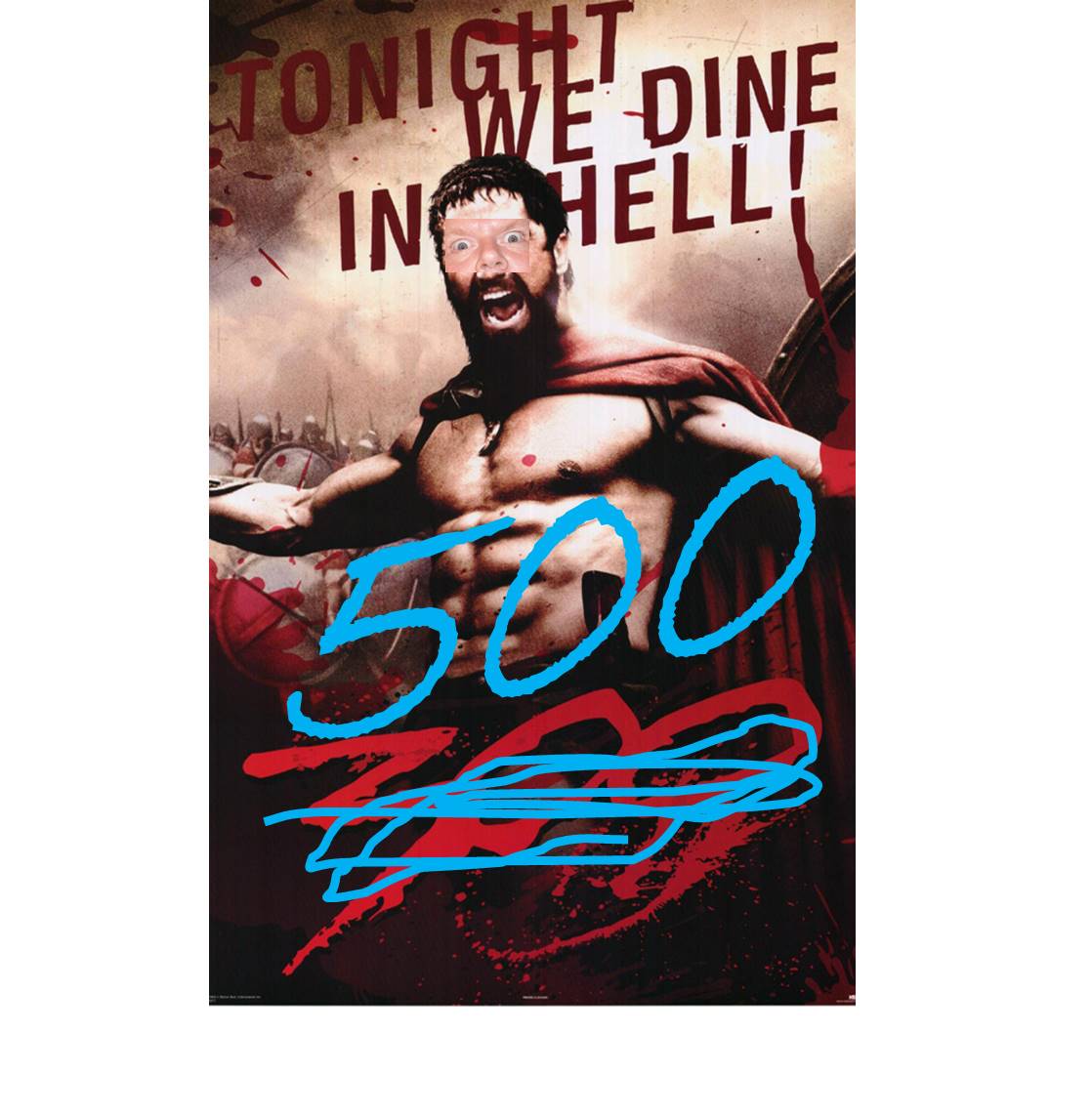
So I have hit the milestone blog post: 500.

For some of you, who have followed me from the earliest days, you are no doubt thinking: “500? Really? Seems like 5,000.” For those of you relatively new to the wonder that is my blog, please note closely the previous statement.

I dithered over what to write for my 500th post, and have decided I’m going to talk about you…well, some of you.

I “follow” quite a few blogs…I read many fewer…and I seek out even fewer. I’m sorry for those I don’t visit more regularly…hours in a day and all that. It’s some of that last group, I want to highlight here…those glorious few who make me stop whenever I see they’ve posted something new.

crows

Filippa Levemarks Blog

The paintings that this woman creates and the themes she explores by mixing media and mixing subject-matter blow me away. Rare is the image that doesn’t elicit some emotion in me. Hers is a style I have seen nowhere else and is worth exploring.


Jack Flacco

To read Jack’s blog is to have no clear idea as to who Jack is, and I mean that as a compliment. Jack takes on any subject it seems, but always in a thought-provoking and welcoming way that makes you want to contribute with a comment. His latest topics have been: monotasking, Veronica Mars, infectious pandemic readiness and phone addiction.
 

bareknuckle

Bare Knuckle Writer

As the title suggests, Steph Snow is a no-holds-barred writer who likes to talk (or rant) about writing. With generous dollops of humour, she discusses the creative fortunes and practices that torture her soul on a seemingly daily basis. Misery truly does like company.

 

ionia julian

Readful Things Blog/Julian Froment’s Blog

I list these two blogs together because they are both discussions of the written word—e.g., reviews of books and authors, discussions of book marketing—and because the bloggers (Ionia Martin & Julian Froment) are beautifully connected at the soul (I don’t ask questions about any other forms of connections). Amazing people whose love for words is only surmounted by their love for each other.


Schelley Cassidy Photography

As a photo-hobbiest, I deeply appreciate the craft and skills that other photographers bring to the world. In this case, however, Schelley and I seem to share a greater fascination for the minute rather than the panoramic, as suggested by her regular feature “What is it?” where you only see an aspect of an object and are left guessing as to what that object is.


Ron Scubadiver’s Wild Life

If I couldn’t have my life, I would want Ron’s. A world traveller and freelance journalist, Ron is an amazing photographer, capturing incredible aspects of life in the many places he has visited. I particular enjoy his collections of people photos, often taken at a festival or gathering, which are incredibly natural and inviting.


ned

Ned’s Blog

Ned Hickson is not right in the head. And that’s what I love about him. A journalist in the Pacific Northwest and volunteer firefighter (or latex-coat fetishist…can’t really tell), Ned brings an irreverent sense of humour to everything he writes, earning him several accolades including his own NSA file. Ned also has a book to his credit, which I believe he has to return to the library next Tuesday.


Curnblog

More a collective than a personal blog, Curnblog offers amazing insights into all things film, whether examining an individual film or genre from angles such as sociology, creativity or cinematography. Predominantly the work of James Curnow, the blog is like having your own little film school where you can access new and unusual topics on a weekly basis without the pressure of essays, theses or exams.


There are so many other blogs to which I would like to direct you, but I am happy that you made it this far down the page. Perhaps for my 1000th blog post!

My gratitude for your patience and enduring interest.

post-milestone-500-1x

Much Review About Nothing

http://prettycleverfilms.com/movie-reviews/modern-times/review-much-ado-about-nothing-2013

There is a certain degree of irony in this review of Joss Whedon’s Much Ado About Nothing which is just that; the reviewer complains at length about the bare-bones nature of the production and the lack of interpretation over mere presentation (i.e., modern dress without modern sensibilities).

I seriously doubt the reviewer would have had quite the same issues with the setting simplicity if this had been a staged production rather than a filmed production, and it is important to remember that Shakespeare’s plays were written for the stage, not the screen.

As to modern interpretation and sensibilities, I largely think this is impossible without a complete rewrite of the play into another project all-together and most particularly in the case of the comedies. Take, for example, the movie 10 Things I Hate About You as a modern interpretation of The Taming of the Shrew.

The tragedies so better lend themselves to simple modern reinvention by simply changing the uniforms of the many and varied soldiery or political figures. As an example, I give you House of Cards, which to me is a retelling of Richard III with a soupcon of Othello for flavour.

And let’s face it, Much Ado About Nothing is one of the more frivolous and playful of Shakespeare’s comedies…it is play for the sake of play. It offers no deep meaning but instead centres on the silliness of love; a topic that will remain universal for all time.

Which brings me to the biggest challenge I have with this review.

The reviewer seems to assume that Whedon meant for this to be anything more than a lark…but Whedon being Whedon, a lark that he filmed with very good friends who happen to be very good actors.

I know as little as the reviewer, but I have every reason to believe the choice of modern dress was simply the reality of not having racks of Renaissance costumes lying around the house. The choice of black & white cinematography was perhaps an homage to the screwball comedies of yesteryear, of which this play is truly one and possibly the most yester of yesteryears.

As you can probably tell, I liked the movie…I had few expectations other than laughter and those were met. I also liked Kenneth Branagh’s version, which really only differed in multiple sets, colour film and period costume.


I don’t hate movies!

This may sound like an unimportant statement, but as a newly minted screenwriter, I was starting to worry that I seemed to dislike every movie I watched in theatres or via Netflix.

Now, I must admit that I have spent much of my life as a hypercritical asshole, a picker of nits most egregious, so it perhaps came as no surprise that a movie had to be pretty solid to impress me…but when you go through dozens of movies and find all of them meh, you start to worry. Or at least, I did.

You see, I slowly began to doubt my own understanding of what makes for a good film, or more importantly to me, a good story. And as someone who has decided to be a professional storyteller that is a worrisome doubt to have.

Movies that I have found lacking despite their acclaim

Movies that I have found lacking despite their acclaim

The recent fare that I had heard wonderful reviews of or that had won awards:

  • Blue Jasmine – good performance by Cate Blanchett in a completely forgettable movie
  • The East – incredibly slow melodrama in which none of the characters was note-worthy and a moral dilemma on which the screenwriter and director refuse to take a position
  • Life of Pi – hated the book, bored by the movie…would have been more likeable as a Disney flick
  • Vicky Cristina Barcelona – boring people with no ties to the real world (like a need for money) screwing
  • Noah – missed opportunity to explore the more interesting character of Tubal-Cain
  • Dom Hemingway – a wonderful portrait of the eponymous character, a terribly flawed story (my thoughts)
  • Enemy – 2014 Cdn Screen Award as Best Picture, thief of 90 minutes of my life (my thoughts)

I have many colleagues who will defend some or all of these movies to the hilt and yet I found each of them somewhere between seriously flawed and downright insulting.

Clearly, I was the problem. In my zeal to craft my own stories, I had become myopic on what a good story is, what good characters are.

And then I watched The Boy In The Striped Pajamas.

Wow. I was blown away, not just by the subject matter, but by the story itself, the unique perspective and the richly drawn characters.

Sure, there were one or two small moments where I tilted my head askew, but they did not linger. Nor did they snowball in my consciousness as they were few and far between.

Movies that have renewed my faith in storytelling

Movies that have renewed my faith in storytelling

Last night, I watched The Reader.

Not as blown away, but still enthralled. Rich characters, slow revelations, palpable conflict both within and without.

I don’t hate movies.

I have no time for movies that fail…and more importantly, I aspire to and am inspired by movies that succeed.

Doubts remain, but thankfully, they have diminished.

Canadian Film Day: Hoorah or who cares?

nationalfilmday_photo

Via my social media outlets, I discovered that today is Canadian Film Day (presumably only in Canada).

Oh Canada, our home and native film industry… (although not necessarily native in the sense of indigenous peoples).

The discovery caused me to pause, as I realized that it has never mattered to me that a film is Canadian…only that it is good, entertaining, thought-provoking.

As an artist who is Canadian, I almost feel guilty that this is the case. And as a friend of several writers, directors, performers, etc, who live and work in Canada, I am embarrassed to say that I am not sure I can name 5 films that I know with any confidence are Canadian.

My attempt: Black Christmas, Exotica, The Sweet Hereafter, Decline of the American Empire, Scanners (honesty check: of this list, I have only seen Black Christmas)

Don’t get me wrong; I don’t have a problem with having a Canadian Film Day to celebrate my nation’s achievements. I think it’s great to pat our collective selves on the backs every once in a while.

CanadaPoster11

I guess my bigger question is does it really matter if a movie is Canadian or not, whether from an artistic or audience perspective?

When an industry is in its infancy, it needs to be protected and nurtured, but much as with the Canadian music industry, I think the Canadian film industry is well beyond its infancy. It doesn’t need training wheels. We shouldn’t be coddling it out of some odd sense of nationalism. It is more than capable of competing (and does) with the big boys and girls of the world.

This country has played incubator to world-renowned directors, writers, performers and production companies, and these people and groups became world-renowned by competing in the world. By setting the bar high and achieving even more.

My fear with art-via-nationalism is hearing the phrase “You know, for a Canadian film, this is pretty good.”

I worry that in blindly supporting the Canadian film industry simply because it is Canadian, we won’t push ourselves as hard. That we will be willing to settle for good enough for a Canadian film. That mediocrity will reign, punctuated here and there with islands of brilliance.

As some of you know, I am cowriter of a sketch comedy show–SomeTV!–currently in production in Toronto. One of our mandates as a writing team was that we are NOT writing a Canadian sketch show, regardless of all of the writers being Canadian and residing in Canada for initial broadcast in Canada.

Sure, the show will have Canadian sensibilities given the Canadian writing and acting, but we’re targeting a global stage with this project.

Likewise, none of my film screenplays are targeted as Canadian. Nor all but one of my teleplay concepts (the one revolves around Canada’s Parliamentary system).

Sure, many of them are set in Canada, but that is more an artifact of my knowledge base and personal experiences than anything else. Any of the Canadian locations could be swapped for American or British locations with only a few modifications to the story.

I’m not trying to write The Great Canadian Story. I’m trying to write The Great Story, which may or may not feature Canada and its people.

I wish every movie to do well, even the ones I don’t particularly like. I want all of the artists involved to find personal satisfaction and achieve greatness. I want audiences to be entertained and money to flow.

And maybe this is biting the hand that feeds me (when and if it ever decides to feed me), but I don’t particularly care if those movies, artists, audiences and money are Canadian.

MIC-LOGO-2

PS: I am a strong advocate of any organization that supports the development of new artists who push the envelope in storytelling. Again, though, I advocate these organization whether Canadian or other.


My screenplays:

Tank’s: Animated musical feature, female co-lead; Winner of Best Animated Feature Screenplay at 2014 Nashville Film Festival

An impulsive adolescent fish, ripped from his Amazonian home, struggles to find his place in the world of a pet shop, complicated by feelings for an idealistic, privileged fish and the iron-fisted rule of a villainous eel. A story that proves even a fish in water can be a fish out of water.

Captain Pete: Humourous family drama, female lead, set in Eastern Canada

To reconnect with her increasingly distant son, 35-year-old divorcee Billy tries to protect her son’s pirate-hunting lunatic friend from himself and an intolerant town, and in the process, may help both him and herself reconnect with the world.

The Children of San Miani: Murder thriller, female lead, set in Northern Italy and Canada

A crusading young Turin police officer must partner with a Vatican officer and faces Vatican interference as she tries to prevent another murder linked to a 35-year-old child abuse mystery, and in the process, faces the demons of her own Catholic upbringing.

The Naughty List: Dark adult comedy, holiday-themed

After a near-fatal accident, Santa vows to make amends to the Naughty kids, but when he learns two of them—now warlords—are racing toward war on Christmas Day, he drops everything to intervene as only he can, with catastrophic results.

Award season 2013

As the alcohol sets in and the year ends, I thought I’d take a moment to consider the 2013 Randys, the seminal moments and/or people of the past year.

Every year is special but this was truly a year for the books (or Kindles/Kobos if you’re one of those people).

Most engaging conversation: Weekly meetings with friend, Agah Bahari

Friend, child of the universe and novel buddy (as in we're writing a novel) Agah

Friend, child of the universe and novel buddy (as in we’re writing a novel) Agah

Silliest playtime: Conversations with Kevin Scott, Marsha Mason, Nic Lemon

Just set the camera to reward and place a diaper on the furniture...there will be pee

Just set the camera to record and place a diaper on the furniture…there will be pee

Most raucous laughter: Monthly bonfires organized by Janine Short

Conversation runs the gamut from politics to coitus interruptus and everything in between

Conversation runs the gamut from politics to coitus interruptus and everything in between

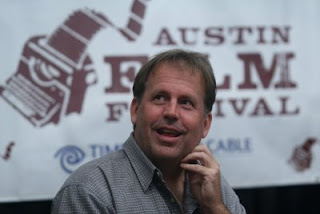
Most head-spinning period: Austin Film Festival, both the sessions and attendees

Terry Rossio on AFF panel

Oddest friendship (tie): Virtual connection to blogger Ned Hickson; Duke #75, mascot of the Toronto Marlies

One is a pro hockey mascot and the other is a humorist (US spelling here)

One is a pro hockey mascot and the other is a humorist (US spelling here)

Most humbing moment: Little Joe’s Heart campaign and response

We lost a little fighter this year...he will not be forgotten

We lost a little fighter this year…he will not be forgotten

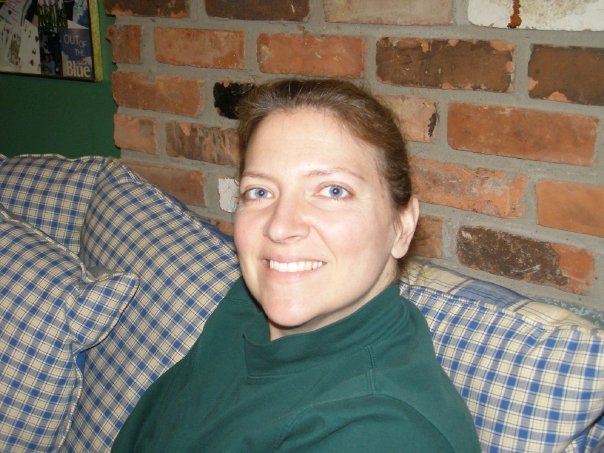
Friend of the year (tie): Leela Holliman, Nic Lemon, Marsha Mason

This is Leela...you met Nick and Marsha above

This is Leela…you met Nick and Marsha above

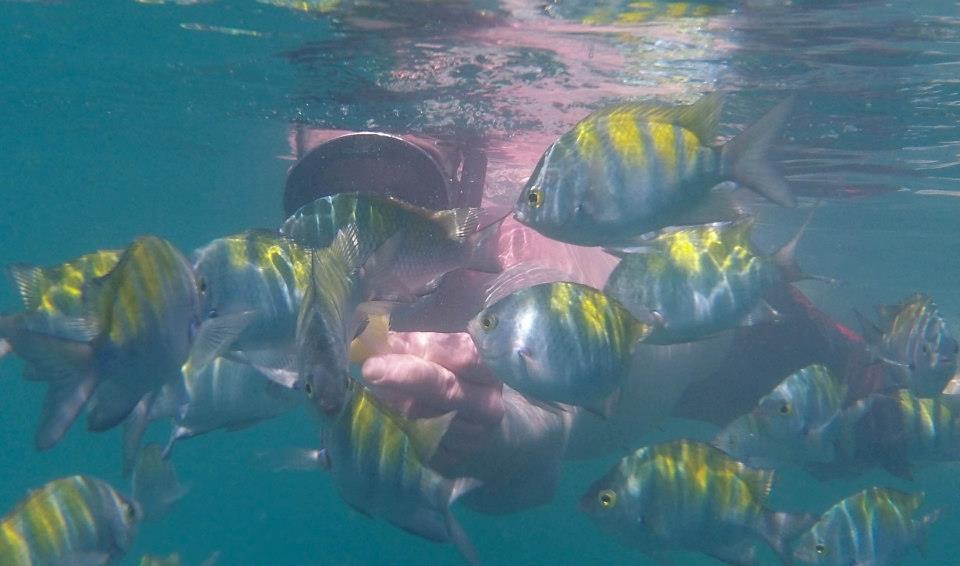
Dream come true: Travelling Costa Rica (bonus: with my brother, Shawn “Chongo” Solnik)

One of the few photos of my brother NOT flipping the bird...here he flips fish

One of the few photos of my brother NOT flipping the bird…here he flips fish

Greatest moment of the year: Photo with cast of PuppetUp!

I don't care if you're sick of hearing about these guys

I don’t care if you’re sick of hearing about these guys

Selling out versus selling

Image

Over the last few years, I have met a lot of artists of various stripes, and almost to a person, one of the major fears each has is the belief that to become a success and to make a living with their Art, they will have to dilute that art. They’ll have to sell out. Some simply fear it in quaking silence, while others fend it off with flecks of foam like some rabid dog chained in a backyard of their own making. To each, their own.

You have a vision for your Art and you must respect that. It is because you are doing your Art that your Art is different from anyone else’s. By the same token, if you do hope to make enough money to keep at it, you must be able to express your Art in some commercial way.

Admittedly, with technologies such as self-publishing (formerly known as vanity publishing) and phones that offer better cinematography than anything Cecile B could have dreamt of, you can go it alone as no one before you could. You can make all of your dreams come true, but the question is, will those dreams come true? Will anyone beyond your mom, your partner and a few close friends bother with your Art once discovered?

I’m not saying to make a living you have to sell out. Don’t despoil your craft in the name of crass commercialism. If you’re truly an artist rather than a hack, it wouldn’t serve your purposes and you’d come to loathe the thing you once loved.

No, I’m talking about finding a line of compromise between your vision and the market’s.

As this is particularly close to my heart right now, let’s say that you’re writing a screenplay. First, congratulations. There may be thousands of screenplays out there, but I am confident there are billions of unfinished scripts and half-thought ideas.

Having completed your screenplay, however, is only the first step. Now you’ve got to share your creation with dozens of other people, each of whom will want to put his or her stamp on the work.

Story editors, readers, producers, directors, actors, financiers, market researchers. To a greater or lesser extent, each of these people has to buy into what you’re selling before your movie will get made.

Sure, if your film is small with a very modest (miniscule) budget, all of these titles may be handled by 3 to 6 people, but even then, you’ll likely run into issues with distribution.

I’m not saying it can’t be done. History is replete with artists who decided to go it alone. But the unwritten backdrop of that history is swamped with the myriad films sitting idle on bookshelves or hard drives, or competing with cavorting kittens and bad karaoke on YouTube or Vimeo.

If you want to share your Art—and I’m betting that you do—then you want outside thought, you want feedback, you want people to contribute.

Don’t look at barriers, but rather seize opportunities to engage. These people are your first audience. Respect them. Use them. Understand them. Do this and you’ll be well on your way to realizing your vision in their world.


(Image is property of owner and is used here without permission because I refuse to let anyone sell out.)

I am always right (motivation)

Image

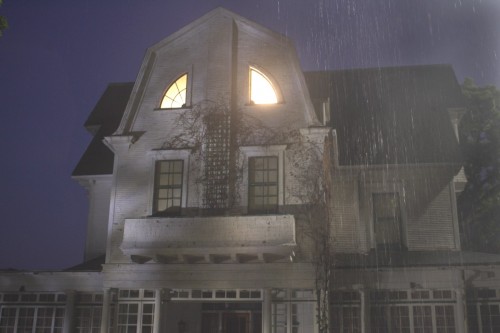
If I move into a beautiful New England home with my beautiful family and on our first night, the walls run red with blood and a disconnected voice cries “Get out!”, I go to a hotel and move the next day.

I do not search for an explanation (or at least not that night). I do not instinctively head for the dusty attic, the dank dark basement or that rather nasty looking shed under the menacing weeping willow in the darkest corner of the back yard.

So when I read about characters doing just that in a novel or screenplay or watch actors do it at the movies, I find myself thinking they deserve whatever comes next because they are idiots. What the hell motivated them to have that stupid response? Out of the gate, I disconnect from the character.

Now, despite the title of this blog post, I am not suggesting that only my instincts should be followed in screenplays, novels, etc.—these would be damned short stories if everyone did—but rather it is a call to writers to help me, as a reader or viewer, understand why the character behaved the way he or she did. Until I do, I cannot really bond with the character.

This isn’t easy, but it is necessary.

Whenever a character responds to something or takes an action, you have to ask yourself, why did he or she do that? And over the course of your story, are all of that character’s choices consistent with his or her personal journey from before your story’s opening to its conclusion?

And as if that isn’t difficult enough, you then have to ask yourself, have I written the story in such a way that the audience can see the logic of the choices, even if only in hindsight?

This last point is crucial, because as writers, we often know or understand things about our characters that never make it to the page. Thus, while everything may seem completely consistent and logical to us, it may still be confusing to our audience, who is not privy to the machinations within the head of the writer god.

At the same time, you never want to spell it out for the audience, because then story reading or watching becomes too passive an exercise and the audience doesn’t engage. You need to feed your audience just enough information that it can begin to make inferences about your characters’ behaviours and so become connected with your characters.

The good news is that this is unlikely to happen in your first draft or at best, will happen in drips and drabs.

As you develop your story past draft one, you will find moments of inconsistency or more likely, your trusted readers and advisers will find inconsistencies. Take those in and mull them over. Odds are, fixing those issues will not require a major refocus of your story…just a heavy-brush rewrite. And your story will improve.

So if the walls run red with blood, a disconnected voice cries “Get out!” and your protagonist doesn’t, I better understand why.

Image

(Images are the property of the owners and are used here without permission.)

What is sexy?

The announcement earlier today about Angelina Jolie’s pre-emptive double mastectomy for fear of future breast cancer made me pause for a moment to consider what makes a woman sexy to me. What follows is purely subjective and I hope it is taken in the spirit in which it is meant.

What makes a woman sexy?

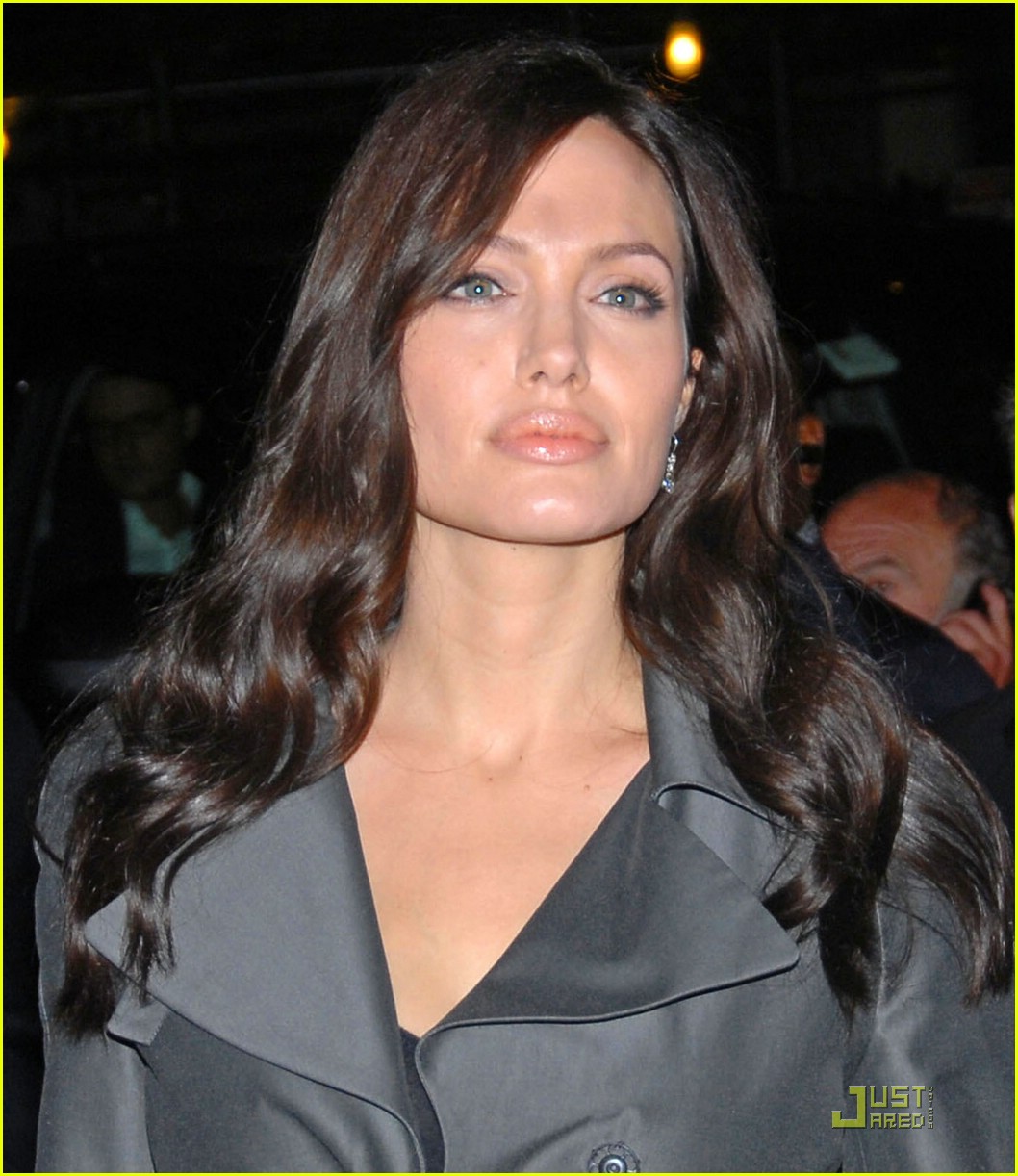
Is it her amazing boobs? (Angelina Jolie)

Image

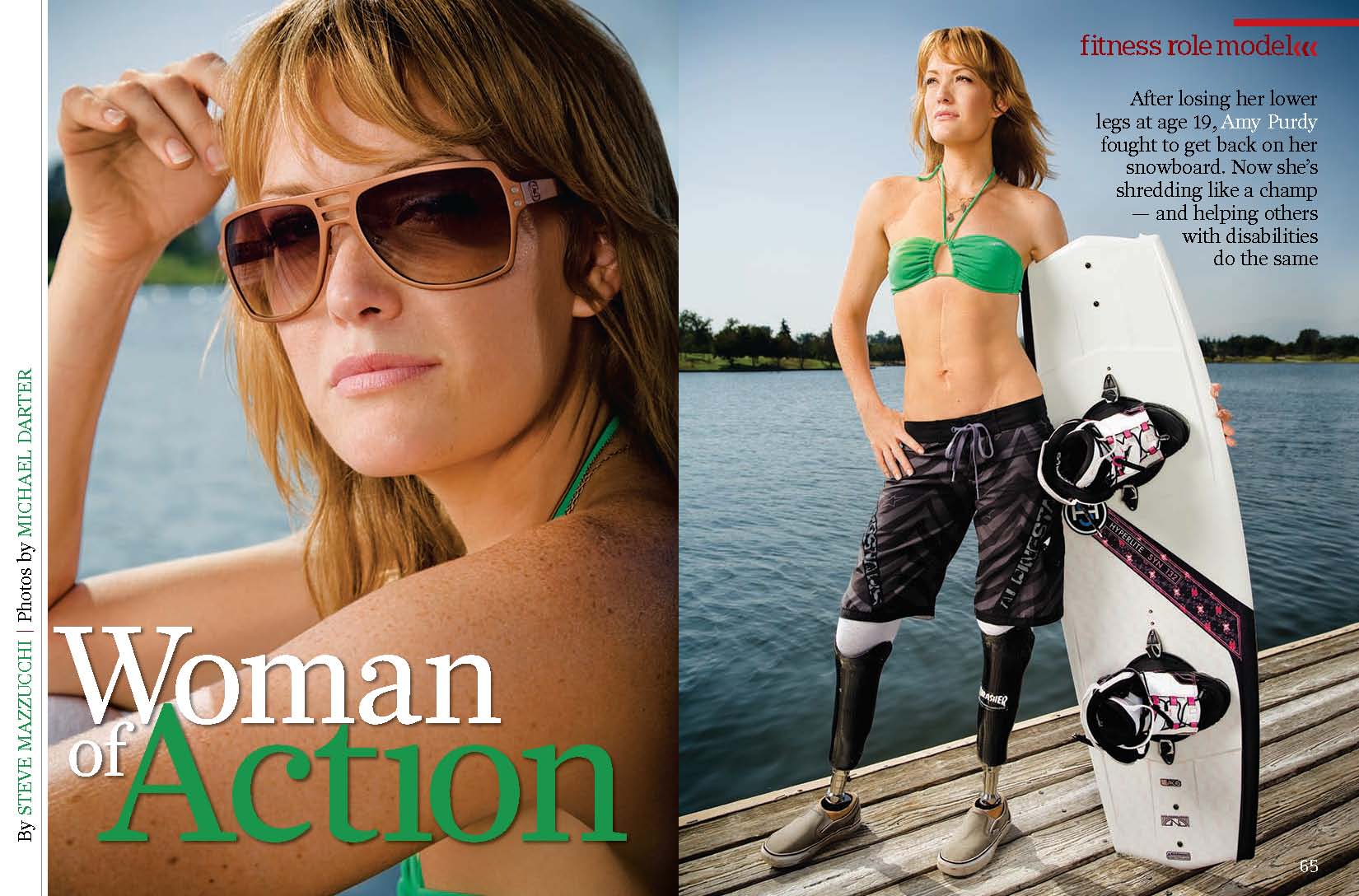
Is it her sinewy legs? (Amy Purdy, activist and meningitis sufferer)

Image

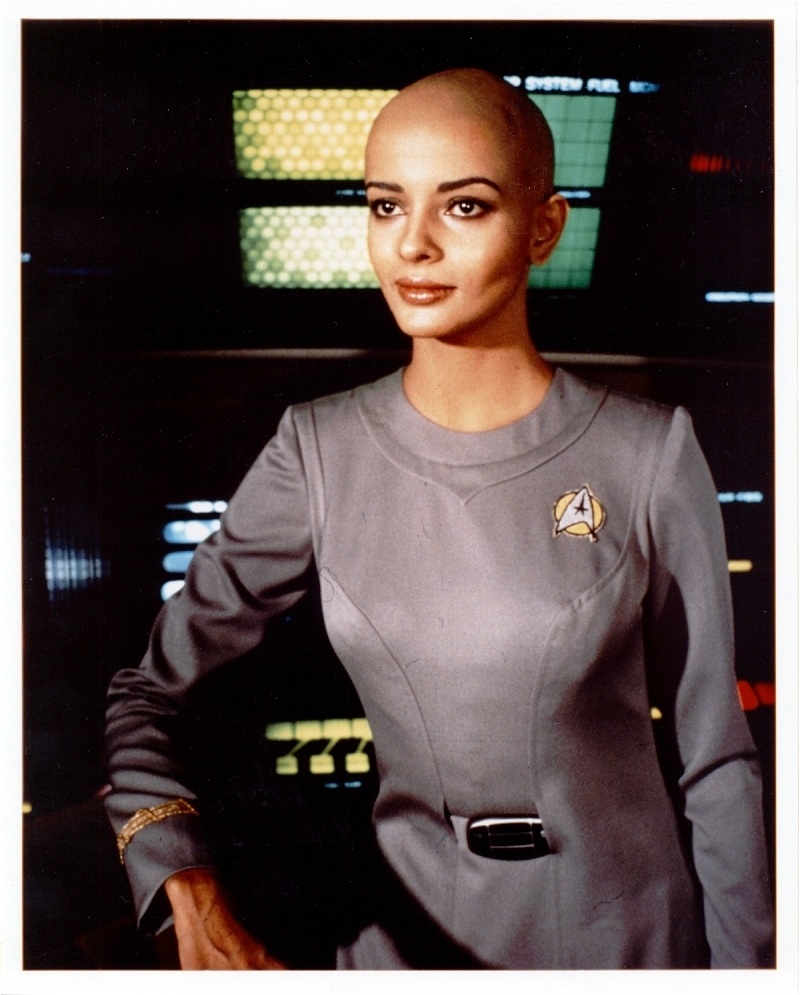
Her flowing hair? (Persis Khambatta from Star Trek: The Motion Picture)

Image

Her fashion runway looks? (Emma Thompson)

Image

Her youth? (Dame Helen Mirren)

Image

Her demur nature and delicacy? (Team Canada’s Cassie Campbell)

Image

Her fame? (Leela with my grandmother)

Image

No, what makes a woman sexy is who that woman is, not what she is or how she looks. It is what comes from within when you take a moment to get to know her.

That is the sexy that stands the test of time. That is the sexy that makes me want to be in her presence.

(All photos used without permission, except the last one. Copyrights belong to owners.)

Stupid is pretty smart

Image

I find it interesting that most people seem to be less afraid of being stupid than they are of looking stupid.

I say this because of the inordinate amount of stupid material I find every day—the people posting this stuff obviously don’t think it’s stupid—and yet many of the brightest people I know (and not just those with whom I agree) are paralytically afraid of saying anything lest people think they’re stupid.

Now, I appreciate that stupid is subjective, but this is not a condemnation of stupid, it is a call to embrace our personal stupid and use it to move forward to brilliance.

If you watch a group of children as they age—not literally moment-by-moment; that would be stupid—you will see that they start out unfiltered and unhindered by subconscious voices that make them edit themselves. They are free to create amazing things and proudly display those things on refrigerators around the world.

As they get older, though, those subconscious voices creep in and you find the children become less enthusiastic about their art. They become more self-conscious about being seen as stupid, and so the refrigerators of the world become increasingly barren.

That is incredibly sad, and not just because the typical refrigerator is a featureless, oddly coloured box with little inherent fashion sense. It is sad because it creates a population of adults who are incredibly repressed and overwhelmingly self-conscious.

Image

As I have mentioned before, I have numerable friends who want to write, but they are routinely stopped from taking any action by an infernal firewall of what to write. They can’t just write anything. Writing just anything would be stupid.

No! No! No! Writing just anything would be freaking brilliant!

Writing just anything would make you a writer, rather than the non-writer you are now.

Write the word “stupid”. Write “stoopid”. Write “styupid”. Write “stewed pet”. And bloody screw AutoCorrect.

Let stupid be your creative scissors and run around the room not caring into whom you run or stab. Stupid begets intelligent, no matter how stupid that sounds.

Image

Besides, no matter how clever, intelligent or prosaic you are, someone is going to find your writing stupid. Stab them with your stupid scissors and move on.

I absolutely abhor the novel Crime and Punishment, routinely espousing that the crime was the writing of the book and the punishment is the reading, and yet many people find it a marvelous work of art. How stupid is that? (You can read that as I’m stupid or they’re stupid…I don’t really care.)

In King Lear (III, ii), Shakespeare wrote: “The art of our necessities is strange that can make vile things precious.”

As used in the play, this line has absolutely nothing to do with the point I’m making, and depending on how you read it, the line actually blows my thesis apart or completely justifies it. Now that is freaking stupid.

As Liam Neeson should have said in the movie: Release the Stupid!

You may just find that your stupid is pretty amazing…and even if it’s not, you’re one step closer to your brilliant.

Image

(Images used without permission. Pretty stupid, eh?)

Death by a Thousand Meetings

Committee (n): 1) a group of individuals specializing in irreversible creativity vivisection; 2) last known location of a good idea. See also: elephant’s graveyard.

Perhaps the greatest challenge facing anyone creating art is less the generation of new ideas and more the knowledge that at some point, you will have to release your art to an awaiting world; aka, relinquish control.

Now, we can (and have) discuss the illusion of control at any phase of the creative process, but there is no denying that if you want your art to be appreciated by others, you will have to pass your newborn into someone else’s hands…or worse, someseveral else’s hands.

For writing—my predominant area of interest—that moment can come quite early in the creative process, whereas for other art forms, such as sculpture or painting, it may appear quite a bit later (please correct me, if I under- or misstate things).

You must respect your art. You must protect your art. But you must also realize that if you intend to share your art, and perhaps even make money from it, you must be somewhat flexible with your art. When you bring it to the world, it ceases to be all about you.

A teacher once suggested that upon completing a play, Shakespeare merely became another critic of the work. His opinions on meaning and significance within the play were simply one more voice and held no more sway than those of any other critic. I don’t know that I agree—what self-respecting writer would?—but I see the point.

When I write a screenplay, I need dissenting and diverging voices to ensure that I am not leaving things out or glossing over important plot or character points that are clear in my head. At the same time, I must be sure that my vision is protected, lest I start writing someone else’s screenplay.

I understand, however, that if I want to turn this screenplay into a movie or television episode, I will have to relinquish some of the control to the hands of studio executives, producers, directors, actors, directors of photography, sound teams, and in all likelihood, the third cousin of the guy who runs the craft services table. I have to be comfortable with the idea that each of these people wants to (actually, must) contribute in some way to the final product to give them a sense of ownership. They too are artists.

I am struggling at this stage with several television projects I have been developing. I have a computer filled with TV series concepts and/or pilot scripts, and I am trying to decide with what production companies to share my babies. Like Smeagol, I stroke my precious and have a rampant distrust of everyone.

How do I know the company I choose shares my vision, will protect my baby, isn’t just a group of ravenous Orcs? I don’t. I can’t, ahead of time.

What helps is watching fellow writers who rabidly protect their newborns at a much earlier stage in development. Who in a reading group, spew buckets of foamy spittle while savagely defending the use of the word “vivisection”, or primal scream that their protagonist’s motivations are obvious to anyone with half a brain.

I am doing the same thing with my projects, only at a later stage and mostly in my head (and possibly with just half a brain). Just as they have to learn to let go or at least lighten up, so do I.

In writing this post, I am coming to realize that my art is in the writing of the screenplay, not in the making of movies or television. Thus, when the screenplay is ready to move on, I must let it go and hope it flourishes…even if I am not ready to let it go. The art must grow and breathe, regardless of my personal reluctance and fears.

Committees are still evil…you will never get me to say otherwise…but unless I am willing to do everything on my own, which would not do justice to my babies, committees are a necessary evil and less dangerous to my babies’ successes than on overbearing, overprotective parent.


For a humourous take on the evils of meetings, please also see the recent blog post by Ben’s Bitter Blog: Meeting Bitterness.